
057: RON RATHBUN - Founder of Kelee Meditation
SHOW NOTES
Are you meditating but still feeling stuck, anxious, or triggered by your past?
In this eye-opening episode, we dive deep with Ron Rathbun—founder of Kili Meditation and mentor to elite performers—who explains why traditional mindfulness methods may be failing you, and how the true power of stillness can actually dissolve trauma, not just help you cope.
Learn how to differentiate brain vs. mind function and why it matters in healing.
Discover the Greater Kili: a non-linear energy field that unlocks emotional freedom.
Hear how real trauma—from PTSD to looping thoughts—can be permanently released.
Hit play to explore a proven meditation method studied by medical researchers and used by top athletes to break free from fear, trauma, and constant overthinking.
Ron shares his story and goes into details of the Kelee Meditation practice.
Music: Don’t Dream it’s Over - Crowded House
https://thekelee.org/
https://www.amazon.com/Kelee%C2%AE-Meditation-Medical-Study-ebook/dp/B00B3YWTRO/ref=sr_1_2?dchild=1&keywords=kelee+study&qid=1588283559&s=books&sr=1-2
https://podcasts.apple.com/nz/podcast/032-matt-griggs-busting-through-terminal-mediocrity/id1088660076?i=1000412521842
Key Points
Ron Rathbun, founder of Kili Meditation, discusses his journey with meditation starting in 1978 to cope with PTSD from his father, a Vietnam veteran, and how it led to the development of Kili Meditation.
Ron explains the concept of trauma and its psychological impact, sharing a personal example of almost committing suicide due to the trauma he experienced.
Ron describes the difference between brain function (thinking process) and mind function (mental feeling process), emphasizing the importance of understanding this distinction in Kili Meditation.
Ron discusses the practice of Kili Meditation, focusing on the importance of getting off the surface of the mind and into a state of awareness of nothing, which leads to deep healing and regeneration.
Ron explains the concept of empathy and compassion, differentiating between the two and how they relate to the practice of Kili Meditation and its benefits for mental health.
Dr. Daniel Lee, a clinical professor of medicine at UC San Diego Medical Center, shares his experience with Kili Meditation and the positive effects it had on his patients, leading to a study on its benefits for reducing stress, anxiety, and depression.
Outline
Introduction of Ron Rathbun and Kili Meditation
Ron Rathbun is introduced as the founder of Kili Meditation and author of several books on the subject.
He is described as the mentor of Taylor Knox and Matt Griggs, who were previous guests on the show.
The episode is presented as an in-depth exploration of Kili Meditation, building on previous introductory episodes.
The host mentions that the first few minutes cover Ron's background before delving into the meditation practice.
At the end of the episode, there will be a note from Dr. Daniel Lee, who was involved in a medical study on Kili Meditation.
Ron Rathbun's Background
Ron was born in northern Minnesota in 1956 but moved to Oceanside, California at 9 months old due to their father's military service at Camp Pendleton.
They discovered the ocean and surfing at a young age, starting with rafts and progressing to belly boards, knee boards, and eventually stand-up surfing.
Ron became serious about surfing in high school, around 10th grade, and frequented spots like Blacks Beach and Del Mar Jetty.
They still surf today and alternate between knee boarding and stand-up surfing.
Introduction to Meditation
Ron began meditating in 1978 at the age of 20 to deal with PTSD resulting from their father's experiences as a Vietnam veteran.
They sought help to address the trauma internalized from their father's behavior after returning from the war.
Ron met their mentor in Encinitas, California, who told them they needed to learn how to still their mind, which became the most profound thing ever done for themselves.
Understanding Trauma
Ron defines trauma as negative energy or emotional baggage that people take in and can be triggered by.
They describe personal experience with trauma, including feeling worthless and contemplating suicide due to the hurt and pain internalized from their father's behavior.
Ron explains that their father, who had been abandoned by both parents and served in the Vietnam War, returned as a changed person and took out frustrations on them.
The trauma manifested as feelings of worthlessness and being the victim of their father's attempts to control them.
Introduction to Kili Meditation
Meeting their mentor, a brilliant and wise person with multiple PhDs who had studied with Einstein, changed Ron's life.
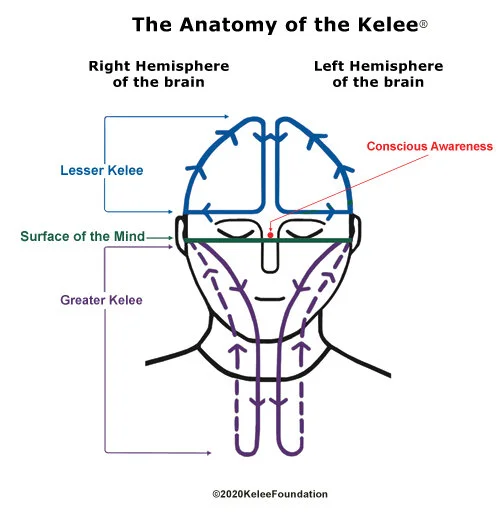
Through learning to still their mind, Ron became aware of reference points in the Kili, including the electrochemical surface of the mind at eye level and a field of energy below the surface of the mind.
They explored this field of energy and encountered fears, then developed a practice of stilling the mind while focusing on these fears to dissolve them.
The practice proved effective not only for Ron but also for friends and strangers who sought their help, leading to its spread through word-of-mouth based on results.
Anatomy and Structure of Kili Meditation
The Kili is described as a product of evolution that has always existed, with the term 'Kili' dating back to ancient Sanskrit in 1300 BC.
It provides reference points and something to study, distinguishing it from other meditation practices.
Kili Meditation involves an awareness of 'nothing,' which is described as a state of consciousness detached from physical sensations and thoughts.
Ron differentiates between the brain/intellect (associated with thinking) and the mind (associated with mental feeling and consciousness).
The practice involves moving from the surface of the mind (lesser Kili) to the greater Kili, a non-linear field of energy below the surface.
Benefits and Mechanisms of Kili Meditation
Kili Meditation allows practitioners to detach from the sympathetic nervous system and physical tensions, promoting relaxation and healing.
It helps dissolve negative compartments or traumas stored in the mind, leading to freedom from past issues.
The practice is presented as a way to break thought loops, improve sleep, and reduce stress, anxiety, and depression.
Ron emphasizes the importance of consistency in practice and suggests keeping a journal to track progress and insights.
Scientific Study and Medical Applications
Dr. Daniel Lee, a clinical professor of medicine at UC San Diego Medical Center, conducted a study on Kili Meditation with HIV patients.
The study, lasting about two and a half years, examined the effects of 12 weeks of Kili Meditation on stress, anxiety, and depression.
Results showed statistically significant improvements in reducing stress, anxiety, and depression based on questionnaires and interviews.
The study is available as an ebook on Amazon, possibly the first medical Amazon ebook of its kind.
Future Developments and Accessibility
Kili Meditation is being presented to physicians at Kaiser and will be introduced to the VA to help veterans with PTSD.
There are ongoing negotiations for further studies and applications, including a potential project on empathy and compassion at UCSD.
The practice is accessible through an Apple and Android app, allowing users to be guided through the meditation.
Taylor Knox, a long-time practitioner, is beginning to teach the practice, and other teachers are emerging to make the practice more widely available.
Transcription
Michael Frampton
Welcome back to the show. Today's guest is Ron Rathbun. Ron is the founder of Kili Meditation and an author of many books on the subject. He's the mentor of Taylor Knox and Matt Griggs, previous guests on the show, and this episode gets into the weeds of the Kili Meditation. So, if you have not heard episode 3, which was the original episode with Matt Griggs, go back and listen to that. Episode 32, which is the second interview I did with Matt Griggs, and episode 31, which was with Taylor Knox, are all sort of more introduction-based episodes into Kili. But if you're familiar with either the Kili or other forms of meditation, then you will enjoy this episode. First five minutes or so, Ron sort of goes into a little bit of his story and then we're straight into it. At the end, there'll be a short music break and then there'll be a little short word from Dr. Daniel Lee, who was one of the doctors that was involved in the study, which was done—the medical study which was done on the Kili Meditation.
So stay tuned for that little note from Dr. Daniel Lee. And I will have links in the show notes to the Kili website. And if you go to my Instagram, which is @surfmastery, you'll see links to Instagram, links to everything mentioned. Here is my conversation. Start for you, where were you born?
Ron Rathbun
I was born in northern Minnesota in 1956. My dad was in the military, but very quickly we moved out here because he was in the military. I was just born back there, but at nine months old I was in Oceanside because of Camp Pendleton. I moved around a lot, but seemed to always come back here. This is where my family grew up.
Michael Frampton
When did you discover the ocean and surfing?
Ron Rathbun
God, ever since I was a little kid. My mom used to work at the Pacific Bell, which is just two blocks from the beach. She'd drop us off in the morning, and so we'd go down there and started on rafts. Back then there weren't even boogie boards. I had a belly board, and then I actually went to a knee board, and then I went to a stand-up board.
Michael Frampton
Do you remember that moment where you knew you were going to be a surfer?
Ron Rathbun
It was in high school, probably 10th grade, where it just became serious. Then I started surfing Blacks a lot, and that became one of my favorite spots. Del Mar Jetty on the base, because I had a sticker to get on.
Michael Frampton
You still surf?
Ron Rathbun
Yeah. I actually knee-boarded for 20 years, and I stood-up surfed for 20 years. The funny thing was that Taylor knew I loved knee boarding, so he found my shaper and gifted me a board, and I still do that too. That's part of my roots.
Michael Frampton
When did you start meditating?
Ron Rathbun
I started meditating in 1978, very early on, like 20 years old. It was basically to deal with the PTSD that got into me from my father, who was a Vietnam vet. When he came back, nobody knew in those days really what PTSD was and how much it affected the family. When I moved out, I just had so much trauma inside of me that I knew I needed help. I started searching lots of different areas, and then I ended up meeting my mentor in Encinitas, California. He told me, the first thing he said to me was that you have to learn how to still your mind. That was the most profound thing that I've ever done for myself.
Michael Frampton
Can we define what trauma is?
Ron Rathbun
What trauma is? Everybody has taken into their mind something that hurts them and can be triggered. These are people's buttons, emotional baggage that people take in. Anytime somebody comes at you with a lot of negative energy, it can get into you. This is basically in psychology and psychiatry where a lot of the mental health is stored, which is through my understanding. What I was seeking was not only how I don't want to cope with these problems that are inside, I want to learn how to get rid of it.
Michael Frampton
Can you give us an example, a real-life example of something traumatic that will be affecting your psychology?
Ron Rathbun
I almost committed suicide. It was that bad. I had so much hurt and pain inside from the horror of the Vietnam War, when my father would lay into me, that it got inside me and I could feel it inside. It was just a lot of hate, a lot of negativity, and I couldn't get it out of me.
Michael Frampton
How do you mean your father would... You didn't serve in the war personally? No, took it out on you?
Ron Rathbun
He screamed at me. He... He took it out on me. That happens a lot of times with people who come back from war. Now the PTSD is everything that we're talking about, which is the trauma that internalizes in a person. Everybody has trauma that they've had in their life. Some are just much more severe.
Michael Frampton
He's taking his frustration and anger out on you. Where did that come from for him? Is it just the traumatic experience of war for him?
Ron Rathbun
It started... He got abandoned by both his parents, so he had a really rough upbringing. He went into the service as soon as he could just to escape where he was living. Then he ended up being in the Marine Corps for 20-something years. But the Vietnam War, he was very different before he went over, and then after he came back he was a completely different person, which is a common thing with people that go to war.
Michael Frampton
When he's taking it out on you, is he trying to control you?
Ron Rathbun
That was part of it, yes. I think he controlled me being a gunnery sergeant. He was one of these guys that would scream.
Michael Frampton
He role?
Ron Rathbun
Was a leader in the army?
Michael Frampton
Yes.
Ron Rathbun
When he came back he wanted to continue that leadership.
Michael Frampton
You became the victim of that?
Ron Rathbun
Yes.
Michael Frampton
How did that make you feel at the time? Do you remember?
Ron Rathbun
I felt worthless. That's worse than just the hate that I felt coming from him directed at me. But I was just worthless as a human being, and that was probably the hardest thing on me.
Michael Frampton
You weren't worthless as a human being, but he made you feel like.
Ron Rathbun
That? Right. He's your father at 10. This is a person who's supposed to inspire you, right? At least what I thought.
Michael Frampton
I think we can all relate to what you're saying. Everyone has a different story, obviously, and different levels of intensity. That's trauma, right? Basically, you're losing touch with who you are and trying to... You were so young, you know no different at the time. You're letting someone else tell you who you are and make you feel worthless. How does finding a point of stillness get rid of that?
Ron Rathbun
What ended up happening was, when I met my mentor, first of all, he, to this day, he's the most brilliant, wise, kind man I've ever met. He had two PhDs, three Mastery degrees. He was going for a Doctor of Science, which is five PhDs. He studied with Einstein at Princeton. He was a physicist in the nuclear era. I mean, just brilliant like I have never seen. I've met Nobel laureates that he was way above. I knew when I met him, I wanted to study with him as long as I could. He was not only a scientist, but he was a very spiritual man. When he started to teach me about stilling the mind, it just changed me. It was from learning how to still the mind that I started becoming aware of the reference points in the Kili. You could understand the mind from the inside out. Once I started to still my mind, I became very aware of this plane of energy at eye level that I kept feeling. I would ask him about it and he'd say, yeah, that's the electrochemical surface of the mind. I go, wow, this is a reference point. Then one day he came into the class and he said that he had found this field of energy inside of him, down below the surface of the mind. I went home and in my meditation I went to see if I could find it and, sure enough, I did. What happened after that was I began to explore it, because when I went into this field of energy below the surface of my mind, I ran into a lot of my fears. Once I felt them in there, I came back up and I go, okay, how can I get rid of these fears? I know I can feel them inside me in this field of energy. My first thought was, what did all the masters say? You need to get your mind still, first of all. I just started dropping my awareness from the surface of the mind down inside this field of energy and would get as close to them as I could and just get my mind still. I just trusted that the practice would work. Then what started to happen was they started to dissolve. One by one, as they dissolved and got smaller and smaller, they finally ended up just completely dissipating. My friends saw the change in me and said, how did you do that? You're different. You're not traumatized by all of this fear and worry that you used to have. Where did it go? I said, I found a way to dissolve it, not cope with it. Friends just started asking me, will you teach me how to do this? I said, I'm not sure if it's going to work with you, but I will teach you. They did it and the same thing happened. Their fear started to just disappear. Their friends saw the changes in them, and then I started getting strangers coming to my door. Will you teach me how to do this particular meditation? It was through word of mouth, by results. One by one, it just started getting out to a bigger and bigger audience.
Michael Frampton
Is it anatomy-focused?
Ron Rathbun
It is, because the anatomy in the Kili gives you reference points. It gives you something to study. It is a product of evolution. It has always been here. You could probably ask almost every person, have you had the sensation of emotion welling up from inside you? Everybody would say yes. That's the greater Kili. That term Kili is an ancient Sanskrit word that dates back to India in 1300 BC. It's really old. There's very little that's actually known about it.
Michael Frampton
How do you describe meditation?
Ron Rathbun
I describe meditation as learning how to get to a place where you have an awareness of nothing. If you listen to that—an awareness of nothing—you're talking about two points. There is the awareness of you, and then there is, for most people, the awareness of something, which is one point, your awareness, and then the something is the second point. You have these two points that everybody is always working. As I say many times, there's only two things in the universe: you and everything else. Those are the two points. What I realized through the practice inside of myself is that when I learned to pull back to the single point and learned how to get out of the something and get into nothing, I was one point and I was detached from all of these second-point problems. Once I learned to stay there, I started to realize I was much less affected, not only by the world and other people out there, but from the compartments. A compartment is actually a very old Buddhist term, which means having to do with something that has compartmentalized inside of your mind. Something you've separated, and these become the issues that people have that get trapped inside the Kili. This was my whole premise, because the issues are your trauma. How do I get rid of them? When I learned to go one-pointed and learned to get into the greater Kili, it just started to happen.
Michael Frampton
You kind of become your own psychotherapist in a way.
Ron Rathbun
You become your own master of your own mind. You start to understand your mind from within. Even if you're working with another person, nobody knows you better than you.
Michael Frampton
Could we go back to it, like you're saying, an awareness of nothing. Right. That sounds contradictory, because how can you be aware of nothing? Because if there's nothing...
Ron Rathbun
That's why it's the deepest state. You can have an awareness, but your mind is not thinking, and/or your mind is not on something. You're just still.
Michael Frampton
You have to have something to think about, right?
Ron Rathbun
Yes.
Michael Frampton
If you get to an awareness of nothing, you are not thinking.
Ron Rathbun
But you're saying it's an awareness of the true you.
Michael Frampton
Yes. So... No.
Ron Rathbun
The true you is nothing?
Michael Frampton
The true you is a something, but it is a non-linear something. It is a consciousness. The usual something that people talk about is the world, which to most people is all chemistry.
Michael Frampton
Right?
Ron Rathbun
Yes.
Michael Frampton
Well, it takes consciousness to bring this chemistry alive. Right?
Ron Rathbun
If you're not aware of it, it doesn't exist.
Michael Frampton
Doesn't exist. Right.
Ron Rathbun
Okay.
Michael Frampton
But do you know how healthy it is for you to detach from the chemistry? It is the deepest form of healing that you can experience, because even when you're sleeping, you dream. But when you go to an awareness of nothing, you go to a pure state where you're not dreaming, you're not thinking. You're just in a state of complete regeneration.
Michael Frampton
So, okay. So how does it... So, other meditation practices are often, you know, you focus on your breathing, or a mantra, or a candle, or etc.
Ron Rathbun
They're focusing on a second point.
Michael Frampton
Yeah. I understand that. But how is your breathing a second point? Because breathing is something that's part of you.
Ron Rathbun
When you sit down to consciously breathe, you have to think about it. Right?
Michael Frampton
No, because breathing happens unconsciously.
Ron Rathbun
Well, then we would have to get into whether or not you're breathing through the sympathetic nervous system, which is... Okay, when most people do a breathing exercise, they're focusing on the breath, which takes their conscious awareness to be aware that they're doing it. Right?
Michael Frampton
Yes.
Ron Rathbun
Right. In this particular practice, when you go into the greater Kili, you allow the parasympathetic part of your breathing to breathe for you so that you can detach from the physical body.
Michael Frampton
Yes, but some would argue that if you're aware of the way you're parasympathetically breathing, that's still you.
Ron Rathbun
No, you're not aware of the parasympathetic. It's just doing it automatically.
Michael Frampton
Yes, but you're still feeling your diaphragm move.
Ron Rathbun
No, you're not when you're at an awareness of nothing. Because you're talking, you're still aware of the second point. I say that the body is the second point of the mind. The whole body is as well. Yes, it's the second point of the mind.
Michael Frampton
So you're almost dissolving out... Is it almost like an outer body experience?
Ron Rathbun
No, it's an in-body experience.
Michael Frampton
But it feels like you're completely detached from your body.
Ron Rathbun
This is where you have to get into terminology to try to describe it. That everything associated with the chemistry is a linear process, two points. When you go into mind and get out of the brain and the intellect, then you get into a one-point process, which is non-linear.
Michael Frampton
Okay, that makes more sense now. Yes.
Ron Rathbun
What you're learning is a deep understanding of how the mind actually works. Everything through all of these years that I've been working with, not only my mentor but on my own, was all results-based. That if you do this, this happens. If you do this, this happens. So everything became a very predictable and very understandable approach. That's the reason why this can be in medicine. We just had our five-year review at UCSD Medical School because it works. It can be systematically taught.
Michael Frampton
Okay, so how is the medical world proving that it works? What are they measuring?
Ron Rathbun
They measure through different scales. They had multiple scales. On the first one, we studied stress, anxiety, and depression. And you would do questionnaires partway through it, from beginning, middle, and end. And then there's a whole technical side to that, to measure all that. I leave a lot of that to the docs to figure out that. But it was highly successful.
Michael Frampton
Is that going to be published? There's probably people that are interested. It already is. It is. So is it open to the public?
Ron Rathbun
Yes, it is.
Michael Frampton
I'll put links to that in the show notes for those that are interested. Yes. So when you say the mind, most people think of the entire brain. So in the Kili language, it's a little different to that, right?
Ron Rathbun
Right. The brain and the intellect are one and the same. And the brain and the intellect are associated with a thinking process. But the mind actually is a mental feeling process. It's a consciousness process. It's not a thinking process. And so we define it very different. And the easiest way to know the difference between the brain and the mind is to get off the surface of the mind, which is where all other meditations do their practice, on the surface of the mind, is to go into the greater Kili and go non-linear. Because all the other meditations are linear meditations, two-pointed. This is the only meditation out there that I'm aware of that knows how to go one-pointed.
Michael Frampton
It makes sense neurologically too, because you look at the brain in terms of the old brain and the new brain, and everything above the eye level essentially is the modern neocortex.
Ron Rathbun
That's the lesser Kili.
Michael Frampton
Exactly.
Ron Rathbun
And then everything below that would be your old brain, the reptilian brain, the mammalian brain.
Ron Rathbun
Technically, where that's located is actually associated with the conscious awareness on the surface of the mind. And it is associated with the brainstem. But when you go into the greater Kili, you're going into a non-linear field. It's not a chemistry-based field. It's a non-linear field of energy. The brainstem itself is part of the whole brain network, which is associated with the ego and the alter ego.
Michael Frampton
Okay, so we're trying to get out of that as well.
Ron Rathbun
Yes, because that is the earliest, most primitive part of ourself.
Michael Frampton
Yes. Okay, so that's why you're referencing this point down around the heart area.
Ron Rathbun
You mean to go to the mind?
Michael Frampton
Yeah. Yes. A lot of listeners and myself think of the heart chakra from yoga. Is there any... How does that language feel to you?
Ron Rathbun
Well. The chakras are just energy points in consciousness itself. But everything is run through consciousness. They are just points that just exist in the non-linear, whatever... There's multiple names for it. The etheric body. And they exist, but everything is run through consciousness.
Michael Frampton
Okay. It's my understanding that we can direct our consciousness.
Ron Rathbun
Yes, you can.
Michael Frampton
Okay, so if I was to think of my right thumb, all of a sudden I'm very much aware of my right thumb. So I've directed some of my consciousness to that thumb? Right.
Ron Rathbun
Is that right?
Michael Frampton
Yeah.
Ron Rathbun
I say that there's the body and there's the mind, and there's an interaction between those two all the time. In this particular practice, what you're learning to do is to learn how to detach from the body because the body is under so much stress. The nervous system that just right now, the biggest problem is sensory overload.
Michael Frampton
Yes.
Ron Rathbun
It's a serious problem right now. And what happens is that people don't know how to detach from that, which affects our sympathetic nervous system. When you learn how to get off the surface of the mind and go into the greater Kili, you can detach from the sympathetic nervous system and all the tension and just literally let the body go into a state of relaxation, being detached from it. And it becomes a very powerful means to help heal yourself.
Michael Frampton
In practical terms, it was my understanding that we're often directing our consciousness or our conscious awareness too much in the brain. Yes. So we're just trying to direct it closer to here where the true us is.
Ron Rathbun
What we're trying to do is to learn how to detach from the brain. Some of this goes back into philosophy, back into Buddhism, because it was Buddha who first brought up the concept of attachment and detachment. The mind is detached, the body is attached. While we're living here, they need to be attached, because when they separate, we die. But what we need to be able to do is to not allow the trauma that happens to the body to affect the mind.
Michael Frampton
I see. So the mind is completely separate from all parts of the body?
Ron Rathbun
It's integrated with it, but once again, it depends on where we direct our awareness. We can direct our awareness outside into the body, or we can direct our awareness inside to the chela. And see, that's a whole structure that no other meditations do anything with. It's almost like it doesn't even exist. There is a whole structure inside of the chela. There's energy that flows through that structure. One of them is a very unconscious energy that flows through us called the torus effect.
Michael Frampton
Yes.
Ron Rathbun
When people see the structure of the chela, they'll say it folds in upon itself like this. In point of fact, the first time I drew it and showed it to my mentor, he said, “You know what this is, don't you?” And I said, “What?” He said, “It's Einstein's model of the universe. A universe folding in upon itself without beginning or end, only a point of perception to perceive it.”
Michael Frampton
The torus energy field is ubiquitous through every atom. It's fractal, isn't it?
Ron Rathbun
It flows through the chela. And see, what we're trying to do is to get out of the looping of the thought process stuck in our own head many times. The issues or the compartments that you have where you can't stop thinking about something and you're just spinning. That looping process—when you're doing that, you're not experiencing the torus effect. You're just burning your energy. And see, a very powerful thing is that when you learn how to detach and go into the greater chela and go non-linear, you open purely to the torus effect.
Michael Frampton
So do you begin to feel that energy field?
Ron Rathbun
Yes. Yes. Everybody feels it actually when they're in nature. You'll feel this flow that comes at you that doesn't interfere with you. Because everything in nature is exactly what it is, with the exception of human beings. They can be something other than their self.
Michael Frampton
How?
Ron Rathbun
By self-creation. By trying to create themselves to be something other than a human being.
Michael Frampton
Why do we do that?
Ron Rathbun
Most of the time it's because we want to create what we don't understand. Because what we don't understand, we fear.
Michael Frampton
We want to create fear?
Ron Rathbun
No, we don't want to create fear. We want to escape fear. But we usually do that through a second-point process of wanting to self-create a reality to offset the fearful feelings that people have inside their self.
Michael Frampton
Can you give me an example?
Ron Rathbun
I can just give you the example that happened to me. When I first started surfing, it initially, before I found meditation, was an escape. Because I felt so bad about myself from what I had picked up from my father, that every time I went surfing and focused on that, it wasn't there. But the minute I'm back on land, now all of a sudden, here it's back in me again. Because the compartments, all the stuff, the negativity that got in me, was in here. The outside point was great while I was out there, but now when I came back out of the water, it was all in me and on me again. This is a big problem. This is one of the things that I worked with Taylor on—was the distractions of compartments that got inside of him when he'd be in the water.
Michael Frampton
Yeah, we're strange creatures.
Ron Rathbun
It's a common thing for people to want to escape, to experience something else other than what they feel, because they don't really know how to change how they feel. You can't create something to offset something and think that that's going to change what's still in you. This happens a lot with positive and negative. You create a positive to offset the negative. But the minute that you have to let go of the positive, you're right back to the negative. It didn't go away.
Michael Frampton
Yeah, there's always a balance, right?
Ron Rathbun
Yes, I just teach dissolve the negative and you don't have to create the positive. You become harmonious by nature, like nature.
Michael Frampton
Dissolve the negative. But the negative is always there, isn't it?
Ron Rathbun
No, you can dissolve them one by one, till they simply are not there anymore.
Michael Frampton
You're specifically talking about the past.
Ron Rathbun
They're all negative electrochemical compartmentalizations from the past. They're like time capsules. You can get to a place in the chela where, when you come back from your practice on the surface of the mind, you can self-trigger these things and just watch them—where they formed, how they're affecting you. Once you learn how to consciously detach from them, then you can consciously get rid of them.
Michael Frampton
You kind of become more of a witness.
Ron Rathbun
Well, the mind—remember, the mind is non-linear. It does not know what time is. And so what you were in, you're in the now.
Michael Frampton
Yes.
Ron Rathbun
And so when you're in the now, you're looking at the past, and you clearly know this is in the past, and this is where I am right now. If these compartments loop through your conscious awareness in your mind, then they can make you feel the past. Right? So something that happened a long time ago can cycle through you many times throughout your life. Right? You see this in family structures where people, the family members, know how to trigger each other.
Michael Frampton
Tell me about it.
Ron Rathbun
Usually because your siblings and your parents installed them all. So they know them. Right?
Michael Frampton
Yes.
Ron Rathbun
That was my mission with my dad—was to get to a place where he could no longer trigger me, and I attained my goal. He can no longer trigger me at all.
Michael Frampton
Wow.
Ron Rathbun
I can tell you the feeling of freedom that I have. And I don't... In fact, our relationship has never been better because he—because I can relax, he can relax around me—and he's just gotten to a point where he stopped trying to control me anymore. And for the last 15 years, since my mom passed away, our relationship just relaxed and got better. And he just learned to accept me for who I am.
Michael Frampton
So you played a different role. You didn't enable; you broke the cycle.
Ron Rathbun
I broke the cycle. That cycle is looping through compartments, negative compartments in the Kili.
Michael Frampton
Yeah. Because I'm wondering if we could maybe talk people through the practice, maybe just to help educate them on how to do it.
Ron Rathbun
Yes. I mean, you need to understand some basic differences. The difference between brain function and mind function is the first thing you need to know—that brain function is a thinking process, and mind function is a mental feeling process. This practice is actually very easy and simple to do. What isn't simple is the complexity that is in people that you run into at the second point. Because most people are more second-point based, and because they don't even know there is a primary point. So people are more their past and their compartments than they really are their self, because they don't know how to focus to a single point to find their self.
Michael Frampton
Yeah. It can be kind of daunting too at first.
Ron Rathbun
Well, the stuff that you're afraid of looking at is already in there. So wouldn't it be great to just have a place and a way to actually dissolve it? That's what each person individually has to see for their self—that you actually can dissolve things that have been tormenting you your whole life. You can get to a place where one day you can look for that memory and go there, and there's no reaction whatsoever. It's just you remember it, but you're no longer affected.
Michael Frampton
Interesting. Because in terms of the image that's in your books—maybe I haven't read enough of your material—but I'm just wondering, can we look at the image? And I'll post a visual so people can see this who are listening. Is this energy field something that you literally feel?
Ron Rathbun
Yes, you can feel it. The direction... Most people are so distracted that they can't feel the subtlety of the energy.
Michael Frampton
Of it.
Ron Rathbun
But as you learn how to get one-pointed, you can. Yes.
Michael Frampton
Okay. So the first two minutes of the practice is...
Ron Rathbun
You learn how to get off the surface of the mind and mentally feel the top of your head. If you touch the top of your head and then remove your hand, you can still mentally feel that spot, right?
Michael Frampton
Yes.
Ron Rathbun
That's when you're in mind, because you're not feeling the physical part of your head. You're mentally feeling at that point. You're not physically feeling. And so the first two minutes of the practice are just to relax down through both hemispheres of the brain. It's actually a feeling of the mind, a relaxed feeling of the mind that relaxes down through both hemispheres of the brain down to the surface of the mind at eye level. It's not a visualization—that's different. That's when your mind is creating a second point to go through. You're actually directly feeling yourself up here relaxing down through both hemispheres of the brain.
Michael Frampton
Okay. So it's not a visualization practice. So if I was to visualize the Lesser Kili as a snow globe, that would...
Ron Rathbun
A visualization is a creation of what you want to see. You're not actually learning how to feel and perceive without visualization. This is something that's going to take a little... This is when it's going to get much deeper, because then you're going to learn how to not visualize. You're going to learn how to perceive. And you're going to learn how to perceive non-linear energy. The mind perceives from non-linear energy, and so its second point can perceive the Kili and everything that's in here, but from a one-pointed, non-linear place. As you can see, we're talking in some specifics that it's going to take some practice.
Michael Frampton
Yes.
Ron Rathbun
Yes. But as you start to understand this terminology and what you're doing for yourself, it will become commonplace.
Michael Frampton
Okay. There's people listening that are on both sides. There's probably those that are listening that have no idea what we're talking about, and then there's probably those that are interested to dig deeper as well.
Ron Rathbun
Right.
Michael Frampton
The visualization of relaxing this part—is that... Is it fair to do that in the beginning?
Ron Rathbun
I would say make sure you're just in your feeling sense. So I... This is good because it'll help—maybe we can explain it for other people.
Michael Frampton
Don't understand. I'm not quite getting this yet.
Ron Rathbun
Yes, exactly.
Michael Frampton
Because what I've been doing is sort of almost like... I feel like the Lesser Kili is almost like a snow globe, and it's constantly being shaken around and all these thoughts and things are going. I finally get a chance to sit down and let the snow—and let the thoughts—kind of sit down on the surface of the mind, and it feels calming.
Ron Rathbun
Well, remember that the thoughts that you're perceiving are... You're perceiving them from a place that is not in the thoughts. You're perceiving the thoughts. So you're thinking that the thoughts are actually the second point. You're perceiving them from consciousness—that "I know I have a thought"—but the place that you know that from is the primary point. And that's what you have to learn to initially get to, because remember how I said you're so used to focusing on a second point?
Michael Frampton
Yes.
Ron Rathbun
Well, the second point—the brain and the intellect—see from the outside in. The mind is the only thing that sees from the inside out. And so this process of what you're looking... will actually end up happening. Let's say you just do your best to move down through both hemispheres of the brain and you get to the surface of the mind, and then you start to feel yourself drop down inside the Greater Kili. Well, once you get out of the complexity of the neural net of the brain and get below the surface of the mind, there isn't that complexity down there. You're moving into a state of emptiness, for the most part, into a non-linear state where you naturally move from two points and go to one point. And once you get down there, what initially happens—people will sense they're inside their self—but then, "If I'm here, what's here?" And then you come back up. And then you go, and you do that several times where you're down here, and then you sense something up here, and you come back up. And then you keep practicing, and one day you get down inside your Greater Kili and you go, "Well, I know that's the surface of the mind and that's going on up there, but I'm going to stay down here." As you get used to staying down inside the Greater Kili at that one point, you come back up here. Now all of a sudden, instead of focusing on all these thoughts that are going on, you're watching them from the primary point, and you're watching the thoughts. But you know you're watching them.
Michael Frampton
Right? Okay. So let me try and put it in my words, what you just said. So this is what I'm hearing anyway: we have the ability to spread our conscious awareness too thin, where it's spread out through all here.
Ron Rathbun
Yes.
Michael Frampton
But we can't really stop all of this going on—we can just start to focus that conscious awareness into one point.
Ron Rathbun
Right. You want to have your awareness be in mind function, which is a mental feeling process. Because when you're visualizing, you're going to be in some form of a thinking process where you're creating something. You're not trying to create yourself in this practice; you're trying to feel yourself.
Michael Frampton
Are you trying to feel what's already there?
Ron Rathbun
Yes. You're trying to feel who you are at your center.
Michael Frampton
And okay, so if it's already there, are we trying to direct our conscious awareness to it, or is that where the conscious awareness is coming from?
Ron Rathbun
The conscious awareness is actually coming from the mind. It's in the mind. If you look at that term "conscious awareness," okay, you have conscious and then you have awareness. Awareness determines the second point.
Michael Frampton
So you kind of get rid of awareness.
Ron Rathbun
Yes.
Michael Frampton
To go to conscious.
Ron Rathbun
Yes, just conscious. Without awareness of anything. Then we get back to this deepest state: an awareness of nothing. The nothing that we're talking about—you can think of nothing as being non-linear. It's non-physical. That's why when you hear this term that—in Buddhism is mostly what talks about it—this "nothingness," it's not really nothingness. It's non-linear. It's non-chemistry. It's consciousness.
Michael Frampton
There's no language to describe it.
Ron Rathbun
That has been the difficulty all along among the enlightened—how do I describe this? I see it as consciousness. Everything in the universe is between consciousness and chemistry. Without consciousness, the universe doesn't even exist. Nothing exists. On the surface of the mind—center it on the surface of the mind—and then you learn to just basically, just mentally feel yourself drop down inside the greater Keeley where you come to a natural resting point. You basically are just... it's a relaxed feeling of yourself, and once it starts to happen, you'll just come to this natural resting point and you just remain there for about three minutes. It's extremely hard to do. The hardest thing that you can possibly do in the mind is to learn how to get it completely still, and that's an awareness of nothing. See, here are these two points again: there's the something and then there's the nothing, but the nothing in this case is consciousness. But if you're not focused on something, does it exist? No. But that does not mean you're not aware. It's thought-provoking, and it's very deep, and you will never reach, in this lifetime, the depth of how deep you are.
Michael Frampton
I mean, you just have to trust the practice, right?
Ron Rathbun
Right. Just trust the process that what you're feeling actually exists. As you put more time into it, you'll see everything that I'm talking about for yourself. Everybody who does it. That's the beauty of it—is that it's not a belief system. The Keeley itself, the structure of the Keeley, exists. It's a product of evolution that has always been here. I can't believe that I'm the first one that actually took the time to actually look in it. Just a unique set of circumstances with the right teacher and him introducing it to me at an early age, and my need to—for myself—to get rid of my fears, because all negative compartments are all fear-based. And I just wanted to free myself from them. That was it. That was my entire goal. I had no idea that it was going to run into a much deeper structure that right now is... It's incredibly deep. I can't even—I mean, I'm not even going to go into the depth of why it is that we pick up our issues. It's because there's a self-realization process that we need to have for ourself to learn how to not pick up and pick up things that hurt us.
Michael Frampton
Right. Why do we involve ourselves with things that hurt us?
Ron Rathbun
We have to learn not to. And you learn how to not pick something up by your feeling process. Because your feeling process is much more in tune with the hurt that we pick up in this world.
Michael Frampton
Does that come from—some would argue that it's just being empathetic to others?
Ron Rathbun
Well, empathy is actually meant to connect our head and our heart, not connect us with another person. That's why empathy feels so natural to us. But if you notice something—are you empathetic with somebody who's happy?
Michael Frampton
Sometimes. Not usually. No.
Ron Rathbun
You'll see. No, you don't have to, right? You're empathetic with somebody who is really sad or really sick.
Michael Frampton
And I see what you mean.
Ron Rathbun
See, the problem with that—and this is what we work with in doctors in medicine—it's a big part of the burnout. The doctor that I work with just lectured about this. I have 30 patients. Let's say, on a scale of 1 to 10, my harmony is at an 8, and this patient's at a 2, which is really bad. If I drop my 8 to be empathetic with him at a 2, what's that going to do to me?
Michael Frampton
It's not good.
Ron Rathbun
Then you feel really bad after seeing this patient, and you didn't help the patient because you're just feeling the same as them. He has 29 more patients. How's that going to work? No, what you do in this practice is you stay in the 8 in mind and make everyone else come up to you. You don't change yourself for people who are lower. You stay. You learn to get to the higher, and you stay there.
Michael Frampton
Some people might describe that as being cold.
Ron Rathbun
No, because in the mind, harmony is never cold. Harmony of mind. Because we get back to that natural, beautiful state that we are. It's the deepest, most feeling state that there is. It's not cold at...
Michael Frampton
All. You know what I'm saying? If you're acting happy and peaceful around someone who's very traumatic and angry and sad...
Ron Rathbun
No, you don't act happy. What you learn to do is to be detached in harmony. You learn to just be the pure you. That's the most inspirational thing there is in the world, right? Is to be the pure you.
Michael Frampton
Right.
Ron Rathbun
If you're being your pure you, it will inspire the person to be the pure them. The reason why they're not the pure them is they have too many compartments that are not them. All mental pain and compartmentalization, all the issues of the world, are all misperceptions of life. That's why they're painful—because they don't work. If they're on a mental level, we keep doing things in the world that don't work. It just creates frustration. If we do physical things to our body that don't work, that are bad for us, we feel it and our body reacts. We have to learn from a higher state of consciousness to not do those things. What if you were not even aware you're doing them? How do you stop that? See, once again, when you get to these higher states, the higher detached states are aware of what's happening. And you see it, and so you can make a conscious choice—"No, I'm not going to do this anymore because this hurts me." But you have to know it's hurting you first, right? Why do people knowingly hurt themselves? Because they don't know they're doing it. So you have to get to a state of awareness—a higher state of awareness—to become aware that you're doing it. Then you can pull your awareness off the second point of that problem and detach from it, and then just dissolve the problem. Once the problem's gone, there's nothing to deal with. Problem solved.
Michael Frampton
Okay, so how do you do that? Can you define empathy again?
Ron Rathbun
It is a field of energy that connects our head and our heart. We all know this. But I don't think most people think about it. But it's a very natural thing because, without that connection, it connects the sympathetic and parasympathetic system together. And this connection between the head and the heart that you experience in this practice is what you're trying to heal. Once you learn how to go to an awareness of nothing, in an awareness of nothing, there is no pain. There's only the harmony—the deepest harmony of you. And so what ends up happening, not only are you opening to the deepest level of harmony, but you're detaching from all the negative compartmentalization that is trying to feed off you at the same time. Because that's what all these negative compartments do. They feed off your immune system. When people have lots of compartments, they're very depressed.
Michael Frampton
Like a doctor who was to really be... to stay in harmony and not take on other people's feelings, which most of us would perceive that to be empathy—like you're taking on someone else's feelings.
Ron Rathbun
It is empathy. You shouldn't take them on. Because if they're hurtful in the person, they're going to be hurtful to you.
Michael Frampton
Yeah. So you let others affect you, which is—if you're a doctor—you're probably going to make a worse decision for them. So it's actually technically unempathetic towards them because you're not looking after yourself.
Ron Rathbun
Now you're seeing from mind. Because you're seeing the reverse of what would happen if you really got into doing this.
Michael Frampton
Yeah. The doctor's going to make a better diagnosis if...
Ron Rathbun
Yes. If the doctor is affected, they're going to make a worse diagnosis, right?
Michael Frampton
Exactly.
Ron Rathbun
If you're affected, you're going to make a worse decision no matter what you're doing with anybody here, right? For everybody.
Michael Frampton
Can we go back to the... I'm still curious about the arrows on the diagram.
Ron Rathbun
It's a basic flow that most people... they only live in the lesser Kili above the surface of the mind. They stay up there predominantly because nobody teaches you how to go into the greater Kili.
Michael Frampton
So is this where the looping of thoughts happens?
Ron Rathbun
Yeah. Most of it is up in the lesser Kili where you're thinking. The stuff that people do at night when they lay there and want to go to sleep and they can't stop thinking about something. That's the looping.
Michael Frampton
I see.
Ron Rathbun
Everybody... Do you know how good it would be to break that looping, to go to sleep when you can't?
Michael Frampton
Yeah.
Ron Rathbun
Yeah. That's what happens. What you will learn when you go one-pointed is you can break that looping so that you can just detach from the thinking process of the brain and just go into a place in mind that's always peaceful.
Michael Frampton
Yeah. No, I know that firsthand because, spending a week in Nicaragua with Taylor and Matt, I went from getting five hours of sleep to getting eight within two days.
Ron Rathbun
So you've already seen the difference.
Michael Frampton
Yeah. Yeah. No, it's very real. That's why I'm here. Other people need to know this stuff.
Ron Rathbun
That's been my life's work—to try to bring it to the world. And it's here in a place right now where the basic nature of the practice just through... There's an Apple app, Kili Meditation Apple app, and there's an Android one too that people can go to so that they can just hit a button and I will walk them through time. Basically, most of it is emptiness. I'm just telling you when to start, get to the surface of the mind, and when to drop, and then just come back. That's it. So most of the time that you're in there in the five minutes, it's almost all silence, but it'll tell you when to come back because it helps people to have some kind of structure to sit down. If they just hit the button, they can sit down, they'll just hear my voice, and then they'll be more consistent. The consistency was everything in our medical study. Everybody who was consistent did much better.
Michael Frampton
So we're all aware of the circle looping of the lesser Kili, but the circular... well, the arrows in the energy field of the greater Kili—how does that feel?
Ron Rathbun
Much deeper. It's a much deeper feeling that once you go... You have to get extremely detached to sense this—the complete flow of the Kili—because any little distraction will pull you away from that. And this is just... This itself is perfectly quiet. So, I mean, that's very hard to hear, but you can feel it.
Michael Frampton
Okay. It's a lot to take on.
Ron Rathbun
How deep do you want to go, and how good do you want to feel? That's the question that you have to ask yourself. I can assure you, if you just start doing this today, within a week or two weeks you'll already—for most people—will start to notice that things that used to bother them do not.
Michael Frampton
Yeah. No, I can speak from experience. I agree with you.
Ron Rathbun
Right. That you used to be triggered by things that are no longer there, right?
Michael Frampton
Yeah, for sure.
Ron Rathbun
Yeah. Do you remember the first time that happened to you?
Michael Frampton
Yeah.
Ron Rathbun
It's an interesting experience, isn't it? You think you should react, but there's nothing there.
Michael Frampton
Yeah.
Ron Rathbun
Right. You know, the world does not understand that at all—that you can actually do that.
Michael Frampton
Yeah. No, it's profound.
Ron Rathbun
Yeah.
Michael Frampton
Right.
Ron Rathbun
Just from doing even... You've been doing the practice how long now?
57 Ron Rathbun - Kelee Meditation
For the passionate surfer—whether you're a weekend warrior, a surf dad, or an older surfer—this podcast is all about better surfing and deeper stoke. With expert surf coaching, surf training, and surfing tips, we’ll help you catch more waves, refine your paddling technique, and perfect your pop up on a surfboard. From surf workouts to handling wipeouts, chasing bigger waves, and mastering surf technique, we’re here to make sure you not only improve but truly enjoy surfing more—so you can get more out of every session and become a wiser surfer. Go from Beginner or intermediate Surfer to advanced.