
92 Andrew Gelles - Concrete to Crest
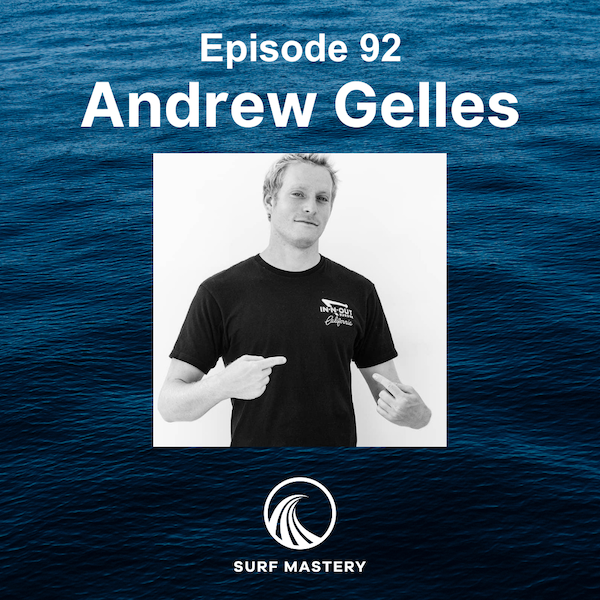
Ever wonder how some surfers seem to progress insanely fast—even tackling waves like Pipeline in just a year or two?
In this episode, we dive deep into the story of Andrew Gelles, a skateboarder from New York who went from beginner surfer to charging Waimea and Pipeline in record time. If you're stuck in your surf progression or learning as an adult, this conversation uncovers what might be holding you back—and what to do differently.
Discover how skateboarding gave Andrew an edge most beginner surfers never have.
Learn the “unofficial rules” of surviving and thriving in Hawaii’s heavy surf culture.
Get raw, real insights on why the worst wipeouts happen in small surf—not at the big breaks.
Hit play to hear Andrew's wild journey and learn the real keys to fast-track your surf progression, avoid dangerous mistakes, and get more joy out of every session.
https://www.instagram.com/andrewhgelles/?hl=en
https://substanceskatepark.com
Key Points
Michael's introduction of Andrew Gelles and their background from meeting at the skate park in New York.
Discussion about the significant day when Michael moved to Manhattan and started skating at Pier 62, mentioning a Tony Hawk visit.
Andrew discusses his shift from skating to surfing, including his early experiences and eventual move to Hawaii.
Andrew's recount of his first successful surf at Pipeline, emphasizing the importance of preparation and local mentorship.
Andrew shares the best and worst surfing advice he received, highlighting the importance of preparation, respect for the ocean, and personal life management.
Andrew explains his journey in opening a skate park in Brooklyn, discussing its challenges, successes, and integration with his vegan diner.
Michael and Andrew discuss the use of Carver boards and One Wheels for surfing training, emphasizing their similarities to surfing and unique benefits.
Andrew shares close calls and dangerous experiences while surfing, stressing the importance of preparation, respect for local culture, and safety equipment.
Andrew talks about his transition to a vegan lifestyle, opening a vegan diner, and balancing it with his skate park business.
Andrew recounts a funny encounter with Tony Hawk at a Halloween event, highlighting the unexpected nature of such interactions.
Outline
Andrew Gelles's Background and Surfing Journey
Andrew Gelles, a skateboarder from New York, started surfing after Hurricane Sandy in 2012.
Andrew quickly progressed in surfing, despite being a beginner, and surfed Pipeline within a year of starting.
Andrew credits their skateboarding background for their quick adaptation to surfing.
Andrew emphasizes the importance of respecting local surfers and the ocean.
Andrew advises new surfers to focus on their own technique and not be distracted by others.
Surfing Advice and Lessons
Andrew recommends paddling four more times than one feels ready to stand up on a wave.
Andrew stresses the importance of maintaining good life skills, such as managing finances and avoiding drugs and alcohol, to sustain a surfing career.
Andrew shares a story of a surfer who ignored warnings and suffered severe injuries, emphasizing the need to respect the ocean.
Andrew suggests watching professional surfers like Jamie O'Brien and Mason Ho to learn proper techniques.
Skateboarding and Skate Park
Andrew opened a skate park in Brooklyn, which has been operational for three to four years.
The skate park features a mini vert ramp and is popular among surfers for cross-training.
Andrew discusses the differences between using a Carver board and a traditional skateboard for cross-training in surfing.
Andrew mentions the challenges of balancing skateboarding and surfing, especially when managing a business.
Surfing Experiences and Close Calls
Andrew recounts several close calls and injuries sustained while surfing, including being knocked out and suffering long hold-downs.
Andrew discusses the importance of wearing an impact vest and using proper equipment to minimize risks.
Andrew shares a story of being choked by another surfer's leash underwater, which had a profound impact on their perspective on life.
Localism and Respect in Surfing
Andrew advises respecting local surfers and the community in places like Hawaii to avoid conflicts.
Andrew emphasizes the importance of being a 'giver' rather than a 'taker' when visiting surfing destinations.
Andrew notes that while there are many long-term surfers who have not improved their technique, skateboarding allows for quicker progression due to consistent conditions.
Andrew's Restaurant and Business Ventures
Andrew opened a vegan diner near their skate park in East Williamsburg, Brooklyn.
The diner, named Rose Diner BK, is open from 10 a.m. to 1 a.m. every day and features a 100% vegan menu.
Andrew discusses the challenges of balancing their restaurant business with their passion for surfing and skateboarding.
Tony Hawk Anecdotes
Andrew shares several anecdotes about unexpected encounters with Tony Hawk, including a Halloween event where Andrew dressed as Tony Hawk and the real Tony Hawk showed up.
Andrew mentions a commercial where they doubled for John, wearing a wig to look like him, which funded their surf trips for a while.
Transcription
Michael Frampton
Welcome back to the Surf Mastery Podcast. Today's guest is Andrew Gelles. Andrew is a skateboarder from New York, and I met Andrew at the skate park in New York. And he had just started surfing and fallen in love with surfing, and he very much fast-tracked his surfing progress. He's not really in the surf industry—he's actually in the skate industry—but he's absolutely passionate about surfing, and his story is inspiring. And I'll leave the intro there because his bio and stuff is intertwined into the first part of the interview. So without further ado, I give you my conversation with Andrew Gelles. The bane—2010. And 12 or 13. When we met.
Andrew Gelles
Wow. Has it really been 10 years?
Michael Frampton
Yep. Yeah, I know that day. Literally, me and the family landed in New York City, and then the next day, Hurricane Sandy hit.
Andrew Gelles
My God.
Michael Frampton
What year was that?
Andrew Gelles
That was, yeah, that was 20... 2012. That was the end of the universe. I remember that.
Michael Frampton
Yep. Yep. So that was when we moved to Manhattan. And then I sort of, I tried to start surfing Rockaway. Yeah. And it's such a mission to get out there, et cetera. And the waves are pretty bad. So I just decided to start skating again, to get back into skateboarding. And what's the skate park? Pier 62, is it? Pier 62. I discovered that skate park and started skating there. And then I think I might've just asked for some advice from you, or maybe you just gave me some tips on how to skate that place. And we just saw each other a lot at the skate park. I remember—were you there when Tony Hawk randomly turned up that day?
Andrew Gelles
Yeah, I was there that day, and I have so many funny Tony Hawk stories since then as well. Yeah. The guy's just everywhere. It's crazy, man. But yes, I was there for that. That was a big deal. I think that was the first time he'd ever come to that skate park, and it was a big deal for New York that day, for sure.
Michael Frampton
Yeah. Well, I remember he turned up, and it was just me and someone else. And then you were just finishing off a lesson or something. And Tony Hawk just starts coming to warm up in the bowl. And then, you know, obviously word got around pretty quickly and it became reasonably busy. But I remember... That was awesome, just skating with Tony. I remember him slamming hard too in that 10-foot bowl. And he just got up and shook it off. No pads or anything. I think he had knee pads, but he didn't, you know, he didn't have much else on.
Andrew Gelles
And it's wild because you think he must have been 45 then. I guess he's 55 now. And he's still just going hard. And, you know, he was just skating a demo the other day. I saw footage in Las Vegas, and I was like, my God, how does this guy still do it?
Michael Frampton
Yeah, he's just recently recovered from a broken femur. I mean, yeah, a terrible one. Yeah. Yeah. His love of skateboarding is undeniable.
Andrew Gelles
Yeah, man, he's in it for the long haul.
Michael Frampton
Definitely. Are you still skating heaps?
Andrew Gelles
I've been surfing a lot more, to tell you the truth. I got injured surfing at the end of December last year. So I was out for two months, and since then, I've been slowly more—I mean, I've fully recovered. But I've been going to El Salvador whenever I can for quick strike missions. I kind of—long story short—I figured out how to get flights for free in the States. So, yeah. I can go to El Salvador when I see a swell coming in. Train as much as I can. And then I'm all set. I just got back from a trip there. Feeling pretty good and ready to get back to Hawaii whenever the next big swell comes and work's not too busy. So maybe the next couple of weeks. Yep. We'll see.
Michael Frampton
So... I think I seem to recall—my memory is a long time ago—that you had only just started surfing when we met back then. Is that correct?
Andrew Gelles
Yeah, so it would have been... Because I remember Hurricane Sandy was about six months for me. And that was my first time experiencing what I considered at the time to be big waves. And I was like, my God. You know, I actually got to surf it on a longboard because I didn't know how to shortboard yet, and that was absolutely—that was the first like religious surfing experience I had at the time. And I've replayed it a bunch of times in my head and wished I would have surfed a lot better. But, you know, what are you going to do?
Michael Frampton
Yeah. I seem to recall. So you'd only been surfing six months when I met you. And then it wasn't long after that, I'm pretty sure you went to Hawaii and surfed Pipeline.
Andrew Gelles
Yeah, it was kind of... You know, it's funny how these things happen. But I mentioned to a friend—I was like living and training in Rockaway Beach, which obviously is not Hawaii—but I mentioned to a friend casually that I was thinking about maybe going to Hawaii. And then he'd spread the word to all my friends that I was definitely going to Hawaii and was going to surf Pipe. So once that happened, I was like, it's on now. I can't back out. And I went for a month every year for the next five—no, four—years. Then I went for the whole winter when I started big wave surfing, for like two years in a row. And then life got crazy and COVID happened. So I haven't been for the entire winter yet. But last year I did get to spend a month out there. I got injured on week three, so that was kind of a bummer. But, yeah, it's been a trip.
Michael Frampton
Let's go back to that first time, because I remember you telling me you'd only been surfing a year or so. And then you were going to go and surf Hawaii. And I was like, you're going to die. Like, what are you doing? You don't surf for one year and then go and try and surf Pipeline. But I think it was reasonably a successful experience for you, right?
Andrew Gelles
Yeah, actually, my first year, I didn't get injured at all. And I got very lucky because at the time, you know, local law enforcement was very much in play. But I was lucky. I met Grayson Fletcher in New York at Chelsea, at Pier 62 skate park. And he actually showed me the ropes and took me out my first session out there and was just super nice. And I'm eternally grateful for that one session because I think that one session got me through a lot of both beatings from the water and beatings otherwise that I would have had to endure. So... Yeah, just—the good thing about the North Shore is there's a lot of different waves. Obviously, Pipeline is the crown jewel. But there's so many other longboard waves. There's so many big wave reforms. There are so many outer reef waves that there really is something for everyone. But, you know, I was smart about it and worked my way up slowly. And I didn't touch Waimea the first four years. I just looked at it and knew I wasn't ready and just waited. I watched it a lot. And then started going for this thing. And so far, so good. So we'll see.
Michael Frampton
Yeah. Do you remember your first... the first successful ride at Pipeline? How big was it? Like, take us back to that moment.
Andrew Gelles
All right... It was probably—who took me out? I think it was Taj Burrow who took me. He was like, "Come on." I was like, "OK." And...
Michael Frampton
Hold on, hold on. Did Taj Burrow know that you'd only been surfing... you were basically a beginner?
Andrew Gelles
No, I mean, that was pretty obvious. And don't worry, once you put in your time for 15 years in Hawaii, you'll still get out-surfed by an eight-year-old. So that’s just to me—always be a beginner out there. But I think we were surfing—which is right to the right of Pipe—which is heavy, but it's at least a shore break, like sand situation. And then yeah, it was him. We started talking because I had his board shorts on. He’s like, "Nice shorts." And I was like, "Thanks." I was like, it's his board short, you know? We’re talking for a bit. And he’s like, "You know, I reckon I'm gonna go hit Pipe. You want to join?" I was like, "Yeah, sure." You know? I'm so scared. And I waited—it must've been an hour and a half, just sitting on the shoulder, waiting for that one wave. And I finally got it. Just went almost completely straight. As soon as I made the drop, I was like, "Barrel's too scary." And it went all right. And I was like, I'm going to make it. I'm doing good. And I saw this—I was like, what is that? A turtle? And there's this big boulder on the inside, and I was aiming right for it. And I had to jump and kick my board out at the last minute. And I was like, I survived.
After a couple of sessions after that, what I realized about Pipeline is there's two sort of secrets to it. The first is unless you're surfing it when it's maxing out, it's actually one of the easier paddle outs in the world. If you set up right in front of the break—which sounds crazy—the channel will take you just to the right. And then you just take a slight left once you've made it past the shore break, and you're there. And again, I know it sounds nuts, but it's a laughably easy paddle out. It's just—what do you do when you get there?
The other thing I learned very quickly at Pipeline—this is a secret as well—no one surfs the first half hour. Because it's too cold for the Hawaiians. So if you can get out there from first light to about sunrise, you will have it under five people at most, usually by yourself. Which is crazy. It can be a little nerve-wracking because obviously there's no lifeguards on duty. No one's going to get you if something goes wrong, which it very well could. But if you really want to get a session solo, just wake up early. Get in there. You can still wear board shorts. It's not cold at all by my standards. But yeah, you will get it to yourself. And after that—good luck. You know, it's just—it's madness out there.
Michael Frampton
Yeah, wow. That's quite rare, I think, in the surfing world—to have someone that new to surfing have a good experience. I'm sure there's plenty of people that give it a crack, but to actually have a good experience at Pipeline that early on in your surfing life is... I'm still a little bit blown by it, to be honest, because it's such a gnarly...
Andrew Gelles
Gnarly wave. I guess the one thing I could say really quick is most of the bad injuries I've had surfing have been at places like Rockaway Beach. Surfing, to me, is kind of like a good zombie movie—it's never the zombies that get you, it's usually the other humans. And I've got to say, like, if you're at—you know, surfing is a dangerous sport, and please surf to the best of your own abilities—but the number one thing that I've dealt with anywhere is just people. It's just other people.
And, you know, if I had an issue with my plumbing and there was, you know, crap and urine all over my floor, I'd hire a professional. Or I'd go to plumbing school and learn how to fix it properly and get a certification, etc. And I feel like a lot of people don't take that approach when it comes to surfing. And it's kind of odd to me that, like, they'll just jump right into something they're not ready for and not work their way up using the steps. And it's going to be really dangerous for everyone.
So if you're nervous, don't. You know, it's probably not Pipeline you've got to worry about. It's your local break on a small day that will get you.
Michael Frampton
Yeah, well, you didn't heed your own advice and you went out at Pipe. My theory is that the reason that you had such a good experience so early on is because you're such an incredible skateboarder. So you're pretty comfortable, you have good balance, and your reaction time's crazy with being on a board. And you already had all that behind you. That's why I think you were so lucky there. What do you think?
Andrew Gelles
I think that's definitely part of it. I remember in the very beginning, I was really—I think skateboarding impeded my surfing because I was so afraid to fall. Because if you fall... When I was just learning to surf, I was like, if I fall, that's it. I'm done, you know. And then, ironically, I fell out in a situation out of my control. I was like, it's water. This is fine. Isn't so bad anymore.
But I really think I really surfed it small the first year—two years. I don't think I ever went out above 10 foot the first two years. I was just—I knew I wasn't ready. And that wave is so powerful that, even on a, you know, what they would call two to three foot day, there's no shortage of energy in the ocean. And I don't know, I feel like it's plenty.
I still, to this day, will not surf big Pipe. It's not... I've done it a couple of times. It's not really in the cards for me. I wouldn't want to disrespect any professionals or people trying to make a living out there. But small to medium Pipe is so much fun and, you know, still quite dangerous.
So I think it was just working the steps and just taking it slow and really studying the wave. But eventually, yeah, you do gotta—you kind of gotta go for it.
Michael Frampton
Yeah, well, you had—that's what I mean with the skateboarding thing. When you go for it in skateboarding, you might be flying top speed skateboarding, and then all of a sudden you hit a stone, right? But as soon as you hit—once you hit that stone, if you're a good skateboarder and you're an athlete, time slows down. And you gently place your hand down on the concrete and you roll out of it. And it's actually not that bad.
Like, it hurts—of course, you're going fast. It's concrete. But it's—when things like that happen in skateboarding, good skateboarders, they roll out of it, right? Yeah. So I think you had that experience behind you. So when things... you could react to things and...
Andrew Gelles
Yeah. That being said, one of the worst beatings I ever had in my life was at Backdoor, which is, to me—way more, not just because I'm goofy—but way more dangerous than Pipe. And I think there's... once you surf a wave like that, there's no... obviously you want to be aware and, you know, awake and ready for any situation that might come your way. But there is no—there's nothing you can do.
Like, you just get put in a situation where you're like, all right. You know, if I do my best and follow everything to my abilities, this is only going to be three broken bones, not worse. And then it's just... into the cheese grater you go. So... yeah.
Yeah, I think it's a little bit of both. But the further you take this stuff, the more it's just like, okay, well, here we are. Time to take a beating now. There's no—you know. You can roll on a reef, but it's not going to feel too good. You know, it's not like the concrete.
Michael Frampton
Yeah. Yeah. Well, it's... it sounds like you had—through your skateboarding connections before you got into surfing—obviously, there's a lot of crossover there. So you went to Hawaii with some support. And, you know, so... that's probably part of it too.
Did you have... have you had a lot of support and mentorship and coaching through your surfing journey?
Andrew Gelles
I have. Mostly it's just been friends of mine. I still do the shoulder stretch every day—the open up your chest thing. I show that to all my students all the time, so thank you for that. Most of it's just been learning from watching.
One thing I'm a firm believer in is—I don't teach surfing by any means—but occasionally I'll take someone surfing or show them the ropes in Rockaway Beach. And I always tell them, I say, "Don't look at people." And they're like, "Why?" And I'm like, "Because they're doing it wrong."
And the more you look at it wrong, the more it becomes real to you wrong. And even if you know it's bad, you're subconsciously taking in that information. You're believing, "This is what I should be doing." And even if you can't relate one bit, I just say, go on YouTube. Look up Jamie O'Brien, look up Mason Ho, look up Andy Irons, look up Kelly, look up John, look up whoever you want. You know, Carissa—whoever it is. But just get... the images of what you want in your head and get them on repeat. And then you'll naturally start repeating them.
But, you know, it's like they say—in each of us, there are two wolves. And if you keep watching, you know, the crappy wolf surf, eventually you're going to be the crappy wolf, I suppose. I don't know.
Michael Frampton
I really like that. I haven't heard it described like that. That's really good advice, actually.
Yeah. Yeah. That makes sense.
Because that's actually how we learn. That's how we learn as young—as children—to walk. Something neurologically—the term would be "mirror neurons." And even when you're rehabilitating someone who's been partially paralyzed or had a bad accident, they have to relearn to walk.
Part of the rehab will be watching. They might be walking through a set of bars or something, but they'll be watching the therapist walk as they do it. Like, "Watch me." So this is very true. And obviously, if you're watching someone walk with terrible gait, then you would be relearning the wrong way to walk.
So it makes complete sense. Yeah. Only watch good surfers.
Andrew Gelles
Yeah, exactly. And, you know, if you need to put your head down and not look at the guy next to you, that's okay too. You know, they won't take it personally. Just try to do the best you can. Sorry, we got a siren going by. One second.
Michael Frampton
That's all good. I can't really hear it. So... from a cultural perspective, I think it's good advice too. Don't look at people.
Yeah. People are—when people are surfing—they're usually trying to focus on themselves and the wave and the ocean. They're not there to socialize. I mean, some people are, but most surfers—they're not there to socialize and make friends and stuff. Depending on the conditions where you surf a lot.
But if you're taking surfing seriously and you want to get better, then the surfers you're watching—they're in their own little world. And they're focused on the waves. And they might give you a nod or something, and, you know, but that's often... that's often all you should be. I'm not saying don't be friendly, but you certainly don't want to go out there and try and socialize and be... if you're taking it seriously, your focus is on the waves. So I think that's good advice too.
Andrew Gelles
And there's so much—especially at Pipe—there's just so much, like, poker face. There's so much just... of this. And it's not... and there's a lot of mutual respect there too. It's not like people—when they first get out, they're like, it's the cold shoulder, this is what it is. It's not at all. It's just everyone's trying to hive mind in, figure out where the next wave is, who's got priority, all this fun stuff.
Michael Frampton
So yeah. Exactly. And it's a beautiful, you know?
Andrew Gelles
It's a beautiful thing to be a small part of, you.
Michael Frampton
Yeah. And it's—I mean, they're essentially risking their lives. So they don't want to get out of the zone and start chatting with someone often.
And the thing is with surfing is—I remember when I was learning to drive—one great piece of advice was: "Look where you want to go." If you start looking at the cars coming the other way, then you're slowly going to drift towards the car coming the other way. You actually want to look at the left—at the side of the road you want to stay on.
And the same is true with surfing. If there's someone who's potentially in your way and you're on a wave, don't look at them. You look where you want to go. Like if you would, for example, you'd look between the two surfers you're trying to avoid, right?
Exactly. Because that's where you want to go—you want to go in between them. And it's really important that you do that because if those surfers who are paddling back out—if they see you looking at a certain place, then they know to avoid that place.
So if—do you know what I mean? Like, the worst thing is the confusion is when you look at a surfer who's paddling out, and then they're like, "I don't know which way to paddle." And then you're bound to hit—you get...
Andrew Gelles
Exactly. The deer in the headlights thing. And you're like, "My gosh, yeah. Yeah." Especially helped me out a bunch.
Michael Frampton
What... what's the best surfing advice you ever got?
Andrew Gelles
I mean, as far as beginning stuff goes—and this is what I say to everyone—it's like: right when you think you got it, right when you're first paddling, you know, like, "Okay, this is my moment. I feel the wave taking me. I'm going to stand up." Paddle four more times. Right when you're like, "This is it. This is what... this is it. I feel it. The coach is right. It's time to go." One, two, three, four.
And I'll catch myself doing that on bigger waves as well. Even when I think I got it, I'll give it, like, a little bonus paddle just to get through that.
As far as bigger stuff, you know, I just feel like... you know, as far as troubleshooting goes, I've seen so many things go wrong for surfers, and none of them ever have to do with surfing. Meaning, like, I've seen surf—not just hobbies—but surf careers ended, and it's mostly over personal stuff. Namely, drugs and alcohol, bad diet and exercise, poor managing of finances.
You know, just bad life skills in general make it so that you're living in a perpetual hell and you don't actually get to do what you love, which is surfing. So, yeah.
Someone once said to me, "If you watch the pennies, the dollars watch themselves." I thought that was brilliant. And I think if you can—if surfing is truly the most important thing in your life—make sure all the other things are in order before you go take care of that thing. Because if you don't, those things will creep up on you.
And then, ironically, you're not surfing. And then you're miserable. And you're in this hole. And you can't really get out of it. And I've seen it happen to so many good people. And it's just like, you know, just get the little things right first. And the big things will be way easier.
Michael Frampton
Yep. That's good advice. What's the worst surfing advice you've ever had?
Andrew Gelles
Just go for it. Just go for it. I can tell you the worst thing I've ever heard. Was going back to that poker face thing. I was at a big to medium day at Pipe. Everyone was like dead serious. So probably like 50 of us out. And there was one guy—he was like an overweight American. He had a boogie board, but not like one of those professional boogie boards, like one you would get at the grocery store. And he had the biggest grin on his face, and he was just like this, you know? And he was just bobbing around. And he—it was just like the opposite of "Where's Waldo." It was like, this person is just not mentally here. I don't know where this guy is. And the set came, and we were all kind of on the inside.
So I started racing to the right just to get over it, just to survive and hope one of the other ones were smaller. I could maybe... you know, snipe the shoulder. And I see this guy turn around and start going for it. And I just—I looked at him, I was like, "What are you doing, man?" And I'll never forget what he said. He said, "Ain't no thing but a chicken wing." And he went right over the falls. He got washed in. His back just looked like a lobster. He was all red. He was shaking. Lifeguards were all coming over, and they took him out in a stretcher. And it's just one of those things where, you know, the ocean's like your mom. She's loving, she's kind, she's beautiful, and she will slap you.
So you better, you know, you better show some respect. That's all.
Michael Frampton
Ha. Yeah, I'm sure that happens a lot.
Andrew Gelles
Not so much at Pipe. I see it happen a lot at some of the other breaks, but there it's usually pretty good. But that was like, whoa, you know? That was crazy. I don't know what that guy was doing there.
Michael Frampton
Yeah. That's funny. So you've... you've opened a skate park in Brooklyn.
Andrew Gelles
Yeah.
Michael Frampton
How long has that been going?
We are on year three, between year three and four. We had two in Brooklyn, but we lost the lease on one of them. We opened a temporary one where that indoor wave is in New Jersey, in this giant mall. And we briefly had one in Hawaii as well.
So it's been—the skateboard part of it's been—the journey's been unreal, but unfortunately just trying to find the balance between that and surfing, you know?
Michael Frampton
Yeah, surfing gets in the way.
Andrew Gelles
Escape. I think it's the opposite. I think skating gets in the way of surfing. You know, I love teaching, and it's... I've—a lot of my students are doing really well right now, and I'm very proud of them. I just want to personally make sure I can get these few days a month in to go to Central America and train and try to get, you know, as many seasons as I can out of Hawaii before it's all over.
Michael Frampton
Yeah. Yeah. So what inspired you to start the skate park?
Andrew Gelles
Well, so when I was teaching—you would have been, or when we were skating together more, or training, or whatever—2012, 2013, I was still pretty young and pretty new in the business. But as time progressed at Pier 62, I ran out of hours in the day. I was booked from 8 a.m. to 8 p.m. on weekdays in the summer. And I figured, okay, I'm going to start a skateboarding camp so I could teach a bunch of kids at once. And, you know, that booked up pretty solid.
So, and it was doing well. So I decided to open an indoor spot because we don't have any indoor locations in the city where people can cross-train and train all year long. And, you know, COVID timing was never my thing—hit right as we opened up, which was a bit of a bummer—but we got through it and here we are.
Michael Frampton
Cool. So it's a... it's a success?
Andrew Gelles
It's busy. We're still here, and it blows my mind. And I always think, you know, if we can get through COVID, we can get through anything.
So yeah. We're open 24 hours, so you can just get a key online. Wow. And for a monthly fee, you can just train there whenever you want, literally.
Michael Frampton
Yep. That's cool. Yeah, that's—I wish we had something like that here. I just don't have the population, but yeah.
Andrew Gelles
Yeah. I mean, it only really works in... hold—populated areas, but yeah. But yeah, it's going, you know?
Michael Frampton
That's awesome. You got some decent sized ramps in there? Got a vert ramp?
Andrew Gelles
Yeah, we got a mini vert. Unfortunately, the ceiling's only 13 feet—or no, what is it? I think it's 14 at the—before the lights kick in. So we could only build an eight-foot ramp. So you still have six feet of clearance, but you kind of have to... Hunchback of Notre Dame at the top a little bit. You can still do airs and stuff.
And a lot of guys will come out with the Carver and try to cross-train just because it's such a—even though the ramp is big, a lot like the ramps at Chelsea, it's very mellow. The radius is very... high. So it's a lot easier to skate than a smaller one that would be outdoors.
Michael Frampton
Yep. Do you get many surfers using the facility?
Andrew Gelles
Yeah, we got a ton of them. In fact, I get a lot of them who strictly cross-train for surfing. And a lot of times they start with the Carver and then they'll move on and get a typical wooden board. But yeah, they come in a lot and work when they can, because, you know, most of us are kind of stuck in New York City and trying to... yeah, other than September, there are no real waves here. So we're just trying to make the best of it until we can go somewhere else.
Michael Frampton
Yeah. Why do you think they stem away from the Carver?
Andrew Gelles
I think the Carver works really well emulating surfing. I actually—you can say what you want about this—I think the RipStik is even more accurate, if you've ever ridden one of those.
Michael Frampton
Yeah. Yeah.
Andrew Gelles
Yeah. And Razor makes one that kind of looks like a surfboard where I can actually throw stuff. That's just me. I'm like, it kind of feels like you're throwing a slack or something. But when it comes to skating, the Carver can't go backwards. You can't go switch on it.
And the wheels don't—you need so much power to push through those rubber wheels to get through it. I've skated it where you switch it out for Bones or a wheel that'll give you a little bit more maneuverability. But even so, when the trucks bend that much, it's just a different sport. It kind of makes it tougher.
But that being said, if you have a good pump track or a good hill that you want to work on your carves on, it still makes a lot of sense and there's a lot of practical use for it. I just think in a small confined space or on a half pipe, in general, the skateboard makes more sense—especially when it comes time to like, do a grind or get some air—locks in a little bit better.
Michael Frampton
Yeah, I've got—I don't know if they still make them—but Carver used to have these... maybe they still do. I know the front truck on the standard Carver board is very loose, but they used to make this one called a C7 truck, which was nowhere near as loose as their standard front truck, but more loose than a normal truck—Indy truck or whatever.
And I put just normal skate wheels and a normal deck with those trucks. And I quite liked that because you get a bit more turning radius out of the front truck than a standard board, but no, it's nowhere near as loose as a standard Carver. And you can actually still go backwards—up and down backwards on a ramp. Nice.
Yeah, so that's always an option. Have you ever ridden the...
Andrew Gelles
OneWheel? The other thing is—the only... the only thing with the Carver, and it's not just the Carver as a brand—I feel like all the... I know there's a bunch of other ones. They're all flat. They don't have any concave on it. Which makes sense theoretically, because it's not like you're going to kickflip or tre flip the thing.
But... and when that happens, I just feel—maybe it's because I grew up skateboarding—but I feel like my feet just slip off way too easily. And even if you're not doing a trick, just that little bit of concave would go a long way as far as just keeping your feet on as you're carving up, you know, to vertical heights and all that.
Michael Frampton
Yeah. You know, good point. Well, there's plenty of other decks to choose from and you can buy the trucks separately as well.
Andrew Gelles
Yeah, exactly. I was listening. Have you ever tried a OneWheel?
Michael Frampton
I have, and it's... it's really interesting the way that the—I was like, I'm never gonna, you know, learn how to do this. And in 20 minutes, I kind of figured it out. But it's... it's not really like anything I've ever used before. I imagine it's kind of what foiling would feel like, which I haven't gotten a chance to try yet. But it's super—the gyroscopic sensors and all that—it's super interesting.
Michael Frampton
I actually think it's—I’ve only ever used one once—but I was... I was actually quite—I think it's very close to surfing. Because the thing with surfing is... there is one pivot point essentially, which is the middle of the board. Right? And just like with the OneWheel. And when you're riding a shortboard at high speeds, a surfboard is a very sensitive piece of equipment. You know, it doesn't take much weight shift to change direction. And that's the same with the OneWheel. So I saw a lot of similarities between those—surfing and the OneWheel.
Andrew Gelles
I guess so. I was only on flat ground at the time and I was—yeah, I guess it could feel kind of similar. I was just amazed at how easy it was. I would love to build something like—you ever see the old movie Ghostbusters?
Michael Frampton
Yeah.
Andrew Gelles
How they had the packs and then they had a wire connected to the gun. Imagine if you had a giant battery on your back and a wire connected, and then just the motor inside of the OneWheel. You could get that thing going pretty frickin’ fast. That’d be cool. Probably not too safe. Probably not that good to have a hot battery on your back, but it just, you know... something I was thinking of.
Michael Frampton
Yeah, I know when I used the OneWheel it was on sand, so it was quite forgiving.
Andrew Gelles
Yeah. Yeah, I can’t imagine.
Michael Frampton
Yeah. So have you got a surf trip booked? When’s your next surf trip? Or you just wait for a...
Andrew Gelles
Swell? And I looked, and my buddy Val was at Pipe alone, like scoring perfect waves. And I was like, goddamn it. I should have made a left, you know. But I definitely have the miles lined up, and I have my 9'6" out there ready to go. So I’m just kind of... I have a bunch of Halloween stuff I gotta take care of out here. And then once that's over, I kind of have this window—from... I have Thanksgiving stuff with my family—but I kind of have this window right now where I could go. And I’m just kind of waiting for the right swell to line up, maybe two or three days’ notice. And then stay maybe, you know, if I’m lucky, five or six days and go back to work.
Michael Frampton
Yeah. Cool. You got the surfing bug. It’s awesome. Yeah, you said you’ve got a 9'6" in El Salvador?
Andrew Gelles
Especially if Waimea is breaking—my God, there’s no place I’d rather be, you know? No, I got a 9'6" on the North Shore. I don’t think you would need a... Yeah, that’s just for Waimea. I actually finally had this 9'6" for like... five seasons, and I finally—the leash snapped. Or not even the leash, the tow rope snapped. And like ripped the plug out. And the thing just went into the rocks and got destroyed. And that day, I just went to the store and bought the same exact Bushman 9'6", glassed-on fins. I was like, “Okay, I’m ready,” you know? I love that wave. You know, a 10-minute walk from there. I really hope it breaks again.
Michael Frampton
So, okay. So when did you... when did you start getting into bigger boards? It’s a gun, essentially. Was that pretty early...
Andrew Gelles
On? I think my third—or was it third? Yeah, my third or fourth year in. I bought—Aritz Aranburu was selling out his quiver. He was done for the season. And I bought one of his 7'0"s. And I started surfing Pinballs. I started surfing Jockos and bigger Laniakeas and Chun's on it. And it really—it did make a world of difference.
But once I started hitting Waimea, I got the impact vest and a 9'6". A 10'6" in some ways might be better. Because you're—it’s not so much necessary, but when there's a crowd, then you can sit further back. You just get more waves. But if you can actually go left at Waimea after the drop and then turn right at Pinballs last minute, you can get barreled there. So having a little less—compromising a little bit of paddle power for a little more maneuverability—was kind of the... it's where I fell into the 9'6" there.
Michael Frampton
Yeah, you’ve had... I would say quite a fast-tracked surfing experience. And life. That’s pretty awesome because it's—what’s that? When was the first time you surfed Waimea?
Andrew Gelles
That would be... the first time I ever tried it, unsuccessfully, was 2016. On Christmas, during the Christmas swell, I finally was like—Pipe was like 25 to 30 and perfect—and I was like, there's no way, I'm not ready for that. But there were a couple of guys out at the Bay. Me and my friend borrowed this 8-foot board and gave it a shot.
But after that, yeah, I’d say I spent like two long winters there just trying to figure it out. And it's been unreal. It's just a lot of hold-down training. But overall, as I'm getting more and more comfortable with it, the hold-downs there—because it's so deep—are not as bad, as long as you're smart enough to wear a vest and work on your breathing a little bit. I'd say it's way less dangerous than surfing, you know, head-high Rocky Point or a spot where the reef is just going to get you, you know?
Michael Frampton
Yeah. Okay. So you... so 2016—that's still only what? You’d only been surfing for three or four years, right?
Andrew Gelles
Yeah, something like that. I think I was like, right—just starting my fifth year. Yeah, I was like, all right, it's time. I didn’t get a chance to surf growing up. So, yeah.
Michael Frampton
That’s what I’m saying. You’re an adult learner, and after only five years of surfing, you're taking a gun out to Waimea. That's pretty... I mean, it's awesome. But it sounds like you were smart, and you did some preparation, some breath work, and...
Andrew Gelles
Yeah. I mean, my whole thing was, you know, before the skate park—I have a restaurant now, so that’s been great, that's been very time consuming—I really was able... I was so fortunate. With my schedule, in the winter in New York, you can’t work. And Hawaii is one of the few spots where the winter is actually better. That sort of is the season. And it’s still in the United States. So it’s easy to travel to. It's relatively cheap.
So the way that... that like my life was sort of—and it inadvertently worked out—was I could work every day for eight months and have four months off. But those four months, surfing was my job. You know, I didn’t have a job. That’s—I woke up every day, I surfed, I ate, I went back to bed. And I didn’t really party that much either. That was kind of it.
So I got really lucky that I kind of just... I probably clocked in as many hours as other people, I just... crunched it all into a very short amount of time. And although, like, you know, they all say, “What would you do differently?” Well, maybe I would have started surfing when I was three and been born, you know, the fourth John brother or whatever.
But I do appreciate it a lot more. I feel like I watch a lot of my friends who grew up surfing and it’s just a thing that they do. But for me, it’s such a privilege to this day that every time I get to surf or get even a remotely decent wave, it just—it brings me so much joy because I had to wait so long to get it. You know? That’s kind of helped me out personally.
Michael Frampton
Yeah, I think—yeah. This reminds me of a Jerry Lopez quote: “The first 20 years of surfing is just to make sure you like it.” Something like that. Sweet.
Andrew Gelles
So, yeah. Well, in nine years, I’ll get back on and I’ll have to tell you if I’m in or not.
Yeah. It was just a phase.
Michael Frampton
Yeah, well, that’s—I think, yeah, surfing's one of those things... there is no—you know, there’s no limit. You can always get better. There’s always a more challenging challenge, spot to ride or board to surf or whatever. So that’s one awesome thing about surfing.
Andrew Gelles
Yeah. It’s a... yeah, it’s a drug you truly cannot OD on. It’s beautiful. You—yeah.
Michael Frampton
Know? Yeah. You must have had some close calls on the North Shore.
Andrew Gelles
Yeah, I had a couple. I had the one my first year—someone actually just... someone dropped in on me at a beginner spot at a spot called Freddyland, which is just a big wave reform. And I kind of got a board like into my head. Which was really bad. But luckily, I’d been KO’d a few times in my life. So I kind of knew what to do. And I think, ironically, like getting knocked out saved me in a weird way, you know, like knowing what to do in that situation.
But... yeah, I’ve had just a lot of long hold-downs. A lot of, you know... you ever turned down a radio real slow? It’s kind of like that. You know, you feel everything fading, you hear the—you see the light a little bit, and then you come up and you’re like, okay, we’re good. I’ve had a few of those.
But mostly... honestly, if you surf conservatively—even in big situations—and you trust your training and your—most importantly—your equipment, you just wear one of these impact vests, you won’t be under for that long. You know? There have been very few instances. I did have one freak accident in California where I kind of got choked by someone else’s leash underwater. It was like getting hung by a noose, and it changed my life. But other than that, like, I haven’t... every other time I’ve just come up and been like, okay, all right, Lena, what’s next? Here we go.
Michael Frampton
What happened?
Andrew Gelles
Well, I was surfing Rincon.
Michael Frampton
With the leash?
Andrew Gelles
Which is a... it’s a really mellow spot. It was probably like six to eight feet on a north swell. And I made it out of a wave, and this other guy was right in front of me on the next wave and I was paddling out. And as we spoke before, “Which way are you going?” “No, I’m going this way.” “No, this way.”
So he kind of kicked his board one way and jumped the other. And then the leash clotheslined me and started pulling me under. Which was really just brutal pain. But then he—you know, when he finally... when he finally realized what happened and came up and it like loosened up, I instinctively took a breath. But unfortunately, I was underwater. I just took in a lot of that cold Pacific—not the cleanliest water ever—and just real painful.
And, yeah, I kind of had a thought during that time. There was one part of my life I really didn’t like. And I was like, “Well, at least I don’t have to deal with this anymore if this is it.” And when I came up, from that moment on I was like, “Nope, that’s out.” You know? And that sort of changed me forever. But other than that, all the other wipeouts have just been... you know, par for the course, if you will.
Michael Frampton
Yeah. Yeah, man, leashes can be dangerous. Far out. That’s intense—taking a breath. Yeah. That pressure tricked your brain and you thought you weren’t underwater, and you breathed in.
So you—yeah, how much water did you take in?
Andrew Gelles
Enough to throw up a couple of times. It wasn’t so much the unsettling stuff of the stomach. It was just like the immediate physical pain of just the water going right where it shouldn’t. It was like drinking fire or something.
Michael Frampton
Yeah. And what—you had to, what did you do? Paddle back out and cough it up, or did you just go just...
Andrew Gelles
Straight in. As soon as I could, I just held onto my board, like hugged it for dear life, let a wave push me all the way in. Right to the rocks. Just started puking. The guy was actually nice, he came up to me and was like, “Can I help you?” I was like, “No, just f*** off,” and just kept throwing up, you know? And then I had to wait there for like 40 minutes because my friend who I drove with didn’t see it and came out and was like, “I had the best session ever!” And I was like, “Cool. Let’s drive two and a half hours back to Los Angeles. This will be great,” you know? But it could have been a lot worse, obviously. Fire out.
Michael Frampton
So yeah, man. Yeah, you’re lucky. Yeah, I had a bad experience.
Andrew Gelles
Yeah, if that’s all I get, I’m beyond lucky, you know?
Michael Frampton
I remember surfing this—we’ve got river mouths here, which almost like... the waves kind of look like Pipeline. They’re very square because they break all of a sudden. The swell hits a shallow surface—a shallow shingle bar that’s been pushed out by a river, and the river’s running under it.
So you’ve got a lot of water moving. And I remembered I had the only—this is early on in my surfing life—and all I had with me was a longboard leash because my short leash had broken. So I took my shortboard out with this big old longboard leash. And I’d never surfed this place before. And I remember paddling in and there’s just so much water drawing up the face from the river flowing out. And the wave was so heavy. And it’s pitch-black water because the river’s flooded.
And I just went straight over the falls, slammed into the shingle bar, and my board must’ve been grabbed by the river and it wrapped around my chest. And so I remember reaching to put my hands over my head, but before I could even do that, the leash had wrapped around. So I’m literally like... like in a straitjacket, and the leash has gone all the way around and the surfboard’s here just hitting me in the head and this—God.
Andrew Gelles
Leashes, man.
Michael Frampton
And I’m getting dragged along the shingle bar by the flooded river. And I thought, this is it. My God, I’m going to... I’m going to drown because I wore the wrong leash. But thankfully, I mean, I came up and everything was pink. I’d been under—you know, I don’t know how long I’d been under, but I was obviously freaking out. Phew.
Andrew Gelles
Yeah, you’d seen a little bit of the end there and you were coming back, right?
Michael Frampton
So weird. So... yeah.
Andrew Gelles
Weird.
Michael Frampton
Yeah.
Andrew Gelles
It’s crazy how, like—I had another one where I just started doing... I haven’t done towing yet, but I was doing step-offs at this outer reef spot.
Michael Frampton
Step-offs. Yeah.
Andrew Gelles
And, you know, I was like, you’re supposed to wait for your jet ski driver to tell you when to go. And I was like, “Is it time?” And he said, “No.” No. And I realized he was saying “Go.” And I was like, “Sh*t.”
So I jumped a little too late. I ate it. And then, you know, I had to take a bunch of waves on the head. But again, I had the vest on. Luckily, I had a shortboard, so I wasn’t—it’s not like I had to duck dive a 9'6". I was like, “Okay.”
And, you know, I basically took like 10 or 11 long-period waves back-to-back. But like, I’d worked on my breathing, my cardio was fine, I wasn’t freaking out. And eventually it subsided, and the guy came and got me. And I was fine. I was like—I was, you know, I thought it was going to be worse, honestly. And I looked and we were so close to shore, and I realized I’d probably gone like at least a mile. I was like, “Wow.” And holy cow, that wave was powerful. And I realized if that boat wasn’t there, man... or if I didn’t have a vest, the amount of traveling I must’ve done—just the water pushed me so far in each duck dive.
Michael Frampton
Yeah.
Andrew Gelles
Wow. Yeah, it took us a good amount of time to get back out there on the peak and all that. I later found out I fractured three toes, but my adrenaline was running, so I didn’t feel anything. I was just like, “Cool. Let’s do another one.”
Michael Frampton
Just... so wild how those little—like the size of your leash or... the pronunciation of a word—can just throw you in a whole spiral and then that’s it.
Michael Frampton
Yeah, you’ve got to be so on the ball in conditions like that. How much training—well, let me go back to the heavy situations in Hawaii. So what about in terms of the locals? Because Hawaii is notorious for, you know, localism and some pretty hardcore surf culture. Have you had any bad experience there, or are you pretty smart in that way?
Andrew Gelles
No, like I said, I’m very conservative. I definitely respect local leadership. I’ve done community service. I, you know, appreciate community—all the people in power out there. And, you know, I think Hawaii is like anywhere else: if you go looking for trouble, you’ll find it.
But the one thing I’ve—the number one thing I’ve seen in Hawaii is if you’re just—if you’re a giver, they’re fine with you no matter who you are. Just don’t be a taker. You know, when you’re there, if you’re watching this and you’re not born and raised in the Kingdom of Hawaii, you’re a tourist. So be a giver.
Go to the store, give your money. Go to the hotel, go to the hostel, give your money. Give waves to the locals. The second you become a taker—the second you go, “You know, I’m going to take this wave. I’m going to take this person’s home. I’m going to take this person’s girlfriend,” whatever it is—then they’re not going to like you.
But the economy, the way of life—they’re fine as long as you’re willing to share. So just be very willing to share. And... it’s the Seven Mile Miracle. So there’s tons of waves to go around. Just, you know, be respectful and you’ll be just fine.
Michael Frampton
Yeah. Yep, that’s good advice as well. Yeah.
Andrew Gelles
And I would say that about, you know—obviously like, there’s no Hui in Rockaway Beach—but you should still... I would be respectful of anywhere that you go, no matter where you’re from. That’s just, you know, pretty common sense, I would—
Michael Frampton
Think. Yeah. Well, there’s—I mean, post-COVID, there’s been an influx of beginner surfers. I don’t know whether you experienced that. And I’m assuming that was the case out in New York and Brooklyn as well, out at Rockaway. Did you get a bunch of newbies to the sport?
Andrew Gelles
Yeah, we did. But I feel like we’ve always... this might sound weird, but I can’t discern the difference necessarily between a beginner and a seasoned veteran. Because—going back to what I was saying before—like, there are people who have, you know, been born and raised surfing where I’m from for 20 years, and they’re bottom turning wrong for 20 years.
And I’m almost like... well, that being said, we have some very talented surfers coming out of Rockaway Beach, some far better than I’ll ever be. And it’s cool to watch them as well. But I’d say the average... the overwhelming majority to me are perpetual beginners. And that’s fine. It’s just... it’s just a different thing.
Rockaway has... you know, I love the people out there. Really good times. There’s just not a lot of waves. So it’s hard to get good if you’re staying in that peripheral, you know?
Michael Frampton
Yeah, it’s a good point you make. There’s so many long-term and experienced surfers that just never really addressed their technique or anything. Do you see that much in the skateboarding world?
Andrew Gelles
Yes and no. The thing about skateboarding is I feel like there’s less excuses. In surfing, not only do you need a high level of physical fitness, but obviously you need a consistent, pumping wave if you’re ever going to even try to get good.
And in skateboarding, because the conditions are so similar all the time and it’s not very physically demanding—it’s almost like golf. It’s mostly just a mental battle in your head. Unless you’re really going for top 20 in the world, you don’t really need necessarily a crazy course to do it.
So, that being said, I think in skating... you do see people progress quickly, and then you just see more of life get in the way. Whereas I have a little more empathy for a surfer who really wants to get good but is landlocked in Rockaway Beach or wherever they’re from and just can’t afford to travel like some of us get to at this point, you know. It seems easier to move up and start from the bottom and make it to the top in skateboarding than it does in surfing in general.
Michael Frampton
Yeah, that’s a good point too. Yeah, you—yeah. Tell me, I wanted to ask you about your restaurant too. When did that start?
Andrew Gelles
Boy... well, I went vegan about four years ago. Not for surfing—just for other reasons. Although I will say, personally, I think it’s helped a little bit. But could be the placebo effect. I don’t know.
And as much as I love healthy food, I grew up on diners. And there’s this vegan diner right by where the new skate park was. And it saved my veganism, because I was like, “I can’t... I know I should just eat grass three times a day, but I can’t. I need some... I need protein. I need greasy diner food.”
And it turns out my friend, who I used to work retail with—we worked at the Billabong Element store in Times Square—was the head chef. And we ended up hanging out again and becoming friends. And the diner closed, and I found out the ownership just had financial problems.
So I got the lease and just opened it, I guess, seven months ago. And it’s been a wild journey. It’s just been very time consuming. So... you know, it’s just a whole new adventure.
Michael Frampton
Yeah. Well, you're—yeah, wow.
Andrew Gelles
Fortunately, a whole new way to not go on surf trips. So I’m trying to figure the two out.
Michael Frampton
You’ve got to have long-term vision for business, right?
Andrew Gelles
Yeah. I mean... yeah, I love it. I'm very happy there. I finally—I'm starting to learn how to cook, which is good. But it's cool because life, you know, I've been teaching skateboarding since I was 16. I'm 32 now. And I never had to work in a restaurant.
So it's almost like this American movie Billy Madison, but I feel like I get to finally go back to kindergarten and do all these things I never had to do. I'm like, cool. Now it's my turn. Now I'm going to wash the dishes. Now I'm going to wait tables. Now I'm going to be a line cook. Like it's all—I'm learning all the basics and it's kind of fun, you know?
Michael Frampton
Yeah. So it's close to your skate park as well?
Andrew Gelles
Yeah, it's... three-minute walk. Yeah. So we have a deal where if you buy a deck, you get a free meal at the diner to try it out. So that's good. That's been fun. People have been taking advantage of that, but whatever. It’s all good. You know?
Michael Frampton
So whereabouts exactly is the skate park and the restaurant?
Andrew Gelles
So they’re both in East Williamsburg, which is kind of an industrial area of Brooklyn. There are a lot of warehouses. And yeah, it's just overall a good time. And it’s kind of perfect because you can operate things late at night there. It’s not a residential zone.
So we can, you know, have a 24/7 skate facility. Which is really good because a lot of beginners will come in super early in the morning and get their stuff out of the way, or, you know, people who work on film sets won't get out till midnight and they just want to skate for two hours by themselves. So it's good to have that option for people, especially in the winter months when we're just unbelievably crowded.
Michael Frampton
Yeah, that's really cool. So what's the website for the skate park?
Andrew Gelles
The website is www.substanceskatepark.com. I highly recommend following us on Instagram because we post more funny content there. And the diner is Rose Diner BK on Instagram. And we're at 197 Meserole Street. We’re open from 10 a.m. to 1 a.m. every single day. We got a new menu coming out on the 3rd and it is 100% vegan.
Michael Frampton
All right. We've got quite a few listeners in the New York area that—hopefully—yeah, go and check it out. Go and work on your surfing technique when it's snowing outside.
Andrew Gelles
Yeah. I mean, people still surf in the blizzards. I don't know how they do it. I did it a few times and I can't do it. It’s like right as you're—when it's barreling—right as you're about to push through...
Michael Frampton
It. Man.
Andrew Gelles
The snow and wind just, like, hits you in the face and you're like, man, I feel like I was in a scene of Interstellar or something. You know? It's just awful, but people do it.
Michael Frampton
Yeah. Yep. No, I remember surfing at Rockaway in the winter. And yeah, I was just like... I think I did it once. I was like, it's just too cold.
Andrew Gelles
And it's a cold that sticks with you for like six hours afterwards. Even when you get out, you take a warm shower—like, your bones are cold after that. It's crazy.
Michael Frampton
Yep. Yep. Yep. Yeah, because we were living in Manhattan at the time, and I remember seeing these mini icebergs flowing down the Hudson. I was like, it’s pretty cold. It gets so...
Andrew Gelles
Good. Yeah, but if it's been like, you know, if it's been one to two and onshore wind for the past month, and then there's that one three- to five-foot day, you're like, my God, you know, I'm doing it. And then it's just totally not worth it.
Michael Frampton
Yeah, well, that's the thing, right? You can get some really good waves there in winter, right?
Andrew Gelles
You can. Yeah, I've seen it. Blizzard barrel. It's insane to watch, but yeah... usually it's watching from the comfort and safety of my own home or from a beach somewhere. I'll be like, "Look, they got waves back home too. That’s cool." But yeah. I just can't perform in the cold like that, you know?
Michael Frampton
Yeah. Have you ever surfed with Balaram?
Andrew Gelles
Yeah. I've actually become really good friends with his mom. She’s the glue. She, like, holds it all together. Him and my kids are working together on a brand too, which is really exciting. And it's cool to watch him surf because... I always knew he was good, but seeing him the last few years—obviously he just had the big win at Pipe—you really see what a chess player he is, especially at that one specific wave.
I think that... almost like a—I don't want to say a young Kelly Slater—but a young Kelly Slater. He really is so focused and so dialed, not just on what he's doing with the wave, but on wave selection, that you can tell. I can see how he advances through these heats and does as well as he does.
Yeah, and on top of that, he's just a really nice person, which is rarer than it should be these days. So... props to him, you know? Yeah. If you haven’t gotten a chance to see his movie, it's incredible.
Michael Frampton
I actually haven’t seen that. What’s it called?
Andrew Gelles
Hail Mary. It’s about his story being raised by his mom and being from the East Coast and making it. And it's... it's kind of wild. It really puts things in perspective. Seeing how he grew up and where he is today—it's pretty awesome.
Michael Frampton
Yeah. Okay, cool. Well, I'll put links to that and to your website and the diner website—Substance Skate, etc.—in the show notes so people can get a quick link to that. Go and check it out. Links to the Instagram, your Instagram, skate park’s Instagram, etc., will be in the show notes too.
It’s just coming up on the hour, Andrew, so thank you for your time. And we should definitely—keen as to check in with you, see how your surfing journey's going.
Andrew Gelles
Yeah. Well, if you got three minutes, I got a pretty funny Tony Hawk story if you want to hear.
Michael Frampton
Please. Yeah, do it.
Andrew Gelles
For the last five years or so, we’ve been hosting this Halloween contest at this outdoor skate park in Brooklyn called Owl’s Head. It’s in the middle of nowhere. But it’s fun. Everyone dresses up. A few bands play. Usually about 20 people show up.
And last year, I decided to be Tony Soprano Hawk for Halloween. So I had the cigar and, like, you know, the leather jacket. And I was like—I made a stupid video—I was like, “Tony Hawk is going to be there,” and like, “show up,” you know?
And funny enough, like, I was in character the whole time doing my stupid thing... and he actually showed up. To this skate park in the middle of nowhere. And he’s like, “Hey, what’s up? I’m Tony Hawk.” And I was like, “I’m Tony Hawk. You’re an imposter.”
We had a whole dialogue going. It was great. And I hope we have the contest again this Saturday. I hope he makes it. I don’t think he will. I’m not going to dress up as him again, but it would be really cool if he did.
Michael Frampton
Book them and they will come.
Andrew Gelles
Yeah, that was a shock to me. I was like, “My God, he’s here.”
Michael Frampton
So was it literally a coincidence, or did he happen to see your Instagram or what?
Andrew Gelles
Well, so... I don’t really know. Because we chatted a couple times. He came to the skate park in Brooklyn. He was very nice. We were chatting on Instagram for a bit. And I DM’d him the video. And he left me on seen, so I was like, “He’s not coming.” And he never responded.
But he did show up. So I don’t know. You know, to this day, I truly don’t know. I don’t have his phone number. Be a lot cooler if I did. But... you know, the Birdman just swoops down sometimes. So you never know. You never know who you’re going to skate with next.
Michael Frampton
That’s cool. You’ve got a couple of random Tony Hawk run-ins. That’s cool. Have you surfed with him yet? You’ve seen him surf?
Andrew Gelles
No, I have not. I haven’t surfed with him. I saw his tweet about surfing when someone was like, “Yo, you look like Tony Hawk.” I think that’s always funny. But I got to—I did get to double for John, which was amazing. And, like, very humbling.
So I got to wear a wig. I looked like when he had long hair. Okay, I looked like Annie. What was that from? The musical. It was for a Marvel commercial that never aired. But it funded my surf trips for a while. So thank you. Thank you, John.
John, sorry. Sorry I’m 10 pounds heavier than you, but you know, other than that, we’re pretty similar. You might be a little better at surfing than me—just a little. But... you know, that was fun. That was a good time. Life peak. It’s over, you know.
Michael Frampton
Yeah. Yeah. Cool. Thank you so much for doing the podcast, and let’s keep in touch and do it again. See how your surfing journey is going.
Andrew Gelles
Yeah, for sure. I’m down. I’ll try to do a live report from the North Shore if you’d like. I know it’s a different time zone. It’s actually probably closer to you. So... maybe like a Volcom House update or something—if they’ll let me in again. We’ll see.
Michael Frampton
Yeah, that’d be choice. That’d be rad. Yeah.
Andrew Gelles
Yeah, I’m down. I’ll DM you as soon as I know what my dates are. I usually know like two or three days out. I’ll see a swell and I’ll go. But I’d love to. The audio will be crap, but I’ll try to get a live feed from somewhere big. That’d be cool.
Michael Frampton
Yeah, that’d be cool. All right, man. Well, thanks for doing it.
Andrew Gelles
Yeah. And share me—send me a few clips and we’ll cross-promote it on Instagram. And always a pleasure, man. And thank you for your help in the beginning with my surfing journey, man. It was cool to see you out there, you know. Clearly knowing what you’re doing—because not a lot of people in New York did. And it was great to—just the... simple stretching and the seed you planted in my mind really helped me out. So thanks again.
Michael Frampton
Thanks for tuning in to the Surf Mastery podcast. Make sure you subscribe and give us a follow on Instagram @surfmastery. Until next time, keep surfing.
92 How to Surf Pipeline After One Year Of Surfing - With Andrew Gelles
For the passionate surfer—whether you're a weekend warrior, a surf dad, or an older surfer—this podcast is all about better surfing and deeper stoke. With expert surf coaching, surf training, and surfing tips, we’ll help you catch more waves, refine your paddling technique, and perfect your pop up on a surfboard. From surf workouts to handling wipeouts, chasing bigger waves, and mastering surf technique, we’re here to make sure you not only improve but truly enjoy surfing more—so you can get more out of every session and become a wiser surfer. Go from Beginner or intermediate Surfer to advanced.