
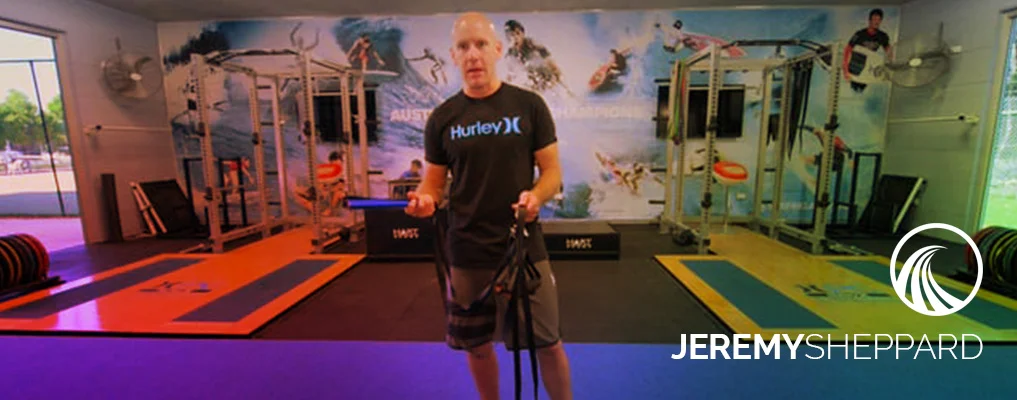
004: DR JEREMY SHEPPARD - (Former) Head of Strength and Conditioning/Sports Science Manager at Surfing Australia.
Available On All Platforms:
Show Notes for The Surf Mastery Podcast: "Jeremy Sheppard on Elite Surf Training and Legacy in Surfing Australia"
How does a leader in surfing science shape the future of wave-riding excellence while balancing family, career, and personal connection to the ocean?
Jeremy Sheppard, with over five years as the Head of Strength and Conditioning for Surfing Australia, has revolutionized training for elite surfers, blending strength, mobility, and innovative gymnastics drills. In this episode, he shares how science-backed training methods are driving professionalism in surfing and how these insights can be applied by surfers of all levels.
Discover why traditional strength training is just 6.5% of elite surfers’ routines and how mobility and skill-specific exercises make up the rest.
Learn the importance of gymnastics, trampolining, and foundational mobility work to improve force absorption, aerial control, and injury prevention.
Hear about Jeremy’s favorite surfboard, his transition to Canada, and how his experiences in surfing inform his approach to other sports like snowboarding and freestyle skiing.
Level up your surf fitness and performance by listening to Jeremy’s expert insights on training smarter and surfing stronger—play this episode now!
Dr Jeremy Sheppard outlines some of the methods he & his team use to train elite level surfers and gives recommendations for exercise and training that complement all levels of surfing, surf longevity and injury prevention.
Summary - Next level surfing requires next level strength, mobility, and athleticism and you can fast track your development using smart strength training and mobility protocols. Jeremy goes into detail on some exercises and benchmarks that have been proven beneficial for surfing. Chin-up strength has a strong correlation to sprint paddling speed - Jeremy goes into detail on this at the 15:40min mark. Top to bottom surfing can be likened to jumping and landing, learning how to jump and land correctly can increase performance and help prevent injury. If you exercise outside of surfing then this is a must listen, if you don't then this episode will inspire you to train.
Show Notes:
Mobility Vid: https://www.youtube.com/watch?v=w1aLdYgfr3M
Deep Squat Vid: https://www.youtube.com/watch?v=lbozu0DPcYI
Gymnastic Push-up Vid: http://gymnasticswod.com/content/push-progression-pt1
Gymnastic chin-up Vid: http://gymnasticswod.com/content/bar-pull-progression
Great vid that Surfing Australia did on surf training: https://www.youtube.com/watch?v=2xj-KSfN35k
Prague School of Physiotherapy: http://www.rehabps.com/REHABILITATION/Home.html
Foundation Training: http://www.foundationtraining.com/ and https://www.youtube.com/user/DoAFounder
Jeremy did another podcast interview, take a listen here: http://www.paceyperformance.co.uk/podcast/pacey-performance-podcast-28-jeremy-sheppard/
For more info about training at the HPC with Jeremy's team click the HPC logo below:

Key Points
Jeremy discussed how when he started working with surfers 5 years ago, there was a misconception that surfers should just train to be fit, rather than training specifically for surfing performance.
Jeremy emphasized the importance of having a clear purpose for training, which for competitive surfers should be winning heats and competitions.
Jeremy mentioned that for recreational surfers, training goals may differ, such as improving endurance or mobility for longer surf sessions.
Jeremy highlighted the importance of integrating specific training methods like gymnastics and skateboarding to develop relevant skills for surfing.
Jeremy discussed using force plate tests to assess power production and landing ability, which were found to correlate with judges' scores for turns.
Jeremy explained that as athletes progress, the emphasis should shift from general strength training to more sport-specific training.
Jeremy recommended gymnastics drills like trampoline, tumbling, and rotations to develop body control and force absorption for surfing.
Jeremy mentioned his upcoming move to Canada to oversee performance services for 22 national teams, including freestyle winter sports with roots in surfing.
Jeremy discussed his approach of tailoring training programs to individual surfers' needs based on their strengths, weaknesses, and goals.
Outline
Jeremy Sheppard's Role and Background
Jeremy Sheppard served as the Head of Strength and Conditioning and Sports Science for Surfing Australia for five years.
They have a background in strength and conditioning, training high-level athletes across various sports.
In their role with Surfing Australia, they focused on competitive surfing, working to improve performance through targeted training methods.
Emphasis was placed on purposeful training for athletes, particularly professional surfers, to directly address performance limitations rather than simply training for general fitness.
Misconceptions in Surfer Training
Upon starting their role, several misconceptions in surfer training were identified.
Many people focused solely on endurance training, believing surfing required high levels of cardiovascular fitness.
There was a tendency to train simply to be fit, rather than to improve specific surfing performance.
The purpose of training was often misunderstood, with surfers training like non-athletes instead of focusing on winning heats and competitions.
A lack of disciplined thinking about the reasons behind specific training methods was observed.
Effective Training Approaches for Surfers
Training should be tailored to individual surfer needs based on their strengths, weaknesses, and goals.
Focus should be on physical qualities that underpin specific surfing skills needing improvement.
Addressing mobility issues, particularly in ankles and hips, can improve performance in smaller waves.
Developing explosiveness and power enhances dynamic movements and turns.
Improving sprint paddle ability through targeted upper body strength training is crucial.
Utilizing gymnastics and trampoline work helps develop body control, spatial awareness, and force absorption skills.
Incorporating skateboarding and other related activities aids in specific skill transfer.
Strength and Conditioning Aspects for Surfers
Developing upper body strength, particularly through exercises like chin-ups and dips, is important.
There is a correlation between chin-up strength and paddling performance, especially sprint paddling.
Push-ups, particularly with hands placed close to the midline, offer better skill transfer to pop-ups.
Gymnastics-style movements like muscle-ups and skin-the-cats help develop overall body control and strength.
Balancing general strength training with sport-specific training becomes essential as athletes progress to higher levels.
Injury Prevention and Prehabilitation Exercises
Integrating foundation training exercises improves posture, mobility, and joint stability.
Focusing on re-centrating joints, particularly hips and shoulders, counteracts the effects of repetitive strain.
Breathing exercises and posture work enhance overall body alignment and function.
Targeted mobility work, especially for the shoulders, hips, and ankles, is implemented.
Prehab exercises are adapted to individual surfer needs based on specific limitations and injury history.
Training Evolution at Elite Levels
As surfers reach elite levels, focus shifts from general strength training to more specific, skill-related exercises.
The percentage of time spent on traditional resistance training reduces to around 6.5% for top professionals.
Increased emphasis is placed on mobility training, corrective exercises, and gymnastics-style training.
Maintaining a base level of general strength training while prioritizing sport-specific skill development is necessary.
A variety of training modalities, including trampoline work, floor exercises, and unstable surface training, are integrated.
Future of Surfing Training and Career Transition
Continuing research and development in surfing-specific training methods remains important.
A balance between scientific approaches and practical application in surf training is needed.
An upcoming move involves overseeing 22 national teams in performance services for the Canadian Sports Institute.
Potential applications of surfing experience to other action sports, particularly snowboarding, are considered.
Balancing career aspirations with family priorities led to the decision to return to Canada.
Transcription
Even if it doesn't look like surfing, that doesn't mean it's not relevant.
Welcome to the Surf Mastery Podcast. We interview the world's best surfers and the people behind them to provide you with education and inspiration to surf better. Professional surfers got a huge benefit just from...
Michael Frampton
So Jeremy, welcome to the Surf Mastery Podcast. Thanks. Jeremy is currently the Head of Strength and Conditioning and Sports Science for Surfing Australia. But Jeremy, it just happens to be your last day. This podcast won't be released for a couple of weeks, but as of today, that's still your current role. And my research tells me you've been in that role for five years. Is that correct?
Jeremy Sheppard
Yeah, that's right. Five years almost to the week.
Michael Frampton
Excellent. And you have a background in strength and conditioning and training a lot of high-level athletes. When you came into this role five years ago, what were some of the biggest mistakes or misconceptions that you saw in regards to surfers and training surfers?
Jeremy Sheppard
Wow. That's a really good question. Yeah, when I think back to five years ago, I think there was a lot of perceptions around the endurance requirements of the sport. Particularly, because for the last five years, I've been focused on competitive surfing. So I understand that a lot of your listeners are trying to improve their enjoyment or trying to improve their performance, but performance is defined by happiness or more of an internal outcome in terms of their own surfing ability. But for competitive surfing, what seemed to be kind of a glaring thing was that people would train simply to be fit. And so it was like the purpose of training was to be better at training. So the purpose of training was simply to be fit. And that's what non-athletes train. Non-athletes train to be fit, to be healthier, to have more energy, all that kind of stuff. Athletes train a lot in their sport, or at least they should. So athletes are already training a lot. Any additional training has to be very purposeful. And so for me, a lot of the narrative that I wanted to create, based on my observations of what was current practice, was to create an awareness that your purpose, if you're a competitive surfer, is to win heats and win competitions. And your method needs to be selected based on that purpose.
Michael Frampton
You came on board, was there any clinical strength and conditioning work going on with these high-level surfers?
Jeremy Sheppard
Yeah, in places, for sure. There's examples here and there throughout Australia and other parts of the world where people were putting in some really good disciplined thinking on why they should be doing things and using a bit of science and a bit of art in evaluating where they might be able to make some critical gains. So I've got colleagues all over Australia and all over the world who, before I was lucky enough to take on this challenge nationally, they were doing great work with all sorts of quite relevant training methods.
Michael Frampton
Okay. And if you had advice for, let's say, a potential WQS athlete or even a surf coach or trainer who's training one of these athletes, let's say they had three hours a week to spend on training outside of surfing, what would you recommend they do?
Jeremy Sheppard
Wow. I know you're not looking for this answer, but that's definitely, and it depends. But general tendencies would be, if you can look at the way they surf and say you're sitting down, you're a trainer or you're the individual athlete, if you're sitting down with their surf coach, which, you know, in a lot of cases that's their dad or it's their uncle or maybe they have a professional surf coach that does it full time, if you can sit down with the surfer or with the coach and get an understanding of what they're good at already and then what they need to improve to reach their goals on the QS. So if it's an 18-year-old surfer and they say, look, I need to work on these aspects, if you can look at what physical qualities underpin those things that will help them get improvements in those aspects that will transfer to performance, that's how you get yourself on the right path. So I'll give you an example from, you know, a real-world example. Five years ago, a pro junior guy who was transitioning to QS, the feedback from every coach that had worked with him is he can't really get, he doesn't seem to be comfortable in low positions, in small waves, really solid in medium and larger waves for his age, you know, a little bit more spice was the word they used, in smaller waves would be really helpful because he's a bit on the heavier side. So from that I took that information, evaluated him, and we ended up focusing on removing a few things in the mobility area with his ankles and his hips that were kind of preventing him from really being dynamic and getting into lower positions and finishing, you know, finishing turns in small waves. And then we looked at some explosiveness aspects because he was reasonably strong, particularly for his age, and, you know, we integrated a few things that would give him that little bit more exciting flair and things like that.
Michael Frampton
Those are two great examples and probably a couple of the biggest mistakes you see with the average surfer. Yeah. And let me rephrase that question differently. Let's say you're a weekend warrior and you have access to a gym, you know, two or three times a week. What would you avoid doing?
Jeremy Sheppard
Good question again. If you're in your 40s like me, I would, you know, if most people in their 40s that are a weekend warrior, that means they've got a job so you've got a schedule, maybe you've got a day minder. I would just in a different color pen just record how you feel every morning. As you get older, recreational surfer, 30s, 40s, 50s, 60s, and you've got a day job, you want to look at how you respond to the training and how it might negatively affect or positively affect your surfing and you can just sort of give yourself a scale out of 10, you know. So let's say you enjoy running, you enjoy hiking or something like that and you realize that after every day where you run, you try and go for your morning dawn patrol and you're giving yourself a score of 4 out of 10 in terms of how your body feels. Maybe your body's not responding very well to that running regimen or, you know, maybe the next day you really feel like your hip flexors are tight because of the climbing that you do with your friend on Tuesday night. At the climbing gym, Wednesday mornings, you feel rubbish because everything feels tight around your hips. Your pop-up is slower. Just keep some notes on that and you'll actually end up starting to realize what, even though you might enjoy it, it's actually robbing from your enjoyment with surfing and, you know, that could be through, you know, making you tighter or potentially not helping. So you could find that, you know, things like a basic resistance training or gymnastics program done in small doses is really quite helpful for you to keep you kicking over but that, you know, doing some breath work in the pool with a qualified coach like a free diving coach or, you know, doing regular stretching and things like that might be helpful. To give you a specific example, I know lots of recreational surfers, being a middle-aged recreational surfer myself, and what I find is that a lot of the guys, not so much females, but a lot of the guys find if they go to a yoga class once a week, they don't really see a benefit. But if they go to a yoga class for an hour and 15 minutes, learn a bunch of yoga and do it 2 times 10 minutes a day, they find it's a lot more effective. You know, so that paradigm of, yeah, I go to Sunday yoga, they're actually finding, and I find the same thing, they're actually finding if they just discipline themselves to stretch for 10 minutes twice a day every day, there's a much greater impact on their surfing. Their ankles feel better, their hips feel better, their back feels better, those kind of things.
Michael Frampton
Yeah, that's good advice. Yeah, you're better off spending 10 minutes a day really trying to refine and improve your sun salutation than you are going to a random yoga class once a week.
Jeremy Sheppard
Absolutely. Because, you know, you never know what you're going to get. Like, don't get me wrong, I don't want to bag yoga because it's a great solution for a lot of people who just need someone to help them stretch. But for me personally, I don't like to outsource things, so I don't send athletes to yoga classes. I say to them, let's use what works for you out of yoga and implement it into your day-to-day. So plenty of the guys do some yoga, but none of the guys I work with go to a random yoga class where who the heck knows what they might be doing because we probably don't need to work on their headstand. But there's some great things in yoga for their hips and their rotation and their upper back rotation. So, you know, there's an example of it's good, but let's get the right good out of it. Just like strength training. I don't just send them to an Olympic weightlifting club and go, yeah, great, you'll get strong over there. You know, we insource that kind of stuff.
Michael Frampton
Okay, so a smart approach might be self-management and learning. You've got to come from that perspective, don't you? Absolutely. It's nice to trust your local yoga instructor, but really, once you've been to a couple of classes, you really need to assess, well, how did I feel after that class? How did that yoga class affect my body? And then you can take what felt nice and then practice it on your own. And that would definitely help your mobility, wouldn't it?
Jeremy Sheppard
Absolutely, yeah. Excellent. And I mean, and there's even things that, you know, I might not advocate for a surfer. A good example would be I'm friendly with a surfer who's on the world tour who is not from Australia, and so I don't have anything to do with his training program, but he knows lots of guys that I work with. And he was telling me—we were having dinner, a bunch of us, late last year—and he was telling me how he really got into this exercise class and they do this and they do that and how he just loves it and all that kind of stuff. And it was really all about he doesn't come from a training culture background. He made the world tour by just surfing. So for him, this is something that he's willing to do. And I didn't smirk or think, wow, what a stupid training program. It has nothing to do with surfing. I can't see how it's helping his surfing directly, but indirectly, if he didn't have that class that he enjoyed with that instructor that he liked, he wouldn't be doing anything. So he's doing something. So at the very least, it's not doing any harm. And at the most, it's helping him develop a mental toughness because people who are physically tougher and have to, you know, not suffer but stay disciplined enough to do some physical training—I mean, the science shows they tend to be a lot more mentally tough. I mean, look at special forces. All those guys are mentally tough, and they basically start by trying to kill those guys physically. And only the mentally strong survive. You know, so I'm looking at what he's doing and going genuinely happy for him that he's doing something that I wouldn't advocate for surfers. But that's what he discovered, and he went from not training at all, just surfing, to doing some training.
Michael Frampton
Okay. Interesting. I'm going to put a link in the show notes to some videos that might help people in this regard with mobility. There's some simple, nice little really safe joint circles you can do. There's a few nice free YouTube videos online. I'll put a link to that in the show notes for just basic full-body mobility. Obviously, you can go to a yoga class and go to a yoga class with the perspective to learn. And there's some really nice gentle deep squat progression videos that I'll put up in the show notes as well. Cool. And if we use, the other example you used was paddling strength. Now, do you think developing a really nice chin-up is a good way to approach paddling strength?
Jeremy Sheppard
Yeah. Yeah. We, like if there's one sort of no, you know, no "it depends" sort of thing, it's for paddling we want to have a fairly strong upper body. So, we did some studies where we examined the relationship between athletes' sprint and endurance paddling ability. And we just compared it to the humble pronated, you know, overhand chin-up and their one rep max. And we found that there was a really high correlation. So, the faster they were in those paddling tests, the stronger they were in their one rep max chin-up. But then the thing with that is correlation is not necessarily causation. But the correlation was pretty strong. So, you know, well, in fact, really strong for sprint paddling. So, we thought, okay, this is worthy of doing a training study. So, we can remove that skepticism of correlation doesn't mean causation. Let's actually train people. And so, I had a master's student named Joseph Coyne who wanted to do the training study on that. So, it was a perfect fit. And what we did was we had athletes who were surfers. We tested them on their sprint and endurance paddling. And then we strength-trained them with the dip and the pull-up only. So, they were willing to just do that plus surf for I think only six weeks. But they did three sessions a week. So, it was pretty intense, and it was pretty heavy loads, like relative to what they could do, you know, five reps, four reps kind of thing and even one rep, one rep maxes or close to it. And what we found was that in general, people who did the lifting got faster in the endurance paddle, and they got faster in the sprint paddle. But when we looked really closely and divided the group into a stronger and weaker group, we kind of just divided them in half. The athletes, the surfers who were strong at the start of the study did not get faster by getting stronger. The surfers who were relatively, you know, in the bottom half of strength, they got stronger during the study and they got a lot faster. And so, what was really interesting for us there was to say that this general exercise of the pull-up helps people who don't have a high level of general strength. But the guys who could already do like a pull-up with 50% extra weight—so an 80-kilo guy who can do a chin-up with another 40 kilos—getting him stronger did not actually get him faster. The 80-kilo guy who could do a chin-up with only 5 kilos extra body weight, getting him to be able to do an extra 20 kilos for a one rep max, those guys got a lot better at the endurance paddle as well as the sprint paddle. Which to me, that's a really cool example of, hey, general strength training helps people who are generally not strong. And then you need a bit more, probably more specific strength training.
Michael Frampton
Awesome. So chin-ups and dips are good.
Jeremy Sheppard
Yeah, I definitely think, you know, push-ups as well or even modified, you know, like you can do some power stuff where you can do like pop-ups like there. So it's kind of like a push-up. But, you know, you do it much more explosively. You can do banded push-ups to make them harder. You know, you can do all sorts of different things. But one thing I would say is at the elite level, we're not doing a lot of push-ups because these guys are already ridiculously skilled and fast at getting to their feet. So it's more that they're fighting the midlife bulge. And so, you know, they're starting to get slower and slower at popping up. And so you're starting to say, hey, you know, for that middle-aged woman, a middle-aged man who's starting to fight body weight issues, starting to fight stability and mobility issues, yeah, they might do some wobble board push-ups, and they might do some pop-ups, and they might do some burpees just to be explosive in the upper body. All those kind of things, you know, could be helpful because definitely, you know, anecdotally, a lot of people who talk to me, they say in my old age, the worst thing about my surfing is getting to my feet. And I am exactly the same. I personally struggle because I have tight hips from getting hit by a car. But a lot of people, they struggle with that pop-up because maybe they don't have arthritic hips or anything, but it's just like, geez, I can't get my feet past my gut. Upper body isn't explosive enough to get my gut out of the way in time, you know. So that's a real-world issue for a lot of surfers. And I personally suspect it's why a lot of people love stand-up paddle boarding because they're like they're already there.
Michael Frampton
So you mentioned the push-ups now and gymnastics. Sort of that's a bit of my background. So in gymnastics, we do push-ups differently. We have our hands very close to the midline and close to your center of gravity, your center of mass, which is how you pop up or how a good surfer pops up anyway. They put their hands down by their belly button close to their body. Obviously, you know, you're limited by surfboard width anyway. Yeah. And that's a skill that you can learn. And I think that's a very effective push-up to, you know, develop and maintain the pop-up.
Jeremy Sheppard
I agree. I agree 100 percent. And, you know, my point on we don't do too much with the elite guys. You know, we do some. But again, it's like that antivirus software. It's a general strength exercise for them because they're already fast. But for, you know, a middle-aged man like me, anyone sort of struggling with that task. If you lose that ability to do that on land, well, of course, you're going to lose that ability to do it on water. And, you know, on the style of push-up you're talking about. For me, how most, how the average person does a push-up with their hands up close to their shoulders and their elbows out, I think that's actually inviting injury. So I think we're very much, I agree with you 100 percent with that style of push-up. It's more relevant for surfing, but it's probably a lot safer. That wide elbow where people say, no, I want to get the spread of my chest and all that kind of stuff. That's bodybuilder talk. That wide elbow, you cannot achieve that without internally rotating your upper arm. That humerus bone, you internally rotate it. Now that's cool. Internal rotation is normal for the humerus. Internal rotation, though, when you're putting it under load like that, you know, bones aren't smooth. They have lots of little notches on them. And you bring one of those notches very close to another bony part, what they call the, you know, these bony prominences. It gets real close to another bony bit. And then you've got tendons running between those bones. So you shorten the, you reduce the space where those tendons are going to pass through as you put them under load. So they're acting, they're under load and you're kind of squeezing on them. And their bursas get upset. The tendons get upset. They might even get frayed. And so I'm not saying we shouldn't be able to be in those positions. But, geez, we rotate our shoulders a lot as surfers. So we want to find shoulder-friendly exercises when at all possible. And that wide elbow stuff, that's, we don't do that. I wouldn't advocate that for anyone. It's just not, I just can't see, you know, you don't hit someone like that even in football with your hands up like that. You hit with your hands down by your chest in tight. So I don't know too many sports where you would really need to be strong in that awkward position.
Michael Frampton
Yeah, okay. So that sounds awesome. So dips, chin-ups, push-ups. There's a guy I know who's got some really great YouTube videos where he breaks down the gymnastics push-up and the chin-up. I'm going to add that YouTube video into the show notes for people that don't have access to a good gymnastics coach in their area. Because, in my opinion, I think you can go to your local gym and you can book a session in with your personal trainer who's maybe done a weekend course on powerlifting. And has a, he got his level threes from a six-week course. And you can spend a couple hundred bucks with him and learn how to do a chin-up and a push-up and a dip. But I think that money is better spent going to a gymnasium and learning from an experienced gymnastics coach. Would you agree?
Jeremy Sheppard
Absolutely. Absolutely. And especially too when you think about things like, you know, the average person doing some training. It's very easy to get very bored with very general stuff. People like to see a link to what they're doing. And gymnastics has a skill challenge. So, you know, to the point of, you know, resistance training or strength training for skill sports. You know, like surfing is very a high-skill sport. If we actually view it as coordination training under heightened resistance, these gymnastics ends up being pretty good coordination training and there's a heightened resistance. And that's why you see these movements happening of various, you know, people are integrating gymnastics into the training of everyday people. You know, CrossFit has adopted that and borrowed that and it is, you know, very popular worldwide. I'm not aware of these sort of fitness trends too much because I hide in the bubble of elite sport. But I'm certainly aware that there's lots of gyms that do that and some people really like it. But there's even, you know, gymnastics affiliates that are, they're not gymnastics clubs, they're gymnastics coaches who are creatively using gymnastics for the average middle-aged person or young athlete. And people are loving it, and they're loving it because it's fun to do stuff that is challenging. I mean, I don't know about you, but you'd have to pay me to go jump on the treadmill next door. I mean, there's a health club next door to where we are and I look at people on the treadmill and I just go, I'm not disciplined enough to want to be on that treadmill. I'd rather go run in the woods and avoid all the snakes. Or I'd run, I'd rather, you know, swim, you know, in the ocean than stare at a black line. I'd rather see how I can hold my breath and in between my swim stroke and think about how it relates to maybe surfing bigger waves. Or I'd rather do some really cool bodyweight gymnastics movements, climb some ropes. Basically move my body in an artistic way under some load. And that's a lot more fun.
Michael Frampton
Definitely. I'm always amazed. It's a nice day outside. You go into your local gym and there's people waiting in line to use the treadmills.
Jeremy Sheppard
Yeah, it's amazing.
Michael Frampton
Isn't it bizarre? Yeah. Would you agree that surfing, good surfing, is very much sort of jumping and landing?
Jeremy Sheppard
Absolutely, yeah. Joseph Coyne, the master student I mentioned who did the training study with us on the upper body strength, he and I were having a chat one day and he came up with the expression that, you know, that modern competitive surfing is like aquatic gymnastics. And I definitely have presented on numerous occasions where, you know, I have introduced to a non-surfing audience, let's say it's a sports science symposium or strength conditioning symposium, I'm presenting some data on some of the work that we do in power production and landing. And, you know, have said, I want you to view surfing not based on that time you went to Waikiki and stood up on the one-foot waves and the 14-foot board. I want you to actually take a look at this video. It's actually force absorption, force propulsion, force absorption, force generation, and then, you know, jumping and landing.
Michael Frampton
So, improving your jumping and landing capabilities on dry land, would that help your surfing?
Jeremy Sheppard
Yeah, we start that with athletes as young as we can get them in terms of teaching them to land in a general sense properly. Because the knee and the ankle and the hip are super dynamic in surfing. Based, you know, depending on your stance, the knee can be in from the foot, it can be even with the foot, you can be in a deep position where the hips are right down by your heels, all these kind of things. So, because it's such a dynamic knee position and a dynamic ankle and hip interaction, we want to be able to start with at the least these young athletes being able to control their body in a very general sense, then adding in landing with rotation, taking off with rotation, you know, and increasing that rotation and increasing the complexity. And we test power production reflected by jumps, you know, squat jumps where they hold the bottom position and then explode out of it, as well as a counter movement where they drop down and jump up on a force plate. We test them on landing, just their ability to land on a force plate, their ability to land after rotating onto a force plate. And we're looking at how they can dampen that force that they have as they drop, as well as how quickly they can re-stabilize. We validated those tests, so a lot of people sort of say, that makes sense, I get it. But as, you know, if we put our scientist hats on, we can't just sort of say, yeah, I reckon that's a good test, let's really focus on it. So, what we've done is Lena Lundgren did her PhD and Ty Tran did his PhD on and utilized that landing test. And that landing test, Lena found that if you're better at that test, you're less likely to get injured from an aerial. And Ty found that if you're better at that test through some training interventions, that you're more likely to be a high-performing junior surfer. So, he was able to differentiate between more successful and less successful. And then, more recently, you know, what was really pleasing to see is that landing test, we had a surfer come in, he's a free surfer. He's by some considered to be one of the best aerialists in the world. I think that most people would say he's one of the most accomplished aerial surfers in the world. And we wanted to test him and he wanted to get some input on his training. I was happy to test him because I'm learning a lot from him. And when we tested him, he absolutely smashed everyone's results on it. You know, he was the fastest in re-stabilizing. He had a very cat-like ability to dampen his force, which was really cool. And then validating the jumping aspect or power production aspect, like I've said earlier, you don't necessarily have to be the strongest person in the world to be the strongest surfer. But you've got to be able to be at least strong to hold your body position to generate some force because that's where your power is the foundation. And so, we've actually found that some simple power propulsion tests on a force plate, they really do strongly relate to the judges' scores that athletes get for their turns. So, you know, we had a panel of judges and coaches. They were blinded to the test results of the athletes, but the athletes were known to them. And we asked them to rank the surfers based on the strength and power in their turns or their scoring capabilities in their turns. And it was very highly related to their test results and their ability to produce force, their ability to produce power in a dynamic way, being a squat jump and a jump squat.
Michael Frampton
So, if you don't have access to a force platform, could you maybe spend some time with, obviously a gymnastics coach can help you jump and land better?
Jeremy Sheppard
I think any good coach, absolutely. So a good coach who has an understanding of human movement. So someone that understands that in the air, when you're doing an aerial or even a floater for, you know, the rest of us who only end up in the air by accident. But even when you're unweighted in surfing, sometimes our knee position on both legs is inside the foot because we're squeezing the board together to create stability so it doesn't fly away from us. So in an air, you might actually be in the air, you're totally unweighted, but the knees are inward of the feet to squeeze it together. Because, you know, unlike snowboarding, we don't have bindings. But when we land, we want to have a fairly stable base, which means, you know, knees a little bit more over the foot. Not a poo man stance with your hips back, but with your hips square or fairly square. We tend to land one leg then the other in surfing from aerials, which is obviously important to complete it. But in general, we need to have a bit more of a squared-up position. Any good coach is going to be able to see that. If they're a gymnastics coach, they know what positions cause injury. If they're a good strength conditioning coach, they know how to assess those landings. You can hear the landing too. That can be your indication of how abrupt it is. So as much as we like our force plates, good point, you absolutely don't really need one. We score them, like, qualitatively. You know, when we work with large groups of junior surfers, we say, you know, how does that landing look? Did their chest stay within the base that is supported? Did their chest go way forward? Did they shake? Did they wobble? Did their knees tremble? How stable looking was it? How loud was it? These are all totally relevant qualitative things that are, you know, things that you can sort of do to try and improve your landing.
Michael Frampton
I'm thinking parkour. A good experienced parkour coach might be a good investment for a surfer as well.
Jeremy Sheppard
Cool. I mean, that's really thinking outside the norm. I hadn't thought of that. I admire parkour. My wife actually took a class of parkour when we were on the North Shore. She went to Honolulu because she's a primary school teacher and she thought that might be something that she could introduce into her phys ed classes, which I thought was, I was really impressed that she was sort of thinking outside of that typical curriculum that you sort of get at in the school system. But yeah, that's an interesting point. You're moving your body and you definitely have to learn how to absorb force really well.
Michael Frampton
Yeah, and you have to make sure that you're, in parkour, there's a jump called a precision jump. Elite parkour people are, you know, jumping huge gaps and landing on handrails. Yeah. So your foot-eye coordination goes through the roof, I think, as well. Yeah. Foot-eye coordination is something, you know, good surfers are obviously naturally good at it. You know, you spot the most critical part of the wave and you want your feet to go there, don't you?
Jeremy Sheppard
Absolutely, yeah.
Michael Frampton
So yeah, maybe some precision jumping from a good parkour coach might be a good road to go down. Awesome. Another question I have for you, Jeremy, is through your experience in working with surfers, have you come across any prehab exercises to combat, you know, all the hours surfing?
Jeremy Sheppard
Yeah, that's a really good question because it's really insightful to think about that, you know, this cycle when athletes are getting injured. And even if it's, you know, pre-injury, so it's like, it's not an injury yet, but it's an incident. They might end up getting on this cycle of injured, so they have to modify training. Training becomes more rehabilitation than injury prevention. And then they're not training very much, then they return to their sport. They try to return to the normal levels of participation that they enjoyed. And they're not robust enough to handle that new load, and so it creates this injury cycle. So integrating things that we know help with creating a robust athlete is pretty critical for sure. You know, one of the things that I did that was, it was created by a guy in the US, it's called foundation training. And I took the class to become an instructor in foundation training because I had looked into it a little bit. And I thought some surfers on the world championship tour had introduced me to it.
So it was primarily Adrian Buchan who had said, look, I was taught some of these things, and it's really been helpful. And so I tried them, and I thought, you know, and I wasn't even doing them properly. Ace is a great athlete, but he tried to teach me in about 90 seconds this one maneuver, and we didn't go over all the key points. And so I was even doing it half properly. And I was sort of saying, yeah, this is really good posture work. So I happened to be in the United States when one of the courses was on. I took the course hoping to get some postural training exercises out of it. But I got a lot more than that. There's a lot of mobility work and rotator cuff work. And the founder, he happens to be a surfer, and he happens to be networked with a lot of physical therapists who are surfers at, you know, on the world championship tour.
So it ended up being this very small circle of people that he knows, that I know in the United States particularly, and then a lot of the athletes who were doing this stuff. And so, yeah, so that was one thing that was really helpful. And it's not so much that the other prehab stuff, you know, around the shoulder and everything. It's not like we've thrown that out, but it's certainly some of the stuff around the stabilization of the shoulder blade under tension and some of the postures that they do. A lot of the stuff for the hip. It's really about, because in a lot of our sports we create overuse syndromes because of the repetitive strain nature.
So we get fatigued because we do our sport a lot. And then our joint becomes de-centrated, or, which is just a straightforward word to kind of describe when the joint likes to sit where it's not in its optimal position. So that could be the hip. A lot of us have externally rotated hips, and they're de-centrated because of the sitting that we do, driving, and a lot of the kind of stuff that we do. So there are foundation training postures that help re-centrate the joint into more of a neutral position. The same thing for the shoulder. And we're still doing, you know, we're still trying to develop strong rotator cuff and all that kind of stuff. But the posture is critical. That head position, neck position, the rib position. A lot of the athletes get this open scissors concept.
So I've been doing a lot of study with what's called the Prague School of Physiotherapy. They're really big on how breathing affects the position of your torso, your ribs, the interaction between your rib cage and your pelvis. You know, so people listening to the podcast, they can shop around for people who might be a foundation training instructor. They might shop around for physical therapists, chiropractors who have studied under the Prague School if they want to dabble and see if this stuff works for them. But I'm never a one-size-fits-all guy. But as of late, those are the two things that have been really helpful in our injury prevention efforts.
Michael Frampton
Okay, great. Awesome. Foundation training. Eric Goodman, I think his system is great. Yeah. He's got a few free YouTube videos online as well. I might put a link to some of those in the show notes as well. Yeah, and I think that's great. And yeah, a local physical therapist or physiotherapist can help a lot with, you know, even if you've got a little shoulder niggle from loads of paddling, you've got to get on top of it straight away. Absolutely. And then take those exercises you learnt from that physio and just, even though your pain, your niggle might go away, you still want to do those exercises as a prehab to avoid that overuse thing happening again.
Jeremy Sheppard
I think that's a really great point to make to the audience. And then over time, people can discover which ones are most useful for them. So I think when I went through Eric's course, Eric was instructing with other instructors. It was in Santa Barbara. I was very surprised at how many different movements he had. But then the feedback I've given Eric is that, and he was quite, you know, surprised by this, because most foundation training instructors, they teach a class. It's not unlike yoga. So eight to ten people come in, and they teach these eight to ten people.
And so in discussions with Eric a few months later at the US Open, he was asking how I was using it. And I showed him our training programs and he's like, this is kind of unique. You're actually just giving two movements to this guy, but you're giving a different two movements to this guy. How did you arrive at that? And I said, well, it's based on their orthopedic evaluations that the therapists have given me, and it's based on their feedback. Because, you know, elite athletes, they're like our guys, they're pro surfers. They're surfing a lot.
Like, we would love to be able to surf that much. They're surfing a ton. So you have to be really careful with how much extra work you give them. You just got to give them the most important stuff. And if, you know, if Joel says, these two are amazing, I love doing them and they're helpful, that's a win. And just go with that. And then maybe you change it or layer it, as they call it in foundation training, or mix it up. Personally, I do six foundation movements maximum out of all 30 or so that I've done, because those are the ones that I know I'll do. I'll do them well and I can fit them in every day.
Michael Frampton
Excellent. Another good point, I mean, foundation training really activates the posterior chain as well.
Jeremy Sheppard
Yeah.
Michael Frampton
Which is, you know, all of our sitting and even surfing isn't so much engaging the posterior chain. So I think foundation training is a good little thing to throw into your weekly routine if you have time. Yep. So Jeremy, tell us about the role you're going into in Canada. And how has your experience with surfers influenced the way that you work with all types of athletes now?
Jeremy Sheppard
I'm going to be going to a job where I oversee 22 national teams in the performance services. But, you know, 10 of those are freestyle winter sports. And, you know, like a lot of those winter sports actually come from surfing. Like if you really show respect for where they came from, like skateboarding was invented by surfers who wanted to basically surf on the street. And snowboarding came from skateboarding. So, you know, there's a lot of, you know, there's obviously some cultural things, but even just some things in terms of the inherent, you know, kind of history of where they've come from and all that kind of stuff. So, yeah, you know, going back to the director position with the Canadian Sports Institute, it's going to involve quite a few traditional sports like your rowing and your triathlon and stuff. But I probably won't be as hands-on with them. But I think looking at, say, more of the freestyle sports where the athletes have lots of different commitments, you know, like rowing, rowers row and they row at a training center. And triathletes train all day, every day out of a training center. But snowboarders are like surfers in that they have a multitude of commitments. They travel a lot. They go and they are traveling for different conditions, but for different competitions as well. And so some of the challenges of working with professional surfers who are on the road six to eight months out of the year, I think that's quite relatable to the snow sports as well. I think the concept of, you know, say if you think of strength and conditioning, you know, the first word is strength. And so most people think, strength and conditioning, you know, how does that relate to the overall performance of a surfer or a snowboarder? But, you know, I was just going through some data from 2015 with some of our WCT surfers who, outside of this place, are seen as guys who strength train lots. And they're seen as really strong. But it actually only makes up about six and a half percent of their total training. And I think going into a sport like snowboarding, they might think, well, where would I benefit from sports science? Where would I benefit from strength and conditioning? Well, even just being able to relate to them that some of these top professional surfers got a huge benefit just from dedicating six and a half percent of their total training to strength and power training. Obviously, some gymnastics and a lot of mobility work is really important. So just basically being adaptable and learning how to integrate into the sport, I think, will really help me with the next chapter.
Michael Frampton
How does that compare to, say, an athletics athlete, say a 100-meter sprinter? How much time do they spend on strength and conditioning?
Jeremy Sheppard
I think earlier in their... If we just sort of talk about strength and power, I think earlier in their development, they'll probably be doing a lot of very general work. And then, you know, the athletes that I worked with in track and field before this job at the elite and sub-elite level, when they were in development, they were very much doing, in the weight room setting, for example, fairly general work. And they started to integrate what you might call special exercises. And then a lot of their strength training is quite a bit specific, you know, in terms of the movement patterns and the muscles. And some of that would even take place on the track, you know, strength training on the track or in the case of, say, sprint cycling, strength training on the bike. I think some of our colleagues kind of have a few tools in their toolbox. And in my opinion, I'd like to try and say it as humbly as I can, but in my opinion, where they might go wrong is that as the athlete progresses, they still put the same emphasis on those very general strength training activities. And we really do reach a point where those general activities are no longer really providing a lot of return on investment.
So at the elite level, you probably want to not downplay, but certainly lift up the emphasis on the more specific applications. Franz Bosch has this expression that strength training is not about strength training for a skill sport athlete. It's essentially coordination training with a heightened resistance. So when you're talking about an elite skill sport athlete, I really like that because it makes us think about, okay, well, how much squatting do we really need to do with a sprinter? Because if we want them to, I mean, they do need to squat, they need to be strong, just like surfers should do squats and things like that. But you get to a point where you're like, okay, if sprinting required you to be a world-class squat athlete, then sprinters would set world records in the squat. And they don't even come close. Not even remotely close. In fact, some strength coaches would consider sprinters generally a weak population of athletes.
Michael Frampton
Interesting. So are you kind of saying that once you get to a certain level of squatting capability, it's more about maintenance from then on?
Jeremy Sheppard
Yes, I think there's very little harm if athletes get stronger than they need to be. Very little harm. But it's about where you get stronger that's going to make the performance gain. So I guess if I can almost be over the top with this analogy, I've never said to a sprinter, man, you need to run weaker. You're just running way too strong. And we've never said to a baseball player, you've got to start throwing weaker. I want you to bat weaker. We don't say that to cricketers. We don't say that to baseball players. We don't say that to anyone. What we're trying to do is get them strong as possible in their sport. And coordination training, like resistance training as a form of coordination training, is super useful. But what it looks like and what you focus on, if we have an athlete at 12 years old and we're trying to improve their bilateral squat pattern and their single leg squat pattern and their lunge pattern and their pull pattern, that's great. It's coordination training.
And then as they get better, we start to heighten the resistance. By the time they're 13 or 14, they're moving around some loads. If at 18, they come into the weight room and we're not doing anything more special or specific for them, we kind of probably maxed out what we can offer them at about the age of 15 or 16. But at the age of 15 or 16, if we start to integrate things, let's say it's a surfer, we start to integrate things like skateboarding as a conditioning method, gymnastics as a method to learn to absorb force better, tumbling and rolls and all that kind of stuff. Meanwhile, we're still squatting. We're still doing chin-ups. We're still doing rows. Those are general exercises that, they're like an antivirus software on your computer. They're always there, but they're in the background once you're an elite athlete. The elite athlete is then doing all that other stuff, that more specific stuff. We use a lot of slide board training as an example. If an athlete is strong, that's great, strong in the weight room sense. But to get them strong in shifting their weight, we might use a slide board, we might use skateboarding, and we definitely use a lot of gymnastics. Those are examples where we're just trying to bridge the gap. Is it strength training? Is it coordination training? It's everything, really.
Michael Frampton
Okay. If an athlete is built up to say they can squat 120% of their body weight for five reps with perfect form, then the emphasis would maybe go away from squats and you'd move into more skill-based gymnastics stuff?
Jeremy Sheppard
I would start the gymnastics stuff concurrently right from the start. We don't hold the athlete away from a certain training regimen, so we would do the gymnastics and things like that. The example I gave you where traditional resistance training was only 6.5% of their training program, that's an example of one CT surfer. Mobility training was about 15% of what he did. So stretching and more dynamic mobility. Corrective exercise was about 12%. Gymnastics training was around 10%. And the reason for that is this athlete is still, don't get me wrong, that athlete is still deadlifting, they're still squatting, and still making marginal improvements. But if I wanted it to be the major outcome for 2015 to get that athlete stronger, I would have to dedicate a bit more time than 6.5% of total training. Does that make sense? How it's really just that shift in emphasis. And I want to be really clear, we don't stop strength training and we strength train year-round. 100%. The athletes get a break. I honestly believe that in nearly every sport there should be some form of strength training. But whether you're the best surfer in the world or whether you're the fastest male or female on the planet, when you're at that elite level, the amount of time you do that general stuff should sort of be like, it's always there, it's like antivirus software in the background. It's always there though.
Michael Frampton
Now when you talk about gymnastics, if you had to choose five gymnastic drills for surfers, what would they be?
Jeremy Sheppard
Real simply, get on a trampoline. Trampoline's great because you learn to control your body in space. It's not quite the same as surfing, of course. You're going airborne because of the trampoline, the bed of the trampoline provides you with that air. But what better way to learn how when you do something with your arms or your head or your knees. And so whether you're doing front flips or back flips or rotations, even if it doesn't look like surfing, that doesn't mean it's not relevant. So just like a squat doesn't look like a bottom turn, but if you're a 14-year-old kid with the weakest legs in your division and you learn how to front squat, it probably will transfer to your bottom turn eventually and being able to hold that bottom turn.
Well, same thing with gymnastics. You might be bouncing on the trampoline and the gymnastics coach says, okay, I want you to do a drill where you now have to just stop yourself real quick. That force absorption is a very specific resistance training coordination drill to absorb force real quickly. And a lot of what we do in surfing is producing force and absorbing force, producing force and absorbing force in a sequence. Even just being comfortable being in different positions on your back, on your front, bouncing from chest to back, rotating in the air, and then of course doing corks and flips and things like that.
Other things that you can work on are things like double mini tramps or mini tramps. Where a double mini, you run at an angled portion of the tramp, you bounce on that, and then you bounce further along onto a flat portion and then you might land on a mat. So we'll use stuff like that just to change pace and use slightly different air times than an Olympic trampoline. We do a lot of floor work as well. So we use a tumbling floor which is a real benefit but you don't necessarily have to have a tumbling floor as long as you have something soft enough. You can do rolls, rotations, little drills like a back rocker.
So you have an athlete stand, they roll onto their back, and then they roll back up into that position. If that's not very difficult for them, then you can integrate some strength challenges too. So they might roll onto their back and roll back up into a single leg squat and then try and come out of that squat on one leg. You might have them do rolls to the side, rolls forward, rolls with their eyes closed, rolls from two legs to one leg, doing rotations where they jump and rotate in the air. Again, they don't look like surfing, but some of the movement patterns are quite relevant to surfing. And people learn to control their body weight. So I know you asked for five, but more simply, those are probably my top three really.
Michael Frampton
Yeah, that's great. With all of those drills, there's a high level of recruitment for the vestibular system as well, isn't there?
Jeremy Sheppard
Absolutely. And a lot of what we do when we borrow from rehab and we say let's do a lot of unstable training, that stuff is really good. We do circuits of it even when the athlete's not injured. So say before a training session, they might do an indoor board thing, they might do a mini tramp thing, they might do a single leg squat type thing. A lot of stability work. Learning to control your body under different conditions where maybe they have to hold something that's unstable like a bag of water while doing a lunge. Or maybe the ground is unstable.
Don't get me wrong, that stuff's useful. It's super useful after they've got injured. But if you really want to say I'm trying to train the entire sensor motor system, then you've got to get vestibular challenge as you say. You've got to get the proprioceptive challenge and you've got to get the visual challenge. So by disrupting the proprioception using what's called the false surface, which is like a wobble board, disrupting vision by having them close their eyes or we even have these funny goggles that intermittently take away their vision. Or having them go upside down and disrupt that vestibular. These are all kind of relevant ways to overload to create that general sensor motor. And as a basic concept, gymnastics as a sensor motor development is really good. And then as a more specific, you might think about snowboarding, skateboarding, and all that kind of stuff.
Michael Frampton
Interesting. So back to the gymnastics stuff. Do you think a muscle up and a skin the cat are good exercises for surfers?
Jeremy Sheppard
Yeah, sure. They're a nice coordination with heightened resistance. As we've sort of talked about, you know, you might look at a muscle up and say, well, that's a feat of strength. And I say feat because, you know, most people can do a chin up within a couple days of training if they haven't done one before. You know, as you know, we can help them with the chin up until they can do it themselves. But a muscle up is pretty tough. It's a feat of strength. It requires pretty well-behaved shoulders too. People can ratchet their shoulders if they don't have a healthy shoulder.
So it's a nice one. Skin the cats are great. We use those quite regularly, particularly with athletes who have, you know, no complaints around the shoulders, super robust shoulders. Skin the cats are great for a number of reasons. Do you call it a torso stability exercise? Is it a shoulder exercise? Is it a feat of strength? I think it's all three. And I particularly like them because even in my old age, I can sort of still do them. So I like to do them. Yeah.
Michael Frampton
I love the muscle up. Obviously, it needs to be progressed into and done safely. But you're transitioning from a pull to a push, which in surfing, that's your last stroke of your paddle into the pop-up. So it has a lot of relevance for surfing.
Jeremy Sheppard
Absolutely. Yeah, you can break them apart and do pull-ups and dips for the old guys or the bad shoulders. But you know, even some people, like if you're not really watching carefully, the dip can be a medium maintenance exercise in terms of, you know, tension on rotator cuff tendons if it's not done really well. So yeah, I guess with everything, there's that sort of risk and benefit ratio with which population you're working with. But when done well, you know, a muscle up is awesome. Absolutely.
Michael Frampton
Is there someone lined up to take a step in your place?
Jeremy Sheppard
I think at the moment, because my job was kind of unique in that it was partnered through universities so that we could achieve some of the research. I've mentioned some of my graduate students who have come through and there are quite a few ranging from performance analysis to injury prevention and strength conditioning. So the direct coaching role that I have with the juniors and the QS and the CT guys, Josh Secum has completed his PhD with me just recently. And he's a very good strength coach and a great person and a close friend of mine now. And he's going to stay on in that role.
The sports science role, I'm not sure exactly how it's going to look or what's going to happen, but we have a partner through Edith Cowan University and Sophia Nymphias is going to step into that space at the moment. And then, you know, in some of the more strategic things, I have a general manager, Chris Simington, who, you know, his kind of mandate is that strategy. That's the person I've been working with over the last five years on, you know, our engagement with the AIS and things like that.
And then we have Clancy, who is a junior development coach and Andy King, who's our national coach. And, you know, beyond this afternoon, what exactly happens, I'll be just a very interested observer because, yeah, my next job, I'm working for Canada and the Canadian Sports Institute doesn't have a surfing program. So I'll be sort of switching my focus to becoming a, my relationship with the ocean will go back to being just a personal one on Vancouver Island and surfing there. And I'll be doing a lot more snowboarding than I have over the last 11 years here in Australia, that's for sure. Yeah, and I'll be working with a range of sports across summer and winter.
Michael Frampton
Got four quick-fire questions I want to ask before we let you go. Sure. Question number one, what's currently your favorite surfboard?
Jeremy Sheppard
Cool question. Easy answer. I have a 5'11" Swallowtail Mount Woogee that Wayne McEwen shaped me. It is the fifth or sixth board I've had from Wayne and from the first one through to this one, they've just all been winners. The scariest one that Wayne shaped me is the 6'5" Gun that B. Durbidge bought me as a gift. It's a big wave board and the reason why I say it's scary is because it means I'm out in huge surf, which as a guy who was born in the middle of Canada, big waves are not necessarily my... I'm more comfortable in a boxing ring than I am in big waves. So that's kind of the scariest one, but just that 5'11" that he recently shaped has just been the winner of all the winners.
Michael Frampton
What's your favorite surf film?
Jeremy Sheppard
My favorite surfing film? Yeah. Tough one. Wow, probably Intersection, the Intersection films. Nostalgic-wise, probably because there's clips in there from Pete Devere surfing Vancouver Island. So that's kind of cool, but I just like the diversity of the stories. I like the stories and the characters that make surfing what it is.
Michael Frampton
Favorite surfer?
Jeremy Sheppard
Quite a bit younger than you and say, in a sense, they've been a role model, but like, I'd like to be a dad as good as Joel someday. I'd like to be a friend as good as Bede someday. I'd like to be a husband as good as Adam someday and so on and so forth. They're great people and I feel blessed to have met them and learned from them.
Michael Frampton
Okay, last question is your favorite pre-surf song or album?
Jeremy Sheppard
90s surf videos with 90s punk rock. I used to be in a punk band and that was in the 90s and 2000s. And so I still like that music, but it might not be what's best for my surfing these days.
Michael Frampton
Jeremy, we've run out of time. Thank you so much for the interview. I look forward to seeing the future of it. Obviously, you've made a huge impact on the future of surfing Australia through your understudies and what they've learned from your strength and conditioning background. And I'm sure surfing in general is going to change. From what I've seen in your videos and I've been following you online, there's a lot more professionalism in what happens out of the water in the gym. And obviously, you've done a lot of studies through the university and really started to find out how much time spent strength conditioning, gymnastics, etc., is complementary to surfing. And yeah, that's awesome. It's a great legacy, I think.
Jeremy Sheppard
Thanks so much for those kind words. I love the word legacy and that's certainly what I aspire to. But I'm not just trying to come up with some inauthentic humility here, but I actually hadn't expected to leave after, you know, you might say five years is a good stint with the way careers are these days. But I had expected to stay quite a bit longer in this role. And so I am sort of leaving a little disappointed that I couldn't have done some of the things that I'd set out to do that were going to take a little longer where I would have thought, you know, maybe legacy would have been an appropriate word. But I appreciate the compliment nonetheless. And, you know, I didn't mention that I am moving on to a job that's really cool. But, you know, at my son's age, he's three years old, with my wife and the way we have no family here and my parents are alive and her parents are alive. And it just is, it's time to put my family first. And that's why I might not be able to quite be leaving the legacy I'd hoped, you know, because I need to put family first and take this opportunity back in Canada.
Michael Frampton
Awesome. I wish you all the best on your new endeavor. And thank you so much. Thank you.
Jeremy Sheppard
Yeah, thank you.
Michael Frampton
If you've enjoyed this, please share with your friends. Check us out on Facebook at Surf Mastery Surf. And if you're on iTunes, please go and give us a little rating. That'd be awesome. Until next time, keep surfing.
04 Dr Jeremy Sheppard - Strength & Conditioning for Surfing
For the passionate surfer—whether you're a weekend warrior, a surf dad, or an older surfer—this podcast is all about better surfing and deeper stoke. With expert surf coaching, surf training, and surfing tips, we’ll help you catch more waves, refine your paddling technique, and perfect your pop up on a surfboard. From surf workouts to handling wipeouts, chasing bigger waves, and mastering surf technique, we’re here to make sure you not only improve but truly enjoy surfing more—so you can get more out of every session and become a wiser surfer. Go from Beginner or intermediate Surfer to advanced.