
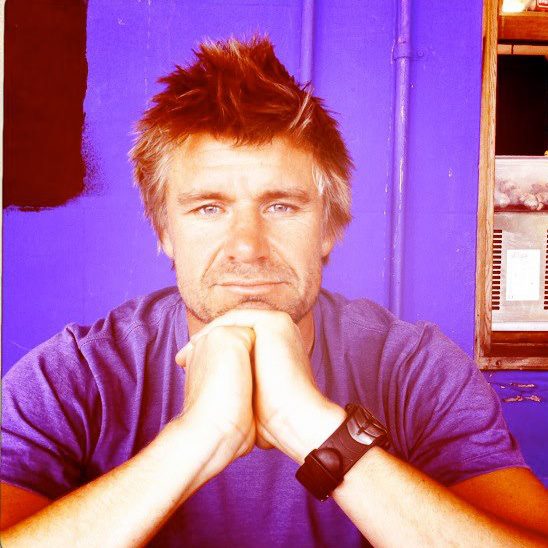
003: MATT GRIGGS - Elite Performance Coach talks about surfing better, meditation, and flow.
Available On All Platforms:
Show Notes for The Surf Mastery Podcast: "Matt Griggs on Surfing, Coaching, and Unlocking Your Potential"
Could mastering your mindset transform your surfing and your life?
In this conversation, Matt Griggs—former pro surfer and coach to legends like Mick Fanning and Stephanie Gilmore—dives into the profound connection between the mind and performance. Learn how techniques like Kili meditation, balance, and focus can help surfers of all levels unlock flow states, overcome fear, and discover deeper joy in every wave.
In this episode, you’ll discover:
Why mental focus is the foundation of great surfing and how Kili meditation can unlock your potential.
How to find balance—on your board, in the water, and in your life.
Practical advice for refining your technique, building better habits, and maintaining effortless flow on a wave.
Don’t miss this game-changing conversation with Matt Griggs—hit play now and start transforming your surfing from the inside out!
Matt shares some valuable information about surfing, meditation, and 'mind'. This one deserves multiple listens.
Summary - Become more aware of the feeling of surfing. “you don't think balance, you feel it” Good surfers are very in touch with the ‘feeling’ of surfing, when you arefocused on the feeling then you are in the present moment, you are in touch with your body awareness, spatial awareness, and board-feel. As soon as you focus solely on your vision (what you can see) and looking for the next section 5 m away then you are living in the future... “You can't feel up ahead, your not there yet” Learn how to detach from fear, doubt, and brain chatter so you can focus on the feeling of surfing in the present moment and increase your surfing awareness. Every technical mistake in preceded by a mental one, to be in the zone we need to be present, you cannot be in the present moment if you are thinking about the future i.e. a section 5 meters away. The greater your self-awareness is, the more space and time you have to implement change and create new and better habits, be it technique, posture, grace etc.
Links to listen and engage:
Matt's website: http://www.mattgriggs.com.au/
More on Kelee Meditation: http://www.thekelee.org/

Key Points
Matt Griggs transitioned from being a professional surfer to coaching high-performance surfers like Mick Fanning and Owen Wright.
Griggs introduced the Kili meditation practice to help surfers achieve a state of presence and focus.
Kili meditation helps distinguish between the analytical brain and the feeling-based mind for better performance.
Griggs emphasizes the importance of balance in all aspects of life, including surfing, for optimal development.
He recommends short, focused surf sessions over prolonged sessions to avoid mental and physical fatigue.
Common mistakes Griggs observes include looking too far ahead, poor positioning, and lack of connection with the board.
Finishing turns high and tight in the pocket is crucial for maintaining flow and speed.
Kili meditation helps surfers detach from fear, self-doubt, and distractions for improved focus and enjoyment.
The practice involves a 5-minute meditation twice a day, with results typically seen within 1 session to 3 months.
Outline
Introduction of Matt Greggs
Matt Greggs is introduced as a high-performance coach and former professional surfer.
He has worked with elite surfers such as Mick Fanning, Stephanie Gilmore, Taylor Knox, and Owen Wright.
His journey from professional surfing to coaching began when he was offered a position as the global team pit boss for Rip Curl.
This role involved helping their team on the tour, focusing primarily on performance areas.
Coaching Philosophy and Approach
Matt's approach to coaching is holistic, overseeing various aspects of an athlete's development including technique, physical training, nutrition, and mental preparation.
His coaching philosophy is based on understanding all factors that influence performance.
He emphasizes the importance of being humble about one's knowledge and bringing in experts for areas outside their expertise.
Initial strengths in coaching centered around technique, heat strategy, healthy lifestyle, and goal implementation.
Creating an elite support network around athletes and overseeing their overall program is a key part of his approach.
Developing a close, trusting relationship with the athletes he coaches is crucial, exemplified by his work with Mick Fanning during Fanning's recovery from a hamstring injury.
Experience and Knowledge in Physical Training
While not having formal certifications in physical training, Matt has extensive knowledge and experience in this area.
He acts as a 'guinea pig' for various training methods, nutrition advice, and supplementation before introducing them to his athletes.
This approach led to the introduction of Nam Baldwin, a breath enhancement specialist, to his team.
His coaching style focuses on overseeing programs and ensuring they are tailored to each individual surfer's development goals.
The coaching encompasses technique (the relationship between surfer, board, and wave), physical aspects (nutrition, exercise, breathing, hydration), tactical elements (goal setting, heat and event preparation, strategy), and psychological factors.
Importance of Mental Strength
Mental strength is emphasized as crucial for success in surfing.
There is a belief that even with the best skills and knowledge, a lack of mental strength can hinder progress.
Much of current work with students focuses on developing mental resilience and psychological preparedness.
Introduction to Kili Meditation
Matt was introduced to Kili meditation by Taylor Knox in 2006 or 2007.
He found it to be more effective than traditional psychological approaches, particularly in addressing emotions and understanding the mind's operating system.
He practiced Kili meditation daily for ten years and has been teaching it for eight or nine years.
He incorporates Kili meditation into coaching work, both in surfing and in other sports and corporate settings.
The practice helps students understand elite features of the mind and detach from fear and self-doubt.
Benefits of Kili Meditation in Surfing
Kili meditation enhances a surfer's ability to feel the board and the wave, improving spatial awareness and balance.
It helps develop presence and focus, reducing distractions that can lead to mistakes.
Many surfing errors occur when surfers look too far ahead on the wave, causing a mental and physical separation.
Meditation helps surfers stay present and trust their position on the wave.
Tom Curren is cited as an example of a surfer who excels at maintaining focus on the critical part of the wave.
Commitment in Surfing
Commitment in surfing is discussed, stating that the size of a turn is less important than the level of commitment to it.
Being fully committed to a single turn choice is easier than when the brain is scattered with multiple options.
Dangerous situations can sometimes force a surfer into a state of heightened attention but can also lead to tension if not managed properly.
Mental and Technical Mistakes
Every technical mistake in surfing is preceded by a mental one, either due to lack of awareness or distraction by fear or doubt.
It is important to maintain a calm and present state of mind to achieve better physical performance.
Mental balance directly affects physical balance and overall surfing performance.
Distinction Between Brain and Mind in Kili Meditation
The brain is described as an organic computer where programs, memories, and intellectual data are stored.
It is associated with analysis, measurement, and comparison.
The mind is linked to feeling, emotion, and perception.
It is where the 'zone' or flow state is experienced.
Kili meditation aims to calm brain function and access the mind, allowing for greater awareness and detachment from unhelpful thought patterns or habits.
Reprogramming the Mind Through Kili Meditation
Kili meditation can help surfers reprogram their minds and improve their surfing.
The practice aids in detaching from ineffective habits or techniques by increasing awareness.
Awareness allows surfers to recognize what doesn't work and begin the process of changing these patterns.
This approach can lead to effortless improvements in surfing technique and overall performance.
Holistic Perspective in Coaching
Interest in Kili meditation was partly motivated by a desire to understand how athletes can achieve greatness while maintaining balance and health.
Matt observed that many top surfers on tour struggled with this balance.
His coaching approach evolved to include a more holistic perspective, aiming to help athletes not just surf better, but live better, more stress-free lives.
Understanding the mind-body connection, the impact of nutrition and training, and developing self-awareness are essential to achieving personal goals.
Common Mistakes Among Intermediate Surfers
Common mistakes among intermediate surfers include looking too far ahead on the wave, weak connection or contact with the board, and physical limitations that affect movement capability.
It is important to be present and feel the board and wave, rather than being too caught up in thinking or planning ahead.
Proper positioning on the wave is crucial, particularly starting and finishing turns high and tight in the pocket to maintain speed and flow.
Kili Meditation Practice Details
Kili meditation is described as a 5-minute practice done twice daily, with an additional 5 minutes of contemplation afterward.
People typically start experiencing benefits anywhere from one session to three months into regular practice.
Benefits often include reduced emotional reactivity, increased awareness, less tension and fear, and decreased stress levels.
Kili meditation serves as a gateway to better life decisions in general, promoting clarity and reducing emotional stress.
Coaching Services Offered
Matt offers various coaching services, including private sessions covering all aspects of surfing development, Kili meditation classes, and training squads for aspiring professional surfers.
His website, mattgriggs.com.au, provides details on these services and how to contact him for coaching or meditation sessions.
Personal Preferences and Strategies
Matt's current favorite board is a 6'2", 19 1/4", 2.5 Gunter Ron shaped for beach breaks.
His favorite surf video is 'Sons of Fun,' and his favorite surfers of all time are Occy and Tom Curran.
He does not listen to music before surfing, preferring to keep their head clear.
Some pro surfers, like Mick Fanning, would sometimes wear headphones without actually listening to music before heats to avoid distractions and conversations, allowing them to get into their mental zone undisturbed.
True Meditation Focus
True meditation involves focusing on nothing, which is different from many mindfulness techniques that involve active concentration.
Kili meditation aims to still the mind of thought, allowing for a state of pure presence.
This practice, when applied to surfing, can lead to improved focus, reduced distractions, and ultimately better performance both in the water and in life.
Transcription
I'll let you in on one little secret. I know Mick never…
Welcome to the Surf Mastery Podcast. We interview the world's best surfers and the people behind them to provide you with education and inspiration to surf better. Then you can get into the zone.
Michael Frampton
Welcome to the Surf Mastery Podcast. Today's guest is Matt Griggs. Matt is a high-performance coach. Previously, he used to be a professional surfer. He's worked with the likes of Mick Fanning, Stephanie Gilmore, Taylor Knox, and is currently working with Owen Wright. I'm interested, Matt. Tell me, how did you go from being a professional surfer into being a coach of Mick Fanning?
Matt Griggs
There weren't too many, I guess, coaches around in those days beyond the beginner level. My mind had always worked that way, and when I left or when I quit surfing or competing myself, I worked at Trax magazine for a couple of years. The publisher there had moved on to Rip Curl, and he knew me pretty well and my background, and probably the way my mind worked. He offered me the position of global team pit boss for Rip Curl, which was helping out their team on the tour. And with the way my mind worked, it sort of went mainly into that performance area. So you could say I was sort of straight into the deep end. To help someone at that level, I felt like I had to understand everything that influenced performance.
Michael Frampton
It was from a surfing technique level where you were coaching?
Matt Griggs
So I tried to be humble with what I knew and what I didn't, and with the areas that I didn't know, I would bring in experts, whether it was in nutrition or whether it was in physical training. So we ended up having a very elite support network around us, and I guess I ended up becoming a head coaching role where I oversaw the program. My strengths in the early days were probably more around technique, heat strategy, and health lifestyle, and putting their goals into action so they could bring about the success that they wanted. Yeah, in those days, Owen was only probably 15, you know, 14, 15, and because I started that role in 2003. So it was only a couple of months into the role that Mick hurt himself with his hamstring injury. So I was straight into the deep end there too, and as you do when you go through those things, you get close, you know, and I was single at the time, and so I was spending a lot of time on the Goldie with Mick, particularly through that initial part of his injury. So we became a lot closer, and you have to have that closeness, I guess, and that trust. Yeah, he was out for most of that year, but we spent a lot of time together, and you know, for the next five, six years, we basically traveled together everywhere and spent a lot of time together between events too. So yeah, we had a lot of time together.
Michael Frampton
Do you have a physical training background as well? You mentioned you...
Matt Griggs
Doing the exercise? I don't have any certificates in that realm. I was just always into it, and I could spot or understand people that were good at what they do. So part of my philosophy, and in that position, working with those kinds of guys, you get a lot of people come and offer their services, you know, whether it's supplementation, nutrition advice, exercise. So I was the guinea pig. They had to come through me first, which is how Nam got to Mick Baldwin, the breath enhancement guy. I was really impressed with what he did and introduced him to the team. So I learned a lot. So I guess you could say while I don't have... It's not where I focus typically these days, but certainly, I have a lot of knowledge and a lot of experience in that realm. So I can help in that realm too and at least see over a program and make sure that it relates to that particular individual and how they want to develop as a surfer.
Michael Frampton
And which aspect of surfing are you focusing on at the moment?
Matt Griggs
Again, my skills are more in the head coaching role, overseeing the whole thing, like helping the student understand everything that influences their performance, which ranges from technique, which I'd look at as the relationship between you, the board, and the wave. So, of course, equipment and ocean and wave knowledge come into play there. Physical, which I'd look at nutrition, exercise, breathing, and hydration. Tactical, which I'd look at goal setting, heat preparation, event preparation, strategy, learning from the experiences that you have, and from that learning, putting more actions into play so you can keep driving forward with your improvement. And most important of all, psychological. For me, I learned pretty quickly that you can have the best knowledge or the best skills in the world, but if you're not mentally strong, you're not going to go too far. Most of the areas I spend time in these days with my students are in the mind.
Michael Frampton
So the psychological aspect. Yes. And through reading on your website, you use Kili meditation?
Matt Griggs
Yes, it was actually Taylor Knox who introduced it to me when I was working with him back in the day. He joined the Rip Curl team in, I'm pretty sure it was 2006 or 2007. And he was just such a blessing for us all. He's just such a dude, that guy. He really helped. Well, he introduced this meditation to me. He really added to the team, not just with his wisdom, but his influence as a person. I know he had such a big influence on Mick, grounding him and helping him have fun, because Mick's quite a methodical worker, whereas Taylor's a little bit more free-spirited, and they probably needed a bit of each other to balance out their careers. But Taylor was the one that introduced me to Kili meditation in that year, and I got great results straight away. Up until that point, I was a little dissatisfied with what was out there in the world of psychology. I didn't think they dived deep enough into emotion, into feeling, and into really understanding how the mind worked. And when I started to study the Kili and the basic principles of the Kili, I realized that was what I was looking for. It was just a basic understanding of the mind's operating system, which it gave me. I haven't missed a day. It's my 10th year now of doing it, and I've been teaching it for eight or nine years. It wasn't something I really set out to do, to teach it, but people kept asking. So I teach a class every week, and a lot of my work, both in surfing and in the corporate world, and in other sports as well, involves the Kili and teaching the practice and helping students understand the elite features of the mind and to detach from any fear, any self-doubt. Even in the shallower end of the pool, just simple things like brain chatter, so they can really be present with the best of their ability.
Michael Frampton
So does meditation help you to focus on your surfing or your surroundings, or both?
Matt Griggs
Absolutely. If you look at surfing, it's a feeling. You don't think balance, you feel it. So if you're going to be a great surfer, you'll notice that the best guys like Owen, guys like Kelly, they have such a good feel for the board. They have such a good feel for the wave. So even if we talk about something like spatial awareness, you can see where you are with your eyes, but for everyone that's done a cutback before, you might not have turned your head all the way around to look at the whitewater yet, but you have a feeling of where it is. So for these people that have a very sensitive feeling, they tend to go a lot better with surfing. When you open up your mind, and Kili meditation is such a direct way to do it, you open up feeling. And when you do that, you develop a closer touch and a closer feeling of balance and a closer affinity to the wave. But not only that, you learn presence. You learn focus, so you won't be distracted. And then some of the most simple mistakes I see in surfing are that most people are just looking too far ahead on the wave. You know, you're standing here on the wave, you're looking 10 to 15 feet up ahead, and that causes a separation. You're somewhere, but you're thinking about somewhere else. And that's when people become mentally, and then because of that, physically off balance and make mistakes. So the ability to be present and feel the board and not be distracted by what you can see, which is really a distraction because you're not there yet, is one of the elite features of the mind to trust where you are. One of the people that does that brilliantly, if you watch old footage of him, is Tom Curren. Watch what his eyes are doing. Different. He never lets them get too far ahead.
Michael Frampton
So he's always looking at the critical part of the wave and being there.
Matt Griggs
Absolutely. And I know he always used to talk about... Because he did a lot of traveling with us during those years of Mick winning. He talked about not even looking at the lip until the last moment, just so you don't get too many ideas in your head on what you're going to do. Like, I think every surfer can relate to seeing a section and going, re-entry or air, and then going in between and kind of butchering it. So he would look at the nose of his surfboard and just allow instinct to take over and feel his way through everything. And, you know, people always ask me, what do you think is a bigger turn? For me, it's not about turn choice so much. It's about how committed you are to it. And if you only have one turn in mind, you're fully committed. It's hard to be fully committed when your brain's scattered.
Michael Frampton
Do you think sometimes when you push yourself into a critical wave, you immediately go into that state anyway?
Matt Griggs
When you're in a dangerous position, sometimes it can force you to pay attention, like on a big wave, for example, or when you're taking off behind a barrel. But it can do the latter where people get tense. I think everyone will be familiar with their first air attempt, that their body goes really tense and stiffens up, and they lose that flow. So, again, we could call this... For me, every technical mistake was preceded by a mental one. Either you don't have the awareness of how to do the maneuver, in which case you can employ a coach like myself and learn the technique to do a particular maneuver, or you just weren't paying attention. You were distracted by fear or doubt or whatever. So I see it a lot when people are just learning a new turn. Because they're in unknown territory, they get into fear mode. Just because you haven't done it yet doesn't mean you need to be fearful. And it's the ones that have that no resistance in their mind, and then they won't have any resistance in their body, that tend to climb that technical ladder a lot quicker.
Michael Frampton
The meditation and the calm mind are kind of the foundation.
Matt Griggs
Absolutely. Like you, we talk a lot about center of gravity, which needs to be maintained for really good surfing. But like I said a few minutes ago, if you're mentally off balance, which I would define as your thoughts not being where you are, either being in the future or in the past, then the body tends to follow that. So the actions of the body are preceded by the state of mind. So it's super important to get the mind into a place that is just present, aware, and non-fearful. Then it's just a matter of learning the technique. Some people can see it themselves. Like, some people have evolved very naturally and very quickly because they have an elite mind. Owen's an example of that. Some people need more help. That's okay too. If you don't have the awareness, usually someone else does, and you can learn from them. But if you didn't see it, that's a lack of awareness on your part. You've developed a program or you've developed a technique that could be better or that doesn't work great. So one of the hard things in coaching too is that it's quite easy to teach someone a new skill, but what becomes very difficult is to delete bad habits. I'm sure you find that in the gym too. Yeah. Yes, absolutely, because it's hard to be in the flow if you're measuring it.
Michael Frampton
Yeah. So is Kili meditation, does it help you with flow states?
Matt Griggs
So the brain is a place where we measure time and where we think about things. It's not really a state of flow. To get into a state of flow, we need to get into mind. Some of the basic principles of the Kili are understanding the difference between the brain and the mind and to calm through brain function, to calm through over-analyzation, brain chatter, etc., which can distract us away from the depth of feeling and to get into mind where feeling is centered and experienced. Then you can get into the zone. I think everyone, quite simply, you could just say, I'm sure everyone's been in the zone here and there, and as soon as they start thinking about it, they're out of it. So whether it's a surfer like Kili or Owen, or whether it's a tennis player, like I see Roger Federer as a great in the way he operates mentally, you can train yourself to be in mind. You can train yourself to have more presence and focus. I think too often people just give in or accept that they're fearful, whether it's to do with development or even just big waves, or they accept that anxiety or depression or self-doubt. That's just how they are, and that's how it's going to be. But you can lose all of that, and you can open to greater states of awareness.
Michael Frampton
So sometimes paddling into a bigger wave or a wave of consequence kind of forces that flow to come about, but you're saying through meditation you can manifest it without necessarily being in that sort of critical position. So when the waves aren't quite as exciting, you can help yourself get into the zone anyway. Yes.
Matt Griggs
Exactly. And it will help as you learn this meditation. You become more relaxed. So what I see is the most... When people experience, let's say, a very powerful turn, and I know Taylor and Mickey talk about it a lot, it didn't feel that big. They've just... It's more to do with finesse. So when your body opens up and you find the right posture and you find the right technique and the right timing through a turn, that's when you can hit top speed and top power or top efficiency. And when it's done correctly, it will feel more effortless. It's usually when the technique's right that you try to compensate with extra effort, which might end up as trying too hard and getting in your own way. So you can operate with less tension when you're getting it right. So back to the big wave thing, if you're just operating on adrenaline alone and you're paddling in with a lot of tension, you'll feel that tension in your body, and that will block your performance. If you're watching someone like a Bruce or, you know, Jamie O'Brien paddling at Pipeline, there's no tension in them. Why is there no tension? There's no fear. So I think both these things need to be learned. If you watch the best at aerials like JonJon, there's no tension in his body. But you watch someone try an aerial for the first time, there'll be a lot of tension. Again, why is that? Usually to do with fear.
Michael Frampton
You mentioned the difference between brain and mind. Can you expand a little bit on that?
Matt Griggs
Yeah, so this is part of the basic principles of the Kili. The founder of this, Ron W. Rathbun... You can do more research. There's a lot of books on the Kili out there. But the brain is, and brain function is, to do with the intellect, to do with analysation, storing all that intellectual data as memory, and via that memory, where we run the physical body. So you look at the brain as like an organic computer. It's where all your programs are stored. But it doesn't mean every program is accurate. It's where your language is, it's where your surfing technique is. So like I said earlier, it's about refining the good habits or the good programs and deleting the bad ones, which can be a little bit harder. Whatever you practice, you get better at. That's just one basic principle with coaching. So it's about practicing the good skills. But if you've practiced a bad technique for a long period of time, that becomes a program in your brain. So yeah, look at your brain as just an organic computer. It's where all your programs are that you've put there. So Kili meditation helps you open up so you can see all your programs, see what needs refining, and see what needs deleting, and create the space inside. The mind is different as it's more associated with feeling, emotion, and perception. So the mind is where we experience the zone. The mind, we don't measure time. The mind is more synonymous with our spirit and, as I said, more to do with feeling, emotion, and perception. Whereas the brain is three-dimensional and linear, always measuring, always comparing, and more to do with conception, whereas the mind's perception.
Michael Frampton
Interesting. It makes me think of how a child approaches things.
Matt Griggs
Yes. They're a clean slate. Absolutely. They're willing. They learn a lot easier and faster.
Michael Frampton
Yes, because they don't have too much... You can probably hear the thunder in the background. They probably... Well, not probably. They don't have as many programs in their brain to compare off. So that's why we'd say they're more pure. The intellect doesn't really develop properly until the ages of three to five, when language forms, and that's when we start to create belief systems. And those belief systems are super strong. I think everyone knows that. But no one really looks to see if they're faulty or not. So it's super important in everyone's development to look at basically the difference between what works and what doesn't. And even if it's just areas of refinement, not just in your life, which is of course more important, but even with something as simple as surfing techniques. For me, I never really learned from anybody. I had a coach when I was younger. His business was more based in surf videoing, so I had to figure it out myself. So I became self-taught just via my own awareness of watching very closely and just always fascinated with how I or how someone else could do things better.
Michael Frampton
So you learn... You can reprogram your mind through Kili meditation. And you can reprogram your surfing through Kili.
Matt Griggs
Meditation. Absolutely. Absolutely, you can. So like I said earlier, it's harder to delete programs. So if you're going to give someone new information, sometimes you can just clog them up. They've just got too much information in their brain. So my style of coaching is... On one side is giving them more information, which would end up being the missing pieces of the puzzle in terms of technique, physical development, etc., and how they can develop. But it's also about unlearning the things that they have learned that don't work. So the meditation helps via detachment because you get into one still point in the mind where you detach from ways of being that you used to do because you'll notice them. You'll become aware that, that doesn't work. And once that awareness forms, then you can start the process of detachment, which the Kili meditation is just amazing at. And all of a sudden, you're just... Things that used to bother you or things that you used to do that never worked, you just don't do anymore.
Michael Frampton
Wow. I'm inspired already to get into Kili meditation.
Matt Griggs
Well, the other thing there is too, I just... You know, I watched Mick win his first world title, and it was amazing, you know, like his dream. And I was super interested in how it would influence his life, you know, and his happiness. And now that I'm doing a lot of work with other athletes because I work with some NRL players and some other people at the elite level in sport, I'm super interested in people that have this bright light and potential for greatness to be able to achieve it in a way that is balanced and in a way that is healthy. So for me, I just... That's part of why I left that Rip Curl job in the first place. I wanted to understand the deeper elements of the mind and psychology. I wanted to understand how could you be that good and be super healthy and balanced because I wasn't seeing too many examples of that on tour. So, yeah. My teacher, Ron, who I mentioned before, Rathbun, who's the author and the founder of Kili, he said at the time, the ultimate form of psychology is in understanding your own mind, not what you read in a book. So I've done vast amounts of time alone in studying the nature of thoughts and emotion and thinking and programs, etc. So while I don't have a certificate, you could certainly say I've put in the time. Ten years of... For a period there, when I first left the Rip Curl job, I was doing four or five hours a day in the national park by myself just writing and journaling on how the mind works.
Michael Frampton
Wow. Yeah. How did that affect your surfing?
Matt Griggs
Greatly. I felt like I got into the flow more than ever, just myself personally. And I realized, you know, a long time before then, I realized you can't teach what you don't know yourself. So I can still surf at a fairly high level because I take very good care of myself in terms of training and nutrition and the meditation. So the only areas I can't really go, I guess, with teaching is... But I was going to say aerials, but I've learned the best of my coaching is really just based in basic principles and not... This can help people find their way that's unrestricted because I never wanted to coach people in a way where they just turn out to be Griggsy robots. You know, everyone surfs similar. I wanted everyone that I work with to have and shine in their own way and find their own style and their own form of self-expression, but to really understand some basic principles of technique where they're universal principles wherever they go with turns or positioning, it applies, and then they could find their way. So I just based mind surfing off that too, and you noticed it worked.
Michael Frampton
You mentioned the balance of an athlete. You mean like having a work-life balance? Is that what you sort of mean?
Matt Griggs
Well, balance with all things. Work is one aspect of life, and, you know, for these people listening, surfing is one aspect, but they're probably not professionals. They're probably, you know, like me and you. They have other jobs, and it's their hobby and their love. So look at balance as a natural principle. It's hard to develop if you're not in balance. Even down to... It's hard to do a big turn if you're not balanced. It's hard to have a good surf if you're off balance, mentally or physically, because you've lacked sleep or you've lacked the right nutrition. So it's a pretty simple formula for me that I realized. When it comes to the outside world and things, it just follows the law of moderation. Too much or too little of anything and you'll get disharmony. So not enough surfing and you won't develop. Too much surfing and you won't develop. So there's a point of balance in between.
Michael Frampton
Okay, so too much surfing is bad.
Matt Griggs
I think coaches can be very guilty of this. It's just, you need 20 hours a day in the water. I don't see it that way. It's more about focus time and about awareness. So awareness of what it is that you're trying to achieve, where you are going into new territory, and then coming in from your surfing, having a way to assess your own personal feedback if you don't have a coach with you on what were the learnings from that session. And based on those learnings, you have new actions for the next surf. So it's really about awareness and focus. And for the competitive surfers, heats only go for 20 or 30 minutes anyway. So why are you surfing for 3 hours? Curren, when he won his third world title, had every surf timed for 30 minutes. So he got amazing at surfing in a 30-minute period. It's very specific. So I don't see the merit in surfing for hours and hours on end. Usually, people get tired mentally and physically, and they start surfing sloppy. And then, like I said earlier, whatever you practice, you get better at. So you're practicing surfing sloppy.
Michael Frampton
So if you had the luxury of going on a surf trip, would you break that up into 30-40 minute surfs and then go in, have a drink of water, assess what went on, and then go back out after a rest? Rather than just staying out there for hours at a time?
Matt Griggs
Yep, absolutely. It's a lot easier to stay out there for hours at a time if it's pumping. Because a lot of the time, why people become mentally sloppy is because they're either tired or they lose a little bit of willpower. Willpower is extremely strong. If you ask me what is it you're looking for in people that have potential, it's that. It's willpower. Even if they're not great at that particular juncture, if they really want to be there, they'll find a way, and they'll develop very quickly. So back to your question, if someone really wants to be there, in this case in the surf, they'll turn up to every wave. But as soon as you lose a little bit of that will, wrap it up, go in. But yeah, I'd recommend, if you have the full day, just short surfs. Go for an hour, highly focused, just work on one thing. Don't spread your awareness out over too many things. I think anyone that's played golf before too... You can't concentrate on more than one thing at a time. Why? You can't feel more than one thing at a time. So just focus on one thing that you can feel and just put an hour into it. Come in, get your learnings, and then focus on another thing. One thing at a time. And then you slowly start to build your technique and your awareness of surfing. Yeah.
Michael Frampton
You must work with a lot of self-taught intermediate surfers. What's the most common mistake you see?
Matt Griggs
Yeah, the mental side of things, where they're looking too far ahead. They don't have enough feeling of presence with the board. So their connection or their contact to the board is very weak because they're looking and thinking too far ahead. Other than that, just with their technique, it might be a lack of movement capability, which may be a physical issue. So if I see a mistake with people, I've got to think to myself, is that a physical mistake? They can't access that position because of a physical limitation? Or is it a technical limitation? They don't have the awareness. Yeah, one of the... God, there's a lot. It's a very individual thing.
Michael Frampton
So I guess a big mistake is people are too much in their mind.
Matt Griggs
They're in their brain too much. The whole get out of the brain and into mind because the mind just feels where you are.
Michael Frampton
Point is to... Their brain, not their mind. Yes.
Matt Griggs
You can't feel up ahead. You're not there yet. This is a good metaphor for life, by the way, too, right? So yeah. There are many mistakes. Just positioning too. You watch someone like Mick or Owen. They hit their target so consistently in terms of their timing and placement of the turn. So you talked about flow before. Mentally, flow to achieve maximum speed and flow on a wave. You should attempt to position the start and the finish of all your turns high and tight in the pocket. So that's a common mistake. I see people spend too much time at the bottom of the wave and finishing turns at the bottom of the wave, so they run out of speed very quickly and therefore lose flow. Like skating. If you're not at the top of the ramp, you're not going to get any speed.
Michael Frampton
Yeah. Okay. So start and finish in the most critical part of the wave.
Matt Griggs
Yes. Most people will, or at least intermediate to more advanced, will start in the most critical part of the wave, but there's so much awareness on where they're starting the turn, there's not much presence and awareness on where they're finishing it. Like whoever thought about where am I finishing my turn? Yeah. But if you watch someone like Joel, who I think is a great example of that flow, and watch where he's finishing his turns, it's generally high and tight in the wave, and that's how he flows out of his turns with such grace and speed.
Michael Frampton
Yeah. I guess no matter what position their body is in or what angle the board is, they're still moving fast.
Matt Griggs
They're always moving. Yes, because you get gravity of the downslope, and if you don't get that, then you kind of have to hop and jump and bump your way across the wave to try and pick up speed again, which I think is a lack of grace and a lack of style. Something I actually wish that the tour judges would show a bit more appreciation for is the ability to do one turn in and out. So you're not doing two, three-stage bottom turns or two or three-stage top turns. It's just one line in and out of the turn. This is something I think Garwin is just brilliant at. He hits his targets, but he doesn't hop and bump across. Wherever he finishes the turn, he has the ability to hold longer or shorter bottom turns to keep hitting his targets but without compromising flow. He'll always be one turn up into the pocket. Very hard to do.
Michael Frampton
Yeah. You need good presence of mind.
Matt Griggs
Yeah, and the spatial awareness and the presence and composure. Not to panic and start jumping. He's very centered, Owen. He's been doing this meditation now for a couple of years now. Yeah, that was probably his biggest attraction to myself. Because we were doing... We got together again because I left the tour and was doing my own thing and yeah, he... We met up again when he had his injury after Bells, and he couldn't surf for quite a long time. So I was just teaching in the practice a couple of times a week, and that was most of where we spent our time before we got back in the water.
Michael Frampton
When you get out of your brain and more into your mind, it's very relaxing, would you say?
Matt Griggs
Yes. Yes, and that's how surfing's supposed to look, right? Or anything's supposed to look. If you're operating under tension, you know, which... Because the brain and thinking is tension-based, whereas the mind is relaxation-based. It can look like you're trying too hard, whereas when surfers really get it right, you know, and I think even the most intermediate or even beginners can attest to when they've done something really well, it was more effortless. And that's... You know, part of that is of course understanding surfing technique, but another part of that is having no resistance in you. And you can't have... You can't be free of physical resistance if you're not free of mental resistance because if you're fearful, the first thing to tighten up will be your body.
Michael Frampton
Yeah, and when the body tightens up, the nervous system tightens up, the optic nerve tightens up, your eyes operate slower, your breathing is erratic, so...
Matt Griggs
Yes, that's right. Your focus becomes more narrow. So, I mean, it's all part of the... As you would probably know, the fight or flight syndrome. So, most people I see are living in that place. It's not a very wise place to live because of stress. So, we don't want to... I mean, not just from a performance aspect but just from an enjoyment aspect to surf from a place that's not stressed. You know, to hunt across the wave and hold your body really tight and be so tense that you didn't even get to let go and enjoy the experience and enjoy the connection to the wave. If you're going to understand the wave, first you need to connect to it, you need to be able to feel it, and then everything else comes after that.
Michael Frampton
Yeah, so I mean, a lot of surfers out there listening will be inspired by performing better and surfing better, but there's a lot of older listeners as well that might be inspired by just enjoying where they've come, enjoying more of their current ability. So, being able to relax and just enjoy who they are as a surfer rather than being worried about anything else apart from being in that present moment, which I think is a progression in itself.
Matt Griggs
For sure. You know, is it... Are you surfing properly if you're not enjoying it? So that was part of my motivation or inspiration, I guess you could say, was to find more enjoyment with it and to, in my work, to help, because, you know, can I help someone? It's not that hard to help someone do a better cutback or learn how to do a better re-entry or a better layback, particularly if it's your area of expertise that you've studied for a long time. But to show someone how to just live better and live more healthy was... Started to become a little bit more of my passion, and that's why I developed this more holistic approach to coaching and to development with people so they could not just surf better, but just live better, live more stress-free, and understand their mind-body connection, understand how nutrition affects the body, understand how training can make you a better surfer, and understanding how awareness of who you are and what it is that you want to achieve and how to put actions into place to achieve that can just make you live a more happy and fulfilled life.
Michael Frampton
Yeah, so it sounds like Kili meditation is a gateway to just better life decisions in general.
Matt Griggs
Yes, absolutely, because when you have clarity, you make better decisions. When you... One of the other basic principles of the Kili meditation is dysfunction. So there's brain function, mind function, dysfunction, and dysfunction is just associated with stress. It's associated with brain chatter and all the bad habits. So when we stress, that's because we don't feel like we can handle the harshness of reality, and I think everyone's probably familiar with bottling emotion or internalizing things. So when you do that, stress compartmentalizes within the Kili, being the vessel for our soul, and that's the weight that people can carry around or the emotional buttons that people can have. And it's hard to enjoy your life and, you know, your surfing being one part of it if you're just carrying around a lot of emotional stress and you're very easily triggered. So Kili meditation is a way to lose all that weight, to lose all those emotional buttons so you can just be free and surf with freedom too.
Michael Frampton
So how long does it take if someone was to start practicing Kili meditation, how much time would they need to dedicate per day, and how long before they would start to see any sort of results?
Matt Griggs
I've been teaching this for around 8 or 9 years now, and from my observation, because I've taught thousands, it's around... You do it twice a day. It's only a 5-minute meditation practice. If they wanted to chase it up, you can just... It's not something you actually need a teacher for. I mean, if you're local, you can certainly look me up and come to my class, but you could just get the book online. If you have Kindle, it's like $2, or you can buy the hardcover book. Just search Kili. It's a 5-minute meditation practice. You spend another 5 minutes or so in contemplation afterwards, so it's 10 minutes twice a day. It's less than 1% of your day, so very practical. And from my observation, it's anywhere between 1 session to 3 months where people really start to experience the common byproducts of this practice, which tend to be things that used to affect me don't anymore. I feel really aware, there's less tension in me, I'm less fearful, less stressed, and just more aware.
Michael Frampton
So I'll put a link in the show notes to the book you mentioned. If people are interested in coming to work with you personally, one-on-one or to come into one of your classes, do you have a website I can point them in the direction of? Yeah.
Matt Griggs
Absolutely. It's just my name, mattgriggs.com.au. So yeah, you can sort of see the services there if you want to do a private session. They go for half a day where I look at all aspects of your development. Yeah, if you just wanted to look at the Keeley, then you can look at that on the website as well. It has details for the class, and you could come to class, or you could do a private session with me. Or if you're a young up-and-coming fella and you wanted to get to that level of professional surfing, then I run squads every afternoon with kids between the ages of probably 10 and 18, 19, that are all trying to get to that level of professional surfing. Yeah, those groups are pretty full, but if you're at that level, I'll try to find room.
Michael Frampton
Yeah, okay, great. So I'll put a link in the show notes to your website as well so people can find out more about you and maybe do some one-on-one stuff. And we're running out of time, but before we go, I just want to ask you four questions. What's your favourite board?
Matt Griggs
I want to say my barrel board. I got a board, I live in Cronulla where there's a lot of beautiful ledgey reef breaks. I want to say my barrel board, but I'm still tinkering with that one design-wise with a few design elements. But right now, my favourite board in the quiver is a 6'2", 19 and a quarter, 2.5 Gunter Ron. He's been shaping my boards since I was 16. He's a great shaper, and it's just a general beach break board. I'm a pretty tall, bigger guy. I'm 6'2 by 85 kilos, so they're my dimensions, and that would be my favourite board right now.
Michael Frampton
Okay, great. Your favourite surf vid?
Matt Griggs
Favourite surf vid? Sons of Fun. Yeah, cool. Yeah, I used to love watching those guys surf. I thought Neil Purchase and Margo had such beautiful flow, and they were having fun.
Michael Frampton
Favourite surfer?
Matt Griggs
Good question. Probably of all time, I would say Occy or Curran. Yeah, Occy or Curran.
Michael Frampton
Great, we've got a goofy international in there. And your favourite pre-surf song or album?
Matt Griggs
I don't really... I love music. I listen to it a lot. I listen to it... If you ever see me coaching, you'll see I've got headphones on. I'm always listening to music when I coach, but I don't generally listen to it before I surf. I like to keep my head clear.
Michael Frampton
Yeah, you see the pro surfers a lot with their headphones on before a heat.
Matt Griggs
Songs can get stuck in your head. People probably know I like to have my head clear.
Michael Frampton
Do you think they're always listening to music, or is that just to block out the noise?
Matt Griggs
Well, I'll let you in on one little secret. I know Mick never... was not always listening to music. In those days, he'd like to listen to Tool, the band Tool, and he would have his headphones on, but often he would have nothing on. Because when you wear headphones, no one comes up and talks to you, so he can get into his zone.
Michael Frampton
Yeah, I quite often listen to some sort of new age alpha brainwave stuff as well to help. I find that helps me calm down. Yeah.
Matt Griggs
You can... If you do this practice, you'll learn how to consciously calm yourself where you don't need music to do it. You can do it like that instantly. You can get yourself into the right state of mind. You don't need a second point to do it for you. You have your own form of self-mastery, and you can... If you feel your energy running unstable, you can stabilize it.
Michael Frampton
Yeah, and I guess because it's such a short meditation technique or practice, you could do it when you're in the water.
Matt Griggs
Not really, because it's... Meditation by definition is to be at one... as in being one still point or an awareness of nothing. So when you're in the water, you want to be aware of your environment, or a wave will nail you. Yeah, so sit on a couch at home where you know you won't be disturbed.
Michael Frampton
Down. So you want to be in a safe place when you do it.
Matt Griggs
There's a lot of techniques that are not necessarily meditation. They're a concentration exercise because you're focused on something. That becomes an active doing process because you're focusing or you're concentrating either on the breath or on a mantra, or you're visualizing. And I... If you're visualizing, you're in the brain. So what we're trying to learn to do is to get out of the brain or calm the brain and get into mind. So that means... And the meditation is about calming through there and then dropping down inside the great Kili. So it helps to do that if there's no distractions, and that's why I don't recommend doing it when there's waves or people around you because they become... Then your awareness is all of a sudden on the wave and on the people, not you.
Michael Frampton
Okay. It should be focusing on nothing. That's an interesting concept.
Matt Griggs
It's interesting. That's the definition of meditation, but no one seems to know it. I mean even the psychologist. So, you know, and a lot of the mindfulness techniques that I see out there, they're great techniques in terms of being very relaxing for the nervous system, but it's not a pure meditation because you're focused on a second point. As I said, it's an active doing, whereas meditation is an inactive being process. So you still your mind of thought. You're not thinking, you're not doing anything. You just, you know where you are, you're present, but you are still in one point inside. Not easy to do, but worthy.
Michael Frampton
Worth a bit of time and practice. Sounds very deep. Learning about nothing. Focus on nothing. It's like focusing on... you're learning more about truth in a way from a philosophical perspective.
Matt Griggs
Yeah, when you learn to detach from all the distractions, then you can have purity in terms of truth. In terms of even just looking at the wave. So when you're surfing and, you know, I teach this to some NRL players, and I can remember one time I said, do you find yourself distracted on the field? He said, I can. This is a fullback. He said, I can remember waiting to catch a ball and thinking about a fight I had with my wife earlier that morning. I mean, that's a distraction. You train yourself to be non-distracted. That is a spiritual law of mindfulness. So when you're in the surf, all of a sudden your mind is non-distracted. You can completely sense where you are and operate from no distractions. Imagine how much better your surfing will be. And your life. So that's where I try to operate, where these basic principles just affect all areas of your life in a harmonious way.
Michael Frampton
Great. Well, I'm inspired to look more into this Kili meditation. I'm definitely going to check out that book, and maybe down the line we can do some work together as well. That sounds awesome. Thank you for your time. I really appreciate it.
Matt Griggs
No worries.
Michael Frampton
Thank you.
Matt Griggs
All the best.
Michael Frampton
Awesome! Until next time. Keep surfing.
03 Matt Griggs - Elite Performance Coach
For the passionate surfer—whether you're a weekend warrior, a surf dad, or an older surfer—this podcast is all about better surfing and deeper stoke. With expert surf coaching, surf training, and surfing tips, we’ll help you catch more waves, refine your paddling technique, and perfect your pop up on a surfboard. From surf workouts to handling wipeouts, chasing bigger waves, and mastering surf technique, we’re here to make sure you not only improve but truly enjoy surfing more—so you can get more out of every session and become a wiser surfer. Go from Beginner or intermediate Surfer to advanced.