
024: KALE BROCK - Author of 'The Gut Healing Protocol'
Show Notes:
What if the secret to surfing longer, stronger, and sharper lies not in your technique—but in your gut?
Whether you're chasing flow state or simply trying to recover faster between sessions, your gut health could be the game-changer you've been overlooking. In this episode, Michael Frampton and health researcher Cale Brock dive deep into how your microbiome impacts your performance, energy, and mental clarity—essentials for any dedicated surfer.
Discover how gut health influences your neurotransmitters and helps unlock flow state in the water.
Learn why diversifying your diet—and your time in nature—could be the best performance enhancer available.
Gain practical steps to start healing your gut and optimizing recovery and longevity in your surf lifestyle.
Listen now to learn how a balanced gut can elevate your surfing, sharpen your mind, and help you stay stoked longer.
The link between health and performance is undeniable, so it makes perfect sense to optimise health in order to optimise surfing performance and enjoyment. Health begins in the gut, and in this episode, we discuss gut health and some simple strategies to optimise yours. For more info check out Kale via the links below.
Kale Brock is an Award-nominated writer, producer and speaker. With a background in TV journalism, Kale has a passion for creative storytelling with a special interest in health & wellbeing. His long-awaited documentary, The Gut Movie, investigates the human microbiome in a scientific, quirky & fun journey in which he travels to Namibia to live with The San tribe. Kale’s books, The Gut Healing Protocol and The Art Of Probiotic Nutrition, have generated international acclaim.

Key Points
Kale Brock discussed his upcoming documentary "The Gut Movie" and his recent trip to Namibia to study the microbiome of a tribe.
The importance of gut microbiome diversity and its impact on human health, including immune system, metabolism, and brain development, was highlighted.
Factors that can damage the gut microbiome, such as antibiotics, processed foods, pesticides, and chlorine in water, were discussed.
Strategies to support a healthy gut microbiome were discussed, including eating whole foods, especially plant-based foods with prebiotic fibers, and potentially using probiotic supplements.
The link between gut health and neurotransmitter production, and its potential impact on athletic performance and flow state, was explored.
Kale Brock's book "The Gut Healing Protocol" and the upcoming release of "The Gut Movie" in November 2017 were mentioned.
The gut-brain connection and its bidirectional nature, with stress impacting the gut microbiome, were discussed.
The potential for future probiotic products tailored to specific conditions like anxiety and depression was mentioned.
Outline
Introduction to Kale Brock and His Work
Michael Frampton hosts the Surf Mastery Podcast, which interviews top surfers and industry professionals for better surfing education and inspiration.
In this episode, he interviews Kale Brock, an award-nominated writer, producer, speaker, and surfer.
Kale has written a book on gut healing and gut health and recently completed a documentary called 'The Gut Movie.'
The interview focuses on the importance and role of the microbiome in gut health and its relevance to surfing and overall well-being.
Understanding the Gut Microbiome
The gut microbiome is gaining significant attention in the health and fitness world due to its pivotal role in human health.
The gut microbiome is now considered an organ, consisting of about 2 kilos of various microorganisms including bacteria, viruses, parasites, yeast, and protozoa.
This collection of microbes influences the immune system, metabolism, and brain development.
A key marker of microbiome health is its diversity, meaning the number of different species present.
While microbiome diversity is important, it is not the only factor in overall health, as someone can have a diverse microbiome but still not be healthy.
Gut Microbiome and Neurotransmitter Production
Bacteria in the gut have a specific metabolic pathway called the shikimate pathway, which involves fructose.
Through this pathway, sugar molecules are converted into amino acids, which then form neurotransmitters.
These neurotransmitters are part of a cascade, with main neurotransmitters at the top of the chain being metabolized into different neurotransmitters.
This process is inherently reliant on gut health, making it crucial for maintaining a healthy neurological system.
The gut-brain connection is bidirectional, meaning stress can negatively impact the microbiome, and gut health can affect mental state.
Factors Damaging the Gut Microbiome
Antibiotics are major players in damaging the microbiome, including broad-spectrum antibiotics and those found in water, food chain, and contraceptive pills.
Chlorine in water has antimicrobial effects that can affect gut microbes.
Pesticides often have antibiotic effects.
Processed foods compromise the microbiome by reducing diversity and providing little nutrition for beneficial bacteria.
Stress can negatively impact the microbiome through the gut-brain connection.
Supporting a Healthy Microbiome
Adopting a whole foods diet focusing on non-processed, real food, mostly plants with some animal protein if desired supports a healthy microbiome.
Increasing dietary diversity by consuming a wide variety of fruits, vegetables, and other whole foods promotes microbiome diversity.
Including prebiotic-rich foods such as onions, garlic, leeks, celery, sweet potato, apples, berries, beetroot, and carrots is beneficial.
Probiotic supplementation may be helpful, especially for those with compromised gut health.
Exposure to natural environments, particularly spending time in nature and the ocean, introduces beneficial microbes to the system.
Reducing stress levels supports a healthy gut-brain connection.
Symptoms of Poor Gut Health
Symptoms associated with poor gut health can include autoimmune conditions, diabetes, neurological disorders (Alzheimer's, Parkinson's, ADHD, autism), asthma, allergies, hay fever, thyroid conditions, arthritis, digestive issues, difficulty getting into 'the zone' during athletic performance, poor recovery after physical activity, and hormonal imbalances.
Future Predictions and Concerns
Within the next 3-5 years, very specific probiotic products may be developed for various conditions such as anxiety and depression.
There is concern about trials on genetically modified bacteria, as pharmaceutical companies cannot patent natural products.
It is important for individuals to feel empowered to make informed decisions about their health.
Conclusion: Holistic Approach to Gut Health
Emphasizing the importance of a holistic approach to gut health involves not just diet but also lifestyle factors.
Individuals should take control of their health decisions and be informed about what they put into their bodies.
The gut microbiome's impact extends beyond just physical health, affecting mental well-being and potentially even athletic performance, making it a crucial area of focus for overall health and wellness.
Transcription
If you want to stay young and be able to be nimble and surfers for a long time, then certainly looking after your gut health is going to help you do that.
Welcome to the Surf Mastery Podcast. We interview the world's best surfers and the people behind them to provide you with education and inspiration to surf better.
The ocean and us share around 70% of the same microbiome anyway.
Michael Frampton
The last interview I published was with Bud Freitas from Santa Cruz, and one of the suggestions Bud made in that interview was longboarding. And as I do after all of my interviews, as I implement those lessons into my own surfing, I was a little hesitant to get a longboard, but I went out and I bought a 9'3 Kennedy, beautiful board, and it has been hands down one of the best things that I've done for my surfing. Firstly, it's just so much fun. If you haven't, I hadn't really done any longboarding. I've been surfing for 15 years and hadn't done any longboarding, and now I'm wondering why.
You know, it's just that longboarding is so much fun and I just find myself giggling when I pull off a wave sometimes. Secondly, when the waves are tiny to small or just weak, surfing is still exciting. It's like rediscovering surfing again. Longboarding truly does have a place. A longboard just has to be in your quiver. And thirdly, my shortboarding has improved.
Like Bud said, it definitely improves your shortboarding. And it slows things down. It makes you realize how much time you do have. It kind of forces you or it teaches you to read the wave differently and more accurately. It forces you to smooth out your style due to the physical weight, you know, the swing weight of the board and the size of the board. It really gets you to look for the power zone at the bottom of the wave and really test out that power zone, as Clayton Neanarba pointed out in a previous episode. That power zone at the bottom of the wave, so important. And the longboard just, there's a little more wiggle room to play with that power zone. And really find out where exactly the most power in that power zone is. Because you've got the momentum of the board, you can, there's a little bit of leeway there.
You know, just go out and get a longboard. Seriously, add it to your quiver, you won't regret it. You will not regret it. And I'd actually be interested to hear, has anyone else been inspired to pick up longboarding since this interview? Please engage with us on social media. Another previous guest, Rob Case, kindly invited me to one of his surfers paddling workshops recently and we spent a day just learning about and practising both paddling efficiency and power paddling. And it's a game changer.
You know, I'd watched Rob's videos and interviewed him, and just by watching the videos and listening to his and interviewing him, changed the way I paddle. But actually spending a day with Rob, and he's a great coach and he's very knowledgeable and just experiencing what he's talking about and seeing the video analysis and sort of fine-tuning those concepts, it's just an absolute game changer. Paddling has never been easier, my shoulders feel fine even after a big surfers. Catching more waves. I can't recommend Rob's work enough. Get to one of his workshops as soon as you can. If you can't get to one, just go to his website and there's loads of free content. That's at surfingpaddling.com. He has a great YouTube channel as well. Does anyone else have any similar stories or insights from those episodes or any previous episodes on the show? I would love to hear from you guys. Please share those stories on the Facebook page. I've started a Surfers Mastery group on Facebook as well. If you go to the Surf Mastery Facebook page, there's links there.
Which leads me into the next topic, which is the podcast itself. Now, I've had a lot of emails from listeners asking for more content, more frequency, when's the next one, etc. That's awesome. Thank you so much guys for emailing in and showing your support. But there is a lot of work that goes behind each episode. I do need your guys' support. There's a few ways you can show support for the show and help grow the show. The first is we need more reviews and ratings on iTunes. That's super important.
So please rate and review on iTunes. That would be awesome. Secondly, social media engagement, especially on the Facebook page. If you go to the Surfers Mastery Facebook page and just comment on the recent show, it's a great place to share the show with friends, share any insights you've had from previous shows.
Like I said, I've started the Surfers Mastery group on Facebook for listeners to engage with other listeners, share some stories, insights, kind of use it like a forum. It's a place where you could suggest future topics, guests, etc.
So the show has a lot of downloads, but we need community engagement so we can help grow the show and develop the show, attract more guests, attract more quality guests. That's what we need. If you guys want to hear more, please go and do those things. I have put a donate button on the website. Big thanks to those who've already found it. Thank you so much for your donations. It's at surfmastery.com and it's just a small icon near the bottom left of the home page.
So there's another way you can support the show as well. The trip.
So I had a lot of interest and response about the suggestion of a Surfers Mastery trip. Big thanks to those who emailed in. If you've already emailed in, you'll be first to receive a spot on the trip. I was hoping to start a discussion on the Surfers Mastery group on Facebook about the trip or surf trips in general. I'd like to hear your guys' input on what would a Surfers Mastery trip look like for you guys. Where would you like to go? What time of year? What sort of budget? How long should the trip be? Do you want videographers, coaches? How many coaches? Do you want pros to be there? If so, who? What size of the group? Let's just start a public discussion around the Surfers Mastery trip because I really want to make it happen but I need more information. I need to know what you guys want from the trip because that's what the trip is about.
And that's enough housekeeping. Today's episode, this episode is on gut health. It's been a hot topic in the health and fitness world recently. And rightly so. There's a lot of science behind it. And why is it relevant to surfing?
Well, simply put, the healthier you are, the better your body and brain works. Really simple. And all of the neurotransmitters needed for flow state or being in the zone, they're all made in the gut as well. More on flow state in an up and coming show. And the guest in today's interview is Cale Brock.
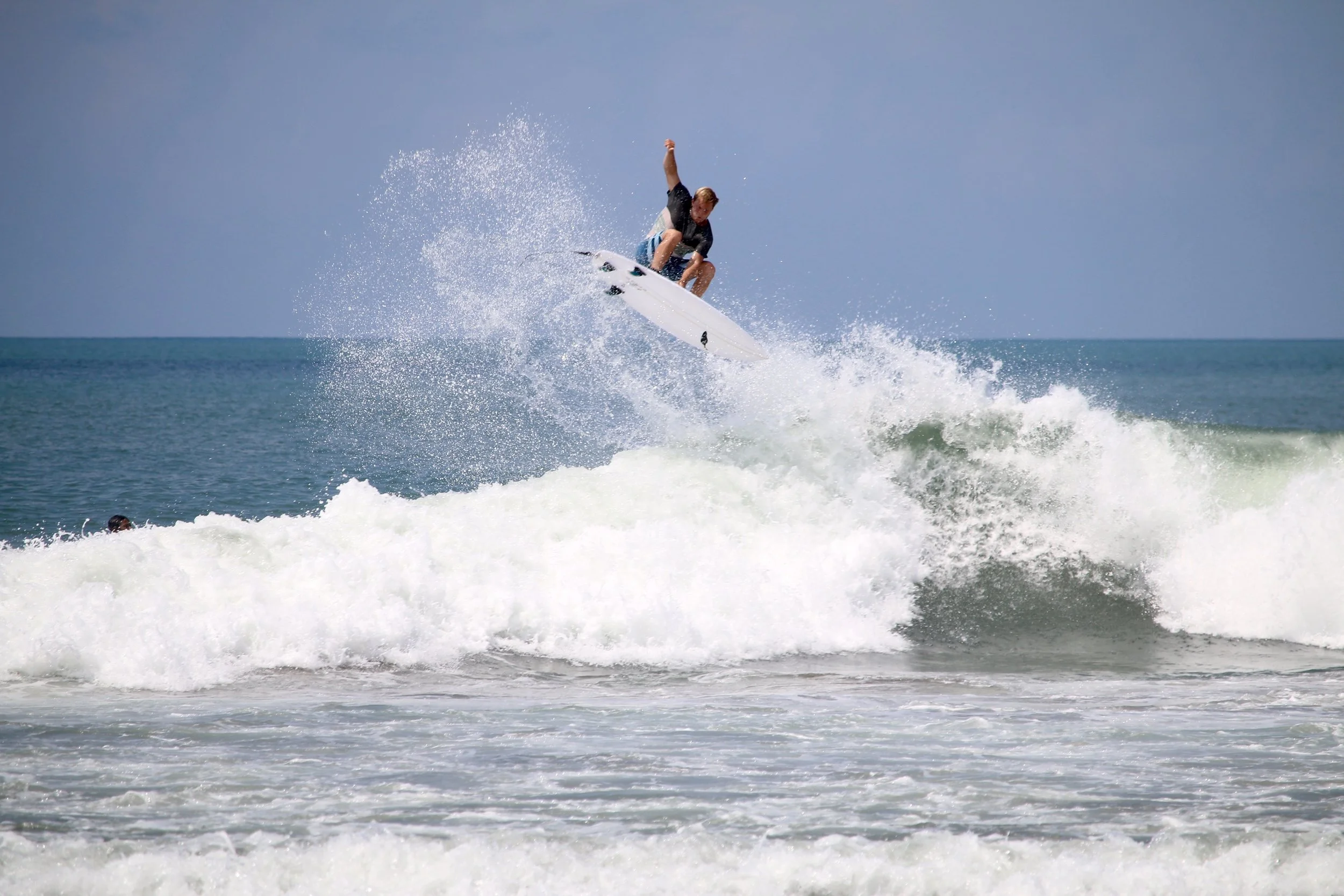
So Cale is an award-nominated writer, producer, and speaker. Cale is a great surfers. He surfing really well. I've surfers with him before, as you can see by the photo on Instagram that I published with this as well. Cale has written a book on gut healing and gut health. Cale has just done a documentary movie called The Gut Movie. In this episode, we're just talking about the importance and the role of the microbiome in gut health. Please enjoy. Please comment. Go to the Facebook page. If you enjoyed the show, let me know. If you have questions for Cale, let's do it on the Facebook page. We'll get him to engage with you guys as well. Enjoy.
Michael Frampton
Tell us what you're up to at the moment.
Kale Brock
I'm in the process of editing my movie, The Gut Movie. So I just got back from Namibia, where I spent a week living with a Stripe over there called the Sun, for the purposes of testing their microbiome and monitoring how my microbiome changed whilst I was there as well.
So that's sort of all coming to fruition at the moment, organizing the documentary tour and how I'm going to release it and all that sort of stuff.
Michael Frampton
I look forward to it. How important is the gut microbiome?
Kale Brock
It's sort of an endless topic of discussion. I suppose it's getting a lot of attention now, I think, rightly so, but maybe to the point where people are understating the importance of other areas as well.
So I want to... I encourage people to always take things like that with a grain of salt. But everyone's really excited about the gut at the moment because essentially it's a pivotal underpinning of the human body in that it trains the immune system, it influences our metabolism, and influences brain development as well.
So it's this very integral system. It's actually more of an organ.
So a lot of experts are calling it an organ now. And you've got around 2 kilos of various bugs in your stomach, and then you've got bugs all over your skin and actually in your brain as well, throughout your entire body, which make up this microbiome. And it's not just bacteria. Everybody wants to just say that it's just bacteria, but it's not. It's bacteria, viruses, parasites, yeast, and protozoas.
So it's that collection of microbes which has this massive impact on us as human beings.
Michael Frampton
So everyone has parasites?
Kale Brock
Everyone will have parasites, yes. But some are good and some are not good. And, you know, some are commensal, which means they are inactive and they don't really do much at all and they're just getting a free ride in your body. But, yeah, there's an important balance of those bugs in the system and certainly parasites make up that balance.
Michael Frampton
OK, so a healthy person has a balanced microbiome?
Kale Brock
Yeah. I think, and this is probably the direction we went with the movie, the documentary, is we were trying to answer the question, what is a healthy microbiome and is there an optimal microbiome?
Long story short, without ruining the movie, it's very hard to say at this time because we're still in such early days on the microbiome research. Even though we've got 2,400 years of anecdotal evidence from Hippocrates saying that all disease begins in the gut 2,400 years ago and we've got principles through which the gut can be healed with food, the science of it is still being discovered.
So a key marker of microbiome health at this point is microbiome diversity. So how many different species are in your microbiome? And that's being looked at as the main point, the main key marker of microbial or microbiome health.
And then, of course, where the rubber hits the road is how healthy you are as an individual because someone can have a really diverse microbiome but they might not be a healthy person. So there's a lot more to understand. I think we've only scratched the surface now in terms of understanding individual species of bacteria and what they do. But it's all very exciting and interesting.
Michael Frampton
And neurotransmitters are made in the gut as well. Yes. And how does that relate to microbiome?
Kale Brock
So bacteria have a specific metabolic pathway called the shikimate pathway. And involved in that shikimate pathway is fructose, which is a sugar often found in fruit but then found in processed food. Very different when it's found in fruit and certain vegetables as well. And that sugar molecule essentially is turned into, through a very complex process, which I don't know all the intricate details of, is turned into amino acids which then go on to form our neurotransmitters. And if you know neurotransmitters, you've always got a cascading... You've got a cascade of neurotransmitters.
So you might have a main neurotransmitter at the top of the chain which then is metabolised into different neurotransmitters. So you've got... It might be serotonin somewhere at the top and then you've got melatonin and dopamine and that might not be the right order but they sort of are reliant on each other. And that process or that supply is inherently reliant on the gut as well.
So it's very important in maintaining a healthy neurological system.
Michael Frampton
OK. So how do we... How do we destroy our microbiome?
Kale Brock
That's a good question. There's a lot of ways. There's a lot of ways that people have indeed damaged or compromised their microbiome and it's something that's being appreciated now, which is nice. I started talking about this probably five or six years ago, even longer, eight or nine years ago. And... It was just sort of woo-woo back then. It was quite esoteric. Not many people wanted to talk about it. But now we're seeing even the mainstream media talk about the negative effects of antibiotics, for instance. And that's really the major player in this microbial equation when it comes to damaging the microbiome. And essentially now we have a population, I suppose, in Australia, pretty much around the world, and this is why we had to go so far, by the way, into the Namibian desert, basically, to get away from antibiotics and find a Stripe that haven't been exposed to many of them. We have a population, as I was saying, who have compromised microbiomes, basically, because it's very hard to find someone who hasn't been exposed to antibiotics. And even if it's not in pill form or prescription form, it's in the water.
You know, we've got chlorine in the water, which is highly antimicrobial because they want a very clean water supply, which is understandable. But we drink it and it affects our microbes.
And then we've got antibiotics in our food chain, we've got horrible pesticides being used which have antibiotics effects. We've got the contraceptive pill causing a lot of issues with women because that has an antibiotic effect.
And then we've got processed foods, which compromise the microbiome. It sounds really scary, and certainly it's receiving a lot of attention from people like the World Health Organisation and various governing bodies around the world. But essentially what it means is we have to step back a little bit and really focus on living a more natural or naturalistic lifestyle and eating a naturalistic diet, which is sort of where my work comes in and where I sort of specialised in. Okay.
Michael Frampton
So to summarise, a broad spectrum antibiotic is going to narrow the diversity of your gut microbiome?
Kale Brock
Yeah, it's one of the things that can do it. So you have a broad spectrum antibiotic, you will skew the microbiome. And that's probably an argument now that people are making is that we shouldn't be using broad spectrum. Certainly long-term or multiple cycles of broad spectrum antibiotics, what they're saying now is that we should probably focus on things like specific antibiotics, so something like fluconazole for a fungal infection rather than a broad spectrum.
So sort of narrowing it down to actually kill the infection that we're trying to kill rather than wiping out the whole system because that is why we're dealing with so many issues today. I mean, a British inquiry into antimicrobial resistance, which is another huge issue, found that 750,000 people a year are dying as a result of it already from resistant infections. And they're saying that by 2050, if we haven't overcome this situation of antimicrobial resistance, we're going to see 10 million people a year dying as a result of it. And pharmaceutical companies have given up making new antibiotics now. They're looking for new drugs because they're just not going to work anymore.
So we kind of have paved a path for ourselves that we're going to have to stop using antibiotics anyway. So we've done all the damage we can. I don't know what is going. Yeah.
Michael Frampton
To come next. Yeah, that river runs deep as far as... What's the... MRSA? MRSA, the antibiotic-resistant thing.
Kale Brock
Yeah, basically. MRSA.
Michael Frampton
Yeah, let's not go down that rabbit hole. Obviously, you've got other broad-spectrum antibiotics or antimicrobials such as chlorine, pesticides, etc., which, unless you live out in the middle of nowhere, they're pretty much unavoidable, right?
So I guess part of supporting a diverse and healthy gut microbiome would be just minimizing those things in your diet. Is that right?
Yeah.
Kale Brock
Absolutely. And just like I said before, living a naturalistic lifestyle. And that doesn't mean you have to go out and live on an island somewhere. It means you can still live in the modern world, which is what I do. But just getting in control of your food supply and being very conscious of where it comes from and who you're buying from and what water you're drinking and what products you're taking and what medicines you're exposed to as well, if any, is very important. And that's not woo-woo anymore. That's not alternative anymore. This is coming from people like the World Health Organization and various professors and doctors who I've been interviewing for the documentary who are saying antibiotics and those sorts of things are reserved for emergency situations only and they shouldn't be used the way we're using them. There was a report that just came out in Australia showing that Australian GPs are prescribing antibiotics for ARIs, which is acute respiratory infections, between four and nine times the recommended amounts or recommended guidelines, which is unacceptable now in today's day and age and it's leading us down this horrible path where I don't know where it's going to end up. But where I see the most importance is in us as individuals taking control because you can't just walk around blaming GPs when someone walks in there, a patient walks in there and says, I need antibiotics because I've been coughing this week. It's got to come down to each individual being empowered enough to actually make that decision to be informed about the health decisions they make and what they're putting on and in their body.
Michael Frampton
How does processed food damage the balance of the microbiome? Well.
Kale Brock
Basically, the gut bugs don't recognize it so they can't eat it. Often, these foods contain a lot of sugar, and when you have a lot of processed sugar, that is, you tend to throw that delicate balance a little bit more.
So, for instance, candida, which is normally a beneficial bowel yeast, can really grow out of control when there's too much sugar in the gastrointestinal tract, so it moves up from the bowel and starts to take over the whole system. So, yeah, processed foods basically reduce the diversity of the microbiome in a big way because there's often no fibre for the bacteria to feed upon, which is incredibly important, and there's no nutrition which protects the bacteria and creates an environment in which they'll thrive in.
So, yeah, you end up with things that just are not health-supportive, growing out of control.
Michael Frampton
So, how do we support a healthy, balanced microbiome? Well.
Kale Brock
That's the big question, and I suppose, again, that's what I've been working on for the past eight or nine years, and to put it simply, and I know we'll investigate a little bit more, you start with a whole foods diet and that's just number one, across the board. There's always going to be individual needs, I think, in that, but across the board for everybody, you start with a whole foods diet.
So, you're eating non-processed, real food, mostly plants with a little bit of animal protein if that's in your diet, and just, yeah, moving back to nature, I think. And if you can afford to buy organic, that's great because then you're avoiding those pesticides and those antibiotics and dangerous chemicals being sprayed on our food and then entering our system, which is a big shame. But, yeah, if you start with whole foods, that's really the best place to go, and then if you do have some symptomology or some pathology going on, then that's when you need to get a little bit specific and maybe start looking at probiotic supplementation, fermented foods if they work for you or your condition, and maybe adopting a more stricter regime until you've got that symptomology under control. But, of course, in doing that, you often need a good practitioner to help you do that as well.
Michael Frampton
Okay. So, if there's people listening out there that are pretty much sort of 80% paleo, let's call it, are there any types of fruit, vegetables, whole foods that they might not be consuming that they could consume more of or add into their diet to help the microbiome more?
Kale Brock
I think it's important to define paleo as well because paleo is so different depending on your geographical region of reference. It's funny that we've sort of landed on this one idea of paleo as if it's the only paleo diet. When I was just with the Sarn in Namibia and they're having, like, starchy vegetables all the time, like bush potatoes and all these different things that are really high starch, that, in fact, the majority of their diet is high starch, which is antithetical to what we would consider paleo in Australia.
So it's sort of odd. But in essence, I do agree a lot with the modern paleo diet in that we should be having lots of vegetables and a little bit of animal protein and some fermented foods and stuff. But, I mean, going back to your question, the best foods, I think, you know, a lot of people are probably having them, are going to be the vegetables. Obviously, when those vegetables have a lot of prebiotics in them, so prebiotic fibres or sugars which feed the gut bugs and which then go on to metabolise or provide metabolites for us, like butyric acid, which is very highly anti-inflammatory.
So things like onion, garlic, leeks, all that allium family, celery, sweet potato, fruits like apples and berries even, beetroot, carrot, you know, all those different vegetables, and then your greens as well to help sweep the system and provide a lot of antioxidants and stuff. All those foods are incredibly powerful in terms of their effect on the gut, and in terms of individualising it, it's just about tweaking the ratios of those foods to make it work for you as an individual. And that can depend on your activity levels.
You know, if you're surfing every day for a few hours a day, then you're going to require more carbohydrates than someone who's more sedentary and not surfing, you know. So that's when a more strict high-fat, maybe keto approach can work if you're a very sedentary human. But for someone who's doing... For someone who's a surfers, you know, like people who are listening to this, surfing typically got that high-intensity element to it, so it's like interval training.
So naturally, you do need more carbohydrates. That's where your vegetables will come in and you'll tweak those up to have maybe a little bit more sweet potato. And even things like rice and some grains, I'm not opposed to as well. Things like chickpeas have really good prebiotics in them and so do beans.
So if they work with your body, then it's fantastic. You know, certainly have those... Even a little bit of cooked and cooled rice has a lot of resistant starch in there to feed the gut bugs in the CSI row. We're doing a lot of research on that.
So, you know, it just depends. And that's why I love going back to that underlying principle of start with whole foods and then work with your individual situation to find out where you fit within that framework. Cos I could just say, I'll just listen to your inner nutritionist. And that's what I used to say. But most people are so confused and they're not in touch with their inner nutritionist. They'll be like, Yeah, I was craving a Mars bar the other day, so I had a Mars bar. Where that's not really conducive to health over the long term.
So that's where you want to start within that framework of whole foods and then find out where you fit within that.
Michael Frampton
Is there any relationship between the diversity of your fruit and vegetables and the diversity of the microbiome?
Kale Brock
Yes, absolutely. So the more diverse your diet, the more diverse your microbiome will become. And Tim Spector, Professor Tim Spector out of the UK, has done a lot of work on that. He's quite an interesting fellow.
So he points out that I think, you know, these days, let's keep it to Australia, most Australians are probably having 30 to 40 different ingredients a week. Whereas in previous times, we were probably having between 300 and 400 a week.
So there's that whole element to it as well. But, you know, there are other ways to introduce bacteria into the system as well to diversify the microbiome. And one of those is being in the ocean. We pick up so many microbes from the ocean. Funnily enough, Dr. David Perlmutter talks about this. The ocean and us share around 70% of the same microbiome anyway. Interesting.
Yeah, it's incredibly interesting. And that's why I believe anyway that we do have such an attraction for it because, you know, we share all those same microbes which are affecting our neurobiology and putting us in touch with the ocean.
So that's a really good way to expose yourself to microbes. But then again, go and do some farming or do some walking in nature and all that stuff gets you in touch. Let the soil go all over your feet and you'll have a nice dose of probiotics for the skin.
So it's really fascinating what's being shown in the science and then the implications of that science in the real world. So I'm trying to get ahead of that with experimenting with different things myself. But then, you know, really taking on more of a journalistic role in terms of reporting the findings of these sort of studies and how they might be applied in what we would consider the real world.
Michael Frampton
If someone did have a gut microbiome issue and even though they were eating, let's say, an 80% paleo diet as you described, what would their symptoms be?
Kale Brock
I mean, symptoms associated with poor gut health can be so far-ranging. It's crazy. But in terms of what's being acknowledged in the scientific literature and across the practitioner region is certainly your autoimmune condition.
So any autoimmune condition is always going to have linkings in with the gut microbiota. Professor Charles McKay at Sydney University says that any disease that was less common or not known about 40 or 50 years ago, it's certainly relating to the actions of the gut microbiota.
So it's incredibly important. We're seeing diabetes being linked, Alzheimer's, Parkinson's, ADHD, autism in children, asthma, allergies, hay fever, thyroid conditions, arthritis, various things.
So that's way beyond just some gurgly stomach, which is what we would typically consider as poor digestion or poor gut health. It's so far-ranging because the gut is in constant communication with the rest of the body via the enteric nervous system, which connects the gut and the brain, but through the immune system. Because 70% to 90%, which is a large range, I know, but it just depends on who you listen to, but 70% to 90% of the immune system is actually in the gut anyway.
So in the gut-associated lymphoid tissue, there are all the immune cells. And that's where they receive all their information and training from and then go off and do their immune things.
So it's incredibly fascinating when you look at that and realise that almost any condition out there, really, when you think about that, could be related to the actions of the gut microbes. So, I mean, how far do you go? I would say that if you're struggling with any health condition, it will only serve you well to get your gut health back on your side.
Michael Frampton
Even if you're struggling, if there's athletes listening that are struggling to get into the zone and they're not recovering as well as their peers, that could be a symptom of a gut issue?
Kale Brock
Huge, because the gut is an incredibly powerful detoxifier. If you've got toxins, for instance, from fecal matter that hasn't been moved through the bowel fast enough because you're not eating enough fibre, those toxins will actually be reabsorbed back into the system and can paralyse muscles. And if you've got an inflamed digestive tract, then your core will stop working because the core muscles don't want to squeeze an inflamed organ.
So they'll hijack the blood supply from the system and divert all the blood flow to the stomach to try and heal that. So you'll be misfiring. And when your core's not working, your back gets thrown out and you can't move properly as you would know.
So it's just massive, I think. And if you want balanced hormones and you want to wake up with a nice cortisol curve and live throughout that cortisol curve, as athletes it's very important to do that, then you want to really get your gut health on your side.
Michael Frampton
So it can be as simple as cutting up processed foods and diversifying your fruit and vegetables?
Kale Brock
It can be for a lot of people. If you've got serious damage like I had because I was exposed to a lot of antibiotics when I was younger because I had frequent chest infections because I was...
Yeah, a long story. If you've got a lot of damage, then it can take a long time and it can take some more strategic and more specific interventions to actually get back online, so to speak. And that's why I wrote the book, The Gut Healing Protocol, because we sort of go through all that.
So a lot of people do need to be quite strict for a while until they overcome their symptoms. Some people do need to have some supplementation, so some probiotics, some colostrum and aloe vera, for instance. And some people do need to... A lot of people do need to go and work with a good functional practitioner to test. And some people need to test their microbiome so that they can modulate a specific intervention based on what they find.
So, yeah, it's not one size fits all, but certainly within that there are some good things to do. I think, you know, I think supplementation is a wise idea anyway for almost everyone if you're living in the modern world because we have such an increased toxic load.
So having some extra nutrition in the body to clear all that out is not going to do any harm. Certainly those are my big ones in terms of supplements, probiotics and colostrum or aloe vera to really work on the gut lining because that's often the first thing to suffer from an imbalanced microbiome.
Michael Frampton
OK. And those that are listening that want to learn more, where can they get your book?
Kale Brock
Kalebrock.com would be the best. We've got some stockists as well around Australia like Govida, obviously Balance Studio, which is where we're recording here in Avalon, and then quite a few places, Ruff & Bear in Mona Val.
I mean, I'll try not to restrict it to specific locations, but we're everywhere. We're about to release in the USA as well. OK, yeah.
Michael Frampton
Great. Yeah, there's a lot of listeners in the US, so it is available online.
Kale Brock
And I think there's some really, I mean, you could talk for hours and go really deep into it, but there's some really great resources out there in terms of practitioners who are bringing their stuff online. And then there are a lot, I would say, there are more practitioners who are very quiet and don't share what they're doing very well. And we certainly met some of those with the documentary. And so that's been really fun to look at, but you can get access to these people and you don't need to necessarily go and see them.
Sometimes you can just listen to a podcast with them or read their book or whatever. So there's some really excellent resources out there for people to learn, not just from a secondary source like me, like from the primary source, like the practitioners.
Yeah, I think that's...
Michael Frampton
Well, there was one of your other projects, wasn't it? The Summit.
Kale Brock
Yeah, we did the Gut Healing Summit. Yeah, actually, I should...
Yeah, so that was where we just interviewed a various bunch of those experts and put it all online. But that's all on the website.
Michael Frampton
OK, so those that want to nerd out a little bit more and learn some more of the science behind what we're talking about, they can go to... Again, that's on your website?
Yeah.
Kale Brock
It's just kalebrock.com. And there's a bunch of free articles on there as well that they can read, which are mostly based on studies on the microbiome.
So, for instance, the peanut allergy study that came out recently, which was done in Melbourne. I just interviewed the head researcher at Murdoch Children's Hospital. And they showed how... They did a study to actually reverse peanut allergies with probiotics, and they had an 80% success rate over 18 months. It's incredible.
And then... I don't think I'm allowed to share this. They did a follow-up study, which we share in the movie. They're just getting it published, so I can't share it. But the results are astonishing.
So that was Professor Mimi Tang. So, yeah, there's... All that sort of stuff is online. And like I said before, what's nice about this whole thing is that it's not just these alternative health practitioners anymore. It's legitimate science and legitimate practitioners who are looking at this.
So it's this convergence of the alternative health space with conventional health space. And when those two come together, we start to really see some big Stripe forward in terms of health outcomes, which is really what it's all about. We want people to just live a nice, healthy life and not spend the last 10 to 15 years of their life in and out of the hospital. And for people to surfers better, you know?
Michael Frampton
Exactly. Yeah, I mean, like we said before, there's a big link between the neurotransmitters and the gut-brain connection as sometimes it's been coined as. Yes.
Kale Brock
Absolutely. And that's got its own team of researchers looking at that at every prestigious university in the world.
You know, looking at stress response and I'm sure they'll look at flow state, which is, you know, obviously very relevant to what we're talking about, and how having inadequate supply of neurotransmitters and having less inflammation or inflammatory products moving into the brain will have a positive impact on that and memory retention and reflexology and all these different things that are directly involved with surfing. I feel like I wouldn't be... I wouldn't be able to surfers as well as I can, not that I'm a pro or anything, if I didn't have health on my side. I think it's incredibly important and I've seen that consistently, you know, people who are really healthy tend to be able to pick up things a lot quicker.
Yeah. And if you want to stay young and be able to be nimble and surfers for a long time, then certainly looking after your gut health is going to help you do that.
Michael Frampton
Yeah, I mean, we've all had that experience on a surfers trip where you surf for three days in a row and then come the fourth day and you're just shattered. Like to the point where you can feel quite sort of low and slow and almost depressed. And that's... Your neurotransmitters are wiped out.
Kale Brock
I think there is always going to be a limit. Like if you get gut health on your side or, you know, if you optimize your gut health, I should say, you're not going to become Superman.
No. It's just going to change. It's just going to optimize your unique body for functioning how you intend it to function.
So maybe that three days turns into four days. You know, something like that. Who knows? Maybe you just, yeah, acquire a little bit more balance, you know, over that time.
So I think... Yeah, like I said, I'm still super excited about it but I do encourage people to take it with a grain of salt because there is so much attention being brought to this whole discussion now.
Some people get too excited about it and say that it's the only thing to consider when it comes to your health. But, you know, I still think there are other areas to consider even though it is so important.
Michael Frampton
But diet is not the only thing that can affect your microbiome, right? I'm guessing stress affects it.
Kale Brock
As well. Yes, it does actually.
Yeah. And they've shown that in various studies that stress does have a negative impact on the microbiome.
So certainly that gut-brain connection is bilateral. I think that's... I hope that's the right word. It goes both... Bidirectional is probably the better word because, you know, when we see something, for instance, and we're so sickened or whatever we throw up, that's, you know, part of it. We've got that connection with what we're seeing and then we see the brain connecting with the gut and saying, you know, ejection. We vomit everything up or we get stress-induced IBD or irritable bowel disease or stress-induced diarrhea. All these different things. Or we're so stressed we stop digesting food.
So it's this... Yeah. It's going to be a multifaceted approach to optimizing your own gut health and it involves various elements of the human experience. Certainly not just... Even though it's incredibly important, not just what you put in your mouth.
Michael Frampton
Yeah. And you outline that in your book as well about it's not just a balanced diet. It's a balanced lifestyle. And you go into detail on that in the book. It's a very good book. It's very concise. It's almost... It is a great book. Lots of recipes in there as well. When does the movie come out?
Kale Brock
Movie comes out in November. November 2017. In Australia, that is.
So if you are listening in the States, we're still... I'm still working out a strategy for release worldwide and whether we sign with a distributor or do a big online release is still yet to be determined. But you'll be able to hear about it if you follow me on social media or, you know, check out carobrock.com and sign up there.
Like, you'll be able to hear about it, I'm sure. So yeah, it is coming out. We're doing a tour in November.
So I'm going to travel around to most of the major cities in Australia. And... Exciting.
Yeah. It's very exciting. It's my biggest project so far.
So, my favorite surfboard?
Michael Frampton
Yeah. Cool. I look forward to seeing it. Thank you.
So, what's your favorite surfboard?
Kale Brock
I don't have one.
Michael Frampton
Currently.
Kale Brock
Currently, yeah. I suppose I'm riding right now. I don't know if it's my favorite. But I'm riding an Almeric Sampler. And I bought it in South Africa. I was in Jefferies Bay after we were in Namibia. And I needed a board because we got that swell.
So, yeah, I bought a Sampler. And it's good. I like it. But I wouldn't say it's my favorite board. My favorite board is any board that I can do airs on because that's my favorite thing to do, is to do airs.
So, my last board, I had a Chili Toucan. And that board was really good for airs. But it ended up it's just a little bit too small.
So, I might just have to get one that's a little bit bigger.
Michael Frampton
Yep, okay. Do you have a favorite surfers?
Kale Brock
Kelly Slater. Nice.
Yeah. Not just because of the way he surfing. Just because of everything that he does and embodies and stands for out the water as well.
So, his conservation work and all that. But I think on any given day, sometimes I'd, you know, lean towards someone else or whatever. But I think overall, he's the man. He's got so much wisdom that I'd love to have a conversation with him one day.
Yep, and I'll have a chat as well, Kelly.
Michael Frampton
Same. Kelly, if you're listening, we'll have you as a guest anytime. Do you have a favorite surfers movie or film?
Kale Brock
Yeah. I loved... What was the one before Castles in the Sky that Taylor Steele did? Or was it the one after maybe? Sipping Jet Streams. Sipping Jet Streams. I love that one. I think it's really beautifully done and shot. But really, the one that I'm frothing on, the one that I watch to get pumped or whatever, is View from the Blue Moon or whatever it is. John, yeah. Because he's a freak.
Yeah, and that section when they're in West Oz and it's like onshore as and they're doing like all these airs and stuff and there's a good song like that. It would get me frothing for anything.
I mean, you and I spoke before. I much prefer when it's onshore.
Like I was just surfing before and it was onshore and I was loving it and then the wind switched and went offshore and I came in because it's just that's my thing, you know.
So, yeah, that's what I'm digging at the moment.
Michael Frampton
Awesome. Thank you so much for your time. Thank you for having me. For sharing us, sharing some of your research and information and stuff. And I urge people to check out your website and look out for the movie.
Kale Brock
Thank you. Thanks for having me. I think it's really, it's good to delve and have these conversations about everything because as surfers, we get a little one-track mind at times. That means it's important to bring perspective and look at other things.
Michael Frampton
Yeah. Well, being healthy and having a healthy gut is not just going to help you surfers better. It's going to help you be a better person and have a more balanced psychology. We could... It's a whole other conversation, isn't it? The gut-psychology link.
Kale Brock
Yeah, it's massive and, you know, there are various people you can chat to about that. I'll be happy to give you some resources. But it's a very vastly... I don't know if that's the right word, vastly evolving area of research and massive implications because there's billions of dollars on the line here. Pharmaceutical companies have made a lot of money off telling people that their psychotropic medications work well, which they don't. When you look at the statistics, they don't work well. They work in very small amounts of situations. Whereas probiotics and nutraceuticals are starting to provide some really hopeful outcomes for those sorts of situations. And look forward to the future. We're going to see very specific supplementation for those things. If someone does have anxiety, for instance, there'll be a probiotic product for that. If they have depression, there'll be a probiotic product for that.
Yeah, it's going to be.
Michael Frampton
How far away is that?
Kale Brock
I would say three or four years, five years max.
Michael Frampton
There's trials going on now.
Kale Brock
There are though, and it's quite concerning, there are trials on invented bacteria, basically, because if we harness a natural product, a pharmaceutical company can't patent that product. There's not that much money in it for them. Whereas if they can invent or genetically modify a bacteria, they can. Which is concerning for me because then I can start thinking about I Am Legend and Contagion and all these movies where bacteria went bad. I'm concerned, but I think people... It's all up to the individual now. And that's really where it all comes... That's what it comes down to, is people feeling empowered to make informed decisions about their health. That's what I want.
Michael Frampton
Cool. Cale, again, thank you for your time. Awesome.
Kale Brock
Thanks for having me, Mike. Sweet.
Michael Frampton
Thanks for tuning in to the Surf Mastery Podcast. Again, I'm your host, Michael Frampton. Make sure you subscribe so you can keep up to date with the latest interviews. Please share with your friends. Check us out on Facebook at Surfers Mastery Surf. And if you're on iTunes, please go and give us a little rating. That'd be awesome. Until next time, keep surfing.