
034: ROB BAIN - Former World Tour Pro-Surfer.
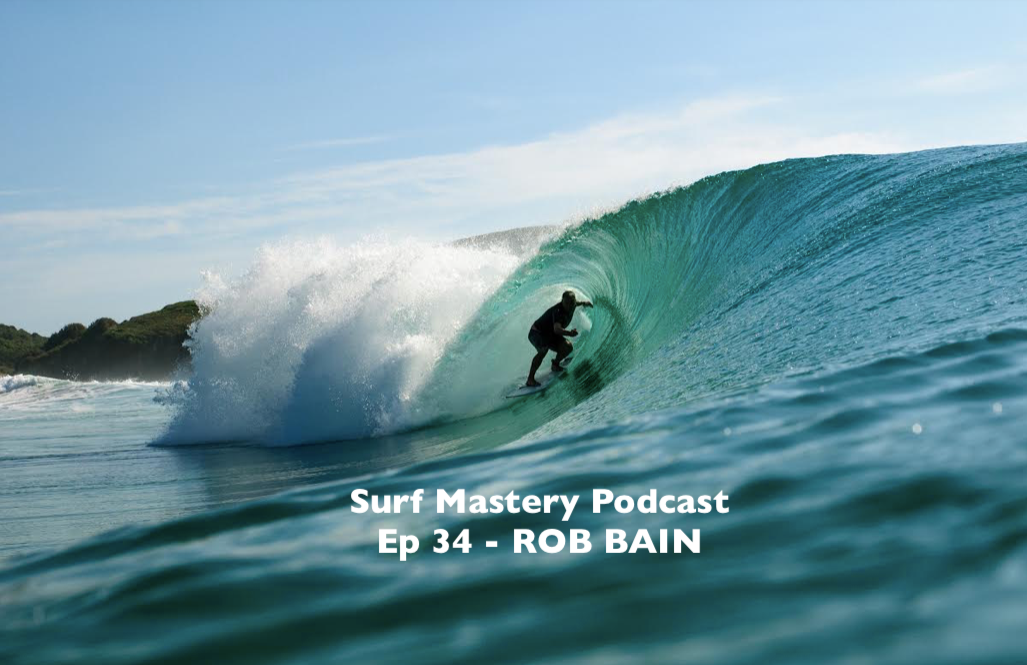
Image by: Alex Brunton
Show Notes:
Do you ever feel like you're fighting your board—or losing the joy that got you hooked on surfing in the first place?
In this deeply raw and insightful episode, former world #5 surfer Rob Bain shares his journey from a tough upbringing to global surf success—and how a near-death accident in 2009 completely reframed his outlook on life and surfing. Whether you're an intermediate surfer or a seasoned competitor, Rob's story will hit home.
Learn why most intermediate surfers are making critical mistakes with their equipment—and how to fix it.
Discover the surprising mental shift that helped Rob go from "barroom brawler" in the water to elite-level competitor.
Hear how to rediscover your love for surfing—whether you're 25 or 55—and how Rob believes your best surfing can still be ahead of you.
Hit play now to uncover timeless surfing lessons and life-changing insights from one of the most respected voices in the sport.
Rob Bain pro surfer from Manly Beach, AUS. Rob was ranked No. 5 in 1990 and finished in the top 10 ‘88-’91, won 4 events and even came 3rd at ‘93 longboard champs. He talks about what drove him to be one of the best, how he learnt to relax and focus in high pressure situations. Memories from his 3rd place in ‘93 Long Board champs and lessons from how riding other boards can help your short-boarding. Rob also weighs in on the state of surf coaching and individual style, surfboard choice among intermediate surfers. How to deal with the transition from being a ‘surfer’ to a ‘worker’ in the surf industry. He also talks about how he recovered form an horrific surfing accident in 2009, and what he learnt form the experience. His thoughts on mindset, rhythm, flow state, the zone, being in the moment and longevity of performance. And stories from some of his surfing highlights. An inspiring icon of Australian surfing.
Rob rides Simon Anderson boards and wears O’Neil wetsuits.
Instagram @bigbadbobbain
Rob also appears regularly on Aint That Swell Podcast. #utfs
Robs G-Land Tsunami near death experience:
https://www.youtube.com/watch?v=c_18a7rXtxM
Key Points
Rob started surfing at a very young age, around 2-3 years old, at Manly Beach where he grew up.
Rob's competitive drive and hunger to win motivated him to become a professional surfer after joining a local surf club at age 18.
Rob learned to stay calm and centered during competitions through breathing exercises and visualization techniques taught by a psychologist named Eric Fleming.
Rob suffered a serious surfing accident in 2009 at North Avalon, breaking his neck and spine, which gave him a new perspective on life's priorities.
Rob emphasizes the importance of riding the right equipment suited to one's ability level for intermediate surfers to progress.
Rob values individual surfing styles and cautions against over-coaching that could make surfers too similar in their approach.
Rob shares his experience of surfing the legendary Waimea Bay in Hawaii during a massive swell on his first trip there.
Rob has a long-standing relationship with shaper Simon Anderson, whose boards he currently enjoys riding.
Outline
Early Surfing Beginnings
Rob Bain started surfing at the age of 2-3 at Manly Beach in Sydney, Australia.
His family lived in a small apartment block right on the beach, allowing their mother to watch them cross the road and enter the ocean as a toddler.
They began on a small 'zippy' board, progressed to foam boards, and got their first fiberglass surfboard at age 7-8 from a neighbor, Jack Knight Surfboards.
Family Background and Influence
Rob's parents were immigrants from England and Scotland who settled near the beaches.
They chose to live by the ocean in Manly rather than inland, which greatly influenced Rob's surfing journey.
The family lived in a rough apartment building nicknamed 'cockroach castle' due to its poor conditions, but its location across from the ocean was invaluable for Rob's surfing development.
Personal Challenges and Escape through Surfing
Rob's father struggled with heavy drinking and smoking, which made the ocean an escape for young Rob.
They found freedom and solace in surfing, feeling instantly better when in the water.
Competitive Surfing Journey
Rob didn't start competing until they were about 18.
They were working in factories and surfing for fun on weekends when someone invited them to join a boardriders club.
Rob quickly progressed through local amateur competitions, winning their way up to state titles and eventually making the Australian team alongside surfers like Gary Elkerton and Damian Hardman.
Their competitive drive came from not wanting to return to factory work.
They became determined to win contests to avoid going back to their previous life.
Rob learned to fight for waves in competitions, which sometimes felt like a 'barroom brawl' due to the lack of priority rules at the time.
They struggled to transition from their aggressive, 'blue-collar' approach to a more professional competitive style.
Rob worked with a psychologist, Eric Fleming, to learn relaxation and visualization techniques to improve their competitive mindset.
Oxbow World Longboard Championships
Rob was invited along with 11 other top shortboarders to compete in the Oxbow World Longboard Championships in Hawaii.
They performed well in the event, making it to the final alongside Rusty Keaulana, Bonga Perkins, and Glenn Winton.
The final day of the competition saw massive waves at Haleiwa, presenting a unique challenge for longboarding in big surf.
Rob finished third in the event, narrowly missing out on the world longboard title.
They needed a 4.9 score to win but couldn't secure it.
This experience gave Rob a new appreciation for traditional longboarding and the different approach required compared to shortboarding.
Concerns About Modern Surf Coaching
Rob expresses concern about modern surf coaching potentially stifling individual style in young surfers.
They believe that the focus on competitive success may lead to a homogenization of surfing styles, as coaches direct students to surf in ways that conform to judging criteria.
Rob advocates for embracing unique aspects of a surfer's style, even if they might be considered unconventional, as long as they don't hinder performance.
They stress the importance of maintaining a love for surfing beyond competition, emphasizing that the ocean provides more than any heat win ever could.
Transition to Business Career
After their competitive career, Rob transitioned into the business world, starting in sales within the surf industry.
They found the transition challenging, going from being a top pro surfer to starting at 'ground zero' in a new career.
Rob worked their way up in the surf industry, eventually reaching management positions, though they felt out of their element in some high-level business situations.
They currently work in a marketing role in the surf industry and value the balance they have achieved between work and surfing lifestyle more than financial success.
Severe Surfing Accident
In 2009, Rob had a severe surfing accident at North Avalon, a spot called 'Off Rocks.'
They hit their head on a rock while surfing, fracturing their neck (C7), snapping their first rib, fracturing several vertebrae (T2, 4, 5, 7), and severely lacerating their scalp.
The accident was a life-changing experience for Rob, making them reassess their priorities and deepen their appreciation for surfing and life's simple pleasures.
Despite the severity of their injuries, Rob recovered and returned to surfing, though they approach certain waves with more caution now.
The experience reinforced their love for surfing and gave them a new perspective on what's truly important in life.
Current Surfing Perspective
At 55, Rob feels they are at a transition point in their surfing but still believe they are surfing as well as or better than they were 10 years ago.
They ride Simon Anderson surfboards, having a long history and friendship with the legendary shaper.
Rob emphasizes the importance of riding the right equipment for one's ability and body type, noting that many intermediate surfers struggle due to inappropriate board choices.
They believe surfers can continue improving well into their 40s and beyond, as long as they maintain the right mindset and adapt their approach as they age.
Rob encourages surfers to find ways to stay 'in the zone' while surfing, using techniques like focusing on sensory experiences or breathing to recenter themselves.
They advise against giving up surfing due to age or minor setbacks, believing that the sport offers benefits that extend far beyond physical performance.
Rob stresses the importance of equipment choice, urging surfers to select boards that match their ability and physical condition rather than following marketing trends.
They share their Instagram handle (@BigBadBobBane) as a way for people to connect with them and enjoy their surfing stories and experiences.
Transcription
Rob Bain
So I never was gonna lose that hunger. The hunger is always there for me. It was more about how to control the animal inside. Smash my head into the rock, and I just felt my whole neck and spine, like right down from my body, explode. It was like this: looking straight up to the lip and wanting to put your back leg through it.
Michael Frampton
That was the voice of Rob Bain. I'm going to read some of Rob's bio from the Encyclopedia of Surfing. Droll but friendly Australian goofy footer from Queenscliff, New South Wales, world ranked number five in 1990. Bain was born in 1962 in Sydney, Australia. He began surfing early and then all but quit at age 13, not long after his father died. He left home at 16, worked a series of labor jobs, and then picked up surfing again in his late teens. Bain finished third in the 1984 Australian national titles, turned pro, and steadily worked his way up the ratings, finishing in the top 10 from 1988 to 1991, winning four world-class events in his career. Bain's wide-stance, lateral driving surf style was more functional than graceful, but he earned a reputation as one of the world's best in bigger, hollower waves. His dry wit made him a favorite among the surf media and his peers. Bain finished third in the 1993 Longboard World Championships. In 1998, at age 35, he won his second Australian titles and placed fourth in the World Surfing Games. In 2009, he broke his neck in several vertebrae surfing his home break after a freak accident in small waves. Actually, Rob goes into this story in this interview as well. He returned to the water six months later. It was Bain's second near-death experience. In 1994, he was pinned underwater after a tsunami rolled through his hut during a surf trip to G-Land in Java. Actually, in the show notes, I'll put a link to a little animated video that Red Bull put out about that story. It's really cool. Thank you to Matt Warshaw for letting me read that. If you guys want to learn more about Rob, you can read the complete bio at EOS Surf or Google the Encyclopedia of Surfing. There are some more videos and photos of Rob up there as well. And of course, any other surf person you want to learn more about, the Encyclopedia of Surfing is your resource. Rob often appears on Ain't That Swell podcast, one of my favorite surfing podcasts. That Swell is available on iTunes.
Rob Bain
Ain’t.
Michael Frampton
A couple of things before we get into the interview. I'm now officially living and working as a surf coach and personal trainer in the Malibu area, so you can contact me through my website if anyone out there is interested in getting some coaching or training done. Secondly, a lot of listener emails have been coming through. Really appreciate it. Thank you so much. Quite a few of them were done through the contact page on the website where you have to enter in your email address, and a few of those were entered incorrectly. So if you have not received a reply from me, that is probably why. This interview took place overlooking Bilgola Beach in February earlier this year, 2018. Thank you, Rob, for taking the time. Thank you so much for your listenership, and please share this episode with others. I present Rob Bain. When did you start surfing?
Rob Bain
I started surfing probably when I was about two or three years of age at Manly Beach. We grew up in a small apartment block. When I was a kid, I nicknamed it the Cockroach Castle, but it was a very small flat right on Manly Beach, in the middle of Manly Beach. And my mum had the ability to actually watch me cross the road as a toddler and jump into the ocean. So it started really early for me. It's funny because a lot of people have said they thought that I started quite late because I had a bit of a skateboarding background as well when I was a young teenager. But no, I started really early surfing.
Michael Frampton
That's really early. Yes.
Rob Bain
Super early. Like, you know, a little zippy board and then you sort of migrate off that onto a foamy. So I rode foamies for a long time, then picked up my first fiberglass surfboard, I think, when I was about seven or eight, off the next-door neighbor, Jack Knight Surfboards. And yeah, sort of just progressed from there.
Michael Frampton
Do you remember what drew you to the water back then?
Rob Bain
Well, firstly, you know, the lucky thing was more than my parents. They emigrated from England and Scotland. They came out as 10-pound Poms, as they say. So, you know, they got the boat trip out. My mum and dad arrived, didn't have a cent to their name. My dad had to find a job virtually the day he landed. So I think they spent their last couple of dollars on a drink each, and then he had to find a job. And lucky enough that they migrated close to the beaches. They started in Mosman, had my sister there, and my sister was born there. And then they moved down to Manly, and there was a decision at that time whether they were going to move to this small block of land in Penrith or they were going to move to the ocean. And lucky for me, they moved to the ocean into these little Craigie Don flats, they were called. And, you know, so it’s a natural progression for me. It was right there. So as a kid, you're always, you know, looking to get out. I suppose as a toddler, I was introduced by my mum and dad to actually go in the surf. But from that point onwards, it just became my life really. It's, you know, there's a big period of time through there from when I was born through till I was about 12 years of age. We lived in those block of flats and we moved around within flats within that apartment building. There was a shared toilet. It was pretty lowbrow, to be honest. And as I said, it was called Cockroach Castles because my Saturday night included, like, getting a water pistol and shooting the cockroaches off the wall. It was pretty rough and ready, you know. But the beauty was that it was right across the road from the ocean. And my dad wasn’t very well. He was a big drinker and he was a chain smoker. And, you know, he put down like three packets of cigarettes a day. And I don't know, he went through a lot in the war and, you know, just had a pretty rough upbringing. So my escape from that internal environment with that small flat was to get into the ocean. And, you know, I can picture it now. I just felt free when I was in the ocean. It just had this draw for me to get out of whatever situation was happening on the land. I’d take myself to the ocean and I'd instantly feel better. And it hasn't changed. That has not changed to this day. So, yeah, it was a beautiful place to grow up. I was very fortunate to be able to be across the road from the beach.
Michael Frampton
Yeah, it’s recognized as one of the best surf beaches in all major cities in the world.
Rob Bain
It is. Yeah, iconic Manly. An iconic spot, you know. Obviously had a lot of champions. I think I was two years of age when Midget Farrelly, right across the road from our flat, won that inaugural world surfing title. And that was kind of like the first recognized surfing title. So, you know, I was probably in a stroller across the road with my mum. So yeah, growing up in that beach, I have a lot of fond memories and a lot of, you know, great things happened for me. Now, competition was a funny one for me.
Michael Frampton
Did that inspire you to compete?
Rob Bain
I think by nature I'm a competitive person. You know, I played football when I was young and represented my local area and, you know, skateboarded and did that competitively for a while in early days—like ’76, around the same time as Dogtown Z-Boys. And so I think early on I was competitive. I had that competitive spirit within me. But surfing for me was always just about freedom and about having fun. And it wasn't till I was about 18—I was out of home, I was out of school, I was just working in factories and, you know, used to have a great time with my friends, ride off on the weekends—and then a guy came up to me at a local milk bar there at Queenscliff, the northern end of Manly, and said, you know, would you like to join the boardriders club? And I said, I haven't really thought about it, you know. And he said, no, come and you'll enjoy it, you know. He said, well, we've seen you surfing out here for years, you surf well, come and join up. So I joined up and I went in a contest. I ended up winning and won B grade, and then I moved up to A grade. And then through that association of that guy Roger at Queenscliff Boardriders, I ended up competing in the local amateur association, which is the Northern Beaches, and did well in that. Ended up winning it the following year, got to the state titles, and really quickly found myself in the Australian team with Gary “Kong” Elkerton, Simon Law, Damian Hardman. So there wasn't a long competitive period for me. It just all sort of happened quite quickly. And all of that time, I was working a day job. So I didn’t have a sponsor. I was working in a factory in Brookvale, clowning around with my mates on the weekend. So I almost fell into it. So I came into it really inexperienced and just a knockabout young guy that all of a sudden found himself in a situation where he was competing with the ability to potentially go further to become a pro surfer. So it was a sort of strange way of, you know, arriving really.
Michael Frampton
How did you get to that next level, where you started competing on an international level?
Rob Bain
Well, I kind of did it myself, really. And I did it myself in the sense that I realized that I didn’t want to go back to working in a factory. That wasn’t where I wanted to be. I was unhappy there. I knew that there was more for me. So I ended up—I made the Australian titles and right at that time I had a choice of whether to jump into a bongo van with my friends and travel Australia, or if I was to make it through the Australian titles into the world team, then I wouldn’t be jumping into the bongo van, I’d be going to the world amateur titles. So it was around that time where I realized that I had the ability to take this further than just being a, you know, a weekend competitor in some amateur events. So I got to California and I realized I didn’t want to go back to that factory job. So I knew that the only way to not do that was to win. And I just became super determined to win. I thought, well, no—someone on that Sunday afternoon is going to pick up a paycheck. Someone is going to get through to that round where you can get enough money to get to the next event. And I just thought—I was just super determined not to go back to where I was. And I just used that as my own motivation to figure out how to win. And that meant a number of different things. It meant obviously getting on the right wave and then positioning yourself in the lineup to take the inside, which sometimes became like a barroom brawl. It was like a fight. Because in those days of competition, it wasn’t so much about priority. It was about fighting for a wave. So there was that. And it was—and then just surfing, you know, surfing well when you got the opportunity. And that was—that took some time for me because I came obviously from this blue-collar sort of factory, barroom brawl attitude—I’m gonna win whatever it takes because I had to—trying to learn how to be a professional and compete professionally and be able to relax in certain situations. So that actually took some time for me.
Michael Frampton
Did you have help along that journey?
Rob Bain
I did, actually. I had help, and it was quite far into it. I used to compete every year down at Manly, and the Coke Classic would come around. It was like the last event of the year. It was super important. It was my home beach. I should have owned that event, you know, just because I was born and raised there. But every year I’d stuff it up. I’d go out in a heat, I’d hassle someone, I’d get an interference, or I’d for some reason wouldn’t get myself on the right waves or psyching up to loud music and just, you know. So that same barroom brawling sort of attitude was what I was taking to those heats, hence why I was making mistakes. And it was funny, I came in after one of the losses and this guy came up to me, a guy by the name of Eric Fleming. And Eric came up to me and I knew him from the school days, and he said, what are you doing? I said, what do you mean what am I doing? He goes, you're—you know, you’re blowing it. And he said, it may pay for you just to come and have a chat with me. Anyway, I didn’t really know what Eric did, but he was a psychologist. So—and he’d done some work I think with Pam Burridge and a few other people just locally. So I just remembered Eric as being a prefect at school and busting me for smoking on the bus. I went to see Eric, we had a chat, and then the one thing Eric really taught me, which was fantastic and it lasted a long time for me in a competitive sense, was just—it was about centering and it was about breathing. And it was about finding that spot where you can relax. And I’d never done that. The only thing I’d ever done in my whole life up until that point was to get psyched up, angry, ready, fight. And so it was a real turnaround for me to take myself to a spot where I was relaxed and calm and confident. And I used those sort of skills for a while when I was competing. And it wasn’t rocket science. It was just a sense of breathing, taking yourself to a space that was comfortable, visualizing, no matter what the conditions were like, and then putting yourself into a position where you were calm and relaxed and you almost knew that wave was going to come to you at some stage. So yeah, that was really helpful.
Michael Frampton
Did that cause you to lose any of your hunger and fight? How do you find the balance between being calm and relaxed but still maintaining that hunger, which sounds like is what initially drove you to get better in the first place?
Rob Bain
I think the way I used it, if I really think about it, was instead of like I was naturally amped to win—I wanted to win. Otherwise, I wouldn't be in it. You know, if you're gonna compete, you're there. You're not just there for the experience. You're actually there to win. You know, that's what competition’s about. And for me, it was, you know, it was a personal goal. I wanted to try and get ahead in life. You know, I didn't want to go back to where I was, and I wanted to be successful. You know, I just wanted to make it. I wanted to build for my family when it got to that stage as well. So it was super important. So I never was gonna lose that hunger. The hunger is always there for me. It was more about how to control the animal inside. And that was about, you know, let's say you're in a heat and, you know, you could be at Pipeline. You got three other guys around you—a little different to now as it's man-on-man—but you'd have three other guys around you. And, you know, it takes 25 seconds for those guys to finish a wave and be back on your inside if they want to. That's stressful. You know, you've got eight to ten-foot surf. It's bombarding everywhere. There's, you know, commentators yelling, there's crowd on the beach, there's people paddling your inside. You have to find that calm spot, you know, that central spot to just go, okay, it's alright. Just stay confident. Be aware. Otherwise, you do—you get into those sort of brawling situations where you're highly stressed, and you make mistakes. So I think in the end, for me, it was about the yin and yang. It was like, aggressive on the wave—the way I surf the wave, my attitude towards the wave. Aggressive potentially paddling back out. But once you're there, just remember to breathe and put yourself back in a spot where you're in a calm state again. You're smart. You're in control. You're thinking of the situation. So that was important for me to learn that because I'd come from such an aggressive nature in the beginning.
Michael Frampton
Yeah, and we're talking about shortboarding. But you're a champion longboarder.
Rob Bain
Yeah, kind of. Yeah, it's a long story. I longboarded when I was young on and off, you know, never competed. Just did it when the conditions were right. I'm a firm believer that, you know, your equipment is suited to whatever the conditions might be. So if it's one foot and it's offshore, then you take a longboard out. Or take a fish out or take a shortboard. If the waves are good, take a boogie board out or bodyboard if you feel like it. So I longboarded, and I love old-school longboarding. And what happened was there were 12 of us, the top 12 in the world shortboarders, got invited by Nat Young to surf in the world Oxbow longboard titles in Hawaii. I thought, this is gonna be great. You know, it's a bit of fun, like imagine going up against these great longboarders. So I ordered a board off a guy called Mark Ravage here in Australia, who goes out with Pam Burridge. And anyway, Mark made me this board—it was a little bit narrower, it was sort of suited to bigger waves in Hawaii. So I went and competed, and I just scratched through my first couple of heats. And I remember I had one heat with David Nuuhiwa, and I just thought, how good is this? I'm against this legend, you know. And I just scraped in ahead of him. And it was a very small Haleiwa. So when Haleiwa is tiny, you've kind of got little rights and little lefts. There’s all this talk about this swell coming. So I scraped through a couple of heats, and then the swell got massive. And it was epic. It was still probably one of my favorite events just because it got so big. It was so heavy out at Haleiwa, and anyone that’s surfed Haleiwa at size knows how dangerous it is. You get caught inside and you get—you know, you can get absolutely smashed out there. But the beauty was on a longboard, it gave you that paddling ability to get out and get into the right sets. It was just a whole different approach to surfing. You know, like on a longboard in really big waves, it's almost like you're—instead of flying a jet fighter, you're flying this jumbo. And you got to think about everything pre-doing it. So it's all about timing. So, you know, your bottom turn has to be timed to ensure that you can get to the top of that eight-foot lip at the right time. And it's really fun, really challenging. And yeah, so I made the final. And I was in the final with Rusty Keaulana, Bonga Perkins, and Glenn Winton, who was another shortboarder. And I did really well. I think I won my semi and got one of the highest scores of the event. But in the final, I was struggling a bit to catch waves. And it was a funny thing, you know, because I was—deep down I didn't even know if I really wanted to be world longboard—you know, known as a world longboard champion because I was right into being so competitive in shortboards. And I kind of blew that final. I needed a—and I may not have won. I mean, Rusty ended up winning it. I got third. But I remember I needed a 4.9—you know, I'll never forget that—I needed a 4.9 to win the world title, and I didn't get it. And so yeah, I was very close to winning a world longboard title, which I kind of regret now. I think I should have just had a—get that wave, you know. I still—the trophy is one of my favorite trophies. I've still got it there. I've seen it the other day. It's this beautiful Hawaiian god, war god, carved out of like mango tree. And yeah, it's just such great memories, really great memories of that. One thing that I always used to do when I got bored riding my shortboard was I’d purposely always get my longer board and ride it, even when it's frustrating, because what happens is it tends to help you draw your turns out and rethink about—
Michael Frampton
Yeah, do you think your longboarding experience helped you to be a better shortboarder?
Rob Bain
I think the way you surf a wave. But the other thing it does, when you get back on your shortboard, it just becomes this super maneuverable, lively—it’s got a spring in its step. And you can just—you just rip harder on it because you’ve almost trained your brain to draw things out and get a bit frustrated, and then you go back to the shortboard—it just, it feels lively. We used to do that quite a lot when we were on tour because you were surfing so many waves on the same board, heat after heat. It becomes quite monotonous and you get quite bored. So the way to liven it up is to get on a longer board, then get back on the shorter board, and you feel so much better. So yeah, it helps in a way. It is two different styles of surfing. I must say that.
Michael Frampton
Yeah, well, no, I find it’s common with a lot of really good surfers I meet. They don’t talk about it much though, but they actually do have a lot of experience longboarding and riding alternative equipment.
Rob Bain
Yeah, I think once you're a surfer at a particular level, it’s quite easy to adapt to different equipment. It’s just a different style of surfing. It’s—you know, if you're riding a fish, you’ve got to draw it out. You can’t get too vertical. You’ve got to think about what you're doing and pre-plan it and keep it smooth. You know, similar to a longboard. I mean, there are guys that surf high-performance longboards, but to me, I just—I don’t like that. I actually love the traditional Joel Tudor style, you know—Nat Young, Midget Farrelly—that's beautiful, stylish longboarding to me. That’s—it’s just beautiful to watch.
Michael Frampton
Yeah. So you mentioned being calm, sort of, you know, making the right wave choice and sort of managing the animal. But when you're on a wave on a shortboard, you just want to rip the bag out of it. You know, you want to be the animal. When you're on a longboard, does the attitude change?
Rob Bain
For me it does. Yeah. It's—how so?—about being in it. It's more about being in harmony with the wave, if you will. Where you utilize the power of the wave, but it really is about flow. You know, because of the simple nature of a longboard, you can shoot out ahead of the wave. So then it’s about, you know, that beauty of dropping your back leg and opening your shoulders up and redirecting back. And just the simple nature of that turn where you are opening your shoulders out and you're feeling that glide of the rail through the water. By default, it feels beautiful. So you tend to adapt to your equipment in that way. And then it is more of a gliding sensation. You're walking up the nose, you're sort of feeling that—you know, you're floating. It's a lot different to burying a rail on a shortboard, looking straight up to the lip and wanting to put your back leg through it. It’s a comp—I just think they're two different surfings. And both equally as beautiful as each other, but it's just a different attitude that you take to the equipment that you ride. So I say yeah.
Michael Frampton
So when you're doing a bottom turn on a shortboard and you're looking up at the lip, you want to put your back leg through it. That's your attitude.
Rob Bain
Yeah. And that, in my mind, that is—it kind of defines where you go in your surfing. I really believe that you get to a certain level, and then it just becomes how you visualize what you want to do on that wave and how you visualize where you want to go on that wave. To me there's—anyway, we can talk about this now if you want, but it’s—you know, there's a lot of surf coaching, if you will. A lot of surf coaching that I see at the moment is defined by where a young competitor wants to go. So if you were to define surfing as a sport and you had to do it a certain way to get points and to be successful, then you coach it in a certain way. And to me, I’ve found at the moment that some of the surf coaching—actually, I should say the majority of surf coaching—is defined by where they want that student to be in a competitive sense. So a lot of it's dictated by, hey, you need to surf this particular way. When you do that maneuver, you have to put your arms a certain way. And I just feel that a lot of the surfers are becoming similar because they're getting coached to surf a certain way. I fear that if that is the trend, then the coaching needs to change somewhat because I think individual style is crucial to keep surfing quite an individual—not sport—just to be an individual. Like everyone has a particular style when they start. I would just hate to see that coached out of them to be successful for a convention. Because really, if you think about it, competition is—there is convention that you need to surf to get through the QS, you know, to get through the juniors and the amateurs and the QS to get to the world stage. And I fear that if everyone's coaching and trying to surf a certain way, they may lose that individual style. I don't know if that'll happen, but that's one of my fears of seeing where it's going at the moment.
Michael Frampton
No, I agree. And you look at the best of the best, and they have a very unique style. John—yeah, just freak. Andy.
Rob Bain
Style, yeah. Incredible. Kelly—yeah, beautiful to watch. You know, as soon as he's up on his board, he’s just—yeah, just amazing. You know, I worry that if all of that surf coaching is directed in that path—because I'm within—you know, I work within the industry, so I see all the sponsored kids and, you know, I see how hard they work at it—I just worry that they end up getting directed to do things in the early stages of their surfing career that programs them to surf a certain way because it's pictured as being good. You know, the convention says that that's a good way to surf. To me, it's—I believe that those years, those development years, are really crucial for a surfer to figure out his own style and to surf his own unique way. And I don’t think, really, it's till about anywhere from 16 through 20 that they fully develop. So, in my mind, just let the kids be kids and figure it out for themselves. Because kids—they look, you know, they watch videos. They see surfers at their local lineup. They'll surf a certain way. It’s important for them to be individual and to create their own unique style while they can. So I hope I don’t see the—
Michael Frampton
So if there’s any coaches listening—
Rob Bain
Wrong. No. No.
Michael Frampton
It needs to be talked about. I agree with you. And if they are listening, what advice would you have for them as a coach?
Rob Bain
I think, you know, rather than squash something that might be looked upon as slightly different, embrace it. You know, get that surfer to work on it and accentuate it. Because, you know, there's certain things like—you know, a surfer might have, you know, a drop knee in a particular turn or he might hold his arms a certain way. You know, as long as that's not completely ugly, you know, and it's got flow and it doesn’t get in the way of technically where he wants to go, embrace it and really push that forward. As opposed to, you know, rolling out all of these kids that are going to surf a certain way so they could get through a heat or look a certain way in that heat. So yeah, I think it’s just embracing the quirkiness of some surfers, you know. Yeah, keep them unique as possible. Anyway—yeah, classic case in point—you know, that guy had an amazing style and still does. I think he's still ripping today.
Michael Frampton
Yeah. It makes me think of Brendan Marginson. Margot.
Rob Bain
Yeah.
Michael Frampton
Yeah, because I mean, obviously you don't want to—it's part of surf coaching, isn’t it? You need to sort of—you need to have the fundamentals. You need to know what the judges are looking for. But at the same time, you don’t want to lose that quirkiness in your own surfing.
Rob Bain
Yeah.
Michael Frampton
And I think, for me, I’ve had a lot of surf coaching done. And most surf coaches are very—you know, they want to change those little things. And it does help. But for me, my reason for getting surf coaching done isn’t to win a competition or to fit the judging criteria. It's just to learn how to be a better surfer. And then I take those lessons into my free surfing. So maybe that's something that competitive surfers need to maybe have more of an attitude around is like—because I always say to the people I coach as well as this—it’s one thing to be focused on winning a competition, but if you lose that love for surfing, and you just—if you lose that love for getting better at surfing just to make surfing more fun, then it’s just going to become more of a job than a passion.
Rob Bain
Absolutely. Yeah, that's what happened to me towards the end of my career. I just—I didn't lose the love for surfing, but I lost the love for the situation I found myself in. You know, it was—yeah, I just—I was done with it. You know, I was done with competition, to be honest. Yeah. And I could have kept going for a while, but my life circumstances just were saying time to get out. Yeah, so I look at a lot of these young kids, and I see they've obviously got dreams, and we sponsor young kids, you know, and I just would always want to see them remain with that love, just for the reason they got into it in the first place. You know, don't get clouded by it's all about results and surfing a certain way. Just go there and be free and enjoy it because the ocean gives you way more than any heat's ever gonna give you or any competition win's gonna give you. You know, I'm looking out your window now, and I'm itching to get out in the water right now. Yeah, it's just that—don't lose that love for it. You know? Yeah. Yeah.
Michael Frampton
Yeah, so what about—what about the intermediate, average surfer? Do you see any just—any common mistakes that you see in the water, just with those—that sort of—that group of surfers?
Rob Bain
Yeah, I see a lot of people riding the wrong equipment. I think, you know, the great marketeers within the surfboard industry—and I don't want to name names—but there's been some board models that have come out that are dogshit. They're not good boards, but I see tons of intermediate surfers riding them, and it's just—I feel that they've been lied to a little bit. So I feel that a lot of surfers are not riding the right equipment, you know, for their body weight or their ability. There's a lot to be said about volume and, you know, the right bottom curve, and a board that can get you into more waves. Because obviously, if you catch more waves, you're gonna be getting more practice. You're gonna be having more fun. So a lot of surfers are under-equipped. The boards that they ride—they're riding potentially the wrong equipment. And then I see, because of that, they're tending to try to generate speed and they're trying really hard. But in the end, what they're doing—they're bouncing, they're pushing water, and they're not flowing with the wave. So I think that is a bit of a handbrake for a lot of guys that—they don't even really know it. And then I think it's about—yeah, it's really about how you visualize the wave. Trying to flow with the wave, not push against the water, but learn to flow with the wave first. I see a lot of young kids riding very small boards too. I think they should ride bigger boards, thicker boards, because that teaches them how to draw out a turn. That's really important for a young kid. I see a lot of people on their backhand where their shoulders are dropped, and they're looking up to the lip and they want to get to the lip, but what they don't realize is unless they open that inside shoulder up towards the lip, they won't be able to turn their head. If they open it up, they'll be able to see the lip. And instantly—like snowboarding—when you open your shoulder out, your board follows. So if you open your shoulder up, look to the lip, turn your head up to it, your board is going to go that way as well. So if you've got a dropped shoulder, you just can't get there. Your board's gonna straighten out and not make it to the lip. So there's like little things like that I see a lot with intermediate surfers. And sometimes, if the kid's friendly and, you know, I kind of know him out in the surf, I'll give him a little tip here and there. I like doing that. I did some surf coaching in the early days with Ace Buchan and Paco and all of those guys. Haven't done it for a long time, but I really love that side of it—trying to help people where I can with that. Yeah.
Michael Frampton
And I guess tweaking your technique to get the fundamentals right is even harder if you're on a—if you're trying to surf a Ferrari and you're supposed to be in a—maybe this’ll be nice—you’re supposed to be in a V8. Then maybe you need to get back on a V8 rather than a Formula One.
Rob Bain
Yeah. I just see a lot of guys are struggling on the equipment that they're on, unfortunately. And it's hard for them to make a decision because, you know, they have all this marketing in front of them, and you're gonna sort of believe what you see.
Michael Frampton
Yeah, well, there's just no room for error if you're on a board that's—if you weigh the same as Julian Wilson and you're on the same shape and literage as him, you gotta realize this—there's no room for error.
Rob Bain
No.
Michael Frampton
You're gonna have to be—yeah. And I've been going up in volume and using alternative shapes and started longboarding recently, and it's the best thing I've done for my surfing, hands down.
Rob Bain
Finely tuned. You can make something like that work, whereas the average guy—he's gonna struggle. Yeah.
Michael Frampton
Yeah. It's just so much easier to change things and—yeah, it's the best.
Rob Bain
Good. Yeah.
Michael Frampton
So I'm gonna second that, for sure.
Rob Bain
Yeah, absolutely.
Michael Frampton
Yeah, it's—it is. We're a victim to marketing in a lot of ways.
Rob Bain
Yeah. I think—
Michael Frampton
It's changing though. Like, I'm living in the States now, and the surfers over there are riding a lot of different equipment. Like, a lot of art—a lot of local shapers that are shaping thicker, fatter boards. And yeah.
Rob Bain
Yeah, it's different to you.
Michael Frampton
It's good.
Rob Bain
Yeah. And you know, it's—as we talked about before—your surfing changes depending on what equipment you ride. But certainly, for the intermediate guys that want to get better, they really have to ensure that they've got enough volume in their board, that they're on the right piece of equipment for their ability level. And sometimes that's difficult even for the shop staff to know. You know, they kind of ask you, like, where you at? How do you surf? You know. And you look at the—you know, they'd be looking at the guy and his makeup. And so even there's—it's lost in translation. You know, if you don't know what you want and then the shop staff's leading you to a particular board style that's in that store, there's a lot of guesswork in that to get it right. So even coaching in that sense is important for an intermediate guy. Because your equipment can just—it can shortcut where you're going to end up in six months. So it's like one of those things—get it right. You know? Like, that's why potentially a surf coach can be good for that. Because you could turn up to a surf lesson with the equipment that you've got, and he could just go, hey, go trade that thing in now. Get this model. You know, if he's a good surf coach, he should be able to do that. Because that's—primarily your tools of trade are so important. Bang. You're ahead of the game because you're instantly on equipment that's gonna work. Yeah, I think it's really important.
Michael Frampton
Does a particular board model come to mind?
Rob Bain
No, not really. I'd rather not say. But yeah, there's quite a few that shouldn't.
Michael Frampton
Right. I think we kind of—I think we kind of know. And I might—I'm gonna be talking about that in an episode coming up anyway. So you're talking about your competitive drive and your hunger for surfing. And when you stopped being a competitor, you took that into the business world, and you became successful in the business world. So did some of the lessons you had in competitive surfing—has that helped you to be successful in business?
Rob Bain
Yes and no. Yeah, I think so. I think—if I try to think about the attributes that I learned while I was doing it—because initially when I started, I was just a punk kid that came out of a factory job that didn't finish school. So I had to draw on whatever physical strengths I had because I certainly didn't have the education and the smarts to be successful in a business sense then. So I had to learn during that competitive stage. You know, like not only how to win against the other competitors, but how to survive on the road with no money, to meeting new cultures, to—you know, just life skills in a way. So really, you know, while I was doing that, obviously everyone at home was getting their trades or going on to be successful through university or business. So the surfing tour can hide you away from that. So you need to be doing something positive while you're on the road and building certain skills. Because when you finish, there's no entry point. There's no easy entry point—or there wasn't. There may be more now. But for me, it was like—I was starting at ground zero. And so I went into a sales role, and just simply because I had the personality to pull it off. I was quite competitive, wanted to win. So that's always good in sales. And, you know, I remember that transition point where my sponsor said, hey, look, work for me in the sales role in Sydney. But I'll keep you part of the team. If we're ever doing any trips or any shoots, you'll be involved. I remember I was in the sales office. The waves were pumping. The guys were filming. And I didn't get a call. But I knew they were doing it. And that was it. I knew it was over. I was now a worker, not a surfer anymore. And I remember selling to this small surf shop, and the guy said to me—he said, how does this feel? And I said, what do you mean how does this feel? And he said, you know, like six months ago you were one of the better surfers in the world. And now you're here making me cups of coffee and trying to sell me this shit. And right at that point, I didn't know whether to pick him up and throw him out the window or what to do. But I realized that was my reality. You know, I was back at ground zero. I was like when I was in the amateur titles. And I had to fight my way out of there again. So it was a reality. I had two kids. And I had to pay a mortgage and, you know, I had to survive. So I just chipped away and proved that I could work hard. Because I think the hard thing for a lot of retiring athletes—or pro surfers, if you will—was how do you work a day job after you've had this incredible lifestyle on a pedestal for an amount of time? You know. So it's just—the reality is you've got to do what it takes. You know, especially if you've got a young family. And so that's what I did. I just chipped away and kind of climbed up the ranks, if you will, within the surf industry. Got to myself to a particular level. And things went a bit pear-shaped once I stepped into that arena because I felt like I was swimming with sharks and probably wasn't my natural environment, to be honest. And I'm still involved in the surf industry now and in a marketing role and enjoy the team I work with. But yeah. So I don't know. I wouldn't call it success in a financial sense. I'd probably call it success in the way I've handled myself, the way I've dealt with people, and the fact that I'm still balancing this surf-work lifestyle. And to me, that's kind of worth more than money. I've still—you know, my family's there. My wife still loves me, I think. So, you know, those are successes to me. And especially after I had an accident a while ago—I did—you know, that accident really set my mind to what's important in life. And that was a big moment for me.
Michael Frampton
Are you talking about North Avalon 2009?
Rob Bain
Yes.
Michael Frampton
There's a lot of American listeners. Could you summarize that for us?
Rob Bain
Yeah, I had a surfing accident. I was at North Avalon at a place called Off Rocks. It's a local wave that we surf and love. It's one of those waves I wish I'd had when I was a kid, because when it works, it's just this beautiful little left that runs across these boulders to the beach. It takes certain conditions for it to work properly. So this day was really good. It was a Sunday. I woke my son up, Billy, and I said, "Mate, do you want to go for a surf at Off Rocks? I think it'll be good." He said, "Yeah, we'll go." So we ran across, and there was probably about 20 guys in the lineup. It was really fun—Bruce Raymond, you know, Max Quiksilver guy was out there, Greg Webber. There was a bunch of sort of industry people, and it was really fun. It was breaking out of this spot called Lobbies, which when it breaks from Lobbies, you know it's lining up good and it's way inside. But what that does too is it brings it closer onto the rock shelf. We were surfing for a while. My son and I got a wave and Bruce was gonna drop in. I called him off, and I remember I was going through the inside, and there's this really long section in front of me. I was hauling ass, like going really fast, so I floated up onto the top of the lip and rode like a long floater. And then when I landed down in the flats, I could see the wave was racing off from me, and I just miscalculated where I was. The wave rifled off, and I just dove in like a pencil dive. So I had my arms down by my side and just went in headfirst. Instantly, when I went under the water, I smashed my head into the rock. And I just felt my whole neck and spine, like right down through my body, explode. It was like this hot heat, and I was starting to pass out underwater. And I just thought, "Don't. No. Don't go out. Don't go out." And I fought that. I got to the surface, and everything was like really tingly. I'd knocked the wind out of myself. I just felt like I couldn't breathe. There was this feeling I couldn't breathe. And I knew I was fucked. Like, I instantly knew I was in a bad way. I reached up, because I hit my head so hard—I reached up to feel what I'd done. And it's one of those things, when your board hits you, wherever—you've got a wettie on, it hits you in the bum—you always reach going, "I wonder how bad this is?" You know? I did that to my head, and my hand went inside my head. So I'd scalped myself. I'd taken just behind my right ear, like half of my arm, having my sort of top of my forehead where my hairline is—actually the funny thing is—and it went down sort of where I'd normally have the part of my hair to the back of my head. So I'd ripped—that was flapping around. And I noticed all the blood on my hand. I couldn't breathe properly. I was all like real ginger. And I knew I was broken inside. So then instantly I just looked for help. I looked up to North Avalon carpark, which is just in front of the rocks, because that's where I knew people would be. And I looked straight at my wife. It's the fucking craziest thing. I looked straight at my wife. She was talking to another lady. I didn't know she'd come across to watch—she brought the dog for a walk to watch me and my son surf. Anyway, I looked at my wife and I whistled. And she heard my whistle. And I was pointing at my head. And from there, she couldn't see all the blood. And she thought I was actually saying "one more wave." So she turned to walk back up with this lady to the carpark. And then I just started screaming and screaming for anyone that was in the water. And she must have heard my screams. And then one of the guys had finished a wave, got to me. He went into a state of shock when he saw me, and he got quite physical trying to get me out of the water. Another kid met us on the way in, because you've got to get off the sort of rock platform. So I was slunched over my board, and this guy was trying to grab me to ensure that I didn't fall off into the water. And I was just trying to tell him—I could hardly breathe—I was just telling him, "Be careful. I know I'm broken. I'm broken inside." Anyway, they got me to the beach. A guy ran up and had a hard towel that he stemmed the bleeding on top of my head. And my wife got straight into my line of vision. And yeah, it was just one of those moments that I'll never forget. It was just this incredible, powerful moment with me and my wife. And I just told her I'm sorry. And I don't know whether I was sorry because it happened, or sorry because I'd been such a dickhead when we were younger, or whatever—it’s just these words came out. I went, "I'm so sorry." Because I actually felt at that moment—and for a little time after that—I was potentially going to die. I was just—I felt—I’d never felt that helpless in my life. Like, it was just—I couldn’t do anything. You know, it was just incredible pain. I was just—I felt so broken. Anyway, she said, "We're going to look after you, Rob boy. Everything's going to be okay." And she just got me straightened. They laid me down on the beach, sort of buried me into the sand so I couldn't move. And I just remember laying there, and it was just this weird, surreal feeling that I was fighting. You know, like—and it reminded me—if you've ever seen the movie Trainspotting, where they do drugs, and there's this scene where the guy falls into the carpet, you know? It's a vision of how he sees himself falling down into the carpet. That's exactly how I felt. And aside from that, I kind of just wanted to get up and run away as well. You know, to get out of the situation. So it's a weird one for me because I spent my whole life fighting for things. And in that situation, there was nothing I could do. I was just helpless. And to cut a long story short—it's a long story—but yeah, I broke my C7. So I fractured my neck, snapped the first rib, and then I fractured my T2, 4, 5, and 7 in my spine. And yes, scalped myself as well. So it was a big injury. But super lucky. Like, just really lucky. So yeah, that was—you know, there was a whole story that went on with that after. Helicopter coming and then not taking me in the helicopter, and then an argument between the ambulance drivers and the helicopter driver. And then, you know, getting to the hospital and my head blowing up like a balloon. They couldn't operate on me because my neck was broken until the next day. And, you know, just—yeah. On the beach with my son holding my hand, you know, like he thought he was gonna lose me. So in the end, I think it was probably more traumatic for my wife and my son than it was for me. And they say that a lot about, like, you know, serious accidents and stuff that happen. So yeah, that experience for me just sort of deepened my belief in—it's the simple things that make you happy in life. And I spent a lot of time laying around in a body brace for a while. I met guys in the hospital, obviously, that would never walk again. So it was a pretty deep experience, that. And you know, it's just given me more love and more vigour for wanting to surf, you know. Because it's just—that’s where I feel—that's my happiest place I'll ever be. So wow.
Michael Frampton
Yeah.
Rob Bain
It's heavy. Yeah, it was heavy. It was really—it rocked me. You know, really. It rocked me because I was so helpless. Yeah. I'd never been like that in my life. I'd always been able to fight myself out of situations, you know. There was a lot of them. So for that—it was—I was reliant on everyone around me really to take care of me. So it made me—it really pulled me up in life and just went, "What's important?" And you can run at things like a bull, headfirst, all day long. But you know, what's important is the simple things and the people around you and love and all that. So it was nice. I'm actually glad it happened, you know. Yeah.
Michael Frampton
Yeah, that's a great attitude to have.
Rob Bain
Well, I'm lucky. Physically, I'm okay. You know, like a little residual things, but I'm surfing and I'm okay. So I'm just the luckiest man in the world. Yeah, I think so.
Michael Frampton
Yeah, that's a good attitude to have. I mean, that would put a lot of people off getting back in the water.
Rob Bain
Yeah, I've heard of—you know, other people I know—an old friend, that similar thing happened. He hit the sandbank and broke his neck, and I think he's struggling to get back in. So it took me a little while. You know, I gingerly swam out there when I could, when I was getting back on my feet, and actually swam out and dived underwater with goggles on to look at where I'd done the damage and go through that whole thought process of what had happened. And, you know, just progressed from like a stand-up to a mal to a big fish to back on a shortboard. And actually, it was—the recovery time, outside of being in the body brace, the hardest part was going back to work. You know, I had this insurance that was potentially going to kick in at three months, but I was worried about losing my job. And that's how stupid I am at times. I'm competitive. I go, "I gotta get back to work. I got it in me. You know, I got to earn for my family. I can't be laying around." And I went back to work probably a little bit too early. I remember travelling to Japan and I was in pain. I couldn't sleep. I was stressed. And I thought, what have I done? You know. So anyway, it's that—you know, you make choices. So—but yeah, it's definitely given me a different outlook on my life and what's important.
Michael Frampton
Yeah. If you look back to the moment before it happened, is there anything you learned to prevent that happening again?
Rob Bain
That's actually a pretty tricky question. No one's actually asked me that about when it happened. It's a funny one to answer that because the beauty of surfing—and when you know, I have sessions where I'm so in the moment—surfing for me is truly one of those things that—I can't think of anything else in my life that puts me so in the moment that I can't remember doing it. Like, I have surfs where I catch a wave and someone says to me, "How was that?" And I go, "I don't know. I can't remember it." That's weird, you know? Because I'm so in it that I'm not—I don't know. It's like this state where I'm not even thinking about it. I'm just—it's like body memory and just flowing with the wave and just get into this state. And I think similarly, that's probably what happened with my accident was—I was in the run. This wave, I even was turning, and it was speeding. It was—feels beautiful floater. Whoa. Land. Wave’s gone. Dive in. Didn't—I don't even think I was thinking about it properly because the moment between doing that floater, landing, jumping off, and then thinking I was going to die was like—it was a couple of seconds, you know. So I just did something where I was in the moment. So I don't know. I don't want to think I need to think more when I'm surfing, because it's not where I want to be. I still want to—and I do have to watch myself because I surf that spot now, and I surf with my son, and we love it. And I am—yeah, in saying that, I probably am thoughtful when I surf there, as opposed to other spots. Because there's that one spot where I know if I float, there's a consequence. If I pull into the barrel on that one spot, there's a consequence. Because those rocks are there. I know they're there, you know. I really know they're there. So it's—yeah, it's a tricky question. Because I don't want to take away that flow state of mind where I'm not thinking and I'm just reacting to naturally all this experience I've built up. But at the same time, you have to be sensible in certain situations. But everyone knows their limitations, I think. You know, you have big wave riders that are incredibly smart, and then you've got other guys that—they get broken in the end because they don't think. You know, they just go. So I think everyone has their limitations in a way, and you can break through those by experience. You know, a guy that's scared of two-foot waves can go out on a two-foot day and catch a three-foot set, and all of a sudden now he's ready to go three to four foot. So you break through those barriers. But I think the vast majority of people know where they're at, you know, at that given time. So yeah, no, interesting question. I don't know exactly how to change it.
Michael Frampton
Answer it. Do you still dive headfirst when you wipe out?
Rob Bain
No.
Michael Frampton
So that's changed.
Rob Bain
Yeah, that's one thing I've learned. You don't pencil dive. You make sure you get your arms out in front of you or you dive flat or you don't dive at all. Yeah.
Michael Frampton
You're talking about being in the zone. Have you ever had surfs where you couldn't get into the zone? And do you have any strategies to help facilitate you getting back into it or to get deeper into it?
Rob Bain
I think, you know, a lot of guys struggle with just—well, I do—and they struggle with being in the right mindset or finding the right rhythm in a surf. And I think you just—you almost need to recalibrate. You need to start again. And I think the whole thing about having potentially a focal point or something that triggers you, whether it's you peel off a bead of wax and you just roll it in your fingers and you just—you know, just anything that is that one spot to bring you back to the now. Because most of the time, you get pulled out of that relaxed zone by stress around you. It could be there's one dickhead in the water and he keeps paddling up your inside and it's just getting you, grills you, you know, and it's turning you off your surf. Or you have an altercation with someone dropping in on you. Or you're thinking about something that happened at work. Or, you know, the missus has been riding you or whatever, you know. I think you've just got to find that little spot for yourself. Whether it's rubbing the nose of your board or rolling the ball of wax or feeling the water, you know—like just a simple act of just feeling the water, the texture of the water—can sometimes just bring you back to, "Hey, this is quite beautiful." You know, and just breathing as you're going into the wave, you know, like even monitoring your own breath as you're taking off in a wave will put you in a state of, "You know, it's okay." You know, and then you just—you start feeling it again. It's all those external things that take you out of the zone. Because you think about the beauty when you paddle out in the ocean—what the water does feel like, and the wind blowing on you, and the roll of the ocean—they're all the calming, beautiful, natural effects it has on you. It's such a relaxing thing to do. It's all the crap that's going on in your mind that takes you out of that beautiful environment. So it's just—find a way to centre back to that, and then you'll be back in the zone again, I think. Yeah. And then there's a whole difference between how you approach the wave. Everyone's different in that sense. You know, some guys get scared. Some guys go for it. You know, some guys see an oncoming section and they go, "I'm going to straighten out." Others go, "I'm going to ride the top of that thing," or, "I'm going to put my back leg through it." That's the difference between a good surfer and a great surfer, or a surfer that's going to progress, is the one that wants to go—he wants to put it on the line, in my mind.
Michael Frampton
And major injury—yeah, age—they're often excuses for people. They think, "I can't go out when it's double overhead," or, "I can't get any better. I can't try new equipment." What would you say to them?
Rob Bain
I think you can keep improving. There's—yeah. I honestly believe you don't—I feel that you don't really reach your peak until like you're potentially in your 40s. It depends on your physical fitness. And then it's about—I believe as you get older, like there are certain things that will slow you down. You know, like if you've got a really bad back or bad knees or shoulders, you get to a certain age—things, it hurts. You know, like stuff hurts. But a lot of it is in your mind of where you want to be. You've just got to find your limitations, get your correct equipment, and just have the mindset that, "I want to continue to do this. I want to..." You've just got to love it for the right reasons. You know, and I really—I know that you shouldn't be absorbed in one thing. Obviously, life is about a whole range of different things. But the beauty of surfing is—I can't understand why people give it away that don't have to give it away. You know, life's pressures are too much—can't go surfing because... I just think it makes for you to be a better person to be able to enjoy that. You know, like that ocean, it's just incredible. So yeah, I just think you can keep improving. I actually feel I'm at this transition point. You know, I'm 55 now, and I'm feeling like I probably will start to decline, and I just have to accept that and ride a different way. Let the wave do more of the work rather than wanting to overpower the wave, which I'm still doing now. But my motivation is still there to be hopefully a good surfer for years to come. And I feel in a way that sometimes I'm surfing better than I was 10 years ago, which is weird, but it's just—I love it now more than I ever have. I don't do it as much, but when I do it, I'm enjoying it so much more than I ever have. Because I know I'm on borrowed time. You know, the surf I don't have is a surf I don't have. And I ain't going to be around forever. It's a—even a bad surf is a good surf for me.
Michael Frampton
Do you have a favorite board at the moment?
Rob Bain
Yeah, I have a Simon Anderson I really love. And me and Simon have a long friendship, if you will. I went to his wedding. He actually caddied for me, sort of mentored me in a way. It's just a real quick story, but we went to Hawaii in 1986 and it was myself, Damien Hardman, Greg Anderson, Cess Wilson, Simon Anderson, his wife Sharon—and actually, I don't think it was his wife then, no, his girlfriend Sharon—and we stayed in a house that Simon had organized. I surfed in the Sunset Pro trials, which meant you had to get through all these heats to get to the main event. Simon came out and caddied for me a couple of times. And I remember it was probably eight-foot Sunset, pretty big for me. I was riding a really terrible board from here in Australia. I just had no experience. And I remember I was freaking out, really, you know, stressed out—had these Brazilians hassling me. And I remember Simon just pulled me aside and said, "Bainy, it's like this. You're going to paddle out there, like way out there. You're going to wait for the biggest wave to come through, and then you're going to ride it." Well, that's pretty simple information. So I paddled way out, got myself on a big old West Peak, made it through that heat, ended up getting through the trials, and basically was supposed to be the last heat of the day of the main event. They ran the day, couldn't get to my heat because it was getting dark—it was myself, Mark Richards, Ross Clarke-Jones, and a guy called Almir Salazar in the heat. So we were going to be the first heat of the next day of competition. Anyway, the next day was flat, but there was talk about this massive swell coming—a massive swell. And it came. And by the next day, I think in the afternoon, it was 15 feet Sunset, like monstrous, with everyone talking about Waimea. And the next day was Waimea. I made my way down from Cavella Bay Sunset. The ocean was washing over the road. It’s just this mist in the air. We got down to Waimea and it was 25 to 30 foot, absolutely perfect. And I just stood there on the beach—could not believe my eyes. I'd never seen so—Hawaii—sorry, I'd never seen Waimea. So like, my first trip to Hawaii, I just stood there in awe. Like, it was just the most incredible thing I've ever witnessed. And then the next thing I knew, my name was being called over the loudspeaker to turn up for the first heat. So I ended up—we had to tie two leg ropes together. I borrowed a board off Simon, which I'd got the night before. It was an eight-footer. It had square fins. It had mud all over it. So I'm in the carpark, cleaning the mud off the surfboard, tying two leg ropes together—had no idea what I was doing. And got a buddy to caddy for me, a guy called Dave Parmenter—he's just an incredible shaper. You may have heard of him. Amazing guy. So he caddied for me, and I paddled out with Ross Clarke-Jones. Ross had never surfed Waimea before. So we paddled out together, shitting ourselves—two young Aussies paddling out. Ross was on a 7'11", I was on an 8-footer. And we got out the back, and I remember Derek Ho yelling at us, "You pussies better not pussy out. You better paddle out of it for the right reasons." And we’re just sitting there going, "Fuck, we're that scared." And Almir just put himself straight in the spot. He knew what to do. And me and Ross sort of got out there in the lineup. Anyway, the heat went on, and we got some waves. We started to charge into it, you know. Almir was ruling, and the Brazilians into it as well. And then that's when the infamous closeout set came through. So the Brazilian was behind me. I was paddling out. I got over one, looked back at him, thinking, "You're gone, buddy." And got over the top of this wave and was just greeted with this wall of whitewater—you know, 25 foot of whitewater coming at me. And yeah, long story, but tossed my board, dived down, lost my leg rope. Almir nearly drowned in the shore break. Was semi-rescued by a guy called Squiddy, who was like a heavy black short guy in the day on the North Shore who had one of those old jet skis, you know, the steering thing goes up and down—the WaveRunner.
Michael Frampton
Yeah, WaveRunner.
Rob Bain
So I had to jump on his back, and he towed me into the impact zone, and then come back and get me. And yeah, it's a long story, but that's kind of my Simon Anderson story. We go way back. I love his boards. He made me a board once for the Australian tour and I won the Grand Slam on it—won a bunch of money. And yeah, just had this sort of, you know, respect for Simon because he's Simon Anderson. He's a full-blown legend. And yeah, just love his boards. So it's funny that we're back again, you know. I'm riding his boards and, you know, it's a lot simpler now. You know, I'm not sponsored or anything, but the guys give me a decent little deal and I'm happy. And I love his boards. I think he just makes just really beautiful boards. So I have a Five Spark, which is a little bit more of a fishier shape, and then I have a board called a TNT model. Don’t know if he still does it, but it’s just a normal shape. And I have some of his old big boards, like an 8-footer and a 7'6". And so yeah, I enjoy riding his boards. Awesome. But I had a relationship, obviously, with Rusty for a long time—incredible relationship with Rusty, John Carper—you know, just great guys, just really looked after me. And yeah, that’s one thing I’d like to say is that all the board shapers that I’ve been associated with, from starting at Force 9 to Lee Riley here in Sydney when I was a kid, to Rusty, to Nev, to John Carper, to Simon—they all looked after me. They’ve all been just great mentors, you know, in the sense that they’re craftsmen. They’re real surfers. And they’re the backbone of this whole industry, really. Yeah.
Michael Frampton
Cool. Rob, thank you so much for your time. I really appreciate it. Do you have an Instagram handle or a website you can point people in the direction?
Rob Bain
Yeah, my Instagram handle—given to me by my kids. I said, "What should I call myself?" and they said, "Call yourself Big Bad Bob Bain." So it's @bigbadbobbain. Alright, so that’s where you can find me. And it's—I enjoy it. I've, you know, connected with people from the past. I have a lot of fun. Sometimes tell a little Friday flashie to give a little story. But it’s—for me, it’s just about having fun with it. So I really enjoy it.
Michael Frampton
Awesome. Thanks.
Rob Bain
Thank you.
Michael Frampton
Cheers. I appreciate it.
34 Rob Bain - Masters Champ 2018
For the passionate surfer—whether you're a weekend warrior, a surf dad, or an older surfer—this podcast is all about better surfing and deeper stoke. With expert surf coaching, surf training, and surfing tips, we’ll help you catch more waves, refine your paddling technique, and perfect your pop up on a surfboard. From surf workouts to handling wipeouts, chasing bigger waves, and mastering surf technique, we’re here to make sure you not only improve but truly enjoy surfing more—so you can get more out of every session and become a wiser surfer. Go from Beginner or intermediate Surfer to advanced.