
044: CC#2 - Tension with Clayton Nienaber
SHOW NOTES
Why do some surfers seem to attract waves and flow effortlessly—while others flail and struggle no matter how hard they paddle?
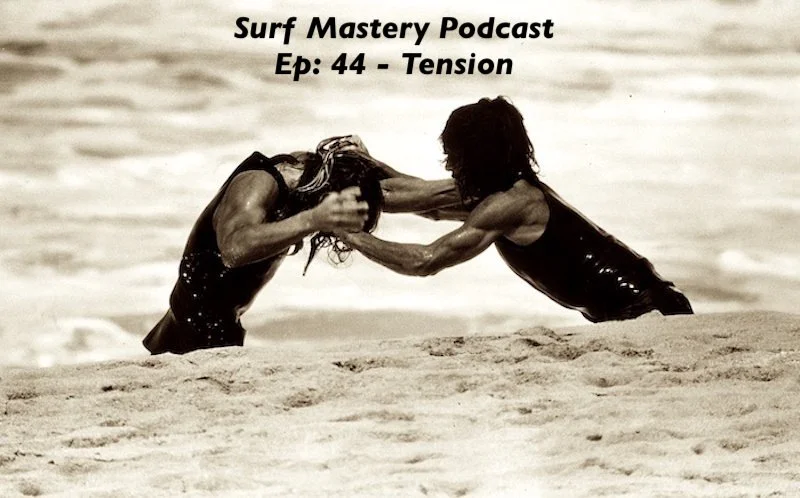
In this short but powerful episode, guest Clayton Nienaber breaks down how tension in the lineup and in your own body directly impacts your performance, your energy, and your ability to read and ride waves effectively.
Learn how to identify subtle physical tension that kills your flow.
Discover why a calm glide-in beats aggressive paddling every time.
Understand the connection between group energy in the water and personal performance.
Listen now to start catching more waves and surfing with effortless style—just by letting go of tension.
Previous guest Clayton Nienaber (ep 14 & 25) talks about how releasing tension can increase flow and enjoyment in your surfing.
https://train.ombe.co/?via=surfmastery
Key Points
The importance of reducing tension in the water to improve surfing performance and enjoyment is discussed.
The direct correlation between group attitude and surfing performance is highlighted.
The concept of energy and vibration affecting surfing success is introduced.
Practical tips for identifying and releasing physical tension to enhance surfing are provided.
The dual importance of reducing tension both in the lineup and within one's own body while surfing is emphasized.
Outline
Introduction to the Podcast Episode
The episode is part of the Surf Mastery podcast, featuring Clayton Neanaba as a guest.
Clayton has been a guest twice before, in episodes 14 and 25, which are recommended for listeners.
The podcast is described as an educational resource, with each episode designed to be timeless and relevant.
This particular episode focuses on the concept of tension in surfing.
Tension in the Surfing Lineup
Clayton recounts a recent experience from a boat trip in North Sumatra with ten surfers.
On the first day, multiple boats were anchored in one bay due to high swells and wind, leading to overcrowding at the single surf spot.
The atmosphere in the water was tense and unpleasant, with surfers exhibiting anxious behaviors such as paddling for waves, pulling back, and avoiding the top of the wave out of fear.
The tension resulted in a poor surfing experience, contradicting the relaxing holiday atmosphere that they sought.
Improving the Surfing Atmosphere
Clayton took initiative to improve the situation by offering compliments and advice to other surfers.
This approach led to a significant change in the atmosphere, with surfers beginning to share waves and enjoy themselves more.
The improved mood correlated with an increase in the overall level of surfing performance.
Clayton's group became known as the 'happy boat,' spreading joy and relaxation wherever they went.
In contrast, other boats experienced continued tension, with surfers fighting and arguing over waves.
Techniques for Reducing Tension While Surfing
A rule was implemented limiting paddle strokes to four, encouraging surfers to glide into waves instead of splashing.
Calm paddling was found to promote calmer and more rational wave surfing.
An analogy was made to car acceleration, where moderate, controlled acceleration provides better traction than aggressive wheel-spinning.
Professional surfers were observed to use gentle, gliding motions to enter waves efficiently.
Relaxed entry into waves allowed surfers to better plan their approach and identify opportunities on the wave.
Correlation Between Attitude and Surfing Performance
The overall attitude and etiquette in the water directly impact individual surfing performance.
Clayton draws a parallel between the energy in a room after an argument versus after something funny has happened, relating this to the surfing environment.
Positive energy in the water is believed to attract better waves and lead to more successful surfing sessions.
Negative energy is thought to repel waves, potentially leading to fewer opportunities for good rides.
Identifying and Reducing Physical Tension
Physical signs of tension include lifting shoulders, squinting eyes, holding in the belly, stiff arms, clenched fists, and holding breath.
These tension indicators can hinder body movement and negatively impact surfing performance.
Relaxing and letting go of tension allows for better body movement and improved flow with the wave.
Tension in the body can lead to stop-start movements, wobbling, and digging rails while surfing.
Key Takeaways
Reducing tension both in the lineup (social environment) and in one's own body while surfing is crucial for improved performance and enjoyment.
Maintaining a positive attitude and energy can significantly enhance the surfing experience for oneself and others.
Practical techniques, such as limiting paddle strokes and focusing on gliding, can help reduce tension and improve surfing skills.
Transcription
Welcome back to the Surf Mastery Podcast. Today's episode is another short episode. It's a little concept to think about on your next surf. The guest for today is Clayton Nienaber. He is a previous guest twice. He's—so if you want to go back and listen to some of his long form interviews, that's back at episode 14 and 25. I highly recommend those two episodes. And if you're new to the show, just remember that this podcast is an educational resource.
So all the way back to episode one, every episode is going to be relevant. And the idea is for each episode to be timeless. This little episode is on tension.
Clayton Nienaber
I just got back from a boat trip in North Sumatra where Chris Mills and myself, we took 10 surfers away. And the first day the swell was up and there was a bit of wind.
So there were about five boats anchored in one little bay. So there's only one surf spot. And the amount of tension in the water, it was actually sickening. It was horrible to go surf. There were guys fresh off the boat, paddling for waves, pulling back. Very few people wanted to go up to the top because they're too scared.
So they're sitting back, but they wanted waves and they weren't getting waves. And just, it was a really crappy feeling in the water for what we wanted to do. We were on a boat trip looking at finding nice waves, relaxing on a holiday, yet the feeling was horrible.
So as soon as I started talking to people and throwing compliments at people and giving some good advice to people, the whole atmosphere in the wave changed. People started sharing waves, people started laughing and joking, and the level of surfing started to go through the roof. And I made it my point on that trip that we had the happy boat.
So wherever we went, we spread joy and happiness and our guys relaxed and their surfing went through the roof and on some of the other boats, the guys were almost fighting and bickering amongst each other to get waves. And you can actually see that the tension on those boats was pretty high.
So purely by dropping the tension in the water and making it more fun and more enjoyable and more social, guys were actually able to start using better technique and better judgment and all the guys had a fantastic trip. So the first thing that we do is you're not allowed to paddle more than four strokes. That was one of the rules. And you weren't allowed to splash paddling in, you had to glide into the waves. Because if you can paddle in calmly, you will surf the wave calmly and rationally.
So a good example, if you look at a car at a stop street, if you were to accelerate really fast, the car would wheel spin and it actually wouldn't get any traction, it wouldn't go anywhere. Whereas if you just pull up at a medium pace with no force or tension, the car would actually go faster than the car with too much power. A lot of people dig themselves into holes and wheel spin, trying to paddle so hard to get into a wave. When you watch the pros, they just stroke the water and glide in. And that was probably one of the turnaround moments with the guys on the trip, is just to get them to glide into waves.
And then if you're scratching for a wave, like your mind's going 100 miles an hour, you're feeling tension, you're thinking too much, but when you just glide in, you start to see opportunities. You're like, there's the bottom, there's the top, the wave's moving at this type of pace, so I just gotta match the pace. And you can start planning your waves so much better.
Michael Frampton
It's interesting. So it's like the attitude in the water and in the group, like the etiquette and the politics, has a direct correlation to the way that you surf the wave.
Clayton Nienaber
100%. Have you ever walked into a room and someone's had an argument?
Michael Frampton
Yes.
Clayton Nienaber
Okay, you can feel that energy. Okay, and have you walked into a room where maybe, I don't know, someone's done something funny and people are laughing. You quickly go, what happened? Tell me. You want in on the action. But if you walk into a room and someone's had an argument, you want out. And there's that energy that you can feel. And when you surf, if you've got that happy energy about you, you are gonna have a cracker session. However, if someone's had an argument or a fight in the water, it just goes, looom, and the energy just drops, and it's like, you're not gonna get any waves. I honestly believe if you've got a good vibrating energy in the water, waves are attracted to you, and you can sit up there having a bad day, and waves will break everywhere, and they won't break where you are, because you almost repel that energy.
Michael Frampton
Yeah, sometimes it feels like that.
Clayton Nienaber
Well, it must be a reality then. It's gotta be something to it.
Michael Frampton
Yeah. So what are, any practical tips on this thought? Any other sort of cues you were giving people on the trip?
Clayton Nienaber
So, do you know how to identify tension in your body?
Michael Frampton
Yeah. Personally, I feel lifting my shoulders, squinting my eyes, holding my belly in, that sort of stuff. Yep.
Clayton Nienaber
So, any stiff arm, clenched fist, like you said, scrunched up face, holding your breath. So if anybody can identify any one of those things, they are gonna struggle to move their body. But as soon as you relax and let go, you'll find that your body moves amazingly well.
So if surfers can let go of tension, they're going to react and flow with the wave really well. But as soon as there's tension, your flow disappears, and that's when your board starts to stop and start, and when you start to kind of wobble and dig rails and so on when you surf.
Michael Frampton
Okay, I like that. So, less tension both in the lineup and in your own body when you're on the wave.
Clayton Nienaber
Yeah, that's it.
Michael Frampton
All right, man, thank you.
Clayton Nienaber
No problem. Well, hopefully you guys surf and you enjoy it.
44 Releasing Tension w Clayton Nienaber
For the passionate surfer—whether you're a weekend warrior, a surf dad, or an older surfer—this podcast is all about better surfing and deeper stoke. With expert surf coaching, surf training, and surfing tips, we’ll help you catch more waves, refine your paddling technique, and perfect your pop up on a surfboard. From surf workouts to handling wipeouts, chasing bigger waves, and mastering surf technique, we’re here to make sure you not only improve but truly enjoy surfing more—so you can get more out of every session and become a wiser surfer. Go from Beginner or intermediate Surfer to advanced.