
061: JAMES WOOD - Surf Coach
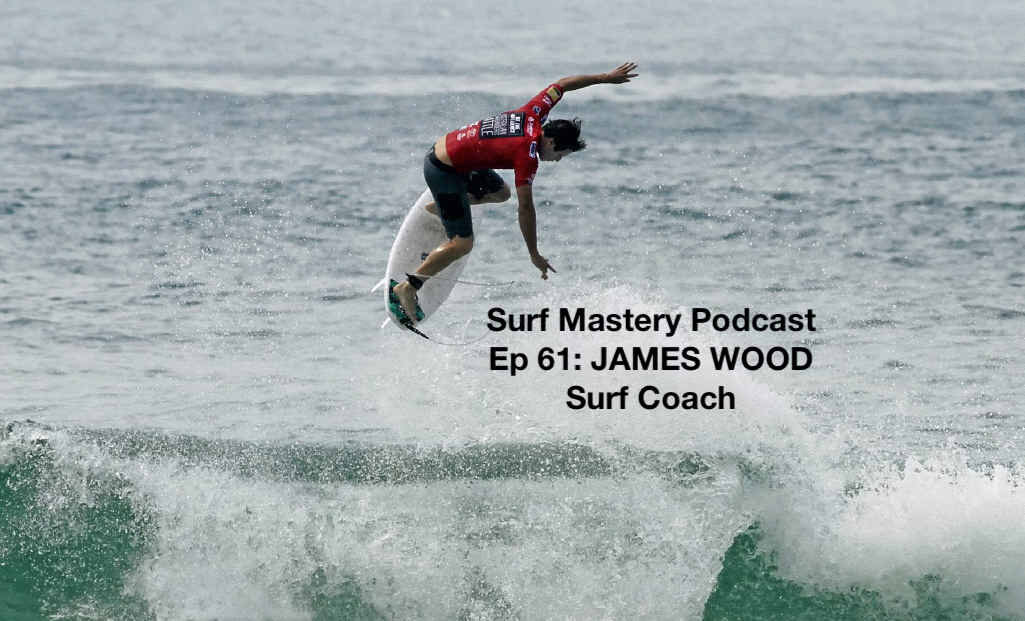
Do you really need perfect waves to improve your surfing—or are you just making excuses?
Whether you're a young grom or an adult just trying to break out of intermediate purgatory, surf coach James Wood has one clear message: surfing consistently—even in bad waves—can transform your progress. From common mistakes in wave reading to the power of video feedback, this episode unpacks how James helps surfers evolve faster.
Discover the #1 mistake kids and adults make when reading waves—and how to correct it instantly
Learn why riding the wrong board might be the real reason you're stuck at the same level
Get James’ daily surf consistency strategy that even pro surfers follow to stay sharp
Hit play to hear James Wood’s powerful surf coaching insights and learn how to accelerate your surfing with practical, proven techniques.
https://www.instagram.com/jimmywood/
https://www.instagram.com/woodsurfboardslennox/
Key Points
James Wood, a former WQS competitive surfer turned surf coach and surfboard shaper, discusses his transition from competitive surfing to coaching and the challenges he faced in the early stages of his coaching career.
James highlights common issues and mistakes among young surfers, emphasizing the importance of wave knowledge and consistency in catching waves.
James explains his coaching methodology, which includes filming sessions and using video analysis to help surfers improve their technique by comparing what they think they are doing versus what they are actually doing.
James discusses the challenges of coaching older surfers, particularly those aged 13-14, focusing on wave reading and turn selection.
James provides tips on how to read waves better, including cues for identifying where to bottom turn and avoiding common mistakes like looking down for too long.
James addresses the challenges of coaching intermediate adult learners, encouraging them to exaggerate their movements and break bad habits to improve their surfing.
James emphasizes the importance of consistency in surfing, even on bad days, to maintain skills and improve performance when conditions are better.
James shares his experience with the 100-day surf challenge and how it helps maintain consistency and improve surfing skills over time.
James discusses the role of shaping surfboards in his surfing career, noting that while it may not directly improve his surfing, it keeps him engaged and experimenting with new designs.
James provides tips for navigating crowded surf conditions, suggesting strategies like waiting for the second or third wave in a set to find more space and better waves.
Outline
James Wood's Background
James Wood is a former WQS competitive surfer turned surf coach and surfboard shaper.
James competed in the Pro Junior Series and the Australian Pro Junior Series, transitioning to the WQS full-time from 2006 to 2013.
In 2014, James became a certified surf coach through Surfing Australia and began coaching children aged 8 to 18 in Lennox Head, Australia.
Surf Coaching Methods
James conducts coaching sessions every morning before school and some afternoons, focusing on different age groups and skill levels.
He emphasizes the importance of catching as many waves as possible to improve wave reading and consistency.
James uses video footage from each session to provide feedback, helping students see the difference between their perceived actions and actual performance.
Common Issues and Mistakes
Younger students often struggle with wave reading and consistency.
Older students, around 13 to 14 years old, tend to look too far ahead, missing optimal sections of the wave.
James uses cues such as looking straight back up to the top of the wave after a bottom turn to help students improve their wave reading.
Coaching Adult Learners
Adult learners, particularly those in their 30s and 40s, are often timid and overly concerned with style and technique.
James encourages them to exaggerate their movements and try new things to break bad habits and improve their surfing.
He suggests using larger, thicker boards on bad days to stay in the water longer and improve quickly.
Importance of Consistency
James stresses the importance of consistent surfing, even on bad days, to maintain sharpness and improve skills.
He participates in a 100-day surf challenge to stay in the water regularly, emphasizing that even short sessions can be beneficial.
Consistency helps surfers maintain their skills and be prepared for good days, especially in crowded surf spots.
Surfboard Shaping
James shapes surfboards, both for himself and for companies, using both shadow shaping and hand shaping techniques.
He collaborates with Chris Brock, an experienced shaper from Lennox, who has influenced his surfing and board design.
Shaping boards keeps James engaged in the sport and allows him to experiment with different designs and shapes.
Surfing Culture in Lennox Head
The surfing culture in Lennox Head has grown significantly, with more kids and adults aspiring to be professional surfers.
Local surfers, including Adam Melling, Stewie, and Connor O'Leary, have inspired a new generation of surfers.
The increased popularity has led to more crowded surf spots, especially during peak times.
Coaching Elite Surfers
James coaches elite surfers by fine-tuning their techniques and strategies, using video footage to review and improve their performance.
He works on specific aspects such as starts, turn choices, and priority usage in heats.
James acts as a sounding board and mirror for elite surfers, helping them stay sharp and focused.
Tips for Surfing in Crowded Conditions
James suggests going over the first wave of a set on a point break to avoid crowded lines.
He advises watching sets and identifying where the best surfers are positioned to find less crowded sections.
James recommends paddling out from the end of a point break and building a way to the back to catch waves that others might miss.
Contact Information
James can be contacted through his Instagram accounts: Jimmy Wood and Wood Surfboards Lennox.
He offers coaching sessions, board shaping services, and video analysis for surfers looking to improve.
Transcription
Michael Frampton
Our guest for this episode is James Wood. James is a former WQS competitive surfer turned surf coach and surfboard shaper. James does most of his coaching out of Lennox Head on the east coast of Australia. He is @jimmywood on Instagram. We recorded this conversation in December 2019, so nearly a year ago is when James and I sat down and talked about surf coaching. Enjoy. ♪ So what's your story? You competed?
James Wood
I did, yeah. Did the Pro Junior Series, like all the amateur events, and then the Australian Pro Junior Series. And then that was kind of the pathway to doing the WQS. Probably full-time on the QS from about '07? Probably '07 or '06 to... 2013 probably stopped. Doing it full-time in probably 2013, I think. I did the first part of the year and then stopped. I didn't go the whole way through. And then 2014, I got my, like, there was no coaches around Lennox and there was heaps of kids, like a really big pool of kids. I just went up and did my coaching thing through Surfing Australia. Got my level one coach or level two or whatever it was. And then, yeah, it's just gone on from there. Do every morning before school. Through the school terms and then a few afternoons and then guys in between that don't go to... I do school kids from the age of about 8 all the way up to 18.
Michael Frampton
School. A lot of groms?
James Wood
So different groups, different levels through the week. Every morning, sort of start at, we meet at 6 wherever. I just send it, send a text out and we meet at one of the beaches between Lennox and Ballina. There's usually between sort of three and six, three and seven kids at the most. Yeah, we coach till about 7:30 and then they all scramble off to school.
Michael Frampton
What are some of the most common... issues and mistakes that you see that age group making?
James Wood
Probably just reading the waves. And just, like, wave knowledge. Just stuff like that. Like just getting the right wave. And just consistency on catching waves. I kind of try and get them to catch as many as they can quickly, just so they're on in a way.
Michael Frampton
Waves. Okay. So the numbers game in a way. Yeah.
James Wood
If they can do that from early on, if you can get them on a lot of waves, they can see the footage. I film every session. They get a lot more waves to look at and then it's easier for them to work on the stuff because they're on more. Yeah.
Michael Frampton
Waves. So they're trying to correlate with that. How did that wave feel? How does it look? Yeah. Kind of.
James Wood
Yeah. I take it. I have a camera and I have an iPad. So I put all the waves on the iPad at the end of the session and I either text them every wave that... good or bad. Especially if it's stuff that we're trying to talk about and work on. If they're still doing it, I'm sending them that. I've got Coach My Video. It's like the Coach My Video app. We can go on and... you can mark everything and slow it down and stuff like that. That's kind of been how I've done it. And that seems to be, it can get them moving a lot quicker because what they think they're doing versus what they see is generally different, especially when they're really young.
Michael Frampton
So what about, like, in the older group, like the... like in towards like the 13, 14-year-olds. You're still trying to get them on lots of waves?
James Wood
Not usually. Generally, they're pretty good. Generally, they can surf sort of anywhere we go, between Lakes and Ballina. They're pretty confident. They want to go where there's sort of some decent waves. It's more on how they're drawing their lines, how they're reading the wave and what sort of turn selection, really, like what they're looking to do with the section they're filming.
Michael Frampton
Have. And is it still a process of, like...
James Wood
Yeah, still filming, yeah. They have it, we have it. Like, it's funny, there's a bit of a bad habit they get here because we have, you know, three or four points. A lot of my kids, a lot of the crew around here, are very down the line. They're looking ahead, they're looking too far ahead. So just trying to get them to stay close to the pockets, close to the bowl, so they can use that power. And it's kind of... it looks so much better if they're, you know, tighter. But a lot of my kids, that's a big one. If they're not... if we haven't been doing many sessions or there's been... I just do term to term. So if they've got some holidays or they go away for a few events or whatever it is, that's kind of a big one. Just keeping them tight, keeping them.
Michael Frampton
Plus. So in terms of learning to read waves better... Yeah. Do you have any cues that you use? What's some tips on that?
James Wood
On how to read them? Yeah. Like as they're taking off? Or as they're paddling... you mean to catch it?
Michael Frampton
I don't know. If you can think of an example of something that you've been teaching someone recently maybe that you could expand on?
James Wood
Just identifying where to bottom turn. Biggest issue, a lot of the guys will stay down too long. So a cue is like... like... as soon as you look to the bottom of the wave, it's like, they'll already start to turn back up because usually they're pretty slow. So as soon as you look down, I'm getting them to sort of look straight back up to the top of the wave and that stage is... that's a good one for kids that are still struggling to get back up off the long.
Michael Frampton
Bottom. So what are they doing wrong specifically? They're looking down for too long.
James Wood
Yeah, they're looking down for too... yeah.
Michael Frampton
Initially you're coaching them, hey, make sure you look down. And then they tend to... so you kind of have to trust what you saw.
James Wood
Stay there too long. As soon as your eyes go down, straight back up.
Michael Frampton
And then make that turn, but then you're always looking what's next. Is that what you're kind of trying...
James Wood
To do? Yeah, trying to get them to do. Because a lot of the kids, they get stuck at the bottom and they miss sections. They're not reading that section right. Like it's too deep, it's too long. Or they just stay at the bottom of the wave. So as soon as I get them to look down, I'm like, if you look down, start to turn back up. That's probably the first one. As they get a bit better and they're starting to really read the wave, that'd be my first... yeah, just eyes, yeah, or the throw.
Michael Frampton
One. Okay. And is it the same thing? As soon as you look up and you start to do your top turn, you want to look back down again?
James Wood
I get them to just watch their front hand and throw to the beach. I'm telling them to throw to me. As soon as they look up, as soon as they think they're at the top of the wave, throw to me. Point your nose to the beach. They're probably the most basic ones, I guess, in regards to what I'm telling the...
Michael Frampton
Kids. So what about that intermediate adult learner? The adult experience, adult person, you know, 30, 40-year-old who's coming to you, wants to just improve. Get rid of some of their bad habits. What are you seeing with them? They're kind of like... they're kind of a little more timid in regards to how they look. They're like, they want... they're very worried about their style and their technique before they're actually really doing anything. I try and encourage them to be pretty... like the couple of guys I've got in that sort of intermediate, sort of range between 30 and 40, or even a couple of them a little bit older. They're really, like, timid in what they do in regards to movement, in regards to how they turn or twist or rotate their body. They don't want to look like they're throwing it all around and kooky, I guess, to a degree. So trying to get them to sort of exaggerate everything is a big one. Like exaggerate your movements, exaggerate your rotation, your head turn, hold it a lot longer. Stuff like that, just so they're starting to do a bigger S or a bigger carve back towards the whitewash. I'd rather them fail, almost like fall a lot more. Easily I can get them to stay on the wave. It's just more of getting them outside their comfort zone. Breaking those bad habits, for sure. The ones I have anyway, I'm just thinking in my head of kind of what I've been telling these guys. They like to stay and they do the same sort of small movement, small turn, because they don't want to look like they're kooking it or they're a bit too crazy and wild. Whereas you see guys that are pretty raw and probably already in their heads have a bit of confidence. These are just free surfers. They look a bit wild, but they can string it together. And it's because they kind of back what they're doing. They're not really too concerned with how they look. I can fix a style, I feel like, pretty easy by showing them sort of what they look like. But if they aren't willing to even try that extra bit or exaggerate that extra little bit because they're worried about how they might look, you're kind of always fighting against a bit of an uphill battle. I find that I've had to really get that in their heads, like don't worry. And even if there's other guys out, who cares?
Michael Frampton
Is that because they don't want to sacrifice the preciousness of a wave?
James Wood
Possibly as well, yeah, to a degree. The other thing as well is I find with that level of people, and this is the one I've just had a bit of a, not so much a breakthrough, but finally agreeing with me, they like to stay on a board that they think they should ride. Whereas like... I've just been like, I ride like these big, thick bikes. You know, almost Minnie Mouse, like big thick quads or whatever, just because I don't feel like doing much work when it's bad. And they just sit up on the water and I'm riding something that's like, you know, 20, 20 litres more than what I'd usually ride, or 15 litres, yeah.
Michael Frampton
More. You personally?
James Wood
So I'm trying to put that onto the guys that are that basic level, just to have some fun, just when it's bad, to stay on a wave longer, instead of just getting up on their board or their fish or whatever it is that they think's right, and the volume's not... You should be on something that's much bigger just in those bad days. Just so you're catching a heap of...
Michael Frampton
Waves. So trying to teach them to like, just choose the right board for the conditions.
James Wood
And just have a big pig to surf. I feel like that's such a good way to improve quickly if you're out of, you know, an intermediate level.
Michael Frampton
What's an example when you say a big pig?
James Wood
Well, I'll just give you my example. I ride my normal short board. It's 5'10", 18 and 3/4, 2 and 5/16ths. I don't know what that is in the American terminology but it's about 26 and a half litres. That's kind of what I would ride on anything from shoulder high to 6 foot. And the board I have the most fun on that I ride in summer, waist-high crappy waves, lower, is 6'9", 21 by 3. And it's a quad. It's just this big pig. And I have so much fun. I bring it to these coaching sessions with these intermediate guys just to get them to catch some waves, have some fun. Because they're like calling me going, it's no good. And I'm like, what? I don't really want to do it. That's not the point. Let's just get out there and see. You'll learn something in that session, whether it's getting in the right spot for a wave or, you know, getting up quicker or, you know, pitching a different line on something big. Just because there's more volume, you stay on the wave longer. It's just about getting that little bit more time on the wave to see how your feet are, see where you're moving.
Michael Frampton
And teaches them to have fun in different conditions. Yeah, like.
James Wood
Different, and yeah, the stuff that they'd probably, if I wasn't coaching and we weren't doing something together, the majority of those guys that are sort of 35 or older will just brush it. And they'll wait for those good days and then there's 50, 40 guys out around here. And they're battling all these good guys and they haven't done the stuff in the bad stuff. To sort of really... So when those good days come, they've had all these other bad surfs and bad waves. They're like, they're ready to go. They're sharp. They kind of sit out. And then they jump in when it's good and they're kind of like, far out, we can't get anything. Can't get any waves. Everyone's hassling us. I've only had a few waves and I've fallen or, you know, I haven't read it right. So it's just trying to keep the sword sharp, I guess. Trying to keep those guys in the water.
Michael Frampton
Is that what motivates you to stay in the water on those days?
James Wood
Yeah, I try to surf every day as much as I can. If I hadn't been surfing a bit through winter, so me and a friend, we did a 100-day surf challenge, which is like... heaps of crew do it around here, but you've got to catch a minimum of three waves. You've got to stand up on three waves, and that counts as a surf. So we did it for 100 days straight. Horrible days of stuff at night because I didn't get back from work until quite late. Stuff like that. And it just keeps you in the water.
Michael Frampton
In the dark?
James Wood
Yeah, just straight out front. Just in the dark, rolling around. It's pretty funny. But it's just... the whole terminology behind that is for those guys that are trying to get to that next level. All of us grew up... I surfed every day from 12 to... I was 22, I surfed every single day. You'd just love to surf. You're surfing with your mates from the age of sort of 11 or 12. You're surfing every day of the school holidays. Every day after school. So all these guys that have started late, in their late twenties or early thirties, they're just picking these days that are good. But all these guys that are coming through have surfed so many more times that they're just... they're never going to get over that hump if they... That's my terminology behind it. I just feel like if you could just... hack a few bad sessions, you're always going to get something out of it, even if it's for three to five waves.
Michael Frampton
Yeah, I think a lot of people don't realise that.
James Wood
That consistency of just going for a surf is, I feel, especially for those guys that have... like, the kids are always going to do it because they do it every day because it's what everyone's doing with their mates. But those guys that have maybe come from... somewhere where there's not much surfing when they were young or, you know, they're just really into it now. I don't know. I feel like that's more important. I've had a few times where I've had to like... for a few of these guys, because I just do... Tam-lays. Intermediate guys that are... that I do through the week. It's maybe one session every Thursday. So you've got to do a minimum of three to five surfs between. Otherwise, we're just going to be working on the same problems. We're going to be going around in circles. It's kind of just banging your head against the wall.
Michael Frampton
So the 100-day challenge. Yeah, that's a good, like, I mean, it's a good way for anyone that's... if you've got, like, I was going out in the middle of winter in my boardies. It doesn't get really that cold here in Lennox, but you can catch three waves in 15 minutes in a pair of boardies, and it's just like going for a swim or an ice bath. It's a good way to wake up. I don't know if you have it. You know, it comes back to if you have a big pig or a mini-mow even or something that you can just run out without a leggy and just go stand up and do a couple of turns or whatever. I just feel like if you can keep surfing every other day, by the time the waves get good on... good around the area, wherever you live, you're going to have some sort of a leg up in the crowds that all know how to surf. Otherwise, it's getting more crowded with more kids that surf every day that are getting better. No one wants to share anywhere unless you live somewhere by yourself in the middle of nowhere. It's a good way to just... just keep a bit more consistent.
Michael Frampton
Okay, and you said you shape boards as well?
James Wood
I do, yeah. I finish shape off, like, off the machine. So I do shadow shaping for a few companies and then just doing for myself. Yeah, and I do a bit of hand shaping with an old guy who shaped the big pig I was talking about earlier.
Michael Frampton
Yeah, so you shape your... all the boards that you're riding you shaped yourself, yeah?
James Wood
His name's Chris Brock. An old shaper from Lennox. Yeah, he's been a big part, big influence really with my surfing and the boards. He's been unreal.
Michael Frampton
Does shaping help you to be... to help you surf better?
James Wood
Probably not, because you're always battling in your head whether it works or not. But it keeps you surfing. Because you're always wanting to try something new and you're always trying to work out, you know, I could go and get a JS or a CI or whatever that's probably going to go really good, probably better than mine. And I can surf, but it's not the same thought of, how can I make this board better for myself? These guys, all you see... someone riding your board that you know, they're loving it. You're like, all right, maybe that is working. So what I have figured out with my boards is working with the boards I'm shaping for the crew around here. So it keeps me in the water. That's kind of what I've got out of it probably the most.
Michael Frampton
So you know how to ride a bunch of different boards?
James Wood
Yeah, I feel like I can ride not any shape, but I like to try all different shapes. And you're just sharp. If it's crap like it is today, you can see it's windy and onshore. If you just go out and get a few on something fun. And the next day turns on, you've been in the water, you know, you've had your feet on the wax, you've done a few turns, you're not like... you haven't... not surfed for a week or a week and a half and then the waves are good and you're like... it takes you maybe four or five waves to get there.
Michael Frampton
Get the spark back? Do you think that's the worst thing you can do for your surfing? Not go surfing because the waves are crap.
James Wood
Yeah. I feel like that's probably one of the worst things you can. Probably.
Michael Frampton
Do. What is the worst thing you can do for your surfing?
James Wood
I don't know. Probably that. It is probably that. It is just like... if you're looking to improve, I mean, if you're just looking to have fun, then surf whenever you want. But if you're looking to improve and in your head you're like, I can't get better, I can't do this. That's probably a big reason, is probably the consistency of how you're surfing or... you're not looking... at your footage, or there's like probably a few things. But I'd say surfing, like consistently surfing, is probably the biggest. Consistency and just going for a surf. And I don't mean waxing up and going for two hours. No one has time, especially if you're in that 35 to 40 range. You've got probably a full-time job. You've probably got two to three kids, and there's very little time. But consistency. If you get up at dark and you get there and surf for 20 minutes or half an hour, even if you have to put on a wedy, just get up a little earlier. I mean... I feel like you'll benefit... from that if you're looking to... and I've surfed all my life and I lose it a bit.
Michael Frampton
Improve. Yeah. For sure. Yeah. I totally agree. Yeah. There's nothing worse than losing that sharpness.
James Wood
For sure, because I've just had a little boy and I haven't been able to surf every other day because I'm coaching as well. I'm watching a lot of surfing. And I still... like I went surfing the other day and hadn't surfed for two days. Or three days in, my timing was out. You know, there's a heap of good guys out and it gave me the shits for sure. I was like, far out. You know, I just wanted to go surfing and I couldn't. I only had half an hour to surf and it was frustrating.
Michael Frampton
Are you working on your own surfing at all at the moment?
James Wood
To a degree, or just trying to be consistent would be my one. Just trying to be like... consistent with the board I'm riding and consistent on each wave I catch.
Michael Frampton
What's the key to consistency?
James Wood
Just reading the wave, yeah. Thinking about the right turn, not trying to do something stupid. And like... consistent. It's hard to explain. I guess just like... you go through times where you want to try different stuff, but if you're in a busy surf and you don't have much time, just consistent. Staying on your feet, just good flow, like flow from the start to the finish. If you watch MF, like Mick or Slater, generally if you watch them up at Snapper, their first few waves, they don't do anything crazy. It's generally top to bottom. Just good flow. They're just getting their feet in the wax. Because they probably don't want to fall because they don't get much opportunity in those warm-ups. I guess in a crowded, condensed session like that would be... something I'm thinking about. Okay.
Michael Frampton
So even Mick Fanning, who's surfing every day, he's one of the best in the world, still, like on his first couple of waves of a surf, he's just feeling it out. Just... is that how you approach it?
James Wood
Finding his feet. I would imagine so, depending on the wave, but... or two? Yeah, a little bit for sure. Yeah, especially at Lennox. If it's good at Lennox and I'm on my first wave, I'll try and get to the very end of the wave and I'll probably... you know, slow it down a lot for sure. Unless it's, you know, really good and it's battling and you're trying to get battled first wave. But if it just turns, I don't want to stuff it up for sure. I want to... I feel like if you start a surf on the front foot, even if you're surfing... the wave at 60% of your skill, it sort of puts you in good stead. I've had a lot of bad surfs where I've tried something stupid, stuffed a wave, gone out, sat for 20 minutes, hassled with someone, didn't get the wave, had a blow-up, and it just sort of breeds... you're getting a bad headspace. It's kind of not why you're even going out there. Yeah, that's a good point.
Michael Frampton
That's a good tip.
James Wood
It's just my train of thought. And that's kind of what I try and coach, especially in a coaching session, because with the kids, I've only got... generally an hour to an hour and 40 is sort of the majority of the sessions I have with the kids before and after school. I always try and get them to just stay on their feet the first wave just because it stokes them out. They're getting a bit of headspace. It's easier said than done, but most of the crew, if there's four kids or five kids, the two kids that have the best session usually... the kids that stay on their feet the first couple waves. It puts them in a just good frame of mind. And then they sort of slowly build, and towards the end of the session, they're trying and doing cool stuff, and they're getting close to making it, or they're making it, but... they're in that headspace because they started their surf right. They didn't go out and try a dumb air or a dumb turn in a wrong section. Like, it's a good way to sort of start any sort of session, I feel.
Michael Frampton
Do you always film when you're coaching or are you sometimes surfing with...
James Wood
If it's the little kids, like if it's the little tackers, I'll maybe get in the surf with them. But generally, like... well, I'm generally filming. Depending on whether some of the kids are going for events, whether they're doing drills like strategy drills or heat drills or starts or whatever. We'll do that or I'll get them on like a bit of a rotation where they... they're allowed three waves. They come in after three, come look at the three waves. We break down what we're trying to work on or achieve that session, and then they're back out. And so I'm trying to get them out of the water now. I guess if you broke it down every 20 minutes? Generally, if they're out there longer, they're either talking to each other and gasping again. And they're kind of not really concentrating on what they're going to do, or they're not getting many waves, and they start to get frustrated. So if you can get them out, they can kind of look at their waves too and kind of put it in perspective. Like, hey, that isn't that... it wasn't that bad. And then it resets them for the next lap. Thank you. Kids that get stuck out there for 30 minutes or 40 minutes generally have a bad session.
Michael Frampton
So you kind of break it up into 20 minutes?
James Wood
Yeah, 20 minutes.
Michael Frampton
Or you just whistle and wave them. How long have you lived around here?
James Wood
In? Yeah, depending on where we are, yeah. Generally sort of 20 minutes.
Michael Frampton
Your whole life? So in the past, let's say five, six years, how much has the surfing culture changed?
James Wood
Yeah, or in general? Heaps. I mean, we've got... you know, obviously it was a big thing with Adam. Adam was sort of the first guy in a long time to make the tour. So Adam Melling was on the tour. He was there from 2010 through to 2016. So to have him there and the kids could go up and cheer him on at... up at Snapper and stuff like that, you know, those kids... sure. And then we had Owen and the Wrights moved up in about 2009 or 2008. And then... so I'm still here now. But we had, you know, Mikey, Tyler, and those guys are all on tour.
Michael Frampton
So they inspired a lot of groms?
James Wood
Yeah, for sure. And then Stewie made the tour and started doing really well. And Connor O'Leary's moved up. So there's a lot of hot... like, you know, there's guys that they watch on TV and on their computer and whatever, competing, that they're surfing with out in front of the pub at Lennox or at the Point or whatever. So it's changed in that regard, that there's a lot more kids that are really trying to aspire to be... pros. Where it was a lot smaller, now it's a lot bigger and there's a lot of kids and crew coming from out of the area just to surf here and surf with the kids.
Michael Frampton
So have you coached some of these teams? You mentioned you've coached Melling before?
James Wood
Yeah. I travelled with him and like... yes, you get to call it coaching. We're best mates. He's one of my best mates since we were kids. I've travelled with him to a few events when he was still in the CT and then I've done heaps of work with Stewie and work with... just kind of, you're just almost a sounding board or a mirror.
Michael Frampton
Connor. So what are you mostly doing when you're coaching the elite surfer?
James Wood
You're not... those guys, like, you're just trying to keep them sharp. Remind them of different stuff like... so going...
Michael Frampton
Are you filming every session and just... yeah?
James Wood
Yeah, like that's the biggest part. Obviously, they come in there. They're pretty easy to work with. You're trying to work on whatever contest they're going to, really. It's not always easy to replicate somewhere like Chopes or Pipe or something like that. But if they're going to, like, obviously a right-hand point or a beachy or a left, we'll try and get stuff left, you know. You're just trying to, you know, if they've got any longer boards before they go, we might ride some of the mid-length ones just so they can get a feel for them and stuff like that. But it's just a lot of drills. Like I said, whatever they sort of did wrong or they felt they could work on, we'll work on that. Maybe their starts or how they use...
Michael Frampton
Priority. So fine-tuning.
James Wood
Yeah, they're pretty easy because they're kind of... Stewie and Connor will go back and forth. They'll tell you what they think and, you know, yeah, that makes sense or... felt like, you know, in this heat or that heat I didn't use priority well or maybe my first turn. We could maybe have a bit of variety on their first turn, whether it's a different-looking turn that the judges haven't seen much of. Or, you know, turn choice in a certain spot. Maybe just one major instead of trying to fit two turns in. Like, just go for a big punt. Like, some of those QS waves can be pretty short and they're trying to fit two snaps in, I'll get a six. Whereas they could just race, do a big punt, maybe get a seven or an eight. Like, trying to do stuff like that. Just where, like, that would be... it just varies to where. To where they're at. Wherever they're sculling or wherever they've been. It's good if they're in... the Primes are good because you can review every heat. They've got the heat reviews, but anything under a Prime doesn't have the reviews, so it's just going off what you saw. But yeah, mostly video.
Michael Frampton
Okay. What about in terms of, like, the... are you seeing here a blow-up of adults, learners on soft tops? Is it affecting the...
James Wood
Maybe not soft tops, but there's definitely more intermediate guys. Yeah, for sure. I do agree.
Michael Frampton
The salty crew, the culture, in a negative way?
James Wood
A lot of the locals are... kids and adults surf early before school and work and surf after school and work. So, like, between 8:30 and 5:00, 2:30, there's not always a great deal of locals. There is quite a few.
Michael Frampton
Okay, so that's when the... you get a lot more around those times.
James Wood
Yeah, for sure. And you get a lot of crew just coming down for a surf. Everyone can read a swell and a forecast now, so if they get word that there's good waves or a good bank, you're generally getting sort of 60-plus guys at first light. Then you're getting 60-plus guys at 10 a.m. Yeah, it gets hectic now. It was a busy winter, for sure. Three years ago, we had all the shark issues. We had a lot of shark issues. We're surfing with no one, so... you know, everyone was sketching out then when there was no one out. Now we've got 60 to 100 guys out now.
Michael Frampton
Any tips for when it's that busy? Any tips for getting waves?
James Wood
On a point break, probably... would be just always try and just go over the first wave of the set. That'd be... that'd be one little secret, or even the second. If you can see you're at a point, right, and it's pretty stacked line. Like, they're five, six-wave sets in a winter swell. I'm never looking... if it's like a five-wave set, I'm never looking at the first two. Let them eat. Let them dall-e. And then you can get... guys will paddle and generally three or four guys will look at the first one. You're seeing around 10 guys, obviously, guys are coming from up the point on the wave, but that's okay. Or just sit off the end. Or sit there for 10 minutes. If you're just going for a surf, there's no need to run out. Watch a set. Watch two sets. See where everyone is. Try and identify where all the good guys are and sit further down from them. There's no point going in the middle. I think everyone gets... like, I feel like a lot of crew, if they go surf a point, they feel they have to be the first out. And that's... I don't... I mean, I've grown up on a point. It's obviously certain times it's good, but a great way to sneak waves if you sit further down or... you see it at the end, even. Work your start at the end and paddle out. Like, catch a wave at the very end and slowly build your way out to out the back instead of starting out the back and trying to work your way down. Go the opposite, miss.
Michael Frampton
Way. Yeah, there's always waves that are being missed and sections that are being...
James Wood
Yeah, or a crew have fallen off, especially in the last quarter of a long point. Generally, even if they're a good guy, they're running out of gas, they might just try something silly because they've already had their few good turns out the back. Stuff like that, probably. Pretty good way to look at it. But I never really look at the first or second wave. I'm always letting everyone eat, especially if it's not my turn. Let them go, have a look at them, and I can sort of get a bit further out, and maybe the next few are bigger, sort of jet off to the side. Probably just giving away all my secrets for Lennox, so don't come to Lennox. No.
Michael Frampton
So how can people get a hold of you? Where can people find out more about what you do?
James Wood
I guess just on Jimmy Wood on Instagram. So I don't really do any advertising. It's a lot like... all my work for coaching is word of mouth. Yeah, just contact us on Jimmy Wood on Instagram or on Wood Surfboards Lennox on Instagram. One of those two if you're looking to do any coaching. Or get a board. Or get a board or just even just have a chat, send us a video and I'll have a look at it and see what we can see.
Michael Frampton
Okay. Rad, man. Yeah. Thank you so much for your time.
James Wood
No worries, mate. Thanks for having me.
For the passionate surfer—whether you're a weekend warrior, a surf dad, or an older surfer—this podcast is all about better surfing and deeper stoke. With expert surf coaching, surf training, and surfing tips, we’ll help you catch more waves, refine your paddling technique, and perfect your pop up on a surfboard. From surf workouts to handling wipeouts, chasing bigger waves, and mastering surf technique, we’re here to make sure you not only improve but truly enjoy surfing more—so you can get more out of every session and become a wiser surfer. Go from Beginner or intermediate Surfer to advanced.