
060: STRIDER WASILEWSKI - WSL Commentator
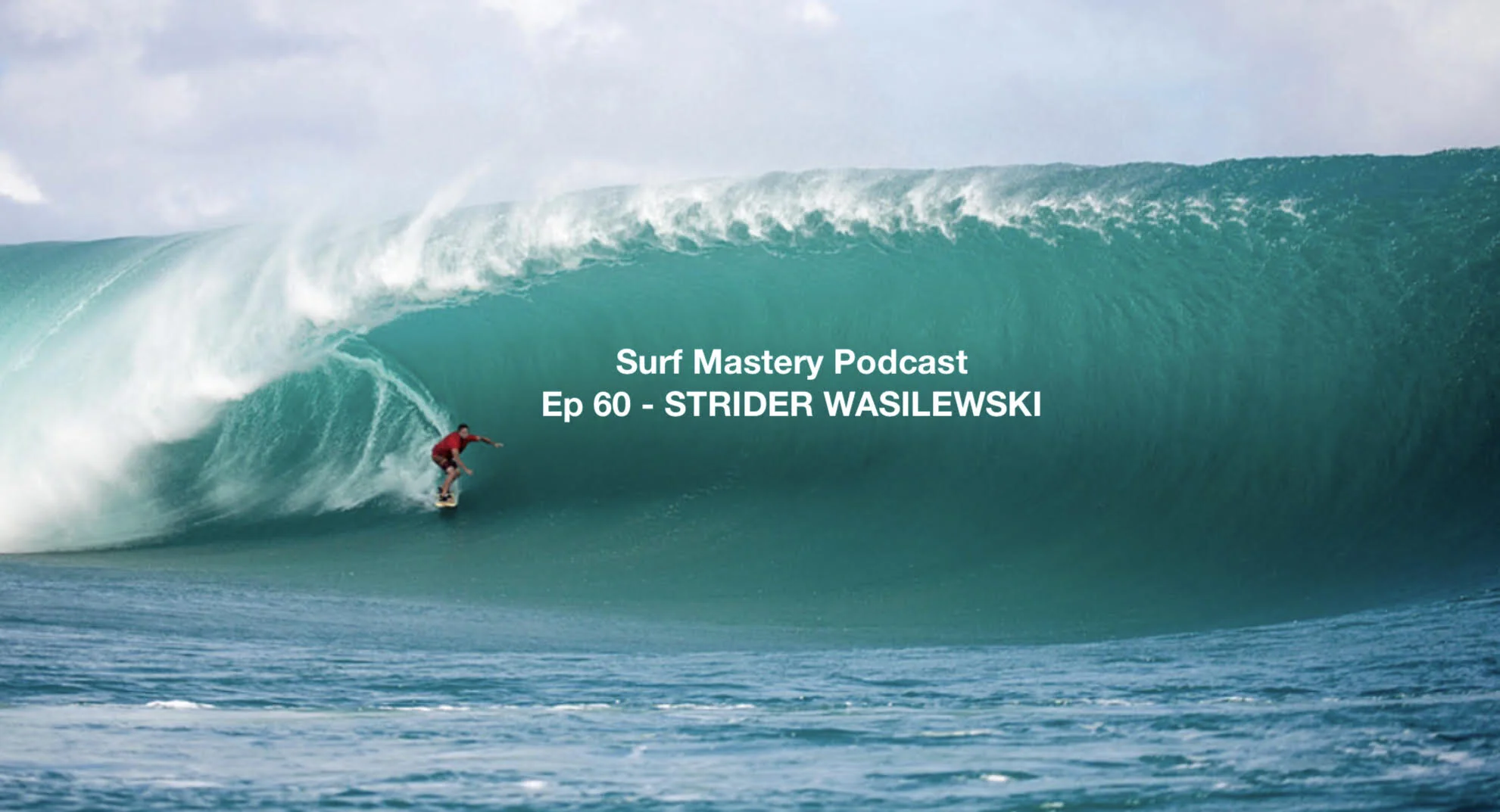
Strider in Tahiti
Show Notes
Is your surfing stuck in a rut no matter how long you’ve been at it—or are you unknowingly breaking the one rule that’s ruining every session?
In this episode, Strider Wasilewski—former pro surfer and WSL commentator—opens up about everything from surfing’s unspoken etiquette to what separates world champs from forever-mediocre surfers. Whether you’re riding soft tops or chasing heavy reef breaks, this conversation reveals the real reason most surfers plateau.
Learn how lineup dynamics and etiquette can make or break your session—even if you rip.
Discover why most intermediate surfers ride the wrong boards and how foam might be your secret weapon.
Get inside the mindset of elite-level surfers and understand why “letting go” matters more than talent.
Hit play now to hear one of surfing’s most respected voices share uncensored truths that could instantly level up your next session.
Former pro surfer turned WSL - World Surf League commentator Strider Wasilewski shares some of his surfing knowledge.
https://www.instagram.com/stridersworld/?hl=en
https://shadesunscreen.com/
https://podcasts.apple.com/us/podcast/a-conversation-with-strider-raspberry-wasilewski/id1456553813?i=1000464476639
https://www.worldsurfleague.com/
Key Points
Strider Wasilewski, a former professional surfer and current WSL commentator, shares insights on surfing conditions, emphasizing the importance of understanding tidal changes and swell patterns.
Strider discusses his love for surfing, regardless of wave size, and how it provides a sense of freedom and joy, akin to an addictive feeling.
Strider recounts his early surfing experiences, starting at age six, and how it transitioned from a hobby to a career path by age ten through winning contests and gaining sponsorships.
Strider explains the challenges and politics of competitive surfing, leading him to step back from the competitive scene and focus on enjoying the sport with friends.
The discussion highlights the importance of confidence, mental capacity, and the will to win in distinguishing top surfers from the rest, emphasizing the need to let go and trust the process.
Strider points out common mistakes among intermediate surfers, particularly the lack of understanding of surfing etiquette and the importance of proper board selection for skill improvement.
Strider suggests that improving surfing etiquette and providing instructional sheets on surfboards could enhance the surfing experience and reduce conflicts in crowded lineups.
Strider shares his experiences surfing alongside top professional surfers during lay days, highlighting the camaraderie and fun despite occasional wave snatching.
Outline
Strider's Background and Early Surfing Experience
Strider Wasilewski, a former professional surfer and current WSL commentator, began surfing at age 6 in Santa Monica.
Growing up in a low-income household, surfing became both a passion and a means to support their family.
Winning his first contest at age 10 led to sponsorships that provided clothes and equipment for Strider and his brother.
Countless hours spent in the water helped develop their skills through constant practice.
Dedication and natural talent led to winning a national title at age 12.
Disillusionment with the political nature of competitive surfing in the 1980s caused a temporary step back from the professional circuit.
The Nature of Surfing and Its Impact on Surfers
Surfing is described as a deeply connective experience with nature that provides a sense of freedom and joy.
The size of the waves is less important than the feeling of being in the ocean and tapping into its energy.
Surfing can be addictive due to the unique sensations it provides, including adrenaline rushes from challenging situations and the calming effects of being in the water.
Surfing forces individuals to connect with something greater than themselves, leading to a sense of calm and perspective applicable to other areas of life.
Surfing Pipeline and the Learning Curve
Experiences learning to surf Pipeline on the North Shore of Hawaii are recounted.
Intense respect and etiquette required in the lineup are emphasized, highlighting the importance of understanding one's place in the pecking order.
A willingness to take risks to maintain or improve one's position is crucial.
A significant element of danger involved in surfing Pipeline is noted, along with an element of mercy in nature allowing surfers to push their limits.
Mental and physical challenges of surfing such a powerful wave contribute to a surfer's overall development.
Characteristics of Top Professional Surfers
Insights into what separates the best professional surfers from the rest are provided.
A strong will to win and mental capacity to overcome insecurities and distractions are emphasized.
The ability to surf with confidence and let go of external pressures allows natural abilities to shine.
The best surfers appear relaxed and in control even in high-pressure situations.
Many top surfers have routines or practices to help them get into the right mental state before competing.
Common Mistakes and Advice for Surfers
Poor etiquette is identified as the biggest issue for beginner and intermediate surfers, particularly not understanding where to paddle out and how to navigate a crowded lineup.
Physical limitations or inappropriate equipment might hold more experienced surfers who have plateaued back.
Using boards with more volume than professional models improves wave-catching ability and overall performance.
The importance of staying physically fit and flexible to progress in surfing is emphasized.
The Importance of Surfing Etiquette
The critical nature of understanding and respecting surfing etiquette is stressed.
There is a suggestion that surf schools and surfboard manufacturers should provide clear instructions on proper etiquette to new surfers.
Proper etiquette includes understanding the lineup, waiting one's turn, and respecting other surfers' rights to waves.
Problems in crowded lineups often stem from surfers not following these unwritten rules, leading to frustration and potential danger.
Strider's Experience as a WSL Commentator
A unique perspective on professional surfing gained as a WSL commentator is described.
Interactions with top surfers during lay days and free surfs show that most pros treat Strider as a fellow surfer rather than just a commentator.
The mention of many younger fans being unaware of Strider's professional surfing background creates interesting interactions on social media when sharing photos from competitive days.
Transcription
Michael Frampton
My guest for this episode is Strider Wasilewski. You may recognize Strider from the WSL commentary team. What you may not realize is that Strider used to be a professional surfer, including charging the bigger waves in Hawaii. He grew up in Venice. Stripe has a pretty hardcore story, which we didn't get into in this episode. I just wanted to keep it specific to this show. He's actually already told his story on another surf podcast, which is called Late Night with Chocky. I have put links to that episode in the show notes on your app. If you just search for Strider's name in the podcast app that you're using, I'm sure that episode will come up as well. That's how I found it. But yeah, Stripe gives some great surfing advice here. He knows his stuff. Great sense of humor, too. Thank you so much for doing it, Stripe. I will have links to Strider's Instagram, etc., in the show notes. Without further ado, I give it up.
Strider Wasilewski
You can see the point. There's really not much surf there. It's pretty small, and the tide's coming high, and that's why that's all happening. But with that, you can look down further at... It's dropping today, so the swell was rolling up. But this morning was a low tide at 4:30 in the morning. So right when first light was at 6:30, if you were up there at 6:30 this morning, you would have had clean offshore conditions. And the swell this morning—you see this 15-second interval—is a little long. So more on the north end of the beach would have better waves. But there's a few different swells in the water, so maybe it would cross it up. So these smaller, like 1.2 at like 10 seconds, between like 8 to 11 seconds, it's really good up there. And everybody just looks at that as flat. And then you'd look at this camera and go, "It sucks, it's flat." But this morning at lower tide, you could see there was waves breaking. And so with that, there's nobody ever out on the small days, and it's head-high and perfect little tubes. And only the people that live there know. But the numbers tell the story on where to go surfing up there.
Michael Frampton
It's interesting to see you like kind of frothing on small waves.
Strider Wasilewski
Yeah. Well, I think...
Michael Frampton
Still?
Strider Wasilewski
I'm just a love of surfing. Like, it doesn't matter how big it is. You know, some of my fondest memories are gliding across the point out here on an 11-foot Muñoz with a wave that I don't even think broke. And you're watching the clear water and the rocks go by and the beach lines. And you're following the swell. And there might have been like a little reverberation swell that came to meet it. And this little apex formed. And you picked up on that, and it made you go faster. And it was just a moment of... There's this simplicity that brings you to this pure joy. That's what surfing is. You know, it's a Stripe-down, simple form of energy. And when you tap into it, no matter where you are, whether you're—to me, whether you're riding a one-foot little tiny wave that's not even breaking on a point, or, you know, a 50-foot wave on an outer reef that you had to win a mental battle to just think about paddling, once you're actually doing it, nothing matters. And that's what, to me, is special about surfing, is that you can get rid of everything. So, no, it's just, I guess it's more...
Michael Frampton
Is it the memory of that fact that gets you out in the water sometimes?
Strider Wasilewski
That's a good question, actually. Now that I'm thinking about it, I don't think... Maybe it is part of a memory, but it's more of a... It's more of a... almost a muscle-memory thing, I guess, now. Like, it's just like a go-to. Like, you think... In my life, I've always wanted to go into the ocean. Always. And I don't know if it was from when I was born, or maybe it was just in me when I was... you know, before I was born. I don't know. But I've always just been drawn to the ocean, to just be a part of that feeling of being in the ocean. And maybe it's just because of that memory of how good it makes you feel.
Michael Frampton
Is it always surfing that gets you in the ocean?
Strider Wasilewski
Not necessarily. I mean, body surfing, bodyboarding, you know? Like, there was so much time of just... My first experiences in the ocean were body surfing, getting tubed at Toa's Beach down in like... Well, actually, I got dumped in the ocean by my dad on a sailboat when he flipped it in Cornwall.
Michael Frampton
How old were you then? Did that put you off for a while?
Strider Wasilewski
Was five, in a sweater, drowning. Nah, I don't really remember that much, but I do remember being in a sweater and being very uncomfortable.
Michael Frampton
Do you remember your first wave? No? On a surfboard, no?
Strider Wasilewski
No. That'd be too long ago.
Michael Frampton
On what you were just talking about before, do you think that surfing is an addiction?
Strider Wasilewski
Surfing is an addiction for... Yeah. I mean, you definitely get... And it's hard to say what is classified as an addiction, right? Because most people look at it as a substance that you take, right? To have things happen chemically, to create a feeling. With surfing, I guess you could say that the substance would be that feeling of freedom.
Michael Frampton
Yeah. Yeah. What doesn't... I mean, people have sex addiction, so that's a feeling.
Strider Wasilewski
Yeah. So, surfing could be an addictive... trait, I guess. Some people do it for the adrenaline, right? They get addicted to going out and surfing bigger waves, and it gets them excited. I guess addiction could be classified there, yeah. It's an interesting thing about human nature and putting labels on things. Yeah. Which is an odd thing to me.
Michael Frampton
Did you start surfing when you were quite young?
Strider Wasilewski
I started surfing when I was six.
Michael Frampton
Do you remember when surfing sort of transforms from a hobby to a career path?
Strider Wasilewski
Oddly enough, yeah. It was when I was like 10 years old, and I started getting free clothes. And when I was 10, we were living… We'd come from England and ended up in Santa Monica, and we didn't have any money. We were on welfare. And so, we were pulling a government check for my brother and I and my mom, living in a rent-controlled building. And so, new things were scarce, really. And we… I was hanging out at Horizons West—it was a surf shop—and I was surfing all the little contests at the beach, and I won one. And they said, "Well, here, come into the surf shop." I kind of got pseudo-sponsored, and I started getting free stuff—clothes. I'd bring that home, and my mom would be like, "Whoa, what?" So, of course, my mom, being a parent, was like, "Who are these people?" So, she went and she met them. And then, once they knew me and my family, I started doing better and better in contests, like winning the surf contest and the boogie board. I'd win the boogie board contest, and then I'd win the surf contest. So, I started getting free boogie boards, which I would then take and sell to the surf shop for a cheap price. I'd get whatever it was, half of it. And then I would get all these clothes, and then I started asking for clothes for my brother, because he was older. But it became almost a responsibility at a very young age to use surfing to get things for my family.
Michael Frampton
Who were you competing against? Kids your own age or older?
Strider Wasilewski
Mostly older kids.
Michael Frampton
So, how did you get that good then? How did you get so good so early?
Strider Wasilewski
Well, when I was little, it was, like I said, it was all I had. It was going to the beach, because it was free, and it was out the front door. We lived in a building on the beach. And so, we would just run down there, and I would basically body surf. And then people would lose their boogie boards or surfboards, and we'd pick them up and ride them. And then I got five bucks a week for allowance. And so, I saw a surfboard, saved up for a month, and bought it at a garage sale. The guy helped—he actually saved it for me for a month. And then I just would surf non-stop, because that's where my fun was, so to speak. And I got a skateboard, and so that was my mode of transportation. That and the bus. But I was out of the house pretty young. I was running around on the beaches in Santa Monica. And the lifeguards and my mom's friends that she would party with would all look out for me. And then me and my brother, because we were brothers, we would hang out as much as he could tolerate me. But then I was always kind of, you know, "Alright, get out of here," kind of kid. And I was always just, you know, "Okay, I'll go surfing." And so, I just non-stop was in the water. Just hours and hours.
Michael Frampton
So you just put more time in than the other kids?
Strider Wasilewski
I would say, yeah. I'd say that I just spent the majority of my free time in the ocean. And now I spend the majority of my work time in the ocean, which is awesome.
Michael Frampton
So what about when you got a bit older and it sort of became, like, more of a literal career path—not just free clothes?
Strider Wasilewski
Yeah, I got older. There was just this interesting trajectory of decision-making. And when I got to the point to where I was supposed to get paid, I had, like, pulled back a lot from surfing because competitive surfing in California—and around the world, really—was very political. And "he's this and that," and "he's sponsored, he's not." You'd watch guys surf really well in the heat; they'd lose, and you'd be like, "What the heck happened?" And, like, a lot of my friends—at this point I'm like 17—and I'm watching a lot of my friends surf in Pro-Am contests and lose, that were doing well, and they're like, "We're out of here." And I'd be like, "Well, I'm out of here too," you know, because I was—you know, they were my friends. And I valued my friendship more than I valued my pseudo-surf career.
The trajectory was pretty cool. I won the national title at 12. I was doing the US championships, and then I started surfing the PSAAs, which were this California tour—it was an America tour. But then I started to see this kind of political and kind of uglier side of surfing, I guess, in competition back then, which was in the '80s. And I was just like, "Okay." And so, I kind of ran away and left that whole thing. I lost all my sponsors, you know. But I kind of—I just was hanging out with my buddies. And at a youthful age at that time, surfing wasn't so much looked at as this, like, amazing career path. It was always like, "When are you going to do something? What are you going to do? Why are you wasting your life?" And I was just having so much fun. I was like, "Am I wasting my life? Am I having the best time?" My mom was always supportive in the sense that she just said, "Well, are you happy?" And that was the most important thing. And so, I just kept—I continued on a path of finding that. And that was with all my buddies. But the whole time I kept surfing. I was always surfing. I never stopped the amount of surfing I did.
And then, lost my sponsors, blah. And then I kind of got a couple of sponsors—Bear Surfboards, or Bear Clothing back in the day. Anyway, I kept continuing to do what I had to do to kind of, in my mind, live what I had dreamt to do, which was get to Hawaii, surf Pipeline. And that was, like, the ultimate when I was growing up. There was a picture of this girl surfing topless on a wave in Hawaii in our house that my mom had up on the wall, and it just said, "Hawaii, Naturally." And it was this great photo of just, like, this pure surfing moment, you know, where the girl's kind of like—she's going backside, so her chest is to the beach—but here's this woman with boobs out and a bikini bottom, but all you see is her face and her smile. And it was just like this—as a little kid growing up, and for some reason that stuck with me, just still to this day. And then, you know, just watching videos of guys surfing Pipeline and Jerry Lopez, and all the way up through that, you know, Tom Carroll and Marvin Foster and all these guys. That was like the ultimate Holy Grail as a surfer. And still, to this day, is.
Michael Frampton
So you're 12 years old, national champ, was it? You're taking your—mostly California-based, I'm guessing—the surfing was done in.
Strider Wasilewski
Yeah, well, I'd go to the East Coast as well.
Michael Frampton
Well, but how do you take that? It's one thing to be good surfing those waves, but then what was it like going to Hawaii?
Strider Wasilewski
That's where, like, you know, you talk about an addiction. So when I first got to Hawaii, I surfed—I paddled out at a very—I was on the west side first with Sonny Garcia, my first time I went to Hawaii. The second time I went to Hawaii, I went to the North Shore, and I paddled out in between Pipeline and Backdoor, which is the worst place to possibly paddle out. And usually, the current sucks you over to where Pipeline is, and you paddle out through the channel. And I had paddled out kind of more in the middle, and I, for some reason, made it out over the shallow reef to Backdoor, and was basically confronted by a six-foot set on the head and almost felt like I was going to die. But then once I got out the back, I was like, "My God." I had this feeling of that adrenaline kind of fix. And so that addiction of that feeling became part of why I loved surfing bigger waves. Because you felt—I felt—so alive after being, from what I felt like, almost dying, right? There's that point before you die, or you're about to die, where you feel the most alive. And that's because there's nothing else in the world at that point that can ever even come into your thought pattern. It's just when you're faced with those situations you have to get out of, is when you're most alive.
Michael Frampton
So, okay, so surfing head-high Santa Monica, and then going to surf—
Strider Wasilewski
Double. But the same thing happened in Santa Monica, on an afternoon, and maybe six-foot face, ten-foot face at the biggest, really heavy, strong winds, wave after wave, probably eight-second interval, so you're catching waves after wave on your head. I got caught inside and was just getting pounded, and it wouldn't let me out of the impact zone. And I had that feeling there as well.
Michael Frampton
So you were no stranger to that when you went to Hawaii?
Strider Wasilewski
It was the first time I was in bigger waves, and over a reef, and that kind of feeling. But my point is, I think you can get that feeling out of your comfort zone in Santa Monica. It doesn't have to be Hawaii or anywhere else—Tahiti or whatever.
Michael Frampton
Do you remember the learning curve of learning how to surf Pipeline on the North Shore?
Strider Wasilewski
Yeah, it was a very interesting… Well, back when, in those days, respect was the number-one element of surfing. There was a pecking order, there was etiquette, and if you didn't follow those rules, you were just discarded, basically. So when I went to Hawaii, the most important thing was know who's in the water and who not to get in the way of. Then know where you're at in the lineup and where you sit in that pecking order, and then follow that rule till you move up that ladder by catching every wave that you can, even if you're not going to make it. So there was a lot of unsuccessful attempts of riding waves at Pipeline, where you just get absolutely pounded. But if you didn't go, then you'd go back to the back of the line really quick. But if you had the opportunity to take a wave, because the guy outside of you missed it, you were already too late. But if you didn't take it, then the guy below you would go around you. And it's a pretty simple game, if you look at it like on a game board. You just—you didn't go—you were next; even though you were going to eat shit and die, you get passed up. It's just the way a lot of things are in life. You better take your opportunity while you can, or else the next guy's going to take it.
Michael Frampton
But it's a big risk to do that at Pipeline.
Strider Wasilewski
It is, but it's amazing what mercy Mother Nature really has, you think about.
Michael Frampton
You, though, must have had some close calls.
Strider Wasilewski
Yeah. But maybe that's why life, to me, is so good—because it's been really bad before—but I guess hard, I wouldn't say bad, but death and being on that edge is so familiar that it's almost like, "How bad could it be?" You know, it wouldn't be set up that way in my mind.
Michael Frampton
"It's amazing how much mercy Mother Nature has." There's an element of faith in there?
Strider Wasilewski
Yeah, there's a definite element of faith and letting go and realizing that you don't have control in life—you've never had it. And those who think they do are rudely awakened when they reconnect with Mother Nature. But oddly enough, even just the other night, Joaquin Phoenix in his speech was talking about the fact that humans are getting so much further and further away from Mother Nature, and thinking that they're bigger, you know? But we're just another species that is trying to survive on a place that's going to be here probably long after we're gone, to me. But when you get into your place of being connected to Mother Nature and realizing that there is no control, you start to see things a lot easier, simpler, relatively less stressful, because people who have a lot of stress seem to think that they can control things. And if you let go of the control, your stress level goes away. And you realize that you can only do as much as you can do. And that's a pretty calming thought.
Michael Frampton
Do you think that a lot of really good surfers understand that?
Strider Wasilewski
Yeah. The coolest thing about being a surfer is that you are connected to something—I would say greater—but I would say singular. We're all a part of one big thing. And being a surfer, you are forced into being connected to that thing, which is a calming energy, the greatest body of negative ions in the world, which has to have an effect on you as a person and your psyche. So I think that everybody that surfs—the greatest surfers to the first-timer—feels it, which is pretty cool.
Michael Frampton
But in terms of what separates really good surfers from great surfers, are they more in touch with that?
Strider Wasilewski
No. No, I think that's just an athletic and time-spent thing in the water, and when you start, because obviously there are some restrictions the older you get and the harder it is for you to be dynamic, and your twitch muscles and everything else that need to be right on the money. And now there are so many advancements in training and understanding your body and it being in tune. But then you can't be in surf shape without surfing. You can take the most physically fit guy in the world and throw him in the water, and you can take a guy who is pounds overweight but surfs every day and watch him paddle right by. That—it's an odd phenomenon, because it's probably the only sport in the world where it's true, if you want to call it a sport.
Michael Frampton
Sometimes it is. Yeah. So what do you think separates—I mean, you spent so much time around amazing surfers—what separates the bottom 10 from the top 10?
Strider Wasilewski
I think the will to win and the mental capacity to not—the pattern I see with all of, say, the bottom 10 is that they're mentally battling something, whether it's a competitive aspect, physical, or an insecurity. I mean, everything plays in. Your life is so filled with so many different walls and things that you have to get past, but when you're 100% confident in your decision-making, which means you're just listening to the rhythm and energies that are being pushed towards you, you do really well. And a lot of guys just let go. Like, you see Medina's and Italo Ferreira and all those guys—they're making decisions along the way, but for the most part, they're just completely disconnected from everything and just letting—their famous quote is, you know, "Thanks, God," which was, to me, internally is just, "I'm going to give everything up and let it happen." And in their society, you know, God gives you everything, and so basically they're just letting it—putting it in God's hands, which to me is putting it in your own hands to let go and let that process happen. And so when I see guys struggling and trying to make heat, they're doing exactly what they're not supposed to do. They're trying harder than they need to try; they're trying to fit in more maneuvers on a wave; they're thinking about their turns; they're trying to do too much. And if you look at the coaching and everybody else that's on tour, the number one thing that they do is distract them from anything around them—any life that's happening. Kids, you know, posts, sponsors—nothing else matters except for just going in the water and surfing. And those are the best coaches. And I see them with those guys. And they can only do as much—you can lead the horse to the water, but you still have to drink. And so for them, all of it has to happen naturally.
Michael Frampton
So you think the top 10 are more stoic?
Strider Wasilewski
I think that they're just more confident in their ability to go out and just surf and let that happen, because being consumed with all this other stuff—which is what—I mean, you look at guys like Kelly Slater, still probably one of the best surfers—he is one of the best surfers in the world—but he'll make a mistake because he's let stuff creep into his head. And he'll say it after; he knows the mistake he makes, and unfortunately, you know, it still happens.
Michael Frampton
It's interesting, when you watch someone like JonJon, when you're watching them, it looks like they have all the time in the world. They're so relaxed and just…
Strider Wasilewski
And that's the time that you see, in a medium, of the posture of a person—is being completely comfortable in what they're doing. So they've spent the hours in the lineup to become a master of where they're at. They know how to surf, and they're not thinking about the time on the clock or the competitor you're surfing against and all of those things. You can see it in them as a person. You can see their shoulders are down, their head's high, and they're just going surfing. It's the guys who are like—you can see their shoulders are kind of up around their ears, and they're kind of like gripping their surfboard, and they're walking down the beach, and they're kind of like looking around a little bit—you can just see they've lost.
Michael Frampton
You reckon you can tell who's going to win the heat as they're peddling—walking to the beach?
Strider Wasilewski
You could. I'd say I could, percentage-wise, be pretty good about it. But the problem is, your fantasy surf team's got to go in before they get in the water. But when I'm in a heat—because I'm in a lot of heats—I can look over at a guy and see where they're at. I looked at Gabriel Medina at the end of the Pipe Masters final; there was probably almost 10 minutes left, and he had lost. I was like—and he actually—it was an interesting thing, but I saw a lot of emotion on his face as well. And then I could just like—"Okay." And I talked about the emotion a bit, and I think I might even have said that he thought he was going to lose, in my mind—or I thought that he was going to lose. But you can see it. It's pretty—it's hard to hide things physically.
Michael Frampton
And, okay, so those guys who—the top 10 guys—do they have a practice around it? Do they meditate, or…?
Strider Wasilewski
Yeah, they have all—well, they all have routines to get themselves into a place to completely depart, to take away the noise, to take away—that's why the Surf Ranch is the hardest event for any of them. Because in a natural environment, you can look at the horizon; there's nothing there. Maybe a buoy that says, you know, Quiksilver or Billabong or whatever, Rip Curl on it. But you have a sense of freedom and turn off the clock, so to speak. But when you look back, you obviously see the judges' tower, the crowd, you know, you hear—but at the Surf Ranch, there's nowhere to hide. Nowhere. You're like—there's the machine, there's the people, there's the judges, there's more people. There's no—you're in an arena.
Michael Frampton
I wonder if that's why Gabe tends to do the best there, because he's more comfortable in that crazy environment because of his background.
Strider Wasilewski
His social—yeah, his environment that he grew up in is a bit like that. It's pretty frantic in Brazil. But he is very good at letting go. And it's something that, like, you know, to his credit and to the unfortunate opinion of a lot of critics, he is probably one of the more soulful guys on tour, and people don't even know it, because he has the ability to tap into what that is. And whether he knows it or not, he does it really well. And whether he—it's just, you know—for him, it's just, "Okay, God, this is what I want; this is what I need to do. Just, you know, I'm gonna go out there; bring that to me." But to me, it's the same thing as just looking at yourself in a mirror and saying, "Look, this is what you gotta do. This is what I need. Trust that it's gonna happen. Go do it."
Michael Frampton
And what have you learnt about surfing from those guys?
Strider Wasilewski
I haven't learnt anything really from anybody except the possibility of what is possible on a surfboard, I guess. There's evolution, and the next level of surfing, and learning of tricks and stuff like that. But surfing, to me, hasn't changed.
Michael Frampton
So you sort of—what you were just describing—you've always understood?
Strider Wasilewski
Yeah.
Michael Frampton
Why is that? Do you have a—you just became aware of it from an early age?
Strider Wasilewski
Yeah, I think, like I explained, you know, when I was little, there'd be so much—you know, growing up was just mayhem. You know, my brother was going freaking crazy, doing crazy stuff. My mom was just trying to hold on to the wheel—single mom, partying and, you know, people. You just get to a point where you're just like—you need a place. And I'd go in the water and I'd just be like, you know… And then I'd just be out there, and I'd just start surfing. And once you started surfing, you'd kick out of a wave, and you'd be paddling back out, and another wave would come to you. And you'd get in a rhythm. And all of a sudden you'd be like, "All right." And that's the way—I guess surfing has taught me pretty much everything about my life.
Michael Frampton
When you look at the general public, the average surfer, the intermediate experienced surfer, what's the biggest mistake you see them make?
Strider Wasilewski
Recently, it would probably just be etiquette—not knowing the parameters of where you're supposed to be in the water, where you're supposed to paddle back out, you know, through the lineup. Like, paddle out around the lineup, not where people are going to ride waves at you. You know, I take my kids out; they will paddle out and sit right underneath me and talk to each other. But they're just having fun, you know. And then I had to explain to them, like, "Okay, if a wave comes and I turn around, you guys are probably going to get caught inside, and you're going to get in my way. And if I don't know you, I'm going to get upset." But I think the biggest mistake you see is just people not understanding a common etiquette of surfing—or a simple etiquette.
Michael Frampton
Yeah, it's obviously detrimental to the other surfers, but it's detrimental to them as well, because they're putting themselves at risk and they're just taken away from the enjoyment of the whole process.
Strider Wasilewski
Yeah, you end up in a lineup, you're in somebody's way, they yell at you—"Fuck, I'm not coming back. I don't want to be a surfer." Yeah, it's that simple. But they do keep coming back. Well, most of them will come back, but there's moments when you're just like, "Fuck," you know. And I see it all the time. Yeah, but that's the number-one thing. Yeah, yeah.
Michael Frampton
It's trendy at the moment, to be on a soft top in a crowded lineup.
Strider Wasilewski
Well, fortunate but unfortunate, surfing is probably the best-kept secret, in a sense, really understanding and feeling that you get from being in a body of water. So you can get it on a boogie board, you can get it going body surfing, you could probably get it pretty close to sailing. But being in the water is probably one of the most—in the ocean—most therapeutic things you could probably do without even knowing you're getting therapy. Because of its makeup—the negative-ion theory—of stripping you so quickly of everything that you have, that you don't even realize it's happening. And all of a sudden you get out of the water after just going to jump in for a swim, and you feel so good. And people walk away happy. And they get back into their car, and they go back into their life, and then they're just—boom. And there was like this remembrance and this feeling of being happy, whether it was on a soft top or in the ocean. But people are scared of the water. People are scared of—you know, there's a bunch of stuff that's in their way, which I'm okay with, I guess, because there's less people. But the trendy soft-top nation is not just soft-top; it's the ocean that's catching on, and people are catching on to that. And it's a fortunate but unfortunate reality of how amazing that body of water is for humans.
Michael Frampton
Yeah, well, the core surfer just has to go out of their way a little bit more to get away from—
Strider Wasilewski
The crowd now. It's true. There should be designated areas. You're just going to go on a soft top and just ride straight—to go to a closeout and ride a closeout, if that would be possible. Whatever, people want to paddle out, they don't get worked, blah. It's just a never-ending kind of slack of, you know, things in front of you to try and bypass so you can go have your fun.
Michael Frampton
Yeah. What about in terms of—okay, forget about the average surfer—what about the core surfer who knows etiquette, who's been surfing for 10, 15 years? They technically should be better than they are, considering how many hours they've done in the water, but they're not. Any big mistakes you see there?
Strider Wasilewski
Well, yeah, the guys who aren't getting better are—well, it just depends on—you see, because surfing is subjective, right, to your own happiness. So whether or not you're happy just getting up, standing on a board and going straight, or getting up and doing roller coasters or turning it into turns and cutbacks or doing aerials, like, it's personal satisfaction for most of them, you know. And the average core guy that is trying to get better—or does he want to be better, you know?
Michael Frampton
If he's listening to this show, he—
Strider Wasilewski
Does. That's the question, you know. But if you want to get better as a core surfer, and you feel like you've hit a wall, there's something in front of you, most likely physical. Because if you're not excelling as a surfer, you're not doing something else that is—you know, you either can't touch your toes, gotta stretch more. You know, you have to be able to be limber enough to perform what you want to do. And for an average core surfer who's not getting any better, either physically not in the position they need to be, or their surfboard is holding them back. And a lot of people ride surfboards that don't have enough foam in them. And to me, foam is your friend. Because a majority of surfers look at a pro surfer, see all these amazing videos, go to the store, and buy the surfboard that those guys are riding. Wrong. You're not that guy. You're not even close to that guy. You'll probably never be that guy. So get yourself a surfboard that is going to get you closer to that guy. Which means most of the people, they go out and they buy a surfboard that's too narrow and too thin, just because there's more foam in it and it feels like you should be riding this other guy's pro board. You know, it's just a far-fetched thing. It's—I'm trying to, like, think of a scenario where you could put it into a different, you know, sport. But most of it's all physical when you go to other sports. But, you know, in the ocean, you need the right board so that you can catch the wave, too.
Michael Frampton
Yeah, it's because the medium's always different. The waves are always different, so…
Strider Wasilewski
I always ride thicker boards. I mean, I ride boards that are 33, 35, 31 liters. You know, my—the pro surfer next to me, who's maybe even bigger than me and heavier than me, is riding a board that's, you know, 28, 29, you know. Like, they have way less literage than I do. But I'm still catching waves and still surfing really well and having the best time ever. So—and I'm physically pretty fit. I go to yoga a lot. I try and stay in shape and eat right and do things to keep myself in the game as long as possible.
Michael Frampton
That's good advice. But yeah.
Strider Wasilewski
Most people, if they're not getting better, they're in their own way.
Michael Frampton
Yeah, that makes sense. Simple as that. What else do you see in the surfing world that could do with a tweak?
Strider Wasilewski
In the surfing world as a whole?
Michael Frampton
Yeah. Etiquette—it's a big one. What can be done about etiquette, though?
Strider Wasilewski
Really? You mean for surfers?
Michael Frampton
Yeah.
Strider Wasilewski
Like in the water?
Michael Frampton
Yeah.
Strider Wasilewski
I think that it is paramount to really understand surfing as where it came from, right? Where we started. Understanding the history of surfing and getting back into where it came from and how it has evolved, and how being in the water with people can be—like, so you surfed Rincon the other day, where almost all of the etiquette goes out the window because you're just hoping for that guy to fall off, right, basically. And then your turn to try and catch a wave, to be in the right place, almost becomes this sporadic equation of fuck-ups. You're waiting for somebody to mess up. You're waiting for somebody to be out of position or in the wrong place or fall on the drop. And you take a lot of chances of being right there in the lip, and then maybe they make it, maybe they don't, and then you catch the wave. But if you're in a normal lineup where you're surfing—which is getting less and less now, where it's less crowded—and everybody's taking turns, it's really nice. It's a pleasure. You kind of take some comfort in knowing that next guy's up and giving them the benefit of the doubt, even if they can't surf as good as you. Let them try to catch that wave. If they miss it, well, they go to the back of the line. But that person knowing that they missed the wave and has to go to the back of the line is what's missing. And so the part about etiquette that's really harsh is, you know, people think that just because they can, they should—but it's not always the case. And letting, you know, the next guy—you're at—if you attempt and you miss, you don't get to paddle right back to the peak and take the next wave. You've lost your spot in the line. But most of the people just turn around, paddle straight back out, and sit down. And then those four people inside of them, who aren't as good of a surfer, stayed in the back seat. And that guy, because he was a better surfer, decided that the wind blew in his eyes, or that guy said something. You know, there's always something. But then that guy paddles back out to the peak and decides that he's still in position. So, unfortunately, there's a lot of selfish kind of "I" surfing out there. Yeah. Yeah, it can…
Michael Frampton
It can bring out the worst in people sometimes.
Strider Wasilewski
But it's just a funny thing—it is. I'd say the number one thing, just like we talked about before, is the etiquette of surfing needs to be kind of ingrained into people on a surfboard. There's an instructional sheet that gets put on a surfboard—especially soft tops. If you're a beginner and you're buying a surfboard, or you're being taught to surf, you need to be told the rules. It's pretty simple. Otherwise, there could be harm done. We don't want any harm. And like when I go surf places like that, I'm—after surfing so long, you know where you're at in the lineup. You see the lineup a lot clearer. You don't see the people—you see the lineup. And when you see the lineup, you catch more waves. And it's kind of an interesting thing, but—and I guess that would just be more time spent in the water. But like, I go surf Rincon, nine times out of ten I have a great session. Nine times out of ten there's hundreds of guys in the water, but I always catch waves. And I see where I'm at in the lineup, and I kind of figure out where the wave's going—whether it's a bigger one and it's going wide, and I need to just be out ten more feet to the side, or deeper, the next wave's gonna come underneath me. There's just so many variables of surfing, it's just absolutely mind-blowing.
Michael Frampton
Yeah. You learn how to do all of that and stay out of people's way at the same time, and that's the key. Because there's always waves that have gone unwritten in a lineup—you just have to find them and stay out of people's way.
Strider Wasilewski
Not at Rincon.
Michael Frampton
You just gotta find your… "That guy's not gonna make that section." You hope.
Strider Wasilewski
It sucks, but you're hoping that guy falls. Yeah. And usually when you give them a hoot and tell them to do something, they fall. Even though it sounds like you're being a nice guy, you're actually willing them off their board.
Michael Frampton
What's it like surfing on the tour? If it's pumping and it's a lay day, and there's the world's best surfers and their crew that are just as good as them, it must be…
Strider Wasilewski
It's pretty interesting because, like I said, I've been surfing a long time. I know the water. I can feel it. I can see it. I can go, "Over there, it's gonna be a wave." A lot of times I'm on good waves. And a lot of times I'll pass up a good wave and let a guy go because they're warming up for the contest or they're surfing. Sometimes I'll be riding a wave and Gabriel Medina and Italo Ferreira will snake me on the same wave. I was surfing at J-Bay and I ended up on a wave with the two guys who were in the final before the final. It was the coolest thing to be riding that wave. Like you said, the lineup is packed. Here comes the commentator on a fucking set wave, and it's just like—you can see them laughing. I can look down the line, they're laughing as they're paddling, and then Italo laughing as he's dropping in. And then I hit the lip, I go around, like, Gabriel drops in, I go around, hit the lip, and then they go around and ride the wave. It's like this really… but at that point, we're having so much fun. I'm not upset. I have a great and amazing relationship with most of the surfers on tour, and it's pretty fun to be in the lineup together. And they're all really cool. I think they view me just as a surfer, not the commentator, which is pretty cool.
Michael Frampton
A lot of the younger people out there probably don't know that you were even…
Strider Wasilewski
Yeah, most of them don't. Most of the people watching, like, the WSL wouldn't know that I was ever a pro surfer. Yeah, me surf, and they're like, "Whoa, he surfs good."
Michael Frampton
But everyone on tour knows. And then they see…
Strider Wasilewski
It's pretty funny. And then I'll post pictures on my social media, and a lot of the fans that follow me are like, "That's not you." I'm like, "Yeah, that was me." And they're like, "What?" It creates this cool part of interest of it, but it's pretty fun.
Michael Frampton
Cool, man. Any parting words?
Strider Wasilewski
Parting words? I guess I'm going to get some paperwork together so I can put them on all the soft tops.
Michael Frampton
Someone should do that, though, seriously.
Strider Wasilewski
I'm serious. I'm going to call the number one surfboard company in the world, WaveStorm, and get an instructional sheet taped to the deck. Hot gun glue. It's pretty simple. Part of production. Get them out there. Will probably not…
Michael Frampton
The surfers read it, though?
Strider Wasilewski
But at least you've done it.
Michael Frampton
At least they're trying. Alright, man. Thanks for your time.
For the passionate surfer—whether you're a weekend warrior, a surf dad, or an older surfer—this podcast is all about better surfing and deeper stoke. With expert surf coaching, surf training, and surfing tips, we’ll help you catch more waves, refine your paddling technique, and perfect your pop up on a surfboard. From surf workouts to handling wipeouts, chasing bigger waves, and mastering surf technique, we’re here to make sure you not only improve but truly enjoy surfing more—so you can get more out of every session and become a wiser surfer. Go from Beginner or intermediate Surfer to advanced.