
140 Shane Dorian: The Art of Reading the Ocean and Understanding Yourself
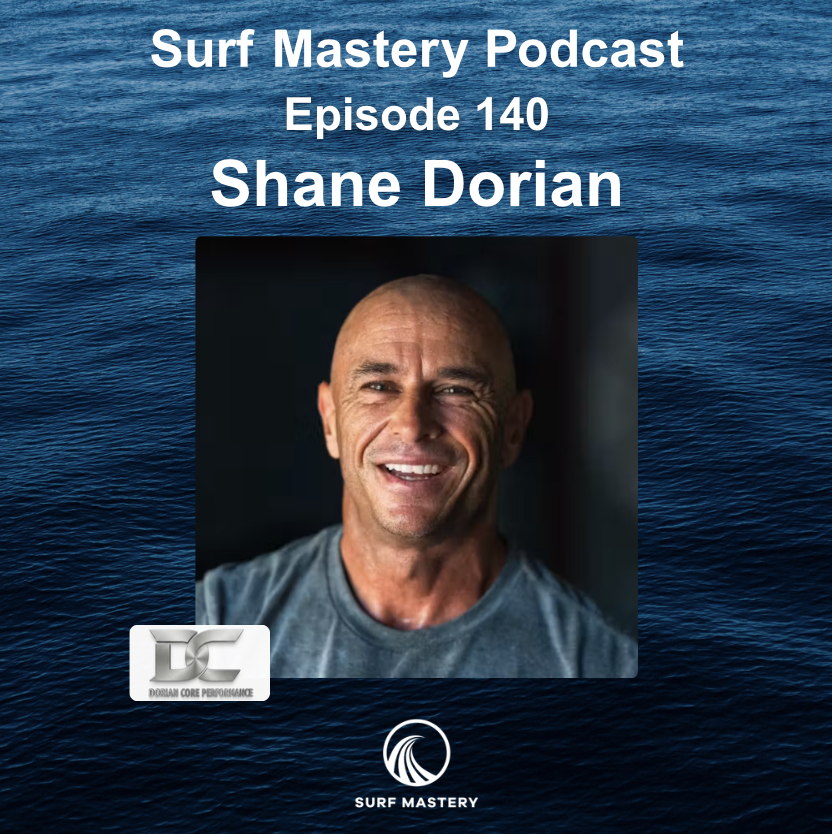
What if the biggest difference between an average surfer and a great surfer isn't how they ride waves, but how they see them?
After nearly five decades in the ocean, Shane Dorian has learned that surfing mastery isn't built on athleticism alone. It's built on observation, patience, awareness, and thousands of hours spent studying the ocean.
In this conversation, Shane pulls back the curtain on the mindset that allowed him to become one of the world's most respected surfers. From learning to read subtle changes in swell direction and positioning to understanding crowd flow, reefs, tides, and wave behavior, he explains how true ocean knowledge is earned through relentless curiosity and attention to detail.
But this episode is about far more than surfing.
It's about how deep observation becomes intuition. How experience becomes wisdom. How a lifelong pursuit evolves from chasing performance into finding meaning, connection, health, family, and joy.
From world titles and giant waves to coaching elite surfers, recovering from serious injury, raising surfing children, and preparing his body for decades more time in the water, Shane shares the lessons that only come from a lifetime of paying attention.
In this episode, you'll discover:
Why reading the ocean is one of the most important, and least understood - skills in surfing, and how Shane developed that ability through decades of observation.
How positioning, patience, awareness, and studying experienced surfers can dramatically accelerate your progression in the water.
What surfing has taught Shane about resilience, family, aging, purpose, and creating a life that remains rich with adventure long after your competitive years are over.
Press play to learn how one of surfing's most thoughtful minds developed a lifetime of ocean wisdom - and how those lessons can transform the way you approach surfing, learning, and life itself.
Shanes’ Website:
https://doriancoreperformance.com
Transcript:
Shane Dorian: I just happen to be really, really lucky. I'm really busy with things I wanna be doing, so I'm grateful for that.
Michael Frampton: Oh, good. . So- Yeah ... let's, get into it. Let's start with when and why did you start surfing?
Shane Dorian: Oh, wow, we're going way back. I was born in 1972 and I started surfing... Well, my parents had a, a little restaurant on the beach in Hawaii in a little town called Kona, and the, the b- the beach where the restaurant was was a little m- white sands beach.
It's a little white sand beach called Magic Sands, and I learned how to swim there, learned how to body surf there when I was about... I learned how to body s- well, I learned how to swim basically when, before I could walk, and then I started body surfing and riding on my dad's back, , when he was body surfing when I was, like, three.
And then I got my first real standup surfboard when I was five. And I've been surfing ever since. And I start... I was born and raised in Kona on the Big Island of Hawaii, and I, this is where I learned to surf.
Michael Frampton: Okay, so it's basically ingrained into your DNA.
Shane Dorian: Yeah, I got a really early start. , My dad was a, was a waterman.
He, he was a surfer when he was, when he was a lot younger and... So yeah, I just had a lot of exposure at a super young age. And then, you know, my... I grew up, , kind of a latchkey kid a lot. , So , my parents were gone when I would get off the school bus, and I would hitchhike to the beach with my surfboard and, , I was just from a little town so, there wasn't really...
I didn't wanna play soccer. I thought soccer and football were, like, hot and sweaty and not that fun and, , I just fell in love with surfing at a super young age. I, and I've just been obsessed ever since.
Michael Frampton: Was there a moment in your early surfing age where it sort of, it went from something you just did, something your family did, to something that was more than that and you developed a real passion for it?
Or did that, was it a slow process over time?
Shane Dorian: I guess it was a bit of a slow pr- process. I, I, it, at first it was, it was first, it was just something fun to do, right? Like when I first found surfing, and then- My, you know, I went through, like my family went through a lot with like my parents got divorced when I was about 12, 13 years old, and I was getting really good at surfing at that time.
And, , surfing became like instead of just being fun, it, it, it was like the place that I would go to when I was stressed out or angry or bummed out. I would kinda, I would run away from my problems and go surfing. And so it, it became so many more things than just fun for me. And then I got, I started getting really good at surfing when I was like 11, 12, 13 years old, and then, and I started competing at a really small level here locally, and then I started going to state contests on, on Oahu, and then I started meeting kids from Oahu and the North Shore that I end up becoming really, really good friends of mine.
And, and so yeah, surfing just became all-encompassing as I grew up in those kind of formative years. , I was basically doing everything in my life that I needed to do, and then I was choosing surfing at every single moment that I didn't need to do something else.
Michael Frampton: And let's fast-forward to now, or m- a better way to put it is how would you describe your current relationship to the ocean and surfing, and how has it evolved over time?
Shane Dorian: I mean, it's, yeah, it's, like, hard to... I mean, we could s- we could blow the whole podcast talking to that, talking about that. But, yeah, I mean, you know, I'm pretty old, so I've been surfing for an extremely long time. I've been surfing for, you know, 40, 48 years or something like that. So I, I've been through, like, so many decades, and every decade, surfing has looked completely different for me.
You know, like, it was just fun, and then it was, like, to get away from stress and, and weird things happening in, at home. And then it became something I was obsessed with becoming a pro surfer. And then, then I became a pro surfer and it became work, and it was, like, chasing points around the world and chasing world titles for 12 years.
And then I shifted gears and focused solely on surfing giant waves, and so surfing became, , this life or death pursuit of the personal challenge and, like, a defining thing for me as a human in many aspects, I would say. And then since I've stopped surfing, like, really giant waves, I've... It's changed again to where, like, now I have two kids and, , I w- I was really, like, hoping that they would fall in love with surfing, so I spent a lot of their childhood, you know, kind of exposing them to the ocean, to surfing, to riding waves, to going on little surf trips with me.
, And so now, like, yeah, life is, life is different. You know, it's evolved in a lot of different ways, but surfing is a huge part of my life still. I mean, I just booked a surf trip, like, my big surf trip for the year, and I'm, like, excited like a little kid. It's about six weeks away and I'm, like, training for it in the gym and, , going paddling and, , trying to make sure that when I get there on my surf trip, I'm, like, operating at a super high level and I can, like, really enjoy it , like a normal person would.
Do you know what I mean? Like, the, the waves around where I live are pretty mediocre a lot of times, so being a hardcore surfer, this is a terrible place to live. So I do surf, but I, it's, trying to surf consistently in fun waves is not that easy., So yeah, I'm excited about a surf trip for sure. So I, I'm still like a kid when it comes to surfing.
Michael Frampton: Wow. So h- has surfing been the most consistent thing in your life?
Shane Dorian: Yeah. Surfing has been the North Star, I would say- . Have you been- ... since I was really little. It was the thing that kinda led me in... It was really, it tru- it truly was, like, the thing that kept me le- r- headed in the right direction. Kept me away from...
At first, it in- introduced me to drugs and alcohol and a bunch of, like, shit kids when I was a grommet. , And then I started doing bad in school, and surfing was the thing that my surfboard got taken away from me, and, , I had to, I had crappy grades for one quarter and my mom was like, "Hey, the surfboard's gone unless, unless you get your shit together.
You have, you have a very small amount of time before your surfboard's for sure gone, gone all the way." And I got scared straight. So surfing has been, like, my North Star for sure in a lot of different ways through all of those decades. .
Michael Frampton: Was there moments through that journey where you kinda lost sight of that , and didn't surf, and wondered whether surfing was g- you were gonna give up?
Shane Dorian: No, no, definitely not. I mean, surfing is just... And, you know, it's evolved also, right? Like, surfing is looking completely different all the time. Like, when I, it, the, the one time I guess it was probably the m- at most risk of that happening, like true burnout, was when I was, had been competing at a super high level for an extremely long time, and I was in my early 30s, and, you know, I'd been grinding for 12 years on the world tour and, you know, competing at a high level, and the, the highs and lows of constant competition and the glory and the agony, , of, you know, all the emotions just constantly happening.
You basically, every single person loses the contest except one person, so it's, like, brutal on your ego, brutal on your mindset and your psychology and your happiness a lot of the times. And, and then, , yeah, so when I stopped competing full time, that was probably at the, the time where I, didn't feel like surfing very much.
But then I, then I became obsessed with trying to surf the biggest waves in the world and, and then so I, then all of a sudden I had this, , really exciting thing to kinda chase again. And then, and then surfing those giant waves gave me an amazing appreciation for, , the simplest type of wave riding, which is just, like, literally just that.
Like, it, surfing doesn't even look like anything. For me now, , I'm stoked to go to Indo to go surf really good waves, but at the same time, I have a mid-length in the back of my truck literally at all times. It's out there in my truck right now. And, , after the gym or before I run my errands or whatever, I'll just go and surf, , one-foot waves on my, mid-length, catch like 10 waves and just start the day.
, Watch the sun rise or, you know, just talk to a couple buddies, catch 10 waves, and then I can get on with my day. And so yeah, I mean, I don't know if that answered your question, but yeah, surfing is still definitely a huge part of my life. It's something I, I, I use in so many ways, like, to bring me joy and to, you know, it's there to get away from any stress in my life.
It's a way to travel. Like, I, I, I, instead of just traveling randomly, I still travel to go surfing because I wanna go somewhere and actually go surfing. , And then, you know, my, my son is a really avid surfer. He's 19 now, and he never comes home, and so w- I will meet him somewhere in the world and go surfing together for .
like, last year I went to, um, I went to Indo and hung out with him for over a month, and it was, like, the one time in the whole year I got to hang out with my kid, and the only reason is because we both love to surf. So that's what, he was gonna be there for a long, long time, and so I went and met him there for a month.
Michael Frampton: Hmm.- As a dad for a, an up-and-coming professional surfer throughout his journey, have you been his coach as well?
Shane Dorian: That's a good question. Yes and no. I would say to start, like when he got, when he started really liking surfing, at first I was just... I never... So, so first of all, I'd literally never...
I mean, I've been around surfing forever. I've been around competitive surfing forever. I've been around really good surfers forever. It was my life when I was a kid. And, and I've now I've been around a lot of, uh, crazy surf parents and surf dads forever. And so I was very, very, very, aware of how weird that whole dynamic is, and I didn't ever want that to be me, and I never even thought it was like a chance, right?
Because the chances of your, of a kid falling in love with surfing, getting good at surfing, and then actually turning it into an actual surf career is so minuscule that I knew those chances were , you know, the stats are completely against him. And so I just wanted to like expose him to surfing so he would enjoy surfing.
So, you know, if he had a, a college break, he could go with his buddies and go surfing, because he knew how to do it and. Or if he, you know, he's in... He, he could travel and go meet people through surfing, right? Surfing is just brings joy into your life. So I just wanted that for him, to be honest. And then when he became really into surfing and he was obsessed with, , you know, improving, he knew that I knew what I was talking about, so he would always like show me his clips, and he would want me to film him, and then I ended up being like a de facto coach.
And because I'm not... I mean, , like objectively I'm not a crazy surf dad, , he felt super safe and, and, um, he felt like I was a safe place to go to for that kind of feedback. , And I love helping kids get better at surfing. I love helping kids specifically get better at, at fundamental surfing, like their actual surfing fundamentals.
Not so much... I'm a pretty good s-, like a competitive strategic coach, but m- more so really enjoy, um, helping kids get better just at the act of surfing. So that was a really fun for, way for us to bond as well, because we spent, you know, five years like every single day before school, after school, and then when he started doing online school we were together like bonding like crazy, because he was obsessed with surfing and I was the person who was filming and coaching and hanging out with him all the time and giving him that feedback.
So we have a really, really close bond because of surfing, which I'm really grateful for.
Michael Frampton: Mm. Yeah. I'm sure your background in, in surfing is a big influence on him, either directly through video analysis, but probably a lot indirectly too. So it makes me think of, I'm sure you're aware of, , someone like Remy Warren, who's- Yeah
a, a hunting outfitter Whereas- Yep ... as, I think as a surf dad, , there's plenty of times where you're not filming from the beach or anything, you're just out having fun, and you might be sitting there and you go, "Well, did you see that little, that little black spot and that little twinkle on the horizon?
That, that means there's a set coming from the west. We should probably paddle over there, 'cause I think there's wide sets coming in." Just all those little define- defined details of reading the ocean and reading the water. Is that something that you were conscious of imparting during his s- as he grew up surfing?
Shane Dorian: Yeah, , for sure. Not enough, because he's not the greatest, um... , he's spent so much time in the ocean in his life, it's ridiculous, so. But, uh, he, like, ocean awareness and, especially, like, wave knowledge, like, he's not, he's not naturally , like a Gabriel Medina or something like that, where he's do- his, his brain's not doing da- like, data analysis with, like, wave conditions while he's staring at the ocean.
, My, mine was like that. I would just sit there and stare at the ocean and, be obsessed with trying to figure out the, the puzzle of where the waves were gonna come from, which one was gonna be best, and try to, , judge which wave was gonna be best before I even paddled for it, all that kind of stuff.
But I did spend a zillion hours with him, showing him lineups, teaching him about reefs, showing him how to get in and out of the water at, you know, safely at even the sketchiest waves. You know, I, I would take him... Because I had so much experience, I would feel super comfortable taking him surfing, like, pretty heavy waves when he was really, really little, and I would boost him in to these really good waves because he had, a really high ability level on the wave.
But he was so tiny, he could not catch them. So it was like... And that's, , that's like a, a, like a controversial topic, right?, A lot of parents, a lot of people would be like, "You should never... , once your kid can stand up and paddle on his own, , he's on his own." And then other kids are like, other parents are, like, crazy, pushing, like, their 20-year-old kids in, at the peak at Trestles.
Like, you know, it's, there's, , a wide spectrum there. But for me, it was more of, , I saw that time in the ocean together- And even the time when I spent, like, pushing him in, , as just a way to bond with my kid. , It was just so much fun to have those moments where I would help him get a good wave, and he would...
I could just hear him screaming on the wave and, like, all excited when he was learning how to surf. And then when he started getting good, like, him yelling and screaming, , t- telling me about his wave as he was coming back out. That's... Those kind of moments are, like, the greatest. , They're better than winning surf- surfing competitions for me.
They're more memorable than, , some of the waves I've caught in my life at Pipeline and Jaws and Cloudbreak, you know? So-
Michael Frampton: yeah, I've always thought that the hardest part of surfing is what happens between when the surfboard is under your arm and under your feet. All that stuff of reading the ocean, being in the right place, choosing the right wave.
To me, as I grow older, as I become better at reading the ocean and negotiating the rhythms, that's what makes me a better surfer, is... Do you agree with that, and do you have any insight into how that's evolved in, over the years?
Shane Dorian: , Literally that's all I did for, like, 20 years. The first 20 years of my life was just in the ocean, scanning the horizon, looking at every lump, looking at, reading the, what the wind was doing, and then I'd be, you know, bec- just became obsessed with every single part of getting better at surfing.
And then in my, the last, , 10 years or 15 years, I'm, like, purely focused on enjoying f- surfing. , Literally just having fun. I ride weird boards. I ride weird fins. I w- ride mediocre waves all the time. I'll be at Kendrewie Villas and the waves will be firing somewhere, and I'll go surf somewhere super rando just because there's no one out, and I just gonna surf and just have less people around and wanna just chill out and surf with, , one or two other people.
And, , sometimes I'd, I'd rather, , get a, some melo- a mellow session with just a few friends than world-class waves with, , 80 of my best friends. And then, , just my perspective of w- what brings me joy in surfing has changed., I, I don't come in , "Wow, I was really ripping today. I had so much fun 'cause I was shredding so hard."
, Those da- those days are, like, behind me. And it's not only because of my age. It's probably has something to do with that, but to be honest, it's more of just my arc, my, my life arc in surfing s- there was such a long time, you know, three decades of high-performance obsession. And so, , learning more about ripping or learning more about, , getting better at reading waves, I don't know, it's just not even on my radar anymore.
It's more about- Enjoying the ocean and riding waves and going on surf trips with my family or going down the coast with a buddy or going for a session with a friend I haven't seen in a long time or surfing with my daughter, one-foot waves on a long board. I don't know, that probably sounds, , unsexy and not that fun, but
i'm sure there's listeners out there that can relate to that. The simplicity of surfing is, , something that I don't think is underappreciated, and I think that's a good thing. .
Michael Frampton: Oh, I definitely relate to all of that. But I, I guess the question is more, so you went through that time period where you were obsessed with s- you know, s- basically, when you're sitting out the back, you're, you're scanning a little sli- s- between the horizon and where you are, there's a little sliver of ocean.
Yeah. You gotta try and read what's going on and predict where the waves are gonna be before anyone else. And you said you were obsessed with that for a period of time. If you hadn't been obsessed with that for a period of time in which that almost became natural, like, you know, driving a car, at first you have to really concentrate on it, and now you can, you know, you can text while you're driving now.
But , if you didn't have that period of time where you were obsessed with that, do you think it, that you would be able to be at a, in a position where you don't have to think about it now and you just en- enjoy surfing on d- on a different level?
Shane Dorian: Yeah. I mean, I think there's a couple parts to that answer.
Number one, because of my, that obsession for so long, and because I have this specific niche of tons and tons and tons of educational hours in the ocean doing exactly that, what you just described, I'm able to, like, navigate any lineup in the world still. Like, sometimes I won't surf for a month. That, that's pretty unusual, but say, say I'm going to Indo and I'm, I have a bunch of work or I'm traveling or doing whatever or the waves are flat around my house, and then I'll go to, I'll go to, , Teahupo'o in Tahiti.
I'll get off the, the plane and go straight out in the boat and feel, like, pretty damn comfortable in the lineup, like no worries after all the experience I have. Or I'll go to Indo and, I will just immediately, , be able to navigate the lineup, pick out really great waves in the sets, know where to sit, know how to, know how to have a good flow in the ocean and kind of like s- sort of sort out what's happening with the tide and the sets and the, the flow of the crowd, like, all that stuff.
, When you've been when you've surfed as long as I have for as , and immersed yourself in it, , totally, your brain becomes like artificial intelligence for surfing. Hmm. Like, it's like, um, if I had to drive a Formula 1 car and it was, , performing, , 95% as good as, uh, it could, I would never know the difference.
But some guy who that's all he does, and I don't know any Formula 1 drivers, but I guarantee you, , the best guy in the world, like, he could tell the difference between a, a car that's operating at 95% and one that's operating 100%. , Your brain just becomes, just through, like, analysis for forever.
I don't know. That's really boring to talk about, but yeah, , my brain is, I have a surf brain. I've- it's been, like, developed over decades of just literally thinking about surfing, like eating, sleeping, and doing surfing forever.
Michael Frampton: Yeah. Oh, it's not boring at all. The, my, my listeners love nerding out about these things.
And so, and so do I.
Shane Dorian: Surf nerd. I love it. Oh,
Michael Frampton: yeah. I wonder... 'cause I think every great surfer has that side, side of them. Often they sort of hide it and make it seem magical or mystical, which is the right thing to do probably. But it's cool to... 'Cause we've got a lot of older s- surfers that started later in life, as you know, and people that just wanna get better at it, and I'm always saying, "Well, it's, it, it's your ability to read the ocean that makes the difference," and that's what makes great...
that's why Kelly Slater's so good, 'cause he reads not only the waves coming in, but while he's on the wave, he can read where to put his rail better than most, and he has the natural athletic ability to, to do that as well obviously. But, the foundation is actually reading the way the water's moving, reading the wave, knowing where to put your rail, , the timing, the rhythms, all that sort of stuff.
But let me ask you a specific question around that, it's, it is a hard one to answer, but do you have any tips for surfers on how to read the ocean and read, read water on a high level? Are there any insights there?
Shane Dorian: I mean, it's, it's hard. , You can't really fake that.
, If you truly want that, , if that's truly, , what you really, really want, there, there is no, there's no, , YouTube video you can watch on how to do that. , It's studying. Studying conditions and studying the lineup and studying, , actually actively- analyzing in real time what's happening all around you while you're sitting there waiting for waves or when you're paddling back out and analyzing how different swells are hitting the point or the reef or the sand where you're surfing and, and analyzing what the tide is doing in real time, what's happening.
, You know, if a, a section of the wave you're surfing is getting shallower by the minute because the tide's going down, just like, you know, having aware- having a lot of awareness of what's happening around you, how pe- other people are riding waves or how other people are positioning themselves before the wave actually breaks.
I, I still do a lot of coaching with surfers and, , I, I've coached a lot of really elite surfers like a Pipeline, , or Teahupo'o and, and like for those type of waves- It's more extreme, but this is, this is like a, this is like a really good tip. Really, I think one of the most important things that you can learn to do , is positioning before you get to your feet.
, At a wave like Pipeline, it's everything, right? , You can take a crazy late drop at Pipeline, have the most masterful takeoff, perfect style, everything's perfect, critical takeoff, and then m- you totally miss the whole barrel because you were just in the wrong spot, right? You can do... But... Or you can just, , have taken off in the right spot, maybe 20 feet deeper, with the identical drop, identical style, and everything's perfect, and you get the best r- ride of the year, the best ride of your life.
So studying how the best surfers are positioning themselves and paddling, how they paddle, the direction they paddle, the cadence, when they start ramping up, how far down the face they start paddling, where they position themselves in the crowd. , Watching really good surfers, not even really good, high-ability ripper surfers, but, , really experienced surfers who have lineups figured out, you can really learn a lot from.
It's almost like looking at someone's, , it's almost like having, , a study buddy in school who is just a weapon at math, and then, k- kind of teaching you the behind the scenes. So, , whenever I'm out at Pipeline, I'm always watching, , John Florence, Nathan Florence, J- Jamie O'Brien, Kelly.
And, and, and since I was a little kid, I was always watching, when I was very first out, when I very first started surfing Pipeline, I was, I was watching, um, Marvin Foster and, Mickey Nielsen, and Dane Kealoha, and Johnny-Boy Gomes. , I was watching how those guys would, where they would sit. I would, I would sit next to them, and I would just try to find lineups exactly on the beach with a tree and a house, , lined up together exactly where Johnny-Boy would sit.
I would do that. W- try to get as close as I could without him getting angry at me. And then I would do the same thing, , with the, the guys who were surfing really good at Pipeline, and, and I just became obsessed with trying to... I felt like it would acce- it, it would accelerate my learning curve by really paying, , extreme attention to people who were better than me.
, I guess that's a... So for someone who's just learning to surf, or they're like a, you know, an average surfer, if there's a, if there's a, a high-level surfer surfing at the break you're surfing, , try to really, instead of being annoyed that that guy s- catches all the waves, , a- actually try to take a step back and, , watch what that person is doing.
Watch how he's approaching the crowd and, navigating that, and approaching the wave, where he paddles, where he kicks out, where he gets in and out of the water. , The I mean, it's a, it's a, it's not the greatest example, but the, my local break is full of sea urchins, and I live in Hawaii, and it's, , lava rocks, and coral, and sea urchins, and- You know, there'll be, 15 people surfing, all local people surfing in the, in the lineup who surf there every day.
They've surfed there for decades, and someone who fully surfs pretty decent will walk up with,, their board, take it off their, take it out of their board bag straight from the airport, walk, walk down to the beach, watch it for 30 seconds, and then start walking straight out over the reef, over all the urchins.
And all these local people are on the beach, not, not ask, "Hey, where do I get out? Are there urchins?" W- don't wait five minutes to see someone come in or go out so they can see where the locals are going in or out. They just have no awareness, and I think that's a really good example of what not to do. Hmm.
Michael Frampton: Yeah, that's, that's some great advice. Hmm.
Shane Dorian: So awareness is a big one, for sure.
Michael Frampton: Oh, yeah, yeah. What's harder, big wave surfing or bow hunting?
Shane Dorian: Oh, man. That's a really good... For me, bow hunting, for sure. , They're both good. They're, they're both really, really difficult, and they're both really difficult in some super similar ways, and that is why I l- I love them both.
, And that's probably why I'm kind of good at both. But I, I feel like the... Maybe it's just, , my confidence is super high in surfing. , I haven't surfed Jaws in years and years, but if it was really big tomorrow and it had really good conditions and I knew my board worked, I could paddle out there and catch a giant wave tomorrow morning, first wave, for sure.
, And I would have total confidence, and I'm 53 years old. , I won't choose to go do that, 'cause, , the reward is really not th- worth the risk for me right now at this point in my life. I don't wanna be out for a year if I rip my ACL in half. , Those days are over for me. But, um, but I have the mental, I have the mental capacity to keep my cool still, to stay calm.
As that 25-foot wave is approaching, I don't lose my shit. I don't start shaking. I don't start panicking. I s- don't start breathing hard. I'm calm, really calm, even in, like, really heavy conditions still. Bow hunting, man, it, it, you know, sometimes it'll take me a whole day to get, , a really good stalk.
I'm a bow hunter only, so, , I'm trying to get really in close to range to an animal that, , their life literally depends on their awareness and their ability to detect me, to smell me, hear me, see me. And they, it's, , it is very unfair. Their ears are a zillion times better than mine.
Their eyes are way better than mine. Their nose is unbelievable. , The wind just puffs in their direction, you could be 200 yards away, and they're just running for the hills. Pshum. They don't, they don't go, "Oh, what's that smell? It's kinda coming from that..." They just don't do that. They're psh, especially deer, and that's what I hunt the most.
So anyway, my point being is, like- The, the moment of truth when, when I'm at, when I'm trying to get the full draw with my bow, when there's an animal there that I've been stalking for five hours, and then he was... He'd laid down before I could get a shot, and I have to wait three or four hours for him to stand up, and I'm on my knees that whole time, trying not to get cramps, and trying to keep my cool and not fall asleep.
And, , and then he stands up, and trying to keep your heart rate down, and knowing this is the moment of truth, and that all the thousands of arrows you put into the target for the last six months, this is the moment of truth. And if that arrow doesn't hit its mark, that's it. You're not getting it. The, the animal's gone.
The, the whole opportunity's gone. A lot of times, the whole trip is gone. , You don't just, like, paddle back out and try again. I mean, you can, but, , the wave's not coming again a lot of times when, when you're bow hunting. So anyway, my point is, , bow hunting is super hard. It is, um, depending on the animals you're hunting es- specifically, the kinda hunt, the kinda hunting that I love the most is the most challenging.
, This week I'm going to go hunting for axis deer, and, , axis deer, it's called chital in, in New Zealand and in Australia, but they're a deer from... They're like a, an, uh, an East Asian deer. They're e- they're from, they, , they're in Burma, Sri Lanka, and, , a lot of the, these kind of places, and they're, like, the predator that they were most worried about were lions and, , actual, like, lions and tigers.
And so they have, like, a crazy vertical leap. They have really cr- really wild, like... My bow shoots super, super fast, and I can make a perfect shot at only 20 yards on a deer, on this kind of deer, and it might hit them terribly even though my shot was perfect. Because their reaction time is, , it's like The Matrix, like that movie The Matrix.
Mm-hmm. Like that. Like, they s- they hear that arrow, and it's, my, my bow's super quiet. They hear that arrow, they know that that's not natural, and they react crazy fast, and they spring into action. And so a lot of times, man, it's just, what I'm saying is, it's super challenging, I guess, in, in the best way, for sure.
Michael Frampton: Do you think the big wave surfing helped you to get better at bow hunting? 'Cause I'm assuming you started that after you were- Yeah ... a big wave surfer.
Shane Dorian: Surfing in general made me a better bow hunter, for sure. Just, I mean, I was a really impatient kid. I had ADHD, but a hardcore, like, super-duper impatient.
Really hyperactive when I was a little kid, and then through surfing, s- sur- surfing taught me patience. , Especially surfing places like Pipeline, you can't be impatient. , You're never gonna get a good wave unless you're patient. And so surfing made me patient. Surfing big waves made me incredibly patient because instead of getting 10 waves in a big wave session, I wanted one wave.
I wanted the wave that was gonna change my life. I wanted the wave that I was gonna, , think about f- 50 years later. You know what I mean? I wanted the unforgettable wave. That's all I cared about. And so if you want... If that's your goal, surfing big waves, you need to be hyper-patient. So I'm a really patient person now, and, , that has probably been my biggest weapon as a bow hunter.
That is my, , that is my best trait as a bow hunter, is my patience, for sure. . I will sit out a deer that is laying down for, , five hours. I'll sit 30 yards from, away from that deer, and if the wind doesn't change, I'm waiting for that deer to stand up before I take a shot.
Michael Frampton: Is there anything on your bow hunting journey that's helped you to be a better surfer?
Shane Dorian: Um, ah, I don't know about that. Not at all about better surfer. More, uh, more, more of an appreciative surfer. , I've been going to Australia... I've gone, I, I went to Australia probably 30 times before I went bow hunting in Australia and, and when I went bow hun- bow hunting in Australia, I was like, I thought I had already seen all of Australia, and all of a sudden I was in the mountains in Australia.
It's like a totally different part. , I didn't even know this place had mountains and, and, , I was getting snowed on, and there was snakes. And you're, like, in big country and hiking and camping and, like, meeting really unusually super interesting Australian bow hunters, and it was just awesome.
, I had such an appreciation for the country of Australia, and I, I hunted in New Zealand a lot and, , yeah, I mean, I just, I think just appreciating nature, appreciating solitude, being out on your own, being challenged physically, psychologically. You know, like, the, the challenge , of, of doing, , a 10-day on my own bow hunt in Colorado in alpine, , like alpine terrain, where it's literally snowing, and there's bears around.
There's mountain lions. There's wolves. , I've done those hunts completely by myself for 10 days, and you really get to know yourself. So, , there's a lot of similarities with surfing. You learn a lot about yourself being a surfer, especially when you travel alone or have, you know, solo sessions or, yeah, I mean, uh, just the appreciation for nature, being in the wild.
Michael Frampton: .
Yeah. , It's a good balance. Obviously, we live, we live in society, so it's always good to get in touch with nature, whether that's surfing, but- Yeah ... to mix it up with some, bush and some mountains is a, it's a nice... You got the two ways to connect with nature, the ocean and the beach, and then the, the mountains and the, and the forest.
Shane Dorian: Like you said, there's so, so much of our lives these days is, uh, we're sitting here right now, , looking at each other on laptops, , using the internet. Like, s- you know, s- these things have changed our lives. Like, so much of our lives are, like, we know what's going on with social media, , up to the minute, , at all times.
, We're always in constant communication. We're, it's just we're inundated with all this content and visual- visually stimulated, , at all times of the day, of the week, of the year. So carving out time for ourselves to go surfing or bow hunting or camping with your kids or fishing or whatever your deal is, , I feel like that is getting lost on so many people because- You know, technology and innovation, , these things are designed so perfectly to capture our full attention, and it's working.
So I mean, I think we need to fight to really k- keep enjoying. I think we're really lucky. Our generation is lucky that we still do truly enjoy simple things. , Some of my favorite things in the world are, are just unplugging, getting away from my phone and my computer and, , being in the out- outdoors, and I hope I never lose that.
That's something that I'm, I'm, uh, I feel like my kids definitely have an appreciation for the outdoors, surfing, hiking, , snowboarding, camping. , Tho- those things are so important.
Michael Frampton: Yeah. Part of what happens when you're a, a top-level athlete, especially as you age, injury becomes, , something that, that happens, and I know you blew your knee out.
How long ago was that?
Shane Dorian: Probably four years ago now. Yeah, I wrapped it around a tree snowboarding
Michael Frampton: Yeah. And how it, h- how long were you out for, and what, what was coming back like?
Shane Dorian: I mean, you know, it's not like all of a sudden... It, it wasn't like, oh, I was out for 10 months, and then I could go surfing again really good.
It was like, I was out of the water basically for, like, 10 months, 'cause I couldn't surf, and then another six months of surfing horribly. Um, no power, no... My leg was not bending., I, I was surfing in a big, huge brace. Uh, I couldn't surf any heavy waves. It was basically like a year and a half recovery, until I was surfing okay again and out of a brace.
Michael Frampton: You've got a new project,, doriancoreperformance, I think, is the Instagram handle, which is surf longevity stuff, and, , you're saying that you're feeling fitter and stronger now than you did, , 10 years ago. How do you go from, , essentially a career-ending knee injury to, and then as you age, to, to making a statement like that?
How?
Shane Dorian: Well, I mean, there, that, there's, there's truth to that for sure. , I definitely feel more fit than I did 10 years ago, but 10 years ago I had a really bad back. So like before, even before the snowboard injury, I was dealing with a back that was very, , unstable. It might... My back would go out, as they say, like probably three, three-plus times a year, and when it would happen, it would go out for , I couldn't surf for five or six weeks, f- like four to six weeks.
That would happen three or four times a year. So there, there was like a five or six-year period where I was only... where I could only surf 60 or 70% of the year because my back was so weak and so unstable, and I was living in a lot, in a lot of pain. I was having to... I eventually had to started saying no to going on surf trips and no to going on bow hunting trips, and then I couldn't go surf heavy waves, and it was really starting to get in the way of the things that I, that I loved most, and it was freaking me out.
, And then that led me to really changing up the way I was training physically, That led me to doing different therapies. , That, that led me to s- to doing a lot of research and eventually getting stem cell treatments. , That was also like, that ha- happened at like kind of the same exact time as my knee injury.
My first stem cell treatment was because of my knee injury., So yeah. So as I recovered from my knee injury, I really wanted to get my fitness back. My leg had atrophied, my quad and my hamstring, and my glute on that side, and even actually on the other side. My body just switched those muscles off.
And so my, my quads, especially my left quad, got so small, , and so I had to like work really hard in the gym to get that muscle back and, you know, I was in my late 40s, uh, late 40s, early f- early 50- late 40s trying to get muscle back on my body and it wasn't easy. So anyway, during those five or six years when my back was sore, in my mid to late 40s, , I definitely...
I may have looked pretty fit, but I wasn't very fit. , And now I actually feel really fit. I can surf, you know, f- three to four hours a day. I'm 53, so it's, I... My back isn't perfect, but it's a whole lot better than it used to be. It's durable. It's... I still surf. I mean, I surf, like last year I surfed eight to 10-foot Jaho and took multiple beatdowns.
I'll still surf really heavy waves at Pipeline. I can paddle really hard, and I can surf three or four hours, , consistently, and I train in the gym like as much as I want, and my back feels great. Yeah, so to answer your question, I, I am fitter than I w- was a decade ago, which feels amazing. .
Michael Frampton: Yeah, 'cause there's a lot of people listening that will be I, I, I guess, well may- maybe I'll describe it from, from my experience as sort of, as I was sort of aging, I had pretty bad knee injury.
, I'm 45 now, and I think in my early 40s I got told, you know, bone on bone on your knee. I had back issues- Yeah ... as well. You know, life gets in the way, surfing, and I was like, "Oh, maybe I'm just, maybe surfing's not my thing anymore. Maybe I'll just go sometimes with the kids or whatever." , And I went through that sort of down phase, and then still kept, , and d- went back into the gym and got stronger, and learnt to move around a bad knee, and just I, I think what- Yeah
really my, rather than trying to be an athlete in the gym, it was sort of, "Well, how can I move and keep strong without hurting myself?" Which makes you slow down and become more aware of your body in general, and also your capabilities. , And I think that b- that body awareness combined with, a bit more realistic expectations on, on, on my surfing abilities and the time in the water, et cetera, I'm actually enjoying surfing so much more now, and I'm a, a, not, I'm not a better surfer in terms of a, a, a performance shortboarder, but I'm a better surfer in terms of the way that I move, the waves that I catch, the choosing the right boards and the right times to go, et cetera.
So I'm really trying to impart that on my clients and listeners to, of this podcast, is that just because you're getting older doesn't mean that you have to stop surfing or stop, or even stop surfing certain types of waves. It's just a certain amount of a- awareness and expectations that have to go along with it, and I just wanna inspire people to keep moving and to keep active and to keep surfing.
Have you got any tips for us?
Shane Dorian: Yeah. I mean, surfing, i- if you don't, if you're not intentional and have a plan, surfing will go away. It won't be a realistic thing in your life when you're in your 50s if you don't do something to keep it there. It doesn't happen on its own anymore. When, when we're in our 20s and our 30s, , you have to do zero work for the most part, unless you have crazy injuries you're coming back from.
But when you're in your l- mid to late 40s, , and I would say 50s for sure, and even 40s, you, in order to keep surfing at a pretty good level, you may not surf as good as you surf when, when you were way younger, but to sur- say you like surfing really good hollow lefts in Indo, , you can't just do that, you can't just do that once a year and just think it's gonna always be there like it was when you were a kid.
You have to be intentional. , And then there's two parts of it. For me, I, I just changed the way I look at training. , When I was training when I was younger, it was all about, , performance. , Only for high performance surfing. And then when I was surfing really big waves, , my, my training was like, like I was going to war.
It was like, it was literally for, life and death. , I was training for, , lung capacity and holding my breath. My static breath hold was, , over five and a half minutes, and, , my, my breath hold under, , hardcore pressure, like high heart rate, was, like, a minute and 45 seconds. , That's the kind of training I was doing because I wanted to survive.
And now the training, and it's like lots of weights and tons of volume and beating the crap out of my body, and it worked really good to make myself extremely mentally resilient and confident. But I don't really need that anymore, so my training has changed. So now I think of my training as how can I train to have surf longevity, to have surfing in my life as long as possible, to be able to go to Indo for the next 20 years and go surf high quality waves that may not always look the same, , because of, you know, physical limitations.
But, you can bet that I'm gonna be surfing, , until I'm 80 for sure. And I'm doing everything I can to, to, you know, to put myself there. So my training is like, a lot of it has to do with, , a lot of mobility, strength and flexibility and mobility and endurance. And there's a few ways to do that.
And then the other thing is, , my training has a lot to do with, , my longevity in general apart from surfing. So, , I never knew that, , your muscle... , i always thought of, , muscle as, something that was more, , aesthetic or for strength, but your, your, your muscle is your, it, , it truly is your metabolic armor.
It protects your brain. It protects, it's, our muscles a- after the age of, , 35, , our muscle starts going away mathematically and systematically every single year if we don't do something about it. And when you start losing your muscle, you start losing your bone density, your bone mass.
That's why old people when they fall down they have brittle bones, 'cause they don't have that muscle mass anymore. So I'm trying to keep muscle on my body, high quality skeletal muscle on my body for strong bones, for strong bone density, for my brain health against Alzheimer's and dementia. , There's so many different things that are huge benefits from actually training.
, I train a lot of it is so I can keep surfing as, as good as I can as for as long as possible, but also, for longevity. Now, a lot of, a lot of the guys I'm working with one on one, that's what they... I mean, they can relate to that. I am my client. , They, they love to surf. They wanna do it as much as possible.
They have one big Indo trip on the calendar per year or two, two big surf trips per year that are super, super important to them and they, they wanna hit the ground running when they get there even though they barely surfed for the last six months. They wanna, , perform at their highest level and be able to surf two times a day every day for 10 days, you know?
'Cause it's their one, it's their one surf trip for the year and it's, , crazy important, and they identify as a surfer, and I can totally relate to all that
Michael Frampton: Yeah. Oh, for sure. I went through a stage where I sort of thought, "Oh, surfing's, it's just surfing. It's such a narcissistic pursuit. How dare I let it motivate-
, So much in my life." But then I was like, "You know what? So what? I, w- I can still be a little kid, and so what if surfing inspire, if booking one surf trip a year inspires me to eat healthy for the rest of the year and exercise three times a week, then that's awesome." And I think some people struggle , with that as you get older.
You sort of think surfing is just, just surfing. Well, you're a surfer. Own it. Have, did you ever go through that, or d- do you have clients that go through those, those thoughts?
Shane Dorian: I mean, I, I think about that specific topic in the most simple way. No, I don't. I never feel guilty. I don't feel narcissistic about surfing.
I don't feel bad about prioritizing surfing. A- when I'm 90 years old, if I make it that long, and I... And if I'm, if I'm in my last moments when I'm 85 or 90 or 95 or 120, I will never, ever regret any surf sessions. I will never, ever regret, surf trips with my friends, surf trips with my family, surfing with my kid and my daughter and my son.
I'll never, ever regret any of that. I won't, I won't... I'll, I'll regret a whole lot of other things, like, you know, probably be like, "Oh, I probably shouldn't have worked so much," or, "I probably shouldn't have spent so much time sitting in traffic," or whatever. But I'm never gonna regret all the mornings I watched the sunrise from sitting on my board and talking to my friends and, watching the sunset and being on a surf trip.
Fuck that. Yeah. I- , that's life. That's what life's all about.
Michael Frampton: That's, that's a great answer. That's a perfect answer, yeah. And it's- it's the conclusion I came to. And, yeah, it's, it's nice to hear that. , Tell us about your new, your new project.
Y- you posted, like, a little mini Instagram video of a simple body weight exercise routine, , that I saw on Instagram, and that's my, my background, both as- ... a surf coach but as a personal trainer, and I've, you know, been through all the different types. And I was like, "Ah, Shane,
Shane knows what he's doing." Just the movements you were doing, the simplicity, the, the body awareness that you did it with, it really resonated with me, and that's sort of what made me reach out and, a- and here we are talking now. But can you tell us more about that project and what inspired it?
Shane Dorian: Very cool. Thank you. , Yeah, I... Very strange. I, I don't, I don't really have a great answer for that. I, I didn't, I didn't see this coming at all, to be perfectly honest with you. There's so many different pieces of this, of this, th- that question, but in, in my mind, and so many different answers. But essentially, I love fitness.
I have for a long, long time. I have a lot of experience, , training for different things, right? For high-performance surfing, , as a high-performance athlete, , as a big wave surfer, with that goal in mind, and then now for longevity. , And then I've... And then I also, I ended up coaching a lot in the last 10 years.
, I started coaching, um, Italo Ferreira at Pipeline, and Ethan Ewing, and Lakey Peterson, and Caroline Marks, and then I was the head coach for the US Olympic Surf Team for Paris 2024. So I, , I love coaching. I love working with people. I love being able to help and bring value to people.
And I had two different friends of mine that are, , they're fitness coaches, and they were like, "Man, I think you should probably, , look into that. I think it would be fun for you. I think you'd actually like helping people. And, , if you could wrap your head around, like, putting yourself out there, , I think, I think you should try it and see if you liked it."
And I was just , it just hit me out of left field. I was , "Whoa." I was like, "I'm not gonna put myself out there as, a online fitness coach. , That's the way you get clients is, , on, , Instagram, like putting yourself out there so people know what you're doing?, Oh my gosh, that's gonna be so cringey.
I'm gonna feel so silly. Everyone's gonna, gonna think I'm such a kook or whatever , like." And, , so I had, , I really, , wrestled with it for a while, and then I was like, man, like- Just like you only live once. Like this, this could be fun. I don't know if I'll like it or not, but I'm gonna, I'm gonna, s- see.
And then I, I was actually already working with a few people in my circle of friends that... Because I'm like the fitness guy out of our larger friend group, right? So they'll hit me up for, , nutrition advice, training programs, training advice. , So I was already helping people , who were getting, , really incredible results.
I had, , two different people actually specifically that had, , wild transformations, like you wouldn't believe transformations. And I was like, man, I really loved helping those guys change their lives. , And, , so I was like, screw it, I'm gonna see if I like online fitness coaching. And so I worked on launching it for a while, for launching the business.
Th- there's a lot of, behind the scenes work that went into, , launching an online fitness coaching business that you wouldn't think. And anyway, I, I got started, and I was hoping, to have five clients at the start, and, , kind of just get my feet wet, kind of really learn to become a really good online fitness coach and just kind of learn about what that means.
And so what I do with my clients is I essentially, like, my... , so, so mine is, , mine is really kind of hyper-personalized one-on-one online coaching. So, my, like, my clients, I'll work with them from the very start with, like- I, I consider all the information from, , their age, their height, their weight, their goals, their aesthetic goals, their performance goals, like how they're gonna use their fitness, their injuries, like their past injuries, their current injuries, their physical limitations, what their expertise is like in the, in the gym.
Do they have a lot of experience? How many days they're currently working out, what type of workout are they on? , A- all of their food program, their food habits, where they have a sweet tooth, alcohol. , I go into the details, , on a granular level to get all of the information I possibly can about that person and make a, a hyper-personalized and customized training program for them to reach their goal.
, And then I also do the same thing on the nutrition side. So I, I, , essentially build out very structured guidelines for their food program to make it extremely simple and frictionless to meet their goals. So that's basically what it is. And I, and then I provide accountability through face-to-face Google Meet calls just like this, , once every two weeks with each and every one of my clients, and just we spend time assessing how things are going with the programming, how their body's feeling, how the results have been, what's happening.
You know, if they're on a weight loss journey, what's happening with the scale, and, you know, is, are there any yellow flags in their body, and, , what the... And then we'll make adjustments for the next two weeks, and that's kinda how the coaching works. And so far I love my clients. They're fantastic. Some of them are getting incredible results, and I'm enjoying it.
Michael Frampton: Awesome. That's a... You outlined a really, really intelligent approach. I like that. , It's rare, so good on you for putting yourself out there and actually doing it because I can see when you look at some of the online fitness coaches and programs out there, it c- it can be pretty cringey. But, , y- you just basically outlined the, the, I mean, the personalized, detailed approach is, is the way to go really.
Where can people go to find out more?
Shane Dorian: Just my website. , It's doriancoreperformance.com, or you can search online Shane Dorian online fitness. It'll probably come up somewhere. That's the way the internet works. But yeah. I, I'm liking it. It's really cool. It's very, ... It's very... I'm keeping it pretty small.
I'm... It's not like a, I can't coach 100 people, so it's, it, I have a, I have a,, a limited amount of people that I'm working with. And, and but yeah, I'm really liking it. , And I'm, I have an amazing, , roster of clients.
Michael Frampton: Awesome. And, , you've been posting some, some free tips on Instagram as well.
I ha- I have links to all, to Shane's website and Instagram and stuff in the show notes for those that are listening in the car. But, Shane, thank you so much for taking the time to, to talk today. I really appreciate it.
Shane Dorian: Thank you very much for having me on. I appreciate it too.
The Surf Mastery Podcast:
For the passionate surfer - whether you're a weekend warrior, a surf dad, or an older surfer - this podcast is all about better surfing and deeper stoke. With expert surf coaching, surf training, and surfing tips, we’ll help you catch more waves, refine your paddling technique, and perfect your pop up on a surfboard. From surf workouts to handling wipeouts, chasing bigger waves, and mastering surf technique, we’re here to make sure you not only improve but truly enjoy surfing more - so you can get more out of every session and become a wiser surfer. Go from Beginner or intermediate Surfer to advanced