
001: MATT GRAINGER - NSW High performance coach talks about surf training and how to better yourself in the water.

Available On All Platforms:
Show Notes for The Surf Mastery Podcast: "Matt Grainger on Surfing, Coaching, and Unlocking Your Potential"
What do the world’s best surfers know about technique, training, and mindset that could transform your surfing journey?
This episode features Matt Grainger—elite-level surf coach, former New South Wales state champion, and owner of Manly Surf School and the High-Performance Surf Center in Sydney. From his days as a sponsored free surfer to coaching the next generation of champions, Matt shares invaluable lessons to take your surfing to the next level. Whether you’re an intermediate surfer aiming to fine-tune your technique or a seasoned rider looking for fresh inspiration, this conversation is packed with actionable insights.
Learn the secrets to mastering paddling, pop-up speed, and wave positioning for better rides.
Discover the importance of surf coaching, dry-land training, and mimicking movements to build muscle memory.
Explore how to generate speed on small waves, handle challenging slabs, and refine your bottom turns to unlock advanced maneuvers.
Transform your surfing skills with the expert advice shared in this episode—press play now!
Matt shares some of his vast knowledge he has acquired during his time as a; pro surfer, free surfer, NSW Elite Performance Coach, NSW Junior Team Coach, Manly Surf School CEO/Founder. Surf with surfers that are better than you, it will inspire you to get better. Watch them very closely, what they do with their arms, foot placement etc.
Good surfers paddle hard, pop up fast then create ‘lift’ to generate speed. What happens before your first bottom turn is what sets up the rest of your wave. Great surfers are great paddlers and can pop up very fast. When the waves are under 4ft they throw their arms up and forward to create lift & forward momentum to generate speed, watch some surf movies in slo-mo to see this and go out and try it
SHOW NOTES:
Some good surfing in some average waves can be viewed here: https://www.youtube.com/watch?v=hHT0nTHSi7Q
Pop-up vid here: https://surfhealthandfitness.com/2012/12/09/pop-up-with-jordy/
Paddling vid here: https://www.youtube.com/watch?v=n0uJCv7Ueeg
More info on Matt: https://au.linkedin.com/in/matt-grainger-6896a620
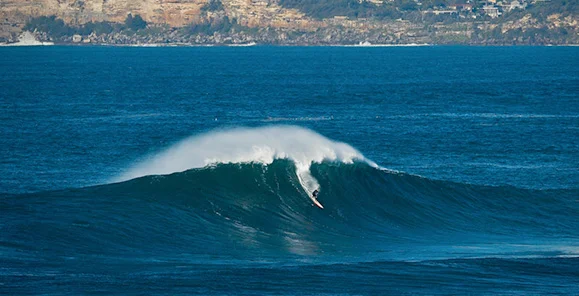
Here is a pic of Matt charging some big waves:
Matt can be contacted through these links:

Key Points:
Matt Grainger's background as an ex-pro surfer, New South Wales state champion in 1991, and his journey as a sponsored free surfer while attending university.
The importance of surfing with better surfers, watching better surfers, and receiving surf coaching to improve one's surfing skills.
Common mistakes made by beginner surfers, such as poor paddling posture and technique.
The significance of paddling, generating speed, and the pop-up for intermediate and experienced surfers.
The role of surf coaching in breaking down skills and techniques, and the benefits of video analysis.
The importance of training and fitness for surfing, including strength, endurance, and mobility exercises specific to surfing movements.
The influence of surfing different types of waves, such as slabs and reef breaks, on improving surfing skills.
The progression of surfing at an older age, with examples of surfers like Tom Carroll and Kelly Slater continuing to surf at a high level.
The benefits of the High Performance Surf Center, combining coaching, training, and specialized equipment for surfers of all levels.
Outline:
Matt Granger's Surfing Career
Matt Granger is an accomplished surfer with a rich history in the sport, having been the New South Wales state champion in 1991 at the age of 20.
He competed in pro juniors before transitioning to become a sponsored free surfer and entered his first competition at age 10 in 1980, participating in both foamy and shortboard divisions.
Throughout his career, he competed in various events including Manly Ringer titles, state titles, Australian titles, pro juniors, and some QS events.
His surfing journey was significantly influenced by training with coaches like Derek Hine and Terry Day, who helped him transition from being just a surfer to becoming an athlete through boxing, fitness routines, and surfing alongside top surfers like Damien Harbin, Brett Warner, and Matt Caddle.
Importance of Surf Coaching
Matt emphasizes the critical role of surf coaching in improving one's skills, noting that while coaching was once considered laughable in surfing during the 1980s, it has now become an integral part of professional surfing.
Every heat in professional surfing today is highly competitive, with surfers having perfect boards, bodies, and constantly refining their technique with coaches.
Coaching helps break down skills effectively, making it easier for surfers to understand and improve their technique.
Matt's experience as a coached surfer has significantly influenced their approach as a surf coach, enabling them to better explain and demonstrate techniques to their students.
Common Mistakes and Tips for Beginners and Intermediate Surfers
For beginners, poor paddling posture is identified as a common mistake; lifting shoulders high, arching the lower back, and keeping legs close together while paddling are advised.
For intermediate or self-taught experienced surfers, many fail to surf in the top third of the wave at the start, often dropping straight down and missing sections.
A strong paddle-on, quick pop-up, and generating speed early in the ride are emphasized.
Focusing on paddling technique, pop-up speed, and generating momentum, especially in quick, fast waves typical in Sydney, is recommended.
Studying QS (Qualifying Series) competitions to observe how professional surfers handle smaller, less ideal wave conditions is suggested.
Critical Role of Paddling in Surfing
Even at intermediate levels, surfers often neglect this fundamental skill, despite all top professional surfers being excellent paddlers.
"Proud paddling" - maintaining high shoulders and good posture for better leverage and control - is recommended.
Attention to board positioning and leveraging the shoulders to prevent nosedives is advised.
Continuous practice and improvement in paddling technique directly impacts wave entry and overall performance.
Generating Speed on a Wave
The ability to generate speed on a wave, particularly in smaller conditions, is crucial.
The technique of "lifting" - raising the arms to create lift and take weight off the board, thereby generating more speed and velocity - is explained.
Examples of professional surfers like Dane Reynolds illustrate how this technique allows for better wave reading and execution of maneuvers.
Practicing this skill improves one's ability to make sections and perform in various wave conditions.
Physical Training to Complement Surfing Skills
Physical training in a specialized facility like the High Performance Surf Center in Sydney can significantly improve a surfer's performance.
The center offers a range of equipment and exercises tailored specifically for surfers, including skate ramps, trampolines, gymnastic rings, and various strength training tools.
Structured training sessions with knowledgeable coaches help develop proper technique, improve fitness, and enhance overall surfing performance.
This type of training is beneficial for surfers of all ages, from young grommets to those in their 50s and 60s.
Favorite Board and Equipment Recommendations
Currently riding a Rook 15 Epoxy 5.9 by Channel Islands, improved paddling ability from training allows riding a thinner board (24.4 liters).
Using a small board with big fins for versatility in various conditions is recommended.
Finding a board you love and surfing it extensively is emphasized.
Favorite Surf Video and Surfer
"Momentum" is cited as the favorite surf video, praised for its music and groundbreaking surfing, particularly the emergence of Kelly Slater and his contemporaries.
Kelly Slater is named as the favorite surfer, admired for their versatility in performing airs and riding big barrels, as well as their continued improvement and passion for surfing even at an older age.
Mick Fanning is mentioned as a close second in the list of favorite surfers.
Transcription:
So you're generating speed, you're getting more velocity. But when you're doing aerials, you've got to…
Welcome to the Surf Mastery Podcast. We interview the world's best surfers and the people behind them to provide you with education and inspiration to surf better.
Michael Frampton
A lot of people think that they're on a big wave, so they drop down straight, and they miss the section. Today I'm interviewing Matt Grainger. Matt is an ex-pro surfer, New South Wales state champion in 1991. Matt is still a sponsored free surfer in his 40’s.
Matt is a big wave charger, as you'll see by the photo I put up. Matt is also an elite-level surf coach. He's currently the New South Wales junior team coach.
Matt is also the owner and director of Manly Surf School, one of Australia's largest surf schools, and also the High-Performance Surf Center in Sydney, which is a gym set up to train surfers. This is a great interview. There are lots of insights to improve your own surfing.
Enjoy!
1991, New South Wales state champion!
Matt Grainger
Yeah.
Michael Frampton
And how old were you then?
Matt Grainger
I was probably 20, 20 years old, I think. Yeah, I got in the finals of the Australian titles, competed in pro juniors, and then basically became a free surfer. Sponsored free surfer. Well, I was at university, so it was cool. Got to surf good waves and get paid to get barreled.
Michael Frampton
When was the first competition you entered?
Matt Grainger
Yeah, the first comp was when I was 10 years old, and it was called the Moving On 80 in 1980, and it was at Manly Beach. And I entered into the foamy division and the shortboard division. It was pretty cool. Sponsored by Move Chocolate Milk. I remember my two brothers winning it. Yeah, it was awesome.
And then from there, pretty much competed in all the Manly Ringer titles, state titles, Australian titles, pro juniors, and some QSs until I realized, yeah, I'd become a free surfer and went to university and studied sports management.
Michael Frampton
Is there anything that stands out for you that took your surfing from just sort of an okay surfer who likes to have fun to that next level, faster surfer who has the ability to compete?
Matt Grainger
Yeah, pretty much starting to do competition helped a lot. So surfing with better surfers—that was huge. And I started training with coaches as well. Derek Hine did some coaching with Derek Hine. Derek Hine coached me and my brothers, and also Terry Day. So I started doing boxing training and fitness training. And Terry Day at the time was training Damien Hardman for his world titles. So being in that mix with Brett Warner, Matt Cattle, and a lot of Garth Dickinson—being with a lot of surfers. Terry Day was working with the O'Neill team at the time, with Brad Gerlach and Luke Egan. So it was good having that guy, that coach, who was actually helping us out with our fitness and our surfing. So that was a change rather than just being a surfer. We started being athletes and training for comps and training for waves, yeah.
Michael Frampton
So surfing with better surfers?
Matt Grainger
Yeah.
Michael Frampton
So even for the general surfer, it could even just be going to a better surf break and surfing with—
Matt Grainger
Yeah, watching other people surf too. They lift your level. Seeing and watching—you know, a lot of people don't understand, but you need to look at other people, how they surf. Like I was in Macaroni's recently with Dane Reynolds, and he watches other people, and he's one of the best in the world. And that's how he gets better. He watches YouTube clips of his favorite surfer. And I thought, that's pretty cool. And he learns from them how to do it. I said, "How do you do a backhand whip?" And he goes, "Oh, I've got this guy from San Clemente that I study, and he's got the best backhand whip." So I copied him. So it's like mimicking the other surfer. And I used to watch heaps and heaps of Occy's footage, Jack McCoy movies like Green Iguana, and just go through that and watch how Occy did his cutties and his bottom turns. And then having someone film you as well—I had Terry Day filming us. So you could actually watch the footage and then look where your hands are, your eyes, your knee placement, foot placement—all those sorts of things.
Michael Frampton
Yep, so surfing with better surfers, watching better surfers, and surf coaching. Surf coaching, yeah. Surf coaching is so underutilized. Would you agree?
Matt Grainger
For sure. Like you look at all the sports, all the way to golf and tennis, everyone's been coached from a young age, even up to an older age. Like these guys still have golf coaches when they're 60 years old.
Whereas surfers—it was laughable back in the 80s. If you had a coach, it was like, well, we started lucky. I was in a team, but we had a team of guys, probably 20 of us all training together in the late 80s, early 90s.
Yeah, that was a new thing. It was unheard of. And now you look on the tour—there's coaches everywhere. And the level's just gone so high, I think, from that. But, you know, you see the tour now—every heat's unbelievable. There's no easy heats anymore. Everyone's boards are perfect. Their bodies are perfect. They're tuning their technique all the time with their coaches. So it's a massive thing, yeah. Just having no stone unturned.
Michael Frampton
Yeah, and that surf coaching you went through as a surfer, did that inspire you to become a surf coach as well?
Matt Grainger
Yeah, definitely, yeah. And I find a lot of people that coach with me who have been coached, they understand how to break down a skill. And it's all about pretty much knowing how to break down a skill. So you've been taught that from a coach. It's easy to relay that in the future when you become a coach.
Michael Frampton
What's the biggest mistake you see beginner surfers make?
Matt Grainger
Beginner surfers, probably their paddling posture. They don't lift up their shoulders high enough. They're not arching the lower back. They probably don't have those muscles at the time as well. Legs too far apart, paddling technique, timing. But it's like anything, you do something a hundred times, you get okay. You do something a thousand times, you get good at it. You do it 10,000 times, you become a master. So it's all about reps, doing reps and reps and reps.
And surfing's one of the hardest sports in the world, as you know. You just got to do a lot of hours in the water and train—training smart as well. Doing exercises in the gym that are relevant to surfing. You know, not the old-school way we used to train too. We used to train like strength trainers did for footy. We were doing bench press and bicep curls and things that sort of make you look good, but not really helping you on a wave.
Whereas now all the movements we do at the High Performance Center with yourself, we're mimicking ideas—mimicking movements in the gym that we do on the wave and when we paddle and when we pop up. So, you know, one, you've got good paddling strength, paddling speed, your pop-up's fast, so you get into the wave early, and then you can go into your turns. Your ankles are mobile, your knees are mobile, your hips are mobile, and your whole upper body—and you've got a strong core.
So doing stuff like any other sportsman would do. If you're a gymnast, gymnasts train that way—they mimic the exercises, and that's what we're doing at the High Performance Surf Center at Sydney with yourself. Yeah, like martial artists as well.
Michael Frampton
Martial artists, yeah.
Matt Grainger
And dancers. Yeah, just replicate doing movements—reps, reps, reps—and having the skate ramp's awesome, you know. Like for the kids, some of them are doing airs now and air reverses because they're doing it on the ramp. Because if you get a wave, you know, for a surf, it's pretty hard to get that section where it's perfect for an air reverse. But on a skate ramp, it's there all day.
And you can, as I talked about before, doing something a thousand times—you can do it, do it, do it, and try it. And then one day that section comes on the wave, and you go, bang, I've done this a thousand times in the ramp, and it works. And you go, oh wow, I just did it. How'd I do that? But it's like muscle memory—like training the brain as well.
Michael Frampton
And even when you were a younger surfer and you were just doing like old-school bodybuilding exercises, you still, even just from those mundane exercises, you still noticed the difference in your surfing.
Matt Grainger
Definitely, yeah. Especially the leg power stuff, like the leg press I found really important and squats—that was awesome. So looking back, they were probably the best exercises we did, and obviously the stretching, so less injuries. And the boxing—we did a lot of boxing. Boxing was real good because you're getting hand-eye coordination.
So, you know, doing left, right, hook, uppercut—you've got to do something fast. Same as on a wave. You go on a wave, there's a lip—oh, I've got to go down and do a floater, you know, or in a cutty. So when the boxing coach is just throwing random things at you, you've got to decide fast—same as on a wave. So that helped and also helped with paddling, paddling speed.
So, you know, when you've got to catch a wave and do real fast—similar to punching out five quick jabs. So yeah, it was good, and I think it's a mental thing too. When you're trained, you mentally feel stronger when you're in a heat against someone and think, well, I've trained. I, you know, I'm mentally tough, I'm going to beat this guy. I mean, it doesn't always work, but it's a way better attitude than being lazy.
When you go in hungry like a fighter—that you're going to go hard, and you go hard for those 20 minutes, and you're not going to back down—I think training's helpful for most people, 95%.
Michael Frampton
Oh, for sure. I mean, we all dream of surfing, you know, four to six foot at our favorite break, but in reality, we only really end up surfing two to three foot slop most of the time.
And then when it comes, when it is actually four to six foot, we kind of feel weak. But if you're in the gym keeping really strong, then your body's ready for that bottom turn on that six foot wave.
Matt Grainger
Definitely. Well, I went to Macaroni's this year with a bunch of guys, and I trained three times a week with yourself. And Macaroni's is—you take off, you get a tube, and then you do about five turns. And I found I could actually, rather than my last turn being the worst, that I could actually be my best, like, 'cause I was fit. Did a lot of leg power stuff with yourself, and you rather, you know, like you're doing your first turn, second turn, third turn, fourth turn—still strong.
Whereas if I didn't train in the gym, you know, you might bog a rail in that last turn because you're not—your muscles are not ready, and you get tired, fatigued. And I know, you know, a lot of guys at Bell's Beach—you see guys get a lot of leg burns, and Jeffreys and places like that—they've got to do a lot of leg training.
They'll mix up their training for the event. I know Mick Fanning and guys like that will change their training for the wave because they know, you know, you've got to be—you know, do six turns, and they're going to be all perfect. Whereas if you've got no leg power, leg strength, or endurance, you fall apart, and you lose the heat.
For people like off the street, like us, just want to go surfing and have fun—like you said, you go and surf. I went to Macaroni's and surfed 96 hours in two weeks. Some days, eight hours a day, you know, two four-hour sessions, have a rest in between, eat good foods. One day I did, like, seven hours straight, but I ate bananas and drank water. And I felt perfect, you know, and made sure I went to bed early. Still had a couple of beers every night, went to bed, and still got my eight hours' sleep. And, yeah, it felt good. And then that's what a lot of the guys who trained weren't falling apart.
And a lot of guys who didn't train, you know, come day seven, day eight, you know, they've done a groin injury, done a hammy, their shoulders are burnt out. So it does make sense if you're going to go on a surf trip to train. And if you want to surf to be an older person—like, I'm 46—I still get to surf twice a day and no injuries, you know. And I can go out if I've got—as I was talking about before—if I've got 30 minutes of time to surf, I just won't check it, put my wettie on, get out there, still get 10 waves, and come in happy rather than not surfing.
And knowing I can paddle out fast, get waves quick, and, you know, not fall off. And, yeah, you're a lot happier, you're not grumpy. Being a happy surfer, not a grumpy surfer.
Michael Frampton
Yeah, and when your surfing's progressing, it's also more fun, and everything else in your life tends to progress as well when your surfing is progressing.
Matt Grainger
When you're happy, yeah, because that's what we all love. We love to surf. And if you come in from a bad session, you feel kind of grumpy, but if you come in from a good session, and you have more good sessions than bad, you're generally a lot happier. You know, you start getting more in tune on your boards and your equipment. You know, it's fun. I'm hanging out with the Grommets, and, you know, we're still trying—I'm still trying aerials. I'm 46 because my hips are mobile, my ankles are mobile.
And some of my mates are going, "What are you doing that for? You're gonna hurt yourself." I'm like, "Well, no, no, it's all right because I'm practicing it, knowing the land, skating, all that stuff." And I'm trying to keep the brain young, too.
Michael Frampton
Yeah, it's inspirational. I mean, those of you that haven't seen Matt surf—I mean, he rips, undoubtedly. So it's inspirational. Even older than Kelly Slater.
Matt Grainger
Yeah.
Michael Frampton
Still out there surfing a few times a day.
Matt Grainger
Yeah, I looked up to, you know, guys obviously like Tom Carroll. He introduced fitness to surfing. He was pretty much the first guy to train for fitness and to help his surfing. And he's still—you look at him, he's trained sometimes twice a day and surfs twice a day. And he's amazing. He's just a massive role model.
And guys like Nathan Hedge as well—like, trying to do the tour now, back on the tour. Thirty-six years of age. He's actually—his body's better now than when he was 25. You know, he's got muscles popping out everywhere. He's more agile. He's got a better diet. And you look at the guys on tour now—same as them—they're, like, more athletic than they were years ago. Not much, but, you know, they're just—they're tweaking their—they're doing, yeah. You look at what guys are doing on the wave now, like backflips, and who would have thought?
Kelly Slater doing 540s. And who would have thought of that? A guy over 40 years old can do a 540. Wow.
Michael Frampton
It's amazing. And he even said in an interview recently that he wants to be surfing better when he's 50 than he's surfing now. So, I mean, that's what keeps him alive and progressing, isn't it? That hunger just to get better all the time as a surfer. And I noticed myself, when I'm getting better as a surfer, it's just—life is just better. It's crazy.
Matt Grainger
Everything in life is better. People are getting better as they get older. Whereas years ago, you retired at 30 on the tour, or even before, yeah. But everyone's diet was pretty poor. Everyone's training regime wasn't up, you know, nothing to what we do now. The boards are better now. Yeah, it's pretty cool. Pretty good time, actually, in surfing. It is.
With the master's heat at Trestles—how was Shaun Thompson? Amazing. Over 60. He looked like a grommet. Michael Ho, Simon Anderson, all those guys. Yeah, Rabbit. That was cool. Cool to watch, inspiring. So, hope I'm doing that at 60.
Michael Frampton
Yeah, we still see Simon out every day.
Matt Grainger
Simon's tearing out Northie. Tom Kersopp, he's over 80. He's out there. He's over 80 years old, and he's out Northie with his helmet on, charging. It's cool. It's supposed to be, you know, people—it's all in their mind, isn't it? As they get older, they think, oh, they've got to be put in these boxes: "Okay, you can't surf anymore because you're 70," or this or that. It's all in the mind, and keep the body moving.
Michael Frampton
I want to still be on a shortboard when I'm 70. For sure. Why not?
Back to the coaching side of things. What do you think is the most common mistake that you see with the intermediate or experienced sort of self-taught surfers?
Matt Grainger
Yeah, a lot of people don't surf in the top third of the wave, at the start of the wave. So, a lot of people think that they're on a big wave, so they drop down straight, and they miss the section. So, a lot of intermediate surfers, one is their paddle-on's not up to scratch.
So, you need to paddle more on the wave as you take off to get that fast entry. They need to pop up quick, get your speed fast, and then go into your turns. When you're surfing, over six-foot waves are different, or four-foot waves when it's power, but when there's no power, you've got to create a lot of power yourself from your arms, from your paddle-on.
So, paddle-on hard on the angle, get to your feet, pump rail to rail, and then go into your turns. Whereas a lot of people just think, do two paddles, pop up, and they fall off or go off the back of the wave. Whereas you watch some of the pros, sometimes they'll do six to eight paddles to get on the wave.
People don't understand that. People actually, when they get to the intermediate level, forget about paddling. They think, oh yeah, that's for beginners, don't need to worry about that anymore. Whereas all the top pros are all amazing paddlers.
And going on the tour with Nathan Hedge and watching guys at Cho-Poo last year when it was 12 foot, all the good paddlers were getting good rides, like 10-point rides, nine-point rides. The guys that weren't as good at paddling were going over the falls because it's such a heavy wave. And you see the guys at Snapper, they paddle past you.
The good, the amazing surfers you see, they just motor past you. Like even John John, the guy you wouldn't even think of, he's an amazing paddler. Yeah, Slater's an amazing paddler.
So that's probably the key for intermediates to really work on their paddling and their pop-up and generating speed. Because speed's your friend when you want to beat that section, that first section, especially in Sydney, where the waves are so quick and fast, you've got to have a quick reaction time. Either with your paddle-on, pop-up, speed, and then you have fun.
Whereas people up the Gold Coast or Point Breaks, North, Mid North Coast, they've got a bit more of a luxury where they can get up and read the wave. Whereas in Sydney, where sometimes we only get two-second rides, six-second rides, sometimes 10 seconds, whereas on Snapper Rocks, you can go for half a kilometer.
Michael Frampton
Yeah, so I'll put a link into the show notes for a video where a gentleman who's a paddling and swim coach analyzes Kelly Slater paddling. For those that are interested to learn more, I think that's a really good video.
Matt Grainger
Yeah, it's a really good video.
Michael Frampton
It kind of analyzes the way a surfboard sits in the water and the way you should paddle in quite a lot of detail. I think that helps a lot. But I guess general advice would just be paddle hard, really, isn't it?
Matt Grainger
Yeah, paddle like you mean it.
Michael Frampton
Get the shoulders up high. Chris Davidson, he's an ex-pro surfer from Narrabeen. He used to work for us, and he used to call it proud paddling. So you look proud. So you're up, your chest is high. You know, you've got your shoulders up high. Whereas when you're like a jellyfish, you're sloppy. You know, body down, bad posture. You're gonna struggle. You're not gonna get that leverage. It's all about leverage and getting that torque through the water.
Michael Frampton
Yeah, and when you're proud paddling, you can set up the board a little bit more as well.
Matt Grainger
Yeah.
Michael Frampton
And have more control over the way the board sits in the water.
Matt Grainger
Yeah, you can push in, you know. You can even be a little bit further forward too on your board to stop that nosedive because you're lifting up the shoulders. And yeah, a lot of people, yeah, they forget about paddling once they get good.
Michael Frampton
No, I mean, I recently had some surf coaching done by one of Matt's proteges. And wow, it's just—my surfing has gone to the next level just from one coaching session.
Matt Grainger
Yeah, it's amazing, yeah.
Michael Frampton
Just getting some advice from an experienced coach and also allowing you to get to watch yourself as well because they're filming as well. And the way you approach the wave and where you pop up and just that little detail of—oh, it's amazing, yeah. Going from paddling to popping up, that—that instant.
That little window. That's huge. If you can speed that up and make it smoother, it will change the way you surf.
Matt Grainger
Yeah, if you're riding, you know, you go over to seas and you're riding tubes, you know, places like Greenbush and Macaronis or Chopu, you got to have that fast paddle-on, pop-up, bang, get into the tube quick. And if you can mimic that and get that movement on land, it's way easier in the surf. And, you know, you're going to get smashed a few times, but it's fun.
And you just got to try and trust yourself and go for it. And that's how I learned how to bow ride, just getting smashed. Just pulling the closeout after closeout after closeout.
And then eventually you learn how to get the line. And, you know, when you got a good day, you come out. Yeah.
But it's not your same thing. Muscle memory—you got to practice. And people are like, what are you pulling the closeouts for? I say, well, it's the only way to learn how to bow ride. Make sure you put your hands over your head afterwards so you don't get a board in the head. But yeah, that's what we do with the coaching with our advanced coaching and intermediate coaching.
It's a lot of video and a lot of techniques. So people go out, they get three waves, we video them, come in, show them what they got to work on, go back out, get two to three waves, come in. That's a technique session. And you just see the kids and even intermediate adults as well, just the technique skyrockets because you're just breaking down bad habits.
And they didn't know that they had, you know. A lot of people don't get low enough on their bottom turn, like their body position, they don't crouch enough. So you've got to get compression-extension to create speed. So a lot of people don't understand that until they see it on a video or they see themselves and go, oh, wow, I didn't know I surfed that bad, or I didn't think I'd—oh, yeah, I need to get way lower.
So yeah, knowing what you're talking about before—your pop-up, your entry, your bottom turn. So your bottom turn's massive. A lot of people don't really put enough emphasis on the bottom hand turn. And we would focus a lot on the bottom hand turn because that's your building block for a wave.
Because everyone thinks about the re-entry in the aerial or the floater, but you've got to have that bottom turn perfect to help that out. So for example, if you want to do a vertical turn, you've got to get speed in the top third of the wave, and then you're going to drop down, do a check turn, and go right to the bottom to get that square, that vertical re-entry. But when you're doing aerials, you've got to pump, and you do a shallow bottom turn. You just do a bottom turn in the third of the wave and then pop to do that ollie.
So knowing which bottom turn to do for what maneuver is important as well. And there's a lot to it. Yeah, then you've got roundhouse cutbacks, you've got floaters, you've got airs, and now you've got air reverses, alley-oops. You've got—oh, it's amazing. So many turns out there now to focus on, but for the intermediate, they should just focus on the basics first and get that right. And then they can go on to aerials.
A lot of kids are going to the air a bit too early, so they don't have a good bottom turn or bad technique. So sometimes we have to pull our guys back a bit in our elite programs just to get everything perfect, and then they can build from there.
Michael Frampton
So paddling, which I already have mentioned a link in the show notes for a video. And then also the pop-up—I'm going to put a link to a video on pop-ups so you can train your pop-up on dry land, which will help your surfing a lot. And also, do you think maybe that, because when you're watching surfing videos, usually it's in that four- to six-foot waves where the good surfers get that perfect drop in, and they go straight to the bottom, to a beautiful bottom turn.
And then we go out into our two-foot sloppy waves on our fatter boards, and we try and mimic that. And that's kind of where we go wrong. We don't tend to drive speed out of a bottom turn on a small wave.
Matt Grainger
Exactly.
Probably the best way is to look at the QS comps. Probably look at the QS comps. The WCT, they have waiting periods. They're in the best waves, they're in big waves, they're powerful waves.
So it's—for us, we don't fly around the world. They fly around the world to the best locations and got a waiting period for the best day. So it is awesome to see their technique. Their technique is impeccable, all those surfers in that level. But yeah, probably what you said is really true.
But look, try and YouTube some QS events where they're in crappy waves. Because in the QS, sometimes there's 200 surfers there or a hundred surfers, and they basically put them out there from sunrise to sundown, and they've got to surf any tide, any swell. And it was that one in Portugal recently—it was pretty cool to watch. It was pretty small waves, and it was good to see how much speed those guys would generate in those small waves.
Yeah, so try to look at videos or stuff of crappy waves.
Michael Frampton
Yeah, and really look at the details of the better surfers at your local break.
Matt Grainger
Yeah. Watch what they do. Yeah, a lot of guys don't emphasize—when you're paddling out, look at what that guy's doing on the wave. You know, a lot of people are like looking at the sky or something. You should be paddling out, looking at that.
Look at the best guy on the beach and what he does every day, or best girl. And what all the top 10 guys at the beach, what they do. You'll learn heaps. Even, you know, they've got some of the guys like Fraser Deville, you know, I trained from Avalon. You've seen him at Avalon. Like Lil Lav, just how he gets barreled, he's amazing.
Harley Ross, another guy we trained from Curl Curl. He can just link turns together on the crappiest waves. And in big waves, he's mental as well, but he's really good at generating speed through dead sections and just bouncing off every bit of chop and whitewater. Yeah, so pretty inspirational stuff.
Michael Frampton
So that's one thing I've noticed in watching the better surfers. Like you said, the first thing they do. So we've already talked about the ability to paddle into the wave and to pop up fast. But you're right, they don't go to the bottom straight away. The first thing they do is they kind of lift their arms up, and they do like a little drive halfway up the wave. And then that puts them—boom—straight into speed. And then if they need to, they can go down to the bottom.
Matt Grainger
Yeah, exactly. It's what we call sometimes in coaching lifts. So they're creating lift by lifting their arms. They're taking the weight off the board. So it's lifting up. So you're generating speed, getting more velocity. And yeah, if you look at Dane Reynolds, some of his YouTube stuff, he's really good at that. I was surfing at Macaroni's out there with him. It was unreal. It was just me and a mate, Dane Reynolds, Noah Dean, and Chloe Andino. So being a coach and surfing with those guys for six hours on one of the best waves in the world, it was five foot, four to five foot. And just watching that—yeah, the lift. Dane Reynolds does it amazing. Like he'll just read it, and he'll just do that lift up. And then he goes, "All right, I'm gonna drop to the bottom, or I'm gonna go high into a floater, or I'm gonna do a crazy aerial." So that creates time. You know, it gives you space and time on the wave.
Michael Frampton
Yeah. It also allows you to beat those sections you might not think that you could make as well, I feel.
Matt Grainger
Yeah, definitely. And those guys, because they've done it so many times, they actually know they're gonna make it. Whereas someone who's maybe on their first day at that spot would look and go, "Oh, I'm not gonna make that section." Whereas those pros have surfed so much in their life and know how to make a section, and they just do it. That's like second nature. So that's just coming back to as well, like trusting yourself, surfing as much as you can, and just trying new things.
I remember the first time when I was 18, I went to G-Land, and I looked—it was probably eight to 10 foot. And I looked down, and there was like a wall that went for about half a kilometre. And it looked like a closeout. And I thought, "Oh, I'm just gonna pump anyway and see what happens." I was on my six foot nine and just pumped and pumped, and then—bang—you're on the wave, and you made it through all these sections. And you're like, "Wow." But my brain was telling me, "No, no, no, you're going to close out." Cause I grew up in Sydney, and looking at an eight to 10 foot wall that went all the way down the reef...
And then by doing that, and then doing that for the next month, now it's no drama. When you look down the line and you see a section, it's like, "Oh yeah, I can make that if I do these things," you know? If I pump and lift and go as hard as I can. And yeah, it's just putting yourself in those scenarios. That's what's good. Like you're surfing different waves around Northern Beaches, different reef breaks. Same as myself, try to surf different reefs and different waves. It's pretty cool at Long Reef, and a lot of waves on Northern Beaches, so many different slabs around those beaches. And throwing yourself into slabs is really cool cause it teaches you, you have to have a fast pop-up.
You've got to be in; you've got to take off under the lip. Otherwise, you're going to go over the falls or not make the takeoff. So that kind of... You look at Mark Matthews, what he's doing at Ours, and he's been training himself, you know, like by doing it—repetition, repetition, repetition—at Ours. Then he goes and surfs The Right. He surfs all these other waves in the world cause he's done it at his local break, which is a heavy break. Whereas if he just surfed Maroubra Beach, you know, the beach here, I guarantee he wouldn't be as good at his surfing slabs.
But all his mates who just surf slabs with him are mental. They surf Shipsterns; they paddle into Shipsterns. So that's a training tool as well. Going, trying to surf short, sucky waves. And even though some of the waves might not be top quality, some will. So on a day, they can be the best on Northern Beaches, but it's teaching you how to surf a slab.
Michael Frampton
Yeah. And what we don't realize is that like Mark Matthews and Kelly Slater and all those good surfers—they're just, they're just human. And we don't see the footage, or we don't often see the footage, of all their mistakes and all their, you know, all their closeout barrels. We only see the highlights. But there's a lot of work and a lot of failures that have gone behind that. For sure. And it's all worth it, you know.
Matt Grainger
And that's what I think too. I've talked about a lot of this with a lot of coaches and other surfers. You look at Kelly Slater and CJ Hobgood and his brother, and also the Lopez brothers—they're all from Florida, where it's tiny waves, you know, consistently one to two foot. They do get good waves, but it's, you know, consistently small. Of course, those guys can paddle in hard, generate speed hard. You put them in Chopes—they go berserk. You put them in Pipe—they go berserk because they can generate speed.
So when you can generate speed on a one-foot wave, when you're in a barrel at 10-foot back at Pipe, and you're 10 foot back in it, and you need to get out—you can pump. And I think those guys, of course they've surfed all those small waves, and they go over there. Obviously, what you were talking about before, they would have got smashed a lot of times, and then eventually started getting in the groove and finding how to surf those waves. But I'd guarantee that paddle on, pop-up, and the generation of speed would have helped them.
Michael Frampton
Yeah, I'll find, I'll get a video of some good surfers surfing some smaller waves, and I'll put that in the show notes as well, rather than just watching good surfers surf six-foot waves all the time. It's not relevant for a lot of surfers, so yeah, exactly. I can really look at the way they approach those tiny little waves, and I mean, you know what, even Tom Carroll at 50—watching him surf tiny little waves and just ripping them to shreds at 50 years old—it's so amazing.
He surfs those little tiny waves faster than these 19-year-old kids out there. Yeah, it's incredible. So it can be done, for sure. Definitely. He told me once that he used to drive down to Bondi, drive away from the northern beaches down to Bondi, to surf the smallest, fattest runner and just learn how to find speed from it.
Matt Grainger
Generate speed, and he also used to surf South Bungin as well, because it's a really—it's a closeout. Like, when it's crap, Bungin can get good, but he was telling me he'd surf South Bungin, and he had to just get two turns in on it. It's usually mostly a one-turn wave, but that was when the world title used to finish in Sydney, not at Pipe. So that was, you know, when it was at Pipe, they trained for Pipe, and that's where a lot of surfers—like Tom—were smart.
He knew that the world tour that year would finish around Sydney, so he trained in Bondi and at Bungin when it was crap, and he'd go six-hour surfs—six-hour sessions. No one remembers. Everyone remembers Tom Carroll as the Pipe Master, you know, and a charger, which he is. He's one of the best in the world still, but he learnt how—like you were talking about—how to generate speed fast, and that's what you need for everything: for one foot, two foot, ten foot.
Michael Frampton
Yeah, it teaches you to really look at the details of the waves, like the wave—the waves on the waves.
Matt Grainger
Yeah, little ribs in the waves, you know, go high, go low. Which is a skill you also need to ride big waves, right? Yeah, there are certain double-ups, and when you start surfing slabs, you've got to go high road, and then down to low road, go underneath the double-up, and then come back up high.
There's all sorts of stuff you've got to look at.
Michael Frampton
So how would, let's say, an intermediate surfer, or even a self-taught experienced surfer looking to take their surfing to the next level, how do they get hold of you or one of your coaches?
Matt Grainger
Yeah, basically just go to the Manly Surf School website, and you can email Manly Surf School website, or the advanced guys—you can even call me. My phone number is 0418717313. Or just go to the website, or High Performance Surf Center, or highperformancesurfcoaching.com.au. It's got all the times for the gym in here with Mike and Jezza running it, and also the Manly Surf School website.
We're pretty easy guys to talk to. We love surfing, we love training people, and yeah, we're starting to do stuff as well, like doing trips overseas as well and helping people when they go overseas. So it's pretty cool going overseas and surfing the best waves, surfing your brains out, and getting coached as well.
Yeah.
Michael Frampton
I'll put links to all that stuff in the show notes, so folks can go online and get links to the website and things. And I can't recommend surf coaching enough. I mean, as a self-taught surfer myself, it's sort of—you're just not aware of all those tiny little things you do wrong, those little habits that are ingrained, and it's reasonably easy to change them.
Matt Grainger
It is easy to change, because with surf, I mean, pretty much like anything you do, you need to do it, and you need to see it, and need to feel it. Like anything, from in the gym, or martial arts, surfing, golf. But when you see your movement and go, "Oh, right, that's where I'm putting that," you keep telling me to put my front arm, open up my shoulders.
Yeah, I'm not doing it, am I? And then you see it, you go, "Oh, now I know." So yeah, visual's amazing, and you can keep it.
And a lot of the kids are getting so good so quick that we coach, because every week they're getting videoed. They're looking at the videos, we give them the video, and they edit it themselves. So they're actually watching over, and over, and over, and over their techniques.
So they're getting these really cool styles going on.
Michael Frampton
Yeah, and then they're coming in here and practicing that technique on the skate ramp, which allows that repetition of movement and technique. Yeah, it's phenomenal the way they're progressing. Yeah, little Kobe that you coach—he's going berserk.
He's only 10, doing aerials at 10. For folks out there listening, the interview is at the moment taking place in one of Matt's new projects, which is the High Performance Surf Center here in Sydney, which is a gym that's been set up for surfers. And to call it a gym is not really correct; it's more of a training facility.
Matt Grainger
Yeah.
Michael Frampton
You don't see—there's only one treadmill here for warm-ups, and we've got a skate ramp, an Olympic trampoline, we've got rings—gymnastic-style rings, we've got a sled, we've got kettlebells, Olympic lifting, club bells—the list goes on. There's just heaps of little fun toys, and top-level coaches working with surf coaches to really take surfers to the next level. So there's also coaching, and there's training, and I think combining the two together is the best way to go.
Matt Grainger
Yeah, and I know myself, I used to go to the gym on my own, and just lift weights, and do movements, and didn't really—wasn't doing it correctly or properly. And now, doing an actual class—like we do a class every night, 5:30, 6:30 Monday to Thursday, and 8 o'clock on a Saturday—and having Mike and Gerard actually telling you when you're doing the movement, "Okay, you need to tweak it that way to make it better."
You know, with your squat, or whatever—your lunge, or any kind of movement related to surfing—and yeah, you're learning as well. So you're not—you're actually getting fit, and you're getting endurance, and you're getting strength, but you're actually learning techniques. Like, now I'm stoked. I'm learning how to do kettlebells, whereas before I bought a kettlebell, like I did down at the shop, got my little book, and tried to do it, but I was doing everything wrong.
I know everything I was doing wrong now. Until I'm training with you—because you've done, you know, years and years of Olympic lifting—so you know how to do the correct movement. And learning that, it's actually fun, because we learn the techniques of how to do everything perfect, and then you incorporate it into a training class. And then endurance—it’s kind of set up 45 seconds to a minute on each exercise. So you're getting all that cardio as well. So you're getting cardio, so when you go out and surf, you can paddle fast, you can go out for 30 minutes and go nuts, and not be tired, and your body feels good too.
Usually after the training, you know, next day you can surf. Yeah, we're not going crazy weights. We're not going to try and hurt ourselves.
Yeah.
So that's the idea. We've got guys here that are—we've got some 50-year-old, 60-year-old guys training here, and we've got kids, you know—eight-year-olds. But obviously we have a kids' class and adults' class, but people think, "Oh yeah, you're going to come here and train and get hurt."
It's totally different. We're doing stuff that's actually beneficial. Some of the stuff is like strength training mixed with yoga exercises. So my shoulders—Mike's trying to open up my shoulders. After doing 30 years of surfing, my shoulders are pretty tight. So now I'm trying to open them up and keep strong, but have more range of motion. Same as you're seeing people at the moment getting hip operations. Yeah, I'm getting my hips looser now and stronger, so hopefully I don't need to go down that route because I'm using my body in the right way.
So it's cool trying to get younger, fitter, stronger. It's fun.
Michael Frampton
Yeah, stay young. Well, I'll put a link to the website for the facility here as well in the show notes, and anyone that wants to come along, you can come and do a trial class.
Matt Grainger
Yeah, free trial.
Michael Frampton
Try it out. Yeah, come check it out. Come meet the people here as well. Before we go, we could talk about—we could talk for hours, and maybe we'll do another interview down the road, but Scott, your favorite four, four questions. What's your favorite board at the moment?
Matt Grainger
I'm riding a Ruk 15 Epoxy 5'9" by Channel Islands. It's really good. It's only 24.4 litres. I've gone down after all the training now. I can paddle better, so I can actually ride a thinner board, so I'm loving that thing, especially epoxy. It's nice and light. I can ride it in all conditions. Put some big fins in it. Put the McFanning Large in it, so small board, big fins. That's what I've been working a lot, and that's what Tom Carroll's been working on as well, and Hedgy, and that's been, yeah, it's been fun. So like a grommet, it's good having a good board. That's a big tip, too. Just get a board that you love and just surf it to the death.
Michael Frampton
Yeah, okay, so favorite surf vid?
Matt Grainger
Oh, probably Momentum. Yeah, the music and the surfing and just seeing all these guys just come. Kelly Slater and all those guys just come out of the blocks out of nowhere doing aerials. Just going, wow, and probably second to that would be Wave Warriors. That was pretty cool.
Michael Frampton
Favorite surfer?
Matt Grainger
Favorite surfer, wow. I would just say Kelly Slater because he just can do everything. He can do airs, he can ride big barrels, and he's an inspiration to all us older guys. Us older guys, and he's a grommet. Yeah, it's good to see that he's still charged up and firing.
Michael Frampton
Yeah, I'm still getting better.
Matt Grainger
Getting better. He's a freak, and, you know, a McFanning close second.
Michael Frampton
Yeah, yeah. What's your favorite pre-surf song or album?
Matt Grainger
Oh, it's, yeah, there's a few. I've been going Guns N' Roses lately.
Michael Frampton
Yeah.
Matt Grainger
Night Train.
Michael Frampton
Cool.
Matt Grainger
Old school.
Michael Frampton
Old school. All right.
Matt Grainger
Nice. Awesome. Thanks, mate.
Michael Frampton
Thanks, Matt.
Matt Grainger
All right, thanks, Mike.
Michael Frampton
We'll talk soon. Thank you. Thanks for tuning in to the Surf Mastery Podcast. Again, I'm your host, Michael Frampton. Make sure you subscribe so you can keep up to date with the latest interviews. Please share with your friends. Check us out on Facebook at Surf Mastery Surf, and if you're on iTunes, please go and give us a little rating. That'd be awesome. Until next time, keep surfing.
For the passionate surfer—whether you're a weekend warrior, a surf dad, or an older surfer—this podcast is all about better surfing and deeper stoke. With expert surf coaching, surf training, and surfing tips, we’ll help you catch more waves, refine your paddling technique, and perfect your pop up on a surfboard. From surf workouts to handling wipeouts, chasing bigger waves, and mastering surf technique, we’re here to make sure you not only improve but truly enjoy surfing more—so you can get more out of every session and become a wiser surfer. Go from Beginner or intermediate Surfer to advanced.