
84 Jack Jensen - Channelling your MiSFiT Energy
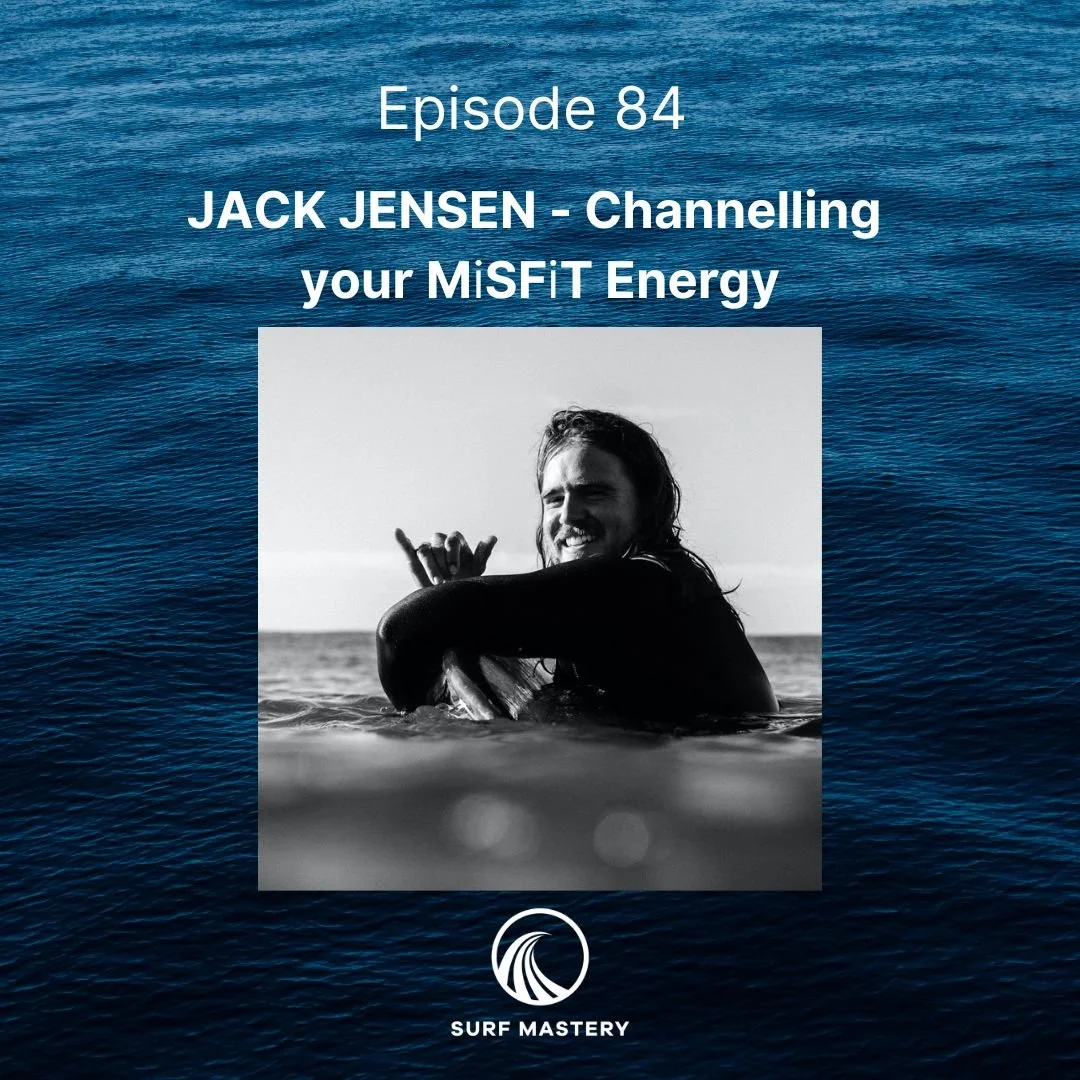
What if the thing stopping young men from healing isn’t weakness—but the suppression of their natural masculine energy? And what if the way forward isn't in sitting down to talk—but in action, community, and shared purpose?
In this raw and inspiring episode, Michael sits down with Jack Jensen—surfer, founder of MSFT Productions, and leader of the Spark That Chat movement. Together, they explore how action sports, creative expression, and real conversations are helping men break free from shame, connect to their purpose, and even save lives. If you’re tired of shallow mental health campaigns, this one will resonate.
Discover how the “misfit” label is being reclaimed as a badge of authenticity and strength
Hear how real conversations—and not performative vulnerability—are breaking suicide cycles in NZ
Learn how to spark meaningful change in your community, even if you're not a therapist
Play this episode now to hear Jack’s unfiltered truth—and get inspired to lead, connect, and spark that chat with someone who needs it.
#sparkthatchat - https://msftproductions.net/sparkthatchat
Resources: https://msftproductions.net/mental-health-resources
Instagram: https://www.instagram.com/msft_productions/ & https://www.instagram.com/jackk_jensenn/?hl=en
Life Coaching: https://surfmastery.com/life-coaching
Music - Sandy Dunes by SUNZ https://open.spotify.com/track/5UjI551rUJTZsuDUxu8zGH?si=7a60280b57a34c96
Key Points
Recognizing individuality and promoting the idea of everyone being a 'misfit' in their own way, aiming to inspire others to embrace their passions and talents.
Addressing the stigma around men's mental health and redefining masculinity as a positive and constructive force in society.
Explaining the origin of the term 'Misfit' and its evolution into a brand that promotes physical activity, mental health, and community engagement.
Discussing the creation of the 'Spark that Chat' initiative in response to the loss of a friend to suicide, aiming to promote open conversations about mental health.
Talking about the challenges of vulnerability and the stigma associated with mental health, emphasizing the importance of normalizing these conversations.
Exploring different ways to address mental health, including physicality, deep conversations, therapy, and hotlines, and the importance of seeking help.
Providing advice for those looking to spark conversations about mental health, including utilizing available resources and reaching out to trusted individuals.
Encouraging the normalization of deep conversations about mental health, fostering long-term relationships and support systems.
Promoting the idea of initiating and participating in shared activities as a way to spark conversations and support mental well-being.
Highlighting the importance of community and shared experiences in fostering mental health and providing information on how to connect with the Misfits community.
Outline
Misfit Identity and Purpose
Jack Jensen introduced the concept of 'misfit' as an identity that embraces individuality and passion for various activities.
The term 'misfit' originated from Jack's group of friends who were passionate about action sports and adventures since their teenage years.
Jack emphasized that everyone is a misfit in their own way and the purpose is to unite as misfits and inspire others to pursue their passions.
Mental Health and Masculinity
Michael discussed the challenges faced by young men and fathers regarding mental health and the stigma around masculinity.
Michael argued that masculinity is not toxic but rather the weak and immature who are toxic, and a mature masculine individual focuses on passions, work, and contributing to society.
Jack highlighted the importance of being vulnerable and reaching out for help when needed, and the role of leaders in inspiring men to connect and pursue their passions.
Misfit Productions and Content Creation
Jack explained that Misfit Productions started as a passion project to create and capture memories through videos and content.
The content creation aimed to inspire others to pursue their passions and improve their skills by sharing the 'stoke' and spreading positivity.
Jack emphasized the importance of authenticity, vulnerability, and embracing one's true self in the content creation process.
Spark That Chat Initiative
Jack shared the story behind the creation of the 'Spark That Chat' initiative, which was inspired by the loss of a close friend to suicide.
The initiative aims to encourage open conversations about mental health, vulnerability, and support among friends and community members.
Jack highlighted the positive impact of the initiative, including saving lives and creating positive ripples across the country.
Overcoming Fear and Vulnerability
Jack and Michael discussed the fear and stigma associated with vulnerability and mental health conversations.
They emphasized the importance of breaking the ice, being vulnerable, and reaching out to trusted friends and loved ones for support.
Jack encouraged individuals to build up the courage to spark conversations and utilize available resources, such as mental health hotlines and community organizations.
Normalizing Mental Health Conversations
Michael and Jack discussed the need to normalize mental health conversations and make them a part of everyday life.
They highlighted the importance of genuine conversations, active listening, and being present for one another.
Jack emphasized the power of speaking and listening as tools for mental well-being and encouraged individuals to practice these skills regularly.
Inspiration and Leadership
Michael and Jack discussed the role of leaders in inspiring and initiating action, particularly in the context of mental health and community engagement.
They emphasized the importance of taking the initiative to reach out to friends, organize activities, and create spaces for meaningful conversations.
Jack highlighted the positive impact of group activities and shared experiences in fostering connections and supporting mental well-being.
Transcription
Jack Jensen
Yeah, everyone’s a misfit in their own way. You know, and that’s the purpose about it. So we’re all uniting as misfits and individuals that froth off different stuff. And that’s what we really love and respect about it as well. Like, you know, we’re hell into action sports and music, obviously a lot around mental health now and connecting everyone with that, but understanding that everyone has their own thing they love. And we just, you know, our whole passion and purpose around what we do is inspire them to get out there and do that. A message from someone saying, “Because of what you’ve done, I am here today,” is the most single powerful message ever. And we were receiving a few of those or, “Bro, if it wasn’t for your campaign or spark that chat or what you’re up to, my mate wouldn’t be here. But he is because I chose to reach in.”
Michael Frampton
That was a couple of quotes from Jack Jensen. He’s a surfer, an entrepreneur, and just an all-round good dude. And as a father of three young boys, my main mission is to raise them to be good men—strong, powerful, and kind men. And some of the biggest challenges that young men and fathers of boys face today are the stigmas around men’s mental health and the woke media continuing to attempt to label masculinity as toxic. But masculinity—it’s not toxic. It’s actually the opposite of toxic. It’s the weak and immature who are toxic. A modern and mature masculine man is one who is conscious of who he is. He focuses his strength and his energy into his passions and his work. He understands that his role in society is to contribute to it and to help others and to provide a safe world for his family, his friends, and his community. The modern masculine man looks after his physical health and his mental health. He understands the importance of being vulnerable at the right times. And he understands sometimes he needs to reach out when he needs help. And he needs to listen when others need help. Men and women are different. We need to talk about man stuff with other men. We need to reach out to our fellow men and spark that chat with our fathers, our sons, our brothers, our mates. Because as Jack says in this interview, a hard and vulnerable conversation—not a cry for help—is far better than burying your mate. Men—we bond and we open up through action, through shared adventure, productive contribution, by getting together in groups and with others. Men don’t sit knee to knee and cry it out over a glass of wine, nor should we. Men need leaders to inspire and organize us to connect with other men by seeking adventure, pursuing our passion, our potential for greatness, by helping to make this world a better place. And one of these leaders is an inspiring young man by the name of Jack Jensen. I was so stoked to connect with Jack yesterday because Jack encompasses everything I just spoke about. He is a role model for young men, an icon of true masculinity. He is not only helping to redefine the masculine energy—what he calls the misfit inside—but he is inspiring others to do the same by leading by example. And it is through the actions of genuine good men that culture will change. The perception of masculinity will change, and importantly, we will obliterate the stigma around mental health. By simply sharing the stoke and sparking that chat. So I invite you not only to listen to Jack’s inspiring story and his message, but to share it with as many people as you can. Word misfit. Why did you choose that?
Jack Jensen
We grew up as a crew since we were grommets chasing action sports, adventures, parties, the whole nine yards. And we’re Hawke’s Bay misfits. So, you know, loved and hated, but we were out there doing it and spreading the froth and being who we were since we were grommets. And since the boys were repping Misfits since we were—what, like 13 years old—all the way through high school and causing havoc, having fun. And yeah, that’s like I was through and through all about it. And you know the bigger picture of what we’re up to, like our whole crew—whether it was wakeboarding, surfing, moto, skating, ruggers, everything—just went and sent it. So that’s where the Misfit name comes from. And then I like the abbreviation of MSFT—No “I”s—and Productions. Because I was starting to create content as a young fella, 26. I started creating videos because I loved to be able to watch them back because they were capturing memories. And I was just frothing on that hard. And then being able to get sick shots and different things in a vlog sort of style, I guess. Before vlogging was full-fledged and before social media big time—I think it was mainly Facebook and YouTube. You just keep pumping with that. You know, we’re five years down the track today and doing what we do. But it started from the passion of just loving to create and capture memories and then be able to watch them back and froth out on it, you know? And, you know, amped me up and the boys up to get out there and do it again, to be able to watch it back. And I, yeah, learned heaps from watching, like with the surfing or moto or whatever, and being like, yeah, I could do that better. And then—but yeah—it was just all about that. Spreading the froth and getting amped up and yeah, so that’s where Misfits originated from.
Michael Frampton
I love that. So it's kind of like the reason you started recording it was obviously some self-awareness for improvement of said activity, but you wanted to share the stoke and inspire others to do the same, yeah?
Jack Jensen
Massive since the get-go. I’ve always, like, really felt emotions and read emotions. I think that’s, you know—I talked to Mum and Dad about it and it's—I can feel the... I can feel whatever emotion is going on within a person, even if they're not really showing. I’ve had that like as a, I don’t know, inner thing about myself. So I’ve been really connected with people since a young age. And I’ve always—obviously, like, stoke is the best place to be. And the most hardest vibes—you’ve rocked from that and to be able to, you know, whether they go and send it bigger or have more fun. That’s been a big part, like, you know, a big—well, massive passion of mine. The purpose of why I’m on this planet is to help people. And through content creation and the reach of—even day dot when, you know, followers or subscribers were, you know, minimal—to have that, like I said just before the podcast started: one life at a time. Knowing the power of that—if we can connect with people through doing what we do by spreading the froth, getting out there, getting sandy, and capturing it well. That’s where the idea fully cooked up with Misfits and what we are and what it’s all about today.
Michael Frampton
Yeah, I love that. The word misfit is great. It’s got this edgy... because it can be taken as like a negative. But what you’re doing is you’re directing that misfit energy into inspiring physical activity and progressing sport. And so I like that about it.
Jack Jensen
Yeah, everyone’s a misfit in their own way. You know, and that’s the purpose about it. So we’re all uniting as misfits and individuals that froth off different stuff. And that’s what we really love and respect about it as well. Like, you know, we’re hell into action sports and music, obviously a lot around mental health now and connecting everyone with that. But understanding that everyone has their own thing they love. And we just—you know, our whole passion and purpose around what we do is inspire them to get out there and do that. You know, whether it’s playing the piano or if it’s going and hitting your first jump and you’ve been drawn to that, or going paddling out for your first surf, or going and getting barreled on a 15-foot wave, or going and doing a backflip. You know, like just the full correlation of levels, of whatever level you are as a person, to be able to keep bettering yourself. ‘Cause why not? That’s what life’s all about. You only get one crack at it.
Michael Frampton
Totally. And it’s almost like that misfit energy has been suppressed in the last 20 years or so. So I’m so stoked you guys are out there like fostering it. No, come on. It’s Misfit Energy. It’s good. You just got to direct it in the right way—places.
Jack Jensen
Yeah. Yeah.
Michael Frampton
So is that what you sort of saw? Is that part of... the equation that—did like, yeah, I guess, it’s always rad to get a different perspective of it. And, yeah, I guess it is. Yeah. Like to be able to capture the stoke or capture—like, makes people think what they love to do in life and internalize and think about it and be like, well... there’s no reason why I shouldn’t try to do this as much as I can while I’m here on this planet. Like, there’s no excuse not to do what you love as much as you can. You know, there’s always ways and things around knowing that people have different privileges, whether being time or money or situation or place, but it’s about making the best of what you’ve got. And I think that’s huge. I’ve been fortunate enough—brought up on a sheep and beef farm and learnt the value of a dollar and value of work ethic, which I’ve been able to really incorporate into what I do today. I definitely back myself on being the hardest worker in the room or like, you know, that’s why I believe where I’ve got to today is because of that. I just go so hard out and don’t stop until I’ve got to, you know, to whatever level that is of what I’m set out to do. Doing whatever you can to do it. But just inspire that like—it’s a choice at the end of the day. And, you know, through the ways of life, the waves of life that come—curveballs always going to come, you know. Like especially what I’ve experienced over the last—you know, a lot packed into three and a half years—being surrounded by suicide and people, like cancer and death. It’s really opened perspective for me. To the simple things in life. Really can be the most powerful tools in this complex world. So if you can simplify things with great tools like getting out there and doing what you love with the people you love as much as you can, it will make complex situations in life, no matter how gnarly, better. Because you’re looking after yourself. And that helps with your whole mental health and well-being. So yeah, it’s a huge part of, you know—and that’s massively incorporating the purpose of what we’re up to at Misfits.
Michael Frampton
Yeah, I love that. Because we’re seeing such a rise in male suicide. And it has been correlated by some pretty out-there authors—Richard Reeves—talking about the crisis of boys and men aren’t doing as well in school at the moment. It’s gnarly. And I see the correlation. I see what you’re doing is the solution. Because men’s masculinity—or their misfit energy, however you want to label it—has been suppressed. And it’s been spun in a negative way in some of these woke liberal media personas. And you’re doing... you’re inspiring people to do the opposite. And not only are you doing that, you’re changing society’s perspective on it. And seeing what the positivity can come out of there—putting the hard work in—as long as you direct it in the right places. Because that energy is in there. For all people, not just men—like, everyone has that masculine energy. And if you don’t—if you suppress it and hide it—then all it does is you end up in your own head. But you’ve got to get back into your own body and get out there and channel it into the right places. And your brain—your mental health—lives in a body. And if that body is not healthy and moving, then yeah—it’s the worst thing you can do. And it’s twofold. Because when men and people get out there and get moving and get involved as a community, that can crack the ice and break the barriers to talking about stuff. Yeah, it’s such a great word—Misfit.
Jack Jensen
Yeah, sure, bro. And that’s so cool. But it is, though. You know, one of the biggest pillars behind Misfits is—we’ve got three main pillars: genuine, positive, and passionate. The key is genuine. Around that is exactly rocking down who you are. We keep it real, bro. That’s basically—if you separated us and our brand with Misfit Productions and what it represents—we keep it real. What you get in front of the lens is what you get behind it. And I think that’s, you know, with the social media nowadays and the media sugarcoating shit and showing the finest 0.1% of what’s going on in front of them, you know, that’s where people—and, you know, comparability around—this is a situation of what’s getting to young people because they’re comparing themselves with the best 0.1% of that person’s life, or this brand’s persona or whatever. And the power, like we said at the start, the power of vulnerability—because vulnerability is pure you. It’s a pure person. There’s no façade. There’s no mask in front of it. And that’s essentially what we are doing and what we’ll continue to do—is keep shit real, embrace, and inspire people to be who they are, love what they love doing, and go and do that shit. Just rock down who you are—like, you know, that individual spark. And like you said around the suppressing—like society and being a certain way or whatever—fuck that. Like, you’ve just got to—you know, we fully—I believe you have to just push them to be their best. All you can do in whatever situation is do your best and rock down exactly who you are. That’s what we—and we’ll continue to—push through whatever we do, whether it be music events, action sports, whatever yarns, whatever. It’s just embracing who you are. And there shouldn’t be a... like... if you’re acting like something else or trying to impress someone, not being who you are—like what? You shouldn’t hang around those people that are looking for that. You know, hang around people that love you for you. You know, that’s essentially, like—you know, going deeper into what you’re saying around encouraging people to, you know, bring their masculine energy, their misfit energy—well, that’s it. It’s just bringing their energy. Their individual energy, the person they are. Like, and if you don’t like it, fuck, well, those people aren’t for you. But there are a lot of people out there that will like you for you. You’ve just got to—I guess, as round as tough as it is being a younger generation coming through now with social media and all these different things, because they’ve got all these perspectives and opinions what they should do—but, you know, if you can come back with all this noise going around, if they can come back to really focus on who they are, like learning who they are and learning and observing what they like, you know, that will be a real powerful key to be able to navigate through those initial stages of life and hanging out with people that bring the best out of them.
Michael Frampton
I love that. And you’re providing the space for people to do that and encouraging them to do that and inspiring them to do that. And that’s what’s needed. That’s exactly what’s needed. And you’ve even taken it deeper than that—like, tell us about the Spark That Chat initiative.
Jack Jensen
Yeah, so Spark That Chat was created from—we lost a crew member. Rito was an absolute legend. Again, life of the party, which I think a lot of people would be able to relate to that. And we lost the bro, who was a beautiful individual. He was a great dude, and he meant so well. And he was loving and caring for his bros, and he’d be there at the drop of a hat if you needed him. And we lost him in November 2020. And that was an experience—that was my first real close experience with losing someone to suicide. And seeing what it did to my mates and the loved ones in his family—it was the most gnarly thing ever. Ever gone through. That I’d ever gone through. I think I was—what was that—when I was 24. And what inspired me from that situation of losing the bro—I went online with socials. We’re very connected with our fans, followers, frothers, community. And I went and sat on the steps at home and had a genuine yarn. Not thinking of it as—I just didn’t even really think about it. But I had a yarn for about three and a half minutes. Just raw. And emotion. Like just real—as I talk about, well, that’s what we’ve done since the start and kept it real—and put it out. And then basically turned my phone off for two or three days. And from there, I opened the phone up when I chose to, and I had a huge influx of messages. People had shared that video around a lot and watched it, and it sparked emotion within them and felt. Then and there, I realized... Holy shit. There is a huge issue here. And New Zealand... and right now, there needs to be something done. There needs to be action from that. People sent through messages saying, “Sending all the love your guys’ way. I’ve lost a brother, I’ve lost a son, I’ve lost an uncle, I’ve lost a dad.” Like just all these different individual stories saying, “It will be okay,” and “Time is the biggest healer,” sort of thing from a lot of these individuals that have gone through it. But I just—it just hit me massively that I had to do something about it. Like, you know, I have this platform. At the time it was probably a third the size of what it is now. But we had solid reach. And again, like, genuine frothers that really engage with our content. And we have a demographic—a main demographic that’s key—between 18 and 26, males majority. And this was the main demographic that was being hurt. And I was like, I’ve got to do... I’ve got to start talking about this shit. This resonates with so many people out there. And if I can open the space to be able to keep, like again—back to the point—keep it real, because life’s not all sunshine and rainbows. But if we can outline what we’re up to, but the real shit that’s going on behind it, within conversation—this is brewed from conversation with these people—holy shit, this is powerful stuff. So that March, the following year—2021—was the first year we dedicated our whole platform of Misfits to Spark That Chat. So that’s day in, day out. We’re currently in March right now—it’s our third annual year which we’re doing the same. But we launched—because we sell clothing all around Australasia as well—and created a line of clothing dedicated. 100% of the proceeds go to the Mental Health Foundation of New Zealand. And we do whatever we can to spark as many chats as we can, knowing that—like, I Spark That Chat—terminology just came about from a simple like, yarns, like, you know, simple chats. And I was like, you know, we talked about it: spark that chat. Something real simple, again, yet so effective. And so Spark That Chat kicked off. And our first year, in 2021, we raised 20 grand for the Mental Health Foundation. But as I believe and always will, money is a byproduct of the purpose at Misfit Productions. Like I said, I’m here. I’ve been put on this planet to help people and bring people together. And we sparked so many chats. We created positive ripples across the country, which went on to save a lot of individuals—a lot of people. We got messages saying, “Hey, from watching your guys’ content…” So we filmed content, released it. Everything we’re doing, we’re dedicating to the cause of Spark That Chat. Whether it’s going surfing or moto or create a conversation—it was amazing. Fully like, why are we doing this? It’s to froth us up, it’s to chase those good vibes, but it’s to keep our good well-being and mental health. It’s to help people out of this. And these are tools to be able to do it. Keeping it simple through perspective of what keeps me stoked, and my bros and crew stoked. So we just dove deeper into it. And the stories that come from it—from individual lives being saved from what we were doing, bro. A message from someone saying, “Because of what you’ve done, I am here today,” is the most single powerful message ever. And we were receiving a few of those. Or, “Bro, if it wasn’t for your campaign of Spark That Chat, of what you’re up to, my mate wouldn’t be here—but he is, because I chose to reach in.” And he sparked that chat with his bro. His bro was a happy dude, funny guy. And he was broken as fuck. And because he reached in and kept it real and sparked that chat, his bro felt safe enough to open up and talk real with him. And they went on to—you know, in multiple situations—they went on to direct their mates in the right direction, whether it’s being professional help, or telling the whole crew to be able to realize, “Let’s keep an eye on the bro, and let’s do something. Let’s get him out. Let’s keep in touch. Let’s go and see him every day, or keep in touch every day, or go and do this every day to make—bring the spirits up—to realize that he’s not alone.” And from then on, man—that was, you know, 2021. We ran it again 2022. And that was incredible. We got media on board. And again, just like every demographic—every human can relate in whatever way that is around mental health. Everyone goes through pits and peaks of their life. But it’s like understanding it’s going to continue—like, no matter what level you’re at. And success is... there’s always going to be curveballs that are thrown at you in life. And being 26 years old now and understanding it can come thick and fast, or long and—you know, whatever. But to be able to have these tools in your pocket to be able to manage through these situations and doing your best, but being able to reach out and talk to people that you love or feel safe around. And, you know, it’s really immersed now in what we are and what the brand stands for—spreading the froth, but sparking those chats, keeping it real. Full spectrums of stoke to understanding it’s perfectly normal to feel low and no energy and shit at some points of time because you’re grieving or you’re going through some stuff—that life of trauma that you’re caught up with. But hey, let’s work through this, realizing that there’s a hand reaching out to get them out of that. People that care and love them. And that’s what we’re here to do. That’s what we’re—we’re not alone. We’re here for you. And there’s a lot of people out there that are.
Michael Frampton
Yeah, man. Wow. Thank you. First of all, I’m sorry for your loss. Why do you think people are so scared to spark that chat?
Jack Jensen
Vulnerability. People... going back to the point of what the younger generation is going through today—showing who they are is really scary.
Michael Frampton
What’s the stigma around that? Judgment?
Jack Jensen
Judged. Being judged for what you are, for who you are, for what you like, for your personality. Especially here in New Zealand, around the tall poppy syndrome—fuck. Like, the judgment part. I don’t fucking understand how you can be pissed off or jealous of someone doing so well, and you’re willing to do whatever it takes to bring them down. What? To bring them down to your level? Of—whatever that is—instead of spinning that shit on its head and being like, “They’re doing so awesome. I’m going to do whatever it takes—that is so cool. That inspires me to be awesome as well.” It’s a way of life that’s come through, I believe, with a habit. It’s created through habit, I reckon, because it’s reoccurring. It’s people seeing that their dad’s done it, or their mates have done it, so that must be the right way. So I think it’s been like—you know, this is just my perspective—I actually don’t know because it fucking baffles me. Like, in my mind, I don’t understand how you can get angry, pissed off, or jealous at someone doing well. Like it really... like if someone’s doing well for them in whatever that they love—holy—that is the raddest thing that can happen on this planet. Like, so take inspiration from that and run with whatever that is or draw inspiration from different things. It’s wild how the human mind is around being attracted to negativity and being caught up on that, then all the positivity. So I think it is from where it stems from—it’s bad habits and being—going down a way instead of being led the other. Perspective. And action. I don’t know. It’s a gnarly one. But it’s a shit one. It’s got to stop.
Michael Frampton
Yeah, I mean, I think tall poppy syndrome is... it’s definitely... it’s a New Zealand, Australia thing. And it’s there. And the negative side of it is not only—well, it’s always people’s misconceptions of what you’re doing. That’s why they want to chop you down. And it’s always—it is their jealousy. But that’s part of what stops them from talking about why they’re feeling so bad about themselves. And that’s part of the stigma. And people are... and... it’s part of the stigma of mental health as well. They’re not willing to admit, “Shit, maybe I am struggling with my mental health.” Because like you said, mental health is not a personality. I think maybe that’s part of the misconception in New Zealand. People would think that if you’ve got mental health, that means that you’re a schizophrenic, or—no. It’s just like your physical health. If you’re going to eat...
Jack Jensen
Everyone's got it.
Michael Frampton
Yeah. If you're going to eat McDonald's for a week, you're not going to feel very well physically, but that doesn't mean that you're sick—you have a sick body. It just means you need to adjust your diet and get back on track. And if you're feeling depressed, it doesn't mean that you're a depressed person. It just means that you need to do some things for your mental health, just like you would do with your physical health. Like, stop suppressing that misfit inside you and get out there and move your body and just... get in front of some people and be vulnerable.
Jack Jensen
A hundred percent. It's taking action. It's taking action. It's taking the reins to exactly do that—to understand. And that, you know, it stems back from the start of that—exactly that—of judging. And it's because that's a tool, a coping mechanism within themselves to deflect. So because it's the way they're feeling about themselves, I'm going to bring that person down because, fuck them, because I feel like this and this is the way—or they don't want to deal with the way they're feeling and unpacking that because it's scary essentially. But it's exactly—it's so true, bro. Taking action. Accountability of your actions and your life. And doing what needs to be done whether it hurts and is painful at the start. Just like, for example, starting at the gym—like, you know, your muscles ache and they're sore after your first few sessions at the gym to the point you can't walk or you can't squat down, but it gets better. Your muscles adjust. They get stronger. They get fitter. It's exactly the same as the mind. This crazy thing—the brain—which is like, it creates and shapes existence around us. And people aren't willing to give it the time, effort, and love, and to be open-minded and understand that this thing shapes everything. So why not respect it and put physiotherapy—just like physiotherapy for your muscles to help them out and mend—like, to do the same, whether it's been talking to your mate, sparking those chats, or seeing professional help. Like, it's—yeah. And that, to this day, has been a driving force to be able to, you know, re-jig that and to bring what we can do to inspire people to be like, fuck, this thing's crazy. It's so awesome. But sometimes it works in the other way around as well. And you can get caught up in the bad ripples. But instead, simple acts can adjust and make for big bounds, you know.
Michael Frampton
Yeah, man, I see it. Like, I think of my father's generation, right? And they—like, if they had a sore knee or something—"Nah, she'll be right. Walk it off" or whatever, right? And then my generation is like, if I've got an issue, I'm more than happy—there's no embarrassment, there's no shame—of me going to a physiotherapist at all. However, there is a bit, like when it comes, would I have a therapist? I'm like—I get that. That's in the New Zealand culture still. But I've been living in LA, and not only—like, people in LA are proud of having a therapist. There's no stigma around having a therapist. If you don't have one, they're like, "What do you mean you don't have a therapist?" Wow. So—and I think New Zealand's just—we're just behind the curve, and it's coming. The stigma here will change. But it's going to take people like you to explain it. Because people need to think it through and see people being vulnerable. And just because you see Jack being vulnerable on social media, that doesn't mean you have to be vulnerable on social media. Just talk to your best friend and say, "Man, I really want to talk to you. And please keep it to yourself." And, like, you know—people want to have those—people want to hear those conversations. They do. But you’ve got to break that ice because, bro...
Jack Jensen
It shows the utmost respect if someone—and I've been in the position of that, I've been on the other side—and someone's come to you because they feel comfortable enough to be vulnerable with you, it is the most—it’s one of the most best things that a mate could do, I reckon. And it's not—and it's switching that, “I'm putting my load or putting the shit on you” as well—no. If they're a real friend and they love you, they would absolutely want to stand next to you and do whatever it takes for you to get through it, than fucking stand next to your casket. It's... it's... I cannot stress that enough. Because I've, you know, over this time of Spark That Chat, been—of, you know, three mates... and it sucks. And I'm over it. And I want it to stop. But you've got to take those reins. You've got to, you know, control your actions and do what you can—whether that's reaching in or reaching out and looking after yourself to be able to do that. You know, at the end of the day, everyone's entitled to do what they want and think what they like. But you can do whatever it takes to be able to help them through that and be there as a pillar to lean on, you know. Yeah, it's... it's hard out, it's real. But fuck, it's a beautiful thing when those conversations roll in. There's nothing better. In conversations like these, bro, when you're keeping it so real and just being authentic—your authentic self—that’s where it is. Because, you know, that's where—that's where relationships form. Because, like, you know, you like them for them. And that—and it's like, you know, just like now, bro, we've talked about what we've talked about, and I feel like I've known you for so long. Because it's so real. And genuine. Like, it's—yeah, it's powerful. So definitely, everyone out there listening—I encourage you guys to spark that chat.
Michael Frampton
Yes. Yeah, definitely. And it's not easy. I was never—I used to be called Silent Mike. I was shy when I was younger. And I had to step up and go, "Okay, I'm not shy, I'm just acting shy." I didn't attach that stigma that I was getting to my personality. I stood up and took ownership of it. And worked on it. And I was lucky enough to be overseas where therapy is more accepted. And I, you know—therapy helped me a lot through that. And for you, it was a, you know, it took a rock bottom experience to realize it. But it doesn't have to be that way. No. We can just—if you see one of your friends, and it's like—he's being real negative—pull them aside. And, you know, don't just jump straight in. You know, have a yarn. "How are you?" and "How's it going?" You talk about the highlights first, get that out of the way. But then go, "Actually, bro, how are you?" And if he's still not willing to say anything, be vulnerable and tell him a story of how you—your life hasn’t been great.
Jack Jensen
First. A hundred percent.
Michael Frampton
And we owe it to our friends to do that, and to society to do that. So just because maybe you're not—maybe you're in control of your mental health—doesn’t mean that your friends are.
Jack Jensen
Hard out, bro. And it's as well, like, you know—that negative mate or that sad mate—check in on your happy mates and your funny mates and the people that seem like they've got their shit together, or that they're, you know, they’re having fun and they're partying and whatever. Check on those mates as well. Check on all your mates. And keep those conversations real like it is. It is so important, bro. Yeah, just that point of checking in, keeping connected. And... yeah, it's not like, you know... it's just being there. Yeah. For one another. And that's right. True friendship. You know, that's true. That's love right there. And it's awesome. Yep. There's so many different ways to address your mental health—physicality, there's talking, there's deep talks with mates and fathers and grandfathers, or there's therapy. If you can't afford therapy, there's hotlines. There's no excuse.
Jack Jensen
Yeah, hard out, bro. And like, I think the vision—the, you know, the vital key—is optimism. At looking at these things with a, you know, glass half full instead of half empty. Understanding some people get to the stage of not being able to get out of bed or have a shower because they feel so down. But it's making those simple steps. And if you can get into those steps—you can, by choice—and building as much courage as you can to have those conversations with, like you said, around the loved ones. But understanding you're not broken. Like, New Zealand, Australia especially—you’re not broken if you need a therapist. You're not broken if you need a clinical psychologist or a counsellor. You just need a physio for your mind. You—just like you’d go—if, for example, the injuries that I've been through the last year, like, the amount of time I've spent in the physio to get everything, you know, back to normal or back to being optimum level so I can do what I do—is so many times. And if I heard—because, you know, I respect so much that people putting back into themselves—like if, you know, which I hear, if mates or people or athletes are like, "Yeah, they're spending a lot of this time with a physiotherapist or acupuncturist or a naturopath or whatever it is," to be able to do better or get their body back better—it’s so much the same around the counselling. I'm so intrigued by it with—around mentality. And because different strokes for different folks, you know. Different people are going through different things at whatever level that is. But, you know, the brain fascinates me and the mind and mental health because it can be so much—it’s shaped, you know, through time of your existence here. And if, you know, different perspectives and picking up different things from, for example, your clinical psychologist—again, these are super personal level and they might not be willing to open up and talk about it at the time. But there will be a time where you can talk about that. And I've had conversations with friends that have, and they've been massively helped by counsellors or a clinical psychologist because it allowed them to unpack that—their trauma, their lives, or something that they've been caught up on that's not allowed them to move on with life. You know, there's a lot of things out there. Like, you know, I'm 26 now, and you can be whatever age and you could literally be—like, from something that's happened back when you're eight years old, you're—you know, some people aren't able to grow, you know, grow mentally or grow past that point because they're so stuck at that point of their life. They are fully triggered by things that relate back to here. And then it allows them not to be—it holds them down from being genuinely happy or, you know, feel fulfilled with love or not being able to feel love because this happened and they got made to feel this way. But by unpacking it and talking about it and lightening that load and bringing it to the surface instead of bottling it up within is so powerful. And, you know, that's what, you know, psychologists or counsellors or mates can do through their relatability through life and their experience or studies or situations they've had. You know, through conversation. And nine times out of ten, you’ll be able to take things from whoever you’re talking to, to be able to help you in your situation. Because at the end of the day, we’re all human. And we have brains.
Michael Frampton
Yep. Yeah, it's so true. And it's like... because we think that—sometimes you go to the physio and your knee's hurting. And they go to the physio and he just, like, works on your hip and your ankle, and you're like—now my knee's better. It's the same thing with your mental health. You think you can think your way through it. Or you can’t. You’ve got to go to an expert. Because it might be something that you're not even aware of that's causing the issues. So, a mental health physio—that's a good way to put it.
Jack Jensen
Yeah, bro. It is. You're so right—the way it's like the unpacking of around the circumstance around the situation. You're not able to get past it because you've been—you’re held up by stuff that happened to you back in the day. But you need to unpack that to be able to move forward. So you're held down by that, but you need to express the fact. And that's the point of—the power—the biggest tool of them all is being able to speak. And, you know, a legend and one of my key mentors, Warren Brown from Staros, incredible individual. You know, the two biggest things, you know, he makes point of, which he is so good at both—and we are given two of the biggest tools when we're born with it—and it is to speak and it is to listen. And if you can utilize those tools so simply, by talking and being your genuine self, but training yourself—because it's easier said than done—being a good listener, and that comes from being there, genuinely listening, being present, is the two most powerful tools that are given to us on this planet.
Michael Frampton
Yep, so simple. What if someone's listening now and they're feeling inspired to spark that chat, but there's still a bit of fear? Is there any resources you're pointing these types of people towards? What's your advice for those individuals?
Jack Jensen
For those individuals out there listening that are really keen to spark that chat, I really encourage to build up the courage to be able to reach in to the people you most trust and love. There's definitely resources out there. For example, in New Zealand, 1737, the mental health hotline, or, you know, we've been working with For All the Brothers—Zane Munro doing incredible things. There's platforms out there, there's individuals. If it's within your community and province, being able to get in touch with, you know, organizations that are proactive, whether creating events or initiatives, reach out to those guys because they obviously, you know, want to care. But first and foremost, because it's right here and right now, do whatever you can to communicate and be able to spark that chat with the people you love and care about. And it really might be your closest cousin, or it might be your closest mate, it might be your brother or sister, your mum or dad, or, you know, whatever it is that you're doing. And someone to the point that even if you feel comfortable in a situation that you don't know this person that well, but you know the cut of their cloth and you feel comfortable in that situation—reaching out to do that. And all those people out there as well that feel content and they're feeling really good about their mental health and they feel they've got a grasp on it, I challenge you to reach in as well. You know, that's a huge thing because sometimes I understand people in these situations and they think—they essentially feel stuck, so if you can lighten that load by reaching in to those people that, you know, you don't necessarily know if they need the help or not, but there's nothing—like I said, like we said at the start—there's nothing more rad than showing vulnerability. You're probably going to learn a lot about your mate and grow a whole lot closer by the end of the conversation you have with them after you've sparked that chat. It's—yeah, it brings a lot of people closer and you really get to know someone on another level.
Michael Frampton
Now, I love that advice and I'll put links in the show notes to those external resources for those that might need it. But I love the advice of just—you already know people. And I think what goes along with this... I think everyone listening can feel Spark That Chat speaks to a part of them. I actually think it speaks to the same part of them that's feeling like they want to connect deeper with people. And if you want to connect deeper with your friends and family, then spark that chat. Like, that's the vehicle to do it. Like it feels like a barrier. But it's not. Some stigma that we're trying to put our finger on, but really the easiest solution is just—I love it. Spark that chat. Doing it. Just do it. You won't regret it.
Jack Jensen
Nah, hell no. And, you know, like—and to be, you know, to paint situations of people would have, you know, be anxious around the—if it doesn't go so well with someone, if they feel like they've been palmed or bat-handed because that person hasn't responded in the best way—please don't be discouraged by that. Again, we go back to the point of—that is probably more of a reflection of themselves not being able to deal with it. But you've learned about that. Don't take that on board yourself. But build enough courage to go to the next person you love and care about. Just don't quit. Don't quit on yourself. Like, again, we talk about these curveballs that get thrown at us. Don't get—beat them down. And don't stay down. Do whatever you can to spark—you will literally, you will find a person. If it's not the first, it will be the second. You know, in the conversation. And you will brew a beautiful relationship that will take you further. And who knows down the track, you know. And it's—you know—yeah, it's super powerful. But again, it's real. Like, it's real shit. It's—and it's a constant practice. Just like, you know, going to the gym or working out or training and getting better at something. This is something you can create a habit into. And therefore you can be that source of inspiration where it becomes a dinner table conversation. You know, that's at the end of the day where we're aiming this towards—is to be able to normalize it so much that people can talk about their not-so-good shit as well as their real fantastic stuff as well. But just like, you know, again, keeping it real.
Michael Frampton
You know, that's a good side note. Cause yeah, sometimes when you decide to open up and you—cause you want to talk—it turns out the other person hits you with something that's like, shit.
Jack Jensen
A bit of a roadblock.
Michael Frampton
Yeah. But that's, I think—you've got to go into these conversations with the idea of it being a long-form conversation.
Jack Jensen
That is essentially the power of genuine conversation, isn't it? Because it leads from one thing to another. Next thing you're learning about all these different things that even you're bringing up, and it's flowing out of your mouth from within. And you're like—you know, and it's again lightening that load. It's emptying that bottle that you've bottled up for a long time. Next thing that person is being able to listen genuinely and retaliate with whatever they can relate with in their own lives, you know, and communicate around that conversation. And it's—thing—it's amazing. I like—it’s one of the most beautiful things about life, I believe. Like, you can be out, you know—for example, my circumstance of being out charging waves or out, you know, charging up the mountain or on the motos, coming back and having a beer and keeping it real. You know, it doesn't necessarily need to be deep and meaningful all the time, but it's just keeping shit real and talking and communicating over a beer or a water or whatever that is. But out in these situations as well—and that's another lead-on to sparking that chat—maybe it's not sitting down. Not for everyone. Like we—you know, at the start, bro, how we said it—different strokes for different folks. And it's about getting into these places where you're most comfortable sometimes. "Hey bro, keen to go for a mountain bike ride?" "Yeah, keen as, let's do it." And then sparking that chat on the way, or stopping after for a coffee or out in the surf. "Yo bro, keen on a wave?" Or, "Check mates?" Cause this is again for both—everyone—women and men—to those spaces that they feel most comfortable in. So out in the back of the waves maybe. And that sparking that—wow—as you'd understand, that's a hell of a place to be. And it's very... it's very humbling. Because the power of the ocean is incredible. And it's one of my biggest tools around mental health and everything—well-being. I know when I can get out into the waves, it can really lighten my load. Because I feel like it can take the energy and smash me. And I can ride the waves, get the motion or big smacks or carving, and become one with the environment, which is so incredible—of connecting with the environment around you—that's amazing. So it's, yeah, again, creating these spaces or like initiating these spaces, you know, to get mates out if you're worried about them, to be able to call them in and go on a mission with them and get out into the environment. Or the other way around. Like, whatever.
Michael Frampton
Your... initiation, that's a good word because that's what's missing is—it comes back to the, you know, how Misfit started—is that the initiation is like, you've probably got friends who love surfing and love doing everything you do. But if you don't text them and say, "We're meeting here," they don't actually do it.
Jack Jensen
Yeah.
Michael Frampton
We need leaders to inspire and spark—not only chats—but spark involvement, getting out and about. And yeah, so what if he can't make it? But send the text: "Come on, we're going." Or drive around there: "We're going." Just put your suit in the car. You can film. You don't have to surf. Just come get out of the house. Like, let's go. And that can be the way that you end up sparking the chat. Or maybe that's just all they need to do is just get out of the house. So I think there's more—we need those Sherpas, those leaders to inspire and initiate action. Not just from yourself, but from others. So even a sport like surfing, which is essentially—it is a solo pursuit, a solace pursuit—but you can still, you know, four people fit in a car.
Jack Jensen
Geez, yeah. It's a—you know, and check off personally for me, if a solo surf is absolutely so good for the soul and sometimes so incredible to get outside your head. But holy—as you'd be able to understand—it takes it to another level when you've got a truck full of homies and their boards, and then you're out there, you're scoring waves, you're throwing down some big turns or getting barreled, and then you're like, "Whoa." Let's do it just right now. Because it's happened to me the last couple of days of just the... froth that it brings to the veins. You know, that stoke, that serotonin, it's pumping. You know, because I really do feel—so when I see someone else stoked and to be able to vibe off that, you know. So it is—getting with them, you know, getting with a mate and taking them out on a mission and being able to, you know, feed off their energy as well. And yeah, it's an amazing thing.
Michael Frampton
Yes. Yeah. Awesome. Yep. There’s nothing better than surf. Nothing worse than surfing in a really crowded lineup, but there’s nothing better than just when it’s just you and a friend. It’s always better with someone else. It’s—the odd solo surf is great—but it’s always better if there’s one other person.
Jack Jensen
Hundred percent. Because you’re able to froth off their big turns, or like, you know, their barrel, or even like to the point of like, you know, someone that’s just starting surfing—seeing them on a wave or surf a wave on the wall, you know, like just that. Because understanding that was us at the starting point, and the feeling it generated when you could—when you surfed down the wall for the first time—that was like, for me, it was life-changing. You know, it’s like, “I want to do this as much as I can.” And now it’s like barrels and like, you know, just smashing turns as you can sort of thing. And it’s just that level of froth just keeps on generating and getting better. And then back to the point of, you know, our purpose at Misfits is to inspire you guys to either do more of what you love or try new things. You know, like for example, if you’ve always wanted to surf—oop—go suss it out. There’s a lot of, you know, there’s a lot of people out there with boards. There’s local surf shops that will definitely hook you up and point you in the right direction. We definitely will, like, you know, be able to point you in the right direction and froth you up to get out there. We understand. Like just, do whatever that makes you happy and like, give it a crack—even though if you’re nervous as, you know, you might be shitting yourself because of the environment you paddled out into or knowing that it’s daunting in some lineups—but just like, and embrace your kookiness and just get out there and give it a crack. There’s only one way to get better, and that’s by doing it, you know. Yeah, froth.
Michael Frampton
Spreading the... sparking the chat.
Jack Jensen
Spreading the froth.
Michael Frampton
Yeah, bro. What’s the website, Instagram? Where can you point people towards?
Jack Jensen
So it’s @msft_productions on Instagram. I think the same is on TikTok. Facebook—MSFT Productions. Website—yeah, msftproductions.net. And yeah, across all platforms. We’re on all social platforms to, yeah, again, spread as much froth and stoke as we can and again spark those chats and be able to—it’s incredible, this community, this family we’ve created. And everyone out there that loves the froth in whatever way it is, you guys are more than welcome to come and join.
Michael Frampton
Yep. Awesome. Well, thank you, Jack. I have links to all of those things that are mentioned in the show notes. Follow, join in, spark that chat, and spread that froth. And you’re an inspiration, Jack. And I appreciate your time today. Thank you.
Jack Jensen
Always, brother. Thank you very much for having me on. It’s been a pleasure. Yeah, legend.
Michael Frampton
Right. Thank you so much for tuning in. The easiest way to support this message, this podcast, is just to share this with a friend. If you need someone to talk to, I am working as a life coach. You can find out more about that at surfmastery.com. Links to find out more about Jack and to all the other resources we mentioned are in the show notes to this episode and on the Instagram post. The music that you’re listening to now that will play out in its entirety and is the intro music is from a local Hawke’s Bay band here in New Zealand, Sunz—that’s S-U-N-Z. Links to them in the show notes too.
84 Jack Jensen - Channelling your MiSFiT Energy
For the passionate surfer—whether you're a weekend warrior, a surf dad, or an older surfer—this podcast is all about better surfing and deeper stoke. With expert surf coaching, surf training, and surfing tips, we’ll help you catch more waves, refine your paddling technique, and perfect your pop up on a surfboard. From surf workouts to handling wipeouts, chasing bigger waves, and mastering surf technique, we’re here to make sure you not only improve but truly enjoy surfing more—so you can get more out of every session and become a wiser surfer. Go from Beginner or intermediate Surfer to advanced.