
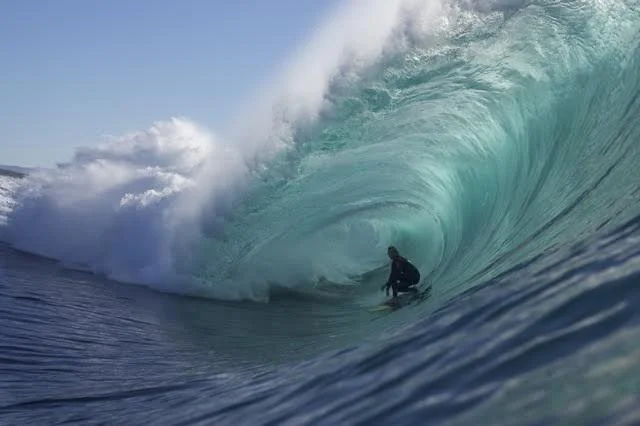
019: KARL ATTKINS - Big Wave Surfer
Available On All Platforms:
Show Notes for The Surf Mastery Podcast: Chasing Big Waves and Overcoming Fear with Karl Attkins
Have you ever wondered what separates the world's top big wave surfers from the rest? What mindset, preparation, and experiences drive someone to ride waves as tall as buildings?
In this episode of the Surf Mastery Podcast, Michael Frampton sits down with Karl Attkins, a self-made big wave surfer from Sydney's Northern Beaches. Karl shares his inspiring journey, from overcoming his fear of big waves as a teen to chasing the world’s most intense swells—all while balancing a full-time job. If you're looking for insights into mastering fear, honing your craft, and pushing your limits, this is an episode you won't want to miss.
Learn how to mentally and physically prepare for big wave surfing and why preparation is key to overcoming fear.
Discover Karl’s approach to training, including breathwork and lessons learned from surfing legends like Shane Dorian and Greg Long.
Hear about Karl's incredible stories, including his first trip to Shipstern Bluff and how commitment and intuition have guided his career.
Press play to learn the secrets to mastering your fears and unlocking your full potential in both surfing and life.
Karl Attkins grew up surfing and competing on Sydney's Northern Beaches, since finishing his competitive career Karl has been chasing big waves.
Karl talks about the importance of being prepared before committing to a big wave surf. Preparation of body, mind, and equipment is essential before you step outside your comfort zone, and stepping outside your comfort zone is the key to progression.
Karl also helps us to identify some of the subtleties around fear, intuition, and instinct, and how awareness of them can help you to face your fears, and avoid injury. How Breath Enhancement Training (B.E.T.) with Nam Baldwin has helped his surfing, both big wave and competitive.
Notable Quotes
"I didn’t ignore the fear—it was there—but I embraced it and went out there anyway."
"Being prepared is the number one key to surfing big waves. I’ve done it unprepared and prepared, and trust me, being prepared makes all the difference."
"Not every day is your day. It’s important to listen to that little voice telling you to hold back sometimes."
"There’s no better feeling than sitting on a plane ride home knowing you’ve just surfed 15 or 20-foot barrels."
"Mastery is a journey, and every time I ride big waves, I’m learning something new about myself and the ocean."
"Big wave surfing isn’t just about dropping into waves; it’s about the commitment to prepare, train, and show up no matter how hard it gets."
Show Notes:
http://www.bettraining.com/
http://www.aidosurfboards.com/
Key Points
Karl discussed how being prepared is the number one key to surfing big waves.
Karl shared his experience of getting towed into a wave at Ship's Dunes naked when Kelly Slater was there.
Karl talked about his early fear of surfing big waves and how peer pressure and the surfing community helped him overcome that fear.
Karl described his first experience surfing big waves at Ship's Dunes, where he got flogged and almost drowned before being towed into waves by Kobe Avedon.
Karl discussed the importance of breath training and working with Nan Baldwin to prepare for surfing big waves.
Karl emphasized the value of traveling and chasing swells to progress in big wave surfing.
Karl shared his experience of breaking his leg while surfing 4-foot waves at home and ignoring the signs that it wasn't his day.
Karl talked about the commitment and drive required to be a successful big wave surfer.
Karl discussed the importance of having the right equipment, including boards specifically designed for big waves.
Outline
Karl Atkins' Early Surfing Career
Karl Atkins is a big wave surfer from Sydney's Northern Beaches who started surfing at age 5 and competed in junior competitions, though they didn't achieve significant success.
Karl performed better in larger waves but struggled in smaller conditions.
They received a nomination for the top four and reached a final for a wave at Depot Bombia on the south coast, competing against surfers like Mark Matthews.
In 2009, Karl placed fourth in the Billabong XXL Ride of the Year competition.
Despite their early involvement in competitive surfing, Karl was initially quite fearful of big waves, often getting criticized by older surfers for bailing on their board or sitting far out to avoid getting caught inside.
Transition to Big Wave Surfing
Karl's transition to big wave surfing happened gradually as different swells came to Sydney, particularly at North Narrabeen where they lived, giving them more opportunities to surf larger waves.
Their first significant big wave experience was at Shipstern Bluff in Tasmania when they were 18 or 19 years old, which became a pivotal moment in their surfing career.
Karl went to Shipstern's after being informed about the swell by Timber Nathan, a big wave filmer, and despite having no jet ski support, they paddled out.
On their first wave, Karl went over the falls on a 10-foot wave, snapped their board in three pieces, and nearly drowned.
Later, Kobe Abberton lent Karl their tow board, and Ryan Hipwood towed them into a few big waves, igniting Karl's passion for big wave surfing despite the terrifying experience.
Chasing Swells and Preparation
Following their Shipstern's experience, Karl began chasing more swells, particularly with fellow surfer Dean Bowen, traveling to different locations to surf big waves while working as a landscaper to fund their trips.
Karl emphasizes that preparation is the number one key to surfing big waves, including mental and physical training, as well as having the right equipment.
They started doing specific breathing enhancement training, particularly with Nam Baldwin, finding it beneficial not only for big wave surfing but also for managing stress in everyday life.
Karl notes that consistency in training is crucial, as big swells can appear suddenly after long periods of smaller waves.
Surfing Preferences and Influences
Karl particularly enjoys surfing left-hand barrels, especially on their backhand, spending considerable time studying and emulating the styles of surfers like Andy and Bruce Irons, particularly their approach to backhand barrel riding.
They find it easier to get into late, deep barrels on their backhand compared to their forehand.
Some of their favorite waves include Shipstern Bluff, Teahupo'o in Tahiti, and various left-hand slabs on Australia's south coast, making multiple trips to these locations to continuously improve their skills in heavy, barreling waves.
Self-Awareness and Intuition in Surfing
Karl stresses the importance of self-awareness and listening to one's intuition when it comes to surfing big waves, recounting experiences where deciding not to chase certain swells due to a gut feeling later proved to be the right decision.
They admire surfers like Greg Long and Shane Dorian for their ability to assess conditions and sometimes pull back when they're not feeling it, even in high-stakes situations.
Karl emphasizes the need to balance overcoming fear with controlling excitement and 'froth,' noting that mistakes and injuries can happen when surfers ignore their instincts and push too hard.
Advice for Aspiring Big Wave Surfers
Karl's main advice for those wanting to improve their surfing, especially in big waves, is to focus on preparation, including being physically and mentally prepared, having the right equipment, and familiarizing themselves with the boards and conditions.
They recommend practicing with big wave boards even in smaller surf to get comfortable with their feel.
Karl also emphasizes the importance of consistency in training and maintaining overall health and fitness, as it benefits not just surfing but all aspects of life.
Transcription
Being prepared is definitely the number one key to surfing big waves.
Welcome to the Surf Mastery Podcast. We interview the world's best surfers and the people behind them to provide you with education and inspiration to surf better. Pinched on me and I just got squished and compressed by the waves, snapped my leg in half.
Michael Frampton
Welcome back to the show. Today's guest is Carl Atkins, a big wave surfer from Sydney's Northern Beaches. Carl started out as a junior competitor and then gave his competitive career in to just focus on chasing big waves and surfing big waves. Carl is most famous for a couple of things, one being an entry and a fourth placing into the Billabong XXL Ride of the Year in 2009, and he was made famous a while ago for getting towed into a wave at Ship Dunes naked when Kelly Slater was there. But this is a really cool interview. Carl gives some really cool insights into his journey and how he's progressed his surfing. But what's really inspiring about Carl's journey is that he's done it all himself. So he's not a sponsored big wave surfer. He's just worked a full-time job, saved his money to chase swells around the world.
Michael Frampton
Without further ado, Carl. So you did okay in the in some junior comps and then—
Karl Attkins
I didn't really do okay. I didn't do that good in the junior series. I just, I did it for a while. I used to kind of go, you know, make a few rounds. But yeah, never won or kind of got right up there or anything. Usually did better when the waves were good. When the waves were bigger or the waves were good, I'd do alright. But when they were small, I don't know. I just never really pulled together. Yeah, I got a nomination once in the top four and got a final for a wave at Depot Bombia down the south coast. Yeah, so like Slack of the Year or what. I think Mark Matthews won that year with massive kind of one he backed or closed out one at the Right.
Michael Frampton
Yeah, and you got—was it fourth in the XXL?
Karl Attkins
Yeah, the year he won that. So yeah, that was a school or someone special.
Michael Frampton
And you were telling me last time that there was—you used to be scared of big waves, like quite scared?
Karl Attkins
Yeah, I was pretty—like I guess from the ages of, I guess, you know, 10 to 15, maybe 15 or so. I guess I, you know, I started surfing from about 5, but then when, you know, started pushing it a little bit more. Yeah, I used to be pretty terrified. I remember getting like pretty ragged on by the older guys for, you know, bailing your board on big waves or just when the surf was big, sitting so far out the back so you don't get caught inside but not catching any. And yeah, it was definitely a big fear of mine—was surfing big waves.
Michael Frampton
Yeah, well at least you had there—you obviously had the balls to paddle out in the first place.
Karl Attkins
Yeah, I guess maybe I was a bit of peer pressure in the first place. Well, yeah, I guess that's what it all starts and what's so good about having good mates around and surfing in a bit of a community. You know, you kind of see the older guys and you got your mates and you egg each other on, and that's what kind of drives you at the start I guess, for most people.
Michael Frampton
Yeah. So that's what kind of drove you to, what, face your fear in big waves?
Karl Attkins
Yeah, it wasn't necessarily like to, like, prove myself or because I got bullied or teased about it or anything. It really happened more naturally. Like I can't say there was a—you know, I just started, you know, as different swells came at home, just in Sydney, like bigger and bigger swells. Like North Av where I live gets pretty good on the right swell. So yeah, just getting more opportunities to do that. And then that just, you know, I guess you just, yeah, push yourself each time. But then eventually, just kind of a few little things switched over and then I started traveling a bit and chasing bigger swells.
Michael Frampton
Yeah. When was your first actual big wave?
Karl Attkins
First proper big wave was when I went down to Shipstone. Yes, I think that was 2009. Yes, I was 19 at the time, 18 or 19. And yeah, I just had seen this swell and then I got told about it by Timber Nathan. He's a big wave filmer as well. And he said he was going down, and I kind of made a few phone calls from people I kind of knew that had connections down there and everything, and then just, yeah, got my stuff together and went down there. And that was the first big swell that I saw. The first, you know, proper kind of big surf that I saw was something different—just even surfing at your local.
Yeah, it's a pretty unique wave that. Yeah, it was heavy.
Michael Frampton
One. Yeah, not just—we're not just talking big wave. We're talking heavy.
Karl Attkins
Yes. It's a big slab.
Michael Frampton
The Slack, isn't it?
Karl Attkins
Yeah, I guess it, you know, gets 15 or 20 foot. I guess it handles out and—but yeah, I guess it's just heavy. Comes from far away and hits this big Slack. And everyone knows about that depth that hits in the middle of it. So yeah, it's a pretty special wave, but that's definitely what started it for me. I remember just, like, that was the first time I'd seen proper big waves and the first time I rode, you know, proper big waves and big barrels. I paddled to start and just got so flogged because I kind of just didn't have a choice. I said I was gonna paddle and went down. I didn't have a ski or anything like that. So I just got out there and gave it a go, and the first wave I got so flogged on—I went over the falls on it. It was probably about 10 foot or so, maybe bigger, and snapped my board in three pieces and almost drowned. And then got, yeah, got back on the boat. And then Kobe Avedon and Ryan Hipwood and those guys were all towing. And yeah, after a couple hours of that, Kobe Avedon let me use his tow board and got Hippo to tow me into a few big waves. And yeah, I got—you know, it was a good day. It was a consistent day. And yeah, he photoed me.
Michael Frampton
Well. And was it paddling, towing, both?
Karl Attkins
There's some pretty good waves. So that was—yeah, that was how it kind of happened down there.
Michael Frampton
So was that real—there's obviously a kind of a sense of community on that boat after you'd, you know, snapped your board and had nearly drowned. What took you from that to then being able to, you know, go back out there and tow into one?
Karl Attkins
I guess it was probably—yeah, I guess it was just probably they saw a skinny, blonde-haired guy just having a go. And you're down at the, you know, bottom of Tasmania down there and, you know, those guys are pretty cool. They had to have a—I guess there is a big wave community, and those guys all kind of travel together and tow each other in and everything. And I was very new to it the first time. But, you know, they love seeing people have a go and just getting out there and doing it. And yeah, Kobe was really nice in that way where he was kind of, you know, gave a pat on the back that said I would paddle in, and I did it and got flogged. And then he said, "Okay, time’s up, but you know, grab the tow board and you can go out there." And I had never ridden a tow board before in my life. So yeah, that's how that happened. So yeah, it was pretty cool. You know, it was nice of those guys to do that for me.
Michael Frampton
Yeah, so that sounds like it was a changing, like a pivotal moment in your surfing.
Karl Attkins
Yeah, for sure. Yeah, I didn't really—after that, I kind of, you know, met Dean Bowen a bit better down there. He was down on that trip with Kobe and those guys. And yeah, then Dean said, "You gotta, you know, come down to where I live. There's some good waves." And then I started doing that a bit more and chasing swells with Dean and going down to where he lives and getting some good waves. So yeah, definitely that was the main starting point for surfing and chasing big waves.
Michael Frampton
Yeah, and how far outside your comfort zone was that day?
Karl Attkins
Everything. I was so terrified. It was—yeah, completely out of my comfort zone. Yeah, like I said, I'd never really seen or experienced anything like that at the time. But yeah, looking back on it, I guess it—you know, it was terrifying, and I was so fearful the whole time. But I guess it's just that, you know, something inside you that just drives you to keep going and, you know, give it a crack. And things worked out for me, so that's why I just kind of kept going from there.
Michael Frampton
Yeah, and what is that something that keeps you going?
Karl Attkins
Yeah, it's a good question. I guess at the start I was definitely just, you know, I just wanted to experience more in the ocean. Chasing the pro junior series and doing that and surfing small waves and everything—I'm glad I did it, but I wish I stopped earlier and started chasing swells. But yeah, just that—I guess the experience and the adventure that happens when you chase big swells, and that rush that you get, and, you know, overcoming your fears and, you know, sitting on that plane ride home knowing that, you know, you just got some 15 or 20-foot barrels. And you know, it's a pretty amazing feeling just, you know, getting out of your hometown and going out to the bit of unknown and, you know, achieving surfing a giant wave. Like, that's a pretty good feeling.
Michael Frampton
Yeah, and I guess part of it is just backing yourself in the moment—like feeling the fear and just—I guess Kobe and Hippo that were there, they sort of gave you that confidence to overcome the fear and go back out again, or—
Karl Attkins
Yeah, at a point. But when—I forgot this little bit at the start—I was at the airport and I was sitting there, and Kobe said to me, "Where you going?" I said, "I'm going to Shipstone," and he said, "You got a jet ski and you're towing with us?" "No, I'm just gonna paddle," and he kind of laughed in my face, which was, you know, a bit of a test for me at that time. "God, what am I doing?" I'd never met him before, and he’s just kind of like—you know, he rolled his eyes and said, "Good luck," because he knew it was gonna be, you know, 20 foot and pretty much unpaddleable. But yeah, you know, then—you know, them saying, "You get out there and have a crack," like I said, they kind of, you know, they get into that. So they definitely, like, you know, gave me that opportunity to go out and get a few waves. Yeah, but just, I guess like—yeah, overcoming that fear that's inside you. And, you know, you train for it. At the time I was always pretty fit, but, you know, later down the track, then I started getting more into training specifically for chasing big swells. And then, you know, that all pays off as well. Being prepared is definitely the number one key to surfing big waves. Yeah.
Michael Frampton
Yeah. So it's just kind of that—the love of surfing is what kind of—and to challenge yourself and surfing in the ocean—is that what drove you to overcome?
Karl Attkins
Yeah, things that started working out for me when I would go on these big swells as well. I guess I was like—parts of it was to—actually a huge part of the start was to—you know, I loved surfing big waves, but getting photos and being sponsored and trying to be a professional surfer. As a young kid, you know, dream of mine to be a world champion, even though, you know, I did all the comps and, you know, had, you know, little successes here and there. But, you know, then all of a sudden you go and—the way it works now is that there is free surfing and big wave surfers out there. They can get paid to, you know, get photos and just travel and not have to do competitions. And that just ended up—seemed a lot more natural for me. Surfing big waves, it just seemed to work. Waves would come my way, and I just felt good, and it felt—you know, I felt like that's what I was meant to be doing at the time. So it was a good transition from doing comps into surfing big waves.
Michael Frampton
So let me just—how did you go from being the 15–16-year-old kid that was sitting way out the back at 8-foot North Ave to the guy who's paddling in when everyone else is towing at Shipstones?
Karl Attkins
How long to answer—because it really was just a kind of a subtle transition that happened. But like I said, it was that first trip to Shipstones, and I just started—I guess I just—it was weird how the weather, universe works, or—I just almost ended up there, you know? I ended up there and then just thought, you know, I'm gonna give this a crack. And then the way it just kind of worked, and then all of a sudden I got—and I, you know, I just towed into 15–20 foot Shipstones. And then after that is when I got a bit more serious about it. But it was just like, you know, it's definitely—I remember Tim just said, "You should come down and have a crack. You know, there's some big waves down there, some big barrels." Yeah. But I can't pinpoint exactly how it changed from being terrified to doing it, but yeah, I guess it was just, you know, I just did it. You know, it's just—having that fear, it's like everything in life. You have a fear, but it doesn't mean that you can't do something or you shouldn't do something. It's just to kind of embrace that and prepare yourself for whatever it is and go out and give it a go. And that's just what I did. You know, I still feel—you know, in Avalon alone, there’s so many surfing that have ten times better than me performance-wise or anything, but I just went out and did it. You know, I just went and booked those flights and saw the swells and just started doing it. Yeah, it's just a drive to get out and have a go at something—a bit of adventure—rather than just staying at home. But yeah, and just—yeah, I guess it's knowing you can, when it works the first couple of times and, you know, you have a crack and, you know, you have a few successes or a few big waves, and you get flogged a couple of times as well and realize that you're okay from that. And then, you know, then you build and build into that. And I'm not saying that I went from, you know, being completely terrified, like I said, at really small waves, like in medium-sized waves, and then just next day went into big waves. It's still, you know, from surfing from five years old to building up and being terrified, you know, you're still out there because your mates are pushing you to do those things, and you do still build up—from when you're scared when it's six foot to then being scared when it's eight foot, you know. So I guess it does take time. It wasn't something that happened directly, like overnight.
Michael Frampton
So you kind of trusting that primal surfing instinct, rather than the fear?
Karl Attkins
Yeah.
Michael Frampton
Yeah. What are some—like, some things that you learnt along that journey that a lot of people miss out on?
Karl Attkins
I guess just—yeah, like seeing what's out there and just experiencing some different waves, different people as well. But just—yeah, just kind of getting out there and just seeing what's out there and the places it kind of took me and different things. I think I honestly—I surprised a lot of people, which is—in the local community or in the surfing community—and that's kind of what used to be so scared away. So how'd you end up doing that? But like I said, I was just getting out there and doing it. And it doesn't have to be, like I'm saying, it's not just for surfing or whatever it is, but just, you know, just making that move or booking that flight or just signing up for whatever it is that you want to do and just, you know, giving it a crack without looking back.
Michael Frampton
Yeah, getting outside your comfort zone.
Karl Attkins
Yeah, I like that feeling of, you know, being in that place of fear and then, you know, accomplishing—you know, what terrified you, or realizing it's okay. You know, all these things that we worry about, you know, work out.
Yeah.
Michael Frampton
And now I'm interested too—if we contrast that with your leg injury recently. Did you—let's say at Shipsterns you were ignoring the fear, trusting your instincts. What was different when you got injured? Like, were you trusting your instincts? Were—
Karl Attkins
Yeah, it's different. And what you just said there about—like, I wasn't—I never ignored the fear. It was more like you, I guess, somewhat embrace the fear or feel that the fear is there, but then kind of go and do it anyway. So it's not like shunning the fear out or saying that the fear, you know, doesn't exist. But yeah, just—I guess with the leg, I broke my leg, snapped my shin, the tibia and fibula, in four-foot surfing. And I think, like, for a lot of big wave surfers—I was thinking of this not only a couple of days ago—but guys like Greg Long and Shane Dorian and how they're so well prepared that, you know, they're definitely the two best big wave surfers in the world. But they do have like an intuition as well, where I've seen and read and different things lately of them being in giant surf that they're trained for, being ready for, and realizing that it's kind of not their day and pulling back a little bit—or just when they weren’t feeling it. And for no other reason than they just weren't feeling it. Not to say that they weren't prepared mentally and physically and have the right equipment and everything. But I've just seen—and, you know, it's taken them a long time to get there as well—and I've read interviews on that. But, you know, just having that intuition and knowing you can be so prepared—you know, physically, mentally, and with equipment and everything—but there's some days that just—you just don't have it, or you're just not feeling it. But just to have that consciousness to be aware of that.
The day that I broke my leg, I was—like, jumped out of work early. I should have been at work, and I kind of—the waves were pumping, and it was only that, you know, four to five foot. But there were really good barrels at home, and I—you know, raced home, and I was in such a rush. Raced home, got my board, got out there, and I was paddling around like a bit of a madman, trying to get into waves. And I kept stacking. It was really fast and sucky, and I went over the falls on one, snapped the board. I ran home, got another board, ran back out. And I got out and I was exhausted, and I wasn't feeling it. Now I look back, I know that there was that thing—there's those, you know, kind of signals telling me to calm down a little bit, or just, you know, take it easy. And I had that. I kind of just ignored it in the back of my head because I wanted that wave so bad, you know, just to get a good four-foot barrel at home.
And then, not so long after having those thoughts, all those feelings, the next wave just didn't—four-foot wave, I went to pull in and it pinched on me and I just got squished and compressed by the wave. And yeah, snapped my leg in half. Yeah, looking back on it, it was definitely, you know, when you push things and rush them and it's not really calculated and you just keep pushing and pushing because you want to do it—that is when, you know, you make mistakes.
Yeah.
Michael Frampton
Okay. So that's a difference between—again, it's that difference between the fear and the instinct. Whereas it wasn't exactly big enough waves to be scared, but your instincts were saying maybe this isn't, you know, the right day for you. Yeah. Whereas it was the opposite at Shipsterns—the waves were huge and the fear was there, but you didn't listen to the fear, you listened to your instincts. And coincidence, or whatever you want to call it—you know, Tim saying, "You know, come," and then Kobe, obviously, the boys down there respecting you for paddling in and then offering you the tow—and it just kind of worked out. But what I'm wondering is—for folks to learn from other surfers' mistakes and things they do right, as well as, you know, so we can all progress our surfing—
And you used—I mean, you said Shane Dorian said the same thing as well, right? Like some days just not your day, and you have to realize that. How do we recognize those signals? Yeah. How do we differentiate them from fear?
Karl Attkins
Yeah. No—kind of, I guess, you just having that intuition and that knowing and just listening to even those thoughts that may come up and those feelings that do come up inside of you. Yeah, I think, you know, you kind of—just a knowing. For me, it's a knowing. I know that, okay, there's a fear going on here and I'm scared—like there's not many big surfs I don't have where there isn't fear and I'm not scared of what's about to happen. But you feel good and you can do it anyway. But then, yeah, there's just those other times where, you know, when things aren't flowing and you don't—you know, you don't need to force it all the time.
That's just kind of the message that I've kind of experienced from my leg—is that, you know, when you force things like so hard like that, sometimes you need to sit back. And, you know, it may even be in a surf just, you know, sitting back for a second and, you know, having a few breaths and just kind of re-evaluating the situation that is going on. I think as surfers, we froth with the excitement and we just want that wave so bad. It was for me for years that, you know, you put everything behind you and you just—whatever it takes, you just want to get that wave so bad. But just having more control and being a bit more calculated in knowing—you know, knowing when's the right time to push it and knowing when's the right time to hold back.
Yeah, but I guess just little things of—maybe even like how you're performing as well, or, you know, you're just not getting—instead of pushing, you know, like I said, to sit back and, you know, have a few breaths and see what's going on and, you know, just kind of re-evaluate the situation. And it may just be for an hour to sit out, or maybe just be that day's not your day. Yeah, I think that's something that a lot of surfers, including myself, just didn't recognize for so many years—was that, you know, not every day is gonna be a day. You know, you have those days where you're in flow and, you know, waves come to you and you can barely put a foot wrong, and you can prepare yourself to get in those states. But there's other times where it's just not your day.
Michael Frampton
And did that—you mentioned that after your Shipsterns—your first Shipsterns trip—that inspired you to do some more training for big waves. What did that entail?
Karl Attkins
Yeah, well I'd—previously I'd done some breathing courses when I was up in Queensland actually, and I did them in preparation really for my competitive surfing. And actually, after the first time I did one of these breathing courses, I went to Stradbroke Island the next day for one of the pro juniors, and the surfing was, you know, four to six foot. But I used to get—you know, there's a lot of fear and anxiety around competing as well, even when it was small, just, you know, being in the water and, you know, making the right moves and, you know, getting through heats. And just being in a heat was just—got a lot of stress built up for me. And I got one of the best results I ever had in a pro junior was after doing this breathing course. So I was a bit, you know, obviously, "Well, that stuff really worked. What was that?" And I, you know, after a few months I hadn't done it. I'd done it for maybe a year or so after that. But then after going down to Shipstern was when—yeah, I kind of thought, okay, if I'm gonna do this, you know, I want to get back on to, you know, getting myself as fit as I can and doing this breathing enhancement training. And that's when—yeah, I really started focusing on doing that. Because I thought, you know, obviously for big waves—I was already pretty fit physically, you know, just from surfing and, you know, other physical training that you do—but the breathing enhancement is definitely one of the key components you need for, you know, obviously to hold your breath under a big wave. So yeah, that was a huge focus of mine once I started, you know, getting really into surfing bigger waves was the breathing enhancement training. Yeah. Probably only, you know, like two sessions a week was kind of the optimal training in the pool, doing this specific breathing training that I do. So yeah, doing that—like, just consistency is definitely the key I found to a lot of that training as well. Yeah, and once you get, you know, through a winter as well, once you do a bit of training and then on the good times when the swells back to back—you know, there's no better training than surfing in big surf as well. So if you get a few back-to-back swells and, you know, get a few floggings and everything that comes in a big wave session...
Michael Frampton
And how many hours a week would you—did you dedicate to that initially?
Karl Attkins
That's—that's the best training that you can do.
Michael Frampton
And so it's pretty obvious to people listening that doing breath training, underwater training and stuff is going to help in big waves. But you mentioned how it helped in surfing smaller waves in competition. How does your breathing affect that aspect of—
Karl Attkins
Surfing? Yeah. It was just—for a start, for me, it was really quieting my mind, quieting what was going on when I was sitting out there in a heat. You know, worried about, you know, what I was looking like or what the other guys were doing—who’s sponsored or who weren’t or whatever it was. Having all the busyness that happened in my mind, focusing on the breath, for me, really helped me before a heat and during the heat when waiting for waves to then be able to perform. When I was, you know, in that bit of empty space in my mind, I could really just get to what I knew how to do. And yeah, just the preparation before your heats as well, the same thing. Yeah, just focusing on the breath. One of the best things for me, it was just that calming effect that it had to chill out those nerves. And I think just for everyday life as well, not even surfing, you know—the breath is such a powerful tool to stay calm, quieten those thoughts that we all have. And then, you know, that can help us come over the anxieties and the fears that we all face.
Yeah, that’s right.
Michael Frampton
Yeah, and it’s the breath enhancement training from Nam Baldwin?
Karl Attkins
That’s the—yeah, that’s the training that I’ve been doing for about 10 years now. I did my first session with Nam, yeah. So yeah, and I started off, yeah, like I said, just mainly for competitive surfing, and then I started—you know, went back and started doing it after I started surfing a bit bigger waves, and then just—yeah, back and forth over the years going up there and training, myself down in Sydney.
Yeah.
Michael Frampton
Awesome. Yeah, I mean, I interviewed them a couple of podcast episodes ago and it inspired me to do the introductory course, which I did—which was amazing. Probably one of the best courses I’ve done, not just for surfing but just as a—I think anyone should do the course just for the way it affects your physiology. It is phenomenal, it’s mind-blowing, let alone the benefits—the obvious benefits—for surfing, especially big waves. But just the type—the way you feel after that training session is—it’s indescribable, really. Yeah, especially at the end when you do the mammalian dive reflex activation thing—wow. That feeling of calm in your body after that is—yeah, you can’t—I’ve never come across so many—doing yoga and things, you get close, but that underwater aspect, just—wow, changes the game.
Karl Attkins
Yeah, that program’s really well set up now, and it’s—you know, there’s Nam, and they’ve developed that over, you know, quite a few years and worked with some really good people. So that—yeah, that course is amazing. I love seeing everyone’s faces after the course, because most of them have never experienced such, you know, such deep relaxation from doing that. And, you know, the thing is, they forget—a lot of them don’t expect to experience that stress as well that is at the start of the course. But yeah, like you said, not just for surfers, because whether it’s stress—whether it’s surfing in a competition or surfing big waves—but mainly day-to-day stresses that everyone faces in the business world or work or family or relationships. Yeah, the breath’s a very powerful thing that a lot of us kind of take for granted and forget about. So yeah, it’s amazing, that course and what Nam’s done with it.
Yeah.
Michael Frampton
It is. I did continue on with the training and then I went to Ulus and had a couple of big days there and—didn’t really—I was there a couple of months before I did the course, and then I did the course and did a bit of practice and then went back. And so I was able to gauge the difference quite easily because it was quite a unique wave. And I got some good eight-foot swells both times I was there, and I was so much more comfortable the second time around. Like, surfing the bommie by myself—it was just fine. Yeah, rolled in by sets and just did the breathing stuff and knew I was coming up, kept it safe, paddled back out, reset the breath and back again. It was just—yeah.
Yeah, so much more energy. So in the past I probably would have done the same thing, but would have been flogged, you know. I’d have caught a couple more sets and gone in, but I was able just to keep my energy levels calm and it was fine.
Yeah.
Karl Attkins
It’s a different approach to, you know, chucking on some Rage Against the Machine and just jumping out there and putting your head down and doing it like that. So yeah, like I said, it’s just so good being prepared for any surfing, but especially big surf.
Yeah.
Michael Frampton
Well, your breath can do both, kind of. It can deeply relax you, or you can, you know, get your breath up in certain ways of breathing to ramp you up as well.
Yeah.
Karl Attkins
Yeah, it's—yeah, it's a great course. Yeah. Yeah. No, he does like a lot of stress management and life coaching, and he's getting into doing lots of corporate kind of gigs now, where he's, you know, helping people using the breath, but, you know, doing different things on land. And like I said, to help them deal with, you know, day-to-day stresses that they—you know, all of us deal with. Yeah, so I've been—like I said, I've been working, you know, doing training with Nam for about ten years now. So yeah, I just want to get more and more into that. And then I'm—yeah, hopefully not too far away down the track, I'll be able to work under Nam as a breathing enhancement trainer down in Sydney.
Michael Frampton
Now, anyone listening, I recommend that course highly. It's just amazing. Yeah. And you're learning more stuff from them as well. You know, he's doing different—it's not just breathing that he does, is it? Cool. Awesome. So what we need down here...
Karl Attkins
Yeah. Yeah, and it's good. It's a regular practice, a consistent practice, and, you know, having someone there is important. So yeah, hopefully not too far away and get into that. Yeah. Yeah, you know, I feel I've been blessed, you know, to have it, you know, over the last ten years of my experience of surfing competitions and surfing big waves. And I've had really good trainers like Nam that have come into my life and, you know, taught me a lot. So I just—you know, I'd love to be able to give that back to, you know, other people as well and just, you know, help them how to, you know, have a better life or, you know, reach their goals in surfing big waves if that's what they're after. Or—yeah, I'd love to get more into that.
Yeah.
Michael Frampton
So you're inspired to do some coaching. And obviously from having coaches like that in your life and just being in this community, which is so rich with surfing and the support of competitive surfing and surfing progression—you've just, from living here, you've gained—I think a lot of people who live in areas like this take it for granted what you learn about surfing and how that can make you such a better surfer. Whereas, you contrast that—someone like myself, who was self-taught and didn't really, you know, have any mentors or anyone else at the beach at all where I was surfing. It was all 100% self-taught. But I'm wondering whether—obviously I learned, you know, on the fly, whereas you—there's a saying, "You stand on the shoulders of giants." You know, learn from the surfers that surfed before us. But are there any lessons that you didn’t learn from others that you had to learn yourself?
Karl Attkins
Yeah, I guess—you know, you're definitely right in saying that. Like, where we live in Australia really, but, you know, the east coast of Australia as well—there's so many good surfers. The quality of surfing is, you know, probably the best in the world, really. So yeah, you know, just being pushed and driven and having, you know, coaches around and being able to, you know, have board riders clubs at every beach to, you know, start and help you from such a young age is—it's definitely a blessing. I guess the surfing of the big waves and all of that was—for me, I guess, you know, I had people that helped me as I got into it more. But like I said, it's just kind of, you know, getting out there and doing it. We don't get giant waves in Sydney. Once a year if we're lucky—once every few years, you know, we get a couple of big swells. But, you know, if you're really just based in Sydney, you need to get out. You need to go to Hawaii or even Western Australia or, you know, start getting out into those more extreme places if you want to surf bigger waves. You can't really hang around Sydney and just wait for that.
Yeah, so, you know, going to places like Hawaii—but, you know, see from a young age, guys are doing it younger and younger now with sponsors and different things like that. But for me, it was hard as well because, you know, you’ve got to rent cars and accommodation and everything. So, you know, traveling to chase big waves—you know, there's a lot that comes with it as well. But yeah, you know, you can only get—you get taught so much by people, but just that experience and getting out there and doing it yourself is, you know, yeah, definitely something that you just have to figure out for yourself and go and do it. If you don’t have sponsors or people taking you directly there—which I never really had either—I kind of, you know, worked and paid for everything myself. And all my swells that I chased, I worked as a landscaper and, you know, had a really good boss that allowed me to, you know, have that flexibility during winter to go and drop everything and just chase swells.
Yeah.
Michael Frampton
Okay. So again—travel. Again, I've had a few surfers say how important traveling, chasing waves is for your surfing. Stepping outside that comfort zone.
Yeah.
Karl Attkins
Well, that’s it. Yeah, you know, every time you go to Hawaii or, you know, go to a big wave spot and come back, and, you know, surf big North Av—it’s just like playful.
Yeah.
Michael Frampton
That's—yeah, that’s the thing. Yeah. You might be scared at eight-foot North Ave, and then you go spend a couple of months in Hawaii, and then all of a sudden you're surfing a small wave board at eight-foot North Ave, and it's—yeah, it’s a cakewalk. Okay, so staying on the theme of getting outside your comfort zone—there must be a limit, though. Like, obviously, when your first trip to Shipstern was quite far outside your comfort zone, but it wasn’t so far that—I mean, it could have gone wrong, right? And you could have been put off big wave surfing forever. Yeah, that was—how close to the edge of your comfort zone were you?
Karl Attkins
And everyone's real friendly as well. You’ve got to work for it in Hawaii.
Michael Frampton
Yeah. But you were lucky enough to have the right people there, I guess, to feel safe, and the right equipment there—and they helped you out. But have you ever gone so far outside your comfort zone and said, "Nope"? Like, have you ever pulled up to a big wave spot and gone, "I'm not ready for this"?
Karl Attkins
Yeah, it's a good question. I have had those thoughts. I've definitely had those thoughts where I've been there and thought, "What am I doing here?" Probably—maybe Tahiti. I went to Chopes for one, you know, one of those really giant swells a couple of years ago, one of the biggest ones, and I got to the airport. Well first, I was on a plane and it was, you know, Mark Matthews and Laurie Towner and Hippo and Dean Morrison and, you know, Richie Vass and a few other guys—like all the big wave guys—on one plane. And then when we landed in Tahiti, there was like Laird and Dorian, and then the plane from Brazil came, the plane from America came—it was like every big wave surfer in the world was there. So those thoughts, you know, come into my mind then when I'm like, "So what am I doing?"
Yeah. But yeah, I guess it's, you know, like I said before, just knowing where your comfort zone stands and what you're prepared for as well. I'm not saying to go and, you know, do your first breathing course and jump on a plane and go to Tahiti or go to Shipsterns. I was surfing—you know, like I said, I was surfing competitively for a long time. So, you know, build up gradually, and you have to know your limits and know, you know, your ability as well. You can hold your breath for five minutes and be the fittest man, you know, going around, but if your ability to surf isn’t up there, you know, you have to be aware of that and try—you know, you can judge that to see where you're at.
Yeah, I wouldn't say I've had too many times where I've actually not surfed, but yeah, there's definitely been times where I've had those feelings and thoughts. But, you know, like I said before, it's just trying to decipher, like, when's the right time to pull back and if it's just waiting to assess it for a little bit if you're not feeling it. Yeah, but it's just knowing your own ability and knowing when there is a time that, you know, you should maybe wait. Yeah, like, you know, I could surf, and I'd, you know, I'd been surfing a long, long time before I did it—you know, close to 15 years or so before I, you know, really started surfing big waves. And, you know, guys are getting younger and younger now, and the talent is amazing. Now, I just judged it on Barton Lynch’s comp for the last few days at Whale Beach, and there's like under-sixes and under-eights, under-tens, and some of the, you know, technique and styles of these kids is amazing. And even these young kids pulling into these barrels and everything—it’s, you know, pretty amazing these days what they're doing.
Michael Frampton
Yeah, so all that experience in small waves helped your big wave game.
Karl Attkins
But yeah, it's just, you know, knowing one's ability and when you know you're capable of doing it or when you know when to pull back. And yeah, it's definitely important because, you know, big waves are dangerous, and, you know, you only get so many chances as well.
Yeah, definitely something you have to be careful with.
Yeah.
Michael Frampton
Yeah, so self-awareness. It's a big one.
Yeah.
Karl Attkins
Yeah, for sure. I think—yeah, it's been a huge thing for me. You know, there's actually been flights—and you said like rocking up to swells and not surfing—but there's been times where I've almost gone on swells, then I haven’t, and because I've had that feeling inside me. There was one time to go to Hawaii, actually, to go to Jaws, and I was gonna—I was ready to go, and I was so close, actually on the phone with a flight attendant about to go the next day. And I just, you know—I had just so many signs in me just telling me not to go. And I was always like that—booking flights and doing things, like just trying to decide, you know, to spend the money, to commit to it, to all of that. But yeah, knowing that as well, I guess, was just having that—listening to those signals. So there was that—yeah, one time, actually, right, I, you know, decided not to go. And then not long—a few days after—it was, I remember everyone saying, "Well, that was one of the most dangerous swells there was," and people got hurt, and the winds were wrong. And, you know, I was—yeah, counting my blessings for that one.
Yeah.
Michael Frampton
Yeah, was it a similar feeling you had moments before you broke your leg?
Karl Attkins
Before my leg was—I just had signals, signs coming in just saying, "Slow down," pretty much, that I just ignored and put behind me and just kept paddling and, you know, just put my head down to try and get—it was a really heavy day with, you know, barrels everywhere. And it was just that over-excitement, that over-froth where I was just, you know, not in flow and not in rhythm, and I just kept pushing. It was a forceful—yeah. So, kind of similar, but not really. I guess it was—yeah, there was more just like, "Okay, slow down."
Yeah, but like you said, it's so tricky at the time, you know, to decide what are those thoughts and feelings that you should listen to—if they're fear that you need to overcome, or they're, you know, the reasonable signs saying, "Okay, take a step back, and maybe this one's not for you," or "This day is not for you." But as surfers, it's not many of us can say that we've, you know, we've done that. But that's why I do respect guys like Greg Long and Shane Dorian, because I've, you know, read in different stories lately where they've been at swells and they're, you know, not completely feeling it. And I think it was the final of that big wave comp at Jaws, maybe—I think it was Dorian—and he got probably the biggest waves of the day in the semis and heats leading up to it. But in the final, you know, he was tired and he was a bit worn out, and I don't think he—didn’t really catch too many waves. And he said that. But I think that kind of, you know, takes a lot of a man to be able to say that, and as a surfer as well, just to have the consciousness to go, "Okay, you know, maybe this isn't for me," and, you know, wait for the next one. But, you know, a lot of guys out there—you know, they're not even going to catch when those thoughts or feelings come up for them. They just put their head down and go, and that's when mistakes and injuries can happen.
I think Mark Matthews as well—not much about it—but that July wave that he got is like one of the biggest Jaws waves, you know, ever paddled into. But, you know, a lot of the questions and people ask him, "Would you do it again?" or everything, he's, you know—says, "No way." Like, you know, he just had to get in on a wave, and he was, you know, probably like that—same thing—that froth and excitement and wanting to get a wave before the comp started. And, you know, he got one of the biggest waves, you know, paddled into at Jaws. But then, you know, it was pretty massive action—six months with, you know, blowing his shoulder apart.
Yeah, so it's just a fine line of, you know, overcoming the fear and, you know, controlling the froth and excitement that us as surfers have.
Yeah, I guess—yeah, an intuition.
Michael Frampton
You're trying to differentiate fear from instinct.
Yeah, it's such a fine line sometimes.
Yeah, because a lot of it will come with experience.
Yeah.
Karl Attkins
I suppose. Yeah, definitely.
Yeah, you know, it's—I'm not saying that still I do it perfect every time. It's just something I work towards and, you know, just kind of try to be more aware of. Yeah, you know, like I keep saying with Greg Long and Dorian, you know, those guys are, you know, 40 years old or something, and they're still progressing and still learning. And, you know, they're kind of, you know, coming out and saying that a bit now. You know, they know when to pull back and when to go. And those guys, you know, surf the biggest waves in the world.
Yeah. I did for a little while, actually, when I first started getting guns. I—yes, I think it was Tom Carroll, maybe, or I think it was TC, and he kind of said, you know, the best way to get used to your guns is, you know—because you don’t have that many opportunities, especially in Sydney—is to start riding them when the waves are smaller just to get a feel for how they paddle and just standing up on it.
Yeah, because, you know, just getting a gun and then out in 10-foot surf or whatever...
Michael Frampton
Yeah, do you spend much time on your gun outside of big waves?
Karl Attkins
It isn't riding it—it's all first-time experience. So yeah, that was something I've actually always remembered, was just—yeah, him mentioning that before I went to Hawaii once. "Just get out on your guns and just start riding them, you know, just out in small surfing, just to get a feel for them and, you know, get your feet in the wax." Yeah, that's a tip that I definitely recommend for people. You know, just to get a feel for those boards before you're out there for the first time in a big swell—at least you’ve got a bit of wax on it and a feel for it.
Michael Frampton
Yeah. Yeah, negotiating a big board like that on a two-foot wave—it's kind of sometimes what you have to do on a 10-foot wave, because the chop can be almost that big. Yeah, and right—you actually, you might be on a 10-foot wave, but you're kind of riding a line of chop that's one foot from the wind or whatever. So...
Karl Attkins
Yeah, definitely. There's definitely an art to it. I've got, like, so much still to learn. But yeah, because, you know, a lot of waves in Australia—big waves—that's slabs. You know, there's waves down the south coast that, you know, when it gets big—gets bigger than six foot—you can't paddle into them. So, you know, I did a lot of towing when, you know, towing was cool. But no, when—yes, I, you know, rode a lot of big waves on smaller boards. But then, as I started, you know, riding bigger boards and everything, you know, this one time actually I was surfing down there and it was a bit of a shock because I was, you know, just trying to negotiate the board on those bigger waves. Definitely an art to it. The way the boards are shaped these days—there’s some amazing boards out there, and running quads and everything. But yeah, I think it definitely helps just to get a feel for those guns in smaller waves before you get out there in the big stuff.
Yeah, I'm not too much into longboarding.
Michael Frampton
Have you ridden—you’ve done much longboarding?
Karl Attkins
I just—yeah, every now and then when it's real small. But yeah, I never really have done too much longboarding, too much serious longboarding. Yeah, but I think that—I’ve seen guys, you know, that do ride longboards and then ride guns and they're—yeah, they're definitely, you know—I think that would help too.
Michael Frampton
Yeah, kind of similar weight.
Karl Attkins
Yeah. Yeah.
Yeah, but saying that, there’s really no—the real big wave guys are riding big boards, but, you know, you watch a lot of the guys now as well, and they’re riding smaller and smaller boards. You know, places like Chopes and things like that, you just need a—you know, sometimes it just needs to be a bit thicker under your chest to paddle into them. But you don't want it too long so you can, you know, get up under. And some of the, you know, those Hawaiian guys are, you know, paddling into Chopes, you know, getting right under the lip. There’s definitely an art to that as well. So it depends if it's a big slab or a, you know, big bommie. You just kind of have to be ready for everything—and have a good quiver.
Michael Frampton
Yeah, when was your first trip to Chopes?
Karl Attkins
I went there probably four or five years ago. I've done, like, three trips there now.
Yeah. Yeah, definitely one of my favorite waves. Yeah, such a good wave. It's just so perfect and so heavy and so intense.
Yeah. So, yeah, it's probably about four or five years ago. So yeah, paddling that spot is just—you know, that's definitely one of the best spots that I've been to and love going to. Yeah, just the barrels. It's such an intense wave there. You get so flogged, and you have to, you know, be on your game there to see, you know, when it starts getting big.
Yeah.
Michael Frampton
I mean, you obviously spent some time at the Slab here in preparation for Shipsterns, but did you ride any left-hand slabs before you went to Chopes?
Karl Attkins
Yeah, down the south coast there are a lot of left-hand points, down—left-hand slabs down there. And I was towing with Dean Bowen a bit, and he's a goofy footer and loves his lefts. So yeah, I'd say I'm probably—yeah, I'm better on left barrels than I am on right barrels.
Yeah, that seems to be, you know, the area where I live and where areas close to me seem to be more left-hand barrels than right-hand ones.
Michael Frampton
Did you find it harder to learn to get barreled on your backhand than you did on your forehand?
Karl Attkins
Yeah, for sure. I—you know, I think it's, you know, it's for a lot of—most of us—pig-dogging and getting into left barrels seems, you know, unnatural. And it's—you know, pig-dogging, I think it's probably one of the hardest things in surfing that, you know, people struggle to get a grasp of. But yeah, I used to just—I remember I used to watch, like, Andy Irons and Bruce Irons. I loved how they pig-dogged barrels at Pipe, and they just had the cool styles, and I always wanted to be able to do that. So I remember, like, for years, even just at home when there were good right-handers or whatever, I'd just go left on every opportunity I could. Just pull into closeouts, just trying to grab my rail and just work that technique.
Yeah, that is by far my favorite thing to do in surfing is, you know, left slab, left pig-dog barrels.
Yeah, I think those guys—you know, those guys are so good at it and just have, you know, really good styles. And just them out at Pipe and them out at Tahiti—for me, just, you know, watching their old movies was something that definitely inspired me to be able to do what they do.
Michael Frampton
So you did a lot of watching the Irons brothers, yeah?
Karl Attkins
Yeah, I spent a lot of time when I was young, actually. Yeah, just trying to, you know, figure out where they grab the rail and, you know, the way their shoulders point and just the direction that sends them out.
Yes, I used to spend a lot of time watching those guys.
Michael Frampton
How much time did you spend watching them?
Yeah, what’s a lot of time—like, hours a day?
Karl Attkins
I wouldn’t—I guess probably when I was young, probably would still watch a movie a day when you're young. Yeah, get up early and watch it before the sun comes up, watch at night and on the weekends with your mates. Yeah. Maybe one a day when you're a full grommie. Yeah, I don't watch as much surfing as I used to. Yeah. But...
Michael Frampton
Obviously that was a time in your life where you really wanted to get better at one particular aspect of surfing.
Yeah.
Karl Attkins
That's probably where I put the most focus for myself in surfing—to perform in a certain way. Just thinking back, it would definitely be the most amount of time I'd put into watching things. Like with, you know, doing turns or anything—I didn't really, like, you know, focus too much on that. But the one point that I would have, you know—like I just said—was watching videos of those guys and, you know, going left on closeouts when there were good rights, just to get good at it. That was something that I focused on. Yeah, and I think that paid off a lot.
Michael Frampton
And back when you first started really being a little bit obsessed with backhand tube riding, what percentage of waves would you make?
Karl Attkins
Not very many. Like I said, I was just pulling into closeouts that would come through. But yeah, I just found it an awkward position to be in. It was just, you know—it was just hard figuring it out. Once I started to get the hang of it and, you know, where to position yourself a bit better and, you know, ways to make it out of barrels on your backhand—yeah, I think the feeling and sensation of kind of, you know, dropping into a sucky backhand barrel is just, like, one of my favorite things to do. And I think, like, sometimes for me it's just—it’s actually easier because you can, like, dig your rail in a little bit more on your backhand and get into it a bit later. And because you're kind of, you know, holding on with your rail and you can dig it in—on your forehand, you know, when you're not holding on, you really just have to, like, have that balance to get your rail in to get in really late.
Yeah, so for me, I just found—I think it's easier to get late and deeper on your backhand than it is on your forehand.
Yeah.
Michael Frampton
But you can only say that because you went through that time of, you know, focusing on it.
Karl Attkins
Yeah. So, yeah, that's true. So... yeah. Yeah.
Michael Frampton
All those hours—it’s worthwhile. Because now—yeah, I mean it's a skill you probably never lose.
Karl Attkins
No, it's like—yeah, it's something I still—yeah, I still just love doing the most. If anyone was asking what's my favorite thing to do in surfing, that's it. Hands down, lefts. But not everyone's the same, you know. Mates that, I guess, love going to rights—and maybe it's because, I don't know, they're not as good at pig-dog, you know, they’re surfing more rights, or it's where you grow up or what waves you know, what waves you like. But when I started going down south and surfing lots of left slabs, and then go to Tahiti and then go to Fiji and Cloudbreak and Western Australia—they're all left slabs. So I guess it all just kind of led me that way and focused on it to get better at it. You know, there are some winters I look back—I haven't gone right for ages. But, you know, maybe guys on the Goldie and surfing Snapper all the time and live up there—they probably say otherwise, where they don't go left for a very long time. Probably saying guys like Parko—he's really good on lefts. You know, he's one of the top guys for sure at left pig-dog barrels.
Michael Frampton
Did you find that getting better at left-hand barrels made you a better surfer overall?
Karl Attkins
Yeah. That's just, like, having that option and the ability that, you know, you've worked on to be able to go left. Or...
Michael Frampton
More specifically—like this: do you think getting better at backhand barrels made you better at doing forehand cutbacks?
Karl Attkins
No, it just got me better at pig-dogging lefts.
Yeah.
Michael Frampton
What about being more—being more surfing more critically in the pocket on a left-hander? Do you feel more comfortable?
Karl Attkins
Yeah, maybe. Like maybe just even for takeoff—if it's not necessarily barreling—maybe just being able to, like, swoop into the left a bit better and knowing you can, like, try to trust your rail a bit and, you know, get those takeoffs to get yourself in better positions.
Yeah, it's helped for that.
Michael Frampton
And was it the trips down south that inspired the backhand stuff, or was it the Tahiti?
Karl Attkins
Yeah, everything. But I'd definitely say that Andy and Bruce Irons—just watching them—was just something I just, you know, just something that I liked about their styles and the way they rode backhand barrels. I thought it just looked really stylish. And, you know, I said those two—for me at the time—were the best at it. So I just really—I just liked the look of it. And then when I, you know, started doing it as well, I just—I think I liked the feel of it as well. It just feels good to be in that position. And maybe just because it was really difficult or something that I found I wasn’t very good at. So then, you know, like I said, when you overcome that or accomplish something that you're not so good at, you know, and it pays off, it feels pretty good once you kind of master it.
Not that I've mastered it.
Michael Frampton
Mastery is a journey.
Yeah. What about hanging out—obviously you've had the chance to hang out with a lot of top-level—and especially big wave—surfing. Do you—is there anything you notice about those people that are different to other surfers?
Karl Attkins
I guess, obviously, their commitment. It's a huge thing just to be—a lot of big wave guys obviously have to have that commitment. I notice as well maybe a lot of them, you know, they just have that love of big waves. There are guys that surf really good—ten times better than me—but they're just not into big waves. And, you know, we're all different. And, you know, some—a lot of them—would admit it, some won’t. But some just, you know, they're just not that into it. But yeah, some of the big wave guys—like, you know, not all of them surf great in small waves. And a lot of them, I guess, they—yeah, they have that drive for big waves. And, you know, maybe surfing in small waves, you know, they don’t have that ability or that skill to surf really well in small waves. So, you know, they get it out of surfing big waves.
Yeah, I think that’s definitely something I noticed. And not to say everyone—I know a lot of big wave guys who surf really good in small waves—but there is a, you know, a majority of the bigger wave surfers that, you know, maybe just because they love it. They just love surfing bigger waves. Or like me—just small waves didn’t necessarily work for them, and when they surfed big waves, things worked. That’s what happened for me. So yeah, definitely a bit of a trend there, I'd say.
Yeah. Yeah.
Michael Frampton
Committed not just to each wave, but to the cause.
Yeah.
Karl Attkins
Yeah, definitely. That, you know, drop everything, and when they're out there, they're just like, you know—they just want it so bad, and, you know, do anything they can to get those waves. Yeah, and commitment, you know, to preparing for it as well. And I guess it's, you know, maybe some people couldn't be bothered to, you know, jump on a plane and, you know, fly five hours and then drive 24 hours or something to get up to Nalu or something like that. But, you know, having that commitment or just being, you know, knowing that it's possible and you're gonna get a bit tired and, you know, you can make things work if you, you know, just keep at it. Yeah, just having that drive behind you as well. You know, most big wave surfing—you need that. Because, you know, you're gonna have to work pretty hard to get there, especially if you live in Sydney.
Yeah.
Michael Frampton
What percentage of trips are unsuccessful? You've been on a few where you get there and—yeah, the swell just didn't happen. There's been a—
Karl Attkins
Couple. Like, luckily more closer ones down the south coast. There's been a couple, but we're so lucky these days with the swell forecasting. It's—yeah, you know, so accurate really. We're lucky because, yeah, the swell forecasting and weather maps are so accurate, and flights—you know, you can get pretty cheap flights the next day out of places. All that freedom is there, so, you know—but it does happen.
Yeah, I haven't—I've been pretty lucky. I've been pretty lucky. There's been times, but yeah, I haven't done any massive Tahiti or Fiji or anything I’ve missed. I've always kind of scored when I've done that. You know, maybe guys that do it more often, but, you know, if you can know what you're looking for, yeah, kind of play your cards right, it's, you know, pretty accessible and easy these days to get what you want.
Yeah, it's just—maybe, you know, but the same, saying that, you know, there has been a couple of times, you know, going down south and it's just not what it is. But maybe certain waves as well, with directions and things, can change or just different storms that are unpredictable, not knowing what they're doing. But yeah, we're pretty lucky these days to be accurate on the money with them.
Michael Frampton
Yeah. And back onto the surfing movie—what's your favorite? Do you have a favorite surfing movie?
Karl Attkins
Movie—I haven't watched like a surf movie in so long. My favorite one growing up—I used to watch Loose Change a lot.
Yeah, really old ones. Yeah, I loved watching that. Trilogy is sick with Andy Irons and Rasta, Parko.
Yeah, my favorite surfboard is this 8’.
Michael Frampton
Taj and Andy? Yeah, it's one of my favorites too.
What's your favorite surfboard?
Karl Attkins
I've got one from Adieu Wheeler, and I've only ridden it once, and it was at Cloudbreak and it was 10–15 foot. And yeah, it was probably one of the better surf sessions I had in my life with not too many guys out, and the board just went so good. And that was, I think, a little bit before I broke my leg. So that's my favorite board at the moment. I've only ridden it once, but it looked so good and felt so good. That's my favorite board.
Yeah, I do—I used to listen to a lot of, like I said before, like Rage Against the Machine and heavy music like that to get me pumped. But now I don't do it like that.
Michael Frampton
Do you listen to music before you—
Karl Attkins
I listen to way more calming music to just get myself in—yeah, kind of a better headspace. Yeah, for sure. I used to, when I was a lot younger, listen to Rage Against the Machine, pumping, go out and do that. But yeah, just kind of listening to more cruisy music just gets me in a better headspace.
Yeah, right now.
Michael Frampton
Yeah. Do you have a favorite surfer?
Karl Attkins
Varies all the time—like depends what I see, like depends what clip I see of them or different things. I have, you know, probably said a lot of different guys are my favorite at different times. But big wave guys—I love Greg Long. I think he's the man. I like what he's about, and just—I’ve actually never met him, but he just seems like a really well-natured, solid dude and, you know, loves surfing big waves. But yeah, I really like what he's about.
Yes, he's pretty up there. Cool.
Michael Frampton
Any advice for people out there that want to get better at surfing—closing words?
Karl Attkins
Words for—if it's for surfing big waves, preparation. Preparation: number one key for that. Yeah, like anything, if you just be prepared mentally, physically, and with your equipment and everything, it's, you know, gonna help out a lot. I've done it unprepared, I've done it prepared, and being prepared is so good. You know, things are always going to change, but if you can get yourself in the best possible position with the way you feel and the equipment that you have and everything that you can control, it's gonna make, you know, the experience a whole lot better.
Michael Frampton
Yeah, so preparation. When you say boards, we're not talking about just having the right boards, but like you said before—having actually ridden those boards as well. Know how they paddle, be it in small waves or—
Karl Attkins
Yeah, definitely. Yeah, I've, you know—I went to Shipsterns—the last time I went to Shipsterns, I was so unprepared. It was towards the end of winter. I snapped all my boards and on the way to the airport, I stopped off at the factory to get a board, and I just saw this like 6'2", kind of like semi, like—you know, big fish-type thing. Had a bit of thickness in the rails, and I thought, "This board would go good." And it was—yeah—the worst decision. The board just was not made for that wave.
Yeah, I suffered, you know, severely because of that choice. But then, you know, being prepared and having boards—like going to Cloudbreak, that 8'8" that I said, you know, just knowing that that's what it's made for just gives you so much more confidence. And, you know, the opportunities don’t come around that often.
So, you know, you want to make sure that you're ready for it and not be wishing you had another board when, you know, you’ve waited a long way for a swell or, you know, it’s finally that swell’s come at home and you don’t have the right boards for it.
Yeah, huge part.
Michael Frampton
It's that thing—like being prepared. And we look at the body and your fitness for big waves. And like you said, the opportunities to surf those big waves don’t come around all that often. What keeps you focused? What keeps you driven and motivated to stay prepared for those opportunities?
Karl Attkins
Yeah, good question, because, you know, it's not like you have a competition set on a certain date that you know, "Okay, I have to be prepared for that." You know, you just have to be—kind of—all of a sudden as well. There won't be a swell for, you know, a month or more, and then all of a sudden a big one kind of, you know, comes around the corner and you've got to figure it out. But yeah, just that consistency within the training. But I just like feeling good, so I like to be healthy all the time. And, you know, that's just—feeling good is what, you know, we're all after. So I just do the best I can to be feeling good and be in a good state in my mind and in my body. And, you know, it works well for everything else you face in life—not just for surfing big waves. And then, like I said, it's a really good feeling when you know you've done everything that you possibly can for the surfing that you're having. You know, and the other way around—you know, had a big night on drink or whatever it was before, which happens to a lot of people. And, you know, when I was younger, you know, I had lots of experiences like that as well. Yeah, it's just been a good one for me to, you know, always be feeling good, in a good state through my body and my mind. And then when the swells come, you know, you're ready to go, and there's nothing better than that feeling.
Yeah, just preparation is definitely key. And yeah, staying healthy and everything else—you know, it's gonna work when you're surfing, but it'll work for everything else you do in your life as well.
Michael Frampton
So just always—you just always prepared.
Karl Attkins
Yeah. Yeah, that's right.
Michael Frampton
Well, surfing is like everything else, right? The more time you put in, the more preparation, the better you get.
Karl Attkins
Yeah.
Michael Frampton
Okay, awesome. Well, thanks so much for your time, Karl.
Karl Attkins
Thanks for having me.
Michael Frampton
Awesome. Thank you. Cheers.
Michael Frampton
Thanks for tuning in to the Surf Mastery podcast. Again, I'm your host, Michael Frampton. Make sure you subscribe so you can keep up to date with the latest interviews.
Karl Attkins
Please.
Michael Frampton
Share with your friends. Check us out on Facebook at Surf Mastery Surf, and if you're on iTunes, please go and give us a little rating. That’d be awesome. Until next time, keep surfing.
19 Karl Attkins - Big Wave Surfer
For the passionate surfer—whether you're a weekend warrior, a surf dad, or an older surfer—this podcast is all about better surfing and deeper stoke. With expert surf coaching, surf training, and surfing tips, we’ll help you catch more waves, refine your paddling technique, and perfect your pop up on a surfboard. From surf workouts to handling wipeouts, chasing bigger waves, and mastering surf technique, we’re here to make sure you not only improve but truly enjoy surfing more—so you can get more out of every session and become a wiser surfer. Go from Beginner or intermediate Surfer to advanced.