
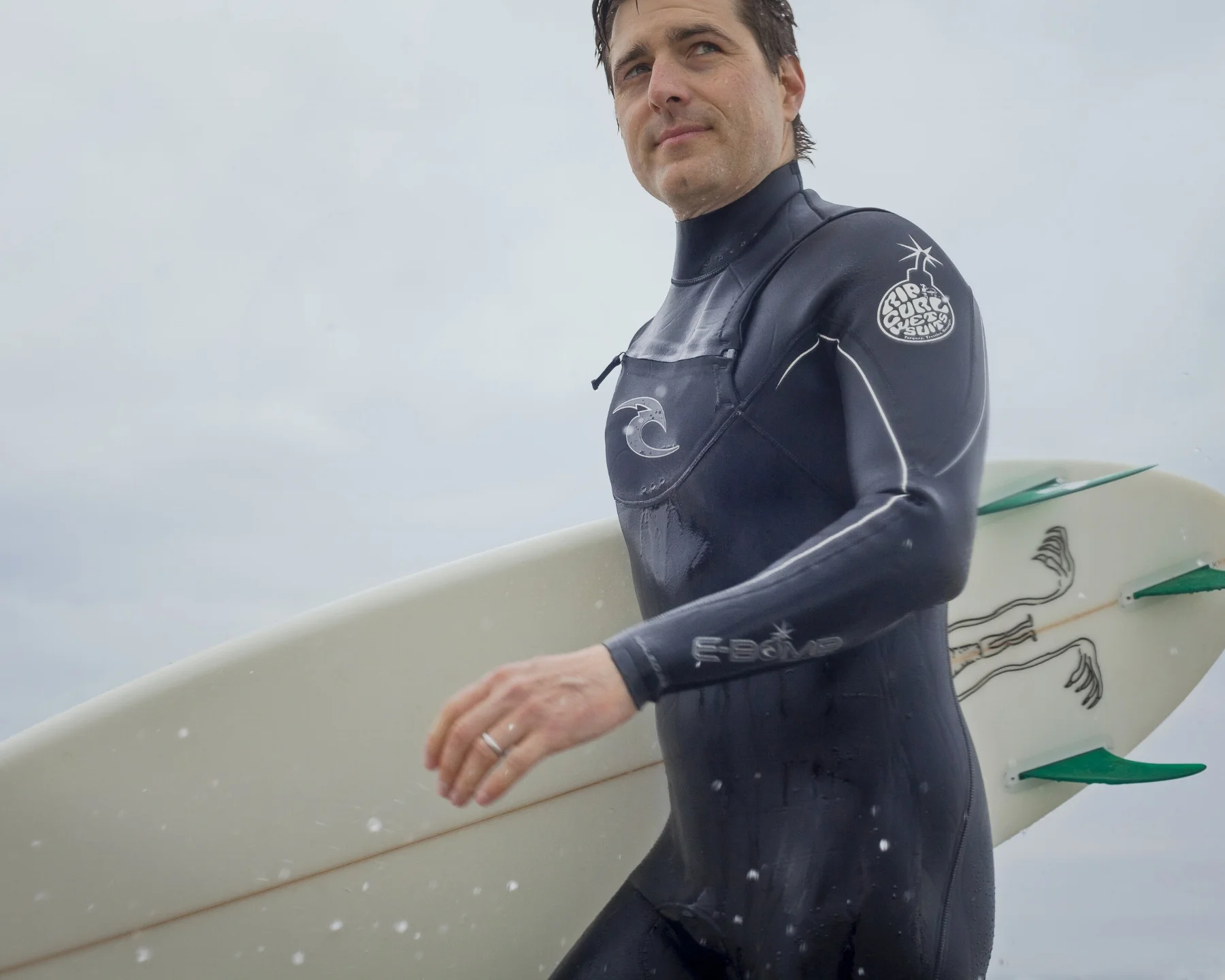
020: MICHAEL GERVAIS - High Performance Psychologist
Available On All Platforms:
Show Notes for The Surf Mastery Podcast: Surfing, Self-Mastery, and the Art of Presence with Dr. Michael Gervais
What if surfing could teach you not just how to ride waves but how to master your mind and unlock a life of focus, presence, and resilience?
In this episode, high-performance psychologist Dr. Michael Gervais reveals how surfing serves as the ultimate "laboratory" for mastering focus, awareness, and emotional resilience. Whether you're chasing bigger waves or a more balanced life, discover how the lessons learned in the lineup translate into personal growth and fulfillment.
Learn why mindfulness is a powerful tool for improving both your surfing and your life.
Discover the essential "fundamental decision" that elite athletes make to orient their lives toward mastery.
Explore how music, breathing, and awareness can transform your pre-surf routine into a mindset game-changer.
Listen to this episode to learn how to turn every surf session into a masterclass in mental focus, personal growth, and life mastery. Michael talks about how your mind affects your surfing, as well as surfing's effect on our minds. Mindfulness, flow state, being present, living in the now, awareness, in the zone, in the pocket, focus on 'now', meditation, mind-set, surfing philosophy. It's all in here, and it's all relative to surfing.
Notable Quotes
"Surfing is the laboratory to figure out how you respond to the unpredictable."
"Your craft—surfing, woodworking, anything—isn’t just something you do; it’s a way to reveal and refine who you are."
"The goal is not to have no thoughts but to be connected to the one thing that matters in this moment."
"Until you make a fundamental decision about who you are and how you’re going to experience life, you’ll always be at the mercy of your environment."
"If you value your thoughts, you can choose what to do with them. The more you fight them, the harder it becomes."
Show Notes
Key Points
Michael Gervais shared how he got into high performance sports psychology through his experience as a competitive surfer in his youth.
They discussed the contrast between free surfing and competitive surfing, and how the fear of judgment can create barriers to performance.
Gervais explained the difference between the mind and the brain, and how the mind can shape the brain and vice versa.
They talked about the importance of being present and focused in the moment, and how mindfulness practices can help train the mind.
Gervais emphasized the need to make a fundamental decision about how one wants to experience life and what to set life efforts towards.
They discussed the surfer's relationship to surfing and the importance of not letting surfing control one's life, but rather being in control of when and how to surf.
Gervais shared his perspective on the commonalities among elite athletes, including their ability to be fully present and their fundamental orientation towards mastery.
They explored the role of music in pre-performance preparation and how it can support an ideal mindset.
Gervais provided advice for listeners who want to get better at surfing, including investing in the quality of one's mind, making fundamental decisions, and enhancing the ability to be present through practices like mindfulness.
Outline
Dr. Michael Gervais's Background
Dr. Michael Gervais is a high-performance sports psychologist with a PhD in sports psychology.
They work with elite athletes, including professional surfers, and host the Finding Mastery Podcast.
Gervais brings a unique perspective to sports psychology as both a surfer and someone who works with elite-level surfers.
Journey into Sports Psychology
Gervais's journey into high-performance sports psychology began with their own experiences as a young surfer.
They excelled in free surfing but struggled in competitions.
A pivotal moment occurred when they were 15 during a competition when an older surfer advised them to stop thinking about what could go wrong.
This led Gervais to start focusing on what could go well, marking their first introduction to applied sports psychology.
This experience sparked their interest in understanding the mind's role in performance, eventually leading them to pursue formal education in psychology and performance psychology.
Understanding the Brain and Mind
The brain is the physical organ - three pounds of tissue in the skull with complex structures, chemicals, and functions that are not yet fully understood.
The mind is more abstract and not directly observable, but it can be influenced and trained.
Gervais believes the mind and brain are intimately connected but separate entities, with the mind capable of shaping the brain and vice versa.
They describe the mind as the 'rider of the horse,' with the body and brain being the horse.
The mind determines how individuals experience life, rather than merely reacting to experiences.
Mindfulness Practice
Mindfulness is a practice of focusing intensely on the present moment, often through techniques like breath awareness.
The goal of mindfulness is not to have no thoughts, but to be connected to one thing with great intensity.
Awareness is the first step in mindfulness, followed by tools and training to bring focus back to the present moment.
Gervais recommends starting with short sessions (1-2 minutes) and gradually increasing to 20 minutes for optimal results.
They emphasize the importance of intensity in practice, but caution against confusing intensity with judgment.
Importance of Presence
Being present is crucial for peak performance in surfing and other activities.
Common barriers to presence include internal dialogues about not being good enough, perceived dangers, and fatigue.
External factors like real danger or others' opinions can also interfere with presence.
Gervais suggests that the path to mastery involves dedicating time to practice while maintaining control over when and how one engages in the activity.
Surfing as a Laboratory for Growth
Gervais emphasizes that surfing should be viewed as a 'laboratory' for personal growth and self-understanding, rather than just a sport or hobby.
They caution against allowing surfing to control one's life, advocating for a balance where the surfer chooses when and how to surf.
The goal is to use surfing as a means to reveal and refine one's true self, rather than letting it define one's entire identity.
Common Traits Among Elite Athletes
Elite athletes across different disciplines share many similarities, regardless of gender.
They have become 'artistic' in their craft, with their tools feeling like extensions of themselves.
They possess great awareness of their inner experience and can manipulate their mind and craft in various environments.
Their drive for mastery is typically stronger than their desire for external recognition or rewards.
Recommendations for Personal Development
Invest in the quality of your mind through awareness and skills to guide it.
Make fundamental decisions about who you are and how you want to experience life.
Enhance your ability to be present through practices like mindfulness and breathing work.
Surround yourself with bright, knowledgeable people and be open to learning and looking 'stupid.'
Impact of Music on Performance
Music can significantly impact mood and performance.
The choice of music should support an individual's ideal mindset for their activity.
The type of music that works best is highly individual and should be chosen based on how it enhances one's desired state of mind.
Transcription
Relentless mental toughness to be here right now.
Welcome to the Surfing Mastery Podcast. We interview the world’s best surfers and the people behind them to provide you with education and inspiration to surf better.
And so, it's the craft that allows us to master the self.
Michael Frampton
My guest for this episode is Dr. Michael Gervais. Michael is a surfer from California and his PhD is in sports psychology. Michael is a high-performance sports psychologist. He works with a lot of elite athletes, including some of the surfers on tour. Michael has his own podcast called the Finding Mastery Podcast, and he has actually interviewed Ian Walsh and Kai Lenny, which, if you haven't listened to those interviews, definitely go and check them out. In fact, all of his interviews are amazing. His podcast is one of the better podcasts out there at the moment. Michael is both a surfer and works with elite-level surfers, so I think he brings a great perspective to that sports psychology realm.
Michael Frampton
Michael goes into what the mind is, and obviously how it relates to surfing and performance. But what else was really awesome that we covered in this interview was the surfer's relationship to surfing.
Michael Frampton
A topic that’s maybe not discussed enough, because I think a lot of—as surfers—we can often fall into the trap of surfing sort of ruling us, rather than, or when surfing is leading the surfer, rather than the surfer choosing when and how to surf. So we go into some detail about that, which I think is fascinating. I'll chime in at the end of this one and give my thoughts on the interview as well. Without further ado, Michael Gervais.
Michael Frampton
Can you tell me, Michael, how you got into high-performance sports psychology?
Michael Gervais
Yeah, sure. I guess the first part of that phrase doesn't come for a long time. It's like the high-performance stuff doesn't really begin to be understood until—man—it feels like, I don't know, 15, 20 years in to understanding what comes before high performance, which is just performance.
So the longer story, to kind of give full context, is that I grew up in Southern Los Angeles, and, well, I spent most of my young life here in Southern California and I surfed a lot. And the surfing was the thing that I did most—more than almost anything else. And I was like a good little surfer in high school for free surfing, and then as soon as it got time for competition, I just couldn't do it. Like, I didn't have the right mindset or framework, and I just was like significantly less skilled as soon as the competition got sorted out or started.
And so what I came to understand was—and this happened from a—I was in the middle of a heat, I was 15, surfing in the men's division, and this older guy paddles by me—older meaning he was probably like 35 years old or something like that, 30 years old or something—and he paddles by and he says, “Hey Gervais, I surf with you every day, I watch what you're doing, you gotta stop thinking about what could go wrong.” And like a good competitor, he just paddled off. And he left me with that little nugget but didn't tell me what to do—didn't tell me if I'm not supposed to think about what's going wrong, he didn't give me any advice or suggestions on what to do.
So I sat there like a little grom and just said, “Well, okay, well let me start thinking about what could go well.” And that was my first real introduction to applied sports psychology. And I had no idea that there was such a thing as a field or discipline or profession. And so I just started figuring out that I was—my mind was better suited when I was focusing on what could go well, as opposed to all the thoughts that were getting in the way of what could—what—yeah, no, let me say that more succinctly: I'm better when I'm focusing on what could go well rather than what could go wrong.
Michael Frampton
Okay, so the contrast that you felt between free surfing and competition surfing—I'm wondering, did you feel a similar contrast between a surf that you would have with a few friends at your local break and then a surfing session you might have, you know, at a place like Rincon or Trestles, where there's lots of better surfers and people on the beach watching? Did you feel a similar contrast?
Michael Gervais
No, it was different. It's like—that was fun. That part, I liked that. I liked going into new territory and figuring it out. And I enjoyed that, because I didn’t think—there was no formal evaluation. And I really didn’t care what somebody was thinking if they were in the water. I cared about the people on the beach. I don't know why. It’s like—that's something that—it was a gift my parents gave me that didn’t end up working very well. And, you know, so it was more that evaluation from the beach. God bless it.
Like, it took me way too long to figure that out and to find a sense of freedom from being able to stop giving a shit what people think of me—and at the same time still love them. And that tension and that separation between the two I think has been a lifelong challenge. And it’s like, there’s such freedom on the other side of it. At least there was for me. Because I felt like a tortured little soul as a young grom as well as a young adult.
Michael Frampton
So is it that fear of judgment that causes those barriers?
Michael Gervais
For me it was. And for sure, the science would support that. It's that I was so critical and hard on myself that—if you think about it in a Zen tradition—my cup was already full.
And then, as soon as I would just begin to think about other people cutting and carving and critiquing me, it just was like spilling over. So it really is that image of being able to empty my cup and know what that means and how to do it. That was this life journey that I tried to sort out from a formal education standpoint. And that helped. But it’s really—that helped, and I don’t want to downgrade that in any way. It helped to give me an understanding of what all the great scientists, all the great theorists, all the great students from a very learned and rigid perspective have contributed to the field of psychology and performance psychology.
And then that gave me the platform to go experiment even deeper with myself—putting myself in very rugged and hostile environments to see if I can be present and stop caring, really. To sort out—in those moments when it’s really heavy—whatever “heavy” means for each individual is different. But when it’s really heavy, that’s when we figure out really what our mind is made out of.
Michael Frampton
Yeah, I mean, the reason I said that previous statement was because a lot of our listeners aren't competitive surfers, but I think even as free surfers or non-competitive surfers, we still feel the similar feelings of how judgment can affect our performance. Like, we usually surf our best when we're by ourselves or we're with a close group of friends, and there's often a lot of anxiety around surfing in front of better people or a crowded lineup where you kind of get shunned if you miss a wave or you mess up something. And is it the ability to be present and to really pay attention to the detail—sounds like that's the key to kind of overcome these barriers?
Well...
Michael Gervais
Yeah, and it sounds so trite to say it. It really does sound trite to say, you know, being present is the antidote or is the solution. It is for everything, and it's really hard. It's very difficult to do. And if we don't train our minds through focused strategies, the noise in the environment overrides our brain's primary function, which is survival. And so if there's noise or threat in the environment, real or perceived, it completely hijacks our survival mechanism inside of ourselves.
So, you know, it's like, yes, it sounds simple to say all you need to do is be present and to focus on the task at hand. But there's so many different variables in our own head, as well as in the environment, that trigger a very native and biological response to ignore the focus strategy and try to get the hell out of there. And so, you know, I just want to make sure that we land that it's hard to override your DNA. It's not that different than thinking about changing your posture. It's possible, but you've got to really work on it—relentlessly so.
So it's like, that's the type of commitment to learning how to become present that is required.
Michael Frampton
What are some of the most common barriers that get in the way of being present?
Michael Gervais
Well, there's two main themes, right? The first is the internal conversations that we have with ourselves about not being good enough, about danger that could take place. And it's the internal dialogue mostly around those two. And the third variable is fatigue.
So not fitting in or being good enough, real danger that we're sorting out in our head, and some sort of fatigue are most of the internal struggles—along with a fourth, if you're biologically born with some sort of attention deficit disorder, right? So those are kind of the internal processes that get in the way. And that's all inner dialogue stuff, really.
And then the external environment is when there's real danger out there. Whatever that danger is—whether it's what other people think of you, which is a very low form of danger but tends to be one of the most crippling forms of danger in modern times. In modern times, we're not, you know, yielding samurai swords or, you know, like in the cowboy days, some sort of gunfight on a regular basis. That's not what we have to deal with. Most of us are relatively safe, have a roof over our head, the majority of us have food that can sustain us, and a system of belonging that is intact.
So the perception outside—forgive me, the experience outside, the danger outside in surfing—when you're in conditions that are heavy, you know, people think that—I'm sorry, little rabbit hole here—people think that surfing is dangerous. And everyone listening to your podcast knows that most surf conditions are not dangerous. You know, there are those moments that it gets heavy, you know, but for the most part, you know, it's just not dangerous. At least that's been my experience. Unless you're surfing incredibly shallow slabs or reef breaks or—you know, I think there's this imaginary line where it becomes all business at like about double overhead, where you've really got to lock in.
But all of that being said, internal and external noise is the thing that gets in the way of the signal.
Michael Frampton
And what is the signal?
Michael Gervais
Being present.
Michael Frampton
And is being present something that we can do all of the time?
Michael Gervais
Theoretically, sure. Theoretically, yeah, that's possible. And that level of attainment is like what the sages have demonstrated. You know, whether you believe in prophets or living gods or whatever—whether it's Muhammad or Jesus or Buddha or the Dalai Lama in modern times—that is essentially what those stories and life efforts are about. They are the living expression of presence. And when that takes place, they end up transforming the world.
So that's rare. So I'm not—I guess that is the goal, but really, that is such rarefied space. There's handfuls of them across the, you know, millennia of human existence.
So I think that while that might be possible and is possible for all of us, it's more like, "Okay, how do I be present more often?" And to do that requires training—outside, I think, of rugged environments.
Now, I'll tell you this as well. One of the things that I've really been fortunate enough to learn from some of the most extreme and intense risk-takers in the world—people whose life and limb are at risk—is that they use hostile environments as a forcing function to be present.
So it's not that that's a shortcut, but when it's heavy—whatever that might be, whether it's free climbing, whether it's surfing in whatever conditions—but when it's really heavy for you, if you're not present, the best in the world talk about how it's way too dangerous and it forces their mind to be all in.
So—and that's on the extreme side of conditions. The other way to become more present is something that has been around for thousands of years—2,500, to be exact, as best we can tell—is some sort of mindfulness training, where you're sitting on a pillow, or standing, or eating mindfully, or walking mindfully, or breathing mindfully. And there's nothing hostile about that moment, other than the little noise that you have inside your head—that little conversation that can be brutal at times.
But those are the two ways that I understand best to be able to train focus.
Michael Frampton
Okay, so it's been said that there is nothing but this present moment. So technically speaking, we can't really live outside of the present moment, but I think maybe what you're trying to get at is that if, during that present moment, you're thinking about something going wrong in the future or something that has gone wrong in the past, then that is somehow occupying space and time in the mind and sort of clogging up your random access memory to actually be aware of what is going on now. Am I right in saying that? Yes.
Michael Gervais
So "there is nothing other than the present moment" is a beautiful way to think about it. And so the Zen traditions will talk about being at the center of now. And there’s a more mechanical way to think about it, and people will talk about how your mind can go one of three places: it can go to the past, or the future, or now. That’s one way to think about it, but that’s a very mechanical thought. And through quantum math and physics and advanced philosophical discussions with some real science backing, there just might be more than one universe that we don’t know about—but that's a rabbit hole that I'm not skilled enough to go down.
So the way that I understand the present moment is that there is only this moment. Now, let’s talk about the quality of being on time. And the Zen traditions, again, will talk about being at the center of now. And musicians will talk about being on time—that’s another way of thinking about it.
So if your mind is fully consumed with the one thing that you're doing now, and then again now, then you're on time or at the center of now. And if some of your mental activity is thinking about what could go wrong, or has gone wrong, or anything other than being completely absorbed in now, then it’s like we’ve fragged the hard drive. We’ve created some sort of parsing that pulls us from being completely at the center of now. We can still be productive, we can still perform very well, but it doesn’t mean that we’re at our true best—because that is a rare thing to do, to have what, again, I’ll go back to some of the Zen traditions, call “no mind,” where there are no thoughts. It’s just a complete dictating or response to the conditions of the environment—now and again, now.
Michael Frampton
So the self-talk you mentioned before is something that sort of gets in the way of being in the center of now. Is self-talk something that can be stopped, or is it just changed and minimized?
Michael Gervais
So self-talk doesn't necessarily get in the way. It's the thing that brings us to it as well.
So self-talk—if it’s negative, critical, frustrating, doubt—if it’s any of that type of stuff, then it pulls us away. So the most mechanical and simplest way that I’ve come to learn from good science and from those in the amphitheater of danger is that there are two basic minds. There’s the negative mind and the positive mind. Let’s just make it really simple.
And the negative mind—let me say this more clearly—negative mind, positive mind. And if you can hang out in positive mind long enough—and that doesn’t mean like, “let’s hold hands and go skipping,” be all positive—but positive mind, which is more about focusing on now or what could be great. It’s like this relentless mental toughness to be here right now, even when it’s going sideways. If you can hang out in that space long enough, you slip into the third mind, which is called “no mind.”
So the work is to recognize when you're in a negative mind—to fight, or let go, or trust, or somehow shift your mind or the quality of your thoughts over to positive mind. And if you can just hang out there long enough, you’ll accidentally slip into that thing that, from a science perspective, we call flow state. Athletes for years have talked about “the zone,” musicians talk about it as “being in the pocket,” and the Zen traditions talk about it as “mu shen” or “no mind.”
Michael Frampton
Now, when it comes to flow states—to use that term—it’s quite an intense mixture of neurochemistry going on. Does our physical body need to recover from that flow state, or is that something that we can always sort of strive to get more and more of?
Michael Gervais
Well, anytime that we have a dramatic shift in our internal ecosystem and there’s a pendulum that’s moved in one direction—whether it’s fight or flight, or flow state, or submission, or freezing—whenever there’s been a significant shift to respond to the demands of the environment, there is a pendulum that swings the equal and opposite direction. So yes, there’s five responses, and most people only talk about two when it comes to high-risk scenarios. Most people talk about fight and flight. But again, there’s submission and freezing and flow state that can happen.
So when we have an intense internal response and the sympathetic nervous system is kicked on, and all of the neurochemicals in our brain that are phenomenal and highly addictive—dopamine, serotonin, anandamide, endorphins, all that really good stuff that kicks on—our body has to do something with it. And so we need to push it out and flood it. And so that is the recovery, or the exhaust, if you will.
And we do know that people who produce too much adrenaline, they find themselves in a condition of adrenal fatigue. And so people that come back from war, or people that are video gamers—like junkie video gamers—or extreme athletes that are really looking for the thrill as opposed to craft development, and they’re looking for a thrill in everything they do—they burn out their adrenal system.
And so that’s a dramatic way to think about a long-term recovery process. But yes, in every microcycle of flow—the thought, and Stephen Kotler, a good friend of mine, has really found some groundbreaking ideas and research around this—that there is a recovery phase involved in the most optimal state a human being can be in.
Now, that really is when you’re using thrill as a way, or risk as a way, to hijack the intense focus systems inside of our body, both structurally and neurochemically. Because I don’t think that if you’ve reached this level of mastery that we’re talking about—the sages reaching—that there’s a recovery, like a massive recovery dump, that they need to deal with.
Michael Frampton
So there’s quite a difference between going from one extreme flow state to another, as in like an adrenaline seeker, and then you’ve got the athlete or the person that’s truly on the path of mastery in learning their craft?
Michael Gervais
You know, I think we’re too early in the conversation to really know, but that’s an initial hunch that I have. And I’d be curious to hear some of your guests and some of your listeners—their thought. But that’s my early hunch in the difference in the quality and the tone and the methodology to reach flow state or no mind.
Michael Frampton
Yeah, because there’s a bit of a culture in, sort of, the extreme sports world that is, you know, “I want to enter flow as deeply as possible and that’s how I’m going to learn and grow the fastest.” Do you agree with that statement?
Michael Gervais
I think it’s a fantastic approach, and there’s a cost to it—because if you don’t enter it, you get hurt. Right? And it still doesn’t mean if you enter flow state that you’re going to not be hurt, because sometimes Mother Nature is so unpredictable and so severe in consequences that things happen. We can go on and on about what that could mean, but you can get a picture in your own mind about how there’s real danger, even if you’re in flow state.
So yeah, that’s one way. And I think it’s something that the people who have been on the other side of seeking no mind—like the mindfulness, the contemplative meditators, or single-point meditators—have been doing for a long time.
Like, they need a little bit of the risk-taking piece. And the risk-taking and the type T—was an old term for “type thrill,” you know, there’s type A, type B, whatever personalities—well, the type T probably need a little bit more of the sitting.
And so there’s probably a harmony that we can find on some kind of level. But I don’t think we could say that absolutely there’s only one way, but there’s probably a blend that we could all work on figuring out that’s more optimal for us.
Michael Frampton
What's the difference between mind and brain?
Michael Gervais
Well, so we'll start with the mechanical first. The brain is that three pounds of silly putty that sits in your skull, and it's literally tissue. And inside of that tissue, it's very complicated. Myself—I feel like I'm a novice and I've been studying it a long time—but people that all they do is study the anatomy and neurochemical and neurostructural parts of the brain are saying the same exact thing. Like, it's this amazing three pounds of tissue that we're not sure exactly how it works. We know there's chemicals involved. We know that there are structures and regions and functions that are somewhat predictable. But at the same time, it's like it's the beginning of the Wild West. And with the advent of great science to be able to see—functional MRI, magnetic resonance imaging—we're starting to learn more about it. And we can get some color graphs from the actual structures of the brain. It's a phenomenal time to be interested in the brain, both from a structural and a functional and a chemical standpoint. And so that's what the brain is.
Then the mind—now there's a great, beautiful conversation slash debate about what the mind is. And it's been around for a long time. And I'd say probably like 15 years ago, the buzz in neuroscience—or neuroscience, meaning like primarily interested in the tissue and the brain and the structures—there were some leading thinkers in that space that would say there's no such thing as the mind. It's just the artifact from neurochemical and structural occurrences that are—I'm sorry, not structural but functional occurrences—that are happening in the brain. There's no mind. There's no rider of the elephant, so to speak, or rider of the horse. That's just a figment of your imagination to try to explain this thing of personality or this thing of psychology or this artifact. They would say the mind is an artifact from the neurochemical and activity of the brain.
And so I don't see it that way. I do not see it that way. I see that the mind and the brain are intimately connected, and that the mind is not an artifact of the brain. It is intimately connected, but the mind is something that we cannot see, and therefore we really don't know what it is. But we can observe it, and we can impact it and change it and guide it. And so that is like the watchmaker's watchmaker—that idea that we have this part of us that we can't see, but we know is true. And it's not just the flare, this uncontrollable flare from a brain response, but it is something separate, but intimately related to the nervous system, to the structure of the brain, and can impact neurochemical responses when we're skilled at it.
So I see them as separate. And I see that our mind can shape our brain, and our brain can shape our mind. And so it's this beautiful interplay and interaction between the two.
Michael Frampton
So is the mind both—it can be aware of itself but change itself?
Michael Gervais
Yeah, for sure. And that's where this gets really complicated. Like, how does the watchmaker’s watchmaker control and change things? Like, where does it start and end? And it gets really confusing. And like, if you think about some of the ancient texts—this is a line from Christianity—when they asked Jesus, they said, “Who are you?” Like, “Who the hell do you think you are,” basically. And he said, “I am the I am.”
And so, I mean, we can go down a serious rabbit hole, Michael, about this. Like what—like, this is a conversation about consciousness, which is very complicated. And just to play this game, just for a moment—it's like, when you say, “I am Michael,” who is the “I”?
Michael Frampton
Yeah.
Michael Gervais
You know? And there's a rabbit hole to go play down. And for anyone that's, like, intrigued by it, I implore—that is a wonderfully complicated and challenging and somewhat overwhelming question to begin to answer. And it is one of the most fundamental mindfulness questions in the tradition of meditation, is to ask yourself the question, in a mindfulness kind of state: “Who am I?” And that’s been around for a long time. And so I think it’s an important question to entertain at some level, but just knowing it can be a rabbit hole that can take us to a place that is really confusing.
Michael Frampton
Yeah, let’s maybe bring it back a little bit. So, another way to put it, maybe—this is what I’m thinking—is the mind kind of a filter between sensory and motor?
Michael Gervais
Yeah, you could think of it that way. I think of it a little bit differently. So, the filter is kind of like what the neuroscientists would say—the mind is an artifact. And it's just this thing that is—of course you think it's there, because it's just based on sensory or motor information. And you have to be able to understand sensory and motor information in some kind of way.
I think the mind is different. I think that the mind—for me, the way I've come to understand the mind—is that it is the horse rider of the horse. So the horse is the body and the brain, and the horse rider is the guider of it. So the mind—you—let's make this more concrete: you determine the experience in life, as opposed to being a responsive body of tissue that is reacting only to the experiences in life.
More concretely, when you look out at the surfing line, you dictate the thoughts about the surf break and the conditions. And what I'm talking about there is that you are the mind. And if you’re really aware of your thoughts and your belief systems, then you can impact and change and influence the quality and efficiency of the tissue inside your body.
Michael Frampton
And when you get—And how do we do that?
Michael Gervais
Awareness.
Michael Frampton
What’s the strategy?
Michael Gervais
Yeah, it begins with awareness. And the first—so awareness of the inner dialogue, awareness of the way that you respond automatically to a condition or an experience or a circumstance. Because if you haven't trained your mind, you do become almost like this—I don't know—sleepwalking, responsive human being that is kind of non, sub-awake, you know? And it's because you haven't put in the work to think about or be aware of, “How do I want to experience said moment,” whatever that moment is.
And so it begins with awareness. But prior to awareness—because awareness is a skill—it does begin with a fundamental decision. And that decision is—and there's no bullshit around this—like, it starts with the decision that you have to make. And that decision is: What and how am I going to experience life?
So how do I want to experience life, and what am I going to set my life efforts towards? So it's the how and the what. And without that fundamental decision, I don't know another way to help people. And most people that are not in dangerous environments, or on world-leading or even world-class—just a tick under world-leading—is that most, if not all of them, have really sorted that decision out. And the rest of us are just trying to figure out how to get over today or how to get by today, and have not set and made that fundamental decision about who they are and where they’re going, really.
Michael Frampton
So are you saying that's the foundation? Yeah.
Michael Gervais
And then once we make that—otherwise, seriously, I think we're really just bullshitting our way through life. If we're not careful, people will try to keep asking for the tactics. How do you do that? How are you present? How are you so poised? How? Which is great. And that question is really about the tactic. It's like we're in this age of wanting a shortcut or a hack. And there are no hacks for this. There are no shortcuts for this. Being present and focused in emotionally risky environments—or physically risky environments, by the way, there's no such thing as mentally risky, it's either emotional or physical—to be poised and present in those moments requires a fundamental decision first, and then subsequent training of the mind.
And so once the decision is made, then the second is that the training begins with better awareness, with increasing your awareness of your physiological experience and your psychological experience. And you can change both of them. You can impact both of them. And I'm sorry if it's like—I'm just so sick and tired, seriously, of like the seven steps to whatever, the three most essentials, whatever. There are no seven steps. It is a fundamental orientation to organize your life based on the decision of how and what you're gonna pursue as a life effort. And until that, it's just all made-up softness.
Michael Frampton
Yeah, I totally agree. There's a quote I love, and that's, "If the why is big enough, the hows will look after themselves."
Michael Gervais
Yeah, there you go.
Michael Frampton
Yeah. And me personally, I went through a stage of my life where I thought, okay, surfing's just my hobby or my sport or my pastime. And when I made that decision to make surfing a priority and just to really own it and live it and love it and master it, then I found that everything else in my life fell into place better.
So sort of deep down, I guess I knew there was always that desire and that just sort of—it's almost indescribable how much love I have for surfing. And it wasn't until I really owned that I saw things start to come together.
Michael Gervais
There you go. There you go. Fundamental decision.
You know, like fundamental decision.
Michael Frampton
And are you finding similar stories with some of the elite athletes you work with?
Michael Gervais
Really. Uncommonly so. It is a relentless—now I'm talking about the 0.00005 percenters in the world. Like, that is a common thread for almost all of them, seriously. And so it's just like—sometimes I need like a two-by-four over the back of the head to really get the thread. And that one is an easy one to grab.
Michael Frampton
Yeah. And I guess it's easy for us to imagine ourselves—you know, if we were an elite athlete—how committed we could be to that.
Like, for example—I mean, you interviewed Ian Walsh. I mean, Ian Walsh is obviously an amazing surfer, but we often don't realize how much time, effort, thought, love went into—you know, went into that.
And then—but then we think of our own lives and we think, man, you know, you either go down that path and you forego the rest of your life, or somehow you integrate some of that into your surfing life, yet still maintain a balance of, you know, work obligations and family life. And the question I have around that statement is: is it right for us to wake up in the morning and be motivated by our love of surfing, or is that pushing things too far?
Michael Gervais
I think that's a complicated question, you know, because I want to kind of pull it apart just a little bit. But let me start with the most simple answer. And the most simple answer is that the thing that we do can never define who we are, but it's the activity that helps us express and realize who we are at our potential—you know, I'm sorry, at our center. And so it's the craft that allows us to master the self.
And if we're not careful, we miss that, and we become just a surfer. And that is an awful thing to be able to—awful limiting thing to be able to do, you know? And I could talk a lot more about that because I don't want to sound judgmental about it, but we are so much more than just the thing we do. But the craft is the way that we reveal and refine and understand better who we really are, so that—this is me talking, there's no science around this—so that we can be connected in relationships.
So it's through—this is again, Mike talking here—it's through relationships that we become who we are. Through relationships with ourself, through relationships with nature, through relationships with others, through relationships with our craft. And it's that interplay between the two that really teaches us everything about who we really are.
So I think—I do think the simple answer to your question is yes. But I don't think that it's simple to do. I think that there needs to be some sort of sophistication about like, what are you really doing in this world? If it is just to surf, I find that those people end up really struggling in other parts of their life. Or if it's just to be a basketball player or whatever—like when they're not doing that thing, or they're too old to really do that thing well—then the other parts of their life struggle.
And we can see that, case in point, in the NFL—the National Football League in America—is that according to research, 87% of NFLers within two years are broke or divorced or both. And so they had meaning, they had rich meaning while they were in the highest form of American football. And it was real simple why they got up every day and worked so frickin' hard every day in and day out. And football is a very complicated, rugged learning environment.
And then, if they miss the kind of stitching of, “Wow, meaning and purpose is really cool. What is my meaning and purpose in life outside of ball?” Then they struggle, and they struggle deeply after the circus moves on without them.
And so it's a long way, I think, to answer your really beautiful question.
Michael Frampton
Yeah, no, it's a tricky topic to articulate and talk about. So even someone who's a professional football player, who's being paid a lot of money to be not just the best football player they can be, but to improve and help lift the team—are you kind of saying that when that person is, or that person still needs to have some sort of balance and time away from football?
Michael Gervais
Yeah. I mean, there's a lot of people that—there's that common idea that you have to think about it everywhere you go, you have to eat, breathe, whatever, sleep about it. No, I mean, it just—life doesn't work that way.
Like, yes, I think what they're trying to say is that there is a required deep commitment to learning and a deep commitment to risk-taking and sorting things out and practice, and being like really dedicated to dedicating an ample amount of intensity and time every day to refine the craft. Yes.
And there are so many other parts of life that both are required—that require watering of those parts of life—and are fulfilling and are emotionally meaningful, that without them, we become these shells.
And so I don't think that the simplicity of the idea that you have to eat, think, whatever, just about the thing you do is the answer to becoming a very dynamic and maybe master of craft.
Michael Frampton
Okay, so the path to mastery doesn't necessarily mean that surfing controls your life. It means that you are dedicating a certain amount of time to mastering surfing, but you're in control of when you surf and when you think about surfing so that there's a balance.
Michael Gervais
Well, I think that surfing is the laboratory. And so it's like, you go out and just have a great time and not catch many waves, that's fine. You can go out and have a great time and really be on point on your surfing. But surfing is a laboratory to figure out how you respond to the unpredictable, how you value structuring time. It's like, it's the laboratory. And I'm not sure I know how to help anybody have balance in life, because it's just challenging to have balance. I don't know anyone on the world stage that has balance. But what I have come to understand and learn from them is that when they're in the thing that they're in, they're all in. And that could be a conversation, or it could be dropping into a wave. Like, they've figured out to maximize their life experience, they need to be in. And that goes back to where we started this conversation about working and training to be in the center of now. And so...
Michael Frampton
So if surfing is the laboratory for increasing our time in the center of now, by getting better at that while we're surfing, is that then gonna help us to be more in the center of now when we're having dinner with our friends?
Michael Gervais
Only if you value the experience or the experiences when you are fully present. So you can—if, like, if it is a laboratory to be at the center of now, and because you just want to surf better—then when you get out of the water, you can become extremely agitated because you're not surfing, or the surf is whatever. Like, so it's like, at the first surface level, it's not just about becoming a better surfer. Yeah, that's good. I love it. I love that. It just happens that you and I both enjoy surfing. But what's underneath of that is the joy of progression, the joy of learning, the joy of growing, the joy of straining and striving and letting go and trusting. All of that is—it just so happens that we both enjoy surfing. It could be tennis, it could be woodworking, it could be steelmaking, it could be anything. And if it's just about doing that thing better, then when we're not doing that thing, when we're at home at dinner, it's very easy to not translate or stitch those learnings into everyday living. And they tend to be very tortured people. And you hear things like, "I'm miserable. The surfing has been flat." Whoa. Wow, so the environment dictates your experience. Okay, that's interesting. That doesn't sound very strong. It doesn't sound very resilient. It sounds, actually, that you're a victim to your environment.
Michael Frampton
Exactly, and it's so common with surfing—very common. Yeah.
So there's something deeper than surfing mastery, and that's life mastery.
Michael Gervais
Well, yeah. I mean, so again, the premise is that whatever the craft is—whatever the hobby is, if you want to take it in that direction—whatever the thing is that we're doing is meant to be the laboratory to sort out really who we are and how we can improve being able to be on time or to be at the center of now, to be more present, to be more focused or committed, which are all sub-characteristics of people that are able to enjoy the life experience rather than being agitated and irritated or scared or frustrated or overwhelmed because the environment is not giving them what they think that they deserve or need.
Michael Frampton
Wow, a lot of food for thought there.
Michael Gervais
You know, it's funny, Michael. Obviously, we were just meeting, and after I say something, I feel like you're going, "Okay, dude, what the hell did you just say? Like, I don't even know what to make of that."
So I'm sorry if I'm being too esoteric, but...
Michael Frampton
Not at all, man. This is almost turning into like a personal therapy session. But I think a lot of surfers can identify with what I'm talking about because, yeah, because surfing can be so all-consuming.
Michael Gervais
No. No, surfing can't. It's that the person that does surfing—and then now change that to the person that does mountaineering or the person that does skiing. Like, it's the person that allows their environment to dictate their experience that loses. And so if you just happen to be a surfer and you're looking to the conditions to set your mind, you've missed—we have missed it. And so we call it mindset, right? But really it's about us setting our mind on how and what we want to do. Go back to that fundamental decision. And until you make that fundamental decision, we just end up being at the whips' end of the environmental conditions. "Look at it, it's flat again," or, "It's blown out." "Damn it, I had to go do that thing at work and I couldn't get out in time," or, "I had that call."
Like, that's just a disaster. Yeah. And so I think that is—this is gonna sound judgmental in some kind of way—but I've lived it, and so I feel like because I've lived it so deeply, I've been—not damaged by it—but like really struggled through this, it's a lazy way to go through life, to need an external condition for the internal to be okay. And the people that survived—I'm gonna go heavy for just a minute—the people that survived Auschwitz, the people that survived the most brutal conditions known to man, what they have come to learn is that they had to dictate their experience in life to find joy, peace, and happiness in the worst conditions. And the most beautiful book, game-changing book, that I hope that you—hopefully you’ve read or many of your folks have been exposed to—is Viktor Frankl's book called Man's Search for Meaning. And the first half of that book fundamentally altered how I understood the human condition, and it is rad.
Michael Frampton
Okay, I haven't read that one. It's on the list now, definitely.
Michael Gervais
Yeah, I think you'll really enjoy it.
Michael Frampton
It smells like you're pointing towards something within our mind that's constant, that we can always fall...
Michael Frampton
...back on.
Michael Gervais
Well, yeah. So we are always with ourselves. Our mind goes everywhere we go. And so I don't—really, there's only three things as humans we can train. And I'll put an asterisk to maybe a fourth, but for sure I know that there's only three things we can train. We can train our body, we can train our craft, and we can train our mind. And if you're only training your craft, or just training your body and your craft, we are missing a fundamental pillar. And so our mind goes everywhere we go, and our mind is that—if you want to call it a filter, or the interpreter of the experience, or the dictator of experience—then we're just missing a huge opportunity.
Michael Frampton
Yeah, let's bring it back to something a little practical, and I wanna use an example from my own surfing life to kind of pull at this. A few weeks ago, I was on my way to go for a surfing, and when I pulled up, I checked my emails. And I got an email saying, "Hey, your car registration is due. You know, you need to re-register your car." And then I was like, "Okay, yeah, that's fine, I'll do that today."
And then when I went out surfing, I was sitting in the water waiting for a wave, and the fact that my car needs to be registered is like just occupying space and time in my mind. And then when a wave came, that thought and those thoughts were slowing me down, is how it felt—taking away some of my surfing or wave awareness.
So when I find myself back in a situation similar to that, what do I do?
Michael Gervais
Well, you must have like a really nice car. No.
Yeah, like that's interesting that thought would be the thing that gets in the way of—
Michael Frampton
The point is, it's, you know, sometimes when we're sitting out the back surfing, it's those little thoughts that, because we're sitting there and waiting for a wave, we start thinking about other things in our lives, and we don't stay present and watching the ocean and ready to react. And then sometimes we get caught up in that thread. And when a wave does come, we can't switch back to the wave.
Michael Gervais
Yeah, that's like being on the edge of now, or your mind in the more mechanical way is like your mind is ahead of time. Like you're thinking about other stuff, right? And so you miss, you're just not on time with this moment. And so you're half a second late popping up, or you miss, you know, the spot you wanna be, or whatever.
So—yeah, so that's fine that you're—the natural state of our mind is like a drunk monkey. It's curious and sloppy and all over the place. And so if we just begin to have a relationship with that drunk monkey and say, "Look at you thinking about the car. Okay, come on back to now, here we go, come on back." And you just recenter—I'm sorry—refocus on something now, totally cool. Or entertain it. Entertain the thought, knowing that you just might miss something that's happening out the back, but entertain the thought like, "Okay, when I—and make a plan—like, okay, when I get home, first thing I'm gonna do, so I don't forget it, I'm gonna do A, B, and C. Make sure I lick the stamp, put it in—bang, okay, done."
Now you don't have to think about it anymore. And if it does come up again, you can just say, "You know, okay, I'm done with you. Come on back to now."
So it's like, it's not a big deal if we have a relationship with how our mind works. But if we don't—so you had like, you had that kind of first step I was talking about, you had awareness, but then didn't have the second step, which is maybe the skill or the tool to do something with it. And if you don't practice it, then it can feel like it's really overwhelming because we haven't built the skill on how to refocus.
Michael Frampton
So you mentioned mindfulness. Is that how we practice the skill of awareness?
Michael Gervais
That's one way. Sure, it certainly is. And it's very—let's call it efficient—because it's the only thing that you're doing in a present moment is focusing on now. And so it's a really efficient training because as soon as your mind wanders, then you simply just refocus back to now, again and again, a thousand times, over and over again. And the goal is not to have no mind—that's not the goal, that's an accident. The goal is not to have no thoughts—that's an accident. The goal is to be connected to the one thing with great intensity. And that one thing can be very boring or very risky, such as the free climber or the base jumper, or it can be very boring, such as focusing on a breathing—I'm sorry—one breath at a time, or a flickering candle or a mantra or whatever.
And so those are kind of like the two ways to train mindfulness. Another way to train your mind is to value that your thoughts matter. And so when you're out the back and you notice that you're thinking about something and it's creating an emotional response, then you just kind of go like, "Cool."
And then you make a decision. Do I wanna keep going with that? Is that the thing I wanna focus on? Because maybe that's a cool thing to focus on.
I mean, sometimes it feels like you wanna be a machine and catch every fricking wave, but other times it's like, no, let's not do that. I know there's six-minute lulls, so I don't need to focus on every little glimmer of the water on the horizon or the slapping of my board underneath the current right now. I can focus on taxes. I could focus on a problem I'm trying to sort out. I could focus on how I wanna do my relationship with my loved one.
So I don't wanna be esoteric, but it's a basic strategy just to value your thoughts. And then when you have them, you make a decision on what you wanna do with them. And I will tell you, the more you fight, the harder it becomes. If you say, "Son of a—there's that fricking thought of my car registration. God bless it, what's wrong with me?" Now you're having a conversation that's just about frustration. It's a frustrating experience that you have created based on your interpretation of the meaning of your mind's activity focusing on that thing—that registration.
Michael Frampton
So is awareness meant to be judgment-free?
Michael Gervais
Well, awareness is like the first step. And a lot of people are pretty aware of their thoughts—like, pretty aware—but then don't have the second thing, which is the tools or the trainings to bring it back to now. And if the whole thing about judgment—like, there's a really deep conversation we can have about positive regard, nonjudgmental, noncritical mind with this whole thing. There's a whole deep thing that we can do about that from a spiritual frame point. But from a performance standpoint, that noncritical or nonjudgmental approach to thoughts, it's like—it's just removing a step to get back to now.
Because if I notice that my mind is thinking about my car registration, and then I say, "There I go again," it's like I've just added another layer to coming back to focusing on, I don't know, maybe the sun on my cheek or something as simple as that.
So it does open the door for a train of thought that might not be very productive. And literally, I mean, we talk about that thing—train of thought. And if we're not careful, our mind is like a fast-moving train that will take us somewhere. It might not be the place we wanna necessarily be.
Michael Frampton
If there's anyone out there listening that's inspired to do some mindfulness awareness practice, do you have a book or some online content or anything like that you could point us in the direction of?
Michael Gervais
Yeah, I've been too busy doing it. I wish I had some of the bandwidth to write and capture it. And I'm making a commitment to do so in the future. But there's great books out there. And people—like more Western thinkers—want to go read about something and like really understand it before they do it. And I bet you didn't learn surfing that way. I bet you had a couple of your buddies that kind of paddled out, showed you how to put your leash on, and just kind of—you followed them out and then figured it out. I don't know, like, that's how most people learn surfing.
You know, and then maybe they get some coaching. So my thought is to go do the fricking thing.
And then if you want to read about it, that's cool. But it's not about acquiring more knowledge at some point. It's as simple as: if something in this conversation has been touching and you're like, "Man, I need—I'm craving to be more present in my life because I'm overwhelmed, I'm tired, I'm unprepared to deal with the [stuff] in my life, and I'm fidgety and anxious and I don't want it anymore. I just don't want to live that way anymore," then if you're feeling in some kind of way those things, then you might just, I don't know, borrow my experience and say mindfulness fundamentally changed my life.
And it's as simple as focusing on one breath at a time for an extended period of time, over and over again, as if a loved one depended on you getting the inhale right, then the exhale right. And if you could set a timer for one minute, you'd be on your way. If you could do it for two minutes, you're doing a little bit better. If you could do it for 20 minutes, pretty epic.
Research would suggest that six minutes a day is a minimally effective dose, and 20 minutes is more optimal. And so—but it's not about just the time. Of course, it's about the quality. And so that's it. One breath at a time. And if you could add a little nuance there, you'd have your exhale be a little bit longer than your inhale, and you'd just fricking own it like as if that's the only thing that mattered.
Michael Frampton
Okay, so there's a certain amount of intensity or a quality behind it.
Michael Gervais
Yeah.
Michael Frampton
And how do we balance—can you be too intense with that sort of practice though?
Michael Frampton
Yes.
Michael Gervais
Yeah, of course you can.
Michael Frampton
Any guidelines for finding a balance of?
Michael Gervais
Yeah, most people are not too intense. Most people's minds and brains and body get tired so fast that the intensity's not gonna be—over-intensity's not gonna be the problem. The challenge is gonna be what do you do when, after the first inhale, your mind has already gone to, "Am I doing this right?" Because now that's you pulling out of the center. And so the work is refocusing with great intensity back to this moment without critique.
So let's not confuse intensity and judgment. Let's not confuse those two. Okay?
Michael Frampton
How are elite surfing different from other elite athletes you—
Michael Frampton
Work with?
Michael Gervais
They're not.
Michael Frampton
Not at all?
Michael Gervais
I mean, the best of the best in any discipline are so similar. And it's gender-neutral too. And I'm talking about—you said elite—so I'm thinking about the ones that have changed the way the world works in their craft. They're not different. Those people are all uniquely themselves. And that's the common thread. They have become artistic because their tool feels as if it's an extension of themselves. And they have great awareness of their inner experience, and they're able to play with their mind and their craft in quiet moments, rugged moments, and hostile environments. And is it always easy? No, hell no it's not easy. But they are more alike than they are dissimilar.
Michael Frampton
Interesting. And some of the—you mentioned, well their likeness and the commonality that’s ubiquitous throughout elite athletes, does that come back to the why and the love of their craft?
Michael Gervais
Yeah, so like the fundamental decision? Yeah.
Yeah, yeah. Very few on the world stage are agitated, if you will.
So, world-leading. Very few are agitated that they still have to do the thing. That being said, it doesn't mean that fatigue doesn't get in the way. It doesn't mean that burnout and staleness are not part of the equation. But they have fundamentally orientated their life towards mastery. And it's—for most of them, and I'm talking about the half-a-half-of-percenters—they're not doing it for money and fame and whatever. There are some that love that too. But the internal drive and the hunger for mastery is far greater than the external. And so the external need—or the need for external recognition or reward—
Michael Frampton
That's secondary.
Michael Gervais
It doesn't mean it can't be high. It just isn't as high.
Yeah. And again, there's nothing wrong with great risk-takers.
You know, there's no judgment or critique about that. But if that's the primary driver, as soon as you get it, you gotta get onto something else.
Yeah. God, yeah.
Michael Frampton
Yeah. Can you describe your relationship with the ocean?
Michael Gervais
It is—it's where I sort everything out. I'm a better human when I'm connected to it. And it's where I really—it's my working laboratory, as I talked about before.
So my relationship is—it's a love affair. And I don't wanna sound cheesy or whatever about it, but I love the way I feel when I'm a little salty, when I feel some—you know—the rhythms of Mother Nature. And Mother Nature is just so awe-inspiring. It challenges both, you know, the parts of our brain that are working to understand shape and dimension, as well as logic and sequence. And so the brain is animated in a really cool way when we're out in the ocean, especially when there's some risk or danger involved. And it's just a great laboratory for how the mind works as well. And so, for me, it feels really good to my body, and it becomes a place where I can sort out how thinking is—really works.
Michael Frampton
Nice. And do you currently have a favorite surfboard?
Michael Gervais
Yeah, whichever one I'm on. Yeah, I mean, are you asking like the board that I ride most often?
Yeah. Yeah, Channel Islands.
You know, it's a local—to Southern California, or California. So I ride a lot of his work, Al Merrick and whatnot.
Yeah. You know, I'm fortunate enough to know a lot of guys on tour.
Michael Frampton
Okay. And do you have a favorite surfing?
Michael Gervais
And I think that—I wanna not answer that question.
Michael Frampton
Yep, fair enough. Yeah. What about a favorite surfing film or movie?
Michael Gervais
You know, first one that came to mind was Blazing Boards. And that's gonna date my experience. It was a VHS film way back. And I think I wore that tape out with my buddies. And it was just kind of a classic surfing film, you know, looking at like Tom Curren and Mark Acaluho, you know, in some classic matchups. And so Blazing Boards—that's the one that comes to mind.
And then, you know, I love stuff like John Florence's new movie.
Yeah.
So, you know, I'll go back and forward, but Blazing Boards.
Michael Frampton
Yep, okay. Now, do you personally—and I'm asking whether you recommend it for your athletes—the relationship between pre-performance and music. Is there anything going on there?
Michael Gervais
For sure. One thousand percent. We know from a science perspective that music impacts mood. And yeah, for sure. And so the first order of business is, if you're like—if you want to maximize your experience in life and/or surfing—let's call it the session, if you will. It's one of the ways that we front-load the maximizing of that experience, is to know what your ideal mindset is.
And so if you can identify and target what your ideal mindset is, then everything you do right before you get into the water is to switch that thing on and to get that thing to be reliable. And not at the—again—not at the whips end of a bad wave or a comment by another person or a score or whatever. And so you dictate your—you set your mind and you dictate it.
And so once you know your ideal mindset, then everything you do beforehand—whether it’s a little jog, a little warmup, push-ups, whatever, some yoga stuff that you might do on the sand or not, you throw your leash on and you just go charge.
But if there's music involved in it, the purpose of music is to help support that sustainability of your ideal mindset.
Michael Frampton
That's a good way to put—
Michael Frampton
It. And that's obviously—the choice of music is completely individual, or is there science behind particular types of music?
Michael Gervais
Totally individual. Now, well, you know what? I don't know if I'm speaking out of turn, but my—I'm not deep into the science of music and physiology, but I know that it does impact mood. And so I think it's completely individualistic. And so whatever puts you—there's a particular way that people carry themselves when they're connected to their ideal mindset. And so—and that's unique to each person. And so the music ought to enhance that. So like if—and just to make it really concrete—if you get easily keyed up and kind of wound up, you don't want to put in Tool or Metallica or some, you know, Rage Against the Machine. That's not what you want. You know, you want something more chill, more melodic. But if you like having a crazy kind of vibrant edge and intensity, well then get some of that edge going and play that music. Yeah, but first you gotta know what you're searching for.
Michael Frampton
Yeah. Okay. We're running out of time, Michael, but do you have any for those listeners out there who want to get better at surfing?
Michael Gervais
Yeah, the first order of business is, like, invest in the quality of your own mind, and invest that from an awareness standpoint and the skills to be able to guide your mind so that you have the ability to be autonomous in life and not to be the quote-unquote victim of the circumstance. And so that would be the first.
And then the second is make a fundamental decision. Like, who are you and how are you going to experience life? Where are you going?
Like, make those fundamental decisions and write that stuff down. I think it goes a real long way.
And then the third I would say is do something to enhance the ability for you to be at the center more often. And I think for me, mindfulness and breathing work—that’s been a great accelerant and a great teacher.
So those three. And if I add one more, if I may, is get around some really fricking bright people and people that understand the deeper meanings in life and/or something that you really want to learn. And so get around really fricking bright people and be open to learning. And so be open to looking stupid. And that's just a wonderful gift you can give yourself.
Michael Frampton
Yeah, that's great advice. And Michael, thank you so much for your time. It's been invaluable for me and hopefully the listeners as well.
Michael Gervais
Love what you're doing, Michael. Well done.
Michael Frampton
Thank you. And those that are listening, Michael's website—well, Michael's got a podcast, Finding Mastery. It's available on iTunes and findingmastery.com. Is that correct?
Michael Gervais
Dot net, findingmastery.net.
Michael Frampton
Okay. Well, if you Google Finding Mastery, it'll come up. Awesome. Again, Michael, thank you so much.
Michael Gervais
Brilliant. All the best to you, Michael. Take care. Thank you.
Michael Frampton
Wow, so much wisdom. So many gold nuggets in that interview. Well worth—I’ve listened to it myself so many times and I keep getting more and more out of it. But I just wanted to maybe summarize things a little bit from my perspective. I think when he's saying, towards the end of the interview, that there's something that all great athletes have in common—elite athletes have the ability to be 100% focused on now, on what's going on now. And obviously, what he's saying is that we can train. And so, obviously some people naturally have that, but we can train our minds to be better at focusing on what is going on now.
And like he says in the interview, it can be done with a mindfulness meditation practice. And that is really simple. To use his words, you focus on the one thing. It could be your breath. Your breathing is the most common.
And then, when you realize—as soon as you realize your focus is drifting away from that—then just refocus with great intensity back to this moment, again and again. It’s as simple as that. The practice is as simple as that. And for me, in terms of in surfing, it’s just if you realize—when you’re sitting at the back and you realize that your mind is going off—and a wave comes to you, and it's not a wave of consequence, so you don’t have to 100% focus because it’s just an average wave—
Well, that gives us an opportunity to learn how to just focus.
So it’s something we can practice in the water as well. We brushed on a topic which Michael said was foundational to all of this stuff, which is the importance of self-awareness and knowing what you want to focus your life efforts on. Now, Michael works with people that already know this stuff. They know what they want. They just want to improve what they're doing. His speciality is not helping you to refine what that is and discover what that is. But one of my previous— guests.
Michael Frampton
Dr. Demartini, which I interviewed a few episodes ago. So I urge you guys to go back and listen to that interview. And he has a book called—The Values Factor. It is a phenomenal book. There’s a couple of other interviews I did around this space as well. If you haven’t listened, you can go back and listen to the Matt Greggs interview and the Richard Bennett interview as well, where we talk about the mind a lot in those two interviews—as well as the Demartini one.
And I really loved his thoughts on the surfer’s relationship to surfing as well. And listeners, please, I’d love to hear your thoughts on this conversation. And if you just go to the—Facebook page. And just go to the post where I shared this interview, and just in the comments section, let’s just try and get a little thread going.
I’d love to hear you guys’ feedback on this. There’s so much going on in this conversation. And listeners, if you are enjoying this podcast and want to hear more, deeper conversations, interviews, et cetera, then please just share with your friends and please rate and review on iTunes. That helps a lot. But ultimately, yeah, just, you know, let me know, let others know on Facebook what’s going on here.
Help me spread the word, because the more listeners we have, the more time I can spend on doing this and creating content. Until next time, thank you.
Thanks for tuning in to the Surfing Mastery podcast. Again, I’m your host, Michael Frampton. Make sure you subscribe so you can keep up to date with the latest interviews. Please share with your friends. Check us out on Facebook at Surf Mastery Surf. And if you’re on iTunes, please go and give us a little rating. That’d be awesome. Until next time, keep surfing.
20 Michael Gervais - Finding Mastery
For the passionate surfer—whether you're a weekend warrior, a surf dad, or an older surfer—this podcast is all about better surfing and deeper stoke. With expert surf coaching, surf training, and surfing tips, we’ll help you catch more waves, refine your paddling technique, and perfect your pop up on a surfboard. From surf workouts to handling wipeouts, chasing bigger waves, and mastering surf technique, we’re here to make sure you not only improve but truly enjoy surfing more—so you can get more out of every session and become a wiser surfer. Go from Beginner or intermediate Surfer to advanced.