
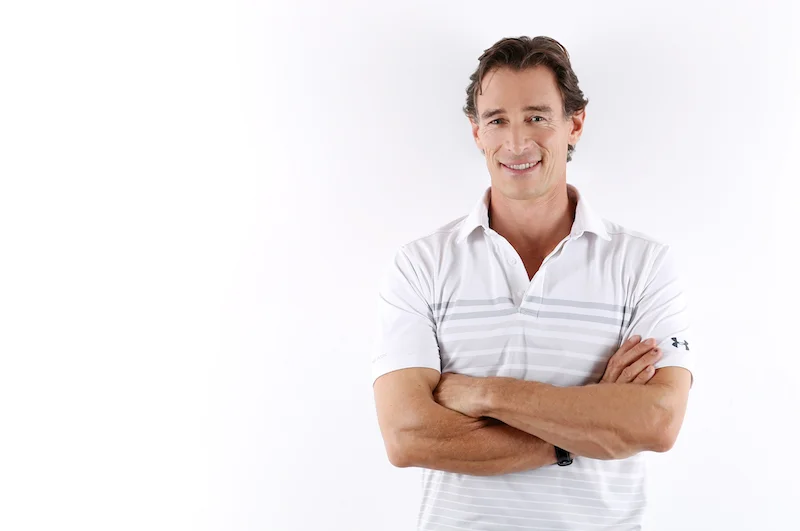
026: NAM BALDWIN - Flow, Flow State, "the Zone"
Show Notes:
Ever had a perfect wave where everything just clicked—but couldn’t figure out how to recreate it?
That magical state of surfing where time slows down, decisions happen effortlessly, and your body flows without overthinking? That’s a flow state. In this deep dive with elite performance coach Nam Baldwin, we unpack the science of getting "in the zone"—and how you can train your body and mind to access it more often, even in average conditions.
Discover how flow states unlock not only better performance but faster learning and deeper enjoyment.
Learn the specific warm-up strategies and mental triggers that elite athletes use to consistently access peak states.
Understand how your breath, posture, and self-talk can either guide you into—or pull you out of—your best surfing.
Hit play now and learn how to harness the power of flow to surf with more confidence, clarity, and control every time you paddle out.
We discuss what Flow is, why some surfers get into 'the zone' more often and more easily than others. How do we train, warm-up and think in a way that elicits more flow. How to turn a bad surf into a great surf.
http://www.equalize.com.au/
http://www.stealingfirebook.com/
https://www.youtube.com/watch?v=y1MHyyWsMeE
https://www.bravermantest.com/
https://en.wikipedia.org/wiki/Flow_(psychology)
https://www.ted.com/talks/mihaly_csikszentmihalyi_on_flow
Key Points
Nam Baldwin, named as the Elite Performance Specialist for Surfing Australia heading towards the 2020 Olympics.
Nam explains the concept of 'flow state' or 'being in the zone' as a mental state where one's attention is fully focused on the present moment, allowing optimal performance without distractions.
Nam discusses the factors that contribute to an individual's ability to enter a flow state, such as genetics, neural chemistry, and consistent practice from a young age.
Nam emphasizes the importance of finding one's optimal state of arousal and regulating attention through techniques like proper warmup and breath work.
Nam suggests using triggers or anchors, such as posture or self-talk, to help re-enter a flow state after falling out of it during a surfing session.
Nam highlights the role of managing expectations and simplifying goals to avoid overthinking and anxiety, which can hinder the flow state.
Nam recommends recovery strategies after experiencing a flow state, such as rest, proper nutrition, and mindfulness practices, to replenish the hormones and chemicals involved.
Nam suggests resources like the books 'The Rise of Superman' by Steven Kotler and 'The Edge Effect' by Dr. Eric Braverman for further understanding of flow states and hormonal balance.
Outline
Introduction to the Surf Mastery Podcast
Michael Frampton introduces the Surf Mastery Podcast, which interviews top surfers and industry professionals to provide education and inspiration for better surfing.
A previous popular episode with Clayton Neanarba is mentioned along with a surfboard giveaway.
Michael discusses their experience with a custom-made wetsuit from 7th Wave in New Zealand, praising its fit and warmth.
Listeners are encouraged to check out 7thwave.co.nz for custom wetsuits.
Current Episode Featuring Nam Baldwin
The current episode features Nam Baldwin, who previously appeared on episode 15 discussing breath enhancement training.
Nam has since been named the Elite Performance Specialist for Surfing Australia for the 2020 Olympics.
This interview focuses on flow states or being 'in the zone.'
Definition of Flow States
Nam Baldwin defines flow as a mental state that translates into physical performance.
Previously known as being 'in the zone,' it represents an optimal state encompassing mental, biochemical, physiological, and psychological aspects.
In this state, an individual works at their best without distraction and is fully focused on the present moment.
The body and brain work optimally together, allowing performance to thrive.
Neuroscience now refers to this as a 'flow state' because it is a condition that can be entered through various activities and thinking processes.
Flow is characterized by a lack of self-consciousness, effortless action, and a sense of control.
Time perception may be altered, and the experience is often described as highly enjoyable.
Factors Influencing Ability to Enter Flow States
The ability to enter flow states varies among individuals due to several factors.
These factors include chemistry and hormones influenced by diet, fitness, health, and genetics.
Neural chemistry and brain activation networks also play a role.
Consistent exposure to flow states from a young age contributes to ease of entry.
Positive experiences create a subconscious desire to return to that state.
The ability to trigger the right responses within one's mental and physical makeup is crucial.
Overthinking can hinder entry into flow states, as certain parts of the brain need to be less active for flow to occur.
Strategies for Inducing and Maintaining Flow States
Building a foundation through effective training and discovering one's ideal state is crucial.
Understanding one's optimal level of arousal and awareness, conceptualized on a scale of 1 to 10, is important.
One should perform a comprehensive mental and physical warm-up that engages multiple senses and fine motor skills.
Elevating heart rate and increasing blood flow primes the body and brain.
Practicing activities that require struggle releases chemicals and hormones that prepare the body for optimal performance.
Incorporating balance exercises and fine motor skill activities in the warm-up routine is beneficial.
Maintaining good posture and positive self-talk is essential.
Using triggers or anchors helps return to an ideal state if focus is lost.
Practicing mindfulness in various activities, not just meditation, is recommended.
Simplifying expectations and focusing on specific, achievable goals enhances performance.
Acknowledging and observing the flow state experience makes it more familiar and easier to access in the future.
Importance of Proper Recovery After Experiencing Flow States
Allowing time for rest and replenishment of hormones and chemicals used during flow is necessary.
Practicing calming breathing exercises for about 8 minutes after intense sessions aids recovery.
Maintaining good nutrition helps rebuild necessary hormones and chemicals.
Limiting the use of stimulants like caffeine, drugs, and alcohol prevents depletion of these resources.
Recognizing that flow states typically last around 40 minutes before dissipating is important.
Balancing intense experiences with periods of calm avoids burnout and maintains overall well-being.
Recommended Books on Flow States and Related Topics
Several books are recommended for those interested in learning more about flow states and related topics.
'The Rise of Superman' by Steven Kotler is suggested.
'Stealing Fire' is another recommendation.
'The Edge Effect' by Dr. Eric Braverman discusses hormone balance and its impact on performance.
Emphasis on Self-Awareness, Balance, and Consistent Practice
Throughout the interview, Nam emphasizes the importance of self-awareness, balance, and consistent practice in developing the ability to enter and benefit from flow states.
Listeners are encouraged to observe their own experiences, acknowledge their states of mind, and work on creating the optimal conditions for flow in their surfing and daily lives.
Transcription
It is a state in which we fall into or create through different activities, different thinking processes that allows performance to thrive.
Welcome to the Surf Mastery Podcast. We interview the world's best surfers and the people behind them to provide you with education and inspiration to surf better.
Michael Frampton
Welcome back to the Surf Mastery Podcast. Our previous episode with Clayton Neanarba was a very popular one. Turns out you listeners really do enjoy getting right into the details. So if you haven't heard that one, go back and have a listen. Listeners had the opportunity to go into the draw to win a surfboard shaped by Clayton. That was won by Josh in Queensland there. Congratulations Josh. While I was with Clayton recording the episode, he had a custom-made wetsuit turn up. It was the first time I'd ever heard of a custom-made wetsuit. So I went ahead and ordered one myself. It is the best wetsuit I've ever owned. It fits like no other wetsuit. It's only a 3'2", but it's damn near as warm as a 4'3". The fit and the material is just amazing. So a big shout out to 7th Wave in New Zealand for doing custom-made wetsuits. They're awesome. There's no affiliation or anything. I just wanted to give them a shout out. I think it's a great product. And myself and it turns out a lot of people I know had no idea that you could even get a custom-made wetsuit. I think it's well worth your while. So check them out, 7thwave.co.nz. Today's interview is round two with Nam Baldwin. Now Nam appeared on the show back in episode 15 where we discussed his breath enhancement training. That inspired me to actually do his course, which is... I can't recommend that course enough. Nam's Breath Enhancement Training. So you keep an eye out for the next BET course running in your area. You can check that out on BETtraining.com. Since that episode, Nam has been named as the Elite Performance Specialist for Surfing Australia heading towards the 2020 Olympics. So congratulations Nam on that. And this second interview with Nam is all about flow, or flow states, or being in the zone as it's sometimes called. I had the first major technical issue with audio equipment. So I had to use the backup audio for this interview, sadly. It's not too bad, but the first six minutes is a little scratchy. And then after that we just happened to move closer to the backup recording device. But yeah, I mean the content of this interview is outstanding. It's worth multiple listens. Please leave us some feedback and please support Nam on his Instagram. And yeah, jump on one of his Breath Enhancement Training courses. The more I look into surfing and why some surfers are better etc. Than others. The more it points in the direction of flow states and being focused.
Nam Baldwin
Yeah, or regulating one's attention.
Michael Frampton
Yes.
Nam Baldwin
Because sometimes focus can be over-focused.
Michael Frampton
What is flow? In terms of, most people think of speed, power, flow. We think of it in terms of surfing as in fluidity or the gracefulness of movement. But we're talking about flow in a more technical sense. Yeah.
Nam Baldwin
Sort of a mental state, I guess, which then goes into the physical. So the old term was really the zone. If you remember, it was classified as the zone. You're in a zone-like experience. A zone being a zone of optimal state. Both from a mental, sort of like a biochemical, physiological, psychological state. So all those elements coming together that creates a zone or a space in which you will work at your best. Without any distraction, your attention is fully on the present moment. And in that present moment, because of the task that you want to execute or the fun that you want to have or the experience you want to have, your body and your brain will be working optimally together. And that was once called the zone. Now, neuroscience has kind of turned to the flow state because it is a state. It is a state in which we fall into or create through different activities, different thinking processes that allows performance to thrive.
Michael Frampton
And why are some people able to get into flow better than others?
Nam Baldwin
Many reasons. I think if we start with chemistry, a lot of people have really good chemistry, really good hormones based on their diet, based on their fitness, their health, based on genetics. And then having the right neural chemistry and the right network of activation within their brain that allows that state to come through easier through consistently going through those states from a young age or going into those states because of a desire to have fun, a desire to experience something that at some point in their life had a great meaning. You know, they were able to have a greater awareness of being in that place or that feel and subconsciously it locked into their way of being and thinking. And therefore, in the future, their ability to go there just happened due to the fun, the experience they had, and they trigger the right response within their makeup to create this experience of flow. Ideally, you figure out what it is that allows you to get there effectively. So a lot of that is kind of contradictory in some ways because sometimes you can't think too hard about these things, because if you're overthinking going into flow, you'll stop some of the processes allowing you to go into flow because when we're in flow, parts of the brain that are really activated will be shut down through an overthinker being judgmental, critical, you know, be aware of breaking your leg. All those things can stop the processing power of the flow state.
Michael Frampton
Okay, so it's just as much as getting out of the way of yourself as anything else.
Nam Baldwin
Yeah, absolutely. And I think a big part of that, though, is actually to build the foundation of it. So to train effectively. And what I mean by that is to discover what's an ideal state for you. You know, you could put it into numbers. You could say out of one to ten, when you go and surfers, what's the optimal number reference to how you think and feel? So for you, it could be an eight. You know, your heart rate is up. Your awareness is out there. You're really aware of what's going on here and now. You're able to regulate here and now in terms of your thinking. You're staying on task. But there's an energy of feeling and emotion almost in the background that's keeping you really centred in that optimal state of arousal. If you drop to a six, you'll be less responsive. Your reaction time will be a little bit behind milliseconds, but enough to not be able to execute a good turn or hit the lip where you should hit the lip. So, you know, working on that, working on what is your ideal or optimal state? Because there's an upside down U-curve that a lot of people probably seen that, you know, you're too relaxed. You won't fire into split actions or split decisions or whatever. You're too stressed. You're too hyper and you'll dig a rail because you're too aggressive in your turn. So there's an optimal. So that's the foundational work that I believe that we just touched on was to find, OK, what's optimal? But it will take time and someone to notice your behaviours, notice your bodily language, notice your wording that you use to describe things to then go, hey, I reckon we're almost there. Now, play with it, because flow is a playful experience, too. If you look at a lot of kids go into flow state often because they don't really care about the outcome. They just want to have fun. And in that process of enjoying themselves and getting into what they're playing and staying very present in that moment, they will go into flow. So, yes, we can condition ourselves and figure out what helps us get there. But actually falling into it, it's quite an interesting space. You've got to let go. Yeah, that's it. You can't overthink it.
Michael Frampton
And so I guess for those listening that haven't heard about flow before, they've probably been in flow. So, yeah, you think you've last time you surfers waves that were a little bit on the edge of your skill level, but you went out there anyway and you caught a couple of good waves. You probably were in design flow.
Nam Baldwin
Yes, very likely. We're Yeah, that's it.
Michael Frampton
Just breaking down that.
Nam Baldwin
Yeah. And it is a feeling of you can't, it's almost like you don't really know how to describe it. It's just a lot of people would say I just had so much fun and I can't even remember what I did, but it was so fun and time flew like it just, you know, an hour went so fast and I just felt so on point. Everything was just connecting and I didn't have to think.
Michael Frampton
But often we want to recreate that state and that feeling when, I mean, for a competitive surfers, especially, you know, if it's only two foot, the waves are only two foot, certainly the conditions aren't going to force you into flow, but how can we help to recreate that flow state when the waves are suboptimal?
Nam Baldwin
Yeah, interesting question. So I believe a very good warmup, both mentally and physically. So doing warmups that involve a lot of your senses, a lot of your finer motor skill and getting them primed into a place where then flow can operate better or easier. So if I go to the beach and I have heard this podcast, I'm like, I can't wait for it to kick in. I don't do a warmup other than wax my board or maybe the odd lunge or whatever, paddle out, sets don't come for five minutes and then I'd take off and I'm like, I don't feel that flow state. Well, you didn't do much to assist yourself into allowing that to happen. So a good warmup requires not only, I believe, to make it simple, you need to go into a bit of struggle. In other words, your body needs to go into an experience where heart rate is elevated, blood flow is very high. Your brain is getting a tremendous amount of information based on the activity that you're doing. You're feeling the load. Therefore, in that struggle, your body and your brain will release different chemicals, different hormones to allow you to then have less of a threat in that space and then open you up in many ways to then go, OK, you're priming for something. Here you go. Let me help you with that. And one very simple chemical that gets released in a warmup is nitric oxide, which is a chemical that opens up capillaries, allows greater blood flow. Good breathing is very important in that space, too, because if we breathe effectively, we get a good amount of carbon dioxide coming into the system because of burning oxygen that then allows release of oxygen. So there's little areas of we could refine and get better. And that can take place in the warmup. Then not only priming the body with good powerful movement, but thinking about finer motor skill, standing on one leg, closing your eyes and balance there for 30 seconds. A lot of surfers will find that very difficult. But the more that we do that before we paddle out, we're activating all different parts of our body, both neurologically, psychologically, physiologically, that allows then an optimal state to arrive that will then be conducive for flow.
Michael Frampton
So one simple strategy could be just be a really good quality warmup.
Nam Baldwin
Pretty much. And then, you know, in training, in a gym or whatever, being very attentive to how you're feeling in different activities that you're doing. Do you feel like you're flowing through the routine? Do you feel like your movement is free and easy and you can move in a way that is conducive to the task? You don't feel any rigidity in your body. You feel and you feel like you're having fun. That's probably another thing, too, is that you're enjoying that moment. You're not thinking of the past or the future. You're right in that moment, experiencing it as it unfolds. And then if you are able to notice and recognize what's assisting you in that time and space so that you could potentially recall those little triggers or anchors that you fire that keeps you in present time in that state.
Michael Frampton
Yeah, we're talking about such subtleties we, I mean, now I just did a session with some tennis balls and, you know, as soon as I'm catching one ball and throwing it back to Nam, he's sort of preparing to throw me another ball.
Nam Baldwin
As well. Yes. Because.
Michael Frampton
And if I start thinking about the next ball, then I'll miss the catch. And until someone really sort of points that out, you don't notice how, because it happens so quickly. So you might think, I'm clumsy with a tennis ball because my hand I put in Ashens bad. Well, it's no, it's probably more that you're not actually focused on catching that ball at that moment. Yeah.
Nam Baldwin
You're not in present time. You're in the future because you're thinking about the next one, which means that then parts of your motor cortex will fire differently. And therefore your final motor skill will become a bit rigid, which then you're out of flow because in flow that doesn't happen. In flow, your brain is working in a brainwave pattern that is optimal for things to happen in a very responsive now that then allows this experience of you being what we would say your best. It's just trying to recreate that consistently to work at your best. And that feeling of working at your best is usually a feeling of it's natural. It's easy. And that's what Yes.
Michael Frampton
It's total immersion. With what you're doing. Yeah. And so you're saying the like a really good hand-eye coordination exists in everyone's brain, but flow state gives way to that.
Nam Baldwin
Well, no, not necessarily. People might not have really good hand-eye coordination. However, if I want to get your body and get you to work with everything firing effectively, it's good to work on that skill because for you to catch a tennis ball, there's a lot of finer movement and eye ball, eye-hand coordination occurring that if that is nice and warmed up and primed, it's allowing you then to be able to access the finer detail of how you move, how you change direction, how you use parts of your body collectively together that allows great performance. Because there's lots of things that occur when someone's in their best performance, especially surfing. You know, you stand on a surfboard, the amount of movement your foot's going through when you turn or riding along the way, the finer detail of all those little muscles that are firing is enormous. And the information that has to travel from your brain to your foot and back again and the speeds it needs to travel, that needs to be warmed up. Otherwise, you'll find it difficult to be working at your best.
Michael Frampton
So the flow states sound like they're not just optimal for performance but for learning as well.
Nam Baldwin
I think so, yeah. Think about things that you've learned and have never forgot. You were probably in a specific and emotional state that was conducive to that learning. You were present. You were, you know, allowing information to flow freely through your mind. You weren't ridiculing it, you weren't criticizing it, you weren't judging it. You were just observing and understanding and allowing that to happen in a non-judgmental way potentially where you were just so free to what was being shown, learned, taught that the information just locked in easily and you never forget.
Michael Frampton
If you find yourself in flow and you have, let's say you're having a surfers, you've warmed up as described. You had a great wave, you were in the zone, you paddled out the back, you get a little bit cold and your next wave is the opposite. There's no consistency in your surfers. Is there any strategies to kind of bring that back while you're in the water?
Nam Baldwin
Yeah, it could be that you use a trigger, what we call a trigger or an anchor in various training methods psychologically that a lot of athletes use, a lot of surfers use too to trigger themselves back into an ideal state or optimal state. It doesn't mean they're triggering back into flow, they're going into a state that will allow that next level of what we call the flow to come through because again, we can't overthink ourselves into flow. It's an experience that takes place where there's minimal thinking. However, we can fall out of chemical reaction, ways of thinking that will reduce the ability. So if I go, okay, I've just had a bad wave, how do I get back into the flow state? Well, hang on, what's the ideal state for you to be in for that to happen? So it's almost like a two-step process. And you might have, posture might be a big one. You have a shitty wave, you pull off and you sit out the back and you drop your posture. That instantly is then telling yourself no good, then dialogue might come into it. You're not good enough to be out here or that flow state's a lot of hogwash or whatever. There's all these different things that come through, but it could be that you have triggered that to come through. Your posture started it. So then the opposite, you paddle out, you don't have a good wave, you paddle out and you go, okay, let me just hold posture for a moment and keep my posture similar to what it is when I do surfers on a good wave. I'm upright, I'm breathing well, my dialogue is good, let's hunt this next one. Let's relax as we paddle in. And there's little triggers again that are creating a state change within you that then allows you to go into the moment, into present time and boom, you're in that flow state. So there's definitely a process that will assist you getting there and a process that will take you away from getting there. Recognize them both. Then there'll be moments where I say with a lot of people I work with is don't think about anything now. Maybe posture, that's it. Let go of everything and just surfers. And then if you're going through a barrel or a cutback and you have the ability to be the observer, recognize you're there, be aware of the process along that journey. Was there anything in particular that you said to yourself or did with your body that allowed that to really come to life? And there might be, there might not, but if there is and you found it, just practice that again and see if it assists. Same for the other side. Is there anything that you're doing that's stopping you? Yeah, I keep telling myself I'm no good or that I'm just not designed to do good cutbacks or whatever. There could be a number of factors that come into play.
Michael Frampton
So negative self.
Nam Baldwin
-talk. Yes. The big one. Absolutely. You know, think of a lemon. Now go and chew on that lemon. It's juicy. Cut the lemon in half, cut it in quarters. Now chomp your teeth around it and really taste that flavor of that zesty lemon. Now, the more I talk about a zesty lemon, you're chewing on it, you'll probably start to salivate because the dialogue I'm using is creating pictures. The pictures in your mind creates thoughts. The thoughts creates feelings and feelings are chemistry and hormones and peptides firing together, creating the sensations and the emotions that we are following from the thoughts.
Michael Frampton
Now don't think of a lemon.
Nam Baldwin
That's it. There you go. Exactly.
Michael Frampton
When did you.
Michael Frampton
First sort of discover flow?
Nam Baldwin
Kung fu and surfing, but kung fu probably first because that was what I started before surfing. So in kung fu, the style that I trained, it was all about really regulating your mind so that when you're in sparring and challenging moments of training, if you overthought, the thinking would slow down the action and that means you get hit. Think about the block. You can't. So you have to train the block so that then it becomes natural to your body to move in that pattern through a stimulus such as someone trying to hit you, but you can't think about the block. So there's an area that's like flow. So what I'm saying is if I train it enough, it will become so easy to perform because it's all in my nervous system. It's all been trained to a point where now I can work at my best and forget about the future and the past because if I do think about those two things, I'm out of present time and I can't be in flow unless I'm in present time. So I noticed that often coming through me as I trained and sparred that if I was very present with the person I'm working with and sparring against and really allowed myself to get to that optimal state through a good warm up, through good thinking and dialogue, I would often go into really good moments of sparring training where it was felt like perfection almost.
Michael Frampton
Was it called flow state back.
Nam Baldwin
Then? No, it was the zone. Yeah, being in the zone. You know, instructor would say you're in the zone, man. And we never really knew what we were talking about, but we were just, yeah, I'm here.
Michael Frampton
And how old were you when you had those experiences initially?
Nam Baldwin
Early teens.
Michael Frampton
Has flow state or being in the zone, has that been part of your training methodology or?
Michael Frampton
Since then.
Nam Baldwin
Yeah, it has for a long time. As you know, I do a lot of breath work and breath enhancement training is a big program that I sort of have put out there. And parts of that are about self-regulation, regulating your attention to what you can control, not what you can't control. And then working with a lot of elite surfers and athletes over the years, you know, you can train your body and how you use it. You can train your skill. And then there's one major part that a lot of people miss out, which is, you know, you can train your mind. And that's where I've in the last sort of decade or so I've really dived into is, OK, let's look at that. But let's train the mind in real time, as in, you know, if you have a challenge in a session with me, I will pick it to pieces as it happens so that you become so familiar with your own behaviors, your own way of thinking that we can then interrupt it, give you a or we can collectively together, we can discuss a better recipe for what just happened to make it better so that, you know, we're becoming our own practical psychologists in the moment, not, hey, go and book in, you know, and psychologists are wonderful people. They're really good at their craft. Incredible. I'm just thinking, you know, on a practical sense, but let's do it now. Let's not waste this moment where you just had a meltdown. Let's talk about it now and see if we can resolve it and come up with some good strategy to assist you through that level of intensity or challenge that we just put you through so that then you own it in the moment. You can practice it almost instantly to get feedback for yourself to then go, wow, that works.
Michael Frampton
So mindfulness training doesn't just have to be sitting in a quiet room in the lotus position.
Nam Baldwin
Absolutely not. Mindfulness can be washing the dishes. What is it? It's just paying attention to your thinking and feeling.
Michael Frampton
And so you're saying as you're, the more physically demanding something is, the harder that.
Nam Baldwin
Is? Yeah, well, as heart rate rises, so does areas of the brain become more active in a fight or flight response. So in that time, in that space of high heart rate and, you know, execution of final motor skill and moving movement, etc, there's a lot of demand on the ability to process information and you become, what happens is you become a sensory overloaded being. There's so much going on within your senses that can become very overwhelming and overloaded. So there's a sensory overload. There's a heart rate to match it, meaning the heart rate is rising to a point where final motor skill dissipates. As my heart rate gets higher, my motor skill dissipates. As my heart rate gets higher, my thinking becomes very rigid and I will generally fall back on what I've been conditioned to do. So in the past, if your heart rate elevates and you make a mistake and you say something, do something, and that's all you've ever practiced. That's all you'll fall back to, which can be very self-destructive unless someone's there with you, taking you through it and going, that little behavior you just showed, then let's redo that. Let's redo the same sequence, the same thing. And let's see if we can interrupt that thought process, that feeling experience that you're going through and resolve it. Have a quick chat about it, resolve it and then reinstall, refine or define what will be optimal in that time and space.
Michael Frampton
It's simple, somewhat.
Nam Baldwin
Very, but sometimes difficult. Always. Because the person on the other end could get really pissed off in that moment when they drop the ball or did whatever and swear and get angry. And if the person who's assisting them doesn't have the courage or the insight to go, now's the time, can leave it and go, I'm not going to say anything because they're really angry. But that's a bad behavior that they've got that doesn't allow their skill to come through and their performance to thrive.
Michael Frampton
So anxiety gets in the way of skill.
Nam Baldwin
Yes. But it can assist it if we can allow that anxiety to change into excitement or intention. It's an energy. Every emotion is an energy. Can we refine it and change it slightly to allow it to create a different sensational energy? Meaning if I get anxious, I'll tell myself. I care. This is going to be good because I'm going to be anxious. That means I really care. This means I'm going to step up or I'm anxious. I'm not ready. I don't think I should be here. It's a different meaning around the experience that takes discussion and conversations from an experienced individual that can then pull the threads around. Why are you anxious? Can we change this and just realize it's just your body responding to the challenge in front of you? It's not a threat. You've got the skill. Treat it as a challenge, not a threat.
Michael Frampton
It's hard to do without working with someone.
Nam Baldwin
To a degree. That's why mentors and coaches and psychologists and trainers are really good. You just got to find the right ones and keep looking until you can get the right ones that will assist you in these areas. They're out there. There's plenty of them.
Michael Frampton
With surfing, there's so much, I guess it's anxiety, but it's there's a preciousness to a wave.
Nam Baldwin
That Because you're overthinking.
Michael Frampton
Sometimes creates even more anxiety.
Nam Baldwin
You're thinking it's precious. So you've got to drop the significance because in a given surfers, there's hundreds of waves coming through. So expectation is probably the thing that is getting in on top of you. You're wanting, you're expecting to have this precious wave and enjoy the experience. This is it. And there's such a high expectation that limits you. So drop your expectation. Think about in a session, let's just do one good cutback, but let's nail this cutback. It's like, well, the champion's going for the world title. Everyone's expecting them to win. Just get two good waves. How many good waves do you get in a session? 50? Okay, we'll just get two. Expectation. Simplify. Simplify, keep it low so that you exceed your own expectation. That will take a little bit of work. I get it. Because you might go, I wonder, I want to have the best time ever. Yeah, cool. But let's just work on that aspect for a week. Let's work on your expectation paddling out. Let's work on that for a week and go, today you get a good cutback and a seven second ride. Holy moly. Good stuff.
Michael Frampton
It can be taxing going into flow. Is there to recover from a.
Michael Frampton
Any advice for folks flow state?
Nam Baldwin
Really good point. So if you go there, make sure that in that day, if you have been in flow and you go, whoa, I felt that was amazing. What you felt was a lot of chemistry and hormones being activated that need to be replenished. So what it means, if they've been challenged and used in that experience, a lot of them are you're using actually in your everyday life of making decisions. So one of the most taxing things for our brains is to make decisions. And if we've got a lot of decisions to make during the day, the chemistry that we're using to make those decisions are the same chemistry as we would want to use when we are going into flow. Okay. So therefore, how can you help yourself? It's taxing, you said. Recover, lie down, breathe for eight minutes and just chill out and be very aware of a calming sensation coming through your mind and body. That is another hormone coming out that is now stopping the other hormones that allow you to go into flow. And therefore, they can start replenishing themselves if they're not being activated. Nutrition is a big part. After you've been in a flow state and you've had a challenge and it's been taxing, make sure you eat well to recover the nutrient that was required to make those hormones and those chemicals so that then the nutrient that you're now eating post-training, post-surfing is the nutrient needed to build the hormones again. So tomorrow you can go back into it.
Michael Frampton
Makes sense. Is there more science on that? Like how long can you spend in a flow state and how long does it take to recover?
Nam Baldwin
A lot of suggestion out there is that it's about 40 minutes. That things like dopamine and noradrenaline, adrenaline, testosterone, all those things that we require, nitric oxide, will have a lifespan potential of 40 minutes of being in that experience. And then it will start to dissipate. So then should you want to go back into it a couple of hours later, it would be more challenging. So what we want to do therefore is make sure that, again, it comes back down to the physical for a lot of this. We need good healthy nutrition. We need to limit the things that spark those chemicals into high activity such as caffeine, drugs, alcohol that really activates them in a big way because we're wasting it. Why not wait till you get in the flow? Don't shortcut it with those additives that really aren't good because what goes up must come down. And if you're overstimulating, you'll crash. So hence flow needs recovery. Just chill, man. Calm down, eat well, drink well, sleep well and allow that to be an experience too. Acknowledge it. I keep going back to acknowledging and recognising and being that observer. But that's such a big part of our ability to reset, our ability to switch on is when we observe things, we actually create more neural firing in that area and therefore it becomes more familiar. Therefore, it's easy to experience time and time again. The brain will go to what it's familiar more than anything. So if we go and calm down after flow and we notice that we're calming and we're relaxed, it's easy to go to the next time and therefore it's almost amplifying the effect. Good point. We become very familiar with it.
Michael Frampton
And that's probably quite important to do reasonably instant. Like if you decide to come in from a surfers session or you've been in the zone, you want to try and do some breathing to calm down.
Nam Baldwin
Yeah, ideally. But it can be a challenge because of the endorphins and so on, the chemistry and the hormones that have been released. You don't want to. You want to keep riding that wave, but you keep pushing it. As it drops, you might get pulled in to have an extra coffee or a few too many beers because you want to keep riding that wave. But that will only limit you for the next time, tomorrow, for example. Because I.
Michael Frampton
Think we've all had that experience of when you have a great surfers or even a good couple of days of pumping surf and for three or four days after that, you're just wiped Sad.
Nam Baldwin
Out. Yeah, you're wiped out because you've...
Michael Frampton
Sometimes even.
Nam Baldwin
Now we're hitting it. Now you're starting to hit the fact that dopamine is so high in a flow and dopamine and serotonin allows us to feel happy and level our mood. So if they've gone, we will feel potentially sad and we won't be able to maintain a stable mood. So our mood will change. So we've got an emotion of sadness, but then we've got a mood that lingers. And that then brings us down.
Michael Frampton
Yeah, they're saying flow states are one of the most addictive things there are. Yeah, so we've got to be aware of that.
Nam Baldwin
Yeah, and reset. Recover from it. The classic analogy I always tell a lot of people is they ask me, what's the best? What's the do? In the end, I usually say, look, it's just balance. Yes, you need to have these amazing states, but you need the calm stuff too. You can't live there up high because you'll run out of what allows you to feel that, which is hormones and chemistry and endorphins and so on. They've only got X amount. It will run out. So let it recover. Have balance.
Michael Frampton
Good advice. Keep it simple.
Nam Baldwin
Yeah. Keep it simple. Keep distilling what works.
Michael Frampton
Okay. I think there's a lot of information for people so far on flow. Any books or you can recommend?
Michael Frampton
Any resources.
Nam Baldwin
Yeah, there's a really good book. Stephen Kotbier, I believe his name is. He's got an actual flow. Rise of Superman. Yeah, the Rise of Superman is really good. And then there's one called, and I'll bring it up now in my own network. I'll just bring it up because I forgot the name of this book, but it's a wonderful book that they have written now a bit more about flow and what it is that they're trying to get to around this. And it's called Stealing Five. Yeah. That's pretty powerful. And they explain it very well. They go into some detail around it. Another book too that I can suggest is to just be aware of your own hormone nature. What hormones are dominant in you and what may be deficient in you? And there's a really good book called The Edge Effect by Dr. Eric Braverman. And there's a couple of simple questionnaires in there that can allow you to see roughly what hormones you may be dominated by and then what you might be deficient in. That then through very balanced nutrition and supplementation, not drugs, can assist in bringing those levels up if they are deficient that then can change how you're going into flow because it's chemistry against hormones. So The Edge Effect by Dr. Eric Braverman is really good too.
Michael Frampton
Thanks for those resources. And thanks again, now. Yeah, you're.
Nam Baldwin
Welcome. Until next time. Indeed. Thank you. Thank you for having me.
Michael Frampton
Thanks for tuning in to the surfers Mastery podcast. Again, I'm your host, Michael Frampton. Make sure you subscribe so you can keep up to date with the latest interviews. Please share with your friends. Check us out on Facebook at surfers Mastery Surf. And if you're on iTunes, please go and give us a little rating. That'd be awesome. Until next time, keep surfing.