
122 Surfing - Art or Sport - with Donald Brink
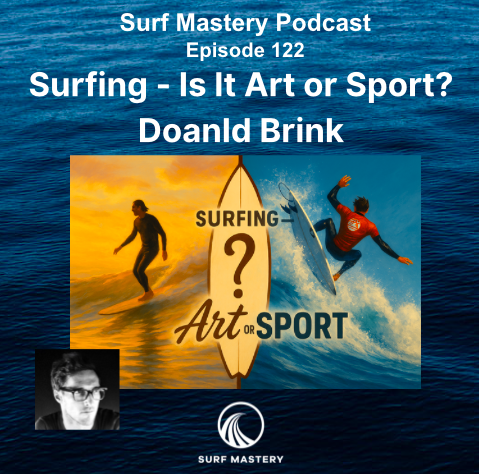
Is surfing just a sport—or is it something much deeper, a form of art that mirrors your soul?
Whether you're a weekend warrior or a lifelong wave chaser, you've likely felt that indescribable magic in the water. This episode dives into that very feeling, exploring how surfing transcends competition and becomes a deeply personal, creative expression. If you've ever wondered why your best session had nothing to do with trophies, you're not alone.
Discover why Donald Brink believes surfing is more about galleries than stadiums—and how that insight can reshape your approach to every wave.
Learn how intention, presence, and lifelong curiosity can turn every surf session into a meaningful act of self-expression.
Hear how legendary surfers and everyday wave riders alike find purpose, growth, and connection through a pursuit that often defies explanation.
Tune in to hear Donald Brink unpack the soulful side of surfing and walk away seeing your next session as more than just a ride—it could be your masterpiece.
https://www.instagram.com/donaldbrink/?hl=en
Transcript:
Michael Frampton: [00:00:00] Well, you mentioned them being art, which segues us into, I wanted to talk about, which was. Is surfing an art or a sport, or both? Now let me, , I'll tease you a little bit with some of my thoughts and then I'll, we'll get you to weigh in.
So, the Oxford Dictionary defines a sport as senses relating to play pleasure or entertainment. , Some other, uh, definitions, , diversion, entertainment, fun, , frequently with modifying objective, , , activity that you do for pleasure and that needs physical effort or skill, usually done in a special area and according to fixed rules.
So surfing definitely fits within most of that definition. Maybe not fixed rules, of course, if it's competition, it definitely does. And the actual, those are sort of some modern dictionary definitions of sport. And the etymology actually hasn't changed much in the origin of the word. I will [00:01:00] add I think those that have a background where their sporting youth was competitive, , you would immediately think that sport was, , competitive as well.
And so obviously surfing fits that, but only in a small niche, OO of a hundred, uh, people, sort of, or a handful of competitive surfers in the world. Mm-hmm. Then art, which is definitely has a, some lucid definitions, but the dictionary may explain art, is in the use of the imagination to express ideas or feelings.
, That can definitely, uh, explain surfing for a lot of us. Uh, the expression of ideas and emotions through a physical medium, often with the intent to evoke a worthwhile experience. Definitely surfing fits that. Something that is created with imagination and skill and that is beautiful or that expresses important ideas or feelings.
Again, another definition of art, which I think surfing for [00:02:00] me at least, fits in there. The etymology of art. , Basically put a skill as a result of learning or practice.
Donald Brink: Mm-hmm.
Obviously how art thou art has been used in other ways, , which sort of comes back to one's identity as well, which I think, is a cool little nuance there.
'cause obviously a lot of us as surfers, we identify as surfers. It's not just something we do. , So there's a little bit of a history of the two words. , And I'd like to hear your thoughts, Donald.
Donald Brink: Those, those definitions definitely have an overlap. And I think I would've, , if you asked me to choose one, I would choose art.
And I, I think that, , that's changed over time and my confidence in, I, I want be rather just choose one so that it, so obviously it's both, but I would say it's art. And the [00:03:00] reason I'm more adamant on that now is because that's changed over time. Because even my work, people often ask like, oh, oh, these boards, it's such art, you know?
And I'm like. No, it's like they're beautiful. They like, it's like, well, I want to hang it on the wall. It's like, no, just go surf. It's, it's like I, I do paint pictures as well, and you're like, that's art. You hang that on the wall, that's gonna, you're not gonna surf that. And then you start to realize either it's all art or none of it is.
And, and that's a brave statement. And, and it's not to be cute. And therefore, to me, surfing is art because it has such, , depth and value and meaning to yourself and the inspirations. And, , the things that come along with the, the surfing life to me are sometimes indescribable. And that's what art is.
You know, it's really hard to quantify exactly which brush stroke meant that thing come [00:04:00] together, which part of the light in a photograph. Convey that emotion and you don't want to start to study it in such depth that it, um, kills the bird to find the song that then vanishes. So you start to see these metaphors trip on themselves.
And, , I prefer if, if there's art in everything to be endlessly fascinated by art, then this is art. And that isn't, 'cause those binary thoughts to me just make it, , they put endpoints on, on potential new horizons or potential dreams. And that's happened to me. Like a lot of board design, not a lot, but from time to time there's been waves I've dreamt about, or boards that I've dreamt about, or boards that I've dreamt on waves about.
And those are treasured things. And I'll, I'll wrap this thought up with this. I, , I got to meet Phil Edwards. . A few months ago. I, I've seen him before. I, I'd never met him before. And, [00:05:00] uh, yeah. I was endlessly obviously inspired and fascinated by his legacy to surfing. And a mutual friend wanted to bring him by my shop and introduce us and I was like, such an honor.
Right. You know, like, get him to meet Phil Edwards and he came down to the shop. , He was such a lovely man. We, we, how we, we got on like a house on fire. It was great. We were talking boats and design and all kinds of things. And I, one of the reasons I was so interested in him was 'cause he stopped surfing years ago.
Just stopped surfing. And I, I was like, I'm always like, man, how do you just stop surfing? That's just strange to me. Right. And I wasn't sure how to ask that 'cause I wasn't conducting an interview. I wasn't sure it was even my place or space to ask. So I, I asked him flat out, I was like, this is, I'm not sure how it's gonna go.
But I was like, Phil, do you miss surfing? No, it was about as, as, , as much energy in the way I said it then as it was when I just said it to you now, like, Phil, do you miss surfing? And he looked at me and, and he didn't hesitate much at all. He said, [00:06:00] you know, I have dreams about it and it's still so vivid, it's amazing.
And he shared one or two things and we moved on and I was like, wow. It was as though he's still surfing. And it left me more confused and even more interested because I was like, man, imagine the, the data points that I'm getting from my surf just yesterday and potentially that I could get from today's surf could be things storing up inside, which you would hate to meter or measure, but they're in you.
And I think they come out of one without being governed or policed, and therefore they're precious. I wanna respect them, and that, that's how art feels to me. I, I've been working on some mixed media, like, like challenging pieces, really like pushing myself as a creative being. And I say that because I can feel [00:07:00] the angst and ah, I can phone this in and just make it look pretty or I can try and find new ground.
And, and when you do, stuff comes out from within that halfway through, you get these break points and they're like, wow, I, I didn't know I could do that. And it's, and you, it's not that you're impressing yourself. You, you just can't believe that you were able to be part of this dance of something that came to life, , really through you, not from you.
And I'll challenge people to, to compare this to what they've felt in their own surfing. You know, you, you're out there sometimes and maybe it's even when there's a waves are good and then you take off on this little wave. My point is sometimes the most rewarding sensations come from the most surprising little nuanced events, or the most unlikely timing of things.
, And there's just so much input on the sensors. It's such a sensory activity. [00:08:00] In fact, you would say it's sensational. And that, that used to really bug me, that that's all surfing was. The whole thing's just sensational. And I was challenging myself. What, or am I trying to ascribe too much to what surfing is?
Am I trying to add too much value to it? 'cause I'm so either ridiculously into it or, or am I trying to put meaning to something that really doesn't have meaning and therefore make it okay? And no, I love it. I'm so grateful for it. I think it's entirely creative. If you want it to be. And, and I, I think the whole thing is art beyond, beyond words because you can't find the words to explain something to somebody else that meant so much to you.
And over time those meanings and those things compound. So sport's cute, but I like to do art and I really, I really think because of that, you could be put [00:09:00] into, oh yeah, well you're an artist. And I'll kick back on that saying I think we're all artists and I, I've practiced art a lot and I've also practiced surfing a lot.
And therefore I see the similarities and, you know, I think it's, , the act of surfing it, it really needs to be. Put together as, uh, the adjective and the noun. I guess now I'm talking out of turn, but the, the practice of surfing is something I like to say sometimes audibly. It's like, I'm going to practice surfing today.
And it changes the energy in the, in the approach or, , the act of surfing lifestyle, the surfing lifestyle or the surfing life. , These are words you read on book covers, but I think they're really well thought out, you know? , So I don't mind how surfing's explained. I just don't like to be, I don't like to to have end points within my own understanding of it, because it keeps showing itself to be bigger and more beautiful and deeper [00:10:00] and with a bigger and broader community of, of things indescribable for all points of view.
And for me, that's important and I'm grateful to be part of that. But, , that's more of a, , gallery setting than a stadium. Mm. And both are cute and both, both are necessary, but I would, I would prefer to be at the gallery.
Yeah. No, that was beautiful. I loved that. And , the more I think about it and the more I analyze it, it actually makes me realize that surfing more and more is an art and not a sport.
. It is a sport as well, don't get me wrong. If you go by those, , the definitions in air quotes, and I think for a lot of people it is only a sport because it's just something they do for a little bit of recreation here and there. And then obviously, obviously you've got the highly competitive people who treat it as a competitive sport.
But for most of us, and I'd say everyone listening to this show, it is an art
Donald Brink: for
sure. [00:11:00]
Donald Brink: And I think I'm not against sport. And that's where I think this could be like, it's like, are you for sport or are you for art? And that sounds like we're both for both. But I love the concept of sport. I just, I, I just think if I had to shake, that's why I was, I'm gonna choose one lane to honor that.
So it's like, uh, I think it's more art than sports. , Yeah. Yes. And the other thing too is that it's so personal and it's like there's not many other sports which have such a, , closed feedback loop within just oneself. Like a team sport would naturally be your team player when you enter the ocean.
, You might be amongst people, but you're really playing different games on the same court. You know, it's you and the ocean and your thoughts, but , the, the school is within your own life and you take away what I call stoke or those little joyous moments. Frustrating ones too. So there's wins and losses, but they, they're kept within one's own heart.[00:12:00]
Mm-hmm.
Donald Brink: And therefore, it's hard to show me another sport where that happens. So consistently at choice.
Yeah. No surfing is closer to music than it is tennis.
Donald Brink: Like, I like the concept. What I do like about parameters is they produce really good art. If somebody commissions you to do a piece and you have to, and there's a couple of confines or a narrative script or whatever, it, it really helps give a narrative guideline. And, and it, I think it helps produce good art.
Agreed. Putting some confines and so that's why surfing competition is actually really interesting. Just to put a clock against the heat. You surfing against the clock. They're all really good. So. I, I do think therefore you could even argue, that's why the art's so good, because now that's you've put confines.
Well, that's the [00:13:00] irony of it all. You look at a competitive surfer. The the ones that win, they're the, they're the best artists. The, I think the only competition in competitive surfing is like the strategy stuff, not the surfing itself. Right? It's the strategy and all that other bs. But once you're on a wave, even John, John surfing a wave in a competition is art.
And that's why he's so good, because he is an artist. He's dancing with the wave.
Donald Brink: I, I agree. , And so therefore it's like, yeah, those confines produced better art, so therefore it's art. It's, but my, back to my point, it's like trying to think of another sport where you are, , selecting to be so individualistic in your pursuits over and over.
. 'Cause people often look at surfing at, at first glance, it seems like quite a selfish activity. And I'm sure it can be. I mean, it certainly can be. , But when you realize if you could cultivate your fascination for the sea, [00:14:00] it could be, , you could be a better husband for the teacher partner by your not surfing too much and also not surfing too little, right?
It's pretty simple. So once you balance that fascination, that gets very, very powerful. And I don't see, or at least I can't think of another sport. 'cause I often think, man, what if I didn't get to surf or I couldn't surf anymore? Like, what would I switch this out for? And it, it ends in tears every time.
I'm like, I've gotten so much outta surfing. And then you're like, man, am I so shallow that I, I hedge so much on this and I'm sure I'll find something or get really busy doing other things. , But. I can't, you know, I can't, I can't, I can't imagine replacing it. And I think you'd have to replace it with many things.
. Yeah. To
Donald Brink: fill the complexity of the, and that's why it's unique. That's what I love about it. It's so complex, like these central downloads that you go and get and those humbling [00:15:00] experiences, like being scared in the ocean is something that I do not take, take lightly. I mean, scared for your life at times.
And that is such a gift to choose to do because many people don't get scared by choice often at all. And so to do that at will, the learnings that you once again, take away for yourself and you return to your tribe or your family, or your place, your, your neighborhood, your community, you return as a different person.
Mm.
Donald Brink: That's a beautiful thing, you know?
Yeah. Maybe martial arts encompasses some of the things in surfing and that way it's, it's, it's risky. You're playing with the power of something external.
Donald Brink: Mm-hmm.
You have to be very skillful and relaxed in order to do it well.
Donald Brink: Yeah. But I think the difference, uh, I like that.
Sorry, I'm not [00:16:00] trying to be right here. I think the difference here is that you'll never overcome or, impose your will on the ocean. Doesn't matter how frustrated you get at the wave, it's, it's always going to, it, it's, the ocean's just so big. It's would be like trying to fight the mountain. So in martial arts, you'll, you'll generally explore with another human.
So there's, within your mind, there's this concept of day one today. Whereas when you surf, the sea will always win. You're not stopping the tide. It's, it'll come up and down twice a day. That's what it does.
And
Donald Brink: there's a, that's where the humility comes. It's like, you know, you can't win. You're not, you don't go to the ocean to win.
You go to the ocean to, , be part at best. , Yeah. Uh, so yeah, I've thought about this too much, it sounds like, but um, that's, that's why I'm like, no. The other sports that we, I always end up in these little cul-de-sacs. I'm like, no, no, no, no. It's,
mm. Yeah. I mean, there's so many reasons why [00:17:00] I think surfing is more of an art.
Then you're connecting with nature. It's, it's all, it's borderline a religious experience. It's the, it's challenging. It's scary. It's fun, it's playful, it's artistic, it's creative. It's,
Donald Brink: mm-hmm.
And those restrictions that you might, if you're commissioned to do a painting, has certain restrictions. Well, same with surfing.
The waves are the way they are. The board you chose to ride that day is the way it is. Mm-hmm. The crowd is only gonna gift you certain waves. Like there are so many restrictions every time you go surfing. And if you can play the hand, you're dealt Right. You have the opportunity to dance with the wave however you want to and create yourself as long as you're in the right spot yourself.
Yeah, exactly.
Donald Brink: And not getting in anyone's way. Yeah. Yeah. It, it's interesting. That's. Think about these things when you're trying to understand like, you know, what a [00:18:00] governing body or a sport entity is doing right or wrong within a surf space. See how well I worded that? But you know, like the judgment on how to run a surf competition is, um, you know, it's endless.
But I'm always wondering is like, it's almost 'cause it's, it's not a sport and everyone wants it to be a sport 'cause they're getting paid dollars to win, right? Or dollars to be endorsed. But the best parts that we love about surfing, like if, if there were no competitions you would land up with, what we would have left with would be amazing surf films and people enjoying the ocean every day.
So if you think about the best parts, and this is just me talking now, but when I think about I do, I watch, I follow all the tour and everything and the like, some of the best parts are the fact that it's almost like a live version of a surf movie. And so it's still. It still is what we always will want and need and enjoy, but it doesn't necessarily make it a sport, it's just there's an [00:19:00] overlap of the things that it'll always be.
Um, it's, it's just, it's really interesting and I, I do think it helps surfing and it makes surfing more understandable and more broad. And yet all of these things really don't matter. 'cause if you don't like surfing, then it doesn't matter. 'cause it's those who do will cherish it and hopefully be responsible with it.
But yeah, it's, I, I don't know. Like
I think you have to, ah, I'm talking in the wrong space. Yeah. But yeah, no, I think that,
that, there's an, an interesting irony there because even those who treat surfing like a sport to the extreme, the professional surfer in a competition when they're actually doing the act of surfing. It is an art form, the same, the same way that an Olympic gymnast is judged.
The, the ones who do it, the smoothest and the most beautiful and turn the sport [00:20:00] of gymnastics into an art form, those are the ones that win. Mm-hmm.
Donald Brink: Yeah. It's, it's, it's neat to have winners. Um, it's, we like winning.
It's funny, I was thinking about this just being on the Gold Coast at Burleigh, and if you had to suspend the competition and just have a group consensus of who surfed the point the best over two weeks, I think you'd actually land up with similar winners. Right. There'd be some incredible standout locals watching them understand that wave and surf it so well.
But my point is, good surfing is inspirational. Like watching somebody. Put a performance, and you could call it a performance together. It's, it's so just, um, it's amazing and the depth and detail and nuances to us endlessly fascinating, but also to a layman, somebody walking up the point watching a competent surfer put a ride [00:21:00] together is it's, it's quite obvious, right?
So like having to put clocks and jerseys and heats and buoys in place just to find that is almost hilarious. Like at the end of the day, the ocean knows we know, and yet none of it matters. And yes, it's still interesting, but you know, there's, here's my point. You know, those days when you, you went surfing and you realized that you were so in tune and you, you kind of surfed beyond what you thought you could and you didn't win anything and it didn't matter.
Mm.
Donald Brink: That, that is quite a beautiful thing. I think very rarely we've seen somebody do that in a final, and that would be the highest level of sport, right? To see somebody just lose themselves in a performance. And it's from time to time. I'm sure that happens, but my point is like, if you are not that person and [00:22:00] it, it really doesn't matter to you.
So the fact that you can level up and go beyond yourself within these, within a sort of, and find new levels and heights and connections and have a dance put together on a wave, let alone a bunch of wave and put a session together. Like are we constantly at sport with ourselves then, is the question?
Hmm.
And in terms of winning? Yeah. Because like you described that the moment where you surfed better than you had, you won. Oh yeah. You won against. Yourself yesterday. Right? So you became a hundred percent, you became a better artist, let's say. And I, I think the competition surfer, I think when a competition surfer wins, they, the feeling is similar in [00:23:00] a way.
'cause they know, oh man, I surf that wave beautifully, probably because of the pressure. Pressure makes, made a diamond in that case. And not only did I win the thrill of the wave, I won some money, which gives me the opportunity to surf this amazing, the, the next amazing wave next year with only two people in the water and create more art and, right.
So I think you we're winning a surf competition. I mean, look at Kelly Slater. He just kept on doing it. I don't think he, he didn't need the money. He didn't necessarily need any more trophies. I think he just wanted to surf pipeline with two other people in the water again.
Donald Brink: Well played. I mean, that, that's the game of life then, not the game of surfing.
It's like, oh, you get to jump through these hoops and you get, these are the little perks, you know, it's, that's quite brilliant. You know, we, I mean, you do that in any decision in life. You, you play the game according to your lifestyle you're looking for. So it's back to lifestyle now. [00:24:00] And therefore that's quite a creative composition of how to spend your days or your best, um, cardiovascular years, let alone your joints.
Um, and for me, I choose surfing and it's, um, it that shows itself from time to time in conversations where, like, I, I have foil board at one time and it was incredible, but I, I just chose to not invest in spending that much time getting good at something else, which I know I'm gonna love. 'cause I wanted, I know life short and I want to be so deep in what I'm doing that I.
I dunno if it's wrong or right, but for me I was like, I'm gonna stay purely focused in this lane 'cause it helps me understand my work. And I'm not judging anyone being divided in interests, but I knew how much time it would take someone like myself to get proficient at foiling. And so I was like, that looks incredible for me.
I'm gonna say no, only 'cause I'm looking for a, uh, I know I could surf better and [00:25:00] deeper with the consistency that I'm still chasing. I think the consistency in surfing is the measure that most people don't talk about, and to me is the most important thing. , And the most consistent I can be with my approach to any day, any board, any session, and be in control of that consistency is really what I'm aspiring to.
'cause that then you can tap in and balance yourself in life like I can. Pop in at the beach for 40 minutes at the right time of the day with the right equipment, ride six waves, and be back to work and be radically changed with the shortest amount of, neglect to other things that I'm really interested in too, whether it be work or art.
Right. So therefore that's, that's a creative balance. And therefore surfing is, it's, uh, I don't, even if you wouldn't agree, that's the creative act of surfing is creative, that the balance of its lifestyle is quite creative, you know?
. Yeah. You've gotta stay on top of your skills, otherwise [00:26:00] you can't take those opportunities.
Like, if you've got the opportunity to, to attend band practice once every month, and you don't practice in between, you're not gonna, you're not gonna enjoy that rehearsal hour that much because your skills aren't sharp and you didn't, you didn't sink in with the, with the song. Right.
Donald Brink: I think the future of surfing is being able to be accurate in challenging conditions.
I'll say it again, accuracy in challenging conditions. I've, I've summed it up that succinctly because I've thought about this so much, but I think as surfing gets more crowded and popular, uh, the difficult waves are gonna be the ones you get to enjoy either on your own or on the smallest or fewest people are like the smallest crowd, right?
But they're harder to surf. That's why no one wants to mess with them. But if you're able to tap into that and either stay polished or just have fun and that's what you enjoy, I think it's really difficult to, to ride small, weak [00:27:00] waves. But it's, it's of huge value if you wanna stay tuned for when good waves do come or when you do get chance to be on a trip, or when you do get a day when it's too big for everyone else to paddle out.
Like there's, there's a repetition and a favor to trying to stay. Um. But also that needs to be fun in and of itself. And I'm endlessly fascinated by these, um, small and crowded waves that I choose and get to ride on my own. And I'm not sure if it's just 'cause it's, it's better than fighting in a crowd or if it really is of long-term value, but it doesn't really matter.
It's just interesting to me. So yeah, I'd rather set better wage, but also it's maybe not like when you really look back like what is surfing? And you're like, it's the pursuit of excellence within oneself. It means nothing to anyone else. So like if you said it was, um, [00:28:00] if you, sometimes I think of serving as a puzzle.
What's the next piece to put together within a performance on that wave, let alone waves within a session you could build, , really difficult puzzles.
That's quite a radical choice. So back to making things hard to get more out of it. Yeah. That's, that's just an interesting part of life.
. Yeah. Imposing new challenges. It certainly elicits the flow state.
Donald Brink: I like that you said flow state, because as you said, imposing new challenges. I was like, I, I, I don't know that surfing and tricks need to be, so, um, that sounds kind of sporty to me, like the tricks within surfing.
It's like, well, yeah, there are maneuvers that seem unnecessary and they probably feel good and that's why you do 'em. But then there's efficiency in [00:29:00] connecting energy parts of a wave that we put together as what we call a beautifully ridden wave that felt good to do. That's what I'm consistently talking about.
And if that requires an air within that, that's great. But the, once we consider categories of technique and, and, um, proficiency in a trick, I get a little lost. Can't do most of them, that's for sure. But that is a different thing. And I watched the wholesale vibe. It was fantastic. Like,
yeah, yeah. It's, but it's a
Donald Brink: different thing at that point.
Surfing, I think simple surfing is the best, you
Donald Brink: know? Well, until, until you realize it is, it might not be for you. And that's why it's, it's your own thing. Like it's, it's your own fascination. Like what are you really, fa like those ISTs must be incredibly fascinated by putting their body at those potentially dangerous positions over and over.
Like [00:30:00] the, like imagine being injured and sitting out for that many months, that many times within a life that you're only 24 years deep in. I'm not sure I'm willing to risk that. And so you let some sections go, right? It's just a different fascination and an incredibly incredible ability and incredible amounts of, um, refinement gone into consistently pulling off maneuvers like that Netherland in a shallow pool.
Um, it's like, what are you, fascinating? What are you fascinating with? And how do you unpack that best? Um, that that's, that's how you would approach a complex puzzle or a challenging art piece. It's just problem solving, right? Like how, I'm not sure which, which part of this next paintings a layer or, and then you, and then you break through and you find, ah, and then you get a little more momentum and then.
You get, uh, you get the wobblies and then you lose confidence, and then [00:31:00] you get these little breakthroughs and then all of a sudden it's done and you at best know when to stop. And that's good editing. And that's probably the hardest part. It's kind of like surfing too, and it's like, okay, it's time to end the session and the waves are still pumping and you didn't have to be anywhere.
But sometimes it's sit on the beach and watch the next four sets and just realize what you've been a part of. That's maybe a maturity that I'm starting to see. And it's, it, it, um, it doesn't add value to the session. It just helps resonate the memories that you've gleaned and therefore maybe files them better and protect, I don't know, maybe I'll get to dream out of or from them.
So being really precious with those, um, times.
Yeah. Do, do you think surfing becomes more of an art. The older you get or the better you get or the more experienced you get?
Donald Brink: A
hundred
Donald Brink: percent. I think, I think one, one of the thoughts I had [00:32:00] today was, , if you think of surfing as an art, then it's like, well, there's some pretty bad art out there, mine included.
At times you make terrible decisions or distasteful selections on a wave or on a board color or in a wetsuit choice. Like, like it's still life. The, it's not a, it's, it's not a hundred percent all the time. How boring would that be? And, and yet you see people's growth within their own surfing life. And that's why you don't want to judge.
And these statements really need to be taken with huge amounts of salt, please. But you see people new to surfing that get fascinated deep enough, and then they wanna learn so badly that they'll almost like get in their own way. Then others just naturally acquire these skills and they're quite proficient and you realize they're probably good at a lot of things.
They try, you know those people, right?
Mm.
Donald Brink: Um, they're just really quick learners or like taking feedback or pinpoints. And now with the amount of [00:33:00] coaching available and those kinds of opportunities, you can learn, you can shortcut the learning really quickly. And yet still, if surfing is an art, then your creative body of work is really your surfing life, your surfing lifestyle, the way you understand what surfing is to you and how you responsibly cultivate that relationship with surfing, which means with surfing and everybody else in your life too.
There's, there's other relationships. It's always complex, right? Um, I think you'll see people surfing change over time and yeah, things go in and out of style and in and out of fashion, but you creatively get more, um, astute to what this thing means to you and how to balance it. . I think if you are only fascinated by very, very good waves, there'll be a time when surfing just gets so frustrated and you hang it up.
I can think of so many people that have done that, and that's interesting. It's, it's not our, I am, and I'm kind of grateful for that. 'cause I'm kind of not sure what I'd switch [00:34:00] it out for. So that's their path to discover. But right now I'm fascinated by how it is and how I'm approaching it daily now.
I guess surfing is like, if you think of, let's take, let's take music as an art form. If you are, if you first start learning the guitar
Donald Brink: mm-hmm.
Are you practicing art?
Donald Brink: No. You, you, you practice so that one day you can play. That practice, if possible, should be fun 'cause it keeps you interested. And if you're interested for long enough, one day you might be able to play a song and sound like you would like it to sound.
So when you learn to surf, you're practicing surfing, and one day you might get a really nice wave, come to you and you'll blow your mind that the, the feeling [00:35:00] of how that felt and the how ridiculously happy you feel for the next day, week, month, year. I don't know. My point is you walk away with that sensational, change the stoke, right?
So I do think there are times when you practice surfing and there are times when you perform surfing and they're usually, um, premeditated. And if so often there is a overlap within it. Days when I'm on the beach training and I, I've used those words. I'm either going to therapy or I'm going to training and I'm surfing all by myself.
Meaning I know the kinds of things I'm working on, like riding very difficult boards is a hard pill to swallow except I know what I'm looking for. And so that would be training, that would be like exercising one's ability, refining your ability, highlighting [00:36:00] your pain points. So there are times when I practice surfing
like a musician, learning a new scale
Donald Brink: a hundred percent.
And therefore I'm staying tuned, I'm staying activated, I'm staying interested and not all of it is fun. And yet I know I'm on the larger overarching NA narrative. This is gonna return dividends. 'cause on the right section, I know my arms are gonna be in the right place. And with these films on this rail.
This feeling is what I'm not chasing, but when it comes, I'm gonna be so grateful for it.
Yeah. That's why I like that. Yeah. I I It's your intention, isn't it? If you're practicing or you're learning how to do something, but you're doing it because, like, think of music. If you, you're, you're practicing the guitar, you're doing it because you want to be good at the guitar as an artist.
Donald Brink: Mm-hmm.
Right? Not as a professional or a sportsman or whatever. [00:37:00]
Donald Brink: Right. It's such a creative outlet. Like it's nauseating when you see somebody surfing really well on your, can't surf as well as that. Right. And you're like, wow, that must feel amazing. And yet to them it probably, it feels okay because they, they, until they're pushing themselves that feeling, and that's why I don't like the thing of tricks.
It's like, it's not like until they land on your trick, they probably won't feel happy. It's, if you are not in tune, no matter how well you're surfing, you know that you're missing out on what you could have done or wanna do. Right? So your vision for how to surf that wave with, with flow and seamless transitions and reading the wave properly should be always growing.
And when you do from time to time, get it right, it's undeniable. That's what keeps you coming back. So I think looking at other people surfing and imposing what you are able to do or can't do, you gotta be careful for that. You wanna push yourself constantly. And that's a practice. , , I mean, it's [00:38:00] almost like, it's like people learning to surf shouldn't ride good waves, which is a terrible statement, but it kind of could hold up, you know?
Like there would be, I. If you went to low as an only really proficient surfer surfed out there, it would be an entirely different experience. Now, you wouldn't wanna put a gate on the, on the, at the, at the sea. Like you don't wanna, you know, gatekeeper the place. However, if you work on your surfing well enough and you get proficient enough, when you do get to surf a good wave, you are not gonna be in the way, you're gonna be in the right part of the way of doing the right thing, and the memory's gonna be really rich.
So, yeah, I, I, I'm still trying, I'm trying to lend a surf still.
Mm-hmm. Which
Donald Brink: is incredibly fun.
Yeah. The, the guitarist sits alone in the bedroom doing a lot of practice. They don't [00:39:00] practice on stage.
Donald Brink: Please, no. Get off the stage. Go learn your, go learn your stuff.
It's not the time or the place. Yeah. You might as well go down to the closeout beach and just catch white water after white water and practice your timing.
There's reps
Donald Brink: exactly. There's reps to be had with nobody around. And, and if you, if you, if you do speak to musicians long enough, there is this relationship with that practice. You know, it's kind of still, it's still really fun. And so if you think of surfing as a sport, then you would train for sport. And yet why you would think it is a sport.
'cause it's like people will switch it out for another sporty activity. It's like, well I'm not, I'm not running at the moment, so, but I've been surfing a lot. I haven't been going to the gym. I've been So you're switching it out for a cardiovascular. Endure endorphin releasing kind of activity. And that's, that's all true.
But then you also need to switch it out for, well, [00:40:00] that means you should be, you, you're working on your pedal technique when you're surfing. Right. And then, and how the breathing exercise is going. And, um, the wave Ki program, how, which, which module, like there's parts of the responsibility to it being a practice that is pretty obvious if you want to call it a sport.
And yet even more logical if you're creating art, 'cause you work on how things work and then you manipulate them or be able to play with them without of your, your, um, pantry of options.
Yeah. You can, you separate practice and play. You're still an artist.
Donald Brink: They coexist. There are times when I'll approach the sea and I'm certainly putting my hand up. Yes, this is a practicing session. I'm going to practice surfing, and yet there's still moments within which good surfing is happening, and I have the most amazing joy. So there's a performance that means nothing to anyone except myself.
That's what surfing is. I [00:41:00] think that's odd, but they do overlap by the strangest ways, but they are, um, I just don't like that hard line between like the sep binary separation between practice and then performance. It's more, um,
the lines are blurred as you,
Donald Brink: uh, I'm trying to think the best way to, I was, this is one of the things I was thinking about, but, , I grew up studying the Bible a lot and there's a verse in the Bible.
That, and it didn't, A lot of it still doesn't make sense, that's for sure. And, and it's, most of it's like skewed in a narrative that that's just, it's silly. Anyway, there's incredible wisdom there that I do look for. And, and the wisdom rings true, and therefore I like it. Anyway, there is a verse that says, go into all the world and share the gospel, and that gets like, oh, you should do it this way.
But the, the [00:42:00] verse actually says, as you go into the world, and so what I was thinking about was like, is surfing who you are, what you do, but it's the way you do it, the way you, you go about life as a surfer. You do not drive down PCH without looking at the waves. Once you've started surfing, that's, it changes who you are.
So as you go about surfing, the way you can conduct yourself as this artist, if it's art. Is there therein, I think is what the message was. That's that. If those were the words of Jesus, they make total sense. 'cause they, that seems to be true. You know, you can carry that with you. It's the way you go, as you go.
Um, anyway, that, that was the best way I could understand it within my own self. 'cause I've wrestled with that thing before and I was like, well, that kind of makes sense with the art and the, the sport thing. So,
so is
Donald Brink: for whatever, is it worth surfing? Is gospel, [00:43:00] no, surfing is art. And if art has truth within it to you, then it'll be true somewhere else too.
Like, so you can't force a narrative on somebody else. But if I talk about these things in surfing and you haven't felt them within yourself, then why does it matter? But if you have, then we resonate on a similar thing. And I'm not trying to be right, but if that makes a difference to how you see or understand something that that could be really joyous within your own life.
Like this has got nothing to do with you or I, it's got to do with whoever's listening and there surfing. Right? Like I constantly have to remind myself, and it just happens naturally, really. But to get out of the, the what's going on and that it's going on, like you remove yourself from this. 'cause like, otherwise surfing is just selfish again, but it's, it feels something that you then bring back to the rest of of life with you.
Mm-hmm.[00:44:00]
Donald Brink: Yeah, I agree. It's quite simple and yet it's really difficult to put words to, and here I'm rambling on and on and on, but it, it, I do wanna be careful 'cause the words matter, you know, like, . I think not not trying to bring meaning to surfing, but just acknowledging that it has great meaning is, is enough for me.
And it's taken years to get to a place being so comfortable to say that. And I think I didn't grow up in a surfing family. They have no idea about what this whole thing's about. It's pretty hilarious. And now having a young family and my son surfs and we are enjoying sessions together, it's such a joy.
But they all know how much surfing means to me, and they, yet they don't understand that at the depth, nor will they ever, and that's okay. Well,
Let's say you have Kelly Slater and Messi, the, the Great Footballer Messi. Sure. Both, both are artists, I would say.
I would say Messi is an artist within the sport of football. [00:45:00]
Donald Brink: Mm-hmm.
And I think that he would say that football is a bit more than a sport for him personally. Of course, like his relationship with the field and the ball and the goal and the opposition, et cetera. He would probably describe it similar to the way you and I might talk about surfing.
His love of the great game and, and then when you watch him play, he's, the ball is on a string and he's, he's doing art. So I think that for surfers, surfing is your thing, but then other people, whether it's football or cross stitch or whatever it is, I think almost any pursuit can be an art if it's given enough.
. If it's given the permission, if you give yourself permission for it to be an art, and it means that much to you. So the best, right? The, the people that are at the top of their field that do whatever it is, beautifully, you could say it's an [00:46:00] art for them, whether that's a sport like football or tennis, or whether that's painting or music.
Donald Brink: Well, there's a mastery there for sure. , Yeah, I, I agree. If, I mean, if something's fascinating enough, you'll go deep within it and within depth , there's incredible beauty, you know, , messy and Kelly have complex lives, and yet they've seen something deeper than most other humans would ever see in that space.
But that even at the end of it, it only means anything to them. And then we can glean and look and listen from it. But at the end of the day, you come back to your own life and your own surfing and your own soccer ball, and who are we? So there's this narrative of like, can I create. But yet I'm also in creation.
It gets as simple as that, you know, like you're part of something and yet it's still you and yours. Um, and then you get to share within that. Like I think the gift that Kelly's given us has been incredible. He [00:47:00] is, , contribution to surfing beyond many other things is very inspirational. And the way he carried that torch, I'm sure he is looked back with regret on some things, but for the most part, like he's incredible ambassador.
You know, I've heard him speak at many things about those kinds of things of how much surfing's giving him and how much he wants to give back. And it just makes sense. Um,
, I was watching this.
Art show. Gosh, it must have been 16, 17 years ago. It was a long time ago. And it was an art competition with these artists that they would give them. , It was kinda like a cooking show. You'd have briefs and then someone got eliminated. Someone got eliminated and throughout the weeks, and then you'd land up with four finalists and they had a commission and they did this thing and they chose the best artist.
And once again, it's like, man, it kind of got cringed 'cause he had to make it competitive to make it meaningful. Anyway, similar to what we're talking about. But I remember, I, there was this one [00:48:00] artist, I really liked his work and, um, he didn't win. But what he did in his final was, it, it was really, it wasn't clever, it was just well thought out and it was moving.
, I, I still remember it. And one of the judges got up. I wish I could, I wish I'd remembered their name. I wrote it on a sticky note and stuck it on the bottom of my computer. And it said, good art isn't what it looks like. It's how it makes you feel. And he didn't win. And that was the condolence to him.
Like, 'cause you could tell he should have won maybe. And yet the scores showed that he didn't. , But that's what they said. They said, good art isn't what it looks like, but how it makes you feel. And it was very helpful for me at the time, creating, I've always been creating, but like formally showing up and getting commissioned or paid to create [00:49:00] something, whether it's a surfboard or a painting, photograph film.
And so therefore understanding that was very helpful. And then when you think of the conversation of surfing being so much of a feeling, and that's okay. There's a, there's a really beautiful overlap there. It's not what it looks like. It's how it makes you feel. You know, when you, it feels like you're ripping and you're not.
And then you learn to surf better and you realize that you're inefficient. And now you can get to more places with more agility and ability and it flows more proficient. Like that's why we want to get better at surfing. But the end of the day, as long as you're not in anyone's way, if it feels good, that's, that's kind of a good thing, you know?
And that's enough. So yeah, I had those thoughts the day thinking back about art and how it feels to create and there was an overlap there for sure. And I dunno what it feels like to be a very proficient [00:50:00] sports person. And that would be interesting to, 'cause I don't know what that's like. So it, it's, it, I don't have a good point of view on that.
So I'm already just talking as an odd point of view. I'm realizing I've played sports, but I'm, I've never been that good at something or played it for this many years, you know?
Well, how it makes you feel. Yeah. As a surfer, nothing feels better than surfing. And if you are a
Donald Brink: surfer
and if you have the perspective that surfing is an art and you're expressing yourself creatively, surfing is an art, especially for you.
And then you take someone like, , I mean the film Kelly Slater Black and White, is a beautiful piece of performance art. Not, not just from Kelly himself, but the filmmakers as well. But obviously the focus is Kelly's surfing, which is performance art. And how does that make us feel when we watch it? Like we almost get, oh wow.
I can imagine what that might feel like. I wanna go surfing [00:51:00] now.
Donald Brink: Right.
So, and then messy playing in front of 50,000 people he's performing there is, is an element of performance art the way he would feel. I. You know, obviously he would love kicking a ball around by himself. But to, to score a goal in front of 50,000 people that are cheering at him, there's a, a certain, a different feeling, not just for him but his supporters as well.
So they would get to feel some of what, oh wow. They can imagine if they play football as well as sitting there watching it. They can imagine what that must feel like to score a goal that beautiful in the heat of the moment and
Donald Brink: Right.
So therefore a sports athlete could also be a performance artist in that scenario as well.
Donald Brink: I mean, you see people like you stand at pipe and watch somebody score a 10, I've done it the last two years. It's pretty incredible. Like watching Baron getting blown out of that wave and the clock time. Like there's an energy within that and [00:52:00] once again, like that becomes bigger than what it was. So therefore, like this whole thing is you, you, you, part of creation he was creating within create, I can't think of better ways to.
Try and understand it within myself and even not, not trying to put words there to meaning and an end, but yeah. He was creating within that creation. And the creation was this man, that amount of people on that beach with that many people watching online. And it was such an energy. It was, it was really cool.
And those are little moments of Lavonne and it's, it's a beautiful thing that was art created for sure. Um, that's a museum time, you know, museum piece. A little capsule.
Mm-hmm. Yeah. Art is so, gosh. Yeah. This, I mean, performance art. And you think it's, you know, when standup comedians often when they talk about themselves, um, you know, they are performing artists.
Oh yeah. And they're often very self-aware and they'll even say, oh, I, I love being on stage. I love being the center of [00:53:00] attention. Please look at me. Please laugh at my silly dick jokes, or whatever it is. They're very aware that they love the performance aspect of it and Right. Being the center of attention and whether someone like Kelly Slater would, would be willing enough to admit it.
I, I think he gets off on being the center of attention and a performing artist. And I think a lot of athletes are that. However, if he's to surf by himself on some boat trip when everyone else is, uh, having coffee, he'd get maybe more out of that or just as much. And that, but that's more for himself. It's still, it's still art.
I mean, I think surfing is a, as many different forms of art.
Donald Brink: I mean, it's a yes and right, like you're still a human, like someone stroking your ego at that level, you know, of course you're gonna tap in. But I often think of it this way, like, if all the surfboards went away tomorrow, would I still show up and go for a body surf?
[00:54:00] And it's an absolutely yes. So like if you strip things down to like, are you really still interested in this? If all the competition goes away, would those surfers still surf? I'm pretty sure most of them would. Right. So therefore they are surfers. Are they winning surfers? Well, that comes and goes. But I like to think of it as simply as that like without a board, you still enjoying the waves or to see, or just a body of water, and therefore, like, it kind of takes the nuance of all those other things.
Of course, they matter and they feel good or whatever, but I do like the concept of surfing in the, in the simplest form, you know?
Mm. Well, I mean the, in the analogy there of body surfing, you are, you're still surfing and you're, you're connecting with something bigger than yourself.
Donald Brink: Exactly.
And something that has a long history behind it too.
Playing in the ocean.
Donald Brink: It's almost like listening to our [00:55:00] conversation now and trying to like, really. Not see if I'm saying the right thing with just clawing for words here, but it's almost like a surfing competition really should be showcasing that. It should be more of a waterman appreciation thing.
Like who's the best body surfer, aerialist, tube rider and point surfer. And I can tell you exactly who I think would win those, like the axle woodman. And you're like, oh, well this isn't what we're doing. This is what we're doing. It's, it's all fun, man. It's all good. But I, I do respect the creativity or the art, the art life approach or the surfing life.
Art life, surfing life. Transposes, the art, artistic creation or expression of someone being proficient from body, surf, swim to, to bride. I could name my two favorites and it's, uh. That is incredibly deep to me. Like, wow, the things they must have felt and seen and the way they carry [00:56:00] themselves through life with those memories and responsibilities is, that's pretty high level man.
That's, that's a life, that's an interesting world of life. I, I, in my opinion, I'm interesting.
Mm-hmm. Yeah, definitely. Yeah. The connection to the ocean. And then from a performance perspective, you're connecting with the audience as well, you know? Right. Yeah, yeah, yeah. So the connection is a through line.
Donald Brink: Yeah. I think 'cause you're present, you know, like it's, you, you start landing up in, um, yogi terms yet pretty quick. It's, um, like, yeah, you, you're in it, you know, you're only feeling it. And I'm like, yeah, that's, that's cool. Yeah. Touche. Yeah, it's good. It's good stuff. I mean, but yeah. Back to the listeners. I see, I wanna keep thinking about these people.
I can't believe they're still listening. I think there's three of them. I dunno. But set out to, like, [00:57:00] I don't say, I don't wanna like premeditate surfing, but set yourself these little challenges and go play in the sea with this. I'm still learning mentality. It's, it's quite liberating. Um, I'm practicing surfing.
If you say it out loud, there's actually some science behind, I forget exactly how they quote it, but like, um, it interrupts the conversation in your head. So, Donald, I'm going to practice surfing right now. You address yourself in first person and it, it's quite disruptive, but do it with your surfing. Like start playing and messing with it that much, that responsibly.
Oh man. It just gets more interesting and it, and interesting is the word I choose because it doesn't get, um. Deeper. It's already deep. It's just looking into it for long enough that, uh, is the difference maybe.
Mm. I I like to say to myself, I, I'm going to play surfing. 'cause I like the music [00:58:00] analogy as you're going to play music, I think brings an element that
Donald Brink: conversation with that exact, uh, concept.
Yeah. The act of play in that we don't use it for surfing. I've had this with a friend just, just a month ago, like, yeah. 'cause he was writing, , Substack articles on play. The concept of play and how it's like, it, it really well written pieces. James, lovely young man, and he, um, I was like, man, it's interesting that we don't switch that out for surfing.
We don't come play surfing. We come and maybe practice surfing or just perform surfing or just do surfing but play. And we riffed on it. We were in the water, which it was not a great place to chat, but we took the conversation on land and. It was, I like that to play surfing.
. Ironically, the best surfers in the world, they learned from an early age, which is when it was pure play.
Kids just playing with the whitewater and then on body boards and then trying to surf Dads surfboard, they're playing [00:59:00] with it, or watching my kids learning surfing now, and they just, they don't wanna surf like anyone. They just love catching waves and just playing.
Donald Brink: Well, I, I agree. I think that's really interesting.
But I do think now in 40 years, we're gonna be able to have data and have to look back and see people that started surfing late and, and die surfing after staying true to it, maybe being exposed to it later. What that kind of relationship will be later. Like if you started playing, would it, uh, on an average forecast that it'll end this way, or if you.
Arrived to it late. I was only 15 years old when I started surfing, which is quite a late blooming. Right. Um, but then there are many examples of pros that started that late too. I believe Dan Reynolds started. Oh, really? Oh, I didn't know that. I think so. Wing Wingnut
started at 17, but he body surfed since he was five.
Donald Brink: Uh, maybe a better grounding to be honest. Um, but there are people that start later and [01:00:00] it, it, it is interesting. I, I do like that concept of play, but I don't think it's, and that's what's cool about surfing. It's not, there's not one way.
Mm.
Donald Brink: It's, it's your way 'cause it's your surfing, you know, like it's, it's your thing.
Yeah. Yeah.
Food for thought. Yeah. Well, actually in, in the episode with Aaron James, we, we talk about that a lot. About the play, play, play and, and stuff. Really interesting. He had some really interesting thoughts on that. That's episode 1, 1, 1 for listeners, but yeah. Um. I think the year your relationship with surfing does, not everyone, but a lot of us, it evolves and it becomes more playful than we get.
Well, that would make sense.
Donald Brink: Yeah, that would make sense. If you look at the rest of life, you know, you see some PE people retire out of what they formally did as a career and start picking up new interests or whatever it is, like life moves on and so do you. And therefore, as you change and your understandings and your, your vault of [01:01:00] memories come with you, you know, we are who we are and we've been fused and formed from the goods and bads that have happened to us.
So like, like those things, you are not in control of everything. And yet to be able to approach something and tap into it with this practiced years of appreciation, I highly really like that. Uh, because you don't know what's coming. And I just, I'm grateful for every day I do get to surf. Um, yeah, I, I really am.
I think that every day that goes by, the gratitude deepens. Like what this is. Um, yeah.
For me
Donald Brink: it's been LA lately just sitting on the beach and watching a few waves and it's like, okay, well maybe you don't have the luxury of time. Just no. Like if you have 45 minutes to surf, we'll sit on the beach for five of those and watch waves.
It's a good investment I fund and this is what I've found. So try it on for yourself and see if that fits. But I think it's coming out of [01:02:00] this large gratefulness, this generosity towards what it is and just even removing yourself from it and like letting those waves go and ridden. This is a beach and nobody was at the last two days me surfing all by myself and it was like, just sat and watched a few waves and it was meditative in a way.
Uh, meditative.
Yes.
Donald Brink: Oh, definitely. Yeah, that's been fun. Cost nothing and it's changed everything. Like that was just the last two days. I had no idea we were having this conversation. Like there it was. It was like, that is interesting. I'm just gonna watch. I'm gonna wait for the next set now. It was just so interesting.
It was like mindset and, and what it did was just, just blossom some. This gratefulness within me has, has really, it was quite surprising, I would say that. And I'm even more grateful for that.
Mm-hmm. Yeah. We used to do that a lot more when we were young. In between surfs, often just watching waves when we had time.
Donald Brink: It's almost like watching surf competitions [01:03:00] for me is like just watching somebody else ride away is, it's like, it's just interesting enough. I mean, you can sit and watch that all day if you had the luxury of it, but it's like eventually you just wanna go surfing and driving yourself nuts, but, mm. Yeah.
Or maybe get,
or you get to fill, Edwards is age and is maybe just dreaming about it's enough.
Donald Brink: Gosh, it was such a interesting conversation and, and yet he was so poignant and direct. I, I was really, I was like, oh, I'm really glad I asked him. And, um, yeah, he was, it didn't offend him at all. I took a chance, but yeah.
What a neat man. Yeah. Gosh, it was so cool talking about boats and holes and designs. It was really, really neat. Yeah.
Oh, cool.
Donald Brink: I can't believe he hasn't been interviewed. I mean, like,
oh, has he not,
Donald Brink: I show me an interview. I mean, like, he was notorious for like, not really speaking about surfing and his, like he's, he lives down the street.
I, I, now that I know what he looks like, I see him, but, um, yeah, I'm not sure if he's just not approachable, if [01:04:00] nobody's taken the time. I'm not, I'm not sure, but I'm pretty sure that it would be a,
I'm pretty sure that either David or Scott have approached him. I'm sure I remember them talking about it.
Donald Brink: I wouldn't be surprised that he turned it down, but it would be a shame for him not to have his, uh, not everyone wants to do that, and that's fine.
It's his own thing.
Yeah, no,
Donald Brink: understandable. It's, you're, yeah, you're surfing your own thing too. It's like, it almost feels rude, imposing our thoughts on what this is to others. And that's why I'm like constantly trying to think about how people are listening to this, and it's like, just shut us up and think about it for yourself, like, and take ownership on those things and share them accordingly.
But that's kind of, there's a cringe factor, and yet there's also this gratefulness to be able to talk about these things, let alone to live the life looking at them for this long, like, that's the gift, really. So yeah, I, I am grateful for that.
Oh, and I think it's awesome. People want to hear different perspectives, especially from those of us who are in the industry, who have had the luxury to do it more than them, [01:05:00] and immerse ourselves a little bit more.
Any little nuggets we can give them might help them in their weekend warrior journey and to get more outta life and stick with it and yeah. Become better surfers and, uh, more focused or more present artists.
Donald Brink: I like that thing. The more present artists. 'cause I, I practice art too. Like I do a lot of art, but there's,
yeah.
I could
Donald Brink: walk in right now and show you the doodles with Drew yesterday. And I've been trying to show my kids, like I set on little assignments. I'm like, oh, you need to write a thank you card for so and so and or all you have to do is spend five minutes to do this if you wanna spend longer this, but you set these little parameters, but it's like, like, look at this art piece you did.
So you, you were commissioned to do something. So I have to do the same for myself. It's like, all right, sit down and draw this and it's helped me. So therefore it's helped my surfing's it's hand in
hand. [01:06:00] That's an interesting point and analogy because. If you sit down and you spend one minute creating a thank you note, uh, the sentiment would be appreciated, I'm sure.
But if you were to sit down and spend five minutes carefully with care and intention for that thank you note, maybe the words are the same, but the handwriting is more neat and it looks prettier, the other person will see that and they'll actually experience more gratefulness for the time that you took, especially if you drew a little drawing and or so, I think, and then that would be the difference between the thank you note and a really artful thank you note is the care taken in the presentation and the thought behind it.
Perhaps
Donald Brink: now we get into philosophical territory because then you could start pandering to [01:07:00] be wanted, like to accept it. So if you spend three hours making that note, oh, now, now there's incredible care. Oh, they must be really grateful. All, all very insecure. So you land up in a, so now you, you can see how that could be risky, right?
So let's go back as an artist, hey, could you sit down and make a thank you note? If you want to spend longer, that's fine. Now you're creating till you feel you've expressed yourself. That is the biggest gift and most accurate thanks you could give. And if the person didn't see the care that it, the same lettering could have taken somebody else longer.
That doesn't matter. The heart in which you presented it was now it's out of your hands. The way they received it, if you were pure and true, that's unde defendable. It's not undeniable. They might not like it and that's also [01:08:00] not the point. But the fact that you just poured yourself creatively out, you were the meter and measure of which brush strokes to do, which, lettering to choose, when to stop, if to stop.
That was the act of of thank you. And as an artist, that's the act of like, how much is this piece selling for? Like pricing can get kind of sticky, but if you're like, I, I really don't care what it costs. I'm just so grateful that I was the vessel through which this came. So this is what landed up being right.
That's
Donald Brink: where you want to be every time. And it's like, man, I wish I'd charged more for this. I love this piece. It's the best thing you could feel. But you've quoted and you stick by your word, right? But then you're like, oh, I got to be part of this. And then it's gone. And every time you think back on that piece, there's a energy that GOs up.
There was a responsibility with just showing up and doing the work and then moving [01:09:00] on, show up, ride those waves and come back the next day. Ride the next ones. Like there's, it's a similar, so they got maybe too much, but I do think you can start to want to be liked or accepted.
Yeah. Yeah. That is a good point.
Yeah. You wanna do it. You'd create the thank you note in this analogy. You wanna be proud of it and that's probably enough. If you obsess over it and you take five hours to do it and it's for someone you don't know that well, it would come across as creepy, where if you just scribbled it quickly, it would come across as shallow.
So there's that sort of middle ground if you like it. That's good art.
Donald Brink: Actually, this is a great segue to introduce Rick Rubin's work and I'm, I'm careful to recommend books, even like quoting the Bible was I. Off brand for me, meaning like things have to be taken within context. But my point is, I [01:10:00] read Rick Rubin's book, um, uh, it's called The Creative Act, A Way of Being is the subtitle, I believe.
, Yes. And that book was really, really helpful for me 'cause he was putting words to think things that I'd thought, but hadn't ever either heard, expressed, or didn't know to be true for someone else. 'cause they were kind of within your own head. But that's his whole thing, man. Like, read the book really.
If this, if this sounds interesting to you, I'd highly recommend it. But he was saying like, you, like ought to be the what to be liked or enjoyed. Is commerce, like art that you like is art. If other people don't, that's not, that's, that's commercial at that point. So in the Thank you, back to the thank you note.
Make the thank you note and oops, send it when you like it once you're done. So that's, as an artist, you need to learn to stop when you like it. 'cause you can overcook a painting too, or under deliver and be lazy. So [01:11:00] there's that realm. And I think Rick put the best words to that, saying like, gee, if you do things so that people like you or it, that's, that's not the point here.
It's, if you like it, that's what you, that's why you made it. And that goes to like, there's, that's a nice little tie into our surf talk too. It's like, did you like that wave? Great. Could you have done better? That's on your, like, could you explain where you feel you could work on your technique or where you a little more could be more efficient in that ride?
Great. If you can't, well cool. As long as you weren in the way in the field, it's like you, you, you become the um, meter and measure of what's going on within you. Around you and through you. Definitely through you.
Yes. That is a great point. Yeah. Yeah. No, I really like [01:12:00] that. , If you're happy with the way that you surf, you've won Hundred
Donald Brink: percent.
I mean, I, I think you could argue oh well, that eventually you'll get bored. And that's why I come back to, well, if you're fascinated with surfing, you'll consistently be interested. I get, um, nervous with somebody being passionate about surfing, say, 'cause yeah, you'll probably, you, I wrong move under other things, but there's people I've met.
Um, I think you're one of them. And it's not a judgment of who's in or who's out, but there are people who are endlessly interested with what surfing is and the depths within it. And that's great. And if you. That's fine too.
Mm. Yeah. I don't think that ne like myself, I'm content with the way I surf at the moment.
However, I still [01:13:00] want to get better in, in terms of like, oh, the waves are really small today. I'm content with my, the way I surf. But it's gonna be challenging of me to surf this board in those waves. So in some ways I have to get better kind of thing. There's still challenge. There's still challenge there.
I'm not content to the point where it's boring,
Donald Brink: but I'm interesting.
But I'm, but I don't care what other people think. I don't care whether I do a, a cutback or not, or, whereas in the past I was, you know, a bit more judgmental of myself, I think. But that doesn't stop challenge and progression and in, in other ways.
Donald Brink: , try and make surfing harder for yourself as a challenge, like riding the skinny boards or whatever it is, and just see if it, if it becomes more interesting or you learn something about yourself. That's maybe the biggest point I'm not trying to make, but have found to be true lately. And it's really, it brought out energies that I [01:14:00] didn't even know were within me.
And frustrations too, that I didn't know how to deal with and parts of self-worth that I didn't know were tied up within who I thought I was as a surfer. And I. I'm not comfortable with how well I'm surfing right now, and I'm surfing the best I've ever surfed in my life, and I'm guarantee convinced about that.
So that's kind of cool. So there's this like frustration with my progression, and yet I'm progressed to a point that I'm, I'm surfing more accurately, consistently than I ever have. This is why I know it's better, but yet there's, I'm still like, it's an end. I don't think I'll ever arrive. There's no end point in this, which is okay.
It's not like you, like when you said you've won, I think that's really true for a lot of people. But for the character, keep moving is also really, really beautiful too. 'cause then one day you're done and then all of this was, it was
great. Oh yeah. That, that will change when, when my kids get a bit older [01:15:00] and they can start surfing better and more challenging waves, that's gonna change.
I'll be like, oh man, I need to, I need to up my skills. I need to up my fitness to. To keep up with them and, and to enjoy the style of waves that they can surf. And I wanna surf with them. So, but at the moment it's just the types of waves that I get access to and the times that I get to go surfing. I'm just, uh, yeah, that's, but they, like I said, it's not to say there isn't challenges 'cause there's always, there's always, there's always a challenge there.
Donald Brink: I like, , Tom Carroll is always talking about riding tiny waves in, , Sydney training for big sessions. And I always just cherished him. I've heard him say it on a few occasions, but yeah, like it go and surf small, windy, I think North Sydney or something, and I'm, yeah. And you're like, yeah, he was challenging himself, putting the training together Next stop.
Why Mayo? Wherever it was. It's pretty funny. I love it. And you're like, yeah, there's endless reps to [01:16:00] be enjoyed and practiced and things from which to glean.
. Yeah. Well, it's 'cause the way that you get power out of a small wave is by having a eye for details.
Donald Brink: And that's the thing is that a lot of those waves will be unridden.
So there's endless eye for practice.
Yep.
Donald Brink: And
enjoyment. And the way that you, the way that you make it down a massive wave that's windy, you have to have a eye for the details. You have to pick that line of smoothness that'll allow your rail to cut through the madness of that massive wave. So I remember him talking about that.
That's the, the through line between small and big waves. Is that eye for detail. Where's that, where's that rail going? I like to use the analogy of the mountain biker flying down a hill. If the track's two meters wide, you can get down the hill in a number of ways. But the fastest way down is you wanna know exactly where the center of your tire is going at every moment.
So you focus in on that, on those, those little details, a little bumps and grooves and the in [01:17:00] within the track. And same is true for surfing too. If you can look at the details of where that rail is gonna go , that's another art in itself. Oh, for sure.
Donald Brink: Alright, I'm gonna go
Yes. No, thank you Donald.
I appreciate that. I'll let the folks know your website and Instagram handle.
Donald Brink: Oh, um, I'm trying to think what I just, uh, you don't have to go online just Yeah,
I'll have links. I have links. Links are in the show notes.
Donald Brink: Alright. Yeah. And I ring surf. Yeah, I think everything is on, on brinker
brinksurf.com. I'll have links in the show notes and I'll do an intro anyway, so
Donald Brink: it's, yeah, it is difficult.
It's like a, a hand make all board start to finish and I love doing it. I really do. But like it's, I didn't make that many surfboards, so it's like. It's, yeah, it's all custom and yeah, people get in touch with me and we have these long conversations and make the right board for the right [01:18:00] person is the goal.
It really is. But yeah, more than anything, if, if, if this can just be a, a way to give back to surfing and I really appreciate the work that you've done and the tireless hours and episodes you put out and the consistency in that within your own life that's changed so much. Um, it, it's an honor to be in conversation with you about these things and to share to other people like, so it's not, it's not on deaf ears.
This, and thank you for calling and having these chats over these years, Michael.
Yeah, no, it's been
Donald Brink: great. We should do it again for sure. Yeah, I look forward to it. Alright man. Good to chat. Sweet.
I'll
Donald Brink: let you go
see.