
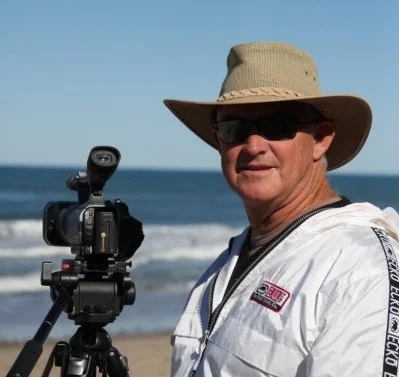
009: MARTIN DUNN - Surf Coach - Former Head Coach Team Australia ('09-'13)
Available On All Platforms:
Show Notes for The Surf Mastery Podcast: Unleashing Surfing Potential: Fundamentals, Technique, and Coaching Insights with Martin Dunn
What separates an average surfer from one who truly rips? Discover how mastering fundamentals like bottom turns, wave positioning, and speed creation can transform your surfing.
In this episode, legendary surf coach Martin Dunn shares his decades of experience coaching everyone from beginners to WSL pros. Whether you're struggling with consistency or want to elevate your performance, Martin reveals actionable tips to improve your technique, make better decisions in the water, and maximize every session.
Learn why the bottom turn is the cornerstone of powerful, fluid surfing and how to perfect it.
Discover techniques for generating speed and maintaining flow, even in less-than-ideal conditions.
Get insights into surf-specific training, decision-making strategies, and how to harness your potential both in and out of the water.
Play this episode now to gain practical, expert advice that will enhance your surfing experience, no matter your skill level!
Notable Quotes:
“The better you surf, the more fun you have.”
“A good bottom turn is the key to power, speed, and flow in surfing.”in Dunn
“Even the best maneuvers start with solid fundamentals. Without them, consistency is impossible.”
“Every surfer should learn speed creation—it opens up all conditions and breaks.”
“Perfect practice makes perfect. Focus is essential to truly improve.”
Martin has 30 years experience as a surf coach, from beginners to WSL athletes. In this podcast Martin discusses the fundamentals of performance surfing and provides loads of tips for you to take your surfing to the next level.
Show Notes:
Martin's website: http://www.martindunn.com.au/
Bottom Turn:
http://www.martindunn.com.au/video/forehand-bottom-turns-regular-footer-version/

Key Points
Martin Dunn started surf coaching in 1986 after completing an Associate Diploma in Sports Science.
Surfers should spend time observing the waves before paddling out to identify the best waves and positioning.
The bottom turn is the most important maneuver in surfing, and proper technique is crucial for generating speed and power.
Generating horizontal speed after popping up is a crucial skill that opens up more surfing opportunities.
Wave selection and depth of takeoff are common mistakes in tube riding.
Consistency in surfing comes from focusing on fundamentals like bottom turns and speed generation before progressing to advanced maneuvers.
Simulations and land drills help ingrain proper body positioning and movement patterns for surfing.
A surfer's desire to improve is the main factor in their ability to progress and become a better surfer.
Martin Dunn provides online coaching services by analyzing video footage and providing personalized training videos.
Martin Dunn has mentored and educated other surf coaches through programs and consultancy work.
Outline
Introduction of Martin Dunn
Martin Dunn is introduced as a surf coach with over 30 years of experience.
He has worked with surfers of all levels, from beginners to World Surf League (WSL) professionals.
His notable clients include Adrian Ace Buckin, Julian Wilson, and Sally Fitzgibbons.
Martin served as the head coach of Team Australia from 2009 to 2013.
He was instrumental in creating the level two criteria for Surfing Australia and the International Surfing Association.
Martin's website, martinDunn.com.au, offers a wealth of free videos and content for surfers looking to improve their skills.
Martin’s Background and Coaching Philosophy
Martin began surfing at the age of 12.
Dissatisfied with their job as an adult, they pursued an Associate Diploma in Sports Science (sports coaching) at Northern Rivers College (now Southern Cross University) in 1986.
This general coaching course sparked their interest in surf coaching.
Over time, they became increasingly involved and skilled in the field.
Martin's coaching philosophy centers on helping surfers improve, regardless of their skill level or goals.
They believe that the better one surfs, the more enjoyable the experience becomes.
Importance of Pre-Surf Assessment
Martin emphasizes that surfing begins before entering the water.
He stresses the importance of assessing conditions upon arrival at the beach.
This assessment involves deciding where to position oneself, identifying landmarks to use while in the water, and determining the types of waves to catch based on one's ability.
Martin notes that the best surfers on any given day are usually riding the best waves, which is no coincidence.
These surfers have learned to read the ocean, understand wave patterns, and make informed decisions about positioning and timing.
Common Mistakes by Intermediate Surfers
Martin identifies a significant mistake made by intermediate self-taught surfers: not spending enough time observing the conditions before entering the water.
He advises spending at least five minutes on the beach watching sets break to better understand the rhythm of the ocean and identify optimal surfing spots.
This observation helps surfers make more informed decisions about where to paddle out and which waves to catch, rather than simply following the crowd or seeking isolated areas.
Take-Off Positions and Their Implications
Martin discusses various take-off positions on a wave peak and their implications for surfing quality.
He explains that taking off on the shoulder typically results in a flat, low-speed first maneuver, while taking off behind the peak allows for a better quality turn due to the steeper wave face.
Martin emphasizes the importance of peak positioning and decision-making, noting that some surfers consistently make suboptimal choices due to habit or personal preference.
He advises surfers to be aware of their tendencies and adapt their approach based on wave conditions.
The Bottom Turn
Martin describes the bottom turn as the power maneuver of surfing.
He expresses concern about the current trend of surfers dismissing its importance in favor of progressive aerial maneuvers.
Martin explains the mechanics of both major and minor bottom turns, emphasizing the importance of body compression, hand positioning, and timing.
He notes that a well-executed bottom turn is crucial for setting up quality top turns and maintaining speed and flow throughout a ride.
Improving Top Turns Through Better Bottom Turns
Martin discusses how problems with top turns often stem from improper execution of the preceding bottom turn.
He explains that issues such as lack of speed or flow coming out of a top turn can frequently be traced back to an inadequate or rushed bottom turn.
Martin advises focusing on the bottom turn to improve overall performance and consistency in surfing.
Tube Riding Techniques
Martin addresses common mistakes in tube riding, including over-attacking waves and poor wave selection.
He emphasizes the importance of calculated decision-making when choosing waves and positioning for tube rides.
Martin provides specific advice for slowing down in tubes, such as dragging an arm in the wave face up to the elbow or shoulder until the lip is visible in one's peripheral vision.
Generating Speed While Surfing
Martin discusses techniques for generating speed while surfing, emphasizing the importance of being light on one's feet and using arms effectively.
He describes a specific technique involving jumping to one's feet, straightening the body, and throwing both arms forward to unweight the surfboard and accelerate.
Martin stresses that this skill is crucial for all surfers, as it provides more options and allows for better turns and performance in various wave conditions.
Simulations and Dry-Land Training
Martin recommends using simulations and dry-land training to improve surfing technique and body positioning.
He suggests using skateboards, particularly Streetboard skateboards, to simulate various surfing maneuvers.
Martin also advises surfers to study videos of skilled surfers and practice body simulations as part of their pre-surf warm-up routine.
He emphasizes the importance of focused, repetitive practice to ingrain proper body movements and improve overall surfing performance.
Coaching Philosophy and Approach
Martin's coaching philosophy focuses on helping surfers become self-sufficient in their performance.
He works with surfers over extended periods, typically two to three years, to significantly improve their skills.
Martin emphasizes the importance of surfer motivation and desire to improve, as the surfer must ultimately do the work to change their performance.
He tailors his approach to each individual, starting with easily achievable goals to build confidence and progressively addressing more complex aspects of their surfing.
Mentoring Other Coaches
Martin has extensive experience mentoring other surf coaches, including their work with Surfing Australia and as the national coach for Peru.
He provides education and guidance on coaching techniques, problem-solving in challenging conditions, and effective communication with surfers.
Martin offers various resources for coaches and surfers, including online courses, instructional products, and one-on-one coaching sessions.
Personal Preferences and Inspirations
Martin rides D'Alberg surfboards and prefers shorter boards that allow for rail turns and combinations of maneuvers.
He cites Kelly Slater and Mick Fanning as significant inspirations in men's surfing, praising Slater's comprehensive skill set and Fanning's transformation into a surfing great.
In women's surfing, he considers Stephanie Gilmore the benchmark but notes the emergence of new talent.
Among goofy-footers, Martin admires Sean Cansdell and Adrian Buchan for their unique styles and professionalism.
Transcription
And position is critical to a great bottom turn. The better you surf, the more fun you do have.
Welcome to the Surf Mastery Podcast. We interview the world's best surfers and the people behind them to provide you with education and inspiration to surf better.
Michael Frampton
Welcome to the Surf Mastery Podcast. Today, I'm chatting with Martin Dunn. And Martin is a surf coach with over 30 years of experience as a surf coach and even more as a surfer himself. Martin works with all levels of surfers, from beginner right through to WCT, or WSL I should say, surfers on the tour, including Adrian "Ace" Buchan, Julian Wilson, Sally Fitzgibbons — the list goes on.
Martin was the head coach of Team Australia between 2009 and 2013. Martin created the level two criteria for Surfing Australia and the International Surfing Association. I'm gonna stop it there because I just keep going on with your bio. For those of you that want to learn more about Martin, go to Martin's website, martindunn.com.au and go to the about page. You can read up all about that. It's actually a really awesome website with loads of free videos and free content for all surfers just to learn more about surfing in general, surfing techniques — loads of stuff.
You've obviously spent a lot of time making those videos, Martin. That's awesome. And tell me, how did you get into surf coaching?
Martin Dunn
I started surfing when I was 12. And then, you know, when I was into my adult life, I wasn't happy in the job I was working at. So I decided to go to university. And in those days, there was a course at Northern Rivers College, which is now Southern Cross University, which was an Associate Diploma in Sports Science, which is sports coaching.
So I went and did that, and that was just a general coaching course. And from that, I started dabbling in surf coaching at that point. And that was in 1986, so it was a long time ago. And then I just found the whole thing fascinating and just kept on doing it and progressively getting more involved and more skilled in what I do. So, in a nutshell, it's a long journey, but that's basically where I started.
Michael Frampton
And still going strong today, as I can see. Yeah.
Martin Dunn
I still really enjoy it. You know, my ethos is that whoever I work with, I wanna make them a better surfer, whether they're a 10-year-old kid wanting to learn how to do a re-entry or a WCT surfer wanting to surf better heats.
You know, like everyone's got different needs and aspirations, and I'm happy to work with it at any level. As I said, I'm keen to help people be better surfers, to be a better surfer. And to have that idea and that goal in your business, well then, obviously, it's much easier to do a good job because you're always trying to do a good job with that in mind.
Michael Frampton
I was looking at some of your videos on decision-making skills and just sort of realizing that really surfing starts when you start. So when you pull up to the beach and you start looking at the lineup and looking where to sit and where to paddle out, that's when surfing starts, isn't it? It's not when you stand up on a wave.
Martin Dunn
Yeah, for sure. You know, like if... when you rock up to the beach for the day, you know, and you have a look at the surf, you can make a lot of decisions about the surf before you even paddle out. And, you know, obviously, the decisions are — where are you going to position yourself?
You know, the landmarks you're going to use when you're in the water, the type of waves that you want to catch, you know, consummate with your ability as a surfer. And then, you know, obviously, when you get in the water, well then you've got all the decisions about your positioning using landmarks. And, you know, for some people that comes naturally, you know, with experience, but other people, they need instruction on learning the cues that they need to look for.
Because, you know, really when you're out there, there's a lot of information going around. There's a lot of surfers in the water. There are a lot of ways that you can surf a beach on a particular day. But if you want to surf well, then obviously there are different things you should do that help you surf well.
And when you think about it, the best surfers on a given day are usually riding the best waves. And that's no coincidence. It's the fact that those good surfers have already learned all those cues. They've actually spent some time on the beach looking at the ocean, knowing where the best waves are, which wave of the set is the best wave. They've got the understanding and the timing to actually catch those waves.
So it comes through experience by self-evaluation of what you do, or it could come through someone like myself who trains people in that area.
Michael Frampton
What's the biggest mistake you see for the intermediate self-taught surfer in this regard?
Martin Dunn
Well, they don't spend enough time on the beach before paddling out. In a metropolitan area or in a crowded situation, what a lot of people do is they get to the beach and they check the surf out. And they say, yeah, there's waves today. And then they wax up and they paddle out.
So they haven't spent enough time to actually see where the waves are and the rhythm of the ocean. And often, I've thought that people make a decision. They make a decision, which is, okay, I'm gonna go and surf on that bank because that's where the most people are. Therefore, that must be where the waves are. Or they make a decision, and they go to somewhere where there's no one sitting, where they might be able to get a wave to themselves.
So it's about where the crowd is or where the crowd isn't. And then that's just a basic either/or. Whereas if you just spent five minutes on the beach, just waiting for a couple of sets to break, the intermediate surfer would actually have much better awareness about where they should paddle and what type of wave they should be trying to catch when they paddle out there.
Because usually, on any given day, if there's a set of waves coming through, there'll be two or three waves in a set. Usually, there's a rhythm or a pattern as far as it might be the first, second, or third wave of the set that is usually a better one.
So if you understand that pattern, you can actually paddle over that first wave knowing that the second one's better anyway. And then you're more likely to catch a better wave because of that... if you like, that informal study you've done before you paddle out off the beach.
Michael Frampton
Yeah, I quite often would just watch. I'm doing a little warm-up on the beach and just watching. So let's talk about the way you approach the wave as well. Like where you take off and the first thing you do when you pop up as well. Could you go into a bit more detail about that?
Martin Dunn
Yeah, sure. You know, like what happens is that when a wave comes in, you can take off in a number of different locations on a peak. You know, you can take off on the shoulder, you can take off on the peak, you can take off behind the peak, you can take off too deep, you can take off on closeouts, and you can take off too late. You know, when you take off and the lip's breaking over your head as you're taking off.
And each of those takeoff positions or decisions that a surfer makes has an implication on the quality of the surfing that gets done. So, for instance, if you take off on the shoulder of the wave, your first maneuver on that wave will be generally flat and of low speed, you know, because you're more on the face when you first take off.
Whereas if you take off behind the peak, you're taking off behind the peak, and you are basically coming from behind the section. And when you come and do your bottom turn around the section, your face would usually hit a lip or a steeper pocket section, so you do a better quality turn.
So if you're a surfer and you are taking off on the shoulder, that limits your ability to perform a quality turn because of that. So you can train people to actually become more aware about their peak positioning, their decision-making on the peak. And once they're aware of it, and once they're aware of their individual idiosyncrasy in that area — if they're taking off too wide — or some people, on the other hand, are real chargers, and they often take off way too deep and they'll make one in eight waves sort of thing because they really wanna charge and challenge themselves just on the takeoff.
Those guys, well, that's okay, but if they wanna be successful in surfing, like a competitive surfer, that's a major mistake because they're not allowing themselves to show the judges what they can do if they're a competitive surfer. So just on that, the decision-making on the peak is a really big area for some people.
When someone takes off, they can take off and go straight to the bottom and do a bottom turn, or they can take off and generate speed and go horizontally across the wave. And depending on the nature of a surfer, some people have a rhythm that they always take off horizontally, or they always drop to the bottom and do a bottom turn. And they haven't got the ability to vary that decision on takeoff because they get into a rhythm. It's like it's their rhythm that they like to do.
So a lot of times, you're working with people, you're looking for those rhythms. And if their rhythm is out of sync for what the wave's doing, well then, just at the start of the wave, well then, you can discuss that with a surfer and give them other options. Make them aware of what they're currently doing, and with that awareness comes the first step in any correction that may need to be done.
Michael Frampton
Yeah, so you should be able to do both. So you should be able to drop in straight into a bottom turn, but you should be able to pop up quick and get some horizontal speed, depending on the situation.
Martin Dunn
Yeah, that's correct. Well, you should be able to do both, but just in that one decision-making area, lots of people make the wrong decision. And then sometimes that becomes a consistent error in their performance.
Again, it's not that you wanna find fault with them, but what you wanna do is you wanna make them aware of the implications of their decision. And sometimes what they do is absolutely correct, and on other days, it's absolutely incorrect. So it's that versatility, depending on what they've been faced with, which is the key to good performances.
Michael Frampton
Yeah, can we talk more about the bottom turn? The bottom turn is something I've been focusing on a lot more lately, and I find when you focus and you get a really good bottom turn, it makes the top turn so much better. And yet I've spent a whole surf only focusing on the bottom turn.
Martin Dunn
Well, of course, the bottom turn is the power maneuver of surfing, you know? And unfortunately, what's happening with a lot of people these days is that they're dismissing the bottom turn as a maneuver — just another maneuver rather than the maneuver of surfing. And that's come about by the overemphasis in the media of racing down the line and throwing airs.
And so, we're getting a whole generation now of surfers who can't do a good bottom turn because they've never had to, because they're more focused on the progressive surfing further down the line, you know? It's really important that, you know, in my view, the most important maneuver you've got in surfing is the bottom turn. If you can do the bottom turn effectively, both forehand and backhand, you're never gonna have problems off the top of the wave because that bottom turn is always gonna work for you.
Yeah, part of that is that you've got to have the right technique to do the bottom turn. Well, actually, there are two bottom turns. There's the major bottom turn and the minor bottom turn. And the major bottom turn is one where you come down and you bend your body at the knees and waist. So you compress like you're landing a difficult landing, you know, jumping off a wall and landing — you bend your body.
But what you do in a major bottom turn, in a forehand bottom turn, is that you bend and you reach with your trailing hand forward. And what that reaching of the hand does is that it actually puts more weight on your front foot. So you get a drive through the bottom turn, and you hold that position.
So this is a crouched, reaching position with your hand, with your body. And you hold that for about half a second. Half a second is not a long time, but it's important that the holding is done because what happens is then you're using the wave's power effectively at the key moment in the turn.
And then, once you've held it for that period of time, well, then you straighten out of the body, straighten out of the compression. And that's the thing that gives you the power off the top. If you don't bend and hold that position, what happens is... a lot of surfers, they bend but they don't hold, and they apply their power too early in the turn.
And when you apply your power too early in the turn, invariably, what happens is you run out of speed just as you're coming off the top, and you catch rails and nose dive when you're coming back down. And often, mistakes off the top — people look at it and say, okay, there's something wrong with your entry or there's something wrong with your snap off the top. But fundamentally and generally, what's happening off the top... the mistake is caused by the rushed bottom turn or off the bottom.
And that's just reality. Most people have what I call a minor bottom turn, no problems at all, where they come down and they just bend their body a little bit, and especially just getting the board on the rail to go into the next turn. If you're doing a minor top turn, that's fine, but it's not good for a major top turn that you're trying to do, like a vertical hit off the top or a big snap off the top with a full rail turn. Well then, you need a major bottom turn to do it.
On the backhand bottom turn, well, it's different. Backhand bottom turn, it's this compression again, there is a holding phase, but there's a lifting of the leading arm as you come out of the turn. And the lifting of the leading arm is really important — something that a lot of people haven't got in their surfing right now.
And that's a big problem, probably right through the whole of... if you look at the surfing population, there's 100% of people who surf, probably 60 or 70% of surfers don't use their leading arm well on their backhand bottom turn. Okay.
Michael Frampton
So once you've held that bottom turn position on your backhand, you then wanna kinda get some lift with your front hand before you... That's.
Martin Dunn
Correct, that's correct. Yeah, you know, you wanna... it's all about unweighting the surfboard as you come up the face. It's about... the arm gives you direction where you wanna go.
So where you're looking as you come out of the bottom turn, a backhand bottom turn, that's where your arm should point as you straighten out the turn. So it's a combination of the two things, and it's all about unweighting the surfboard so that you, if you like, jump out of the bottom turn and you have maximum hitting power off the top. Okay.
Michael Frampton
And you mentioned before that surfers are having problems with their top turn. And the way you were describing it, it's that top turn where surfers go up, and they might do a nice top turn, but there's no speed and there's no flow coming out of it. Yeah.
So you're saying that problem can actually be from the bottom turn.
Martin Dunn
Yeah, well, probably greater than 50% of the time, it is from the bottom turn. Okay. They either don't perform a deep enough bottom turn or a technically correct major bottom turn, or they don't perform that correctly, or they have some rotational problems off the top. But normally, the first place I look when I see someone making a problem off the top is usually the preceding bottom turn. It's a bit like cause and effect. It's all interrelated, and speed, power, and flow in surfing are started from the bottom turn.
So if you have a good bottom turn, you then are gonna be a good surfer, in my view. You've got the ability to be a good surfer. What a lot of coaching is going on right now is that there's a lot of competition coaching going on — strategic, tactical stuff. There's a lot of people working in the aerial game, which is fine because that's what it is. But the problem is you're gonna have surfers who are one-dimensional and not well-rounded if you don't fix the foundation areas of their performance, which the bottom turn is the major one.
Michael Frampton
Now, you mentioned there are two different bottom turns, the major and the minor. By the way, for folks listening, there's a couple of great videos on Martin's website that really break them down. But is a major bottom turn something you can do on a small wave?
Martin Dunn
Sure, yep. As long as you've got enough speed, as long as you have enough speed and the section is sucky. You can't do a major bottom turn with success in fat waves. If the wave's small and fat, well then, you're basically... you're gonna catch a rail by doing it.
So you need a certain amount of speed, and you need a certain amount of steepness in the bottom turn. But I've seen Kelly Slater, I've seen Mick Fanning doing perfect bottom turns in less than two-foot waves. And really, it's all about... if you look at the best surfers in the world, you look at Julian Wilson, if you have a look at his surfing at Snapper and Bells and just his last week in Western Australia, you have a look at his bottom turn, that is about as good a bottom turn as you'll see. I know.
Michael Frampton
Well, I was watching the WA, especially that heat with Julian and Parco, and just watching some of the slow-mos of their bottom turns, and like their elbows are almost in the water.
Martin Dunn
Well, see, in the forehand one, you can't get over any more than that because your knees stop you from leaning over more than what they were doing. On your backhand, you can lean a bit more on your backhand because it's your backside that's stopping you from leaning any further. But I think you can lean more on your backhand than you can on your forehand. The amount of lean you get on the turn is critical to how good the bottom turn is as well.
Michael Frampton
And just watching those guys do their bottom turns, they go into their bottom turn, and they actually drive so much speed out of the bottom turn.
Martin Dunn
Again, you can see the important thing with that is their hand position. You'll see that their hand position is forward. On their forehand bottom turn, it's forward.
So if you think about it, if you're standing and you're standing with your feet shoulder-width apart, if you reach diagonally across your body towards your front foot with your back arm, you'll see what happens is that your body will actually... the weight will actually distribute towards the front foot, which means there's a transfer of weight from your back foot to your front foot.
And what they're doing is... with their hand forward, what they're doing is that their weight is being transferred from the back foot to the front foot as they're doing the turn, and it has a driving effect through the turn. If you put your hand... so this hand position's critical to a great bottom turn. If you put your hand in line with your back foot when you're doing the bottom turn, you don't get that transfer to your front foot.
Therefore, you'd still do a good bottom turn, but you don't get the driving ones like the great surfers do. Some people put their hand behind their front foot. Well, then that actually works against... you get more of a stalling effect in the bottom turn.
And so this hand position, it's this compression with your body. So you compress, so you can put your muscles on stretch so they can fully extend and get maximum power from the body. But this hand position in this forward position is critical to how good the bottom turn is.
And you can learn that as a... like, you can learn that as a little 10-year-old grommy, boy or girl. And as I was working with a 10-year-old boy yesterday, he puts his hand down, but he puts it down, touches, and immediately brings his hand up behind his back when he does his bottom turn. And so he rushes out of the turn, so he doesn't get into this forward position.
I've given him training now, where I'm asking him to put his hand in a certain position, which is this forward position. And out of that, he will develop, over the next couple of years, a great bottom turn, which then will develop a great top turn.
So what I'm saying is, a real little change in the performance of a surfer, in some instances, can have a profound effect on how good that surfer becomes. And often, it's things like the hand position's wrong or the arm position's wrong. It's often things like, okay, well, they're not lifting their arm up high enough to, you know...
So fundamentally, some people might have a bottom turn where it's sort of 70% okay. But if they want the best bottom turn they can do, they need to do it as perfectly as possible in a major turn situation. It might be that they don't turn their head enough in some situations.
So simply rotating the head another 40 degrees as they're doing a turn can turn an ordinary snap off the top into a great snap off the top. So, you know, but what the surfer has to do first, they have to become aware of their deficiencies first and foremost.
And then with their deficiencies comes an awareness, and then you show them how it can be done. And for most people, especially people who've got an ability to pick things up quickly, they can change. You know, they can change within half an hour into a great turn.
Like you mentioned recently, you mentioned the start thing that I had worked with Sally Fitzgibbons as a younger surfer. With her bottom turn, I said to her — she was just about to go to the world titles about a month later — I said to her, "Listen, Sally, your bottom turn is not good enough."
You know, I was picturing her four years further down the track. I said, "Your bottom turn is not good enough. Your hand's in the wrong position." And I said, "But I don't wanna talk about it too much now. I wanna talk about it when you come back after the world titles," because I didn't wanna upset her preparation for the world titles. This is the amateur junior stuff.
Anyway, so she said, "Well, how is it?" And I showed her, and she did some simulations on the beach. She paddled out. First wave, she did it perfectly, as good as you wanna see — perfectly the first time on the first wave. And that's the type of thing that someone like a Sally Fitzgibbons can do.
But see, she's an exceptional learner. She can pick things up very quickly. For a lot of people, changing technique and changing the way they do things, even small changes, can take time and persistence and patience from both the surfer and the coach.
But if they're aware enough about it and they've got the right drills, the right training simulations, they can get it, and they can become a much better surfer, as I said, by just changing small things in their performance.
Michael Frampton
Yeah, I totally agree. You know, I've had surf coaching done, and those small little changes can make huge differences. So what about where the surfer looks? Sometimes I don't even look where I'm going to do my bottom turn. Should I be having a quick look at the bottom of the wave, or should I keep my eye on where the wave's going when I do my bottom turn?
Martin Dunn
Well, I think when you basically take off, as you're paddling into the wave, you're actually looking. You're making decisions about — do you drop to the bottom, or do you cut across horizontally? At that time, you make the decision. And if you go down, fundamentally, it becomes a feel thing when you're doing your bottom turn. It's not something that, you know, necessarily you need to look.
Unless you're doing a turn like you're fading back to deepen the turn and set up a tighter turn off the top. But generally, as you're doing your bottom turn, you're looking where you want to go. And that's the thing about looking. What looking does is it tells your body and your board where you want it to go. And there's a lot of mistakes people make because what they do is they look down the line when they should be turning their head.
Like if they're doing a snap, for instance, or a carve, they do the carve by looking down the line. And what that does is that it crops the turn, and they get like a flicking of the turn rather than a rail turn. With the bottom turn, you don't necessarily need to look. You do need to look where you're going, but generally, the bottom turn is done through a feel of your experience.
So you just know when and how the bottom turn should be done. But definitely, when you're doing your top turn, when you're doing your cutbacks, when you're doing any maneuver where there's a turning, an arc-type of turn, you really do need to look, turn your head, and look where you wanna go to tell your board where you want it to go.
The only one I'd say you don't do that with would be like a layback, which is basically all you're doing there is stopping the board by laying back, and you're just fundamentally stopping the board and then recentering as you drop back down the wave face. Otherwise, you should turn your head because one, you're telling your board where you want it to go. And two, by turning your head, it allows every other part of your body to turn.
So you turn your head, and then your shoulders and upper body are able to rotate, and your hips are able to rotate. So you get a flow through your body to your feet and therefore your board. If your head doesn't turn, it locks your body, and you get a cropping to the turn. So technically, wherever you can, you always should be trying to look where you want the board to go. Okay.
Michael Frampton
So when you're paddling into the wave, a quick look down the bottom is enough, and then you want the bottom turn through feel? Yeah, sure. Okay, so you wouldn't purposely try and look at the bottom of the wave as you're going down to your turn?
Martin Dunn
No, I don't think so. I think you're basically... that's done with feel. What you're doing as you're dropping down the wave face is assessing what maneuver to perform. If you're a competent surfer, you might have, depending on the section, you might have three or four different options about what maneuver to perform, depending on the shape of the wave, the steepness of the wave, the speed of the wave.
All of that information's coming into your brain, and you're assessing what goes down. Well, you're assessing that through your vision. And so you've got to look and make decisions about what maneuver to perform, how hard a bottom turn you should be making. Do you do a short, sharp one where you're trying to go vertical, or do you do a long, drawn-out one to make the section, to make a longer section?
So that's what you're doing as you're dropping down the wave face. And then, as you're doing your bottom turn, you're looking at the lip, or you're looking down the line, depending on what you've chosen to perform.
Michael Frampton
Okay, awesome. Well, I'll put a link in the show notes to those videos, the free videos you've got online that really break down the bottom turn. And most surfers are visual learners.
So if you're inspired to work on your bottom turns after hearing that, then get a visual on it, and then if you can, get someone to film you and send the footage in to Martin. And you do online surf coaching, don't you, Martin?
Martin Dunn
That's right. You know, I get lots of people sending me video tapes of their surfing. I evaluate their performances, and I make up a training video — what I call a focus video — individualized to them. Then I send it back to them, send the link back through YouTube or some other web video-sharing site, and then that acts as their surrogate coach back at home at their own beach. And that's very successful, actually.
So lots of people from around the world tap into that. And you know, as I said, the first thing you need to know is you need to be aware of where your deficiencies are. And then, once you are, well, then you can move forward if that's what you wanna do. If you're out there just having fun and just mucking around, well then, that sort of service isn't really necessary. But if you wanna be a better surfer, well then, the video service I offer is as good as you'll find, I think.
Yeah, without a doubt.
Michael Frampton
Well, the better you are, the more fun it is.
Martin Dunn
Yeah, I've seen some slogans like that. "The best surfer in the world is the guy having the most fun." I've always thought the better you surf, the more fun you do, that's correct.
Michael Frampton
Yeah, definitely. You know, if you're not progressing, then it gets boring.
Martin Dunn
Actually, well, today I just worked with a 60-year-old doctor. He's of the opinion that you've always gotta be learning new skills no matter what age, and especially the older you get. And he's decided to work on his surfing to improve his surfing.
So that's really interesting. A lot of what I've done over the years too is that I work with a lot of sons or daughters of established surfers. And obviously, these guys are actually saying to their kids the same as I say to them, but the kids won't listen to their fathers. So I get to work with those sorts of surfers.
But it's interesting that a lot of the stuff I talk about to the kids and show them on video, the fathers go out surfing, and they say to me, you know, "Yeah, you know, I tried to turn my head, or I tried to lift my arms, and that really works," you know.
And so it's been really a pleasure and a surprising benefit that you work with a person, but other people benefit at the same time. And again, that's the reason why I produce those free videos. I did a video, an internet site called surfcoach.com before, which had like over 100 videos on it.
And the whole point of that is to coach people and to say to people that, hey, you know, there is a good way of surfing. There is a proper way of surfing. And we're not necessarily talking about creating clones. What we're talking about here is creating good mechanics.
You know, we're talking about creating good technique. And the reality is that everyone's a different shape, everyone's got different motor neurons and speed going from the body to the brain. And so what happens is when you teach someone to do a technique, that person still has got their style, their individual style, who they are as a surfer.
And so you actually enhance who they are as a surfer because of that improvement in their technique, which improves their style as well and improves their success on a daily basis. And that just makes fun, more fun, and gives them more confidence in their own ability in any and all types of surf.
Michael Frampton
Yeah, definitely. The fundamentals, you can never spend too much time on the fundamentals.
Martin Dunn
Well, that's right too. And you know, when the fundamentals are done well, then you can move into the decision-making area in a more effective way, like how you put your maneuvers together. It's how you perform your maneuvers so there's no hesitation.
You know, it's how you do your maneuvers so that you're throwing more fins and stuff. And then you can work in the aerial game and the progressive stuff. So there's all these different levels you can work with someone as you work with them and you work with them over a period of time. It's not just, it's not just, "Let's fix up the bottom turn and let's fix up your finish."
Okay, well, if you like doing that and you enjoy working on your surfing, there's so many more layers that you can add to your performance if you're open to suggestion and you're really keen to be a better surfer.
Michael Frampton
Yeah. What's the biggest mistake you see with tube riding?
Martin Dunn
Well, tube riding, well, there's a couple of things there. There's a lot of people who over-attack. So there's a lot of people who just go for it, whether they can make it or they can't make it.
I remember a quote from Kelly Slater who said, "I'll only take off on a wave if I'm 90% sure I can make the wave." Right, so he's given a little bit of doubt to himself that he's not gonna make the wave, but he still believes that he can make the wave when he takes off, all right?
Whereas there's a lot of people who just take off because they're just gonna take off. You know, they're gonna go for it. So they haven't actually been calculating about where they take off, whether this wave is a good enough wave.
You know, like some people take off because it's a bigger wave. You know, a big wave isn't necessarily a good wave. So their wave selection can be a problem for a lot of people and how much they charge. You know, like they attack the wave by their depth of takeoff.
As far as what they do in the tube, you know, stance is obviously important. Some people just don't have a good, solid tube stance. Some people, obviously, backhand tube riding — a lot of people find that a lot more difficult because they can't rotate and get into a, you know, a pig dog stance or some sort of stance, you know.
So they find it a lot more difficult in that regard. You can simulate that on land before you paddle out. If it's a hollow day, you can play around on the beach and simulate the tube stance both forehand and backhand. And then, when you get out there, obviously, then you try and enact what you tried to do from the beach.
But I suppose the most common thing I would think would be the decision about the wave they take and the depth they take it from.
Michael Frampton
Okay. So I've got a problem with tube riding at the moment, whereas I don't seem to be able to slow down enough.
Martin Dunn
Okay. Well, the other thing you can do is you can put your arm in the wave face. Do you do that?
Michael Frampton
Yeah. Sometimes, like, I've got my arm right in there, and I'm trying so hard to slow down, but I just can't get... I don't consider a barrel unless the nose of the board is in the barrel. I wanna get deeper in the barrel. Just struggling. Sometimes it works, and sometimes it doesn't. I'm struggling with the consistency.
Martin Dunn
Well, with that, there's a number of ways of stalling, but the easiest way to stall is to take off and immediately drag the arm in the wave face. But you've gotta actually drag the arm at least up to the elbow. You've gotta put your arm in at least up to the elbow and sometimes right up to the shoulder.
Michael Frampton
Really?
Martin Dunn
Yeah, you stick your arm as far in as you can, and you stick it in there until, as you're looking outside the tube, you can see the lip coming over your head out of the corner of your eye.
Michael Frampton
Yep.
Martin Dunn
Okay, once it's come out — once you can see the lip — you're not looking at the lip, you're looking straight ahead. But when you can see the curtain out of the corner of your eye, then you pull your arm out, and you'll find that that's perfect timing to get out of the tube. Okay.
So, yeah, it just depends on how much... if you're trying to stall just with your hand, you're not gonna stall. But you can stick your arm in quite a long way before you're, you know, you wanna come to a total stop sometimes.
Yeah, stick it right in and then bring it back out once you see the curtain out of the corner of your eye as you're looking forward.
Michael Frampton
Okay, yeah, I've gotta stick that arm right in there. All right, I'll try that.
Martin Dunn
Yep. Last week I was working with the best 14-year-old kid from France, well, 13-year-old kid from France.
Michael Frampton
Okay.
Martin Dunn
Yep. And so with him, there's a number of things we’re working on. There was his... I've got a thing, like I was talking about decision-making and stuff. Once you get to a certain level, you've gotta try and maximize each section you enter.
So this kid's a good surfer, and he's destined for the big time, I think. And so what he was doing, he'd do a maneuver, a good quality maneuver, and then the next maneuver, he'd do a lesser maneuver. And it's like he's having a rest or he's having a breather. Or it could be that he's actually satisfied, so satisfied with the first maneuver that the next maneuver isn't as important to him as that first maneuver was.
So with him, one of the things is we talk about that. Every maneuver, for this type of surfer who wants to go places, every maneuver is important. And what you're trying to do, instead of thinking of a wave as being worth 10 points, you know, judged out of 10 points, you think of each section as being judged out of 10 points. And so you're always trying to perform the best quality maneuver you can in each section that you enter.
That's a big step forward for a lot of good surfers if they get into that style of surfing because what it does, it takes a good surfer, once they've worked on it, to an excellent surfer.
I was working with a surfer yesterday who's one of the best... not yesterday, the day before... who's one of the best Aboriginal surfers in Australia. And he's an older guy. What we were talking about with him was the type of wave he was catching. And he's wanting to do the WQS this year. He's got to start in some of the QSs this year. And so we were talking about the type of waves that he catches.
So, you know, at his level, the type of wave he catches... you don't start out with a cutback because that's just not a dynamic enough maneuver, even though his next maneuver after the cutback was a great turn, and the one after that was a great turn. But the first maneuver wasn't great because it was too flat.
So you can work with people to work on their understanding of how things should be put together so that people actually... the viewer goes, "Wow, that was well-ridden." And so there's a lot of training that you can do with people. Once they get to a certain level, you can start talking to them about how they put the performance together so that they always are showing a performance that's of the highest quality.
You know, once you get up to the CT levels and the high levels, people just instinctively do that. But as they're developing, those are the sort of things you can work on.
And with the 10-year-old boy yesterday, it was all about generating speed. Like what we do is... with a 10-year-old boy or young surfer, often you're looking at the bookends of the ride. So the bookends of the ride are what they do at the start of the wave and what they do at the end of the wave. And they're the two things that hold the whole performance up.
So this young boy, he doesn't have the skill to generate horizontal speed. So that's the first thing. He's got a standing action, which is what I call a two-stage standing action. So he jumps to his feet, back foot, front foot, instead of both feet hitting the board together.
Now, that's only a minor thing, but the problem is if you have a slow standing action, you can't do the action of generating horizontal speed well. So you've got to fix the standing action first, then you fix the horizontal speed action. And then obviously, that's the start of the ride. And if he can do that, well, that's great.
At the end of the wave, he was hitting the end section too low. So the end section's too low, and he was making lots of errors. He was wiping out, and he was nose-diving when he was coming out of the final maneuver.
So again, it depends on who you're working with, depends on what you talk about. And so every individual surfer, they all know that they've got something wrong in their performance. There's something they would love to fix up, but you can't... like the videos I have on my websites, they are generic in nature, and they say, "Well, this is how you should do it," but you really do need to know exactly what you're doing as an individual surfer to say, "Okay, what's the next step in your development? What's the thing that you really need to work on that can really improve your surfing?"
That's where either coming to a coach, going to a coach who knows what they're talking about, or sending video to someone like me... I've been doing this for 30 years, so I've seen just about everything there is in surfing.
And that's the key, and that's the message I would like to say to people. You need to actually have someone look at your surfing to find out what your idiosyncrasies are that could be improved.
Michael Frampton
Yeah.
Martin Dunn
And a lot of people, they go to a coach... like I had a guy from overseas the other day, and his father said, "Well, we want you to teach him how to do an aerial." This kid couldn't do a bottom turn, he couldn't generate speed, so he was surfing slow. And there's no way you can go to an aerial with that guy because he just didn't have the speed necessary to do the aerial.
So he's probably got 12 to 18 months of work on these other skills before he goes to the aerial type of performance. Other people say, "No, yeah, okay, let's do the aerial." But the problem is, once they get away and they do it all by themselves, they'll never ever be able to do it because they haven't got that foundation under control.
It's like having the foundations in a house. You have a foundation in the house because that foundation holds the house up. If you don't have the foundation strong in a surfer, when they go for their big maneuvers later in their surfing, they won't have the consistency they want because the foundation just never allows them to have that consistency. It's as simple as that.
And unfortunately, in surfing right now, everyone's talking about the progressive stuff that Toledo and John and all those sort of guys do. And you can think about those guys as being freaks, and they are good surfers in other areas of performance, but they're not the average surfer.
So the average surfer, instead of going, "Listen, I wanna do airs," they should be going, "Listen, I wanna do the best bottom turn I can, I wanna do the best cutback I can, I wanna do the best finish I can. And once I've got all them under control, yeah, okay, what's next?"
Yeah, okay, I wanna learn how to do an aerial. Then they've got the possibility of learning how to do aerials and learning how to do them very well and consistently.
Michael Frampton
Yeah, the fundamentals. The thing is, if you can make the right decision, paddle into the wave at the right time, pop up fast, and generate speed straight away, it opens so many more surf breaks up.
You know, you can go traveling, and it's amazing.
Martin Dunn
It does, and you know, what you've said there, what that does fundamentally too, it increases the self-belief of the surfer. And when you've got belief in your ability, you can challenge yourself more, you can go for things and not get as frustrated. You know, you can work through things in a methodical way and actually make things happen. And you know, everything's interrelated, and when you actually get success in surfing, you get more self-belief. So psychologically, you become a stronger surfer. Yeah.
Michael Frampton
What's some tips for becoming faster?
Martin Dunn
You've gotta be light on your feet, you know. And there’s some heavy people around who may be thinking, "Well, I can't do that because I'm too heavy." But it's all about using your arms effectively by lifting your arms as you... I've got a video on my website, Speed Creation.
Yeah. Or on surfcoach.com, there's a video on Speed Creation. It's all about jumping to your feet, straightening your body, and throwing both arms forward. And if you can do that, what happens is it unweights the surfboard and the surfboard jumps forward and accelerates faster than if you don't do that action.
So that's a skill that every surfer should learn. Every surfer in the world should learn that skill because it'll give them so many options when they're surfing. You know, they can take off, and they can generate their speed. And when you've got speed, you can do much better turns.
Michael Frampton
Yeah, okay.
Martin Dunn
And you know, the other thing about speed is that you can have fun in small, grovelly waves.
Michael Frampton
Which is pretty much what most of us surf all the time anyway, so...
Martin Dunn
Pretty much. And you know what? I reckon this is why the guys from Florida and places in the Sunshine Coast, who get a lot of small waves, they can generate their speed, and that's why a lot of them become good surfers on the international stage because they've learned how to generate speed, and they can do it anywhere in any type of condition.
Michael Frampton
Yeah, it's amazing watching sometimes those guys surfing tiny little waves and just doing full roundhouse cutbacks on tiny little waves and going so fast.
Martin Dunn
Yep. That's a crucial skill as well. You know, bottom turn and speed creation — very important.
Michael Frampton
How much time goes into improving technique and body position outside of the water?
Martin Dunn
Well, I recommend doing simulations for sure. I use skateboards. I use the Streetboard skateboards, which are readily available in Australia. And I use them because they feel very similar to what you do in the ocean.
So with those Streetboards, you can simulate speed creation, bottom turns, forehand and backhand, cutbacks, forehand and backhand, snaps. You can simulate coming off the top, getting good rotation off the top. You can use them when it's flat, or you can use them just before you go surfing, and you get a good transfer from one to the other.
If you haven't got that sort of thing, well then, you know, even just looking at videos of surfers and saying, "I like that maneuver," you can actually just go down and, as part of your pre-surf warmup on the beach, just do some of the simulations, the body simulations, you know, before you paddle out. And that'll help you maintain your focus as well.
So it's all about getting those body movements into your body, into your brain. Those simulations have a really profound effect if you use them properly.
Michael Frampton
Yeah, so I guess if you've performed a particular movement pattern or held a particular body position on dry land lots and lots of times, then when it comes to hitting that position or performing the motor control sequence on a wave, it's a lot easier if you've done it on land.
Martin Dunn
Yeah, sure. It just has a great transfer, and what I do is I draw little diagrams in pencil on the nose of the board, you know, of a key body position that the surfer needs to get into, and that really helps. And you know, it's all about maintaining focus when they're in the water.
So that's an important thing too because, you know, like a lot of kids, they might have... a lot of surfers might have a motivation to do a particular skill, and when they get in the water, well then, you know, there's so much going on. There’s so much, you know, waves coming in, their mates are talking to them, that they forget. They lose focus.
The adage of training is, you know, it used to be, "Practice makes perfect," but really it's "Perfect practice makes perfect."
Michael Frampton
Yeah, that's right.
Martin Dunn
And so the more you focus on the skill that you're trying to achieve and stay focused on that, well, the more success you will have. As I said, some people, like say Sally Fitzgibbon, they just have an innate ability to maintain focus on task, while others need lots of different ways — simulations, you know, writing on boards, coming up with key words to say as they do the action. You know, it's all to do with trying to get them to move their body in a certain way at a key moment when they're surfing.
So whatever works, you know, to get that change that I know in my coaching will help them be a better surfer. Yeah.
Michael Frampton
Have you ever had a client who was, what we might call a kook, let's say an experienced but intermediate surfer who surfs well sometimes but isn't consistent? Have you ever seen that type of surfer turn into someone who just rips all the time?
Martin Dunn
Yeah, I've seen people who have had major problems in their surfing and doing things incorrectly and yes, turning them into better performers. And again, it's their desire to be better which is the key thing here because they're the ones, after all, who have to do the work. I have worked with some surfers who have come to me, and they're like what I call my "God surfers," where you just really don't know where to start, and they're so far out of sequence and their technique is so wrong.
So I always just start with slowing things down with that type of surfer, slowing things down and just working on one aspect of their performance. It might be a bottom turn, it might be speed creation, it might be just finishing — just something simple. And the way I operate in that situation is I give them what I consider the easiest thing to change so that they can get success. Because if they've had little success, a little bit of success is better than no success.
So you give them something that's relatively easy to change, and with time, they generally can do it. So those are my God surfers. There's not many of them, but I've had a few in 30 years, and they've been real challenges. But the average Joe Blow who paddles out and can do turns — you can turn them. If they're motivated and they're keen to improve, you can significantly improve their performance, but it takes time. I'm looking at, if someone comes and sees me and I see them three or four times a year, I'm looking at probably two or three years of work with them to get to a point where I say, "You're at a good point. You don't really need to come back and see me again."
But my philosophy there is that I try and help people, if you like, I try and help people have a "use by" date with me. So I work with them thoroughly as much as I can, and after a while, they'll go somewhere else or they'll be more than happy with their performance because I try and help them be self-sufficient in their performance. Especially the competitive surfer, because it's important. They've got to make decisions in the water without me being there.
So I work really hard with my competitive surfers to learn how to think for themselves, right from when they're preparing right through their post-heat evaluation. And my job then is a second opinion rather than... whereas you see a lot of other coaches, they make themselves dependent. They try and make the surfer dependent on them so that they're always part of it. Well, that's not my philosophy. I work the other way.
Michael Frampton
Yeah, a good coach asks the right questions.
Martin Dunn
Well, yeah, I hope I do, and I hope I do make the right questions. But the thing is, the right question to a surfer at that level is, "What do you think?" And then they explain what they think, and then you agree, or you provide your other opinion if you've got one as well. So that's the deal.
Michael Frampton
Yeah, so the desire to improve is the main factor?
Martin Dunn
Without a doubt, yeah. The surfer has to wanna improve, and I don't often see people who don't wanna improve. But I do, I have had kids come through, parents have sent them through, and it's been more like childminding, but that's not what I do.
Yeah, so the desire, because they're the ones that are gonna do the work, you know. It's not easy changing performance. It's a difficult task. You've gotta maintain focus, you've gotta go out, and you've gotta overcome frustrations. You're gonna make lots of mistakes, but it's like any journey. You know, it's something that takes time and effort, and if you want a quick fix, well, then you're not gonna get it by just coming once or twice to a training program. It just doesn't happen like that.
Michael Frampton
Yeah, well, you're in the wrong sport if you want a quick fix.
Martin Dunn
Well, I don't think there is a quick fix in any sport, you know? Yeah.
Michael Frampton
Yeah, well, I mean, the thing is with surfing, I mean, with tennis, you could go down to the courts with a ball machine and practice your forehand, you know, for hours on end.
Martin Dunn
Yep, you could.
Michael Frampton
But, you know, sadly, the wave pool technology isn't yet accessible for most surfers. So we're kind of limited to that moment when we paddle into a wave. It's the only time we get to practice really, isn't it? So it's unique in that respect.
Martin Dunn
Yeah, it is. But, you know, obviously, those sort of things are coming, and they will be coming, and it'll be interesting when that technology becomes more mainstream. You know, you will be able to use that tool for training in a very effective way. You know, the same wave coming through, you can do the same turn, you can practice that same turn, you know, 50 times type of thing, you know, in a short period of time.
Well, that's a great way of learning. The thing about open ocean surfing is the variability of it, and I think that's what keeps us coming back. You know, one day it's one wave, the next day it's one foot, the next day it's six foot, you know, next day it's three foot and onshore. It's that being able to surf well in all conditions that really gets a lot of people fired up, you know what I mean?
Michael Frampton
Yeah.
Martin Dunn
Well, that's what I found anyway, you know. People don't like surfing crappy waves, bad waves, but you know, even if they get one wave and they do one good turn, it makes their day, you know, and that's a really unique thing about surfing. It doesn't take much to make your day when you do something well.
Michael Frampton
Yeah, I used to be like that. I used to not bother going out when the waves weren't that great, but recently I've started just going out. If I have a window to go surfing, I just go out. And, you know, I love the challenge of trying to paddle into a six-foot choppy onshore fast wave. I mean, that's an amazing challenge. And you catch a couple of those waves, and then next time it's, you know, four foot and glassy, it feels so much easier to surf.
Martin Dunn
It's interesting. There was a guy years ago, a guy by the name of Marks Brabant. He was like the Matt Banting of his time — comes from the same town actually, Port Macquarie. And his father used to take him to the worst beach in Port Macquarie a week before a major contest, and at that beach, there were always just bad waves. So he had to surf the bad waves for a week. And then the psychology was, obviously, when he got to the event, if the waves were bad, no big deal. And he would just paddle out, and it’s just what I've been doing. If there were good waves, he was stoked, and he'd be ripping because he was excited about surfing good waves, you know?
So, you know, there are people who use — and more than likely still do — use bad waves as a motivation, as a training ground for specific reasons in their surfing.
Michael Frampton
Yeah, so I'm just looking on your website. Obviously, you work with surfers of all levels, but you do some consultancy work with other surf coaches.
Martin Dunn
Yeah, I've been... I've mentored, you know... Well, when I was with Surfing Australia, I was the head coach of Surfing Australia, and I was head coach of the HPC for three years. And what I used to do there was, I used to do a monthly newsletter or a monthly video that I sent to all the main coaches in every state around the country. And I'd do state visits as part of my role in that position. And the whole idea there was to educate the other coaches and discuss coaching issues and show people different ways of, you know, what do you do? What type of training do you do?
What does a coach do when the surf’s one foot, and you've got five kids who don't like surfing one-foot waves, you know? Like, just discussing things like that, you know. So, well, there's lots of things.
Michael Frampton
What do you do in that situation? It's great...
Martin Dunn
You can work on their speed creation, you can work on their wave selection. Even in one-foot waves, there are better waves than not. You can work on trying to do a fuller turn in small waves, which again has a speed component to it. You can work on going down the line and trying to bust the fins out. You know, it's up to the imagination of the coach.
Yeah. It just depends. I went to Peru two years ago, after I left Surfing Australia. Peru hired me as their national coach for a year. So I went to Peru, and part of that contract was to upskill their coaches over there as well. So, you know, I do a lot of mentoring in a lot of different ways. It's through my videos, through my courses, like I've got courses on my website now, online courses people can sign and subscribe to.
So I'm just trying to do that, and I'm trying to do more of that where I pass on my stuff that I know works when you work with surfers. And it's not only what works with surfers, it's how you present it to surfers. You know, so, you know, words are powerful, as you know, Michael, and how you say something in one situation is perfectly correct, and how you say something in another situation surfers don't want to hear. You know, so it's that conversation you have. You need to actually work with people on how to do a better job in that regard.
And I know that because I've probably made every mistake there is to make in that area over my time. But I'm more careful and more aware now of that conversation and how you have that conversation with surfers. And really, what you're talking about there is, what I'm talking about there is how you get the message across so it has the most weight to the surfer, has the most effect on the surfer, so that they feel positive about themselves, but they know what to do to become a better surfer.
Michael Frampton
Yeah, awesome. Okay. Well, we're running out of time, Martin, but just — you've got so much stuff on your website. You've got 15 instructional products like Secrets of Power Surfing, beginner stuff, and this 12 Secrets to Surfing Success eBook is just freely available online. I just urge everyone out there to go and have a look at Martin's website, martindunn.com.au, and just check it out. If someone wanted to do a one-on-one private with you, what area of Australia do you live in?
Martin Dunn
I live up on the Tweed Coast, up near the Gold Coast, but I've traveled depending on the needs of someone. Generally, I'm doing it up there mainly, or I do it down in the Mid-North Coast around the Old Bar area, which is near Forster. I've got a space, a place there I can work out of too. But, you know, it's... yeah, I'm happy to work with whoever wants to be a better surfer. So they can contact me through my website.
Michael Frampton
Excellent. Now, what's currently your favorite surfboard?
Martin Dunn
I ride D'Alberg surfboards, Rod D'Alberg surfboards. I'm riding a 6'8", around the pin. I've got a Murray Burton quad setup, like more of a fishy type of thing. So, yeah, you'll see I'm a 57-year-old man who's past my best days of surfing, but I still enjoy surfing. Yep. So I have a couple of different boards. I've always been a short boarder rather than having it on the mals. I've never been a mal rider, and I just like being able to do a turn where you can get the board on the rail, you know, so combinations of maneuvers. That's why I prefer going, staying with the shorter boards.
Michael Frampton
What about your favorite surfer?
Martin Dunn
Well, Kelly Slater's been an inspiration to me. I really like his... well, his whole game, whole package of skills. He's been a phenomenon. I like the way Mick's transformed into who he became — Mick Fanning. You know, he showed the model where people who've got talent, who probably weren't as focused as they should have been, turned into someone of greatness in our sport. So that's been really interesting.
So those two guys are probably the best two, I think, in men's surfing. In women's surfing, I think Steph's been the benchmark, but I think there's other girls coming through now who are probably... you know, she's gonna find it hard to win again, I think. But anyway, that's just the way the world works, you know?
Michael Frampton
Yeah, okay, and what about your favorite goofy footer?
Martin Dunn
Goofy footer? Well, a guy I used to coach, actually, Sean Cansdell. Yeah. Sean Cansdell — I used to do a lot of work with Sean when he was younger, when he was a younger guy. And a lot of people misunderstand Sean. I think he's a great guy. He's artistic, he's got an artistic mind, which is different from a lot of other people's, but his surfing is just outstanding.
So I've always liked his, and I really like Bucko, Adrian Buchan. Yeah. Mainly because of Bucko's professionalism and the like. But again, you know, there are always new kids on the block coming through. They're just a couple of people I know pretty well, so I like them.
Michael Frampton
Awesome. Well, Martin, thanks so much for doing this interview. I'm gonna put links to all the stuff we talked about in the show notes for those that are listening. And again, thank you so much, Martin.
Martin Dunn
Okay, no worries, Michael.
Michael Frampton
Thanks for tuning in to the Surf Mastery Podcast. Again, I'm your host, Michael Frampton. Make sure you subscribe so you can keep up to date with the latest interviews. Please share with your friends. Check us out on Facebook at Surf Mastery Surf. And if you're on iTunes, please go and give us a little rating, that'd be awesome. Until next time, keep surfing.
For the passionate surfer—whether you're a weekend warrior, a surf dad, or an older surfer—this podcast is all about better surfing and deeper stoke. With expert surf coaching, surf training, and surfing tips, we’ll help you catch more waves, refine your paddling technique, and perfect your pop up on a surfboard. From surf workouts to handling wipeouts, chasing bigger waves, and mastering surf technique, we’re here to make sure you not only improve but truly enjoy surfing more—so you can get more out of every session and become a wiser surfer. Go from Beginner or intermediate Surfer to advanced.