
010: TOM CARROLL - Big Wave Surfing & Surfers Ear
Available On All Platforms:
Show Notes for The Surf Mastery Podcast: "Mastering Big Waves with Tom Carroll: Safety, Strategy, and Skill"
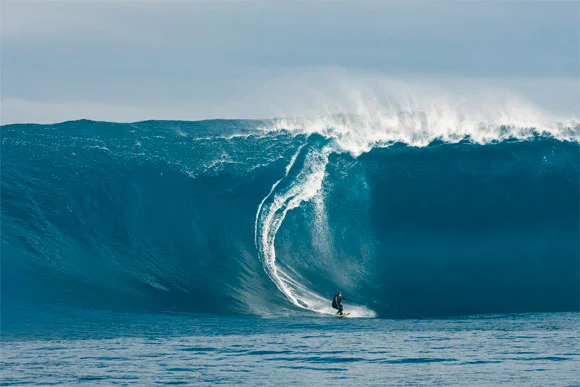
Are you ready to face the thrill of big wave surfing? Discover how to stay safe, make smart decisions, and level up your skills with insights from surfing legend Tom Carroll.
Big wave surfing pushes the limits of skill, endurance, and mental resilience. In this episode, Tom Carroll shares his wealth of experience, offering actionable tips for beginners and seasoned surfers alike. From selecting the right equipment to navigating wipeouts, you'll learn how to approach big waves with confidence while minimizing risks.
Discover the must-have gear for big wave surfing, including flotation vests and board setups for maximum control and efficiency.
Learn the mental and physical training techniques to stay calm and focused, even during the heaviest hold-downs.
Gain insight into wave dynamics, body positioning, and safety protocols to protect yourself and others in the lineup.
Tune in now to hear Tom Carroll’s expert advice and elevate your surfing game with practical strategies for tackling big waves safely and effectively.
Notable Quotes:
"The better prepared you are, the calmer you’ll be when things get tough out there."
"You don’t want to just go out there and wing it—practice and familiarity with your gear are critical."
"Big wave surfing isn’t just about the wave; it’s about how you approach it mentally and physically."
"The more you tune into the feel of the wave, the better your instincts will guide you."
Big wave charger Tom Carroll talks about the do's and don'ts of big wave surfing, sharing his knowledge and experience so we can make it as safe as possible. We also talk about surfers ear (exostosis), its causes and how to prevent it.
Show Notes:
Previous Podcast with Tom HERE
http://surfears.com/
http://www.creatures.com.au/products/surf-ears-2-0
Breath Training: http://www.bettraining.com/
http://www.outsideonline.com/2053251/inflatable-vests-are-no-longer-just-big-wave-pros
Big Wave Boards: http://www.webstersurfboards.com.au/guns/

Key Points
The importance of protecting ears from exostosis (bony growth) and infection when surfing, especially in cold winds, by using earplugs or other protective gear.
The benefits of using Surf Ears, a product that allows hearing while protecting ears, and its effectiveness during big wave surfing.
Risks involved in big wave surfing, such as drowning, being held underwater, shoulder injuries, and impacts from the board or other surfers.
Strategies for handling wipeouts and being held underwater, such as staying calm, conserving oxygen, and looking for light to surface.
The role of training, including breath-holding exercises, swimming, and body awareness, in preparing for big wave surfing.
The importance of using appropriate equipment like flotation vests, and the development of new safety gear by companies like Quiksilver and Patagonia.
Techniques for catching and riding big waves, such as feeling the wave, being aerodynamic, and using the right board setup (quad fins vs. thruster).
The contrast between the experiences of small wave surfing and big wave surfing, and how each can improve the other.
The value of surfing with a buddy or a group for safety and support in big wave conditions.
Outline
Experiences with Big Wave Surfing
Tom Carroll discusses the unique experience of surfing outer reefs compared to closer shore locations.
Waves move much faster through deep water, requiring larger boards for catching them.
The volume and speed of waves near continental shelves or in places like Hawaii and Tahiti present distinct challenges.
Waves with 19-20 second intervals necessitate intense paddling due to their rapid movement.
Modern big wave surfers at spots like Jaws manage immense speeds and powerful swells approaching the reef.
Risks and Safety Measures in Big Wave Surfing
Drowning is identified as the primary risk in big wave surfing.
Mental and physical preparation are crucial for safety.
Inflation vests or flotation devices are recommended to stay above water if necessary.
Surfing with experienced partners and having jet ski support nearby is essential.
Advanced resuscitation certification is advised to handle emergencies effectively.
The recent near-drowning incident involving Aaron Gold at Cloudbreak highlights the dangers even experts face.
Quick access to emergency equipment like defibrillators can be life-saving.
Confidence in equipment, particularly surfboards, is emphasized, along with practicing in various conditions.
Physical Risks Beyond Drowning
Shoulder injuries are a significant concern due to high-speed impacts on water.
Serious shoulder injuries sustained by surfers like Mark Matthews and Garrett McNamara are mentioned.
Keeping arms close to the body during wipeouts can reduce injury risks.
Other potential injuries include cuts from surfboard impacts, broken bones, and dislocations.
The force of big waves can cause severe trauma to the body.
Ear injuries, such as burst eardrums from water impact, are common.
A personal experience of rupturing an eardrum at Sunset Beach left Tom Carroll severely disoriented.
Importance of Proper Equipment
Using the right surfboard is crucial, with larger boards needed for fast-moving waves.
Strong leashes and thoroughly waxed boards for grip are recommended.
Inflatable vests are becoming popular safety devices, though they are not widely available commercially yet.
Companies like Quiksilver, Patagonia, and Billabong are developing specialized inflatable vests for big wave surfing.
Padded flotation vests built into wetsuits are currently a good safety investment.
Appropriate fins are important, with discussions on quad fin setups versus thrusters for big wave conditions.
Techniques for Navigating Big Wave Conditions
Timing dives to get maximum distance underwater when facing large whitewater walls is advised.
Taking a deep, calm breath before diving is crucial; hyperventilating should be avoided.
If disoriented underwater, opening eyes to look for light indicates the direction to the surface.
Multiple waves may hold surfers down, so protecting the head when surfacing is important to avoid collisions.
Staying calm and conserving oxygen when held underwater is vital, as panic depletes air supply quickly.
Fitness and Preparation for Big Wave Surfing
Overall fitness and preparation are emphasized, despite no specific big wave training in Tom Carroll's career.
Swimming, breath work, and strength training, especially bodyweight exercises, help surfers feel strong in big wave situations.
Breath-holding exercises and pool training are useful preparation methods.
Comfort in surfing various conditions, from small waves to larger swells, builds overall skill and confidence.
Gradually working up to bigger waves rather than immediately tackling extreme conditions is stressed.
Thrill and Satisfaction of Riding Big Waves
Despite the risks, riding big waves provides a unique thrill and satisfaction.
Gliding down a large, smooth wave face when conditions align perfectly offers a special feeling.
Surfing big waves significantly enhances skills and confidence in all conditions.
After surfing very large waves, even substantial waves can feel manageable and enjoyable.
Camaraderie and connection form between surfers who share the experience of taking on big waves together.
Transcription
When you're out in the reefs, it's a different experience.
Welcome to the Surf Mastery Podcast. We interview the world's best surfers and the people behind them to provide you with education and inspiration to surf better.
Michael Frampton
I'd like to welcome back to the show Tom Carroll. Tom, welcome back!
Tom Carroll
Yeah, thanks, Mark. Great to be back. Yeah.
Michael Frampton
After that last podcast we did in summer, it was actually coming into summer, and we were talking about small waves a lot. Yeah. Just what you were saying about looking at the detail on the wave, it changed my surfing 100%. Awesome. Like I was always frustrated with one-foot slop, and I bought a small wave board — a short, fat, flat board — and after that podcast, I just, every time it was small, the beauty is that when it's small and crap like that, there's no one else out. Yeah.
So you've got the lineup to yourself, and after a few weeks of just trying and trying, I started to click into it and just had so much fun.
Tom Carroll
Yeah, and yeah, you can start enjoying like crazy little surfs and you go, "I had a really good surf," and they were just looking at you like, you know, you're tripping. Yeah.
Yeah, there's so much more to offer than our idea of like the perfect wave.
Michael Frampton
Yeah, and some of my funnest surfs are when it's small and just clean. And I'd even say it's pumping, you know, because it's just, you learn how to surf it and there's no one else out. You go out there and catch 20 waves and you're...
Tom Carroll
Done. And like you say, like pointed you towards the detail, whenever we go in the surf, it's not really about the wave so much as it's about us.
So quite often, you know, well, more times than often, it's about how we're approaching it. So we walk out in the surf or paddle out in the surf, walk to the water, there's the edge, and we take our board out there and we take ourselves — whatever's going on. And our bodies are loose, free, or, you know, emotional state's different.
So that always can be a lot more open and we don't know. It's always different for me.
So that's what's cool about surfing. But that can be more open and a really crappy little fun, funny little surf that doesn't look like much, and we have more fun in those because we're more open.
Michael Frampton
Yeah, and you surprise yourself. Sometimes it's actually a lot better when you get out there than it looks from the beach. And it's just, you find these little walls and fun little runners.
Sometimes it looks like it's not even breaking, and you go out and it's actually a really fun wave. No, that was awesome. And it helped a lot, you know. I've started to get into a little bit of big wave surfing. Good.
Looking at that, you have to look at the detail on those waves because there's so much wind and stuff when you're that far out to sea. And I wanted to pick your brain about big wave surfing. But before I do, let's talk a little bit about surfer's ear.
Tom Carroll
Yeah, surfer's ear. Yeah, I had a little journey with that recently. I had the exostosis removed from my right ear on March 11, which put me out of the ocean for a few weeks. Actually, the doctor wanted me out for a little bit longer, but I'm not one for listening to that stuff too well. I'm a bit naughty, but I just listened to my body and it was working fine. I didn't have any complications.
So it was good. I wouldn't advise you going in the water with complications in your ear because all it does is exacerbate the situation. There's a lot of bacteria in the ocean that can get caught in your ear. And it's a really amazing environment. And what I've learned about it is that it's its own environment in there. And the exostosis is a bone growth that's created by the body to protect one of the most important, well, actually two of the most important senses for survival, which are balance and hearing.
So way back in the day, you know, from back in the cave, balance and hearing, from all the way then till now, is a very important survival mechanism. So when we get out there in the ocean or whatever we're doing — I understand truck drivers get it because of the wind coming through the window onto the right ear for us in the US and the left ear or in Europe. The wind, water.
Michael Frampton
Not the salt.
Tom Carroll
It's not salt water. It's just all about the wind. It's particularly cold winds. And, you know, right now at the beginning of winter, we're going to get all these sort of southwesters hitting, you know, Sydney in particular, the southerlies and southwest. It's a really good time to protect your ears and get something in your ears, whatever it be, you know, like Blu-Tack or some form of earplugs. And to get sort of regular with that is a really good idea for any surfer, really.
So that's correct.
Michael Frampton
The bone growth is growing over the opening of the ear to protect the eardrum and the vestibular system. So then that's essentially — you prevent that bone growth happening if you wear earplugs because they're protecting those two things from the wind.
Tom Carroll
That's correct. And, in fact, I don't know how true this is, but I've heard that there have been some cases where guys have actually protected their ears, their ear canal, either by like a cap, like a wetsuit cap, or plugs, and they've had the growth actually recede. And you're just way less likely to get infection in there.
And that's our big complication — getting infection inside and behind the exostosis, the bone growth, and then it just doesn't want to... In trying to treat that, it becomes really difficult, especially if it's a large covering or it's a really advanced covering, something around about the 90% mark. I think that's when you have those complications where you get water caught in it, you can't get it out. Bacteria in the water starts multiplying in there and having a bit of a party in there.
And you become the host to the little guys, and hence you get a bit of an infection. So we don't want to get that. Anyway, that's the result of the advanced exostosis. But, yeah, it just basically wants to protect that really important part of our body. It basically wants to keep us balanced, and we want to hear and want to be able to hear behind us, especially any dangers that are coming up behind us.
Michael Frampton
Yeah, OK. So it's pretty important to protect your ears, but what's put me off in the past with Blu-Tack and standard earplugs is you just lose most of your hearing. But then I went in and bought some of the Surf Ears.
Tom Carroll
Cool. And it... Yeah.
Michael Frampton
Hardly changes your hearing at all. It's quite amazing. So I've been wearing those, and I'm just used to it, and it's fine.
Tom Carroll
It's been a really nice product to be involved in for myself. And it came along at a really good time for me. I don't know, a bunch of different levels. But it's really nice to be able to hear your friends in the water. I used to use Blu-Tack in my first, my left ear. I had my left ear exostosis removed in 2010, and I just used Blu-Tack. And I knew that I could only use it for a short period of time because I just couldn't hear anyone in the water. I know that seems to be against what people kind of understand of me being in the water, liking to surf with other people on the wave.
You know, I've had some friends, you know. "What do you mean you're wearing Blu-Tack in your ears, Tom? Was that another excuse not to drop in?" You know, or to drop in?
Anyway, I... or share, you know. But I found it really annoying not being able to hear. And these plugs are working out really well for me. You know, the ability to hear while I'm plugged up. Yeah. Protecting. Yeah.
Michael Frampton
So it protects your ear against that growth forming.
Tom Carroll
Yep. And it protects your ear against water getting in there as well.
Michael Frampton
But lets the sound in at the same time.
Tom Carroll
Yeah. Yeah. The cool thing is, I know they come with a leash, a little leash setup, which I don't particularly use. But I've lost, like, Blu-Tack and stuff out of my ear and things like that. But I was surfing some really big waves on the North Shore of Oahu this year, earlier this year, and using them the whole time. And I didn't lose a pair.
I mean, I got completely annihilated on the North Shore this year. And they stayed in.
So it's a really good design. Those guys, the two Swedish industrial designer surfers who started it off, have done a really good job.
Michael Frampton
Yeah. Surf Ears. Awesome product. If you go to surfears.com, you can find out a little bit more. That's S-U-R-F-E-A-R-S dot com. There's a tab there with a list of distributors. The Australian distributor is creatures.com.au as well, by the way. But yeah, go to their website, check them out. Great investment for your surfing longevity. I'll put a link to those websites in the show notes as well.
So, big wave surfing. Yeah.
So last year, Matt lent me one of his Sunset, an old single fin Sunset 8'6". And I started playing around with the bombies out here and just fell in love with it and ordered my own brand new Webster 8'6".
Tom Carroll
I think I saw a photo of it.
Michael Frampton
Yeah, for this year.
Tom Carroll
Yeah. And...
Michael Frampton
Had a crack at Germans on that big swell a couple of weeks ago. And so much fun. It's quite a different experience, isn't it, riding big waves? I think the first thing I noticed — I mean, I've surfed eight-foot, you know, point breaks and reef breaks and things — but, you know, when you're surfing an eight-foot wave on an outer reef or a bombie, the main difference I noticed was just the speed at which the wave is moving through the water. You need a big board to actually catch it because the wave's moving so much faster. It might not be any taller than an eight-foot wave on the shore, but the wave's still moving so quickly.
Tom Carroll
Yeah, the volume too, the volume of the wave when you're out in the outer reefs. It's a different experience altogether. You know, especially when you go to places like Hawaii where you really... or Tahiti or anywhere where you're right on the edge of the continental shelf or right out there where there's no continental shelf. The wave speeds, you know, and you're looking at around about 20-second intervals, and 19, 20-second intervals — that's when the waves are moving so super quick. And, you know, like you've got to paddle your guts out to get a hold of one of those waves.
And that's what... I mean, I think of what goes on now with the boys at Jaws and how they're approaching that stuff. It's just phenomenal how they can, you know, deal with that — the speed of those swells coming towards that reef. I remember towing that wave and just going, "Man, I'm just flying. I'm just hanging on," little board, little tow board, 5'8". These guys are just dropping in on these big, heavy, you know, and the wind's coming at the face and it's just incredible what they're doing.
Michael Frampton
What do you think is the biggest risk when you start, especially for someone who hasn't had much experience, a beginner to big wave surfing? What's the biggest risk?
Tom Carroll
Drowning. I think, and it works back from there, really. It comes down to being real, really prepared in yourself, you know, and I think it's probably a good idea to get some inflation, you know, a vest, some sort of... or something that actually holds you above the water so at least you can get plucked out at some point. It's good to surf with people, you know, not to be the Mr. Solo guy. I'd get a couple of buddies that we like to do this sort of thing with or tap into some other... yeah, just basically a community of big wave riders, guys that do it together, so they can support each other in situations.
And maybe even if you've got a buddy who's got a jet ski or you have a jet ski with a buddy, that you use that off the side of the break as a safety precaution so you can pluck the person out. Go and do your advanced resuscitation certificate so you know how to deal with the situation when your buddy's in a bad way. That's going to be critical in any situation. It's always good to have that knowledge, but just recently, Aaron Gold was literally a very experienced big wave rider who's ridden a lot bigger waves than what he was out at Cloudbreak last week.
And you have a situation where he was knocked out unconscious and he needed to get plucked out. Now, he's lucky to be alive, and it was only through the fast response and the knowledge of the guys on board the boat, and knowing how to get to him, like Mark Healy, and I know that Greg Long was there. These guys have a lot of experience and knowledge, and they were lifeguards there.
So these are really important stuff, and we just don't know. And if you can, even on top of that, if you're going on a mission somewhere and you're thinking you're going to be a big wave rider guy and you've got a lot of experience even, try and have a defib machine. You know, exercise that on an unconscious body, yeah, because that jolt is the one that's going to bring him back. It's not necessarily you just want to punch him in the chest, freaking, get him moving, but that's the crux of it.
And you can work back from there and make sure your equipment's really good. Like you said, the Webster, you know, you've got this big board that paddles into waves. You feel confident on that board. I think feeling confident with your equipment is really important, super important. And you're developing a relationship with that piece of equipment, but not just surfing any big waves, but riding it in medium-sized waves.
Michael Frampton
What I did. Yeah, earlier with the board and some smaller waves just out here, just got some weird looks, but, you know, it wasn't about that. I just wanted to get to know that board. It kind of feels similar to a longboard when you're on small waves, and that's how big the boards are, you know, they're pretty massive boards. But the biggest risk of drowning would be hitting your board?
Tom Carroll
Being held down. You know, quite often when we hit the water on a big wave, we're moving at speeds, you know. If we're falling off halfway down the face, we get hit by the wave even, the lip. We kind of get an empty lung hold down, you know, we get the empty lung hold down, and that's that sort of training that really comes into play when we understand how our body's going to respond when we've got no air and we're going to have to hold it for a while.
And knowing that you've got, if you've got a... if you know how to use your vest, you know, if you've got an inflation to deploy, you know exactly where that thing is. If you've done it before, you don't go fresh out and do a 15 to 20-foot surf, 25-foot surf, and think you're kind of going to know and just make it up at the moment.
Because there are going to be moments even when you do know, even when you've done all the training, that you're going to be shocked because you're in situations where maybe your shoulder's been popped, you're getting tossed over the falls and everything's in shock, your body's in shock, you're feeling super vulnerable, and you're in panic, you're going into panic mode.
And it doesn't matter. A lot of people inexperienced, I think, who are experienced have this sort of thing happen. Aaron Gold, brilliant big wave surfer, a lot of experience. I don't know what happened to him, I have no idea. It'd be nice to know his circumstances a bit closer, just to understand because we're still sort of figuring ourselves out in these realms and the young guys are really going for it.
They need to know more and more information on how to care for themselves and be prepared, because they're pushing it more now than ever, and they're, you know... I mean, Aaron Gold, anything could have happened to him. He could have been knocked out by his board, he could have just been held down, an empty hold down, and then you just run out of air, and you get held down for too long. And you go, you could go into panic mode, then you just lose all your oxygen.
And so, I think training for that stuff is really important. You want to feel prepared and you want to build your confidence levels up and your ability to stay calm. I think that's like a...
Michael Frampton
Yeah, so you might only get held down for 30 seconds, or let's say it's a 15-second period and you get a two-wave hold down, that might be a 45-second hold down. It's going to feel like five minutes.
Tom Carroll
Four, yeah.
Michael Frampton
And you might be able to hold your breath for five minutes in a safe situation because you're calm, right, and you conserve that oxygen. So your ability to be calm when you're under a big wave conserves your oxygen and makes it less likely for you to black out down there, right?
Tom Carroll
Yeah, and it's depending on the situation. Like, the better trained you are, the more trained you are, the more confidence you'll have, the more you're going to be pushing it, possibly, depending on your headspace. But you'd think you'd be able to handle it, but there are those odd situations where, like I mentioned just a moment ago, where things didn't go... when actually everything went against you, like everything.
Like a big one for me, when I see the wipeout is Garrett McNamara's wipeout at Mavericks this year, where he literally took the... went for this massive wave, and he got some air underneath his board. I don't know whether you've ever seen this wipeout of his, where he did his shoulder and tore his shoulder off, basically tore his shoulder off, and he ended up doing his, you know, he ended up wiping out and just sliding down the face of the wave.
And then his arm got caught in the face of the wave, and then it gets torn, and his humerus ended up snapping, and then the humerus got jammed up into his pec. And his, the head of his humerus completely and utterly disintegrated into all these bits. So he's coming back from a big one at the moment, and that's what's happening at the moment.
It's scary around the shoulders for me because Mark Matthews got a really bad shoulder injury from Jaws, just, you know, warming up for the WSL event back in December, I think it was. The one that Billy Kemper won. And that morning session was really windy and crazy, and Mark took that really late drop, an extraordinary drop, but he didn't quite make it.
Yeah, so I'm not quite sure exactly the full extent of his injury. I know Garrett's a bit better, but I know that he's, you know... Mark's just sort of coming back now, and this is quite a few months later. And you just don't... yeah, our shoulders are vulnerable in big waves.
Michael Frampton
Yeah.
Tom Carroll
Yeah, so when we land on the water, we want to... first thing we want to do is actually put our arms out.
Michael Frampton
Is that just from landing on the water? You do want to?
Yeah.
Tom Carroll
Okay. Same thing happens kind of in snowboarding too. My experience was where I actually hurt my shoulder trying to do a spine jump, and I kind of just went to... I kind of over-rotated and came down and jumped, and fell on the flat a little bit. It was higher than I'd ever really been, and I kind of hit this flat bit, and I kind of went down, and I put my arm straight out, my right arm straight out, and it sort of tore back and sort of subluxed the shoulder joint.
And I think that's what I do too when I wipe out on a big wave. I want to put my arms out to dive, to actually, you know... and it's probably to break the water, which is a good thing, but if we're flying along in situations, and we've got our arms out, even getting pounded in the violent, violence of getting pounded underneath a 20-foot wave, you can have your shoulder torn around and just torn out.
So that's, you know, our arms, something we want to try and keep in, somehow close to our body in those wipeouts. And if you think about it, I'd say, you know, next time you get pounded by a big wave, try to pull your arms in.
Yeah.
Yeah.
Michael Frampton
Okay, but at the same time, you want to break the surface with your... or imagine if you got slapped on the ear, that would pop your eardrum.
Tom Carroll
Hands. Yeah, so your neck doesn't get everything.
Yeah, yeah, that happens a lot. That's very... I've had that happen to me at Sunset Beach.
Okay.
Really, my first eardrum pop was at Sunset Beach, in like, 86. Amazing day at Sunset Beach, and that was my right ear, and it just got, you know, torn up, and it ended up... yeah, it was a nasty feeling. I just slapped it. I was just... amazing surface, building, and took an air kind of drop on the west peak, and didn't quite land right on the rail, and went down on my right side, slapped it, and went back over the falls. I had that feeling of... the fact, feeling of just like drinking a whole bottle of scotch in a second.
So, like, it's like, whoa, yeah, just my whole... all my equilibrium was gone, and I couldn't paddle, didn't know which way to paddle.
Wow.
And a friend of mine came over and grabbed me and said, where are you going? Because it was luckily the last wave of the set, but yeah, our eardrums are really vulnerable on the big waves.
Michael Frampton
Sometimes, you know, when it's just a cruise-y four-foot, we just kind of fall off and land anyway. You can't get away with that when the waves are big.
Tom Carroll
Not so much, but I noticed one really cool... I don't know what, you know... like, the thing about Shane Dorian and those guys at JAWS, and Kai Lenny actually told me... I go, so when do you actually deploy these inflations, you know, like inflatable vests? And he goes, I don't know, like... he goes, I've just been at JAWS last week.
This is Kai, and Kai's a really nice guy, and he's always really super enthusiastic, and goes, yeah, I know, I've been watching what those guys are doing. I was on the edge of this freaking 60-foot wave, and I'm watching Shane Dorian come down this wave and lose it on a 60-footer, and I'm watching him, what he's doing with his vest, and he pulls it as he's going down.
Okay.
You know, he's just going down, he just pulls that thing, so it inflates as he's getting... I mean, you might, and you get more of a pounding straight away, and you're going to get it. You're going to be thrown around a lot with all that inflation.
Anyway, he pulled it, and Kai said he actually counted him out. He said, one thousand, two, one thousand, three, one thousand, four, one thousand, and all of a sudden, Dorian's up.
So he was under four seconds on a 60-foot wave.
Wow.
And you think, well, that's a good idea.
Yeah.
Because I wasn't quite sure myself, when am I going to deploy this thing?
You know?
Yeah.
We're all trying to figure it all out at the moment.
Yeah. Everyone's pushing it out there.
Michael Frampton
So a vest is a worthwhile investment.
Tom Carroll
Yeah, if we can get a hold of a vest at this point, yeah. There's going to be some really good stuff come up in the next few years, where we'll be able to sort of safely approach, you know, bigger waves, bigger conditions.
Michael Frampton
So do they just have little compressed air canisters inside?
Tom Carroll
Yeah, CO2 canisters, and they pop. They're the same mechanism as on, you know, like a life vest that you'd get from underneath your seat on an aeroplane.
So very similar to that. Some have smaller canisters than others, but I think the big thing is for that actual inner... the structure of the inner bladder. It must be really strong and heavy-duty, you know, and have a half-grade inner bladder to inflate because that thing's going to pop under the pressure.
Michael Frampton
So they have other vests that are just... they have lots of spongy, sort of floaty material in them as well. Have you used those?
Tom Carroll
Yeah, flotation pads, like, set into the suit. I mean, that's being used a lot more today. And that's really helpful. It does help you feel like you're going to come straight up. I've used that quite a bit. And on the vests, we use the PDF... PFDs, I should say, PFDs for using on the jet ski and towing. We can swap those out and ride without the vest or put them on.
Yeah, it's so good to feel like you're coming up on a big wave. But it's funny to think that I surfed that many waves when I was younger. And significant size.
You know, the 20-foot range with just a pair of board shorts on, without a care kind of in the world. So it's a very strange thing today to think that we've got to do all this stuff, you know. But I think it's a really good idea.
You know, when I think of what happened to Aaron Gold the other day, I know that his family will be really bummed.
Yeah, and I know that we've lost a few along the way. Sion Milosky, and the list goes on, Todd Chesser, and so on.
So we want to protect ourselves.
Michael Frampton
What are some other risks?
Tom Carroll
Well, of course, the board hitting you. You know, going in you. I mean, we're just like this bag of gel, really. You know, a bag of jelly and sinew. So as soon as you pop through the skin, the board just sort of slices through any sort of flesh real easy. Fins and so on. Like we all probably have felt before. You know, broken bones and dislocations. And yeah, stuff like that.
Yeah.
Michael Frampton
It is a very different game. I remember a clean-up set came through last week, and there was another surfer. He was at least 20 metres away from me, and we got tumbled by the whitewater. And I came up, and he was right there on top of me.
Yeah. So you don't realise how far the other surfers can move if they're in a slightly different position of the wave. So you've got to stay well clear of others as well.
Tom Carroll
Yeah, keep a real good eye out for others. And particularly get really clear about how long your leg rope is and how that plays out. And how heavy your board is and how strong your leg rope is. It's really important. You want a good one. I want a good leggy.
Yeah, I've had that one.
Michael Frampton
My leg rope broke out there.
Tom Carroll
Yeah, out there. I've had quite a few boards break out there. I had to do a stand-up paddleboard out there and surfed out there. And the leg rope popped, and I had to swim with the damn paddle. You don't want that. How did you go on the swim? Did you catch your...
Yeah, just before the back bummy pulled up?
Michael Frampton
Board? Yeah, it wasn't too bad.
Yeah, it went straight towards the beach actually. It didn't drift over towards...
So it was fine. It was a 100-metre swim. Nice. I'd already caught three waves. My last wave actually, I hit a bump halfway down the face, and I landed on my butt, and I got quite a good saltwater enema.
Tom Carroll
Good, yeah. That feels odd.
Michael Frampton
And a good ball slapping. Yeah, ball slapping.
So you just don't realise how fast you're going until water feels like concrete. Yeah. If you're in that situation where you get bounced and you feel like you're going to either land on your bum or your feet, which would you choose?
Tom Carroll
It does. It's hard.
Michael Frampton
Would you straighten your legs out or would you curl up?
Tom Carroll
I don't know. I'm sort of more inclined to do a bomb. My knee, I've got to be really careful with my right knee.
So I'm almost sort of subconsciously preserving my right knee. So everything else comes second, third, or fourth. I don't want to go straight-legged into anything. It's so on the moment. For me, it's so on how I'm doing it at that very moment. And being in a good headspace, I can sort of feel it out.
And then take it like this. Many wipeouts I've had before or moments where I've had to take that kind of hit.
Michael Frampton
Have you done much training for big waves or is it all through experience?
Tom Carroll
Never really did any really specifically really big wave training. I did swimming and some breath work and some strength work on the body where it's mostly body weight work to get everything supported. Kind of almost like strength work, real resistance training before Hawaii. And whilst in Hawaii, that's helped me feel solid and strong in the situation.
Michael Frampton
So what's the breath work you've done, and when and how do you use that?
Tom Carroll
I got it off Nam, the first stuff we did with Nam. I don't know how long ago that was. It was a while back I did it with the Sandal Warrior. He came and did some stuff with us at a training camp. And we did the session in the 25m pool on the Gold Coast. And Nam put us through a session, some empty lung, whole laps, empty lung work. And that made a lot of sense to me, so I've done more of that stuff. That's tricky on your own. I needed to be with more people. I did a few things with using Russian kettle bells, running underneath the water in the pool.
And then putting myself to the limit with that. And sprint training in the pool.
So it's just all interval. So you're really stretching your lungs out. Doing swim squads, things like that, just to build that capacity.
So it helps the confidence in the ocean, knowing that you can actually swim yourself out of situations. I think that's really important, to know that you've got to be able to be ready to help someone or be ready to help yourself out of the situation, to be strong enough to do that.
Michael Frampton
So getting in touch with what it feels like to be underwater with no air in your lungs.
Tom Carroll
Nam's got some really good stuff. The BET training is awesome.
Michael Frampton
And those courses are readily available as well. He's pumping, so jump on board that.
Tom Carroll
Them out everywhere, is he? Great.
Yeah, I want to tap into that too. I've got a bit of a break coming up with a knee surgery. And I need to, during that time, I've set a bit of a program. But just to, yeah, I have to feel it out for a week. But then I'm getting into that stuff and get myself prepped. It's a bit of an unknown world with a weird knee at the moment. But that'd be a cool place to go and challenge myself.
Michael Frampton
Another thing you mentioned on the last interview was the feel of the wave. And that's something I found when surfing the big waves you've really had to be tuned into because by the time you're about to drop down, you can't really see anyway because there's so much wind and chop.
So it is all feel. So you've really got to... I've done a lot of practice of being aware, a lot of training with my eyes closed.
So I was in touch with that, and I think that helped a lot as well.
Tom Carroll
Yeah, that would.
Michael Frampton
Because the chop and the wind, even if it's not windy, the wave speed itself makes it windy.
Tom Carroll
Yeah, you get this wind speed at the top of the wave, so different compared to the normal. I'd like to know what that sort of thing is. I always sort of had this kind of fantasy about having one of those bat suits when I was in... I didn't even know about those glider suits. But in the 80s, because we were surfing Sunset Beach and when a west swell would come in and you get this trade wind and the wind speed at the top of the wave, you literally had to feel your way, like I said, just feel your way into the paddle. And then there's a time when you just couldn't see.
So you needed to actually feel your way over and down into it. But I was so hungry to get the wave that I'd just override it. But yeah, there's something in that, what you're saying, like doing training with your eyes closed, training, like bouncing with your eyes closed, doing that sort of stuff. Get body awareness, come back to your body all the time. But it's always in a sort of full action mode.
So you just sort of almost do it in a full action movement.
Michael Frampton
But when you stand up and you're dropping in, you've got to be really careful with how you hold your hands. Because you've got to be aerodynamic as well. Doing the bottom turn is almost done with your hands, I felt, just through the wind.
Tom Carroll
Yeah, it's all very subtle. And you can see that when the guys are taking the drop at Jaws, and every little movement is so important for them. Every little movement, every little adjustment, it's all feel. It's no thought. It's just all on-the-moment feel. And kind of sensing where you're at, really kind of a broader overall sensing of the situation. And being right on something underneath your feet that's moving so quick. And the little bumps and chops, which actually can be a lot bigger out there.
So you're always adjusting to that stuff. So you kind of, yeah, I love that feeling though. That feeling of feeling way down a big face. And when you get one of those ones that is smooth, it's like really special.
Michael Frampton
You almost wanted like a five-knot onshore.
Tom Carroll
Yeah, no, the onshores are good on a big wave. Yeah, you get that glidey kind of...
Yeah, you get the first wave just knocks all the... You know, smoothens out the water.
And then you get the second one that actually stretches more and draws a little bit more maybe. And you just get this nice big smooth face.
Yeah, I love that. When it's slightly onshore, it's probably better. And plus you're paddling, it's much easier.
Michael Frampton
Cool. And I mean, despite all the risks and stuff, it's an amazing experience, isn't it?
Yeah.
Tom Carroll
And it's.
Michael Frampton
Amazing for the rest of you. Like after that day, having surfed those waves, and then I surfed the next day and it was still quite big, but I just went out to the local beach on my shortboard, and it just felt so easy. And it felt so much faster after having had that experience. I guess that every surf you have when it's big kind of adds on to that.
Tom Carroll
Yeah, I know that my buddy Ross Clark-Jones, he's like... Who will spend a lot of time in Hawaii surfing the biggest waves he possibly can. And months, especially in his last one, where El Niño, it was just a crazy year. Whereas it'd be 10 or 12 feet, and he's like going yawn.
You know, like, that's boring. He's off doing something completely different. Because it's small, you know, like anyone's 10 or 12 feet. It's small. Think about that headspace. It's pretty funny to think that.
Michael Frampton
It's a cool contrast, really improving your small wave game and then having a crack at big waves. Both those extremes just make the 2 to 4-foot surfing so much more fun.
Tom Carroll
Yeah. And you go jump down your little boards, and they just, you know, they move around the wave. Your body responds differently, and it's more gymnastic in the movement. It's not a... Whereas it's more of a static hold. On big wave surfing, it's more of a static hold, and you're kind of making those really tiny adjustments going down the face and even off the bottom turn. You can't move around on a big board like that. No. As soon as you jump back down the little board and your little waves are so much fun. There's not that threat. You don't have that kind of fight-or-flight thing going on anymore. It's more like this sort of nice feeling of just being calm in the water and kind of a calm froth. More of a calm froth.
Yeah. Yeah.
Tom Carroll
Drowning. I think, and it works back from there, really. It comes back to, it comes down to being real, really prepared in yourself, you know, and I think it's probably a good idea to get some inflation, you know, vest, some sort of, or something that actually holds you above the water so at least you can get plucked out at some point. It's good to surf with people, you know, not to be the Mr.
Solo guy. I'd get a couple of buddies that we like to do this sort of thing with or tap into some other, yeah, just basically a community of big wave riders, guys that do it together, and so they can support each other in the situations. And maybe even if you've got a buddy who's got a jet ski or you have a jet ski with a buddy, that you use that off the side of the break as a safety precaution so you can pluck the person out. Go and do your advanced resuscitation certificate so you know how to deal with the situation when your buddy's in a bad way. That's going to be critical in any situation. It's always good to have that knowledge, but just recently, Aaron Gold was literally a very experienced big wave rider who's ridden a lot bigger waves than what he was out at Cloud Break last week. And you have a situation where he was knocked out unconscious and he needed to get plucked out. Now, he's lucky to be alive, and it was only through the fast response and the knowledge of the guys on board the boat, and knowing how to get to him, like Mark Healy, and I know that Greg Long was there. These guys have a lot of experience and knowledge, and they were lifeguards there.
So these are really important stuff, and we just don't know. And if you can, even on top of that, if you're going on a mission somewhere and you're thinking you're going to be a big wave rider guy and you've got a lot of experience even, try and have a defib machine.
You know, exercise that on an unconscious body, yeah, because that jolt is the one that's going to bring him back. It's not necessarily you just want to punch him in the chest, freaking, get the moving in, but that's the crux of it. And you can work back from there and make sure your equipment's really good.
Like you said, the Webster, you know, you've got this big board that paddles into waves. You feel confident on that board. I think feeling confident with your equipment's really important, super important. And you're developing a relationship with that piece of equipment. But not just surfing any big waves, but riding it in medium-sized waves.
Yeah, that's yeah, good.
Michael Frampton
What I did. Yeah, earlier with the board and some smaller waves just out here, just got some weird looks, but, you know, it wasn't about that.
It was just wanted to get to know that board. It kind of feels similar to a long board when you're on small waves, and that's how big the boards are, you know, they're pretty massive boards. But the biggest risk of drowning would be hitting your board?
Tom Carroll
Being held down. You know, quite often when we hit the water on a big wave, we're moving at speeds, you know, if we're falling off halfway down the face, we get hit by the wave even, the lip. We kind of get an empty lung hold down, you know, we get the empty lung hold down, and that's that sort of training that really comes into play when we understand how our body's going to respond when we've got no air and we're going to have to hold it for a while. And knowing that you've got, if you've got a, if you know how to use your vest, you know, if you've got an inflation to deploy, you know exactly where that thing is. If you've done it before, you don't go fresh out and do a 15 to 20-foot surf, 25-foot surf, and think you're kind of going to know and just make it up on the moment. Because there's going to be moments even when you do know, even when you've done all the training, that you're going to be shocked because you're in situations where maybe your shoulder's been popped, you're getting tossed over the falls and everything's in shock, your body's in shock, you're feeling super vulnerable and you're in panic, you're going into panic mode.
So that sort of, and it doesn't matter, a lot of people inexperienced, I think, who are experienced have this sort of thing happen. Aaron Gold, brilliant big wave surfer, a lot of experience. I don't know what happened to him, I have no idea. It'd be nice to know his circumstances a bit closer, just to understand, because we're still sort of figuring ourselves out in these realms and the young guys are really going for it. They need to know more and more information on how to care for themselves and be prepared, because they're pushing it more now than ever, and they're, you know, I mean Aaron Gold, anything could have happened to him, he could have been knocked out by this board, he could have just been held down, an empty hole down, and then you just run out of air and you get held down for too long. And you go, you could go into panic mode, then you just lose all your oxygen. And so, and I think training for that stuff is really important. You want to feel prepared and you want to build your confidence levels up and your ability to stay calm, I think that's like a...
Michael Frampton
Yeah, so you might only get held down for 30 seconds, or let's say it's a 15-second period and you get a two-wave hold down, that might be a 45-second hold down, it's going to feel like five minutes. Four, yeah. And you might be able to hold your breath for five minutes in a safe situation, because you're calm, right, and you conserve that oxygen.
So your ability to be calm when you're under a big wave conserves your oxygen and makes it less likely for you to black out down there, right?
Tom Carroll
Yeah, and it's depending on the situation, like, the better trained you are, the more trained you are, the more confidence you'll have, the more you're going to be pushing it, possibly, depending on your headspace, but you'd think you'd be able to handle it, but there's those odd situations where, like I mentioned just a moment ago, that where things didn't go, when actually everything went against you, like everything, like a big one for me, when I see the wipeout is Garrett McNamara's wipeout at Mavericks this year, where he literally took the, went for this massive wave, and he got some air underneath his board, and I don't know whether you've ever seen this wipeout of his, where he did his shoulder and tore his shoulder off, basically tore his shoulder off, and he ended up doing his, you know, he ended up wiping out and just sliding down the face of the wave, and then his arm got caught in the face of the wave, and then it gets torn, and his humerus ended up snapping, and then the humerus got jammed up into his pec, so, and his, the head of his humerus completely and utterly disintegrated into all these bits, and so he, he's coming back from a big one at the moment, and that's what's happening at the moment, it's for me, it's scary around the shoulders, because Mark Matthews got a really bad shoulder injury from Jaws, just, you know, warming up for the WSL event, and back in December, I think it was, and the one that Billy Kemper won, and that morning session was really windy and crazy, and Mark took that really late drop, and extraordinary drop, but he didn't quite make it, and, yeah, so I'm not quite sure exactly the full extent of his injury, I know Garrett's a bit better, but I know that he's, you know, Mark's just sort of coming back now, he's just, and this is quite a few months later, and you just don't, yeah, our shoulders are vulnerable in big waves. Yeah, Yeah, so when we land on the water, we want to, first thing we want to do is actually put our arms out.
Tom Carroll
My rule of thumb is that after a little while, if I'm feeling a little bit rolled around and a bit disoriented, I will open my eyes up and look for the light. And wherever we see light, it's like, you know, it's upwards. So, yeah, we just look for the light and sense that light. We might not see it straight away, but we'll sense it, where it's at. And then there'll just be darkness and lightness, and those things will become apparent. And you just go up through the veins. Usually, there's sort of, you know, clouds of white water. And then there's veins of light. It's going to hit up through the veins of light. OK.
Michael Frampton
So the veins of light, there's less turbulence?
Tom Carroll
Generally, less turbulence. And you'll find your way to the surface, yeah. OK.
Michael Frampton
And do you climb your leash?
Tom Carroll
I've done that before. I've pulled my... You know, really felt where my board is through the leash. Yeah.
Michael Frampton
Is that always up, though?
Tom Carroll
Not necessarily. And if you can't feel the tension on your leash, be aware that board's going to fly around somewhere. And that's sometimes more scary. Yeah, it's true. The board could be flying around, so you just be really aware that board could be flying towards you. It's like a loose cannon. So if you're not feeling it, really protect yourself as you're coming. Protect your face and, you know, put your arms up and definitely protect your face. That's my response to that feeling of not knowing where my board's through. No tension on the leg rope. I've had boards in the face. I've had boards in the head. And I've had... Yeah. I've actually had a leg rope wrapped around my neck from behind.
So my leg was kind of scorpioned over the back, and the leg rope was wrapped around my neck and being pulled, the board being pulled, like, the other way. So I had to kind of pull the tension off the leg rope to get it off my neck, and then all of a sudden it went loose. And I didn't know where it was and then kind of thing came back and slapped me in the face. It was the most bizarre scenario I'd ever had. That was inside Sunset Beach. I'll never forget that. It was so scary. Because I was in a weird position. I don't know how I got in there, but that was a shocker. So, yeah, be careful. Be careful with that leg rope. And there are times where I've pulled myself up by the leg rope.
Michael Frampton
So when you're coming up towards the light, you're so in need of a breath. Yeah. But you've got to be aware you've got to protect your head when you break the surface. Because it's not just your board you've got to worry about. Other people. Even he might have been 30 metres away from you when the wave came, but he might be right on top of you by then. Or someone else's board, their leash might have broken and might be coming straight towards you or anything. So, and I'm sure that sometimes when you're coming up, you're about to see light, you're about to get a breath, and then the next wave hits. And you go under again.
Tom Carroll
Yeah, I've had that one. That's tricky. But the most difficult one is that one where we've got to hold. Yeah, that empty-lung hold down. We had all the air blown out of us on the slide down the face and the impact. And that's what we've got to kind of train for, really. OK.
Michael Frampton
Awesome. I think that's all the questions I have. I've got all ammoed up for the next session.
Tom Carroll
Yeah, good. Good grip too. Bit of wax helps.
Michael Frampton
The right wax.
Tom Carroll
The right wax and a really good covering. I'm not one for really big wax jobs, but when I go out and it's solid, I give myself a good wax up.
Michael Frampton
The whole board too.
Tom Carroll
Yeah, the whole board.
Michael Frampton
Lots of bumps and combing. You... What about the quad versus thruster on those big boards?
Tom Carroll
Want to have a nice grip. Yeah. Yeah, that's a really important thing. Well, the quad is a bit more efficient with water flow through the back of the board. And when you've got a thruster, the thruster tends to feel more solid, you know, and more anchored down. But there's more drag. OK. With the center fin aiming directly straight, the center fin kind of gets in the way. As soon as you lay the board on the rail or you get the board right over on the edge, the center fin actually starts to play a kind of a, more of a hindrance role. Like it starts to just slightly get in the way of the way the water wants to move off the back of the board. And when we have the quad set up and the fins are set up correctly in line with themselves in a really proper alignment with the point way off, on towards, off the nose of the board.
So they've got this really nice angle to the fin. There's, it's way better into the angle of attack of the turn. The water wants to come through the back of the board unhindered. And we just get a little bit more release.
So we're able to escape the wave better and actually hold on to speed. And you're getting a lot of speed like you mentioned on the wave. And we want to kind of hold on to that speed. And the quads are just a little bit better, a bit more efficient in the water flow off the back of the board. You can reduce the size of your fins.
So you've got less drag again and use more of the rail of the board to hold. Yeah, small stiff fin and probably 70-30 foil on the front and 50-50 on the back.
Michael Frampton
You. So a small stiff fin is fine.
Tom Carroll
Okay. So you've got this sort of real neutral fin.
Michael Frampton
So a quad set up would be better for a beginner because it's faster?
Tom Carroll
Look, the quad set up is definitely for someone who wants to ride really big waves and push it. It doesn't really matter whether you're just starting out and feeling it out. But it's just going to be a little bit more efficient. With your advanced surf or intermediate, the board, the quad set up on a bigger wave works more efficiently. But then again, some people like the more sturdy feeling of being on a thruster. And that's a really personal thing. I know that Ross Clark-Jones, he loves his thruster. And he's really effective on it. There's no doubt about it.
Michael Frampton
The one on the back that sits in. Yeah, the one that Kelly Slater kicked off with a few years back.
Tom Carroll
Have you ever tried that on big waves?
Michael Frampton
No, I haven't.
Tom Carroll
No, I haven't tried it on a big wave. Probably not a bad idea to think about. If that feels better for you on a smaller wave, then you might be able to want to... Because what happens on a big wave, you're traveling a lot faster, the physics of it means that the fins get bigger. So the size of the fin does matter on a bigger wave. So that's what happens. And you can reduce the size of the fins.
Michael Frampton
OK. Cool. I think we covered...
Tom Carroll
A lot. Yeah. Awesome. Thanks, Mike. Thanks. It's an honor.
Michael Frampton
That was valuable information.
Tom Carroll
It's good. I like sharing. It's just learning. We're still learning. Still figuring it out. We've come a remarkably long way, but we've still got a long way to go, I think.
Michael Frampton
Awesome. I feel much better now. Kind of. A few stories that put me off, but some information that will help me to keep it as safe as possible at the same time, which is good.
Tom Carroll
And it's just getting tuned in to look out for each other out there. That's the key.
Michael Frampton
Yeah. All right. Thanks, Tom.
Tom Carroll
Awesome. Cheers, Mike. Thank you.
Michael Frampton
Thanks for tuning in to the Surf Mastery Podcast. Again, I'm your host, Michael Frampton. Make sure you subscribe so you can keep up to date with the latest interviews. Please share with your friends. Check us out on Facebook at Surf Mastery Surf. And if you're on iTunes, please go and give us a little rating. That'd be awesome. Until next time, keep surfing.
10 Tom Carroll 2 - Big Wave Surfing
For the passionate surfer—whether you're a weekend warrior, a surf dad, or an older surfer—this podcast is all about better surfing and deeper stoke. With expert surf coaching, surf training, and surfing tips, we’ll help you catch more waves, refine your paddling technique, and perfect your pop up on a surfboard. From surf workouts to handling wipeouts, chasing bigger waves, and mastering surf technique, we’re here to make sure you not only improve but truly enjoy surfing more—so you can get more out of every session and become a wiser surfer. Go from Beginner or intermediate Surfer to advanced.