
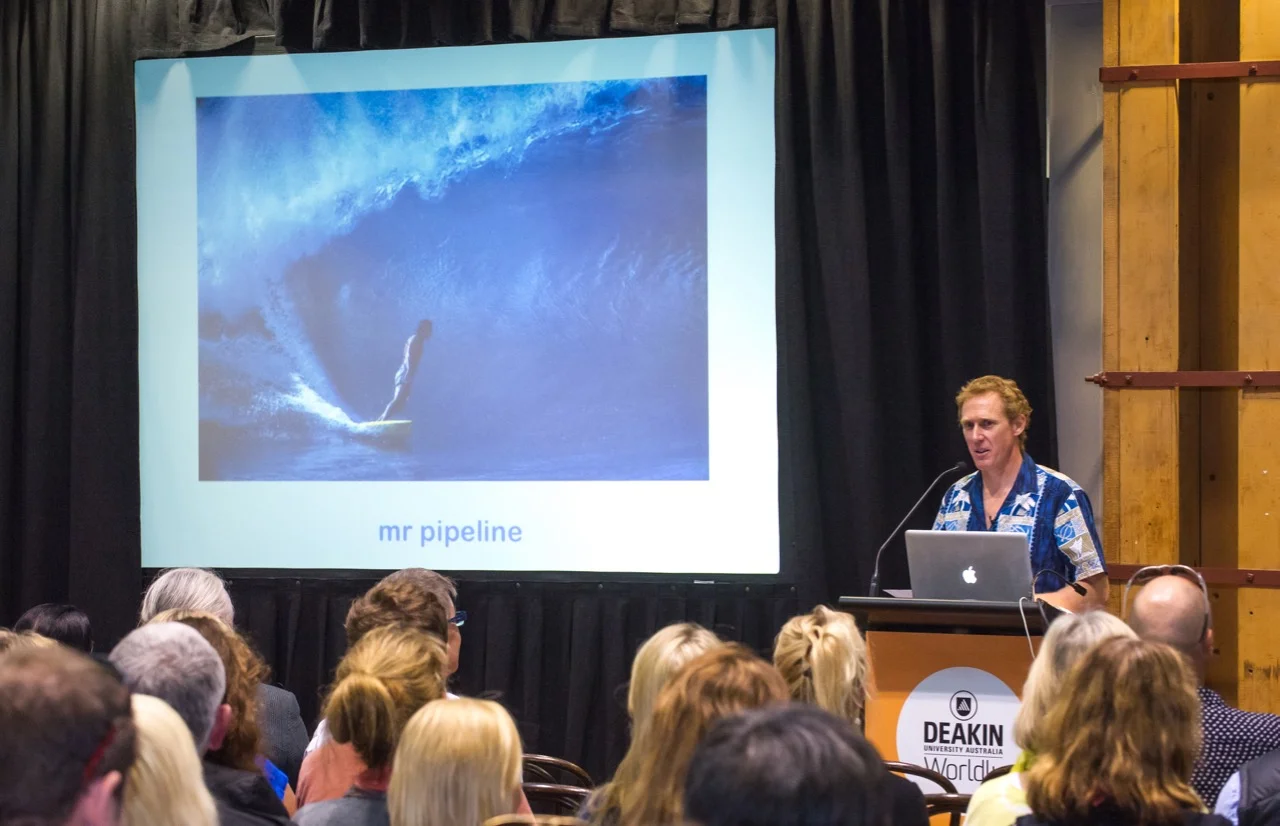
013: RICHARD BENNETT - Performance Psychologist & Author of 'The Surfer's Mind'
Available On All Platforms:
Show Notes for The Surf Mastery Podcast: "Unlocking Peak Performance with Richard Bennett: Mindset, Fear, and the Three C's of Surfing
How can you unlock peak surfing performance by mastering your mind, overcoming fear, and embracing spontaneity?
Join this episode of Surf Mastery Podcast as host Michael Frampton sits down with performance psychologist Richard Bennett, author of The Surfer’s Mind and former psychologist for the World Surf League. They explore how mindset, preparation, and intuition are the keys to surfing your best, regardless of the conditions. Whether you're a seasoned surfer or just starting, this conversation provides insights to elevate your approach both in the water and in life.
Discover the "Three C's" of big-wave surfing—calm, confidence, and commitment—and how they can transform your surfing experience.
Learn practical strategies to manage fear, improve focus, and cultivate mindfulness both on and off the waves.
Understand how elite performers across disciplines leverage preparation, intuition, and adaptability to achieve greatness.
Press play now to learn how to align your mind, body, and soul to surf with confidence, clarity, and joy!
Notable Quotes:
When people are being creative, that’s when we’re at our happiest and fulfilling our potential—whether it’s creating a piece of art or performing on a wave."
"Fear is often about the past or the future. The key is to come back into the moment, where you’re not at risk, and clear your mind to choose an ideal focus and feeling."
"The best mindset for big-wave surfing is calm, confidence, and commitment. Calm your mind and body, be confident in yourself and your equipment, and commit 100% to your decisions—whether it’s to go or to let the wave pass."
"When you’re thinking about preparation for performance, it’s about cultivating the best opportunity to be in that mental state and consistently so, while leaving room for spontaneity."
"The moment we think something’s possible, it starts to become possible."
"Preparation builds confidence—tune your body, tune your equipment, and develop an intimate relationship with the ocean."
"We need to look at our inner being and our own evolution as a person in the same way we look at the ocean—we flow and move."
"Commitment is 100% go, whether it’s paddling for a wave or deciding to let it pass. Hesitation is what puts you in the lip instead of under it."
"Elite performers constantly explore, discover, and embrace mistakes, knowing they are part of unlocking their next level of potential."
"When we resist natural processes, whether in the ocean or in life, we struggle. Flowing with them helps us thrive."
Richard was the former WCT Surf Psychologist and shares some valuable tips and strategies to help you master your own 'surfer's mind'
Richard's websites:
http://www.ompsychology.com/
http://www.thesurfersmind.com/
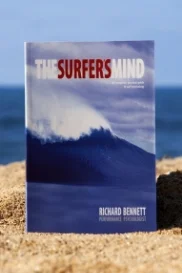
Get your copy of The Surfer's Mind here: http://www.thesurfersmind.com/book/

Key Points
Richard's background in psychology and how he got interested in applying it to surfing.
The importance of awareness and mindfulness in optimizing surfing performance.
Strategies for maintaining calmness through posture, breathing, and being present in the moment.
The three C's of big wave surfing: calm, confidence, and commitment.
Developing confidence through preparation of mind, body, equipment, and understanding the ocean.
The role of commitment in surfing, including letting go of good waves for better strategic opportunities.
Unlocking intuition through being calm, confident, and committed in the moment.
Observations of elite surfers' mindset of constantly exploring and believing anything is possible.
Transitioning from competitive surfing to other pursuits like big wave surfing or family life.
Outline
Introduction of Richard Bennett
Richard Bennett is introduced as a performance psychologist from Australia with extensive experience in sports psychology, particularly in surfing.
He obtained his Bachelor of Arts with an extended major in psychology in 1994, followed by an honors degree.
Richard served as the surfing psychologist for the World Surf League from 2000 to 2003 and authored 'The Surfer's Mind.'
He has worked with Olympic and Commonwealth teams in Australia, showcasing expertise in performance psychology across various sports.
Interest in Psychology
Richard's interest in psychology stemmed from a love for music, particularly artists like Pink Floyd and Jimi Hendrix.
His fascination with their ability to paint vivid pictures through lyrics opened his mind to creativity.
This appreciation for creative expression naturally led him to psychology, seeing connections between creativity, mental processes, and human potential.
During university studies, Richard chose to focus on psychology and found great value in applying psychological concepts to daily life, especially in mastering one's mind, emotions, and behaviors.
Surfing Journey
Richard's surfing journey began in childhood, playing in the waters of Mornington Peninsula in Victoria, Australia.
He started body surfing and using surf mats before getting the first surfboard at age 13.
The transition to board surfing was a life-changing experience, allowing them to have a dance floor on a wave.
Early experiences in the ocean were characterized by a sense of fearlessness and playfulness, which later informed their approach to surfing psychology.
Definition of Psychology
Richard defines psychology as 'life' itself, emphasizing its all-encompassing nature.
He breaks it down into three main components: the quality of thoughts, feelings, and actions or behaviors.
He stresses the importance of relationships in psychology, both with oneself and with others.
A holistic view of psychology forms the foundation of their approach to performance psychology in surfing and other domains.
Importance of Awareness
Richard identifies awareness as a crucial factor in optimizing one's psychology for surfing.
This includes awareness of one's inner world (thoughts, feelings, and responses) and the external environment (ocean conditions, safety considerations).
He explains that while sometimes acting on instinct without awareness can lead to good performances, conscious awareness becomes essential when pushing the limits of one's potential or facing intense challenges.
Three C's Concept
Richard developed the concept of the 'Three C's' for optimal mindset in big wave surfing.
Calm involves maintaining mental and physical calmness and having control over this state.
Confidence means having deep confidence in oneself, abilities, equipment, and support team.
Commitment requires executing every decision and action with 100% commitment, whether it's taking a wave or avoiding one.
Practical Advice for Maintaining Calmness
Richard provides practical advice for maintaining calmness while surfing.
Body posture should involve adopting a relaxed, upright posture with shoulders rolled back and chest open.
Breathing should focus on diaphragmatic breathing to activate the parasympathetic nervous system and induce calmness.
Mindfulness involves practicing awareness of the present moment, especially during paddling or between waves.
Building Confidence
Richard emphasizes the importance of deep, internalized confidence rather than surface-level overconfidence.
He presents a model of four core elements for building confidence in surfing performance.
These elements include developing mental strategies and a positive mindset, training physically to reach peak condition, ensuring gear is optimized for performance demands, and developing an intimate understanding of ocean conditions and surf zones.
Total Commitment
Richard stresses that total commitment in preparation leads to total commitment in performance.
He explains that 100% commitment, whether to take a wave or not, is crucial for safety and performance.
He notes that hesitation can lead to dangerous situations, especially in critical waves.
Richard observes that commitment helps surfers tap into intuition and flow state during rides.
Traits of Elite Performers
Based on experience working with top athletes, including surfers, Richard observes that elite performers share certain traits.
These traits include open-mindedness and belief in possibilities.
There is a continuous desire for improvement and evolution among elite performers.
They also possess the ability to transition skills and mindset to new domains after retirement.
Services Offered
Richard offers a range of services including one-on-one coaching (in-person, phone, and Skype).
He conducts group sessions for surf clubs, sponsored teams, and professional sports teams.
Professional mentoring is available for coaches, executives, and parents.
He works with young people on mental health and performance potential.
His approach combines Western scientific understanding of psychology with Eastern teachings and ancient wisdom.
Websites thesurfersmind.com and ompsychology.com provide more information about services and philosophy.
Transcription
A model or a paradigm to improve your surfing performance.
Welcome to the Surf Mastery Podcast. We interview the world's best surfers and the people behind them to provide you with education and inspiration to surf better.
Michael Frampton
Welcome to the Surf Mastery Podcast. Today's guest is Richard Bennett. Richard is a surfer from Australia, and Richard is a psychologist, performance psychologist, I should say. Richard got his Bachelor of Arts, extended major in psychology in 1994, went on to do an honors degree in psychology. Loads of other qualifications I could read out, but I'll just keep it relevant. Richard was the surfing psychologist for the World Surf League between 2000 and 2003, author of The Surfer's Mind, which is an awesome resource. Richard has done a lot of psychology work with Olympic and Commonwealth teams in Australia. I could go on, but I won't, Richard, because that's an impressive list of roles and qualifications you've got. But tell me, Richard, how and why did you get into psychology?
Richard Bennett
Well, when I was very young, Mike, something that I really loved and I still love to this day is music. I was really mesmerized by Pink Floyd and Jimi Hendrix and those kinds of artists a lot because of the actual sound that they produced, but because they just had such beautiful lyrics and they could paint a picture in your mind with the lyrics of their songs. Pink Floyd, The Wall, that's just a whole description of a life experience, beautifully delivered in music. And so for me, I think it just opened my mind to creativity. And when people are being creative, that's when we're at our happiest and when we're fulfilling our potential, whether it's creating a piece of art or creating a piece of performance like surfing a wave. And I think it just grew from there.
So I just naturally was drawn to creative people, creative expressions. Of course, the mind produces things spontaneously, which is an element of creativity. And we can do that, I guess, consciously as well, which was another good realization to have.
And then when I got into uni, I just really got into an arts course. So I had a good opportunity to just choose what I liked to do. And I thought, well, that's the time. Now's the time to really look at psychology. And I really loved the studies. And more importantly, I loved applying what I was learning to daily life, which is really the most important experience we have when we're learning to master the mind and our thinking, our emotional state, and our behaviors and performance.
Michael Frampton
Were you already surfing before you studied psychology?
Richard Bennett
Yes, I was very fortunate. My auntie built a beach house down on the Mornington Peninsula, which is where some surfing breaks like Cape Shank, Gunnamatta, Portsea, most people might know. And so when I came along, when I was born, we were pretty much all in the water before we could even walk, just playing in the bay side.
And then when we got a little bit older and a little bit more confident, playing in the shore breaks and the waves of Gunnamatta and Portsea, Sorrento, those kinds of places. But it wasn't until I was about 13 that I actually got a surfboard.
So before that, it was all body surfing, surf mats, and anything else we could get our hands on. And then when I was about 13, I got a surfboard.
Yeah, that was really life-changing. It was just fantastic to be able to stand up and literally have a dance floor on a wave, on a dance floor that's already moving.
Michael Frampton
So during your study and application of psychology, did you then realize how that was affecting what you did in the water?
Richard Bennett
Yeah, I think very early on, we're so playful as children. We haven't got that conscious awareness that, well, what I'm doing is consciously guiding and creating this movement in the water and things like that. But we're just so free and open with it. I think I started to reflect on those experiences because it was almost so much fun. I never ever had any fear in the ocean.
And then when I started to progress my surfing and wanted to challenge myself when that kind of fear came in, I think that was a little bit like, well, hang on, when I was less proficient and I was just playing in the ocean, I didn't have any of this fear experience. So now that I've got knowledge, how can I actually transform that to wisdom so I can have the child's mind as well as the value of the experience and the knowledge?
So, yeah, I just started to open my mind to thinking, well, quite consciously about my surfing and having a focus, and particularly when the fear might arise because of the size of the wave or the intensity of the situation.
Michael Frampton
Okay, so performance psychology has got a lot to do with reducing fear?
Richard Bennett
Yeah, I mean, all psychology has a lot to do with understanding fear and mastery, that divine message that our being produces. And sometimes it's produced because of a thought pattern or a belief that we might've had for a while that's no longer serving us.
So we wanna really transform that and open our potential even further. But other times, that message of fear is coming from a deeper part of our being, which is more about self-love and that perhaps the moment, the intensity, the challenge that's before us might be a little bit beyond us.
So there are some fears that are really good to challenge and to transcend, and it opens up another level of potential. And we see that with the world's best big wave riders.
And then other fears are really from our inner being, I think, and they're a real message of self-love. And again, even in a big wave riding or other kind of performance setting, if our being is telling us that we're not quite ready, for example, we might need a better breath hold, much better swimming, or other capacity that's required to meet the demands, better equipment, or that the performance space just isn't workable today, like the waves aren't makeable, then it's good to honor that fear and respond with love, which is maybe do a little more training or wait till it goes offshore tomorrow or the swell drops or something like that.
Michael Frampton
So we're kind of talking about awareness.
Richard Bennett
Yeah, certainly.
Michael Frampton
Keeping surfing out of it for now, how would you define psychology?
Richard Bennett
I define psychology as life. Because for me, psychology is, it is all about the mind as a starting point. And our mind is like our portal between the world around and our inner world. And a very practical way that I look at psychology is that it's about the quality of our thoughts, our feelings, and our actions or behavior.
So in a performance setting, how we ride the wave or decisions we make in a performance space. And then the other really important element of what psychology is, it's about relationships. And the first one is the relationship with self.
So how we think and feel about ourselves, our self-love. And the other relationship that's very important and can, in fact, be quite infinite as well is the relationship we have with the people and the world around us.
So family, friends, partners, acquaintances, business associates. And then, of course, the spaces we find ourselves in or we choose to step into, such as the workplace, study space, the ocean, wherever we like to play.
Michael Frampton
Okay. And then what are some key factors in optimizing your psychology when you're surfing?
Richard Bennett
Well, you shared it a moment ago, Mike, that awareness. If we're not aware about something, aware of something, then we don't have the opportunity to respond. And it's a little bit of a balance because, as you can imagine, sometimes when we're not aware of something and we just go by feel, you know, we actually do really well. And that's a lot of our experiential learning. But when you're really wanting to take yourself to the full limits, or maybe not the full limits, just to the full expression of your potential might be a better way to put it, and/or the full intensity and demand of a challenge that's before you, then you really do want to have an intimate awareness of the self and the inner world.
So again, the quality of how I think, feel, and choose to respond in this moment. And of course, an intimate awareness of the world around. And so, okay, if it's a big wave situation, what are the safe entry and exit spots? What are the currents doing? What's the tide doing? What's the lineup? What are the waves that are makeable? What are the waves that are not makeable? What are my lineups for my takeoff positioning? What's my exit strategy if all things go pear-shaped?
So to a point, not having awareness can be very playful and spontaneous. But once you're really wanting to consciously optimize your potential in a performance space, awareness, which is, you've probably heard the term, people would have heard the term mindfulness.
You know, for me, that's basically what mindfulness is. It's simply good awareness, clear awareness of self, your inner world, and the world around.
Michael Frampton
So are we kind of talking about living in the moment?
Richard Bennett
Well, the moment is where everything happens. And it's the space of time where we do have command to create change or to really zero in on a focus.
So, for example, the past, once something's happened, we can't really change that. But we can certainly learn from it and bring that learning into the moment to improve our focus, improve our feeling, or the delivery, the execution of our actions or performance.
And then, of course, the future can be a wonderful, rich space that drives a lot of love and energy. For example, I'm going to the Mentawais in September this year, and I've started my training program for that. And I just picked up my first of three boards. And so, you know, the future can be a really wonderful energy that, when we bring it into the moment, it energizes what we're doing in that moment. But yeah, awareness. Whenever we are consciously aware of something, whether it's our breath, whether it's a wave that we've just spotted that we want to catch, whether it's a topic that our friend or girlfriend or someone's just brought up in a conversation, then we're very much in the moment when we have that awareness.
So yeah, they certainly go hand in hand.
Michael Frampton
Yeah. Focusing on the past has been an issue for myself. And I see it with a lot of other surfers as well. And that, you know, during a surf, you might stuff up a wave that was kind of easily makeable, or you mess something up, and you paddle back out. And it kind of, it can almost ruin your surfing sometimes. Have you got any strategies for kind of getting over those mistakes quickly?
Richard Bennett
Yes, certainly. And with all psychology, there's some generic understandings and strategies that are useful. When I say generic, pretty much anyone as a starting point can start to go, okay, that might be something I could try, like a focus strategy or something that adjusts your emotional state. But a lot of the work I do with people is highly individualized.
So the first thing I do is understand who the human being is. And they just happen to be a surfer, or they happen to be an Olympic athlete or a Paralympic athlete. But understanding the human is really where I understand the natural creativities, the natural elements of who they are and how they think that are really gonna help in the moment, how they return to the ideal focus and feeling, if that was broken by a few moments of self-doubt or frustration because they just didn't optimize a wave that came through. But in a very basic sense, our actual focus, what we're thinking, is something that in the moment we can change. And if it's a heat, for example, when you have a strategy for a heat, that's always a good topic for the mind to come back to if it starts to go into doubt or frustration because the last wave you got, which could have been an eight or a nine, you turned into a five.
So coming back to your heat strategy, sometimes people come back to affirmations. Okay, I've got this good board. I know my plan is really good for this heat. I'm just gonna stick back to my strategy, or I'm gonna change to plan B because plan A is not working.
So those things can help. And then I teach people how to utilize their body and their expression to shift their mind, their focus, their feeling, because, as you might be aware, our body and our facial expression is far more communicative than the actual words we say out loud or we say in our mind. Now, of course, words that we say out loud or our self-talk in our mind can have very powerful impact. But when we simply adjust our posture and when we transform our facial expression, we start to shift quality of mind and quality of emotional state, which brings us back into the moment. And we've got kind of like a clean slate to choose confidence or choose happiness or choose the feeling that we want to, you know, when that next wave comes, we turn the eight into a 10.
Michael Frampton
Okay. What about yourself personally when you're free surfing? Do you have something that you would bring yourself back to when you're sitting at the back waiting and things?
Richard Bennett
Yeah, I've spent 20 years playing around with what goes on in my mind out in the ocean, Mike. And interestingly, how I first began to combine my surfing and my psychology to, you know, really start growing my understanding and my services in surfing psychology was I started to apply the mental strategies and understandings I was using with clients in a clinical setting, in a mental health setting with anxiety and panic, to my own fears in bigger waves and in more challenging conditions that I was putting myself in down the far southwest in Victoria. And so that's where things like the self-talk and the body, and particularly breathing, were really powerful experiences to do in the ocean consciously to create a focus and a feeling.
And then my first season in Hawaii was the 2001 winter, and I did a research project where I interviewed about 30, 35 of the world's best big wave riders. I did what was called a content analysis, which is when you've got a whole group of transcribed interviews, you and another researcher independently go through and analyze the content and come out with whatever themes continue to resonate.
And then you've done that blindly. So when you match how each researcher has interpreted their own analysis, you can really see themes that are consistent. And one of the questions in those interviews is, what's the best mindset to surfing big waves? And of course, like I was sharing before, the humans can have their own subtleties and nuances. But what that content analysis came down to was what I call the three C's of big wave riding, the best mindset, which I included in my book, The Surfer's Mind. And those three C's are C for calm.
So mentally and physically being very calm and in command of that calm state. Being confident was the second C. Confident in self, in your ability to perform, but your ability to manage any scenario that may come about.
And then, of course, confidence in your equipment. And then when it was about a support team, whether it was tow surfing, so your tow partner, or whether it was just the people who are around you to help if you needed that assistance, you had that confidence.
And then the third C was commitment. So every decision, every action was executed with 100% commitment.
So even if the decision was, I'm not gonna go that wave, then you backed that decision 100% and got out of its way. And of course, when you did make the decision to go the wave, absolutely no hesitation whatsoever.
So for me, I almost felt like I was cheating a bit mentally in my first season in Hawaii because I just had this beautiful opportunity to interview 30 or more of the world's best big wave riders and was able to very quickly turn the data around to come up with the three C's. So I drew three C's on my board, but those in kind of the shape of three waves together.
So it was just as well as being the actual content, calm, confident, and committed, it was just a beautiful visual symbol. So I didn't really have to think it anymore. I just see this symbol, and it was on the stringer, so up the front of the board.
So when I was taking off, even sometimes I'd see it and I'd just lock into that mindset when it was a sketchy drop on a big wave at Sunset or Waimea or somewhere like that.
Michael Frampton
Okay, so let's start with calm. So you mentioned the way you hold your posture and your breathing. Do you have any advice for people in that regard to keep calm?
Richard Bennett
Yeah, well, I mean, people who are listening now, you could even try it. Now, if your posture is in a position where muscles have to activate and hold you because your posture is a little awkward, and/or quite commonly when we're a little bit nervous or worried, we get tension across the shoulders and the neck.
So even if people roll their shoulders back and down and allow the chest to open and come freely forward of the spine, then you're already starting to calm yourself and come into really quite a composed posture, which is gonna help the mind compose as well. And the other thing about both physical and mental calmness, which is a very powerful and simple strategy, is to be mindful of your breath and your breathing style. And how we breathe has a very significant impact on whether we activate or whether we create a real deep sense of calm and serene experience within body and mind.
And in a very basic way, when we're really filling the upper thoracic with our breathing, you know, the upper middle lobes of the lungs, a lot of the hard wiring for the sympathetic nervous system, which is where fight or flight lives, that's all hardwired up top.
So when we're breathing short and sharp or large and heavy up top with our chest, we're actually activating the part of our nervous system that's purpose-built to activate us more. Whereas if we're breathing below the diaphragm or moving the diaphragm from below, that's where a lot of the hard wiring when it relates to breathing, a lot of the hard wiring of our parasympathetic nervous system exists. And so when you're guiding the movement of the diaphragm for your breath from below, you'll actually start to create a sense of calm and relaxation within body and mind. And once the mind's calm, it's a lot clearer and easier to choose responses rather than have thoughts fire off and be reactive.
Michael Frampton
Yeah, so when you're calm and relaxed, you make better decisions.
Richard Bennett
Yeah, that's right, and that's a big part of mindfulness too, you know. A difference between someone who's been mindful and mindless is that the person that's been mindless is whatever stimulation they're presented with, they simply react without thought. And those reactions come from ingrained patterns of thinking or belief about self or the situation. And if they're dysfunctional, then that reaction is gonna be dysfunctional, that action is not gonna work. Whereas somebody who's mindful, the initial thought, because if it's an old pattern, will arise, but the mindful person will observe that and make a choice about whether they respond to that thought or that pattern of thinking or belief, or whether they choose a different one.
Now, there's a good golden rule in a lot of sport, and particularly when it's dangerous situations, is you wanna practice all this in training before you implement it in competition. In other words, if you're, and again, this is some of the work I do with people, training people around their mindfulness in a safe space and then introducing that into the danger zones that they might go. Along with surfing, I work with extreme athletes in a whole range of pursuits. Then you've actually developed that skill before you're implementing it in the high-risk situation.
So yeah, being able to observe thoughts and choose a response or choose not to respond, because a lot of thoughts arise and we just let them fall away, and then they don't have an impact. Whereas a lot of society conditions us to react to everything.
So it's good to be coming back to how nature designed us to think, which is really absorbed with our focus and be conscious and have free choice and free will.
Michael Frampton
Okay, so keep calm and relaxed through, so just a nice relaxed upright body posture and nice relaxed deep rhythmic diaphragmatic breathing could be some basic advice for surfing.
Richard Bennett
Yeah, and practicing those experiences, for example, when you're paddling. Because fear is quite often about the past or the future. I just got smashed on the last wave, and I'm paddling back out, and I'm all adrenalized and activated, worrying about getting smashed on the next one.
So that's a beautiful time to get your paddling in rhythm with your breathing and open your mind to that awareness. And then, of course, if the thoughts are out of the future, it's the same thing. I'm going to get worked next wave. We want to come back into the moment, and right now in the moment, you're in the channel paddling, so you're actually not at risk of anything.
So being aware of that will help people calm in the moment, clear the mind. With a clear mind, you're much easier to choose ideal focus and feeling.
Michael Frampton
Yeah, and the next C you mentioned was confidence. Yeah, that's right. Can you be too confident though?
Richard Bennett
Yeah, for me, lots of continuums people use are high and low. So you want to, it's probably preferable to be higher on confidence than lower. But for me, when it comes to emotions, and not just confidence, all our emotions—happiness, you know, contentment, things like that—yes, there's a low end. But for me, I'm more interested in going deeper into the feeling.
So I want to have a deeper sense of confidence about myself and my ability to be successful or to manage whatever scenario that I encounter. You know, I want a deeper level of happiness or contentment in life, not so much a higher level of happiness, which might, you know, in a clinical sense, might end up being mania.
You know, so it's a good point that you raised, Mike, because people can become overconfident, and when we're overconfident, we're usually overactivated at that sympathetic nervous system level. So our thoughts are firing off a lot quicker. We might take unnecessary risks, and when the thoughts are racing, the quality of our decision-making tends to drop out as well.
But when you're going deeper into a sense of confidence, which is where the confidence itself and the thought about it starts to dissolve, because when you're in a deeper sense, it's more about there's just this profound trust and knowing.
So we don't actually have to think about the confidence or generate it anymore because we've gone to that deeper level of just knowing in our being with every cell in our body, every part of our ethereal being that I'm here, I'm in the moment, I'm ready, let's bring it on. You know?
Yeah. But on a practical sense, in my book, I present the four core elements of performance as a model or a paradigm to improve your surfing performance, and it applies to life too. But in the confidence situation, the four core elements—mind, body, equipment, ocean.
So when you train your body to 100% of its potential, you're naturally going to feel more confident. When you tune your equipment to 100% of its potential and to be specific for the performance demands, the waves that you're surfing, you'll be really confident in your equipment.
And then when you understand the ocean, you develop an intimate relationship with the ocean, and you're very much in tune with the current surfing zone that you're intending to surf. Well, without even doing a mental strategy, because you've tuned body, equipment, and the ocean, the mind's very free and open, but you already have a very deep felt sense of confidence.
And then, of course, you can have specific strategies that enhance confidence in the moment too, if required.
Michael Frampton
Okay. Commitment. That's a big one.
Richard Bennett
Yes. Yeah. Yeah, it sure is. And in that space, in that performance space, you know, for me, total commitment to preparation really is the basis for total commitment in the moment.
So if I haven't done the work, if I haven't tuned my body, if I haven't tuned my equipment, if I'm not dialed into the ocean, in the moment when that wave comes, if it's a critical situation, an intense situation, my commitment might falter because I haven't demonstrated that commitment through the preparation process. And as I was sharing before, commitment is 100% go, just 100% go. Eddie would go.
So there's no hesitation. And it's okay if the go is to go to the channel and not take that wave, and whether it's a big wave setting or a competition setting.
You know, we're probably watching Fiji recently. And to not go, such beautiful, perfect waves, I mean, that's some of the surfing in my book, The Surfer's Mind, talk about that. The challenge, the mental challenge to let good waves go because you're trusting that there's a better one for the actual competitive scenario that's going to offer more points. And with J-Bay coming up, that's definitely another place where the decision to not go is actually, can be a really good one and totally change your heat and your position in the heat.
Michael Frampton
So commitment, that's another thing I noticed, and I'm interested to know if you agree. If you commit 100% to a wave and you don't make it, it's actually safer than having that little bit of hesitation and getting caught up in the lip. Do you agree?
Richard Bennett
Yeah, certainly, because quite often that little hesitation is the reason you're caught up in the lip because it was literally one paddle stroke or a half-hit of paddle stroke that meant you're now caught in the lip instead of under it and at least, you know, getting a rail in. And if it's going to close out and not be makeable anyway, at least getting out of the way of the lip, whether you pull in, pull through, you're able to straighten out. But you're quite right, that moment of hesitation is what decreases, for example, the power in your muscles. It might only be by 20%, but that might be the fine line between you not getting under the lip and being in the lip.
And of course, if there's a moment of realization that this is unmakeable, when you've got full commitment, you're going to be more relaxed about it because you're just purely in the moment with what's happening. And quite often, we surprise ourselves with what we do make because that thought that comes in is not based on reality until reality unfolds. And the other thing is that if it does end up in a wipeout because we're so in the moment, that's when we're at our most calm and serene.
So I'm not worried about the future. I'm going to drown and not hold my breath enough or what happened last time. It's like, okay, you just deal with what's happening right now, and most wipeouts are pretty brief in relative terms.
Michael Frampton
Yeah, and with small waves, sometimes I don't think people commit enough. I mean, I've been working on commitment a lot lately, and I've found even just the small waves, just a couple more strokes and you might be surprised. You might actually catch that small wave.
Richard Bennett
Yeah, that's true. And it's very much in the moment when it's about manoeuvres. And it is an irony because when you're riding a wave, you're wanting yourself to be operating at the highest level of our mental game, which is our intuition, where it's very anticipatory. And it's kind of almost, well, it is totally in the moment, but we're so aware that we can sense what's going to happen and the body can just move. The body has its own intelligence and can just move.
So the commitment is about locking in. It helps you lock into that mindset if you like, because then you don't want to be thinking too much through the waves. You can see people riding waves and a section comes that they could do a turn on, and you see their bottom turn becomes two or three stages instead of just that one flowing rail and then up the face into the lip or whatever the manoeuvre potential is.
So that commitment, locking that in before you paddle, as you paddle in, then the mind can just be free to flow intuitively with the performance opportunities and demands of the wave.
Michael Frampton
Okay, so being calm, confident, and committed is the key to unlocking intuition?
Richard Bennett
I certainly think it's one of the keys. Yeah, this is the beautiful thing of the mind. It's kind of, we're always learning, and people discover all sorts of ways to create, you know, to really cultivate intuition. I've done a lot of work with Olympic sailors, and when, out on Sydney Harbour and other places, another way that I've assisted them to develop their intuition for the feel of the water, the feel of the wind, the full sail, those kind of elements of their performance is when you've got a lot of big, clear, open water, so it's very safe, you ask them to close their eyes, and the moment you let go of a sense, the other senses heighten.
And another part, because our mind and body are just absolutely fantastic creations of nature, because they're purpose-built to adapt moment to moment, you know.
So once you close your eyes, then all of a sudden your intuition kicks in because I have to survive and thrive here, you know. And it's incredible to see these sailors start to get a full sail and be much more subtle in their steering and their movements of all the ropes and how they assist their boat to perform. Because they're doing it through feel, which is more intuitive, which is not so much about the thinking process. Ideally, the thinking process is done in preparation, and then it's a feel when it's a performance.
Michael Frampton
So having confidence in your preparation is definitely going to give rise to more intuitive decisions. Yeah.
Richard Bennett
That's right because what essentially is happening is you're creating the best opportunity. Because it's not certain and, in fact, a component of being intuitive is that there's spontaneity.
So if I am too regimented and too rigid with my thinking and preparation and I'm trying to control it and make it happen, by default it's not going to happen because my intuitive mind just goes, well, my intellectual mind, my cognitions are in charge at the moment, I'm going to have a break. So it's actually when you open up the space for spontaneity that intuition goes, cool, you need some help, and then sometimes it takes over.
So that's where you see people in incredibly intense performance moments, you know, a tennis player blindly diving and somehow getting a winner shot off, or the Formula One racer taking a line on a bend that's just never been taken before. And then, of course, all those moments you see people so deep in the tube, literally riding up through around foam balls and things like that. I mean, that's all got to be by feel because you don't even have time to think.
So when you're thinking about preparation for a performance, it's about cultivating the best opportunity to be in that mental state and consistently so. But of course, spontaneity's got to be part of that, so we need to allow ourselves to be vulnerable, allow ourselves an element of our performance to not be in our control. But isn't that part of the love of surfing, you know? You just don't know what's going to happen when you take off on a wave, and that's why we just take off on wave after wave because it's so... We're incurious, the child's mind is just frothing, so curious about what's going to happen.
Michael Frampton
Yeah. When you were working with the World Tour and obviously you got to meet a lot of the best surfing in the world, what are some things that you noticed that were very different about them to the general population?
Richard Bennett
Well, the things that I noticed, and not just on the surfing tour, now that I've done about a dozen games campaigns—summer and winter games, Paralympics, Olympics, and things like that—and I've worked with musicians and dancers, actors, actresses, business people, the people that are operating at a level where they're constantly exploring and discovering and prepared to make errors because they're so sure that they either do have a process or they're going to find a process that unlocks that next level of potential, that next layer of achievement or goal achievement.
That's certainly something that I see, that I saw amongst the surfing that were really doing well on the tour, that their mind was really open to anything's possible. And I'll never forget when Laird towed into the Millennium Wave. We were all in Hossegor at the time, and it took a little longer to get to a start. There probably was internet then, I can't remember, but the story flooded through that Laird had ridden this wave that was just beyond, totally beyond what anyone thought was possible. And from that moment, the moment we think something's possible, it starts to become possible.
Even things like flying to the moon and being able to have Skype calls with people around the world and things like this, it all happens because people start to think it's possible. And that's part of a mindset of an elite performer in any domain is that if I can imagine this, then now all I've got to do is work out how to create and deliver it.
Michael Frampton
Okay, so that elite performer still has that deep yearning to get better.
Richard Bennett
Yes. Yeah. Yeah, absolutely, and it's one of the significant challenges that I work with athletes on when they're making that transition into retirement because they're no longer day in, day out stepping onto their performance domain where every cell in their body's dancing, where their love and passion is and has been for many years, and where they're on that projection of continuing to evolve a potential. And it can be, you know, mentally, emotionally, really quite crushing for some people.
And so going through that process with them and then assisting them to find another space where they can feel like they're optimizing their potential is really important and really helps them apply that experiential process they've been in with their performance to the new domain, particularly where most sports are time-limited because you can really physically only peak for a certain period of time.
So this is where you see, you know, a range of surfing like Shane Dorian and guys like that who have transitioned from an elite WCT level surfer to now an elite big wave rider. It's where you see people, sometimes people transition into other areas of life that they've loved anyway, like music or something like that. And then another really profoundly important and beautiful space to evolve as a human is through growing your family, cultivating a relationship with your partner, and raising happy, healthy kids and the next generation of grommets kind of thing.
So that all comes down to perspective because a day at the beach with your kids might not be like the days you used to have at Pipeline getting shacked all day in 10-foot pits in a practical sense, but in a felt sense, it might even be more profoundly fulfilling when you allow yourself to transition mentally, emotionally into that space.
Michael Frampton
Yeah, I guess that comes back to holding on to the past again, doesn't it?
Richard Bennett
Yeah, it can be. And you know, like from birth through the lifespan to death, the body changes. No matter what we do, the body is youthful, it grows, it has an adult phase, it ages, and dies. Now, the mind is the same, so it's kind of ironic. It's like trying to resist a natural process. Well, we know what happens in the ocean when we resist natural processes in the ocean. So we need to look at our inner being and our own evolution as a person in the same way. We are our own ocean, you know, we flow and move.
Michael Frampton
You work one-on-one with people, am I correct?
Richard Bennett
Yeah, I do one-on-one in person, by phone, and by phone and Skype around the world. I do group sessions, everything from board rider clubs to sponsor teams to actual professional teams of athletes, not just surfing, but I work with footy, rugby, all sorts of different professional sports. And I work with any human who is interested to perform better, to understand themselves better, or perform better. So I do a lot of professional mentoring now with coaches, with directors and board-level people in companies, with managers.
I actually do mentoring with parents on raising kids and how they can be evolving and approach that from a performance psychology perspective, which really cultivates the health, mental health, and potential of their kids as well as keeps their sanity, which is very important. Yeah, so my three main areas are performance psychology, obviously in sport and performance and artistic pursuits and adventure pursuits, so team sports as well, individual and team.
And then I do a lot of professional mentoring in the professional setting, whether that's, you know, a doctor, a lawyer, a surfing coach, anyone in their professional domain. I do it for tradies, you know. And then my third area of expertise is really with young minds, with young people, and cultivating mental health, good healthy mental development, as well as performance potential. And that's something I do directly with the young person as well as, when the parents are interested, actually with them on their parenting styles.
And I apply performance psychology paradigms to that. For example, the parents, if you like, are the coach, coaching staff, the coaching team, and the kids are the athletes. And so ideally, the intention is to be redundant because it's the athletes that perform. In other words, it's the kids that live their life, and our role is to cultivate their potential and instill values, principles, team spirit, if you like, so that when they're out on their own, they're making good decisions, their psychology is sound, their thoughts, feelings, actions, and their relationships with self and the world are very sound so that they can not just survive but thrive in whatever performance space, life setting they choose to step into or find themselves in.
Michael Frampton
And how do people find out more about you, Richard?
Richard Bennett
Well, everyone can simply contact me through my website. I've got two websites. I started thesurfersmind.com in 2001, I think, and that's just been a wonderful space to grow my understandings of psychology, to do that in the sport and lifestyle that I love. It's just been fantastic, and it's been a real niche area that actually a lot of the Olympic and Paralympic athletes I've worked with have really applied surfing psychology. So a lot of them out there, when you see them in Rio, are actually coming from a mindset that was born from surfing and surf psychology.
But my new practice is called ompsychology.com. That's the website, ompsychology.com—o-m-psychology.com—being the seed mantra of the universe because a lot of my practice is drawn, and a lot of my services are drawn, from Eastern teachings and ancient wisdom and universal laws of mother nature, human nature, along with the Western understanding, the scientific understanding of what psychology is and how human experiences can be transformed from both the Western science as well as the Eastern traditions and wisdoms. And yeah, so ompsychology.com is where people can find me, and that's got, I guess, a little broader, a little bit more broader information about me and my services in terms of those three areas—my performance psychology, my professional mentoring and performance, mindfulness, heartfulness with people in the professional domains, and then my work with young minds and young people. And there is, I do transpersonal psychology, which is guiding people's inner evolution from a mindfulness, heartfulness, spiritual perspective as well.
Michael Frampton
Alright, awesome, and I'll put links to both of those websites in the show notes. And I can't, I think every single surfer out there needs a copy of The Surfer's Mind on their bookshelf. It's such an awesome book and resource, so you can get a copy of that from thesurfersmind.com as well.
Thank you so much for your time, Richard. But before you go, I've got a quick-fire four questions. What's your favourite surfing board at the moment?
Richard Bennett
I'm all out of boards. That's why I just picked up a new one yesterday. It's a 6'0" Morris Cole, and I'm frothing to put some fins in it and take it surfing. I'm sure it's gonna be my latest favourite board.
Michael Frampton
Okay, awesome. Refining things down to that magic board. Yeah, okay, and who's your favourite surfer?
Richard Bennett
Probably my brother. He got me into surfing. I just love sharing waves with him, it's so much fun. Yeah, you know, I really couldn't name one. And I really couldn't name one, you know. If you asked me when I was 10 years old, I'd probably have an answer, but now that I've had just the dream of meeting lots of the surfers that I really admire, and not just in competitive surfing, I was so fortunate to meet people like Peter Cole and Clyde Aikau and, you know, Derek Donner and guys like that through my travels and work in surf psychology around the world that, yeah, I can't choose one. I love everything everyone gives to surfing, you know.
For comedy, I think you still can't go past Mad Wax. I remember seeing that when I was a grommet, and that was fantastic. Yeah.
Okay, I wouldn't say favourite, but I would definitely say I love music, and I tend to play around with what music I might listen to before a surfing session. And in general, it's some pretty mellow stuff when it might be quite, you know, quite big or quite challenging and intense because I just find that mellow music is a very natural way to have that inner part of my being nice and calm and peaceful because the adrenaline is going to come, so I don't need to already be adrenalised on the sand.
And then sometimes when it's one of those cold onshore days, not too much waves, and it's more about, well, I'm just going to have a party in the ocean, whatever it delivers, then I might listen to some music that's a bit more fired up. But I would say I'm still stuck with Floyd and Santana and Hendrix and all those musicians I listened to when I was a grommet because they've got the whole range of that style, and for me, it's just still music that resonates so deeply. Yeah.
Michael Frampton
Okay, favourite professional surfing? Do you have a favourite surfing vid or surf film? Cool, and do you have a favourite pre-surfing song or album?
Timeless albums you've mentioned there and artists again. Richard, thank you so much for your time. I really appreciate it, as I'm sure the listeners do as well. And I just urge everyone to go and check Richard's website out and get a copy of that book. Thanks, Richard.
Thanks for tuning in to the Surf Mastery Podcast. Again, I'm your host, Michael Frampton. Make sure you subscribe so you can keep up to date with the latest interviews. Please share with your friends, check us out on Facebook at Surf Mastery Surf, and if you're on iTunes, please go and give us a little rating. That'd be awesome. Until next time, keep surfing.
Richard Bennett
Thanks, Mike. I really appreciate the opportunity to share with you through your Surf Mastery Podcast. Thank you.
13 Richard Bennett - Performance Psychologist & Author of 'The Surfers Mind'
For the passionate surfer—whether you're a weekend warrior, a surf dad, or an older surfer—this podcast is all about better surfing and deeper stoke. With expert surf coaching, surf training, and surfing tips, we’ll help you catch more waves, refine your paddling technique, and perfect your pop up on a surfboard. From surf workouts to handling wipeouts, chasing bigger waves, and mastering surf technique, we’re here to make sure you not only improve but truly enjoy surfing more—so you can get more out of every session and become a wiser surfer. Go from Beginner or intermediate Surfer to advanced.