
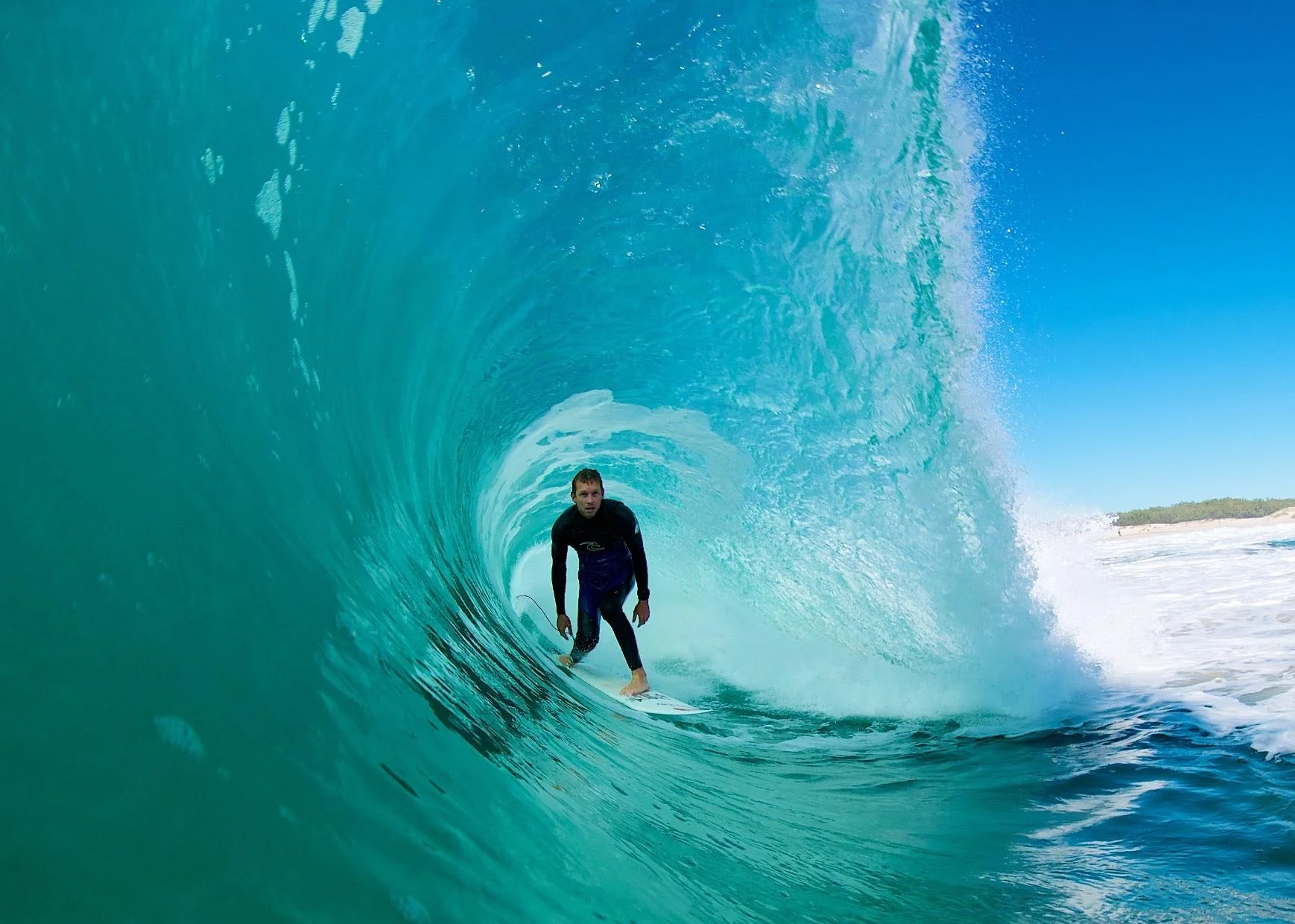
014: CLAYTON NIENABER - Surf Coach, Ex-Pro Surfer, Surfboard Shaper.
Available On All Platforms:
Show Notes for The Surf Mastery Podcast: The Foundations of Better Surfing with Clayton Nienaber
What’s holding you back from reaching your full surfing potential? Former WQS surfer and top surf coach Clayton Nienaber shares how small changes in mindset, technique, and training can transform your surfing journey.
Do you feel stuck in bad habits, overwhelmed in crowded lineups, or unable to progress despite countless hours in the water? Clayton explores how to break through these barriers by focusing on muscle memory, wave reading, and body control to improve flow and consistency.
Learn how to stay calm and relaxed to eliminate anxiety in crowded lineups.
Understand why mastering muscle memory and cross-training are the keys to better performance.
Discover actionable steps to improve your bottom turns, twists, and wave reading for more enjoyable sessions.
Listen to this episode now to discover practical techniques and expert advice that will elevate your surfing to the next level!
Noticeable Quotes:
"Surfing more doesn’t mean improving; it could just mean reinforcing bad habits."
"The key to great surfing is slowing down and staying in the wave’s power zones."
"Muscle memory and cross-training are the foundations of better surfing."
"Anxiety in the lineup fades when you project confidence and stay calm."
"Good surfing is all about flow—connecting turns and maximizing the wave’s energy."
Clayton shares his unique perspective on advanced surfing techniques, surfboard function and reading the ocean. He breaks down top-to-bottom performance surfing, surfboard function, how to get waves in a crowded line-up and much more.
Claytons website:
https://train.ombe.co/?via=surfmastery
Key Points
Clayton explained that surfboards are designed for turning, with features like the wide point in the middle, rounded rails, and banana rocker to facilitate turning and acceleration.
He discussed the importance of leaning into turns, especially at high speeds, to engage the rails and maintain speed and flow.
Clayton emphasized the difference between pushing hard with the back foot, which can cause stalling, and leaning and twisting to maintain speed and flow.
He explained the concept of 'power zones' on a wave, where the water draws off the bottom and the lip throws water down, and the importance of joining these zones through turns.
Clayton highlighted the role of body positioning, such as arching the back and keeping the head up, in maintaining pressure on the tail and enabling easier paddling.
He discussed the importance of reading the wave's power and energy, slowing down when the wave slows, and speeding up when the wave speeds up.
Clayton stressed the need for relaxation and breathing when surfing barrels, as well as anticipating and reading the wave's behavior.
He emphasized the importance of training muscle memory through activities like skateboarding and balance exercises, rather than relying solely on surfing to improve technique.
Outline
Introduction of Clayton Nienaber
Clayton Nienaber is introduced as a former WQS surfer, experienced surfboard shaper, and surf coach.
He has worked with notable surfers like Geordie Smith and Travis Logie.
Clayton has been shaping surfboards for 20 years, starting by experimenting with reject blanks in a spare shaping bay.
His shaping career grew organically as people kept returning to order new boards from him.
Clayton competed in professional surfing before the transition to the World Qualifying Series (WQS), during the Association of Surfing Professionals (ASP) era.
Beginning of Coaching Career
Clayton's coaching career began unexpectedly when they observed a customer struggling with a board they had shaped.
By providing technique advice, the customer's performance improved dramatically, leading to increased satisfaction with the board.
This experience led Clayton to offer free advice to anyone riding their boards, which in turn improved their performance and increased sales.
The symbiotic relationship between shaping, coaching, and sales became apparent, forming the foundation of Clayton's coaching approach.
Modern Surfboard Design and Technique
Modern surfboards are primarily designed using computers, ensuring a decent baseline quality for average surfers.
Surfer technique is often the limiting factor in board performance, not the board itself.
Improper technique, such as pushing too hard with the back foot during a bottom turn, can make a good board seem faulty.
Understanding how surfboards work is crucial, noting that every aspect of a surfboard is engineered for turning, from the wide point in the middle to the banana rocker.
Fundamental Techniques: Leaning and Twisting
Two fundamental techniques in surfing are leaning and twisting.
Leaning is crucial for high-speed maneuvers, similar to riding a bicycle at high speed.
Twisting is more effective at lower speeds and for vertical surfing.
Rail design facilitates these movements, with the round rail providing hold and the hard edge allowing release.
Shifting weight forward and leaning into turns improves control and speed generation.
Bottom Turn Technique
The bottom turn is described as a compressed lean, similar to a sprinter's starting position.
A squatting position should be avoided as it can lead to unbalanced projections.
Shifting the center of gravity forward onto the front foot enhances turning ability.
Leaning into the turn allows the wave to pull more of the board up, creating speed and flow.
Top Turns and Vertical Surfing
For top turns and vertical surfing, twisting is essential.
Twisting is compared to skateboarding on a ramp, where a twist is necessary to change direction at the top.
Timing of the twist is crucial, occurring just before the front foot hits the lip line.
Progressive surfers tend to shift weight to the front foot and lift the back knee, freeing the tail for pivoting and twisting.
Surfing Small Waves
Maintaining a positive mental attitude and body language is important when surfing small waves.
Keeping the back straight, hands up, and staying light on the feet is recommended.
In very small waves, standing up straighter rather than leaning prevents the board from catching rail.
Twisting becomes more important in these conditions.
Reading the wave's power and extracting energy efficiently separates professional surfers from average good surfers.
Navigating Crowded Lineups
Observing other surfers' body language helps identify those less likely to compete aggressively for waves.
Watching for surfers with uncoordinated movements indicates they are more likely to fall, creating opportunities for others to catch waves.
Highline Wrap Maneuver
The highline wrap, a maneuver between a re-entry and a cutback, involves a huge twist using the knees, waist, and hands.
It is compared to a golf swing, emphasizing the sequence of movement from knees to torso to shoulders and head.
Using simple trigger words or visualizations, like throwing a football, aids in executing the maneuver effectively.
Barrel Riding Technique
Matching the wave's speed is crucial for barrel riding.
Boards with round tails and less width in the tail are generally better suited for barrel riding.
Maintaining a straight back, pointing hands forward, and using leg compression and extension controls speed and position in the barrel.
Relaxation and breathing inside the barrel improve control and enjoyment.
Cross-Training and Muscle Memory Development
Cross-training and muscle memory development outside of the water are strongly advocated.
Relying solely on new equipment rather than improving physical skills is criticized.
Tools like carver skateboards, Bosu balance balls, slacklines, and trampolines help train muscle memory and improve surfing performance.
Proper training makes surfing easier, and coaching develops good habits more efficiently than just surfing frequently.
Transcription
By joining those power zones and utilizing the wave's energy, you'll have flow in your surfing.
Michael Frampton
Welcome to the Surf Mastery Podcast. We interview the world's best surfers and the people behind them to provide you with education and inspiration to surfing better. Welcome to the Surf Mastery Podcast. Today, my guest is Clayton Nienaber. Clayton is a former WQS surfer. So basically, he rips. He has been shaping surfboards for a long time. And Clayton is a surf coach. Clayton has worked with the likes of Geordie Smith. Anyone else famous, Clayton?
Clayton Nienaber
Travis Logie. He was on the CT for a while. There's a couple of young up-and-coming guys coming through the ranks at the moment, like Beric De Vries. I think he just made quarters at the Belito contest at the moment. There's the QS there. There's 10,000.
Yeah. And just a couple of the crew from South Africa.
Michael Frampton
So how long have you been shaping boards for?
Clayton Nienaber
I've been shaping boards for 20 years.
Michael Frampton
Wow. And what made you get into that?
Clayton Nienaber
Loved surfboards. I was intrigued by them. I lived with a shaper, and he had a spare bay, and I often got to just mess around on the reject blanks. Just trying them out, trying out new ideas. And I'd had to sell those boards that I made to basically pay for the new one, just to keep it ticking over. And I eventually got it sold.
So you just keep coming back and ordering new boards from me. So it just snowballed from there.
Michael Frampton
Yeah. Okay. Wow. And you were on the WQS for a while?
Clayton Nienaber
Yeah. Well, it was almost before it was the QS. It was back in the ASP days. It wasn't the WCT and WQS then. It was before the changeover.
So it was quite a while ago.
Michael Frampton
And now you're doing some surfing coaching. So what got you into that?
Clayton Nienaber
I made a board for a guy, and he said the board went not so well. And then I said, fair enough. Let's go watch you surfing, and you can tell me what's going wrong. And when I saw him surfing, he was making a whole bunch of fundamental errors.
So I called him in, showed him a few pointers, and he came back a month later and said it was his best board ever.
So I figured, well, that didn't cost me anything except my time. And now I've got a person who loves the board.
So whenever I went free surfing, I'd just watch anybody riding my boards and give them free advice so that it made it look like everyone who was surfing my boards surfed them better. So it kind of went hand in hand. The guys enjoyed the coaching. They surfed the boards better. The boards went better. Sales went up.
So yeah, it stemmed from there.
Michael Frampton
Interesting. So a board that's good might work really well for a really good surfer or even two really good surfers. A board might work well for one, and then someone with a different style of surfing, it doesn't do so well.
Clayton Nienaber
Yes. Look, boards nowadays, most of them are designed on computer.
So it's not like the old days where you got the planer out and you tried to get the hard spots down and the twists out of the blank before you even started shaping. So you're generally getting a pretty decent board. And if they have gone and mass-produced some of the boards, they would have used a model that went fairly decent.
So your average surfer has got the ability to go out and purchase a board that's okay. The problem is that surfers have a lot of technical faults.
So a really good example of a technical fault is somebody on the bottom turn. If they push super hard with their back foot, the nose will lift up, the fins will probably give, and the board will slide out. They'll go back to the shaper and say, hey, it's a shit board. It keeps drifting off the bottom turn. Now they'll try to get the shaper to make another board that makes the board hold off the bottom turn a bit more instead of perhaps just a slight change to their technique, in which case the board would be fantastic.
Michael Frampton
We spoke last week, and you asked me the question, you said to me, what is a plane across the water? And I was wrong. I was surprised to find out.
Clayton Nienaber
So most people have no idea what they're riding or how they're supposed to ride it. So I go around giving surfing seminars, and one of the things that I do first off is explain how surfboards work.
So every single aspect of a surfboard is engineered around turning. It's the reason why the wide point's in the middle of the board. It's the reason why your rails are round. Same reason why your fins point towards the nose and why you've got a banana rocker and not a flat rocker to plane across the water.
So when you actually turn your surfboard, you have less board in the water and therefore less friction, and your board will accelerate. If you stand on top of your board and stand on that curve and weight it down, you're going to slow down because of more friction. If you try to push hard on the tail, you're basically stalling. You may get a direction change but with the loss of speed.
So if you figure out what your board's for—it's designed to turn—then the question is, well, how do I turn it? So the answer to that is simple. It's like riding a bicycle. At high speed, you have to lean, and when you're going a little slower, you've got to twist the head or basically twist.
Michael Frampton
So leaning on the bottom turn?
Clayton Nienaber
Well, at high speed. So you can come out of the barrel going 100 miles an hour. If you try to twist, you'll probably just fall off the board.
So you've got to lean when you're going fast.
Michael Frampton
Okay. When.
Clayton Nienaber
You lean, your surfboard rail's round. It's designed to roll. By shifting your weight, it's the same as riding a bicycle that induces the turn, and it gives you the hold of the bottom turn.
So if you think about a board, it's shaped, the left side is the same as the right side. Yet on a wave, say for example, if you're a natural footer going on your forehand, the right side has to hold off the bottom, and the left side has to release off the top.
So you're getting a surfboard that's the same on the left and the right side to try to do two completely opposite things. So the way you do that is through the lean and the twist. It's through two different body movements. The lean gets the rail in the water. When you load your rail up, the buoyancy in your rail will pop you out with some speed and draft. The twist keeps the rail sort of out of the water and your board level so that at a low speed, you don't bury the rail and fall off.
Michael Frampton
So you're saying you wouldn't twist through a bottom turn.
Clayton Nienaber
Okay. So that's an interesting question. I actually, probably the right answer to that is that you can do both. The better you're surfing, the more you can start to manipulate that lean and the twist. If you're doing a bottom turn and you want speed down the line, if you do a hard twist, it ultimately shifts the weight onto your back foot, and that will slow your board down.
So the twist is only good if you're going to do vertical surfing, because if you hit the lip, that lip, along with gravity, will hit the bottom of your board and push it back down the wave with speed. But if you do a hard bottom turn, burn off your speed, and try to drive out into the face, you're going to be left out there with no speed.
So if you're going to go for an open face carve, it's best to do a bottom turn where you lean and you maintain your speed and your flow out into the open face to be able to complete that.
Michael Frampton
Okay. And so in the top turn, that's the twist?
Clayton Nienaber
Yeah, pretty much. It's the same as if you're riding a skateboard on a skate ramp. If you went to the top of a ramp, you get to a point where you lose your speed, and you have to twist to come back down.
So surfers are famous for going up to the top, looking down the line, and their boards go flat and they lose speed. Or they'll go to the top, push as hard as they can on their back foot, stall, and lose speed. Or otherwise, they lean and catch rail. When the simple answer is to twist, look down, and that'll rotate your board and bring it back down again.
Michael Frampton
Okay. Okay. And if we go back to the bottom turn, the bottom turns that you see really good surfers in good fast waves, they really drive a lot of speed out of the bottom turn. Is that because of how much they're leaning?
Clayton Nienaber
Basically, as they go down into the bottom of the wave, what a wave does is it draws water from the bottom up to the top and then throws it down. So you've got two motions happening. You've got the drawing of the bottom and then gravity throwing the lip down.
So when good surfers go to the bottom and they lean, it allows the wave to pull more of their board up to the top. So that's one aspect. The second aspect is that if you lean, you become weightless, and then it's a lot easier for that wave to pull you up to the top. The third aspect is if you're touching the water, what happens is your surfboard rolls onto the rail, and you've got less board in the water.
So there's less friction. So you end up going faster. Once your surfboard rail's in the water, your bottom curve actually helps to turn you up to the top of the wave.
So there's a lot of things going on there, which all help to generate the speed and flow off that bottom turn.
Michael Frampton
So it's a compressed lean?
Clayton Nienaber
Yes, it is a compressed lean. But when you say compression, that's a tricky word. A lot of guys don't interpret that properly. You can compress like a heavyweight lifter who sort of squats. That will look like a poo man. Your knees will point in different directions, and it does nothing for you. Or you could lunge forward on your compression, like a sprinter going to start a 100-meter sprint where your knees are facing forward, your shoulders are over your front foot, and you're just leaning over and touching. And when you project out of that, you'll project forward as opposed to, say, a person who squats, whose knees are pointing in different directions. When he projects unbalanced, he kind of doesn't know in what direction his bottom is turning towards.
Michael Frampton
Yeah. Okay.
So it's that sort of, you know, Craig Anderson comes to mind. He's got a very exaggerated sort of more of a lunge than a squat position.
Clayton Nienaber
All your great surfers have that knock-kneed lunge. And what it is, it just shifts your center of gravity forward onto your front foot, and that allows you to turn.
So look, here's an interesting thing. Your mid rail by your front foot is round, and on your back foot, you've got the hard edge. The hard edge slices water apart. It's like a knife, and that gives you a release. The round rail, water almost adheres to the round rail or sucks to it, and that's what gives you hold. On a cutty, you'll find your front foot never slides out. It's always the back foot that slides out.
So if you can do a bottom turn and shift your weight onto your front foot and lean, your board should never slide out because your board rolls and water can adhere to that. But if you're pushing hard on your back foot, that's when your board starts to slide out because that hard edge cuts the water apart, and there's nothing for your tail to hold on to.
Michael Frampton
I see. I would have—logic would say the opposite, like a sharp edge would cut into, like, you know, on a snowboard, but it's different for water.
Clayton Nienaber
Okay. So a simple experiment. Get a block of butter, pull a knife through, and you'll see the knife comes away clean because it slices. Now take a tablespoon and pull that through, and butter will stick to the tablespoon.
Michael Frampton
Yeah, that's true. I've never—if I've ever slid out on a bottom or a top turn, it's always the back foot. It's always the rear of the board. You never lose your control from the center of the board, do you?
Clayton Nienaber
Okay. So that tells me straight away, without seeing you surfing, that you're standing up too straight and you're pushing on your back foot.
Michael Frampton
Yeah.
Clayton Nienaber
Yeah. So you need to shift your—you need to get that whole Craig Anderson knock-kneed lunge forward and then lean on the bottom turn, and then you'll get way more speed, draft, and hold.
Michael Frampton
Sometimes, a lot of the times, I'm doing a really nice bottom turn, and I'm definitely—it feels like more of a lean than anything else, and I'm driving up towards the face with so much speed that I almost don't know what to do with that speed. I almost feel sometimes I'm going too fast. Do you hear that much with surfers?
Clayton Nienaber
You said that you have an issue of sometimes coming out of a bottom turn and going too fast up into the lip? Okay.
So pretty much what you need to do then is burn speed off. So you can either try surfing with your nose towards the beach before you bottom turn, or otherwise even fade back like Andy Irons used to do.
So if you're on a right-hander, fade left a little bit, burn some speed off, and then get your timing right.
Michael Frampton
So there is such a thing as too much speed?
Clayton Nienaber
Yeah, definitely. For me, speed is evil. You have to surf a wave at the speed of the wave, and I'd say that 90% of people try to surf too fast. The number one thing that they try to do is just stand up, go fast, and they always end up surfing outside of the pocket, mid-face, and try forced turns.
So you need to slow down, try to surf in the pocket, and then try to do the lean and the twist and keep it as tight as you can inside of the power zones. Now, the power zone is where water draws off the bottom, where the flat starts to bend, and it's where the lip throws water down. You want to join those two dots as tight as you can in a figure-eight movement.
Michael Frampton
But that sounds like saying that I'm going too fast. I mean, especially when you look at the criteria for good surfing, speed is the first thing they say. And I understand that if I'm driving down the line too fast, but can you surf vertically too fast?
Clayton Nienaber
No. So what you're not understanding when I say too fast is that, okay, there's three elements in surfing. There's the wave, and you should surf at the same speed as the wave's traveling. Yes. Then there's your surfboard. You should be surfing off rail, and you should be combining all these elements through doing turns. Because if you're turning, your board's on rail, and it's cutting through the water and accelerating. If your board's flat, it's friction slowing you down, and you're making yourself heavy.
So what most people do is they stand up mid-face and gun it down the line and try to get speed because, with speed, they feel that now I can do turns. So what they should do is they should take off, drop in if it's possible, use the wave's gravity to give them the speed that they're looking for, lean on the bottom turn. The leaning through their surfboard will again give them more speed, and then try to join the top and the bottom through doing the twists and the leans.
Michael Frampton
Okay. And what's the timing of the twist?
So let's say you've drawn off the bottom, nice bottom turn, and your nose is pointing up towards the most critical part of the wave. When do you start your twist?
Clayton Nienaber
Okay. So can we backtrack a little bit?
Yeah. All right.
So imagine if we are going to do long jump. We've all done it as kids at school.
So what's the technique for that? You've got to run up to the jump as fast as you can. You'll spring, throw your hands, throw your legs, and try to cover as much distance as you can. Okay.
So that involves a lot of speed. All right. Yep. But let's think about the next discipline. We have to do high jump. Do we use the same approach for high jump or a different approach?
Michael Frampton
Yeah, it's different, isn't it?
Clayton Nienaber
Okay. So we take a different line. We almost go into an L shape, and we reduce our speed so we can get more pop.
Okay. So we want to surf vertically, which is like the high jumper.
So therefore, speed isn't a necessity. We just need enough speed that we can do the pop that we want.
Michael Frampton
Okay.
Clayton Nienaber
Now, most people just think, number one, with speed I can do anything. With speed, they race out into the flats, and they can't debug at all. Slow down, surf in the pocket.
Michael Frampton
Yeah. Okay. And when you're looking at a section, should you be trying to hit the start, the middle, or the end of a particular section?
Clayton Nienaber
Can you clarify that for me? When I'm at a section, should I be trying to hit this?
Michael Frampton
Well, let's say you've popped up, you're cruising along, and the wave is starting to section. Let's say a five-meter section of the wave is going to break faster than the next part of the wave, which was maybe fattening out a little bit.
Clayton Nienaber
Yeah.
Michael Frampton
Should I be looking at the start of that section, the middle of that section, or the end of that section?
Clayton Nienaber
Okay. Probably the best way for me to explain that is just to use some examples. Whenever I see guys surfing, I normally find their closeout move is the strongest move that they do. And I generally find they get the timing spot on because they can see it, they can anticipate it, and they tend to go to the bottom, to the top, hit it, and land nice and smoothly. But when you try to get them to do that as their first initial move, they can't do it.
So most surfers are used to racing down the line, looking for that down-the-line section, and then the timing's good. Now, the problem with surfing—if you're trying to anticipate hitting a section five meters away from you—is it's like a boxer stepping into a sparring ring and his opponent's five meters away from him and he's outside of that strike range.
So he's going to take a running punch, and it's not the right technique. You have to get in the right strike distance to be able to do your jab, your hook, whatever you want to do.
So in surfing, when you're coming off the bottom, generally straight up at 12 o'clock, that's well within your strike distance. You could jump, you can reach that, and surfing in that tight sort of one to two-meter radius around you is the best part to surf. If you're trying to surf looking five meters down the line, you're always going to overextend, maybe run out of speed, and have bad timing.
So you need to slow down, go straight into the bottom, lean, try to look up as vertically as you can possibly go, and then twist around, look back to the bottom. That's going to give you speed again, and by joining those power zones and utilizing the wave's energy, you'll have flow in your surfing. If you're trying to gun it five meters down the line, you're creating speed through your body, and if that section goes flat five meters down the line, you've got to keep your body creating speed.
So you've got to wiggle the whole entire wave. Whereas the person surfing a little bit tighter and within strike distance will always have flow because he's always got the wave pushing him, the entire wave.
Michael Frampton
Okay, so there's always—there's a section right there that you're not looking at that you should be hitting rather than looking at what the next section is doing.
Clayton Nienaber
Yeah, so a lot of people have probably an anxiety issue or a confidence issue where they'll come off the bottom, and they'll feel like, no, I can't do it, or they hesitate a little, or even better yet, they do too short of a bottom turn. So that will project them mid-face, and then they have to try to chase that section down the line. Just holding that bottom turn for a little bit longer will allow you to get to the lip. Or another interesting case is if you push too hard in your bottom turn, you'll find that you might project down the line rather than projecting up to the top of the wave.
Michael Frampton
So there's a difference between pushing hard and leaning hard.
Clayton Nienaber
Yeah, the leaning hard would be what the guys are doing at Bells. That's the equivalent of riding a bicycle at a high speed and leaning over, trying to get your hand to touch the water so you're on rail. A hard push, your nose comes up, you have a loss of speed, you get a direction change. And you can only push for however long you can extend your leg. And if that isn't long enough, you're going to project down the line.
So sometimes, for example, if you're riding a bicycle, that turn might take you three seconds, whereas a push is probably only half a second.
Michael Frampton
But when you do a hard bottom turn that is leaning, are you holding your stance, or are you compressing or extending as you come out or through and out of that turn?
Clayton Nienaber
Okay, so look at skateboarding for the answer to the second half of that. When you drop into a ramp and you want to go up the other side, you have to extend and throw your hands to make yourself lighter to get the lift.
So then look at a bicycle. If you go into a turn, while leaning, you're getting your turn. When you can see the part of the wave that you want to then project to, you need to straighten up, lift, and throw your hands into that direction, kind of like you want to jump there.
So the lean is just purely the turn. Then the lift or the projection comes from you throwing your hands and your body and extending.
Michael Frampton
Okay, and then the twist. Yeah. And so the timing of the twist, would that have... I've heard that you're supposed to do it just before you think your front foot is going to hit the lip line. Do you agree?
Clayton Nienaber
So there are various sections and various twists you can do. I'd say with more progressive surfing, guys are tending to shift the weight onto the front foot and lift the back knee up. And what that does, it frees the tail around.
So they're standing on the front foot and pivoting and twisting. So ideally, when you hit the lip, you want the lip to hit the bottom of your board.
So it's got a surface to hit against and to push you back down the wave face again. If you hit that lip sort of flat, so the lip swallows your rail, it's going to get swallowed, and there's nothing to push you back down the wave again.
So the later it is, the more you want the lip to hit the bottom of your board. The earlier you go into it, the more you want to twist to get your board down the wave face. Does that make sense?
Michael Frampton
Yeah. So what about surfing really small waves? What are some common mistakes you see with people?
Clayton Nienaber
Yeah, just the mental attitude. They'll get down and go, it's small. And straight away, you see the body language drop, the shoulders round, the hands drop by the side. And even when they stand up on the board, that body language just screams like, do I really have to go do this? Whereas look at a guy like Filipe Toledo. When he's surfing, he holds his body weight really well. He's super light on his feet. And that's from picking his hands up, keeping his back straight, and the compressing and decompressing of his knees enables him to then surf rail to rail and get the speed that he's looking for.
So just that mental approach and trying to be light on your feet makes a world of difference.
Michael Frampton
But let's say you want to surf a one-foot softish wave on a small wave performance shortboard. Why is the bottom turn still a lean, right?
Clayton Nienaber
No, not necessarily, because the faster you go, the more you lean. So if you're riding a tiny wave, chances are you're barely going fast.
So you need to stand up a little bit straighter because if you lean, you might catch rail. It's kind of like if you ride a bicycle too slow, it's going to wobble. You can't lean. You've got to keep your balance. You've got to stand up straight. Then you're going to be twisting a heck of a lot more.
Michael Frampton
The biggest difference you see between good surfers and great surfers is when the waves are small. The great surfers just—it doesn't seem to stop them. They still surf so dynamically.
And then, you know, the average surfer struggles sometimes even just to catch the wave.
Clayton Nienaber
Yeah, okay. What separates the pros from, like, an average good surfer is that the pros know how to read the power in a wave and how to extract the energy out of it. When the wave slows down, the pros slow down. When the waves speed up, the pros speed up. Whereas your average surfer will probably just try to surf as fast as he can. A good example would be if you were body surfing, you can only really surf at the speed of the wave. You can't swim out ahead of it because you'll slow down. When you body surf, you raise your head, and you put your arm out, and you lean into the wave. That leaning allows the wave to pull you up and to give you lift.
And then that, in turn, pushes you along. So in small waves, a lot of people don't use the power of the wave. They don't tap into it. They can't lean, and they don't use their bodies to their full potential.
So if you've got uncoordinated arm movement, it's like a runner running. Instead of pumping his hands forward, he throws them behind and to the left and all over the place. It's not going to be conducive to creating speed and drive.
Michael Frampton
So what's some advice for the average surfer that wants to get better at surfing small waves?
Clayton Nienaber
Try to surf with your back straighter and rather bend your knees instead of bending from your waistline. If you've got your back straight, you're going to find that you're able to twist a heck of a lot more. When you twist, you can see your target and anticipate the section. If you're not twisting, sometimes you might have a blind side to the area that you're trying to surf towards. And you can't anticipate what to do, and your body's not going to be responding correctly. You'll probably look a little bit uncoordinated in the maneuver.
Yeah. Back straight's a big one.
Michael Frampton
Yeah. So combine that with a better attitude, and yeah, your small wave surfing will get better.
Clayton Nienaber
Well, look at a heavyweight boxer. They're supposed to be lighter on their feet. A guy like Muhammad Ali—float like a butterfly, sting like a bee.
So your bottom turn is just a setup. You don't want to push the hell out of it at the bottom turn. You want to save that speed and then twist the hell out of the top turn. The reason why the twist is more effective than the push—if you're in a swimming pool and you turn your wrist and twist, that'll throw a big, huge fan of spray. If you stand in the pool and just push your hand, it doesn't throw nearly as much spray. Which one's more effective, the twist or the push?
Michael Frampton
Yeah, the twist.
Clayton Nienaber
Yeah. And in boxing, your power comes from the twist. A big problem in surfing is a lot of surfers are just heavy back foot, and they'll push hard in the bottom turn and push hard in the top turn.
And then their surfing is just very stagey and stop-start. And then in between those heavy back-footed stop-starts, they try to surf as fast as they can to make up for it.
Yeah, there's no flow, and it looks ugly.
Michael Frampton
Yeah, flow is pretty important.
Clayton Nienaber
Flow is so important. Every single good surfer like Tom Curren, Taylor Knox, Rob Machado—they all just flow.
Michael Frampton
I've been watching Kelly Slater at Cloudbreak recently. He tends to—I mean, most good surfers do—they tend to hang back a lot on their bottom turn. Yep. Does it take a lot of practice to kind of learn where the fine... it seems to me like a very fine line to be kind of surfing right at the energy where the wave’s hitting the bottom in big waves like that. Is that something that you recommend someone practices?
Clayton Nienaber
Yeah, definitely. A lot of surfers start to stagnate in their surfing, and it's due to bad habits. When you surf and if you're faced with a new situation, you tend to think back on your long-term memory and try to get situations that you can refer to. And whatever you've done in the past, you bring that muscle memory to help you with the current situation.
So that stagnates your surfing. The more you put yourself out of the comfort zone—for example, take the line that Kelly does—you might find that you have a couple of wipeouts, but eventually, you'll start to relax in that situation and then go, hang on, maybe if I try something new like throw my hands, point my knees forward, or hit the lip a little bit closer rather than looking down the line. That's when your learning process starts again, and you can start to teach yourself how to surf again. But just by surfing sort of mid-face and repeating old habits, your surfing's never going to improve. You have to draw different lines. You have to try to emulate and copy your favorite surfers.
Michael Frampton
What's the biggest mistake you see intermediate and experienced good surfers making with their board choice?
Clayton Nienaber
A lot of guys are going really short on their surfboards at the moment. So boards are—you can compare them to cars. If you drive a bus, which is like a longboard, you're going to have a real crap turning circle. If you drive a Mini, it's going to be able to fit in absolutely everywhere—a joy to drive in traffic—and that's kind of like riding your sort of really small wave boards. Now, the problem with going that short is that you have to have good style, good muscle memory, and good technique to be able to ride these small boards.
A good example—if you take off on a wave and you're a little bit wobbly getting to your feet, and when you stand up, you're a little bit uncoordinated with your movements, and you're not quite hitting the power zones on point, you're a little bit off. If you jump on a tiny board, you're going to be going all over the show, and you're going to have very little control. The longer the board is, the more time it gives you to actually get your body right to then start surfing a bit more on point. Once your body's right, you can then start downsizing your surfboard length.
Michael Frampton
Do you think that someone should be looking for a board that's as... if their standard shortboard should be about the same height as them?
Clayton Nienaber
It's a tricky answer to give you there. What I'm saying is that probably a lot of people have jumped on the bandwagon due to clever marketing, and they're all riding shorter, fatter boards, and they're blinded by volume. When you ride a short, fat board, it's got great acceleration, but that'll put you out in the face somewhere. Generally, they're super wide, so when you try to lean, there's too much surface area under the board, and you end up surfing flat. Or all that width gives you a delay in your bottom turn because you've got to displace all the water under the rail.
Then, as well, to make up for the volume for the short board, the rails have to be thicker. And if your rail is thick, it takes a lot more effort and grunt to try to bury that rail into the water.
So what's happening— you've got this fast board projecting into the flat, and you've got a delay because of the width and the thickness. The guys take these small wave boards and try to ride them in some fairly decent waves and slightly bigger waves, and that's when you see them coming unstuck. It's fine riding those boards in small, sort of knee-high to waist-high waves where the conditions call for it, but for some guys, that will be the one and only board that they'll ride in everything, and that's when you see all the bad habits starting to creep into their surfing.
Michael Frampton
What's the biggest bad habit you see as a coach?
Clayton Nienaber
For intermediates, when they paddle in, the right way to paddle in would be, say, if you're surfing at Snapper or Burleigh or Currumbin, always swing towards the foam so that you know what the wave is doing.
Michael Frampton
Sorry, swing towards the foam? What do you mean by that?
Clayton Nienaber
Yeah, so if you're sitting staring at the horizon, watching the sets come in, some people will swing away from the foam and paddle for the shoulder. You inevitably end up paddling towards the channel in deeper water, and it's harder to catch the wave. If you swing towards the wave, that way you know no one's on your inside, your paddle in will be towards the beach, a lot straighter, and you won't be as anxious because you can see where the wave is. Your timing will be good, and then all you've got to do is just look right when you're paddling, and you'll be able to read the section. If you swing away from it, you don't know when the wave is coming, you don't know who's on your inside. You generally find those people paddling so hard for the wave, and then they stop and pause and are like, gee, have I got this thing? And then yeah, their timing's out.
So that's some of the sort of intermediates and beginners' mistakes that they generally make.
Michael Frampton
Okay, obviously that gives you a later drop in.
Clayton Nienaber
Yeah, I'm more concerned that guys paddle too hard for waves, and they're freaking out. They're anxious, they don't know when it's going to hit them, when they're catching it, and it just makes a big mess in the water for them. I'd rather have the guy be calm, watch the wave, paddle less, get your timing right. As the wave lifts your tail up, give three or four strokes and glide in.
Michael Frampton
A lot of the best surfers, they almost sometimes don't even paddle for the wave. They just kind of swing, and it's two strokes, and they're in.
Clayton Nienaber
Yeah, so what it is—as the wave lifts your tail up, you're getting lift off the bottom of your board. If you put pressure on your tail, that means there are two opposing forces.
So the board has to go somewhere, so it gets pushed forward to reduce that force. So when you paddle in, if you lift your head up real high, it pushes the tail in, and then when the wave lifts the tail up, that board's got to go somewhere, and it goes forward, and that's your speed.
Michael Frampton
As you're popping up, you mean?
Clayton Nienaber
Yeah. While you're paddling for the wave, you arch your back as hard as you can, and you get your head up, pressure on the tail. With your head up, it's easy to kind of visualize or to see the wave. It's kind of like yoga, you know, you do the down dog and then the up dog?
Yeah. Yeah, it's that—keeping your head up, your shoulders up, arched back. That puts pressure on your tail and allows you an easier paddling.
Michael Frampton
So we kind of touched on it before, we were talking about Kelly Slater's bottom turn. Yeah. Do you mean kind of delaying the bottom turn so you get more of a better view of what's happening in front of you rather than looking down the line?
Clayton Nienaber
Okay, so...
Michael Frampton
I mean, maybe a better way to put it is, do you think people are doing a bottom turn too close to the shoulder and not close enough to the pocket of the wave?
Clayton Nienaber
Okay, if you try to do a bottom turn with your nose facing down the line, you'll probably project laterally down the line. But if you drop in with your nose facing the beach, what it does is you get speed on the takeoff, first of all. It creates space between yourself and the lip so that you can actually lean into the turn. If you're facing down the line, sometimes you don't have enough room, and the lip could be breaking almost right on your inside rail.
So that surfer trying to create the space will then race further down the line before their bottom turn and maybe not be in the right part of the wave. So it's important that you've got space and you've got speed. Then when you lean in the bottom turn like Kelly does, it's kind of like a bicycle. You're leaning, and you're holding, and he's got so much time then to adjust in that position before he hits the lip.
So Kelly is slowing his surfing down, getting more speed, and giving himself time to prepare for the oncoming section.
Michael Frampton
You work up on the Gold Coast as a coach. Now, what's some advice for getting waves in a crowded situation?
Clayton Nienaber
Are you going to give my tips or are you? All right, it's pretty easy. Generally, in the session, there are about 200 guys in the water. Of those 200 guys, some of them are just making up numbers.
So you need to look at people's body language—the guys with the slumped shoulders, looking down. They want the waves desperately, but they're not going to fight for them. You can see the surfers who know what they're doing. They're the ones with the arched back, chins up high, kind of making eye contact, like staring all the bad surfers down. Straight away, when someone stands up, you can look at the body language. If their knees are compressed and they're throwing their hands forward—and you see Mick Fanning doing it down the line all the time—that body language, you can almost anticipate what the next move is going to be through that body language.
An example—if I were to jump, I would compress, throw my hands back, and then lunge forward and throw my hands forward. You can anticipate I was going to do a jump. But if someone's got gangly hands and they're all over the place and they're just uncoordinated, chances are that they might fall off pretty soon.
So you just keep watching those guys. And when they do fall off, then you just paddle in and drop in.
Michael Frampton
Okay. So a lot of it's got to do with reading people, getting more waves in the crowds.
Clayton Nienaber
Yeah. Well, the one thing that you can control is your body.
So if there's someone out there who can't control their body, chances are that they're not going to make the section. They're going to go over the falls. And what they do is—weak creatures of habit.
So if he's done it once, he'll do it again and again. So you just got to know who those people are. And if you let them go ahead of you, chances are they will take off or fall off. And you just keep picking waves off from them. And yeah, then surfing gets fun again. Not for them, but for you.
Michael Frampton
Okay. Let's talk about the cutback. Or more specifically, now let's talk about what some commentators call the highline wrap. Where it's that turn that Mick Fanning, Joel Parkinson, Kelly, John—where it's not really a re-entry, and it's not really a cutback either. It's kind of like a really tight cutback in the pocket. That's something that has always fascinated me, especially when you watch, you know, even Jordy Smith is a great example—the way he actually comes out of those turns with more speed than he went into them.
Clayton Nienaber
Yeah, well, the idea behind doing turns is that it's to create speed. So if you're doing a turn and losing speed, you didn't do it right. Okay, so for that highline wrap, you'll probably find that the section up ahead is slowing down.
So they're able to then—it’s a tight part of the wave that they want to sort of manipulate and increase their scoring potential. So that highline wrap is, it's a huge twist. And what they do is they start to point their knees, twist the waist, and throw their hands back towards the foam. It's kind of like a golf swing. You start with your knees, torso, shoulders, and head. And the longer you hold that turn for, the more spray it's going to throw.
So if you look at Parko, his wraps are slightly more drawn out, but he looks a bit more powerful and throws more spray, and he looks a lot smoother. The quicker you try to force that wrap, it might look a little bit jerky, and the spray won't be as big and as powerful. And that's more like a Filipe Toledo wrap.
Michael Frampton
Okay, so it's all about the twist again.
Clayton Nienaber
Yeah, look, if you're an intermediate wanting to do that, there's a lot of thought that goes into it. And in that split second, to try to get your body to do all of those things—knees, arms, look, twist—you're never going to do it. But if you can anticipate the section and go, okay, I want to pass a footy ball to the foam, and you look back and pretend to throw a footy ball at the foam, guaranteed you'll do a fairly decent little wrap.
So I find with surfing, you need to give yourself little trigger words. And the more ridiculously silly the trigger word is, the easier it is to surf. The more complicated you make the thought process of a maneuver, it's going to elude you and be really hard to achieve. You need to go and skateboard and practice the muscle memory. Go into it, and while you're doing all the technique on the skateboard—because the environment's not changing—figure out, well, it's like a footy pass, and yeah, that works for me. Go in the water and go, okay, footy pass. And you'll find it works.
Michael Frampton
Yeah. Yeah. I just point people towards one of your websites, mavensurf.com, where you've got some recent blog posts that kind of go into what we've been talking about in a little bit of detail.
Yeah. And I'll put links to that website in the show notes for folks listening as well. And so you mentioned the surfboard is designed to turn. Now, that's cool, but how does that work with tube riding? Can we break down tube riding?
Clayton Nienaber
Okay. So you've got to surf a wave at the speed of the wave. When the wave slows down, it enables you to sort of go into the face and do a bottom turn and top turn. But when it speeds up, there's not a hell of a lot of options. You can only sort of sit in the pocket in the barrel.
So generally, boards suited for barrel riding are more your round tails and boards with a little bit less width in the tail because what the wave's doing is sucking water off the bottom and throwing off the top. So it's like a spiral effect.
So the narrow tails tend to enable you to surf a little bit deeper and control the amount of water flow coming up and reacting with your board. The more your back is straight and your hands are pointing forward—I think even on Instagram, you can see the Mad Hueys joking about it, like pushing the trolley cart through the barrel because their hands are up in front of them. It looks like they're pushing a trolley. Yeah.
So when you push a trolley, you've got your back straight, and you've got your hands forward, but your legs are compressing and extending. And whenever they compress, what happens is you put pressure onto your rail. When you pressurize your rail, the wave will then lift you up. And when you extend, you get the lift.
So that's how you sort of pump inside of the barrel using your compression and extension. And when you're surfing, wherever you point your hands is pretty much where your board's going to go.
So if you're just pointing both hands towards coming out of the barrel, generally, that's where your board should track towards.
Michael Frampton
What about slow barrels?
Clayton Nienaber
So slow barrels, that's got a lot to do with the setup. You want to almost delay the bottom turn, kind of like what Kelly was doing in Fiji.
Well, those weren't slow barrels. Get your timing right with the draw of the water off the bottom. If you look at the bottom of a wave and see if the water's drawing up really fast, you know it's going to barrel. If it's drawing up pretty slowly, it's probably going to be a soft burger of a wave.
So you can anticipate what the wave's doing by looking down and reading it. If you take off, go to the bottom, and touch the water, you can start to feel what the wave's doing. It's almost like body surfing. You can actually feel the power and energy of the wave. If you're touching the water, generally, it means you've leant over. Then you've got your rail in, and you can bottom turn and set up with a little bit of speed.
So reading the bottom and engaging with the bottom is going to give you a lot more sense of the environment around you and what the wave's doing. Then it's a case of when you're in the barrel, you need to actually relax and start to breathe.
Some guys pull into the barrel, and they tense up. They hold their breath. And if you tense up, your body moves almost like jerky. But if you're relaxed, you can actually start to go over foam balls. You can compress, extend, and start to move around the barrel and start to enjoy it.
So you have to be able to breathe inside the barrel and have an awareness of what's happening around you and try to relax.
Michael Frampton
Yeah, you've mentioned being calm and relaxed quite a lot.
Clayton Nienaber
Yeah, totally. Yeah.
Michael Frampton
Where do you think most people's anxiety comes from?
Clayton Nienaber
It could be in a crowd. You could not have a wave and sit in a session for like an hour, and finally, the wave comes through, and you're going in your head, "Don't stuff this one up."
So that in itself could be some anxiety. You could paddle for a wave, and there are five other guys fighting you for it. When you get your wave, there could be 10 guys trying to drop in on you.
So you're like chasing it down the line. "Hey, get off!"
You know, so there's so much that causes you to have that inner anxiety. The good surfers are the ones who know how to deal with it, slowly surfing down and starting to go top to bottom. When you're going top to bottom, if someone's trying to drop in on you, they're going to get sprayed in the face. And the guy going top to bottom—people can read that body language and anticipate what's going to happen. And they tend to let you have that wave and not want to hustle you.
Yeah.
Michael Frampton
We're running out of time. Is there maybe one more thing we could talk about? What comes to mind when I ask you that question?
Clayton Nienaber
So something that I want to touch on is that surfers are a weird bunch. If you look at golfers, they'll happily practice a putting stroke before they play the main shot. If you look at boxers, they'll walk down the stadium to go to a fight, and they'll shadowbox before they step in the ring and go fight an opponent.
So they'll do visualization and muscle memory training before they go and do whatever they do. But if you look at surfers, they're too cool to go and train muscle memory.
So they'll go surfing for probably an hour to two hours. When they catch a wave, the wave only lasts five to ten seconds.
And then they expect themselves to be amazing surfers and to just nail the muscle memory. The one thing that we have 100% control over is our bodies. But surfers don't train their bodies. They'll rather go rush out and drop $800 on a new board to try and make them surf better. And that's like a runner going and buying brand-new sneakers thinking that that's going to make them run a marathon and not having training to help them achieve the result.
So it's super important that we jump on Carver skateboards and we train the muscle memory. And we go to the gym and use the Bosu balance balls. Anything—any crossover training, slacklining, trampolines, whatever it may be—that can help you to train your muscles to get the response that you want so that you can relax and then just get a trigger word to reenact that response.
Michael Frampton
So, and obviously, surfing coaching encompasses all of that stuff. And you're up on the Gold Coast, right?
Clayton Nienaber
Yeah, I have my little showroom in Currumbin, and I do a lot of seminars out of there. I get surfing clubs coming around, and we chat to all the surfers there, and we just try and light them into what good surfing is and how to do it properly. We cover boards, how to read waves, and then proper muscle memory. I mainly just teach the guys and give them loads of homework to go do.
And then if we do coach, I like to tackle one area of their surfing, whether it's a bottom turn, twist, whatever it may be, and just keep it small and simple. When they've achieved that, they need to go surfing, practice the maneuver that they've learned before they can come back and coach again.
Yeah. So it's just like building a house—just good foundations from the start and back to basics. Slow down, read the wave, try to use the lean, use the twist, and look where you're going.
Michael Frampton
And folks can find out more about you at claytonsurf.com.au. That's claytonsurf.com.au. And again, I'll put a link to that website in the show notes, as well as the website we mentioned before, which is Maven Surfing, which has got some of Clayton's blog on there as well. And some videos as well, which are pretty cool. You can kind of get a little visual on what Clayton's talking about when he talks about skateboarding. I think that's really cool what you're doing with the skateboards and breaking it down in those little videos.
Clayton Nienaber
Yeah, cool. Thanks, Mike.
Michael Frampton
Awesome. Clayton, again, thank you so much for your time. My head's... it's definitely, you've got a different perspective on surfing and surf coaching. And I really appreciate your time. It certainly got me thinking about changing a few little things I'm doing in the water.
Clayton Nienaber
Yeah, you've got to go. You'll be surprised at the results.
Michael Frampton
Yeah, man. It's all about progression. You want to keep getting better.
Clayton Nienaber
Well, you know what? Surfing actually gets easier. It doesn't get harder.
Michael Frampton
Yeah, I know. You keep seeing all these, especially some of the ex-pros that live where I live. They're still, you know, in their 50s, but they're still ripping way harder than 20-year-olds.
Clayton Nienaber
Well, that's that muscle memory that I'm talking about. Once you know it and it's a habit, it's a good habit.
Yeah. Another common thing, sorry, that I forgot is—just by surfing more doesn't necessarily mean that you're going to improve because you could just improve your bad habits. By going and getting some coaching and getting some advice, not only do you fast-track the system, but then you get to train good habits. Whereas just going to coach, you can fast-track that whole system and start to work on actual good surfing habits and tips and techniques.
Michael Frampton
Yeah. Totally. Awesome, Clayton.
Well, again, thank you so much for your time.
Clayton Nienaber
Yeah, you're welcome.
Michael Frampton
Thanks, Clayton. See ya. All right, thanks for tuning in to the Surfing Mastery podcast.
Clayton Nienaber
Right. Cheers, mate. Bye.
Michael Frampton
Again, I'm your host, Michael Frampton. Make sure you subscribe so you can keep up to date with the latest interviews. Please share with your friends. Check us out on Facebook at Surfing Mastery Surf. And if you're on iTunes, please go and give us a little rating. That'd be awesome. Until next time, keep surfing.
14 Clayton Nienaber - Surf Coach, Ex Pro Surfer, Surfboard Shaper.
For the passionate surfer—whether you're a weekend warrior, a surf dad, or an older surfer—this podcast is all about better surfing and deeper stoke. With expert surf coaching, surf training, and surfing tips, we’ll help you catch more waves, refine your paddling technique, and perfect your pop up on a surfboard. From surf workouts to handling wipeouts, chasing bigger waves, and mastering surf technique, we’re here to make sure you not only improve but truly enjoy surfing more—so you can get more out of every session and become a wiser surfer. Go from Beginner or intermediate Surfer to advanced.