
015: NAM BALDWIN - Director of Breath Enhancement Training.
Available On All Platforms:
Show Notes for The Surf Mastery Podcast: Mastering Breathwork and Stress Management with Nam Baldwin
What if improving your breathing could be the key to conquering wipeouts, boosting performance, and mastering your mindset in the water?
Surfers often focus on physical technique but overlook the power of their breath. In this episode, we explore how mastering rhythmic breathing, focus, and stress management can transform the way you surf—helping you stay calm under pressure, recover faster, and tap into the flow state when sitting out the back.
Discover how breathing affects your nervous system, brain waves, and even the acidity of your blood, allowing you to optimize oxygen use and performance in the surf.
Learn practical techniques like rhythmic breathing, peripheral vision awareness, and diaphragmatic training to handle high-pressure surf conditions and recover effectively.
Gain insights from Nam Baldwin’s experience training world-class athletes like Mick Fanning and applying his BET (Breath Enhancement Training) methods to improve both surfing performance and safety.
Unlock the secrets to better surfing through breathwork—tune in now to transform your performance in and out of the water!
For more, visit BET Training and check out Nam Baldwin's upcoming ebook on breath hold training for surfers.
Noticeable Quotes:
"The challenge in surfing isn’t lack of oxygen—it’s excess carbon dioxide."
"Your breathing is the most important part of how to self-regulate."
"Narrow focus generally creates intensity and stress, whereas an open focus calms the brain."
"If we breathe rhythmically and evenly, we allow oxygen to be released more efficiently from the blood, optimizing performance."
"When under stress, focus on following your breath with your mind to relax the body and let go of tension."
Nam educates us on how the way we breathe affects our nervous system and stress response - therefore our performance in the water. We also discuss breathing in relation to big wave surfing and hold-downs.
Show Notes:
http://www.bettraining.com/
Red Bull brain wave study: http://spectrum.ieee.org/tech-talk/biomedical/imaging/neuroscience-gets-radical-how-to-study-surfers-brain-waves
Key Points
Nam Baldwin introduced Breath Enhancement Training (BET), a program to help surfers deal with high-pressure moments and improve breath holding, breathing, and resetting after challenging situations.
Rhythmic and even breathing can influence the heartbeat and assist the heart in pumping blood and oxygen more efficiently.
Proper breathing techniques, such as breathing low into the lungs first, can optimize oxygen release from hemoglobin and improve oxygen efficiency.
During stressful situations, maintaining an open focus or peripheral vision can help calm the brain and reduce stress response.
Practicing diaphragmatic breathing exercises can strengthen the diaphragm muscle and improve the mind-muscle connection for better breathing under stress.
Short breath-hold exercises, such as 40-second breath holds with minimal rest, can help build tolerance to carbon dioxide buildup experienced during wipeouts.
Nam discussed working with professional surfers like Mick Fanning to improve their breathing and stress management through BET training.
Nam recommended morning breathing routines to establish rhythmic breathing, activate the diaphragm, and prepare the body for the day's activities.
Outline
Introduction of Nam Baldwin and BET
Nam Baldwin is introduced as a highly qualified emotional and stress control management specialist.
He is the co-developer of the internationally recognized Breath Enhancement Training (BET).
Nam's credentials include being a life coach, motivational coach, and health coach.
He has trained world champions in surfing, including Mick Fanning and Steph Gilmore, as well as Olympic gold medalists.
BET is a program developed about 12-15 years ago to assist surfers in dealing with high-pressure moments during surfing, such as hold-downs and surfing bigger waves.
The program aims to improve breath hold safely under stress, enhance breathing to self-regulate the nervous system's response, and reset from challenging moments.
It focuses on helping surfers perform at a high level without getting in their own way.
Importance of Breathing for Self-Regulation
Breathing is the foundation of self-regulation.
When stressed, breathing is the first thing that changes, affecting heartbeat and nervous system operation.
Better breathing under pressure leads to better regulation of stress response.
Rhythmic and even breathing is emphasized, using breathing muscles in the correct sequence.
This involves breathing air low into the lungs before it goes to the upper chest.
Stress often leads to high chest breathing, which is shallow, rapid, and irregular.
Slower, lower, and more rhythmic breathing assists the heart in pumping blood and oxygen more effectively, particularly to the brain.
Influence of Rhythmic Breathing on Heartbeat
Rhythmic breathing directly influences heartbeat.
Devices can illustrate the heart beating relative to breathing patterns on a screen.
The heart sits in a bag called the pericardium, which is attached to the diaphragm.
Effective use of the diaphragm, the primary in-breath muscle, assists in stretching the pericardium, elongating the heart, and helping blood movement.
This makes the diaphragm act as a second pump, reducing stress on the heart.
Better heart function leads to better nervous system operation, as the heart sends messages throughout the body with each beat, signaling the body's state and experience.
Reflexive Breathing Under Stress
Reflexive breathing occurs in stressful situations.
This type of breathing is the body's attempt to increase oxygen intake to process the stressful situation and prepare for fight or flight.
However, this response may not be the most effective way to breathe under stress.
With proper training, individuals can learn to breathe more effectively when stress stimuli kick in, leading to a better overall response to stressful situations.
Application of Breathing Techniques in Surfing Scenarios
These breathing techniques can be applied in surfing scenarios, such as after a heavy hold-down.
In such situations, surfers often experience oxygen debt and carbon dioxide excess.
Good breathing can help repay the oxygen debt quickly, eliminate excess carbon dioxide, and bring the muscular, respiratory, and cardiovascular systems back to an effective operating state.
Progressive breathing, which is even and rhythmic, is recommended to recover from such situations.
Specific Advice on Recovery Breathing Techniques
Specific advice on breathing techniques for recovery after intense surfing experiences includes starting with mouth breathing for both inhalation and exhalation based on the urgency to breathe.
As the heart rate drops and the nervous system calms, transition to nose inhalation and mouth exhalation.
Finally, move to full nose breathing when comfortable.
The key is to focus on getting air low in the lungs first, then high, and maintaining an even and rhythmic breath pattern.
The specific timing of breaths (e.g., 5 seconds in, 5 seconds out) may vary based on individual needs, but consistency and rhythm are crucial.
Working with Professional Surfer Mick Fanning
Experience working with professional surfer Mick Fanning started around 2006-2007.
Introduction to Fanning was through their coach, Phil Mack.
A session conducted with Mack and his surfers led to a significant improvement in their performance.
This success prompted Mack to recommend the training to Fanning.
Work with professional surfers focuses on stress management, enhancing awareness, and improving focus through breathing techniques and other physical attributes that assist under pressure.
Concept of 'Open Focus' or 'Gaze'
The concept of 'open focus' or 'gaze' is introduced as a technique to manage stress.
This involves using peripheral vision when approaching potentially stressful situations, such as paddling out in surfing.
By maintaining awareness of the peripheral vision rather than narrowly focusing on the immediate threat, surfers can calm their brains and reduce stress response.
This technique is contrasted with narrow focus, which tends to create intensity and stress.
Breath Hold Training in BET
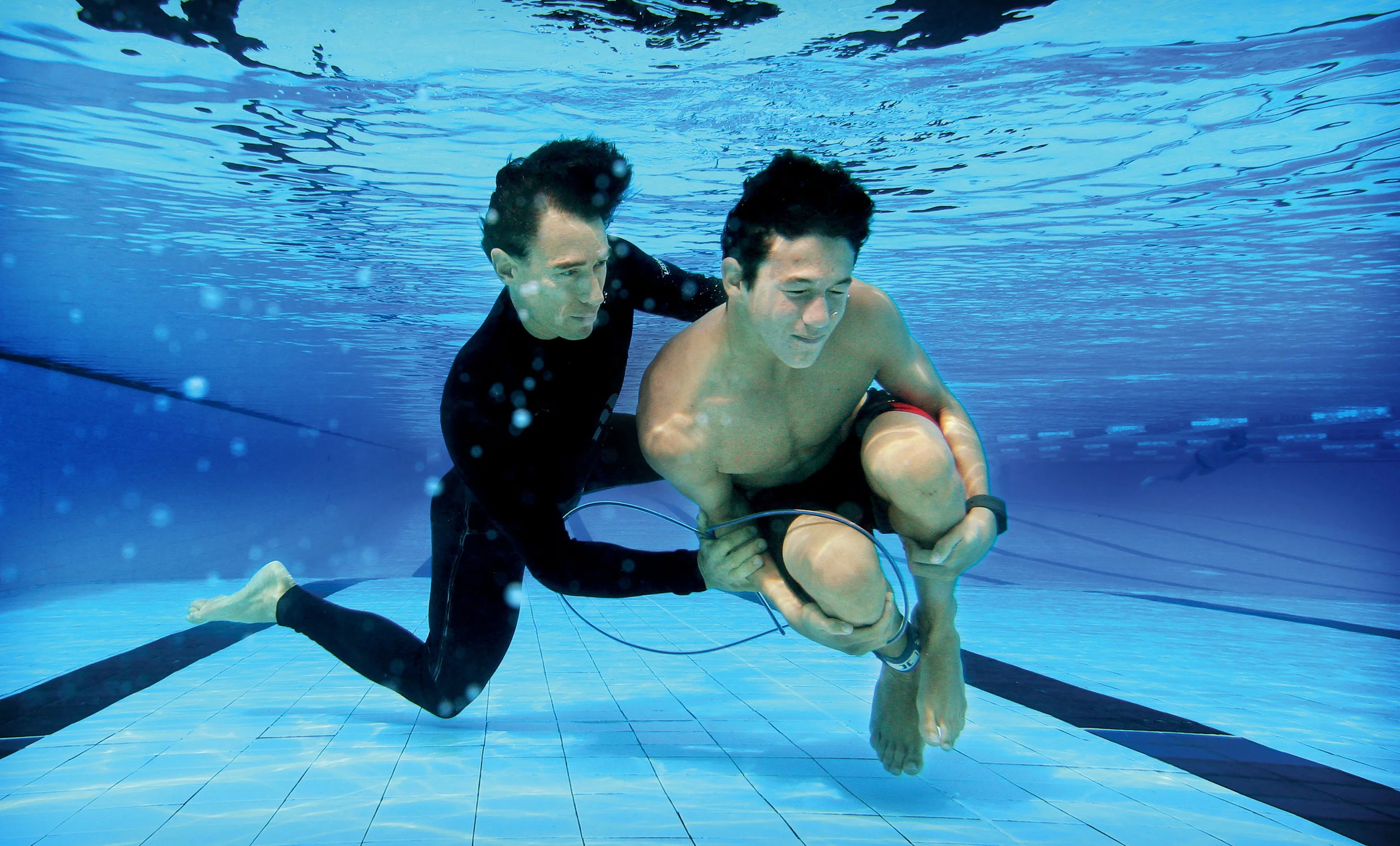
Breath hold training included in BET involves short breath holds similar to the duration of wipeouts, combined with activities that stress the heart rate.
The training simulates real surfing conditions by including activities like being spun around underwater or wrestling underwater.
This approach allows surfers to learn controlled breath-holding under higher heart rates, mimicking actual surfing scenarios.
The training is conducted in a safe, progressive environment, typically leading to significant improvements over six to seven sessions.
Safety Aspects of Breath Training
Emphasis on safety aspects of breath training, particularly in relation to drowning prevention in surfing.
Many drownings in surfing are likely due to extreme stress responses, where improper breathing and movement can lead to rapid oxygen depletion and muscle fatigue.
The training focuses on teaching surfers to remain calm during hold-downs, conserving oxygen and limiting carbon dioxide buildup.
Most wipeouts in six-foot waves only last about 8-9 seconds, emphasizing the importance of managing this short time effectively.
Oxygen Efficiency and Blood pH
The concept of oxygen efficiency is discussed, explaining how breathing affects blood pH and oxygen release.
The Bohr effect is introduced, describing how the acidity or alkalinity of blood affects oxygen release from hemoglobin.
Proper nose breathing and rhythmic, even breaths help maintain optimal blood acidity for efficient oxygen release.
Mouth breathing or hyperventilation can lead to blood becoming too alkaline, making it harder for the body to utilize available oxygen.
Diaphragm Training for Core Strength
The importance of diaphragm training for core strength is highlighted.
A diaphragm pump exercise is described, involving rapid nose breathing focusing on activating the diaphragm, rectus abdominis, and transverse abdominis.
This exercise helps train these muscles to activate effectively under stress or elevated heart rate.
A study showing a 24% increase in diaphragm thickness over six weeks with just eight minutes of daily practice is mentioned.
Safe Breath Hold Exercises for Home Practice
Advice on safe breath hold exercises that surfers can practice at home is provided.
Focus should be on comfort with short breath holds (under a minute) rather than attempting extremely long holds.
A suggested routine involves four 40-second breath holds with minimal rest between each, performed as a morning ritual.
This approach helps build comfort with breath holding under slight pressure without risking low oxygen levels.
The challenge in surfing is not lack of oxygen but excess carbon dioxide, so training should focus on building tolerance to CO2 buildup.
Personal Morning Breathing Routine
A personal morning breathing routine is shared, which includes establishing a nice, rhythmic, even breath for 3-5 minutes (5 seconds in, 5 seconds out).
Focus on belly rising and falling to stabilize CO2 balance in the blood.
Perform diaphragmatic exercises to encourage strength and brain connection.
Do in-breath muscle stretching and strengthening exercises (lung packs).
Hydrate.
This routine aims to activate breathing muscles, warm them up, and prepare the body for the day's activities.
Connection Between Self-Doubt and Physical Responses
The connection between self-doubt and physical responses in the body is explained.
When experiencing self-doubt, the vagus nerve stimulates the diaphragm, increasing breathing to help process the mental challenge.
By consciously controlling breathing during moments of doubt, one can shift attention to something controllable, allowing the brain to process the situation more effectively.
Key Strategies for Surfers
Key strategies for surfers to implement include maintaining a tall, relaxed posture when sitting out back.
Using an unfocused gaze, being aware of peripheral vision.
Relaxing the eyes.
Breathing rhythmically and evenly.
Focusing on deep breaths, activating the belly and sides of the abdomen.
These techniques aim to enhance relaxation, focus, and overall performance in surfing.
Transcription
Because that is the challenge in surfing. It's not lack of oxygen, it's excess carbon dioxide.
Welcome to the Surf Mastery Podcast. We interview the world's best surfers and the people behind them to provide you with education and inspiration to surf better.
Michael Frampton
Today my guest is Nam Baldwin. Nam is a highly qualified emotional and stress control management specialist. He is the co-developer of the internationally recognized BET, or Breath Enhancement Training. He's a life coach, a motivational coach, a health coach. He has trained world champions, including Mick Fanning, Steph Gilmore, and some Olympic gold medalists as well. Nam, tell me about what is Breath Enhancement Training?
Nam Baldwin
It's a program that we put together about probably 12, 15 years ago now to assist all surfers, in the beginning, in dealing with the high-pressure moments that we have when we go for a surf. So hold downs, surfing bigger waves, and dealing with moments where you really go into a bit of a stressed state. How to improve a number of elements around that.
So how to improve your breath hold safely when you're under stress, how to improve your breathing to help self-regulate the way in which your nervous system responds, so that fight-or-flight response. And then how to really allow yourself to reset from challenging moments too, so that when you're out the back, if you've just got through and you're like, holy moly, this is heavy out here, how to self-regulate one's thoughts and behavior so that you can perform on a high level. You're not gonna get in the way of yourself.
Michael Frampton
And all of that stuff can be affected through your breathing?
Nam Baldwin
Yeah, predominantly, that's the foundation of it all. Your breathing is the most important part of how to self-regulate. The first thing that changes when you get stressed is your breath, which then affects your heartbeat, which then affects the way in which your nervous system operates, nervous system being that fight, flight response, or freeze response that we go into.
So the better your breathing is, excuse me, under pressure, the better you can regulate your response to the stress that you're going through.
Michael Frampton
Okay, so how do you mean by better?
Nam Baldwin
So very simply, if I'm going under stress, the important thing is that my breathing is rhythmic and even, and that I'm using my muscles, the breathing muscles that I have, in a correct sequence. So predominantly breathing in air low into my lungs before it goes up to the upper part of my chest. A lot of us, when we get stressed, we become high-chest breathers and breathe shallow and rapid and irregular.
So as soon as we breathe a little slower, a little lower, and then make that breathing more even and rhythmic, the heart is then assisted in the way in which it pumps blood and oxygen around the body, and primarily to the brain, where it's so more effective at the job that it has to do because the breathing is better.
Michael Frampton
So rhythmic breathing can influence your heartbeat?
Nam Baldwin
Totally. Yeah, so we've got various little devices that we illustrate that live on a screen where people can see their heart beating relative to the way in which they're breathing. And if you're breathing shallow, erratic, or fast, erratic, your heart is interfered by that way of breathing. And how it's interfered is that your heart actually sits in a bag called a pericardium, and attached to the bottom of that bag is your diaphragm.
So if your diaphragm isn't moving much when you breathe in and out, it isn't assisting your heart as much as it could if it was. So the diaphragm, which is your primary in-breath muscle, when used effectively, assists in stretching that bag out, elongating the heart, and sucking blood or assisting blood moving into the heart so that when it then pushes back up when we breathe out, now the heart's being pushed up via the diaphragm and helping expel blood out of it.
So it becomes a second pump.
Michael Frampton
Okay. So your heart kind of recognizes, hey, there's a nice rhythmic breathing going on through the diaphragm. I'm gonna jump on that and time myself to be more efficient.
Nam Baldwin
Yeah, and have greater movement so that it doesn't have to beat as hard, so to speak, to get the blood in and out. It's being assisted. And therefore, less stress and load on it.
Michael Frampton
Okay, and that directly affects your nervous system.
Nam Baldwin
Yeah, so interestingly, every time your heart beats, it's sending a message around your body in relation to the state in which it is in and the experience in which your body's going through. So the better your heart beats, the more it regulates the nerves that travel away from it through various means to signal that you're in control or you're in a state of coherence, which is the ability for systems to work effectively together.
So the better the heart beats, the better the nervous system operates.
Michael Frampton
Okay, when we experience a stressful situation, we tend to go into what's sometimes called reflexive breathing. And for those listening, it's sort of a, that sort of breathing, isn't it? Yeah. And the body kind of naturally does that, doesn't it? Now, why does it do that and why is that bad?
Nam Baldwin
Yeah, it does it because it's trying to increase the amount of oxygen coming into your body so that it can process what's going on and then give you an abundance of oxygen so that you can run or fight from whatever's going on around you. You just probably have not entrained yourself to breathe effectively when that stimulus kicks into gear.
So normally, you know, in ancient days when that happened, when you got very stressed, your breathing would increase because you were taking action, you were taking flight. We may have forgotten how to breathe effectively to improve that response.
So it doesn't take much, that's the other thing too, it doesn't take much to teach someone and for them to entrain that response to be way better, to breathe when the stimulus kicks in a slightly more meaningful way, bit more even, bit more rhythmic, bit more intent behind your breath, and then you're assisting yourself.
Michael Frampton
Yeah, I guess from a practical sense, in my own experience, it's been, you know, if you have a nice, quite a good beating or a good hold down in some sizey surfing and you might manage to get back out the back to safety and you're sitting out the back and you just realize that you're 100% absolutely flogged and wiped out and basically your surfing is over. So is regaining control of your breath a way to influence and kind of push the reset button on a surfing like that in that situation?
Nam Baldwin
Absolutely, so you know, predominantly you've probably gone into a big oxygen debt and a carbon dioxide excess, meaning that you're feeling fairly lactic and heavy. So with good breathing, you'll repay the oxygen debt fairly quickly. You'll get rid of the excess lactic or carbon dioxide, and then the systems that allow you to work effectively—the muscular, respiratory, and cardiovascular systems—will come back into an operating place where you'll feel quite good. But you just might need a couple of minutes to get that to happen through really progressive breathing, which is generally just even and rhythmic, and things will come back into play.
Michael Frampton
Okay, so for folks listening, would you suggest a particular time signature to try?
Nam Baldwin
To time as in how long they have to breathe in that matter for or?
Michael Frampton
Well, let's say you're in that situation, you've had a heavy hold down, you realize neurologically you're wiped out but you managed to get back out the back to safety. Yeah. And is there a particular, how many seconds in, how many seconds out?
Nam Baldwin
Okay, see what you're saying, yeah. So, well, whatever the body requires and you're aiming for, I guess the best way to sort of illustrate it is, initially you're gonna have to use your mouth to breathe and you'll use your mouth to breathe in and out based on the urgency to breathe and breathing heavy. And when you feel that you can use your nose to breathe in and your mouth to breathe out, go to that phase. And that will mean that your heart rate is dropping and your nervous system's calming down.
And then when that becomes easy, go to nose. Now that may take a period of time based on your fitness. In terms of how long do you breathe in for and out for?
Well, at the beginning of that stress response, whatever's required, as long as you're focusing on getting the air low in the lungs and then high as a process. Because to say, five seconds in, five seconds out, et cetera, it may not be right for an individual. They may need shorter, longer, whatever works for them. But as long as it is fairly even and rhythmic.
Michael Frampton
Okay, so that sounds like that's key, right? The rhythm of the breathing.
Nam Baldwin
That's right, yeah. And if you look at a really good runner, a really good surfer who's paddling out effectively, their breathing will be very even and rhythmic. There'll be consistency.
Michael Frampton
Okay, so is that another thing you might recommend to surfing, to breathe in time with your stroke?
Nam Baldwin
You could do, you could use that, or you could just follow your breath with your mind. When you do that, you will become even and more rhythmic with your breathing.
So it's just something that you could focus on for a short period of time to get it into that way of breathing. It's amazing what will happen when you put your mind on something.
So, so if you breathe in, just follow it.
Michael Frampton
Follow your breath with your mind. Yeah.
Nam Baldwin
And then when you breathe out, follow it. You'll create a rhythmic, even breath when you do that.
Michael Frampton
Okay, just by becoming more aware.
Nam Baldwin
That's right.
Michael Frampton
Wow! Quite a simple process.
Michael Frampton
Yeah. Could you tell us, what did you do with Mick Fanning?
Nam Baldwin
We got introduced way back in, I think it was 2006, 2007 maybe, no, 2007, through his coach, Phil Mack. When I was just basically teaching people a lot of the BET training, and I invited Phil because he had a couple of, obviously he had Mick, but he had a couple of other really good surfing in his group, and he was keen to see and hear what the training was all about. Took him through a session, and he, him and his guys had a profound shift in how they felt, how they performed in the session. They got tremendous gain from it all, and then he basically recommended it to Mick. He said to Mick, I think this is a good thing for you to do, and we then came together, and I took him through a session and challenged him, and that's where it all began. He loved the challenge and the information backed with the practices that we teach just have such good, real application to real-life stuff. So it started from there.
Michael Frampton
Okay, so any pro surfing is often and always putting themselves in quite stressful situations, so it's partly, it sounds like this breathing has got a lot to do with stress management, right?
Nam Baldwin
Of course. Absolutely, and then there's other things that we teach in relation to other physical attributes that will assist you under pressure that need to be bolted on to good breathing, and then that helps regulate the emotional side of things.
Michael Frampton
Of course. Okay, and that enhances your awareness and your focus.
Nam Baldwin
And again, keeping it incredibly simple with a simple application of a physical thing that you do to keep your brain calmer under pressure.
Michael Frampton
Okay, are we talking posture or a trigger move?
Nam Baldwin
Yeah. So yeah, posture's a good place to be, but the use of your eyes actually has a profound impact on your stress response, so making sure that on a consistent basis you're going into what we call open focus or a gaze as you're approaching something that may be stressful. So if I'm paddling out, I wanna tend to be more aware of the peripheral of my vision, not narrowly focusing on the impact zone of what's just in front of me or about to hit me. I'm still having awareness of that space, but I have awareness of the peripheral of my vision, and that calms my brain down.
Michael Frampton
Okay, that's interesting. I haven't heard that one before. So is that kind of like a relaxation of the eye muscles? Is that part of it?
Nam Baldwin
Yeah. Kind of, yeah. So if you had, easiest way to sort of talk about it is if you eyeball someone, if you go very close and look at someone's eyes, and then you put your hands to the side of the person's head, but look at their eyes, but be very aware of the hands on the corners of your peripheral, you'll find it a lot more comfortable because you're now going into more open focus.
So narrow focus generally creates intensity, stress if it's really zoned in, and you'll notice that when someone approaches something very stressful, their eyes enlarge, and they go into focusing narrowly on something, which is just trying to help you. However, it will create more of a stress response.
Michael Frampton
And it's obviously the stuff you're teaching is relevant for hold downs as well.
Nam Baldwin
Yeah, absolutely. So what we do is activity that involves short breath holds similar to the times that you're wiping out for, with activity that is putting your body under stress from a heart rate perspective, and then simulating or mimicking what goes on when you're wiping out.
So you're learning to hold your breath in a more controlled manner under a higher heart rate, which is real to surfing. Doing activity that is similar to a wipeout, being spun around upside down, back to front, et cetera, wrestling underwater, those sorts of things, that is trying to simulate as best we can what really happens.
Michael Frampton
Yeah, and I guess on your course, you get to do that in a safe environment.
Nam Baldwin
Yeah. Absolutely. And that's the whole objective, is keep it very safe and progressive so that you get tremendous change in a person over six to seven sessions. They have a massive shift in their performance when it comes to things like hold downs and then being able to reset body and mind after a challenging experience.
Michael Frampton
Yeah, and I'm gonna speculate here a little bit, but I'm gonna guess that a lot of drownings in surfing are due to the amount of stress in the body.
Nam Baldwin
Yeah. And going into that fight or flight to an extreme level where, when it comes to breath regulation, you've gotta learn to calm yourself so that you're not burning as much oxygen and creating lots of carbon dioxide that will then lock muscles up. Yeah. And yeah, you can't swim out of things. You're fatiguing yourself through inappropriate breathing and movement.
Michael Frampton
And even like, I'm guessing, when you're held under in a big wave and you're getting tumbled, if you can, I mean, you're gonna come up, right, eventually. Absolutely. And if you can remain calm, then you're conserving oxygen and limiting carbon dioxide, right?
Nam Baldwin
Correct, yeah. Okay. So being very aware of the sensation of a wave holding you under, and then when it releases you, okay, it's time to come up, but don't try and come up whilst it's doing its thing and pounding you into the ocean.
Michael Frampton
Yeah. Okay, so it's just as much a safety course as it is a performance course.
Nam Baldwin
And then being realistic and getting the facts that potentially a six-foot wave that you wipe out on, you're underwater for about eight seconds, nine seconds maybe. It's not a long period of time, so manage that time.
Michael Frampton
Yeah. It can feel like a long time sometimes.
Nam Baldwin
Absolutely. Yeah.
Michael Frampton
Yeah. A bad time is a long time. Do you recommend counting during a wipeout?
Nam Baldwin
Look, you could. I sort of, you know, recommend a number of different things, but that can be a good thing. And another thing is, you know, just to be aware of the feeling of being moved and when that intensity backs off, okay, it's time to come up. You could put your mind in a happy place and just enjoy the experience. You can, you know, be aware of an area of your body that isn't getting stressed at all, like your hands or your feet.
And then probably as important as all those things is just remembering not to breathe out when you wipe out.
Michael Frampton
Yeah, okay, yeah, of course, yeah. What about, have you heard of this guy called Wim Hof?
Nam Baldwin
I have heard of Wim Hof, yeah.
Michael Frampton
Do you have an opinion on his work at all?
Nam Baldwin
Not really, I haven't really looked into it a great deal. And I think a lot of what I have seen, he really does back his stuff on scientific evidence and so on, so a little bit that I have seen, a lot of the information's quite interesting and real. I just haven't looked into it enough to sort of make an opinion on it other than he is backing a lot of what he's saying with good evidence.
Michael Frampton
Yeah, I've looked into him a bit. I mean, there's no denying some of the stuff he's done and it's all through breathing. And I guess part of the reason I mention that is, it's just, I mean, we all look at, you know, we've got food, you know. Food is an input that we need. We can go 40 days without food, essentially, and we all know how the quality of our food affects our bodies and, of course, the way we eat, whether we chew our food, our meal timing, et cetera, affects it. And then water, we can go four or five days without water, but again, the quality of our water and the timing of when and how much and how we drink our water is a big thing. But you can only go without air for a few minutes, and we don't tend to look into it that much, really.
It seems like there's a big mismatch there, and you look at someone like Wim Hof who's gone to the extreme where he's doing these quite full-on breathing practices, but he holds the world record for, you know, swimming under the ice, sitting in an ice bath for two hours without changing his core temperature. I think he got only a few thousand feet shorter for the summit of Mount Everest in his shorts.
I mean, this guy is obviously, he's been doing it for a long time, but it's just such a powerful message. He's like, you know what, breathing, the way you breathe, can affect your performance, your life, your health.
Totally amazing, and obviously, it's something that, you know, surfing is, you spend a lot of time underwater holding your breath.
Nam Baldwin
Yeah, it's incredible. Yeah, so it's just about conditioning, isn't it, and about an acceptance of some of the things that we go through and then, okay, well, what can we do to assist ourselves and to learn those practices and then to practice, and then you condition yourself into, obviously, coping better with what comes.
Michael Frampton
Yeah, and so there was a study that Red Bull did a while ago where they were measuring the brain waves of good surfing, and they found that a good surfer naturally will automatically, once they've got back out the back into safety and they're waiting for the next wave, they'll go into what's called alpha brain waves. Now, that's part of your nervous system, and that can be affected by your breathing as well, am I right?
Nam Baldwin
Absolutely. Yeah, so when we do a session, we always go into what we call a recovery mode where we spend eight to 10 minutes on calming the breath right down to a point where, you know, every participant's sort of breathing maybe anywhere from one to four times in a minute, which is, you know, normally it's eight to 10 without any effort. And in that process, it's doing specific things with the mind which allows then the body to let go of tension, and then as that occurs, the nervous system will calm into what's called a parasympathetic state, which is a healing state.
And in that state, we then influence the brain, its pattern in which it works. So if there's obviously less stress based upon the way we breathe, the way we think, with these little practices that we do, we can go into a very deep parasympathetic state which induces this, probably a bit deeper than that, more of a theta state in the sessions that we run.
So a deep sleep is delta, and we're going into theta, which is, you know, a beautiful calming experience within the mind and body. And through practice of doing that every session, obviously, then you can bring that into, you know, sitting at the back, you can go into that place and maybe not into deep theta but into alpha, which is, you know, where flow and the ability to really sort of go with what is starts to happen.
Michael Frampton
Yeah, so you mentioned, I mean, I've kind of already asked this question already, but let's reiterate it. So in that case, in that situation where you, let's say you really wanna, you know, increase your performance and you wanna make sure that when you're sitting at the back, you're nice and relaxed and getting into alpha brainwaves, is there a particular timing of breath that you recommend or is it again more back to that rhythm?
Nam Baldwin
It's just, you know, I'm using it potentially as a little focal point where you are following your breath with your mind, and as you do that, you then allow, you know, other areas of the body to relax too, in particular the jaw, that area, and then the chest and around the heart as you breathe out to soften those areas. The timing of the breath again is relative to the individual, but, you know, if you would aim for, as an example, might be five seconds in, five seconds out, something around that time frame seems to be well connected to a very good heartbeat because most athletes or surfing, you know, resting heart rate is going down to sort of 60s to 70 beats per minute.
So that would be quite easy to induce a five-second in, five-second out, and then once that's established, then, you know, just let go of tension so that final motor skill can operate on a higher level.
Michael Frampton
Okay, cool, and so whereabouts are you, Nam? Whereabouts are you running these courses?
Nam Baldwin
All around the country. On our website, we just, we send out information of where we'll be. So we run them in Sydney, Melbourne, Gold Coast every month, Perth, Newcastle, all around the country. We just, yeah, again, we just send out the info on our website, and when you go to the website, you can see where the next dates are and the available spots, et cetera.
Michael Frampton
Okay, and that's BETraining.com?
Nam Baldwin
Yep.
Michael Frampton
Awesome, I'll put a link to that in the show notes as well.
Nam Baldwin
Yeah, perfect.
Michael Frampton
And apart from working with surfing, are you working with people in any other capacity?
Nam Baldwin
Yeah, a number of different Olympic teams and individuals on all levels, so kayakers, swimmers, BMX guys, runners, you name it. Then I work with the Titans often, so whenever I'm home, I'm doing a session with them at least once a week, once a fortnight, and then a lot of business people, really going into businesses and assisting them in stress management but utilizing a slightly different approach than most where we focus on better physical performance through daily rituals, et cetera, that allows them to have better mental performance.
So all scopes, and breathing is always part of it because it's such an important part of living.
Michael Frampton
Yeah, the oxygen efficiency, how does that work? I mean, when you suggest that one could improve your oxygen efficiency, it almost is kind of stating that we're oxygen gluttons.
Nam Baldwin
Yeah, well, we've got a lot of it in our body. It's whether we can tap into it.
So I'll give you an example of that. If I'm a mouth breather, when I'm breathing through my mouth, it's not necessarily meant to happen. In other words, I'm calm, I'm relaxed, but I'm using my mouth to breathe. I'll lower my carbon dioxide to a point where my blood becomes too alkaline, and now the hemoglobin that carries oxygen around my body doesn't release the oxygen very well.
So I become oxygen deficient through mouth breathing. Now, if I use my nose effectively and I'm breathing rhythmically, evenly, and low on the in-breath before I bring the air up into the top part of my lungs, I'm really allowing that chemical formula, that acidity in my blood, to be at an optimum where oxygen is released readily from hemoglobin. And now I'm getting more efficiency through my breath because I can now tap into it.
So a simple example is hyperventilate for two minutes and you'll black out. How come?
Well, you've got rid of so much carbon dioxide that now you can't extract oxygen from your hemoglobin cells because the acidity is lost. So it's a fine balance, breathing. And if we get it right, the balance, we work at an optimum.
So we can tap into the oxygen that we have. And if we really bolt on good breathing methods around intensive activity or intensive stress, we're optimizing our ability to tap into that oxygen content. And that's what our brain primarily wants when it's stressed, along with sugar.
Michael Frampton
Interesting. So the way you breathe affects the acidity or the pH of your blood.
Nam Baldwin
That's right. And that needs to be at an optimum for good release of oxygen from hemoglobin. It's called the Bohr effect.
Michael Frampton
Can you spell that?
Nam Baldwin
Yeah, B-O-H-R.
Michael Frampton
Okay, interesting. Yeah, that's probably what Wim Hof is doing a lot of.
Nam Baldwin
He does.
Nam Baldwin
It. Absolutely, yeah, there you go, yeah. And if people eliminate too much CO2, which I have seen on a couple of clips, they pass out. Because now they're locking the oxygen out. And I don't know if that's a good practice, but it demonstrates things.
Clear. So the opposite is true then if you were to breathe very evenly, rhythmically, but to the right areas of the lungs. Lower lobes potentially are absorbing a lot more oxygen than the upper part of the lungs, which is predominantly upper chest breathing.
So over time, that percentage of how much is absorbed into the bloodstream is higher with better breathing. Therefore, you'll get more from each breath.
Michael Frampton
It's in the training world, if you dive deep enough, you learn that the diaphragm is actually the master muscle of the rest of your core. Of course. And when you breathe properly, you improve the sequencing and the firing capacity of your transverse abdominals and your obliques, et cetera. And you actually get a stronger, more efficient core that allows your spine to move smoothly as well.
Nam Baldwin
Absolutely. And therefore, some of the activities that we get people to practice is diaphragmatic activity to increase the muscle-brain connection so that the muscle and the brain are very well connected when under stress, because that usually is lost when we get stressed. Things drop out of circuit.
Michael Frampton
Could you give me an example of an exercise that might help that?
Nam Baldwin
Yeah, sure. Yeah, we do what we call a diaphragm pump for a specific amount of time, and it's breathing in and out through the nose fairly rapidly for a period of time. So it would sound like this. And all I'm doing is breathing in and out and predominantly activating diaphragm, rectus abdominis, transverse abdominis to get the air in and out of the lower portion of my lungs. And if I do that at the rate that I just did for a period of time, I'm then entraining those muscles to activate if my heart rate elevates, if I go under stress, they should come into play because I have entrained them to do so at that rate with that type of intensity.
Michael Frampton
Wow, there's so much to breathing in the diaphragm.
Nam Baldwin
Yeah. We did a test with that. We got a 24% change in thickness in the diaphragm through those sorts of activities over a six-week period with just working on it eight minutes a day.
Michael Frampton
Wow. Massive. Yeah, okay. Now, obviously it's, you know, if you're gonna practice any sort of breath hold work, you need to be with a partner, especially when it comes to water. But is there anything that one, if there's any surfing out there that are interested in increasing their breath hold time, is there any safe exercises they can do sitting on the couch?
Nam Baldwin
Sure, you could, you know, probably my advice is that you're not going for length of time in terms of, you know, let me see if I can do minutes and minutes on end, but potentially just getting comfortable holding your breath for a short period of time, longer than what you need in the surfing. So let's say we keep it under a minute, a 40-second breath hold. You might repeat in the morning, you just do four breath holds.
So you're just activating a breath hold sequence where you breathe in correctly, hold your breath for 40 seconds, breathe out correctly, which is something that we teach in the courses, breathe in again and hold for 40, and do that four times in a row. That's your little morning ritual to activate the ability for your brain to be okay and comfortable with a good amount of time holding your breath with minimal rest between each breath hold. And I wouldn't recommend doing any more than four breath holds in a sequence. But it's under 50 seconds, 40 seconds for each one. But you're just going to that level where normal people will find it quite challenging to hold their breath in that sequence, where you're just getting comfortable with that.
So when it comes to teaching people about breath holding, it's getting comfortable with short breath holds where you're under a bit of pressure. So if you've only got a breath in and a breath out to recover between each breath hold, each one will be progressively harder, but it's not to a point where you're gonna get low oxygen levels, et cetera. You're actually getting high carbon dioxide, which is what you want to build a tolerance to, because that is the challenge in the surfing. It's not lack of oxygen. It's excess carbon dioxide that creates the stressful feelings.
So it's exposing yourself to that. Another simple way is to do fairly intensive cardiovascular work so that your tolerance to climbing CO2 through sprint work will allow you to hold your breath for longer, because you're more tolerant to that gas. And that's why you want to breathe out when you hold your breath.
I'm actually developing an ebook with Mark Matthews, and we're putting it together purely for people to train their capacity to hold their breath better in the surfing without having to get in the pool.
Michael Frampton
Awesome, I look forward to that.
Nam Baldwin
Yeah, it's gonna be good.
Michael Frampton
When's that due to be released?
Nam Baldwin
Look, shortly. We're not too far away. We've done a lot of filming on it, and now we're just cleaning it up and getting the material out there and simple activities for people to follow that are very safe, no risk of any kind of blackout material or anything like that.
Michael Frampton
Okay. Now, what about first thing in the morning routines, morning breathing? What do you personally do?
Nam Baldwin
Yeah, always having a few minutes to just establish a nice, rhythmic, even breath. So it might be lying on my back and just being aware of my belly rising and falling as I breathe in and out so that I'm focusing my attention on that. So that then, predominantly during the night of sleeping, you may have breathed erratically or snored or whatever, so you're stabilizing the correct CO2 balance within your blood through breathing in for five, breathe out for five, for about a three to five-minute period, and then doing some diaphragmatic exercises to really encourage that strength in that area and connection to the brain and stimulating the nervous system into more of a switched-on mode. And then some simple in-breath muscle stretching and strengthening exercises.
So that's just basically a lung pack where you're breathing in over a sequence of breaths to just activate the 10 in-breath muscles that we have and keeping the lungs functioning in its entirety so that when we go and do sport or go into the rest of the day, all those muscles have been switched on, warmed up, stretched, and strengthened so that should you need to breathe heavy, they're ready to do so.
Michael Frampton
Cool, yeah, morning routines are important.
Nam Baldwin
And hydrating, obviously, most important thing.
Michael Frampton
It's a good start to the day.
Nam Baldwin
Yeah, absolutely.
Michael Frampton
Now, there's a little, on your website, there's a blog article on confidence. Just reading off your website, it says, when you engage in self-doubt, there is a contraction of smooth muscle in your stomach area. Could you expand on that a little bit more?
Nam Baldwin
Yeah, so when we go into any kind of mental challenge, there's a predominant nerve that will send signals through and down to your diaphragm called the vagus nerve. And when that's stimulated, it's doing something very simple. It's trying to get you to breathe a little bit more to help process whatever that you're going through, and it could be self-doubt.
So if I go into self-doubt, my mind is ticking over, my brainwave pattern is increasing, and for me to process what's going on, I need more oxygen. And the more oxygen content coming into my blood and therefore up to my brain, the easier it is for my brain to process information.
So if I breathe effectively, that smooth muscle that's contracting, which is the diaphragm predominantly, is now going into service and assisting me through the challenge. So if I go into stress and I'm going into doubt, a good place to start is just to pause and have a few even, rhythmic breaths.
And then in that moment, you're now shifting your attention to something that you can control and allowing the brain then to do its thing and help process whatever doubt you've gone into.
Michael Frampton
Interesting, okay, so it just comes back to rhythm again.
Nam Baldwin
Yeah, and evenness, making it rhythmic and even.
Michael Frampton
Yeah, so I guess to kind of summarize what we've talked about so far, a good strategy for surfing will be to, when they're sitting out the back, sit in a nice, tall, relaxed posture with an unfocused gaze, being aware of one's peripheral vision and relaxing their eyes and breathing rhythmically.
Nam Baldwin
And evenly. Yeah, well, low first, then high.
Michael Frampton
Yeah. And evenly and deeply as well.
Nam Baldwin
So getting that action where the belly is activating that region, ideally out to the sides, not letting your abdominal wall just flop. And then, yeah, that would be great, just for a few minutes.
Michael Frampton
Yep, okay, awesome. And if folks listening out there wanna learn more, then Nam mentioned an ebook that's coming out soon. But yeah, you're doing the BET training courses all around the country.
Nam Baldwin
Yeah.
Michael Frampton
And go and check out that website. And Nam, we're kind of running out of time, but before you go, I wanna ask you a couple of quickfire questions. What's your favorite surfboard at the moment?
Nam Baldwin
I've got a Chris Garrett. It's a fish. I just love his shapes. I just think Chris makes a great board. That would probably be my favorite at the moment.
Michael Frampton
Do you have a favorite surfing movie or surf film?
Nam Baldwin
Good question. There's so many. There's many. A favorite when I was young was Big Wednesday. That was a cracker. Yep. I'll leave it at that.
Michael Frampton
Cool. Do you have a favorite surfing?
Nam Baldwin
Mick.
Michael Frampton
Mick, good choice. Nam, thank you so much for your time. Invaluable, loads of good tips on enjoying this podcast, probably worth multiple listens, considering that breathing is such an important topic.
Nam Baldwin
Yeah, absolutely. And thank you, Michael, for inviting me.
Michael Frampton
Awesome, so that website again is BETTraining.com. And if you just Google Nam Baldwin, it'll come up anyway. And hope to see you on one of those courses soon as well, Nam. Next time you're in Sydney, I'm gonna jump on.
Nam Baldwin
Do, yeah, that'd be great. Love you too.
Michael Frampton
So thanks for tuning in to the Surf Mastery Podcast.
Nam Baldwin
Welcome.
Michael Frampton
Again, I'm your host, Michael Frampton. Make sure you subscribe so you can keep up to date with the latest interviews. Please share with your friends. Check us out on Facebook at Surf Mastery Surf. And if you're on iTunes, please go and give us a little rating, that'd be awesome. Until next time, keep surfing.
15 Nam Baldwin - Breath Enhancement Training
For the passionate surfer—whether you're a weekend warrior, a surf dad, or an older surfer—this podcast is all about better surfing and deeper stoke. With expert surf coaching, surf training, and surfing tips, we’ll help you catch more waves, refine your paddling technique, and perfect your pop up on a surfboard. From surf workouts to handling wipeouts, chasing bigger waves, and mastering surf technique, we’re here to make sure you not only improve but truly enjoy surfing more—so you can get more out of every session and become a wiser surfer. Go from Beginner or intermediate Surfer to advanced.