
016: JARRED HANCOX - New Zealand National Champ (35+) 2016
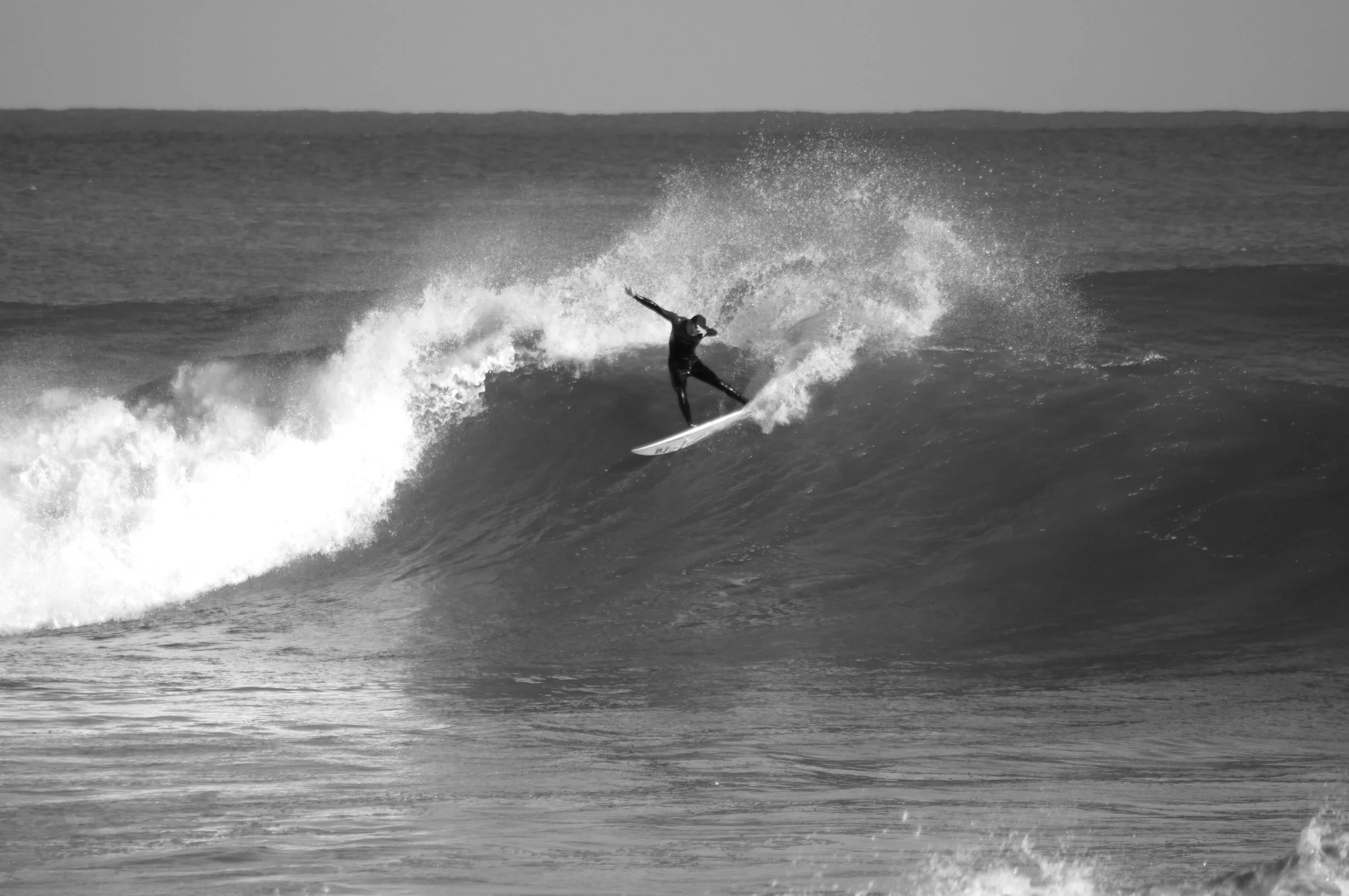
Pic: Daniel Valaperta
Available On All Platforms:
Show Notes for The Surf Mastery Podcast: Unlocking Peak Surfing Performance with Jarred Hancox
Is it ever too late to achieve greatness in surfing? Meet Jarred Hancox, New Zealand’s two-time national champion, who proves that it’s never too late to break barriers and elevate your surfing game.
Have you hit a plateau in your surfing or wonder how to maintain peak performance as you age? This episode dives deep into the mindset, training, and lifestyle adjustments that can transform your surfing—whether you’re chasing bigger waves, improving your turns, or keeping the stroke alive.
Discover the secrets of longevity in surfing, from mobility training to smart diet tweaks that fuel peak performance.
Learn how surf trips to high-energy breaks like Indonesia and Hawaii can reshape your confidence and skills.
Gain insight into the importance of the right equipment—custom boards, advanced wetsuits, and more—to unlock your surfing potential.
Tune in now to hear Jarred’s inspiring story and actionable advice on how to keep progressing in your surfing journey, no matter where you’re starting from.
Notable Quotes from the Episode
"Just five minutes a day on your problem areas can make a huge difference within a week."
"The right equipment turns you into the limiting factor, not your board."
"Whether you’re surfing G-Land or your home break, it’s all about preparation and having something to call upon in the memory banks."
"Life is short—chase your passion for surfing and keep things simple. The rat race will still be there."
"Even if you love your TV shows, multitask—stretch, roll, or work on mobility while you watch."
Jarred Hancox - Sponsored surfer from Taranaki New Zealand talks about how surf coaching, nutrition, training, and equipment refinement helped him go from a good surfer in his twenties to NZ (35+) National champ in his thirties.
Results: New Zealand National Champion Over 28s in 2010 & 2011; New Zealand National Champion Over 35s in 2016; Taranaki Surfing Champs Winner 2012; 4 x Opunake Classic winner, 8 x New Plymouth Club Champs winner; 3 x Growcott Memorial Winner; plus many other wins in local events and events around New Zealand. As well as scoring the cover shot on NZ Surf Mag.
Jarred's Sponsors:
1-DA Surfboards: http://1-dashapes.com/
http://www.matuse.com/
www.surffcs.com/
http://www.oceanearthstore.com
Show Notes:
http://www.mobilitywod.com
https://vimeo.com/jarredhancox
https://web.facebook.com/jarred.hancox?_rdr
https://www.instagram.com/jrodnz/
NZ Surf movies: http://www.damonmeade.com
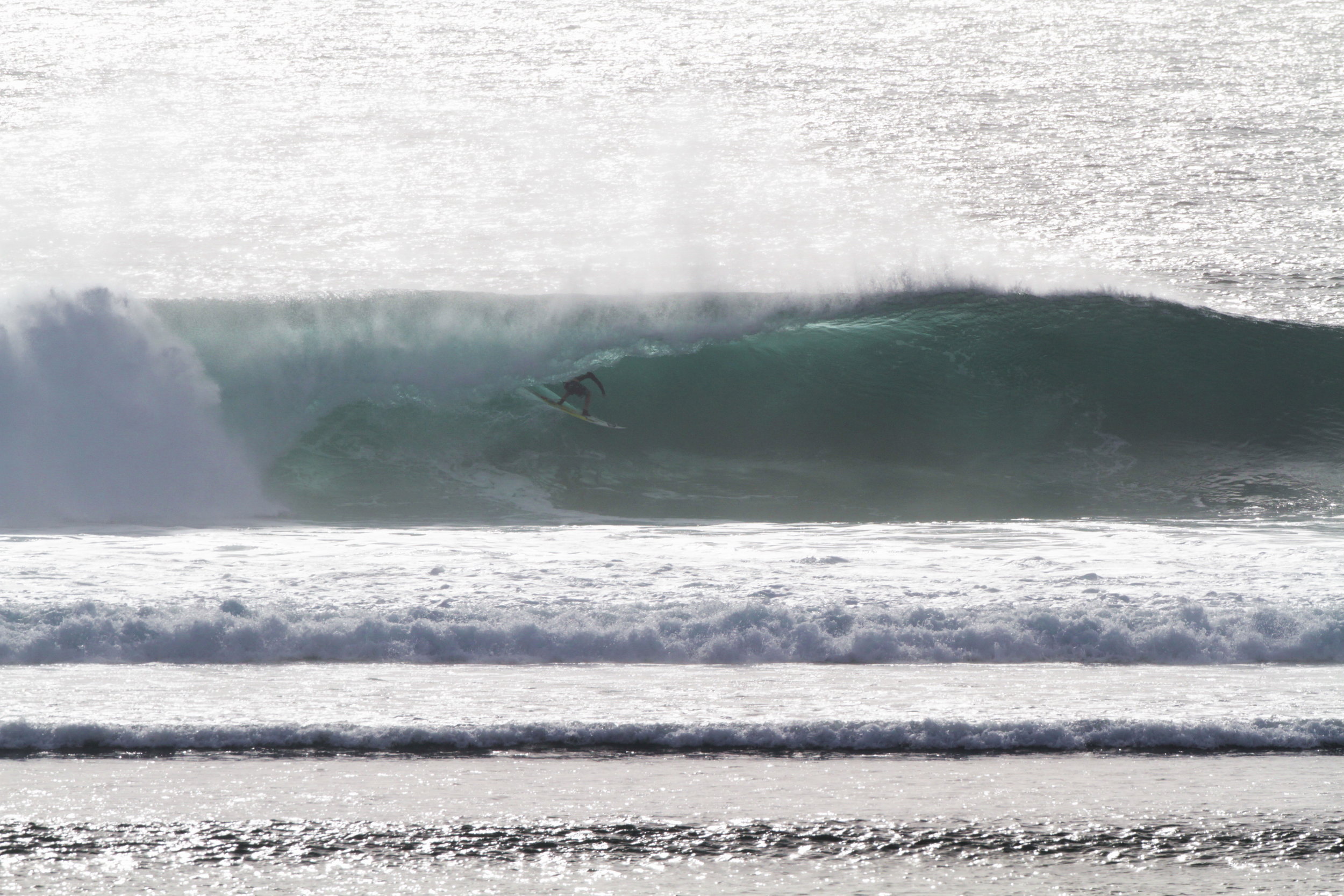
Jarred at G Land
Key Points
Jarred Hancox didn't start getting coaching and focused training until his 20s, which is considered late for most surfers, but he still managed to win national titles and get featured on magazine covers.
Jarred emphasized the importance of consistency in surfing, proper diet, mobility work, video analysis, and getting coaching to improve technique.
Jarred discussed the benefits of positive self-talk and breathing techniques to stay focused during competitions.
Surfing trips to powerful waves like in Indonesia helped Jarred gain confidence and improve his surfing in all conditions.
Jarred highlighted the importance of not sacrificing surfing for the pursuit of money and keeping a balance between work and surfing passion.
Jarred advised listeners to keep things simple in life and prioritize surfing if it's their true passion.
Jarred mentioned his favorite surfers, including Mick Fanning, Matt Wilkinson, and the Brazilian goofy footers.
Jarred's favorite surfboard model is the Wunder Elite, and he has made surf movies called 'Taranaki Terror 1, 2, and 3' featuring himself and his friends surfing.
Outline
Jarred Hancox's Surfing Journey
Jarred Hancox is a sponsored surfer from New Zealand who won national titles in the over-28 and over-35 divisions in 2010, 2011, and 2016.
Numerous competitions have been won by Jarred in their local area of Taranaki.
Jarred's surfing journey is notable because they didn't focus intensively on improving their surfing until their 20s, which is considered late by many.
Significant elevation of one's surfing abilities is possible even when starting focused training later in life, as demonstrated by Jarred.
Through dedicated effort and training, Jarred went from being a good local surfer in their early 20s to winning national titles and getting magazine cover shots in their 30s.
Consistency in Surfing Practice
Consistency in surfing practice is crucial for maintaining and improving skills.
Regular surfing sessions are important, as long periods out of the water can lead to regression in surfing ability.
Diet and Hydration
Diet plays a significant role in surfing performance, with gradual improvements leading to an organic approach.
A balanced diet with adequate carbohydrates provides necessary energy for surfing's high calorie-burning nature.
Proper hydration is critical, especially during competitions, with nutrition and hydration levels needing to be dialed in for contest days.
Coaching and Video Analysis
Coaching was a key factor in improvement, with several coaches like Martin Dunn, Dave Davidson, and Gary Cruickshank contributing.
Coaching helped with wave selection, wave usage, and determining the best maneuvers for different wave sections.
Video analysis of one's surfing is an effective tool for identifying areas for enhancement.
Strength Training and Mobility Work
Strength training on land complements in-water practice and helps improve overall surfing performance.
Mobility work is crucial for maintaining joint health and preventing injuries, using tools like foam rollers, golf balls, and lacrosse balls.
Specific areas targeted include hip flexors, shoulders, knees, and ankles.
Yoga and Warm-Up Routines
Yoga was beneficial, particularly in their early 20s, balancing energy flow and promoting calmness.
Targeted mobility work has become more of a focus now, though yoga is still valued.
Warm-up routines before surfing are essential, especially in cold conditions, involving exercises like split squats and shoulder warm-ups.
Paddling Technique and Mental Strategies
Proper paddling technique is important to prevent wear on joints, particularly shoulders, avoiding early injuries.
Positive self-talk during competitions helps maintain focus and confidence, using mental strategies to stay motivated and perform best during heats.
Breathing exercises help manage excitement and prevent poor decision-making during competitive heats.
Surfing Trips and Challenging Conditions
Surfing trips to locations with powerful waves, like Indonesia, significantly improve surfing skills.
Experiencing faster, more powerful waves helps surfers adapt and improve their skills at home breaks.
Challenging oneself in bigger, more powerful waves leads to increased confidence and faster reaction times in all conditions.
Practicing in small, soft waves enhances overall surfing ability by improving attention to detail and wave reading skills.
Balancing Life and Surfing
Maintaining a balance between surfing passion and other life aspects is advocated, suggesting not becoming overly consumed by career pursuits at the expense of surfing time.
Having a non-surfing hobby or job provides a healthy break and prevents burnout from surfing.
Simplifying life and avoiding unnecessary financial burdens allows more time for surfing.
Daily Practice and Aging
Consistent, daily practice in areas needing improvement, even for short periods, yields significant benefits over time.
Maintaining surfing ability as one ages is considered a form of progression in itself.
Incorporating beneficial activities, like mobility work, into daily routines, even while engaging in leisure activities like watching TV, is suggested.
Transcription
And because you're more confident, I think your reaction time for takeoffs and things improves as well.
Welcome to the Surf Mastery Podcast. We interview the world's best surfers and the people behind them to provide you with education and inspiration to surf better. Welcome back to the Surf Mastery Podcast.
Michael Frampton
Today's guest is Jarred Hancox. Jarred is a sponsored surfer from New Zealand. In 2010 and 2011, he was New Zealand's national champ in the over 28 division. And in 2016, this year, he was the national champ in the over 35s division. Jarred's also won a bunch of competitions within his local area, Taranaki in New Zealand. And basically, Jarred ripps. Jarred, I've known for quite a long time. And the reason I wanted to interview Jarred was because back when I first met him in his early 20s, he was one of the better surfers around. Back then, if you had asked me, "Oh, well, do you think Jarred will win a New Zealand title or get a cover on a magazine or anything like that?" I would have said no. And he proved me wrong and a lot of his peers wrong, I think. And you see a lot of groms at around the age of 10 start to really focus on their surfing, and they get coaching done, and they start doing training, and they really start doing surf trips. But Jarred didn't really do that until he was in his 20s. I think now most people would say, you know, that's too late. And I think that's what's really inspirational about Jarred is, you know, he proved to us that it's not too late to go on that journey of really, you know, breaking down your surfing, getting coaching done, things like that. So that's what we sort of—that's how we start the conversation, actually. I hope you enjoy. So you didn't win a national title until you were over 28?
Jarred Hancox
Yeah, that's right. And I was in that division. I think the first—no, the second time I won an over 28 title, that year I also got my best ever result in the Opens where I got to the semi-finals of the Opens.
Michael Frampton
Yeah. And how old were you, 28 years old then?
Jarred Hancox
No, I think I was about 30.
Michael Frampton
Okay.
Jarred Hancox
Yep, or 30 or 31.
Michael Frampton
Yeah, because I remember when I first, you know, saw you surf, you would have been in your early 20s, I guess.
Jarred Hancox
That's right.
Michael Frampton
And, you know, you were definitely one of the better surfers around Taranaki, but at the same time, you probably weren't quite good enough to be national champ or to have the cover shot on a surfing magazine. And then now in your 30s, that's two things you've achieved. So what I want to know is what changed? What did you do through your mid to late 20s that helped you to become—you know, helped your surfing to go to the next level where you were worthy of a national title, obviously, and a cover shot on New Zealand Surfing Magazine? What did you do?
Jarred Hancox
Yeah, that's a good question, I suppose. How do you get from taking another level, going into your 30s, where I see a lot of guys and friends go backwards a level from that one decade to the next? I guess just consistency. And I was talking to a guy yesterday who's 67, and he's still surfing on a very regular basis. And he said for him—and this is probably a bit of insight for us all—he said for him, he's found that you've just got to keep doing it. And the more you make excuses, the more you will keep out of the water, and you'll find it easier to keep out of the water. But as soon as you start spending long periods of time out of the water, you're gonna—your surfing goes backwards. Obviously, when you're in your 60s, surfing's not gonna necessarily be amazing. But obviously, in your 20s, 30s and 40s, possibly your 50s, you can still surf at a really high-performance level if you maintain. And I think it's just that consistency. But then not just that, because when you're surfing consistently, it's such a high demand on the body. So you've got to have your diet good, you've got to have your body in a neutral sort of state, which requires yoga and—well, probably more precisely, what I thought these days is mobility work, whether you're using a hard ball or something to smash apart, gripping your muscles, and good sleep. What we've talked about before, Mike, is where we can video ourselves and analyze our technique, get a bit of coaching and a bit of strength training on land. Yeah, and just trying to maintain at least that level that you're at in your 20s, and with the goal of only improving that level.
Michael Frampton
Okay, so one of the things you did was change your diet.
Jarred Hancox
Yeah, I think once I got—I don't know when that happened—I think right through my 20s and even into my 30s, I have slowly tried to make my diet better and better to the point of—I think in the last one and a half years, I've been—I've gone more organic. And I don't actually—I don't try and go crazy on the protein or anything. I just try and do what works for me, which is just a medium amount of protein and just plenty of carbs and fats. I think lots of carbs is really important for surfing because you're just burning so many calories. And I find if I just try and go on a real high-protein diet, I just run out of that fast sort of tick, tick, tick, tick energy. So yeah, just a good healthy balanced diet that works for you. I mean, another guy might be different to me. He might find that he needs more protein. I've got friends that have hardly any carbs and they go full on with the protein and they do a lot of gym and surfing. I noticed they're not really fast in the surf. They go more for the gain.
Michael Frampton
Yeah. I guess the key concept is that you've got to have the mindset of you want to improve your diet. Now, obviously that's going to take a little bit of experimentation. You gotta try a few diets and see how you feel on them, try different foods and see how you feel on them. And that's what you've done. And you've seen—you've accounted that to some of your results in your surfing, which is—you can't deny that. And you also mentioned coaching. Is there any particular coach that you used?
Jarred Hancox
I've actually done quite a few coaches. I just want to touch back on that food subject quickly. I think it's really important to have dialed in what works for you on the contest day and through—you might be at the nationals for a week, so you've got to be really dialed in before the heat and after the heat. And hydration—knowing the levels of hydration you need is actually extremely critical. It's very underrated, the hydration.
Michael Frampton
Yeah. Yeah. That's a good point. So do you find that you eat a lot less on competition day?
Jarred Hancox
Yeah. I try not to eat anything too heavy. And if I do, it's probably going to be after I've finished surfing for the day. So pretty much just try and keep eating. But I don't eat anything extreme through the day. It's a fairly light but wholesome breakfast, cereals and stuff, and then maybe some banana sandwiches through the day or such and fruit. So back to coaching again. I've had a few coaches in the past. I think the first ever coach was the guy you interviewed on another podcast, Martin Dunn. So he was my foundation coach, so to speak. I've had coaching from him from the age of 21 all the way to my late 20s, I think. I had on and off sessions with him. Sometimes I was at his home in Old Bar in Australia, or a couple of times he actually came to Taranaki. So I got the benefit of getting coached at my home breaks as well as away in Australia. But getting coached on your home breaks is pretty awesome because that's where you're practicing.
Michael Frampton
Yeah. And what are some key changes you made through the coaching sessions?
Jarred Hancox
For Martin's original stuff, it was the wave selection, wave usage, where you're trying to surf the wave and what you're trying to do with your first turn and that sort of stuff. I wasn't really doing anything spectacular from his first lot of coaching. I was just trying to apply all the theory. Then, of course, once you get more confident with how you're doing things, you start applying your speed and power to it. And that's when you can start doing your bigger turns. And I also got coaching from Dave Davidson on the Gold Coast. He's done a little bit of coaching with me. He was a former World Tour surfer.
Michael Frampton
Dave, oh, yeah.
Jarred Hancox
Yeah. A bit of coaching at G-Land from him. And also I stayed with him on the Gold Coast at Rainbow Bay, and we did a bit of stuff at Snapper Rocks. And also Gary Cruickshank. He's an Aussie surf coach that was with the High Performance Center for a number of years, especially in its earlier years. He used to actually come over to Taranaki every year and do coaching with a squad of us surfers around here.
Michael Frampton
So if we go back to when you first started getting coaching done, it was all about wave selection and the right choice of maneuver for the particular part and shape of the wave. And that's really—did that sort of really help to develop your rhythm in surfing?
Jarred Hancox
Yeah, for sure. I mean, if you want to be good at contest surfing and just look good in general when you're out free surfing, you know, foremost is it's like a painter needs a good canvas to make his painting look good. So you really need to be selecting waves. Well, here I am giving a surf coaching spiel, but yeah, you want to get a good wave to make your turns look good. And then just the sort of lines you draw on the wave and what maneuvers you're trying to do with what sections. That's really, really foundational stuff. And then if that's your foundation, you can really build up a great foundation and just start to really build your surfing. And because I set that up from my early twenties, which is quite late—most grommets are doing it now from the age of 10 or such—but either way, I still set it up in the early twenties. So for the rest of my life since then, the last 15 years, that's been my foundation.
Michael Frampton
Yeah. Was it a frustrating process?
Jarred Hancox
A frustrating what, sorry?
Michael Frampton
Was it a process like changing the way you approach surfing?
Jarred Hancox
Not at all, because I was doing all this stuff anyway, but I didn't have any guidance. So with guidance, I suddenly had direction, and I actually felt it actually pushed me and made me feel really good about going surfing because I felt like I had something to aim for.
Michael Frampton
Hmm.
Jarred Hancox
Hmm. I've always loved getting coaching and getting video footage and going over it. It's awesome.
Michael Frampton
Yeah. And what was your thing to aim for? What motivates you to get better?
Jarred Hancox
I don't know, to be honest. I guess I'm quite competitive, so I really want to get good results when I go in contests, and I really like to, I guess, put on a show, so to speak. So I go for a surf, and I want to surf. And I heard you talking about this with Nat Granger—you go out and surf, you want to surf your best because it makes you feel good. So pretty simple drivers there, Mike, I think—just wanting to surf good, wanting to put on a show, wanting people to be, "Oh wow, that was good surfing, man." You might have done thousands of hours of hard work for that moment, but just to be able to go out and just surf good, that's just the best feeling ever, I think.
Michael Frampton
Yeah. So thousands of hours of work behind it.
Jarred Hancox
I guess so, yeah.
Michael Frampton
That's a key concept. I think a lot of people just don't realize how much work that goes on behind the scenes for a lot of these good surfers, you know. So many hours spent getting coaching done and footage and, you know, playing with diet and training and things, so.
Jarred Hancox
What do they say, 10,000 hours to become an expert?
Michael Frampton
That's the one. That's the one. And then with surfing, it takes even longer because, you know, as you know, you don't spend the whole time in the water actually surfing waves.
Jarred Hancox
That's right, yeah, for sure. So you're actually spending a lot of time getting good at paddling.
Michael Frampton
Yeah.
Jarred Hancox
Yeah. That's a big—I'll tell you, that's another big thing for surfing and longevity and getting better as you're getting older is just having good technique with your paddling and even the way you're doing some of your power turns and that. Because if something's a little bit out, you're actually going to wear down the life of the joints considerably. For example, slouched shoulders—you're going to start wearing out the joint really quick, and then you're going to have a bung shoulder by the time you're 40 or 30 or, you know, people are doing injuries at a young age in surfing. And it's really important to keep all those joints supple and free.
Michael Frampton
Yes, yeah, definitely. And you actually did an interview with Rob Case, which I'll put a link to in the show notes for those listening, about paddling technique and how important it is and things. But you mentioned one of those things that you do is yoga to help that.
Jarred Hancox
I started doing yoga. I got a yoga book for my 22nd birthday, and that was about the time I started yoga, and that was really beneficial. These days, I find yoga—the most beneficial part of yoga is just getting your energy flow balance and getting yourself calm in an otherwise hectic world that, you know, the Western rat race, so to speak. And I don't actually put as much emphasis into the stretching out of one's self. I actually focus more now on specific areas that need mobility work. For example, my hip flexors or my shoulders or my knee or my ankle. So I'm doing all sorts of stuff now that's actually—I don't know if you heard of Kelly Starrett, but I've been doing a fair amount of mobility work that he teaches. Wrapping your ankle up in what they call a voodoo band, and you're almost cutting off your circulation and then doing a bunch of movements for a minute or two, then releasing it. Just random stuff like that. Like I said earlier, also using a foam roller, using golf balls, tennis balls, lacrosse balls—all sorts of stuff just to smash apart stuff that needs smashing apart and getting the joint to be able to sit in a nice neutral position.
Michael Frampton
Yeah, kellystarrettmobilitywod.com. Definitely an awesome resource. He's got a YouTube channel, heaps of free stuff. So yeah, I encourage anyone to check that out for sure. I guess, yeah, as we get older, those niggles start to start to creep up on us. But as you said, it's pretty easy. There's only a little bit of work you need to do—a bit of yoga, a bit of mobility stuff to keep on top of it—and you can just keep surfing. Like you said, at a high level through your 30s, 40s and definitely your 50s.
Jarred Hancox
I'll tell you what, I've had periods—like a couple of, probably a month ago—I was doing so much surfing, one period that my hip, something in my hip, went so sore and stiff, I swear to God, it felt like I was going to need a hip operation. I just thought, right, I've just overdone it. I've overdone my hip, all these top turns and rears and bottom turns, and I was limping and everything. And the last couple of weeks, just from changing a bit of my mobility work, it's 100%. And I've just surfed nine days straight in all sorts of conditions, and including competing in a contest on one day, and I feel great. So it's just—their mobility work is so crucial.
Michael Frampton
Yeah. So when do you do it typically?
Jarred Hancox
Actually, that's just reminding me of another crucial thing. But yeah, mobility work—generally, I'll try and do it before bed because you're going to bed and, in theory, you've relaxed out stuff, you've done stuff that's equivalent to a massage perhaps, and you go to sleep, your body repairs in a much better state. But I do certain mobility things before I surf as well. I make sure I'm nice and the muscles are fired up, but that's sort of more coming back to warm-up. And that's actually something I forgot to mention. And I can't say it's important enough that warming up before a surf is so crucial. And it's cold here in Taranaki, and it's been like single digits in the morning and pumping surf—single digit—you imagine you get down to the carpark, you've got to get in a damp wetsuit, damp booties, and paddle out. And if you're already cold and you're adding to that cold, you're going out and you're trying to surf good on a wave, it's just an injury waiting to happen, in my opinion. So I'll spend about—I don't mind spending 20 minutes, at least 10 minutes at home in the warmth—a bit of exercise, doing some split squats and a few shoulder warm-ups and just a few basic things, a bit of Swiss ball warm-ups and yeah, just really get all those muscles fired up. Even a hot shower before you do all that, just to totally warm you up.
Michael Frampton
Yeah. Yeah, it does get cold in New Zealand. So do you have any other pre-surf rituals?
Jarred Hancox
Just make sure you're not too dehydrated, otherwise you're going to be extra dehydrated after a surf. But no, basically just doing warm-ups. Doing warm-ups on the beach is cool, especially sandbars, because you can watch what the beach is doing and where the sandbars are and how they're breaking. You might see two or three sets in the time you're doing a warm-up on the beach. So I reckon just warm-ups, mate. And yeah, just warm-ups is the biggest key for pre-surf.
Michael Frampton
Yeah. And in competition surfing, do you have anything that you think about or focus on—your breathing maybe—while you're waiting in between sets?
Jarred Hancox
Yeah, breathing can definitely help because you can get overexcited in a heat and you can make bad decisions as a result of that overexcitement. So sometimes you just need to slow everything down and take a few deep breaths. I also use a bit of positive self-talk—something Martin Dunn touched on with me in the early days—and that was, you know, you get a wave and you mentally talk to yourself. You're like, "Right, I've just got one good wave. I need to go out and get a backup." Then you get your backup, then you're like, "Right, I need to go out and get a wave at least as good as that backup." And you can say other little things to yourself too. You can say, "Oh hey, that was a really good wave. I was really happy with how I smashed that wave," or just anything that gets you feeling good about your performance. Because ultimately, you're the only one that can back yourself and mentally drive yourself to perform your best. So you really need that. You can't have any doubt about your ability.
Michael Frampton
Yeah, I guess it also keeps your mind focused on surfing and not other stuff as well.
Jarred Hancox
Yeah, yeah, for sure. And depending on what event you're at—like I know, you know, some guys are going to QS's where the first heat they're surfing in is like a full-blown final. You know, there's so many good surfers that there's no easy heats these days on the QS, I'd imagine. But for me, you know, I've got a local club comp event, and I suppose there's a lot of guys that just do club comps. And you might have to surf three or four heats in the day, maybe five. So it becomes a day of endurance. So you have to be clever about those first few heats so you're not peaking too early. And that's where, you know, you've got to be like, "Right, okay, who's in my first heat?" "Okay, I don't have anyone too crazy in these first heats," because the draw's spread out. So you don't have to go 100% in the first heat. And I think Kelly Slater touches on that in his book Pipe Dreams he wrote many years ago. He would just do enough to get through the heat.
Michael Frampton
Yeah, yeah, it's, yeah.
Jarred Hancox
Pacing yourself. And that's the thing—I'll tell you what's been really difficult in New Zealand, and Australia, I'm sure—when you go to the Nationals, you've normally got a week-long campaign there if you're probably going to get from your first heat to the final. So you've got to make sacrifices, you've got to get a good night's sleep every night, you can't go freesurfing too much. You know, I might just go for one quick freesurf and then have my heat, rest for the rest of the day, because you know, you might have a heat almost every day, especially if you're doing two or three divisions.
Michael Frampton
Okay, so what else has—what about dry land training? Apart from yoga, have you got any other sort of training regimes that you do that have helped you progress?
Jarred Hancox
Oh, for sure. And like I said, I have—I don't do anywhere near as much full-blown stretch-outs like I used to. I used to go hard out with the stretching, but I have talked to yogis and stuff, and they've said, you don't want to try and get past a certain point of flexibility, because then you start going into the joints more, and that's when your joints can become quite a little bit loose, and you've got more chance of dislocating joints. So really, yoga for me is just—it's just maintenance yoga. Just keep me at a certain level of flexibility. So yeah, strength training, speed training is probably the other two big things for me.
Michael Frampton
What do you mean by speed training?
Jarred Hancox
Not so much cardio. I don't do much cardio, to be honest, because I surf so much, and I'm a believer that surfing—when you're surfing high performance and you're really going for it—it's an intensely cardiovascular sport. And speed training for me is maybe just a bit of skipping, and I don't really do much more than skipping, to be honest, for speed training. But I find that gets my fast twitch really good when I'm out on the wave. It gives me a really nice rhythm. Strength training—foundationally, I like to do a little bit of the core sort of bench press, but not too much bench press. Squats, deadlifts—I've only started doing these three in the last three years. I don't do them a lot, admittedly, but I have found I've had a great effect in terms of giving me a stronger back, stronger knees—because the muscles around my knees are stronger—and putting my shoulders into a good position from concentrating on a really good bench press technique. And then there's all sorts of other things. Sometimes I do bodyweight stuff with those TRX straps that dangle down, and you've got the handles on them. You can do a whole lot of stuff with them. Swiss ball—stuff with your Swiss ball—it's always good, yeah.
Michael Frampton
All right, so yoga for balancing the body and keeping mobile. You've got Kelly Starrett, some of his stuff for your mobility. A bit of—let's call it powerlifting—squat, bench press, deadlift. A bit of bodyweight strength training. A bit of speed work, as in skipping. It sounds like a pretty well-rounded surf training program. I might add to that as well, because Jarred's quite flexible and mobile, which is quite common with a lot of surfers—being almost hypermobile—so definitely reiterate what you said about not pushing it too far in yoga.
Jarred Hancox
Yeah, yeah, and I think it's just about that balance. You've got to remember that you're doing all this stuff on land for surfing. You're not doing all this stuff on land to be a yogi, or be a powerlifter, or be a one-hour skipper. I just sort of do everything in moderation. When I powerlift, my gym friends that go to the gym all the time, they laugh at me. They go, "Oh, what do you call that sort of weight?" But I don't care. I'm not powerlifting to be a powerlifter. I'm powerlifting just to keep the movement and just to keep the muscles at a nice tone. I'm not trying to grow massive muscles. Yeah, so just not overdoing it. I think that's the biggest key in surf training is just, yeah, don't go too crazy.
Michael Frampton
Yeah, yeah, you're right.
Jarred Hancox
Go crazy on the wave by all means. That's why you've done all your land training. But if you've been going crazy on land, you're probably going to sort of—if you haven't injured yourself already—you know, you might find yourself more susceptible to becoming injured because you've stressed certain joints and muscles out to the max.
Michael Frampton
Yeah. Has there ever been a stage in your life where your surfing has gone backwards?
Jarred Hancox
Yeah, yep, I would say so. Yeah, I remember when I first started working at a non-surfing job—it was only about three or four years ago—I started working in real estate. So I'm a real estate agent now, and that offers great flexibility. In terms of your hours and when you can and can't surf, that's great. But for sure, the first six months of doing that, I actually—I actually sort of lost interest in surfing a bit. I was quite focused on just the work side of things. And for the first time in my life, first time since a kid, I got chubby. I put on over 10% of my normal body weight. So I went from—I'm lightweight, I'm normally 60 kilos—I went up to about 68. I was struggling to catch waves, boards weren't going as good, and I just didn't look in great shape. And so I went and ordered three new surfboards that had more volume, and that got me quite amped. I was having more fun again, and I quickly lost the weight and sort of never looked back, you know. I just sort of kept—I just realised then, I was like, man, even if I'm not enjoying my surfing, I've just got to do it at least a few times a week just to maintain, because okay, I might be stale on my surfing right now, but it always comes back in waves, you know. So surfing to me is not always an amazing feeling because I've been doing it for so long, but you can't avoid those little waves of negativity. But in saying that, lately, I feel like the last year I've changed board sponsors, so I've got different boards. I'm really amped on my surfboards. So I'll be… I've got a new wetsuit sponsor, I'm feeling good in a new wetsuit, and I'm just amped, man. I've been surfing a lot more, eh? And I've got my mobility dialed in, so I'm not getting so sore.
Michael Frampton
Yeah. So, if we go back to that time when your surfing went downhill, obviously you were focused on other things at the time, but did that—when you noticed that you weren't surfing as well, you're a little bit heavier—is that something that motivated you to start surfing at an even higher level?
Jarred Hancox
No, no, funnily enough, I hadn't sort of been at that weight for so long, I was just—forever—so I was like, kind of like, oh, this is kind of cool for a change. Or, as strange as that sounds, I was like, for once I'm not like a skinny stick, and I was like, oh, that's kind of cool. But yeah, I don't think I—I don't know, it was a phase there where I just lost interest in how well I was performing in the surf. Why? I don't know, maybe I needed to—maybe I was stale on the surfboards I was riding, maybe I needed to change shapers, or—yeah, I don't know, I felt like I'd—I felt like I'd peaked, I felt like I couldn't surf any better.
Michael Frampton
Okay. Yeah. So you hit a plateau.
Jarred Hancox
I reckon I did. I'd spent so much time in Indonesia, I'd been barreled as much as any human could probably want to be barreled, and yeah, I felt like I peaked.
Michael Frampton
Okay, so what do you think got you past that plateau?
Jarred Hancox
Changing—changing surfboard shapers. Just something fresh, something new. As it turned out, my surfing has actually improved as a result.
Michael Frampton
So equipment, yeah. So—but what motivated you? What motivated you to seek out different equipment?
Jarred Hancox
Just keeping an open mind, I think, right? The shaper from Australia—he's Wondershapes—and he's actually Gavin Upson. He's originally from one of the towns in Taranaki called Waitara, and so he's actually got a local connection. And he actually came here two years in a row doing demo days where he had some boards you could try. And I just—I was just keeping an open mind. I didn't want to jump ship or anything from my local shaper, and I just tried his boards both years, and in the end, I was just like, oh, hang on, I'm actually—this feels really good. I kept trying them, and yeah, I don't know, man, I just couldn't deny it. They felt really good, and I wanted to start working with him. So I said to him, "Hey, if you're keen for me to be on your team, I'll be keen to be on your team," and he said yeah. And so we've developed a really good relationship there. And he's one of those shapers that really takes you seriously, and really thinks it out, and analyzes, and watches you surf, and really tries to incorporate into your shapes what he thinks will be best for you directly—not just the general surfer.
Michael Frampton
Yeah, okay, so getting custom surfboards has helped you to get over that plateau?
Jarred Hancox
Yeah, definitely. Getting custom surfboards off a shaper that just relates well with me. So I think it's just important to be able to find that shape—a surfer-shaper relationship can make a huge difference.
Michael Frampton
Okay, and let's give—what's his website? Let's give him a shoutout.
Jarred Hancox
Wondershapes. So it's like the number one—
Michael Frampton
Yeah.
Jarred Hancox
It's hyphen D-A.
Michael Frampton
Okay, cool.
Jarred Hancox
Yeah, and you'll probably find the website just doing that.
Michael Frampton
Yep, cool. Wondershapes. And I'll put a link to his website on the show notes anyway for those that want to look that up, but okay, awesome.
Jarred Hancox
Yeah, well, he used to be the head ghost shaper at PHD, so he was actually doing the shapes for some of the top surfers in the world. And he's got a lot of experience, and it feels like that under your feet, so yeah.
Michael Frampton
Yeah, and it's interesting that he actually went out and made the effort to watch you surf. And so he's obviously got a little bit of coaching surf technique background as well.
Jarred Hancox
No, he doesn't, but the way he went up—because I went to the Gold Coast recently to work with him with my latest quiver—he watched me at D-Bar. And it was funny because he was watching me, and I thought, oh, he'll just watch the whole surf. And he waves me in after like 30 minutes. I thought, oh, that's weird. So I walk in and he goes, "I want to see you go and do this, and do that, and do this or this, and this or that," and I'm like, okay. And it actually felt like I was getting a coaching session. So I went out and I was doing what he said, and he said—I came back in again—he goes, "Cool, okay, yep, I can see you. We'll try—" and then he goes, "And I can see that I need to do this to your board, and that to your boards, and these changes to allow you to do what I want to see you doing on the wave." So without him hardly realizing it, people have told him he could easily be a surf coach.
Michael Frampton
Okay, okay, so he's watching the way you surf from the perspective of, how do I shape a board so that you can actually progress your surfing, not just enjoy it?
Jarred Hancox
Exactly. Which for me is like the ultimate combo—someone who can watch you on the beach, or at least you can send them some surfing footage, and he can go, "All right, I think this is the kind of board I need to make for him to allow him to surf at a better level." So yeah, for me, that's exciting, and that stokes the passion with surfing.
Michael Frampton
Yep. Okay, surfing in the cold—your wetsuit is pretty important. I think it's—I think the importance of wetsuits, and choosing the right one for the day, and making sure it fits properly, making sure you put it on properly as well.
Jarred Hancox
Oh, yeah, for sure, and you've got to think, you're wearing, say, a full-blown steamer and booties, and that steamer's getting soaked with water, so it just—you carry a lot of extra weight, so that's going to impact on the volume of your board.
Michael Frampton
Yep.
Jarred Hancox
Yep, so around here, you don't—you want to go on the higher side of what volume you think you would have, if you want a little bit more again.
Michael Frampton
And you said you'd changed wetsuit sponsors—can you tell us why?
Jarred Hancox
Well, what I consider to be, you know, one of the best wetsuit companies—I rode Excel wetsuits for a good 10 years, and I loved their suits, they were awesome, they were flexible, I couldn't complain. And, you know, so I’d wear my 4:3 through the winter, and cold days usually have a vest and a hood as well, and booties. And actually, a friend of mine in my city, he started getting in Mapoose—so it's called M-A-P-O-O-S-E, Mapoose wetsuits. And a local girl who's been on the World Tour, Paige Harab, she's actually sponsored by them too. And he said, "Hey, you want to ride these suits? I'll hook you up." I said—I thought about it for about a month, because, you know, I’d loved Excel so long—and I put a bit of research into them, and I thought, actually, they sound pretty cool, I’ll give them a go. Because the wetsuit material is actually—it’s not neoprene, it’s called geoprene. Yeah, they claim—Mapoose claim—that they only let in 5% water max, while neoprene is 35% water plus. Over time, it breaks down.
Michael Frampton
Yeah, I’ve got a Mapoose wetsuit in my wetsuit quiver as well, and the first thing you notice—I noticed a couple of things—was one, they’re not quite as stretchy, but they fit better, so they’re more fitted. And yeah, they take on far less water. Like, you can—especially when you rinse it out and lift it up—you just realize how much water your old wetsuit holds. And obviously that’s being held while you, you know, when you stand up. So they're definitely a lot lighter, and just—it’s just a nicer material as well, nice and soft, and—
Jarred Hancox
They're using some sort of—it’s almost like Ironman stuff. Have you actually surfed your Mapoose wetsuit very much? Because at my first handful of surfs, it was a little bit tight, and then it actually became really flexy. And Paige said the same thing. And interestingly enough, I've been wearing a 3mm—just a full 3mm suit—all winter. On the very coldest days, I haven’t needed more than that. Of course, I've got booties on because I get cold feet, and a hood. But I haven’t had to wear a vest or anything as well. You know, it’s actually blown me away. The wind is not getting through that 3mm, it’s not making me cold like, you know, any other wetsuit I used to wear.
Michael Frampton
Nice.
Jarred Hancox
Yeah, I think technology is quite something that can get you quite excited when you’re getting new technologies.
Michael Frampton
Oh man, totally agree. You know, it’s the last thing you want to be is either too cold or too hot in the water—you want to be just nice, just right.
Jarred Hancox
Yeah, or too heavy. You know, if you’ve got an older wetsuit that’s taken a lot of water, and it’s extra thick because it’s cold—you need a 5mm wetsuit because it’s cold and you need that warmth—but the latest wetsuit, you might get away with a 3mm, and it’s taking on less water, and you’re just so light on the surface. It makes a big difference.
Michael Frampton
Yeah, and another thought I had with those wetsuits as well is—have you heard of the principles, you know, whatever you put on your skin, essentially, you're drinking? So, you know, the most extreme example would be, you know, if you rub a bit of cyanide into your skin, you know, it’s going to kill you just as it would if you ate it. Now, obviously, if you're wearing neoprene rubber made from petroleum, you're soaking some of those chemicals in through your skin. But the Mapoose wetsuits—they make them from limestone, which is obviously a less toxic material than neoprene. So there's probably a health aspect that comes into it as well. I haven’t seen them write about it or talk about it, but it’d be interesting to know. If anyone listening knows, please let us know.
Jarred Hancox
Yeah, that's a really good point. Yeah, for sure—same with moisturisers. Oh, that's another thing I’ve cut. I don't know if it helps or not, but even my sunblocks—for the most part now—I just use like an organic sort of zinc. And moisturiser—I don’t even buy any moisturisers—I just use coconut oil. If I ever want to flick my hair for a night out, I’ll just use coconut oil. I’ve really tried to eliminate all strange, unknown substances and chemicals as much as possible. Yeah, I’m not a full-blown hippie on it, I still eat normal stuff and eat, you know, get takeaways and that, but I think just doing anything is better than nothing.
Michael Frampton
Oh, I totally agree, man. You know, if you start reading the ingredients in most sunscreens and most shampoos, and it’s like—people don’t realise that if you're rubbing it into your skin, you're consuming it. So when, you know, a zinc oxide-based—just a normal zinc oxide-based sunscreen—actually, I find, works better than any commercial-based sunscreen in the surf, because it kind of sticks and stays on you, right? And it’s far less toxic than those commercial sunscreens.
Jarred Hancox
Some of those ones even smell like petroleum. But zinc’s supposed to be a mineral that’s good for you.
Michael Frampton
Yeah.
Jarred Hancox
And your skin is like a big mouth.
Michael Frampton
Yep, that’s right, man. Anything you can do to reduce your overall toxic load is going to help keep your nervous system firing at higher speeds, it’s that simple. You know, that’s why eating organic food is—you know, there’s less pesticides and less herbicides and things in organic foods, so there’s less toxic load on your body. So your nervous system is—and your digestion is—more efficient. But anyway, we digress. What else has helped your surfing go to the next level?
Jarred Hancox
I sort of—I mean, it might sound bad to any sort of, you know, guys listening that are into a heavy laboring job, because obviously, you know, that’s your job, that’s your job. But I have been fortunate enough to—you know, I don’t know about fortunate, I’ve just chosen not to do any jobs that are too labor-intensive. So, you know, I think if I’d been doing heavy laboring for the last 10 years as a job, it would have been pretty hard for the body to withstand all that surfing and training and stuff as well. You’d be loading up your back a lot more. I guess you could do it, but you’d just have to be really conscious of your movements during your job, and keeping the right muscle groups strong. Because I have got friends that are laborers, and they train at the gym all the time, and they surf all the time, and they’re in their 40s, and they’re doing well. And their only injuries and niggles are from when they played professional rugby, and they’ve still got plates in their body and stuff from that—or artificial hips at an early age and stuff. So, you know, I’ve got friends in their 40s, and they really do push the envelope, and they’re in great condition apart from, you know, old injuries.
Michael Frampton
I think maybe what you’re trying to get at is that—and correct me if I’m wrong—but when you go surfing, that time you spend surfing, that's, for you, that is your most focused and intense physical activity, right?
Jarred Hancox
Yeah, that’s my most labor-intensive thing in my life—is the surf, for sure.
Michael Frampton
So even when you’re training for surfing, you’re still holding back a little bit, because you know that you’d rather put that extra little bit of effort into a man turn?
Jarred Hancox
Oh, a hundred percent. A hundred percent. I mean, the amount of times I’ve done my powerlifting and gone to an absolute max in a deadlift or a squat is very rare. Normally I’m doing a bit of a load, but I’m not—very rarely am I ever, like, maxing myself out to an animalistic state. But when I do a carve, when I get a big wall at my local break—like Rocky Point or something—and I want to lay on that rail, I’m just putting a hundred percent, everything into it, putting everything my board can take. And that’s where I get amped, you know. But I mean, for some people, they get the most satisfaction out of putting that hundred percent into the heaviest squat, or the—I don’t know—running the fastest hundred meters they can run, or what have you.
Michael Frampton
Yeah, so that—just the way you were talking about putting everything you've got onto the rail of your surfboard—maybe that sounds like that particular moment when you've done an awesome turn. Is that—is it more of those that motivates you to surf better?
Jarred Hancox
Yeah, for sure. And a couple of weeks ago I actually rode a couple of my old boards, and I found I couldn't push my turns anywhere near as hard or radical as on my Wonderboards. And I thought, wow, I wonder if this is why I started to get demotivated. I don't know. I mean, because on my Wonders, I'm going out and it feels like I'm at full throttle. You know, I don't really have much of an excuse. It's, you know, it's more the jockey than the horse, because if you've got a board that's really, really good for you, you are the limiting factor. But when your equipment is the limiting factor, well, you're going to reach a plateau that you can't get past.
Michael Frampton
Yeah. So, okay. So it might be worth folks listening out there that feel like maybe they want to try some new equipment—go out and maybe get some footage and get a good shaper to look at it and get some custom shapes going and see whether that helps.
Jarred Hancox
I've actually got a couple of Wonderboards for some of my friends, and they actually—and I've showed Gavin footage of them—and they're big guys. They're like 90 kilo plus guys, heavyweight, just full of muscle. And they've always struggled to get good boards, really struggled. And they're always riding quite often those HS Cryptos and stuff. And, you know, they surf fairly well on them, but they got some customs off Gavin and these Wonders. They just—their surfing is just on like another level, you know. They've started going vertical and they never used to go vertical, and starting to do proper bottom turns. And they've even commented that, you know, they're getting less sore body parts from surfing these boards because they're customized to turn properly for them. Get a good board for you and make sure you've got enough volume. I see so many guys that, you know, they're a bit overweight or they're not quite fit enough, and they're riding really thin boards because they're like, "If I lose the weight," or, "Oh, but when I get a good wave." But come on, the reality is, 95% or more of the surfs you're surfing, the waves aren't going to be that great, and you're probably not going to be at your peak, and you're not going to surf your best. So you're better to have, you know, a board that's counteracting for that little bit of unfitness or a little bit of overweight. And at least from there, you can get heaps of waves, you can have fun, you can get fit from surfing heaps and enjoying it. And then you can change boards after that. Don't do it the wrong way around.
Michael Frampton
Yeah. So you mentioned just a little bit earlier that you'd been in Indonesia and got lots of barrels, and you kind of felt a little bit demotivated and burnt out from surfing. And obviously the—you know, getting new boards has helped light the fire again. But do you think it's possible to surf too much?
Jarred Hancox
Oh yeah, for sure. It's like anything in life. And it's hard to believe if you've never done it before—if you've never surfed too much before—but, you know, you can. You can surf too much. Surfing is—it's a great thing, but you can definitely do too much of it. And it's taken a little while to happen, but I don't know why, but I've had this feeling that if I did something that was non-surf related in my life to balance things out, I'd enjoy surfing more. And it slowly happened. I got into real estate, which is not a surfing-related job. And I think just having that balance of being able to go work for a while and focus on something completely different than surfing—even if it's a few hours—it really helps keep the freshness in the surfing.
Michael Frampton
Yeah. Yeah. You've got to have that work-life-play balance.
Jarred Hancox
Yeah. Or it might be a hobby. You might need a hobby. You might work in the surf industry, so it's hard to get away from it. So you probably just need a hobby to break it all up that's not directly related to surfing—whether it is playing golf or, you know, the famous New Zealand surf photographer and world-renowned photographer Corey Scott. Because he's so immersed in surfing, and he loves it—you know, he's an awesome photographer and everything, and he still surfs—but he's very passionate now about trout fishing, because that's his escape from the surfing world. Yeah. And it helps keep him fresh when he's back in the surfing world.
Michael Frampton
Okay. So do you find it just creates more hunger for surfing when you step away from surfing and focus on something else?
Jarred Hancox
Yeah, for sure. For sure. But you don't want to step away for too long. Otherwise, you completely forget about it. Your muscles start degenerating, and you don't want to step away from it for a few months, you know, unless you're injured. You only need to step away—sometimes you can just have a week or two off. You know, if you're really, really burnt out on surfing, just have two weeks off. But no, you shouldn't need that long. You should—if you've got the balance right in your life, you should be able to just—and your diet right, and you're having good sleeps, and your boards are good—you'll just be surfing pretty darn consistently because you're feeling good about it and feeling good about yourself.
Michael Frampton
So on your journey towards progressing your surfing, what's some of the biggest obstacles you've faced?
Jarred Hancox
Like through the years?
Michael Frampton
Yeah. Any—the first thing that comes to mind?
Jarred Hancox
Oh, the first thing that comes to mind was challenges faced with, um, in my early 20s. You know, obviously I'd finished school, and then I dropped out of a computers degree I was doing because I just wanted to surf. And of course, most people will find this—you'll meet resistance from family, from even friends, and there'll be a lot of people that'll probably tell you, "You can't do that." You know, older guys that have been in their career for many years—"You can't just go surfing, you have to get into a trade, you have to do this or that." And okay, eventually I had got into the trade of real estate, but I made that surfing thing go crazy all through my 20s. I guess where there's a will, there's a way, you know. And if you want to just thrash it, you want to live the dream—and I never got stale on it through my 20s—and I thrashed the hell out of surfing. So if you want to do it, make it happen. And you'll actually start meeting a lot more supportive people if you stick to your guns, and you'll end up finding these people that'll help guide you and make it happen. And it might not be an easy path, but, you know, you only live once. And when you look back on it and you go, "I did that. I faced a lot of negativity and resistance, but I did it." So obviously you've got to keep realistic to a certain degree, but you've got to try and be resourceful and make things happen.
Michael Frampton
Yeah. Did you struggle with small waves much?
Jarred Hancox
Yes and no. I've never been like a superb aerialist. I've had moments where I've sort of fled in the air, but not—not consistently, which is obviously a pretty key component of being a great small-wave surfer, I believe, is your aerial game. So I've never—I've never been a… So, but being 60 kilos, I've actually ended up doing quite well in certain contests against bigger guys. You know, when the waves are half a foot, one foot, one and a half foot, you can get up quite a bit of speed when you're 60 kilos on the right board. But in saying that, being that light, you can have that disadvantage of—if you get the same section as another guy who's 75 kilos, and you do exactly the same turn on exactly the same equipment with the same speed, I can just about guarantee you he's going to throw a beefier spray—the 75 kilo guy. Throwing spray in general is something that is harder for me to do at my weight. So for sure I have to work on having the right equipment, the right timing, having the speed up. And yeah, surfing in Indonesia really helped with my forehand with that—you know, learning how to do fast rail turns.
Michael Frampton
Was going on surf trips quite an important—let's call it a strategy—for getting better? Like, put it this way, if you had just stayed at home and just surfed your home breaks all the time, do you think you would be as good as you are now?
Jarred Hancox
No, I would have just got too stale, I reckon, just surfing day in, day out and the same waves. No, you have to go, you have to travel, you have to surf different waves. Even if it's just a quick one- or two-week break, you need it. You know, I talked about doing something that's non-surfing related, but you can keep your surfing fresh just by doing surfing stuff like surfing different waves, you know, surfing warmer waters or colder waters or whatever floats your boat. But yeah, traveling, being in different cultures and environments, it's definitely part of that key of variety.
Michael Frampton
When was your first trip?
Jarred Hancox
Ah, first trip—well, probably the first trip I'd really count overseas for, you know, apart from Australia. I don't really—almost—Australia is a funny one, it's not too much different to New Zealand in some senses, some of the culture.
Michael Frampton
Yeah, when was your first trip to Indo?
Jarred Hancox
That was at the age of 23. So I started going every year after that, and I've racked up at least two years straight—well, if you count up all the days, I've racked up at least two years in G-Land alone. I used to work there as a surf guide for a while as well, so that really helped with surfing bigger waves.
Michael Frampton
So was G-Land the first spot you went to?
Jarred Hancox
Yeah, Bali and G-Land was the first.
Michael Frampton
What's the first thing you noticed about your first—do you remember your first surf in Indonesia?
Jarred Hancox
Gosh, I can't remember where I first surfed, if it was Uluwatu or one of the beaches, but I just remember how, you know, perfect the waves were and how they raced down the reef and, you know, really draw off the reef quite nice. And then when I got in some bigger, hollower waves, I ended up getting inside barrels so cylindrical that I'd never really experienced that in Taranaki. I only had little barrels here. You know, over there you end up in barrels that you can just stand up in, and that's not common for a lot of places. Experience in the barrel was probably, you know, the major thing in Indonesia. And I ended up doing a few trips to Hawaii in my mid to late 20s, and that's where I ended up experiencing just waves of just unlimited size. You know, that's just crazy over there—the size and the rawness and the randomness and the rogueness. That was a whole other kettle of fish again.
Michael Frampton
How long was your first trip to Hawaii?
Jarred Hancox
Two months.
Michael Frampton
Two months, wow.
Jarred Hancox
Stayed with a family who lived there, and they took me to a lot of surfing spots that a lot of tourists probably wouldn't actually know about otherwise. You know, a lot of semi-secret spots, and I got to meet a lot more locals than I would have if I was just, you know, a traveling tourist staying down there on the North Shore.
Michael Frampton
Yeah, and what's the first thing you noticed when you came back?
Jarred Hancox
Yeah, one thing I noticed actually—I came back from a long stint in G-Land, I come back to Taranaki, and I remember doing out my local Rocky Point wave and I was thinking how bizarre. These waves that used to seem so tall to me and so kind of solid, they just seemed so small and slow and less tall than what I'd been used to in G-Land and Hawaii, of course. Yeah, they're just different. G-Land and Hawaii, the waves just really stand up really tall and they have a lot of girth and they move really fast and you need bigger boards. As soon as you get back over here, you can be out in some pretty decent waves, but you don't need much of a board on you. You can get away with some fairly short boards here, even though you're surfing sometimes double overhead and stuff. But you go to double overhead G-Land, you're going to struggle on your shortboard. It's just—even if you catch the wave for a start, which is quite hard to do on a shortboard—you almost feel real skittery and like you don't have enough rail.
Michael Frampton
Yes, I mean you had the chance—obviously you spent so much time over there—to kind of get used to those big, fast-moving swells that you experienced in Indonesia and Hawaii. Do you think that kind of made you or allowed you to surf back home with more rhythm and more speed?
Jarred Hancox
Not necessarily more rhythm and speed, but allowed me to surf with more courage perhaps and attack the wave a bit harder and, yeah, less fear. I've got a lot less fear now. You know, I'll turn up at my local break and it'll be maxing out—like, you know, like freaks most people out. You know, a lot of local guys don't want a bar of it, and I'm like, well, it's actually—if I get one of those tips on the head or, you know, get caught in the bowl or whatever, it's actually fairly intense and I'm going to still need to relax, but it's not going to be like getting caught out by an eight-foot set at G-Land or a ten-foot set at Sunset. It's just not in the same league. And because you're more confident, I think your reaction time for take-offs and things improves as well. I think a lot of my take-offs have improved in terms of late sort of out-of-the-lip take-offs or committing to a really steep big wave. You've already got it pre-programmed into yourself. So when you do something enough, it becomes more of a routine. And then you get out at your home break on one of those special—on your baseline—on a special day where you don't get these special days very often when they're really big, macking and clean, and you're already pre-programmed. You've got that pre-programmed routine to call upon just to charge that big drop or bottom turn off the bottom on a triple overhead wave and hook it in the pocket. It's not something you're trying to learn—you've already learned it. So by going and traveling to these surf meccas like G-Land and Hawaii, you just get to be a lot more comfortable in a lot of situations. You learn to relax when you are caught in a scary moment with a monster set landing on your head—your 15-foot set cleaning out the bay at G-Land or something. Yeah, it's just like, okay, I've been there, I've done that. And no matter where you go in the world, you can recall on that. Like when I went to Hawaii, I got caught out by some massive sets at semi-secret outer reef breaks and 20-foot sets of that. But I just called upon that G-Land experience. Okay, I've had big hold-downs at G-Land. I just stayed really relaxed. I just went with it. I didn't fight the turbulence underwater. And eventually it calms down and then I swim up to the top. So yeah, you've got something to call upon in the memory banks.
Michael Frampton
Yeah. Okay. That sounds like that experience was pretty essential.
Jarred Hancox
Yeah. Yeah. Yeah, for sure. For me, I always have to work my way up. So you can't probably get a 15- to 20-foot set on the head and call upon getting a four-foot set on the head for your experience. It's just not the same. But if you can call upon, "Okay, I've had a 10- to 12-foot set on the head," you don't want to throw yourself too much into the deep end for safety reasons.
Michael Frampton
Yeah. Oh yeah, for sure. You want to be smart about it and incrementally progress, which I'm sure was what you were doing on your first trip to G-Land, right? You would have took a few off the shoulder first and maybe missed the first 8- to 10-foot day and watched it, and then went out when it was six-foot, and then, you know, you build up to that, right? You've got to be smart about it.
Jarred Hancox
Yeah. Yeah, for sure. Yeah. You slowly just stretch that comfort line, don't you? You just give it a push every time. Yeah. Yeah. Until you get to the point where, okay, I'm not going out on that. And I had that in Hawaii once. Waimea Bay was what they call 20 to 25 feet, borderline closeout on the odd set. And I'd been surfing it up to 20-foot, which is really big in their standards. But when you've got 20 to 25 feet on most of the sets, right, that's just another level. And I just drew the line right there and said, "You know what, you can drown on that a lot easier." So I just stopped there.
Michael Frampton
Yeah.
Jarred Hancox
I think I found my limit. But then if I was in Hawaii more often, perhaps I'd do it eventually. But yeah, everyone has a limit.
Michael Frampton
You've got to test those limits, right? You really do to progress. You've got to face those fears and obviously be smart about it. But at the end of the day, you've got to have a crack. And on that note of surfing Indo—I mean, I remember my first trip to Indo was the first time I surfed Indonesia—it was about four- to five-foot Uluwatu. And I just remember taking off on my first wave and it felt like I was surfing at three times the speed of what I'd ever surfed in my life. And I remember the first couple of days there, I was just going, what? I just hadn't experienced, you know, a wave that just races down the line that fast with that much energy behind it. And then after a couple of weeks of surfing there, I kind of got used to it and was surfing well. But the biggest thing I noticed was when I came back here to my home break, it's just—every condition since that first trip felt so much easier. Because where I usually surf never gets—you don't get 18, 20-second period swells here, you know what I mean? But when you learn how to surf those big, powerful ground swells, then I just found that I was so much more relaxed in all situations. And like you said, you know, when you're confident and you're relaxed, you react faster, you're more in rhythm. So yeah, I think surf trips are hugely important—hugely important—for improving your surfing.
Jarred Hancox
That's a good point you touched on. Yeah, I forgot about that. Yeah, you're right, you surf a place like Uluwatu and you're just getting so much speed off the bottom and you're doing your turn, you get on the rail—it's just everything's happening so fast. And yeah, you're right, you come back home and you end up surfing softer swells and softer waves and you're just going, but why can't I do that same turn? And you have to start actually using your body more to try and generate extra speed to get enough speed to actually do a decent turn that's not doing it for you like at Ulu.
Michael Frampton
That's right. You have to surf tighter and more in the pocket on other waves to get that same kind of feeling. But also, you know, when you start expanding your surfing and improving your surfing, it just opens up the door to so many more different types of waves as well.
Jarred Hancox
Yeah, no doubt. No doubt.
Michael Frampton
Like what's the most extreme break that you've surfed? Obviously, Waimea is pretty out there. Would that be the most challenging surf you've had out there?
Jarred Hancox
Probably just like a game. For me, it was like a game of chess. I was trying to just play it right. I was trying so hard not to get caught by a set and trying to, you know, I was trying to make sure I wasn't going to blow any drops or anything, because I was just like, what if I broke my leggy or—there's so many what-ifs. So I was just trying to be really careful. But then in the end, once you've got a bit of confidence up, you start actually charging. You do start charging a lot harder once you get used to things. But in terms of extreme waves, it's been some crazy, extreme barrels I've surfed in Indonesia—Scar Reef, and we have one amazing wave at Super Suck, which are both on Sumbawa. And in Padang Padang you get some pretty extreme barrels. And G-Land, of course—there's been times where you've just been in some of the most ridiculous barrels and come out. And it's a funny wave, G-Land. You could surf it for five hours a day for one month straight, and you might just get one wave in that whole month. But it might just be the most stupidest, ridiculous, amazing barrel ever that you'll struggle to get anywhere in the world. G-Land just doesn't serve it up on a plate. You've got to kind of work for it and earn it, so to speak. And it can be hard work, G-Land. But it's there—the potential is there. But you've got to know the reef, you've got to have the right equipment, and you've got to be in the right position. And sometimes there's a little bit of luck, but knowing the certain semi-secret takeoff spots that you can hang out at and wait for the certain rogue wide ones, etc.
Michael Frampton
Okay. Oh man, we've talked about a lot. So let's see if we can give a little summary. So nutrition is important. Tea, sleep, good sleep. Nutrition and lifestyle.
Jarred Hancox
Yep. Yep.
Michael Frampton
Okay. And then obviously a bit of training, but keep the body in check, keep the body strong.
Jarred Hancox
Mobility.
Michael Frampton
Yep. And surf coaching. You've got to get your technique right.
Jarred Hancox
Yeah, for sure.
Michael Frampton
Equipment.
Jarred Hancox
Yeah.
Michael Frampton
Boards. That was a big one. We talked about that a lot.
Jarred Hancox
Critical. Wetsuits. Yep. I reckon, yep, that's a key factor, especially when you're in colder—you know, those who are listening are in colder water. Good wetsuits.
Michael Frampton
Yep. You don't want to get cold. And surf trips—getting into some faster, more powerful waves.
Jarred Hancox
Yeah, yeah, for sure. Or you might live in a place where you're always surfing fast, good waves. So if you're trying to take your surfing to the next level, you might need to travel somewhere that you're going to be surfing softer, more hot dog waves.
Michael Frampton
Yeah. Yeah, that's a good point. Tom Carroll—I interviewed him a while back, and he mentioned that when Tom Curren came on the scene, he really had to learn how to surf small waves a lot better. And he actually focused on it solely for a few months, just trying to really find really small, soft waves and learn how to surf them. And he said when he came out of that process, every other aspect of his surfing was better. Because learning how to surf those small waves made him really attentive on the detail of the wave—the little ripples on the wave and trying to find where the power source is. So I agree, both extremes. Surf the biggest wave you can. That's one of my goals. I want to surf the biggest wave of my life every winter—hopefully, for the rest of my life—we'll see. But also I've been trying to surf the smallest wave I can as well.
Jarred Hancox
Okay.
Michael Frampton
Which has been a real challenge. But it's been really fun. I've learned too. There have been so many surfs recently where it's just so small and soft, and no one else is surfing. So you always get the lineup. I find you always get the lineup to yourself when it's like that. Okay. But another thing you mentioned, which I think is really key, is not surfing too much or at least breaking that up with something else—whether that be a non-surfing job you have and really just focusing on that, or, like you said, a hobby, golf or whatever—if surfing is a bigger part of your life.
Jarred Hancox
Yeah, for sure.
Michael Frampton
Jarred, is there anything else? We're running out of time, but are there any parting words, anything else you can talk to listeners about?
Jarred Hancox
Yeah.
Jarred Hancox
Obviously, if surfing is a big passion of yours, just remember that life will pass us all by. So you really need to try and chase that passion as much as you can. Try not to let the whole rat race devour you. I've got friends, and there's just so much stuff happening in their life. You've got to almost strip things back and go back to the simple things. Don't be too obsessed with buying the biggest, flashiest house you can get with the biggest mortgage, because that just means you're going to have to work more. Don't be obsessed with getting a loan and getting the flashiest car you can get, because that's debt you're going to have to pay off. Keep all that stuff just to what you need, and then that's only going to equal more time to do what you're passionate about, which, if you're listening to this, is probably surfing. Yeah, just try and keep everything as simple as possible and just go surfing.
Michael Frampton
So that period of your life where you were just surfing, surfing, surfing and didn't focus too much on your career obviously caught up on you in some ways, because then you then had to take a small hiatus of surfing and focus on a trade. But do you ever regret that time you spent surfing?
Jarred Hancox
No, not at all. I mean, okay, I haven't acquired certain assets that I may have acquired if I'd worked hard at a job all those years, but I've acquired experiences and I got into the surf now at a level that I'm happy with. Yeah, I guess I let what was most important to me in life rule my life. And it worked.
Michael Frampton
It worked out awesome, and I'm sure that there's many lessons from surfing that you're now applying to real estate.
Jarred Hancox
Oh, for sure, mate. For sure.
Michael Frampton
Yeah, that's right. I've even incorporated my slogan for real estate: Surf to Snow Realtors, because we've got the surf on one side of the city and the mountain on the other. So I've actually cheekily incorporated a bit of surfing into the real estate. So it's—yeah, and I'm quite involved with my local surf club, and sometimes I get business out of some of the members there just inadvertently. And so there is a bit of a blend there, Mike, as well. Inadvertently, a bit of the surfing's overlapped into the real estate.
Michael Frampton
Yeah. Yeah. Well, I guess what you kind of touched on and what I've always wanted to sort of talk about a little bit is that if you're a surfer, and surfing is the thing that you want to do most in life, then don't try and... I went through a stage in my life where I thought, oh, you know, surfing—it's just a sport. It's—you know, I don't need it. I almost had this realisation, oh, I'm addicted to surfing. I kind of fobbed surfing off as an addiction. And for those years where I kind of... I was lying to myself, basically. And then when I came back to surfing, I realised, nah, surfing's not... that's not what surfing was for me. It's something that I just... I need to have in my life, and I need to be progressing my surfing. Otherwise, I just... I don't feel good.
Jarred Hancox
Yeah, that's right. That's it. You said it. You moved to London and you were telling me earlier you were doing 60-hour weeks in probably one of the worst cities in the world to live in to be a surfer, I guess.
Michael Frampton
Yeah.
Jarred Hancox
Yeah, you were in denial. And it's pretty—it's really cool to see what you're doing now with your podcast and your surf training at the high performance thing in Sydney there. And I'm stoked to hear that you've reconnected with surfing in this way.
Michael Frampton
Yeah, man. It's like—I guess in some ways having that break, you know, brought back a lot of hunger.
Jarred Hancox
Yeah, yeah.
Michael Frampton
But, you know, I think that it's not necessary because, like your advice you said before—you know, have a balance, you know. Have a hobby, go and have a round of golf. Try not to think about surfing when you're at work. These little breaks of surfing, you know, daily or weekly, are enough to keep that hunger strong, I think. And, you know, changing your equipment and stuff as well. But, you know, like you said, I just don't think—I think focusing on surfing and focusing on progressing your surfing is something that I don't think anyone will ever, ever regret. I don't think anyone would look back at their life and go, oh, you know, I did too much surfing. I don't think that's something that someone's going to say.
Jarred Hancox
No, and it's quite easy to sacrifice a lot of surf time in the pursuit of the most money possible. You know, for a lot of people, if they get more immersed in a surfing lifestyle or move somewhere, you know, they're not in a big city—they might want to move to a place where there's good surf, but you can't have as good a job, so you get a big pay cut. All those things—it's just a hard decision for people. And I don't know, I guess it's whatever's good for you, but I personally have chosen the road where I've chosen to make less money but just stay connected with surfing my whole life.
Michael Frampton
Yeah, yeah. And then, I mean, one of the things you said earlier was—I asked you when you did your mobility work and you said in the evenings before bed. Now, most people are just watching TV, you know. I think that's a big thing that we've got to realize is that we've kind of got to, in some ways—you know, if you want to get better at surfing, you do have to be a little bit obsessed. Instead of watching TV, get on a mobility ball and work on your mobility or do some specific strength movements or, you know, study some—oh, there's so much, there's so many resources out there to learn more about surfing, you know. And yeah, instead of watching the Kardashians, then, you know, immerse yourself.
Jarred Hancox
Yeah, if we're being a little less harsh here, Mike, we can say, instead of sitting on the couch watching the Kardashians, get down on the floor and start smashing yourself with a ball while you're watching the Kardashians, or start doing some strength movements while you're watching the Kardashians. You know, you don't have to completely sacrifice your TV shows if you love them, but you can actually multitask and do things that are beneficial. You can sit there and do stretches and yoga while you're watching TV if you really want. You know, you don't have to go to certain athletes, but you can benefit. Yeah.
Michael Frampton
Yeah, but what I'm getting at is those things accumulate. Like, from today—listeners out there—if you started spending half an hour every night working on your mobility, or whatever it is, any weakness in your body that you need to work on—half an hour a night over time, you know, those changes will add up, and it'll help you progress your surfing but also help you maintain a certain level of surfing as you age if that's your goal, which is—I consider—a progression in itself. You know, if you're maintaining a certain level as you age, you know, that's also considered a progression—you know, surf longevity.
Jarred Hancox
I can say from even just five minutes a day of focusing on a certain area of your body that might be giving you grief will make a huge difference within a week. You'll just be like—if you're doing the right thing for that body part, it's just something. Just something. You just do something. You just do something every day and you're going to really feel the benefits.
Michael Frampton
Yeah. All right, Jarred, before we go, I've got four quick questions for you. All right. Just quickfire questions. Who's your favorite surfer?
Jarred Hancox
Oh, that's a hard one, man, because there's just so many surfers that I look up to. Obviously, I guess everyone can say Kelly Slater, but you know who I really like watching now is Mick Fanning.
Michael Frampton
Yeah.
Jarred Hancox
Let's say Mick Fanning, because when I've seen him surf live, he's just faster than anyone. Yeah. Also Mick Fanning.
Michael Frampton
Cool. Good choice. Okay. What about Goofy Footer?
Jarred Hancox
Goofy Footer. Oh, there's so many good Goofys now. For backhand, I think Matt Wilkinson. And even his forehand's pretty awesome. Can't go wrong with guys like, you know, Gabrielle Medina. And yeah, I like all those Brazilian Goofy Footers. They're awesome to watch. I can't give you a specific one, though, mate. Sorry. But when I was younger, Rob Machado was my favorite.
Michael Frampton
Yep. Nice.
Jarred Hancox
And Timmy Curran.
Michael Frampton
Yep. Okay. Favorite surfboard. Is your standard custom shortboard kind of loosely based around one of the off-the-shelf models from Wanda?
Jarred Hancox
Oh, it is. It is. So my favorite, you know, for sure, and I can sort of back this up with my quiver—I just got six new boards off Wanda and five of them are the Elite model. And that's currently my favorite model. And it's basically his flagship high-performance pro model.
Michael Frampton
Yep.
Jarred Hancox
So, you know, if he makes boards for any of the new ones doing the QS or tour or whatever, he ends up—they usually get an Elite model. So, and then from there, he's just customized, you know, nose whips and tail whips, etc., for my own style. That's the curve and outline that I love the most. Yep. The Wanda Elite.
Michael Frampton
Cool. Okay. And what about—do you have a favorite surf movie or film?
Jarred Hancox
Oh, you know, I always love the Taylor Steele movies. You know, Focus, Good Times. All those '90s movies are cool because you can still watch them and you don't have to be a gymnastic wizard to be able to aspire to most of those moves they were doing. They had aerials that, you know, were completely impossible to the average Joe Bloggs. Yep. Taylor Steele movies, for sure, from the '90s—epic.
Michael Frampton
What about—do you have a favorite New Zealand surf movie? Oh, New Zealand surf movie. There wasn't that many, was there? All I can think of is Coastal Disturbance 1, 2 and 3.
Jarred Hancox
Yeah, they were before my time, so I never really got into them. There's a guy called Damon Mead—he's made some really epic movies in New Zealand. But to be honest—and I'm not being biased—but I really like... this is going to sound stupid, but I've made a couple of movies: Taranaki Tour 1, 2 and 3.
Michael Frampton
Yep.
Jarred Hancox
And I hardly ever watch them, but sometimes I'll, you know, I might have a date or something and go, "Oh, you want to see a movie I made once?" Or, you know, I might just show a friend. And I love watching them. When I watch them—oh, that's so awesome, because I put hundreds of hours into making those movies and just seeing all the good footage of me and my friends and other local guys surfing. And there's sort of excerpts from overseas as well on those DVDs. And the soundtrack was all my favorite sort of music. So yeah, I'd have to say my own DVDs I made in the 2000s, which were Taranaki Tour 1, 2 and 3.
Michael Frampton
Okay, cool. All right. So you dabbled in a lot of different things as well.
Jarred Hancox
Yeah, everything. I did the filming—or me and my friends did the filming. I did the editing. I made the DVD covers. I made the labels that stick on the discs.
Michael Frampton
Cool.
Jarred Hancox
And I distributed them to the local shops.
Michael Frampton
Cool. Are there any excerpts or samples of that footage online on YouTube or anything folks can look at?
Jarred Hancox
No, I haven't actually uploaded any of those Taranaki Tour 1, 2 and 3s online, sorry. But yeah, if I do, I'll let you know.
Michael Frampton
Okay. Now, so do you have a website or a blog or anything that folks can go and...
Jarred Hancox
I think you can follow me on Instagram. What's my Instagram name? jrodnz. Yep. And follow me on Facebook. Just add me as a friend on Facebook. I put a lot of stuff on Facebook under Jarred Hancox. Yeah, that probably is the main two social media things I push. I've got a Vimeo webpage—a Vimeo, you know, thing with heaps of videos on there. Although I'm going more towards doing really short clips on Facebook and Instagram these days.
Michael Frampton
Yep. Okay.
Jarred Hancox
Yeah, but there is some epic—I've got some epic footage on Vimeo. Like, awesome GoPro and the YouTube stuff. And yeah, some really high-quality made web clips on there that are well worth just checking out my channel on Vimeo under Jarred Hancox.
Michael Frampton
Okay, sweet. I'll put links to all this stuff in the show notes as well. But if you guys want to go and see Jarred's... some of the footage and photos of him surfing, yeah, his Instagram page @jrodnz—that's J-R-O-D-N-Z—there's his Instagram handle. And Jarred, thank you so much for your time today. That's awesome.
Jarred Hancox
Yeah, awesome. Really enjoyed it, Mike. Thank you.
Michael Frampton
Cool. Thanks, Jarred. See ya.
Jarred Hancox
Awesome. See ya, mate.
Michael Frampton
Thanks for tuning in to the Surf Mastery Podcast. Again, I'm your host, Michael Frampton. Make sure you subscribe so you can keep up to date with the latest interviews. Please share with your friends. Check us out on Facebook at Surf Mastery Surf. And if you're on iTunes, please go and give us a little rating. That'd be awesome. Until next time, keep surfing.
16 Jarred Hancox - NZ National Champ (+35) 2016
For the passionate surfer—whether you're a weekend warrior, a surf dad, or an older surfer—this podcast is all about better surfing and deeper stoke. With expert surf coaching, surf training, and surfing tips, we’ll help you catch more waves, refine your paddling technique, and perfect your pop up on a surfboard. From surf workouts to handling wipeouts, chasing bigger waves, and mastering surf technique, we’re here to make sure you not only improve but truly enjoy surfing more—so you can get more out of every session and become a wiser surfer. Go from Beginner or intermediate Surfer to advanced.