
101 Matt Grainger - Want to Surf Stronger and Longer? Discover the Fitness Secrets With
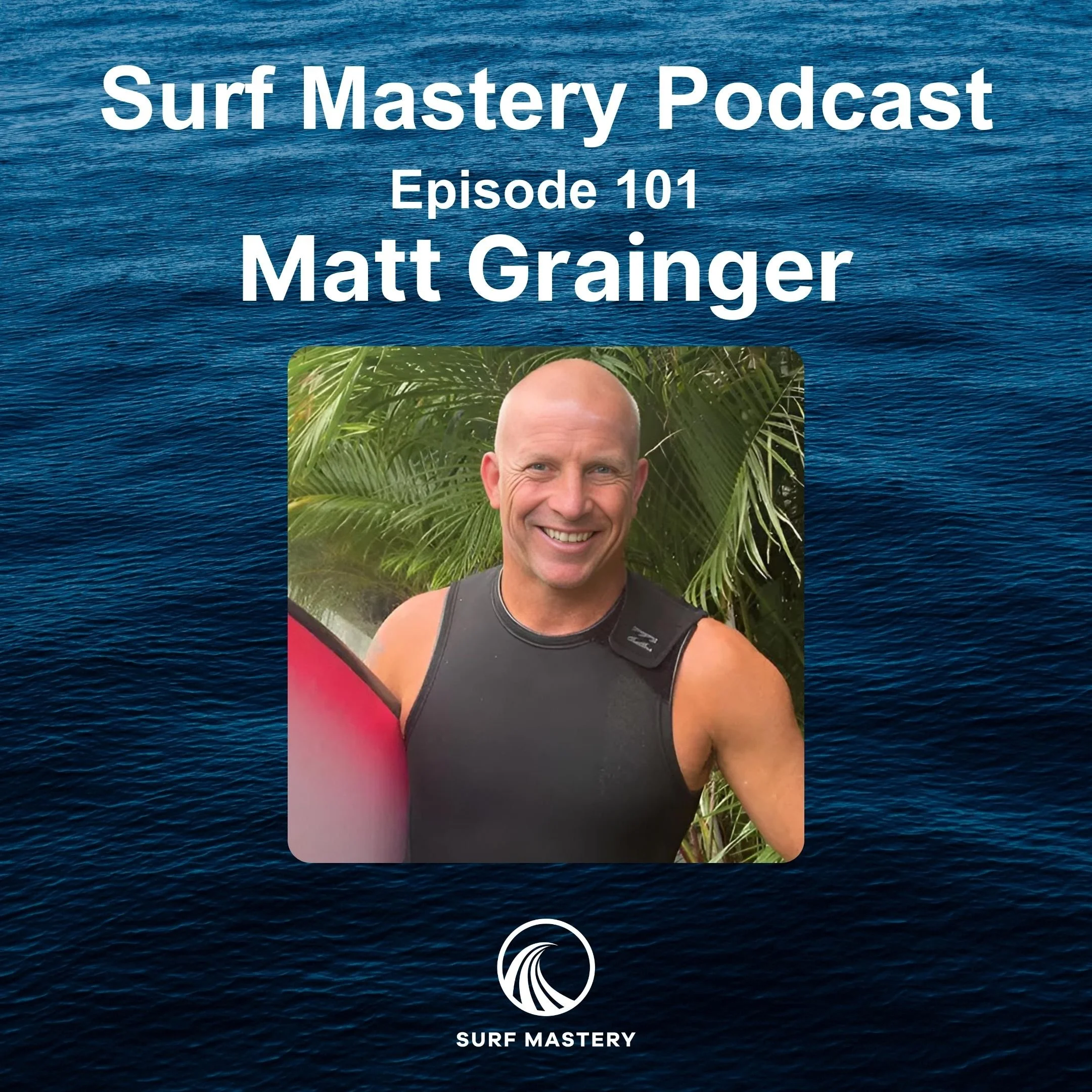
Ever wondered what it takes to paddle back to the boat after cracking your skull open on a reef—and then surf again the next day?
In this powerful and raw episode, Matt Grainger recounts the most serious injury of his surfing life and breaks down the mindset, fitness, and breathwork tools that helped him survive, recover, and return to surfing. Whether you’re battling niggling injuries or just want to surf smarter as you age, this episode is packed with life-saving tips and surf longevity gold.
Hear Matt's gnarly reef injury story and the step-by-step actions that kept him from infection or worse
Learn the mobility and strength training practices that keep him charging Indo barrels at 55
Discover overlooked health tips for surfers—from reef cut recovery to sleep and sunlight exposure
Hit play now to learn how to surf longer, recover faster, and avoid the mistakes that can sideline your progress and health.
For more insights and tips from Matt Grainger:
Follow Matt Grainger: Instagram - mattgraingersurf & Linkedin - Matt Grainge
Follow Michael John Frampton: Instagram - @surfmastery & Website: https://surfmastery.com/
Key Points
Reef Collision & Injury: Matt recounts a terrifying reef impact at low tide—being catapulted headfirst, fracturing his skull, and stitching out coral fragments before the session ended.
First-Aid & Infection Prevention: Detailed reef-cut care tips: scrub with a clean toothbrush, use peroxide/iodine/alcohol wipes, rinse with bottled water, apply powder (EVP), and wear protective footwear.
Helmets & Safety Gear: After the incident, Matt adopts a soft-shell surf helmet for heavy, shallow-reef breaks to prevent re-opening cuts and concussion.
Surf Fitness & Mobility: At 55, Matt surfs daily and credits a gym regimen of mobility drills, strength training (Olympic rings, squats), breath training (4-sec inhale/6-sec exhale), and sprinting for injury reduction and performance.
Age & Mindset: Emphasizes the power of positive self-talk around aging, citing Bruce Lee’s “spelling spells” concept, and shares his belief in staying mentally youthful through passion for surfing.
Mind-Body Connection: Michael and Matt discuss placebo-style health benefits from circadian alignment (morning sun exposure), grounding (barefoot in sand/ocean), and limiting blue-light before bed.
Surfing as a Puzzle: Every wave presents a unique challenge—from takeoff to turn execution—keeping surfing engaging and motivating across conditions.
Wave-Pool Coaching Masterclass: Matt describes running Indo clinics at the Sydney wave pool: expert-mode barrel clinics, AI video analysis (FlowState), mobility drills for tube riding, and apnea (breath-hold) training.
Take-Home Tips: Consistent cut-care, helmet use in gnarly reef breaks, small “movement snacks” throughout the day, mobility + strength focus, and maintaining a fun, puzzle-solving mindset.
Outline
Podcast Introduction
Michael Frampton welcomes listeners to Surf Mastery Podcast.
Episode ethos: education + inspiration for better surfing and life.
Guest intro: Matt Grainger—mid-50s, lifelong ripper, surf coach, health & fitness advocate, four-time guest.
Brief mention of show extras: free PDFs (top tips & exercises), personal coaching, YouTube video version.
Matt’s Reef Collision Story
Setting: Macca’s wave, two-swell day, paddle contest with friend Sean.
The wipeout: foam-ball pump, wave turns, head-first reef impact at low tide.
Immediate aftermath: heavy bleeding, coral fragments, self-rescue to pontoon.
First-Aid & Infection Prevention
Coral extraction with tweezers and toothbrush scrub under peroxide/alcohol.
Two-hour stitching process; breath-training to manage stress.
Infection cautionary tale: fellow surfer Kat’s flesh-eating microbe and staph from minor foot cuts.
Recommended kit: clean spare toothbrush, iodine/alcohol wipes, EVP powder, protective footwear.
Helmet Adoption & Safety Gear
Description of soft-shell rugby-style surf helmet (like Tommy Carroll’s).
Protocol: wear in gnarly, shallow-reef conditions; continued use at G-Land.
Benefits: prevents re-opening cuts, reduces concussion risk.
Surf Fitness & Mobility Regimen
Daily routine: gym at Surfers’ Gym—mobility drills, Olympic rings pull-ups, split squats.
Breath training: Resident breathing technique (4-sec inhale, 6-sec exhale).
Strength focus: leg-dominant work, rotator-cuff prehab, single-leg balance (eyes closed), pendulum jumps.
Nutrition & recovery: two meals/day, bone broth, black coffee + coconut oil, ice baths + sauna.
Age, Mindset & Motivation
Positive self-talk: avoiding “I’m old” narrative; Bruce Lee quote on words as spells.
Harvard placebo study on environment and physiological improvement.
Surfing as the ultimate motivator for healthy choices: diet, sleep, training.
Mind-Body Connection & Health Hacks
Morning sun exposure for circadian alignment; limiting blue-light pre-sleep.
Grounding via barefoot time in sand/ocean; negative-ion benefits.
Infrared and light-health emerging trends; balancing time and resources.
Surfing as a Puzzle
Every wave’s variables: drop style, speed generation, foot placement.
Board evolution: modern shapes enabling more accessible performance.
Interview with son Mason on board tech improvements driving performance.
Wave-Pool Coaching Masterclass
Weekly clinics at Sydney wave pool: 5’3″ Bobby quads, 20+ waves in an hour.
Indo masterclass: video breakdown of tube riding, foot placement drills, mobility patterns.
AI FlowState analysis: personalized feedback on technique.
Apnea training session in heated pool; reef-cut & first-aid workshop by Dr. Shaz.
Closing & Calls-to-Action
Michael’s school-pickup notice, thanks to Matt.
Subscribe, rate & review on Spotify/Apple Podcasts; watch on YouTube.
Visit surfmastery.com for blog tips, PDFs, and online coaching.
Sign-off: “Until next time, keep surfing.”
Transcription
Matt Grainger
I have a nice snap in my head that I took off, made the drop, I was on the foam ball and as I was pumping on the foam ball, the wave turned the corner. So I just got catapulted on the foam ball, thrown in and out head first. And as soon as my head landed, the lip hit the back of my neck and just drove me straight into the reef like instantly. It was only like two foot deep, it was low tide and I just, it was just like bang. And I was like oh, oh no. I got a bit on here. I had like 25 stitches here, five stitches here and I just went, I knew the session was over and I just paddled back. Getting myself back. I almost forgot this anyway, so I went back and got on the pontoon and just started pouring bottled water over my head. I'd cracked, I'd actually like fractured my skull but it was actually bits of coral coming out of my head. And then pulling bits of coral out with the tweezers and then got toothbrushed for an hour and just was scrubbing it. What, scrubbing it all with peroxide or iodine or something? Yeah, just with light alcohol. Oh yeah.
Michael Frampton
Welcome back or welcome to the Surf Mastery Podcast. I'm your host, Michael Frampton. And the ethos of this show is education and inspiration for better surfing and a better surfing life. And Matt Grainger, today’s guest, not only was a huge part of the inspiration for the birth of this show, but he epitomizes that ethos as well. He is in his mid-50s now and he's still out there surfing a ton and stays fit and healthy for surfing and also teaches others to be better surfers and better people through better surfing mindset, health and fitness, etc. Matt is just a pure inspiration in the surfing world and just an absolute frother and a rips. He rips. He's an incredible surfer and stoked to get him back on the show. And like I said, he first appeared back in episode number one. This will be his fourth appearance. He also appeared in episode 30 and episode 55 as well. And without further ado, I shall fade in my conversation, my fourth conversation on this podcast with Matt Grainger from Manly Surf School.
Matt Grainger
So how are you? Great, mate. Yeah. Just did a trip to Indo, which is nice.
Michael Frampton
Yeah. The head looks like it's all healed up. The head's good. Look at that. I'm a good healer.
Matt Grainger
I can tell. Good job. Yeah. It's an improvement. Yeah, she gave me a facelift while she did it.
Michael Frampton
Oh, sweet.
Matt Grainger
Is that your worst injury out there? Yeah, definitely. I've never hit my head ever in any reef in Indo or anywhere. I've obviously had bullets in the head. Some good cuts in the eyes, always the right eye. Must be the way I turn my head. Just haven't had time to put the hands up. Funny, you learn the surf way, tell people to put your hands up. Done it successfully a few times, but sometimes it's got through. A lot of fins in the back of the head. But yeah, never hitting the head on the bottom of the reef. I had the reef crack under my head with nailing. As I got smashed, just instant, like, just heard this, and I just heard the reef just snap in my head, just heard this crack. And I was like, oh. Like, you know when you say stuff, oh, that's not good. And then I popped up. I popped up, then another wave hit that, and there was bursts of blood vessel in the top of my head. So there was heaps of blood. So I couldn't see out of my left eye. And I felt that I hit my nose as well. I said to one of the Indo guys, Wayway, who is one of the managers of Macca's Resort, I said, have I still got my left eye and my nose? And he goes, yep. And I said, oh, we're good to go then.
Michael Frampton
How did it happen? Was it just a freak random thing, or was it a lapse in concentration, or what?
Matt Grainger
Yeah, it was a bit of the ego took over. Every day was the best day ever. We had the first swell in June. And this one day, oh, just got bigger and bigger, and it had a lot of south in it. There were two swells. It was like a south swell and a bit of southwest as well. So you could get a chip in. You could chip in from behind on the tower, and you could backdoor where you'd usually take off, so you'd get more barrel time. And I was riding this Magic 6'0 CI Pro 1 that I've had for about a year. Felt unreal under the feet. I'd been riding it all day straight. And then this guy, Sean, came out from South Africa. He rocked up on a boat. Him and I started paddling up the reef and just trading wave after wave and making them. So we’re just making these unbelievable tubes, and no one came up there because, you know, it was pretty gnarly. So if you fell, it was like two foot deep, and it was like an eight foot swell. So when Macca's, probably eight to ten, you probably saw footage of Nathan Florence. I don't know if you saw some of the footage of him in HTs. It was like ten to twelve foot HTs that day, whereas Macca's doesn't get bigger. It just gets thicker. So it's probably six to eight foot, but really thick, like a Chopes kind of wave. You get this drop. You can make this really nice drop and then come in with speed. And just if you made it, you're fine. But if you didn't make it, that's what happened. So after five hours, I actually wasn't even tired. It was after like five hours, I was just getting cocky, and I probably should have gone in. It was more like one more, one more. And Sean and I were trying to outdo each other, and he actually snapped his board on his last wave, and I snapped my head. But I took off, made the drop, was on the foam ball. As I was pumping on the foam ball, the wave turned a corner, so kind of that southwest angle of the wave. So it turned a massive corner. So I just got catapulted on the foam ball, and I got thrown in out head first. And as soon as my head landed, the lip hit the back of my neck and just drove me straight into the reef like instantly. It was only like two foot deep. It was low tide, and I just, it was just like bang. I was like, oh, oh, no. I got a bit on here. And then I went into warrior mode. I went into warrior mode, you know, where I'd said, ask the Wayway if my eyes were okay. I actually got a cut there as well, so I got a cut. I got cuts either side of the nose. Down here on the bottom of the nose as well, on this eye, and obviously here, I had like 25 stitches here, five stitches here, and I just went, oh, I knew the session was over, and I just paddled back. Everyone was like, oh, get a boat. Everyone's screaming, get a boat, get a boat, Matt's hurt. I'm like, I'm good, I'm good. Get myself back on my own, you know. One guy goes, yeah, good on ya. This guy, Hans from America, he goes, good on ya, tough guy. I'm like, nah, I've got this, I've got this. Anyway, so I went back and got on the pontoon and just started pouring bottled water over my head, and then I got the boat back to Macca's and then looked for showers, and she was already stitching up my brother. He had a little cut on his back. And then someone said, oh, Matt's looking for you, he cut his head, and she thought, if he's asking for something, he's in a bad way. So then she saw my head, and she thought I'd actually fractured my skull, but it was actually bits of coral coming out of my head. Far out. So she pulled that, pulled the bits of coral out. She got some local, which was good, and just put it in the cuts, and then pulling bits of coral out with tweezers and then got a toothbrush for an hour and just was scrubbing it. That was the gnarly part.
Michael Frampton
Scrubbing it all with peroxide or iodine or something?
Matt Grainger
Yeah, just with light alcohol. Just so you don't kill the flesh too much. Not too gnarly, but just getting it all out, and I reckon that saved me for sure. Then obviously it took about two hours to stitch up, which was gnarly. And I was just doing a lot of breath training, like coaching, wrapping it, training, and I saw resident breathing, which was like a four-second inhale, six-second exhale. I was just going into that, and that helped big time. That was like a three-hour ordeal, which felt like a long time, but it wasn't as long as I thought. And then she put a face mask over it, which I couldn't see. And then, yeah, the rest is history. And then I surfed the next day.
Michael Frampton
Our kid did not. Yeah, I know.
Matt Grainger
He taped it up. I just said, I'll get one wave. I'll get one wave, and I did some tests, like I was jumping on one leg, see if I had concussion. And then, oh, no, not well in the head anyway. And then I wore a helmet, of course. And then I didn't surf for, after that day, I didn't surf for three and a half days. And then after that, I was good to go. I was having four tablets of antibiotics every day, washing it with fresh water. She was breaking up antibiotics and putting it inside the cut as well. Yeah. And she left a little bit of one of the gnarly cuts in it too tight, so bits of coral would still come out if it did. Just a little bit's popping out. Far out. So, yeah, so I'm wearing a helmet from now on when it's gnarly like that. So I went to G-Land after that. We had another swell at Macca's and surfed Greenbush. So I had one of those soft-shell helmets that Tommy Carroll wears. Yeah. By DMC. It's like a rugby helmet. Yeah, yeah. But they're nice and light. Yeah, so I wore that. That felt good. And then I wore it in G-Land. Every surf, even, because I didn't want to get hit and break the cuts open anymore. Yeah, yeah, yeah. I got the stitches out after six days. Really, it healed well. Yeah. Dope. Wow. But from now on, if it's gnarly and low tide and heavy, I'll be wearing a helmet.
Michael Frampton
Yeah, fair enough.
Matt Grainger
But I like getting a concussion and brain damage or losing an eye or nose or whatever.
Michael Frampton
Oh, yeah. I mean, any sort of coral cut infection is such a huge risk, right?
Matt Grainger
I reckon. Like, even, there was a girl, there was actually a girl out in the water. Her name's Kat. She does events every year for about six months with her and her partner. And they had a longboat with a solar panel on top and just go around the islands. And she had a cut on her foot. She went to seek a cut and just had a shower. But that got, that sort of told, and she told me this story like a week before. Then she got this flesh-eating microbe in her foot and she basically went delirious and had to go to, she went to Padang and their hospital was too dirty and gnarly. So Hans got her out of there. Carried her to the Bassberry. Then went to Jakarta and she had like three skin grafts. And then back to LA. Yeah, just from that. So that straightaway, I was like, I'm not getting my head touching any, any, any shower water. So I was just, it sounds very first world, but I was just, every time I washed my head, it was just with bottled water. Yeah. Yeah, so it's a good tip for people out there. Oh, yeah. Yeah, look after your cuts. Yeah, always look after my cuts, even feet, you know. I went to Chopes. First time I went to Chopes in 2000, I got these tiny little cuts on my feet and it was the last day. And I was like, alright, last day, who cares? And then I got home and I got staph. I couldn't walk. Oh. Went to my glands and straightaway I was on antibiotics and prednisone and it went away, but that was nasty. So that taught me a good lesson.
Michael Frampton
Mm.
Matt Grainger
Yeah, so get on, get onto your reef cuts quickly, people, when you go to the tropics.
Michael Frampton
Yeah, you've got to clean them, eh? I remember I touched the reef in Arugam Bay in Sri Lanka once, like just got this tiny little graze, thought nothing of it, just put like a little bit of iodine cream on it, that's all I did. And then two days later it's just like 50 cent welt that's just throbbing. And you had to get some antibiotics, so should have just scrubbed it out with a toothbrush and done the right thing at the time. But it was such a small cut, you thought nothing of it, but there must have just been little bits of coral in there or something.
Matt Grainger
Yeah. Yeah, that was like the ones on the feet at Chopes, tiny little, like little nicks. Mm. Yeah, so, yeah, to get the, yeah, so the tip from Shaz, Dr. Shaz, my partner, take, always have like a spare toothbrush that's clean. You can even get it from, you can get it from the hotel, but you never brush your teeth with it, that's totally clean, and just scrub it, scrub it. Use the little wipes, the iodine alcohol wipes, so you do one-offs, nothing else dirty, and then just keep checking it, yeah. And there's that Teo Gin that's pretty good from Indo, you know, that Chinese, that red bottle, that's always cool, the Chinese, it's called Teo Gin, or they don't use cream, she said, because in the tropics, use the powder, the EVP powder. Yeah. The powders are the go, yeah. Okay. So that's the go, and then cover them up, yeah. If you do your feet too, I always wear shoes, people give me heaps of crap in Indo, because I'm always wearing, if I've got cuts, I'll put shoes on, because you're walking around and you get dirt in the cut. Yeah, so, it's important, you always forget, especially, you're like, oh no, I'll be right, or, you know, you see so many guys just get smashed and don't even do anything.
Michael Frampton
Yeah. Oh yeah, it's not worth the risk. Oh, so you're still out charging, catching heaps of waves?
Matt Grainger
Yeah, still surfing a lot, pretty much surf every day, sometimes twice, got the gym, the surfers' gym, which is good, that keeps you fit and healthy, like, working on the mobility that you told me a year ago, and yeah, just building on that. I think that's a big case, mobility as we get older, and even the younger athletes that we coach too. I've got some pros that train at our gym and we've got them on a mobility program where it's strength training, and I've found, lately, like, in the last few years, like, having the mobility and also the strength training is huge, just for reducing injury, keeping strong. Like, I'm 55 this month, and don't even talk about your age too. It's really important what you say out of your mouth, you know. There's that quote by Bruce Lee, it's like, be careful what you say with your words, because that's why it's called spells and spelling. Like, you're saying, oh, you hear heaps of guys walk around and go, oh, I'm done, I'm old, I'm an old man, and all this, and you're like, hey mate, like, no, it's all relative. Like, we don't, what, it's time really, anyway, you know. Like, just this thing we've made up, but, you know, biological age, and if you keep yourself fit and healthy and moving and eat well, sleep well, you can keep rocking till you're in your 80s.
Michael Frampton
I reckon. Yeah, man. Oh, I was just reading, listening to a book, actually, about all of that, and this Harvard professor did an experiment where she got a bunch of 80-year-old men, and she put them in a house where everything in the house was as if it was 30 years ago, and they were only allowed—so the TV programs, the books, the furniture—and they were only allowed to talk about things as if it was 30 years ago or in the present. And within a few days their eyesight improved, like, their blood pressure improved, everything, just by, just like placebo, like, extreme placebo effect.
Matt Grainger
Yeah, I've got to get that book.
Michael Frampton
It's a rad book. I'll forward it to you and I'll put it in the show notes for listeners too. I think it's called The Mind-Body Connection or something. I'll put it in the show notes and I'll send it to you.
Matt Grainger
And even, when I was at—not trying to name drop here—but when I was at Nazare, I towed Lad back to the harbour because he broke down, and it's quite funny, like, it was a big day, like, 60-foot perfect Nazare. And I was with Lucas Padua who's from the Mavericks who trains with Lad. He was towed with me and we were just shifting partners all day. And then I said, oh, your mate Lad, like, I didn't even know Lad anyway from then. And I said, your mate Lad's out at sea doing nothing. We should go check on him. And he was like, yeah, yeah, alright. So we hammered out to Lad and he goes, yeah... yeah... yeah... yeah...
Michael Frampton
Yeah...
Matt Grainger
Like I couldn't give a stuff what I look like. I just wanna be out there, catch a wave and still be able to surf. My brother and I just went to Macaronis together and we're both chatting that we probably surf better now than we were in our mid-twenties. Just got some boards that are better, we've got more knowledge and we've kept our bodies good. Yeah. Yeah, we've had no serious accidents. So that's lucky. You know, obviously head knocks and all that kind of stuff, but nothing like—I haven't broken any major bones, like bloody broken hands and things like that. But not, you know, I haven't broken a femur or anything. Yeah, so some guys obviously are at a disadvantage if they've had a major injury, but I haven't had any major injuries. I mean now I've realized I still always think when I had a niggle—like a nip, like a niggling hip or, you know, you had to go to chiropractic, you have to do this, you have to do that—you can kind of push through it and move through it. I found that like—and if it's really serious, obviously go and see a physician, which is good—and yeah, you can get a really good massage or just to break that tissue down. But I found now you can move through pain and throughout the whole day. Like not—yeah, everyone thinks I've got to train for an hour and that's it so I don't do it. You know, you can do little snacks like 10 minutes here, you know, 10 minutes in the morning, another 10 minutes at lunchtime, another two minutes here and another two minutes and eventually kind of work through it. I remember when you were working together. You were pretty on to that early in early days. Good diets. I got into my fasting which is good. Very much two meals a day. Love the bone broth. I'm doing coffee, always be black coffee, a little bit of coconut oil. So yeah, that's just all these little hacks that we're learning, helping along the way I reckon.
Michael Frampton
Yeah, but you've got that motivation. You want to keep surfing, you want to keep going to Indo, and that's what, yeah, that's what gets you—okay, no, I'm not going to have that donut. I'm going to go to bed early because I want to go and get barreled at Indo. Like, I know it's such a good motivator.
Matt Grainger
Yeah, and that's it. Keeps you young. Keeps you young and young in the head too. And looking at boards that, you know, I still ride shortboards, more shortboards like a 5'9", and I've got a 5'3" Bobby quad that I ride in the wave pool. Yeah, I can still ride shortboards. Yeah, and just having that money and the boards have got so good now, you know, just the rockers and the things all the shapers—and I remember what Michael Ho, I was talking with my son Mason, I saw in an interview that he said, oh Dad, why do you think you're ripping so much now? And he goes, the boards. And Michael's like, doesn't care, you know. He doesn't have Instagram or Facebook. He's just surfing. And I've seen Coco out in the water when she's in Indo or here and she said, yeah, Pops is just proper. So he's not thinking about how he's 60 and he's charging, you know. Yeah, he's right. We've got new blades and getting tubed at Backdoor and even on the backside at Ala Moana and things like that. But yeah, that's the motivation—surfing. Yeah, it's such a fun sport and I just always say to people it's a puzzle. You know, every time we go for a surf, you're trying to work out that puzzle. It doesn't matter if it's one-foot Longy or it's 20-foot Bommies or it's crazy tubes in Indo. You're still trying to figure out how you're going to paddle in, how you're going to get to your feet, how you're going to generate speed. Is it a straight down drop? It's a knifing drop. Am I going to get my front foot early? All these little things just come into play from all those years of experience. And you're trying to work out that puzzle. And then it's one foot, you just want to go and do one big turn on a one-footer and you're happy. So that's what keeps me motivated. Some days, even if it's crap, I'll still go out for like three waves and just, I'll get my three waves and go to work and train. And I like the training too. I've got rid of the cardio so much, sort of not really doing the cardio so much, the hours. Just strength and movement. If you do a good movement flow, you can get good cardio from that anyway, actually. Yeah, I've got my heart rate more today and you're actually getting flexy. Whereas you don't want to get stiff. And then just doing the right strength training. So you look at all the surfers now, it's all legs. Hardly any upper body, only back and legs. You don't want any chest and you don't want to overload the shoulders as well. Anyway, the rotator cuff exercises are really good. So light weights on the shoulders, nothing heavy so you can still get that mobility in your paddle and you've got the power from your back for your paddle. So a lot of the strength training is just Olympic rings, pull-ups, maybe some skin-the-cat. Yeah. Dumbbell pull-ups as well off the bench, all that kind of stuff. And then a lot of, obviously, squats with a barbell, goblet squats, front squats, split squats, all that kind of stuff is super important I reckon. So you're getting that mobility and doing the weights and getting that connection and feeling when you're doing the weight, not just doing it for the sake of it. Like doing those reps and really thinking about that rep. Are you just getting your body in those positions that you could do in the water or land? So when you go out there like a martial artist, you're ready to go. You drilled it so many times it becomes second nature.
Michael Frampton
Yeah, no, strength training's so good. It's also for like—strength training increases your body awareness actually and just maintains your bone density. It's just, it's so cool. And if you're doing it—yeah, do upper body, lower body—it doesn't get any more kind of hard of a cardio workout than doing like a strength training circuit if you want to, you know, get the heart rate up. What sort of stuff are you doing for the hips, like in your regime?
Matt Grainger
Oh man, mine’s—I had ACL surgery in my early 20s, and it’s now almost, so, you know, bone on bone basically. So a lot of my training is just keeping on top of that. So like slow moving heavy stuff with—you know that, have you seen the Knees Over Toes guy?
Michael Frampton
Yeah, yeah, he's awesome.
Matt Grainger
I do backwards walking on the treadmill and just, yeah, following some of his stuff and sticking to keeping the legs strong. Because it’s interesting because they say it's bone on bone, right? And it can get like that, but your cartilage is gone, your cartilage doesn’t really come back. But there is scar tissue that forms where the cartilage was. As long as that scar tissue’s there, you’re fine. If you do too much stuff and that scar tissue wears away—so if you do too much volume and you don’t allow that scar tissue to heal and reform and the fluids to come back—then it can be bone on bone. You get a real sore joint. But so now, as long as I keep the volume of what I’m doing on the knee, it’s fine. I can actually—how many reps—sort of more like six reps, only a couple of sets, but, you know, because I’ve got a history of strength training, I know the form, I’m strong, I know what to do. Backwards walking on the treadmill and some band—lots of balance work as well, because it’s actually those small little twitching movements in the joint that do the most damage. So if your balance is on point and your joint is nice and stable, then that’s one of the big things as well. So keeping the balance—like single standing on one leg with your eyes closed. Little things like that.
Matt Grainger
Yeah, I do. I love the pendulum jumps. You know the pendulum jumps? So it’s a one-legged jump. And when I do that, my eyes closed as well. Yeah, when I coach a lot of the athletes as well, like before they’re competing, like I’ll say, like, we all do five jumps eyes open and then the last five closed, and it helps with that body awareness, you know, for late drops and big drops out of the lip and being aware of where their body is. Yeah. And I even did it when I cracked my head just to check if I had concussion. I was like, yep, I’m fine. You know, I’m not a doc, I’m not a doctor, but you can jump one-legged with your eyes closed, if you pretty much, and you’re fine, you don’t have concussion.
Michael Frampton
Yeah, yeah, yeah. And I do a bit of sprinting as well. Sprinting is really good for you. So I do a bit of that and I still do like this bodyweight gymnastic style strength training as well. I’m still doing that, following a guy called Naughty Man—I can’t even pronounce his name. I think it’s Ido Portal. I can’t remember how to pronounce it. But it’s functional performance training. He’s doing a lot of really unique stuff. He’s worth a follow. He’s pretty out there with some of what he says, but he’s also got some really interesting tips. A lot of, you know, not necessarily heavy weights, but functional stuff. He’s worth a follow. Yeah, and just keeping on top of the diet and sleep, man. That’s like you mentioned, man.
Matt Grainger
Just keeping a clean diet, getting enough sleep and giving a good balance of rest and stress. Because, yeah, life can get stressful, but that’s only what you make it really. But yeah, if you sleep well, you have a good sleep, you can conquer anything really. Hey, I find too the shoulders are important—like the rotator—and a couple of lessons for it. So if you keep on top of that, just like maintenance work, like prehab, like light weights, like 10% of your body weight. Mm-hmm. Just getting in all those different angles because you do—you know when you’re paddling super hard trying to make that wave when it’s hollow—you’re going to put a lot of stress on the shoulder joint. And I’ve seen so many mates—like, you got to look at your mates who’ve had surgeries, you know what I mean? Like it’s always shoulders, knees and spine pretty much. Get ahead of the game.
Michael Frampton
Yeah, hanging, hanging for your shoulder. I had a really good—just hanging. Active and passive hanging. And I mean, I’m lucky when I was living in the US, I did three different DNS courses.
Matt Grainger
Yeah, yeah, yeah. I remember you doing that.
Michael Frampton
Yeah, and so I do a lot of that sort of rehab-style training still and that’s really good for shoulders and core. That helps keep my shoulders in check.
Matt Grainger
I remember. I remember you got injured and I did that DNS course. I think you did your hamstring, right?
Michael Frampton
Yes, right.
Matt Grainger
And it was the day before and you said, "Matty, can you do this?" I went, yeah, I did a whole week with you. That’s right. Yeah, it was massive. It was massive on hanging. And you know the rings too?
Michael Frampton
Yep.
Matt Grainger
Up on the rings. Rings are better for a surfer too. Like doing chin-ups, pull-ups on a ring because you get that nice rotate—you get that movement in the shoulder joint. Whereas just a straight bar, you don’t really get that movement because we actually reach out and rotate our shoulder as we paddle. So yeah. Yeah. Yeah. You know, it was pretty, it was an issue. Cool guy, full-on he is, but yeah, I learned a lot.
Michael Frampton
Hmm. Cool. Are you still doing ice baths?
Matt Grainger
Yeah. Ice bath and sauna. Got an ice bath in the backyard and sauna. We’re lucky. And we got two at the gym now. We’ve got two saunas and two ice baths.
Michael Frampton
Wow.
Matt Grainger
So yeah. Yeah, it’s good. Everyone loves them. Everyone’s created a little community there.
Michael Frampton
Yeah, it’s awesome. What about like, have you looked into light health?
Matt Grainger
I have seen it. I haven’t really done it personally. It looks pretty interesting. It’s just a matter of time and money, yeah. And I do have some infrared but like not some lighting, but you know, it’s not huge.
Michael Frampton
Have you been looking—it’s just really interesting. There’s this guy, Jack Kruse, has been on about it for years, like 20 years, but now there’s all these scientific studies coming out proving his theories right about how important sunlight exposure is for health and how it turns on certain genes, like the POMC gene, and how if you’re exposing yourself to too much blue light after the sun’s gone down, how that affects blood sugar and circadian rhythms. But I mean if you’re getting up and going surfing every day and getting to bed on time, it’s funny...
Matt Grainger
That’s all urban and all that, like, huh? Yeah, they say go out and play, you know, get the sun. And we live on the East Coast here, so every early surf you're like looking into the sun. Exactly. In the morning, you know, blinking going on. You know, different on the West Coast. Yeah, if we go to bed at the right time—and I try not to look at my phone before I go to bed. So yeah, I just try to banish that, put it away. Because yeah, that’s a bad habit, isn’t it? Just before, looking at the screen. Try and look at computers as well, onto that in that way. Yeah. Yeah, you can just go, yeah, just basic stuff. Yeah, keeping those circadian rhythms. I haven’t done the glasses or anything like that. Like the blue-light-blocking glasses. Yeah. Dave Asprey and whatnot.
Michael Frampton
Yeah. Yeah, they get into it a lot.
Matt Grainger
They go hardcore on everything. They know how much is sort of a day. You think there’s a fine line between how much time you’ve got in a day?
Michael Frampton
Oh, exactly. But I mean, Dave and his mates, they’re spending a lot of money on—like Dave Asprey has a goal to live to 120. I think he might have even said 150. But like, and be healthy and functional at that age. So he’s making sure that, you know, every day he’s doing as much as he can. So those guys, I don’t know. I don’t know if I want to live that long.
Matt Grainger
Yeah, it's kind of sad. You kind of want to die normally, you know, like, I think with dignity. Yeah, like you don’t have to go...
Michael Frampton
Yeah. Because if you're the only one doing it and like, you’re still alive and healthy and all your friends are dead...
Matt Grainger
You're like, oh. What's the point? I mean, we talk about that all the time. Yeah, it's overboard. And almost, it brings a lot of anxiety I think too. Like trying to keep on point. Like you’re not actually—like they want to get to this goal of being this age, but they're not actually having fun in the present. Like it’s like, still got to live your life, hey. You still got to have fun with your friends, be with your friends. And you know, like I’m not like a tight—there's no way I’m a total monk. Like I still eat really well. But if, let's say, you know, if I'm with friends and family, I'm not going to go, I’m not eating that because I’m this. You know, like, yeah, I’ll still want to be part of the group, you know what I mean? Yeah. Yeah, it’s not going to kill me. Yeah, I want to have a good time with my friends. I’m not going to be that guy. “Oh, I don’t do that because I want to live to 100.”
Michael Frampton
Yeah, I’m going to go to bed at 8 o’clock on Christmas Day because I want to live to 150. Yeah, it’s kind of like... really?
Matt Grainger
Yeah, whatever. What about if you get hit by a car? Exactly. You know, I don’t mean that in a bad way, but you’ve still got to... yeah. And it’s funny, like all this grounding. You know, we hardly wear shoes in Indo. You know, you hardly wear thongs. When I was hanging out with you, yeah, you hardly wore... I remember going, “Mate, are you wearing shoes today?” That'd be rare. Oh well, I had to get the remaining shoes.
Michael Frampton
I hate it. Yeah, yeah, yeah. No, but that’s the thing, all the stuff that’s coming out in the latest health stuff from these guys, it’s what we do anyway. Especially as surfers—we get early morning sun, we’re getting lots of grounding work because we’re surfing in the ocean. That’s the best way to get your grounding done, is in the ocean or walking on the sand in bare feet. We’re getting it done.
Matt Grainger
Anyway. But it’s interesting these studies coming out and proving it. And by these tasks, you can—you can buy a grounding mat and walk outside, put your feet on the cold grass. You know, like, oh yeah, with cold sand. Like I’ve been surfing the wave pool a lot lately and it’s super fun, but you still don’t get that feeling of the energy of the ocean. Mmm. Like, you know, it doesn’t matter if you body surf, surf, bodyboard, whatever—you dive in the ocean for a swim, you always come out feeling amazing.
Michael Frampton
Oh yeah.
Matt Grainger
It’s from the negative ion, bro. Yeah, that’s part of it. Yeah. Yeah. Yeah, all of it. Yeah, and just maybe the soul energy of the waves, just being in nature. And yeah, it’s funny. You can go in the wave pool, you have a good time, but you don’t get that buzz or that feeling in your whole body from the natural waves.
Michael Frampton
Yeah.
Matt Grainger
And the soul and all that.
Michael Frampton
How much time have you spent in the wave pools?
Matt Grainger
Ah, there’s a new one in Sydney now. Sydney. And every Thursday I teach a fitness class to the staff. I’ve been doing that for the past week. Yeah, I go out every Thursday and I make sure I surf from 4 to 5, and then I run the class at 5:30–6:30. So that’s pretty cool. Like I’ll ride a little 5’3 Bobby quad and get about 20 waves. And then we ran a—we ran a pretty cool course the other week. We did an Indo masterclass clinic. So we taught people how to ride left tubes. So we had the expert mode, which is just a barrel. It’s pretty cool. You take off, you can do a Rio or just a setup turn and get this nice tube. That’s a pretty cool tube—like the barrel is wider than it is high. Yeah, you get quite low in the tube and then kind of turn the corner of it like Macaronis. So we did about 30 minutes. I broke down all the best surfers in the world getting tubed, TV screen, had about 8 participants. And so we broke that down—foot placement for backhand, frontside, getting—and then we did movement patterns like mobility patterns to open up people’s hips and ankles. Because that’s pretty much what you need when getting low in tubes and most tube riding. So we did that, we went surfed for an hour. Everyone got about 12 waves. And then there’s an AI—it’s crazy—they film this AI called FlowState on the left and the right, but we’re only on the left. You come in and it’s got all the clips of you. So I got a coach’s password. So I went through everyone’s clips and wrote down what they were doing right, what they were doing wrong. Yeah, it was rad. And then we had lunch, and then we did apnea training. So then we went into their leisure pool, which is heated, because the wave pool is only about 11 degrees at the moment. Of course. Yeah, it’s quite cold. Yeah. So it’s like 28. Then we taught the science of breath-holding. Then we went and did it in the water. And then Shaz did a chat on Indo—what to take in your first aid kit and, you know, reef cuts. Yeah, it was awesome. That was a full day. It was fun.
Michael Frampton
Awesome. That sounds unreal. I’ll put a link to that in the show notes too.
Matt Grainger
Yeah, cool. That’d be great.
Michael Frampton
Alright, Matt. Hey, it’s just gone three o’clock. I better go do school pickup now, but thanks for doing the show again. I really appreciate it.
Matt Grainger
Awesome, brother. Take it easy. Good to catch up. Hopefully see you when you come to Sydney.
Michael Frampton
Yeah, for sure. We’ll be over there at some point. Keep me in the loop with the app.
Matt Grainger
Will do.
Michael Frampton
Alright. Thank you for tuning into the Surf Mastery Podcast. If you enjoyed this episode, please share it with a friend. Also, the best way that you can help support and grow the show is to subscribe, rate, and review on whatever app you’re using—Spotify, Apple Podcasts. And of course, we are now on YouTube so you can watch the video version of this podcast on YouTube. Be sure to check that out. Also, go to surfmastery.com for more surfing tips via the blog. You can also book in a personal online surf coaching session with me also at surfmastery.com. There are two free downloadable PDFs—one with the five best tips from this show and one the five best exercises to improve your surfing. So go to surfmastery.com. On the homepage there, you’ll see them. Until next time, keep surfing.
101 Want to Surf Stronger and Longer? Discover the Fitness Secrets With Matt Grainger
For the passionate surfer—whether you're a weekend warrior, a surf dad, or an older surfer—this podcast is all about better surfing and deeper stoke. With expert surf coaching, surf training, and surfing tips, we’ll help you catch more waves, refine your paddling technique, and perfect your pop up on a surfboard. From surf workouts to handling wipeouts, chasing bigger waves, and mastering surf technique, we’re here to make sure you not only improve but truly enjoy surfing more—so you can get more out of every session and become a wiser surfer. Go from Beginner or intermediate Surfer to advanced.