
74 Jonathan Wayne Freeman
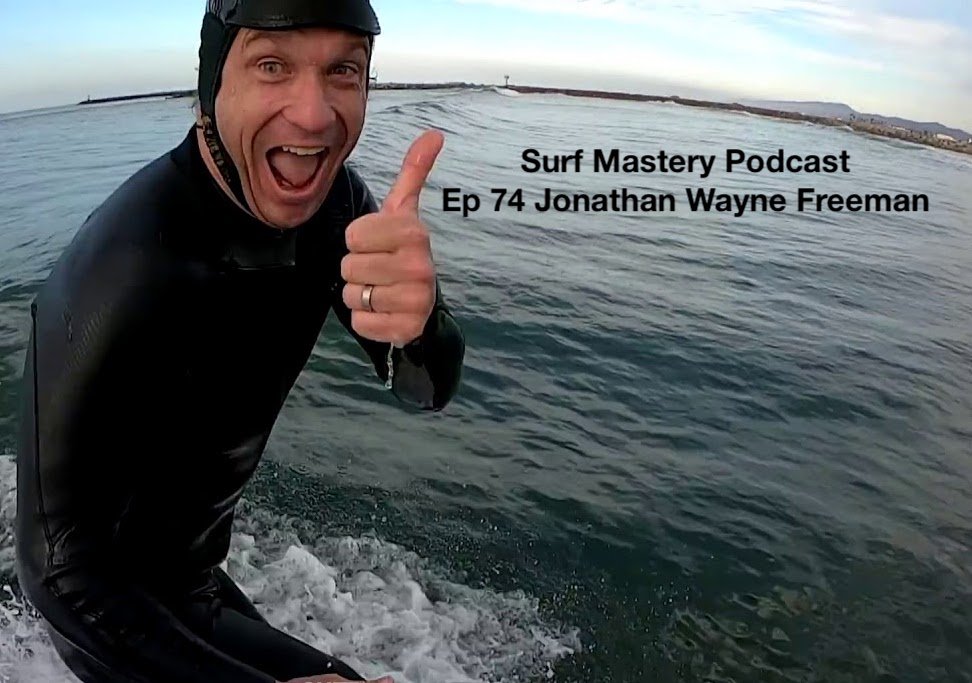
What would happen if ditching just one habit could explode both your wave count and your life purpose?
If you’ve ever felt stuck between a steady paycheck and the tug of something bigger—while trying to surf better on the weekends—this raw conversation is your reset button. Long‑time Southern California surfer and Instagram comic Jonathan Wayne Freeman lifts the curtain on trading a firefighter‑paramedic career (and nightly drinks) for full‑time creativity, cleaner living, and deeper stoke in the lineup.
Hear the exact mindset shift that turned wipeouts—and life detours—into fuel for career‑defining comedy.
Learn the 30‑day habit hack that supercharged Jonathan’s health, relationships, and surf performance.
Grab practical, laugh‑out‑loud tactics for spotting (and escaping) the “kook traps” holding most surfers—and dreamers—back.
Press play now to ignite fresh drive, clarity, and humor for your next surf session—and your next big decision.
Jon's Intagram:
https://www.instagram.com/jonathanwaynefreeman/?hl=en
Key Points
Surfing is not just a sport but a lifestyle and life mastery, connecting with one's true self and passion.
Jonathan Wayne Freeman's journey from a nine-to-five job to pursuing his passion for comedy and surfing highlights the importance of following one's dreams and the impact of supportive relationships.
The significance of surrounding oneself with authentic, inspirational people to foster personal growth and achieve success.
Jonathan's transition from a night janitor to pursuing fame and fortune through comedy and social media showcases the power of taking risks and embracing change.
The importance of vulnerability and authenticity in comedy and social media, and how it resonates with audiences.
The role of satire and humor in addressing societal issues and the importance of understanding different perspectives.
The concept of genius as a combination of strengths, passion, and continuous self-improvement, applicable to everyone.
The impact of choices on one's life and the importance of recognizing and acting upon one's purpose and passions.
The value of being present and mindful in activities like surfing, and how it can lead to a more fulfilling life.
Jonathan's decision to quit drinking and the positive impact it had on his health, relationships, and overall well-being.
Outline
Introduction of Jonathan Wayne Freeman
Jonathan Wayne Freeman is introduced as a longtime Southern California surfer who has recently become famous in the surfing world for his comedic and satirical take on the surfing culture.
John is described as an inspirational figure who had the courage to follow dreams of being a comedian and an entertainer, transitioning from a nine-to-five job to self-actualization.
The conversation highlights the idea that surf mastery is about life mastery and vice versa.
Surfing Culture and Adrenaline
Discussion about the profound adrenaline dump surfers experience and how it keeps them coming back, likened to a drug.
Mention of surfers like Carol and Ross Clark Jones who are described as incredibly inspirational.
Tom Cowell and Meditation
Tom Cowell is discussed as an inspirational figure who replaced surfing with meditation.
Jonathan has interacted with Tom on Instagram and hopes to meet him one day.
Stand-Up Paddle Boarding
Discussion about the introduction of stand-up paddle boarding to the masses and the mixed reactions from surfers.
Jonathan shares personal experiences and opinions about stand-up paddle boarding, including its place in lakes versus oceans.
Surfing Egos and Behavior
The conversation touches on how surfers' egos can change their behavior in the water compared to on land.
Jonathan enjoys watching surfers who were once good but are now progressively worse, finding humor and learning in their struggles.
Surfing Boards and Skill Development
Jonathan discusses the importance of choosing the right surfboard for skill development, sharing personal anecdotes about his own journey with different types of boards.
He emphasizes the value of starting with traditional logs and mid-length boards before moving to high-performance boards.
Inspirational Surfers
Jonathan mentions several surfers who inspired him, including Tim Curran, Kelly Slater, Shane Dorian, Nathan Fletcher, and Mark Healy.
He reflects on how studying these surfers could have improved his own surfing skills.
Comedy and Surfing
Jonathan talks about his lifelong love for comedy and how it has always been intertwined with his surfing journey.
He shares his transition from a nine-to-five job to pursuing comedy and surfing full-time, emphasizing the importance of following one's passion.
Transition from Nine-to-Five to Passion
Jonathan discusses the challenges and fears of transitioning from a stable job to pursuing passion projects, including comedy and surfing.
He emphasizes the importance of surrounding oneself with supportive and authentic people to grow and succeed.
Podcasts and Personal Growth
Jonathan mentions listening to podcasts while working as a night janitor, which inspired him to pursue his dreams.
He discusses the value of podcasts in learning about finances, comedy, and personal development.
Vulnerability and Authenticity
Jonathan talks about the importance of being vulnerable and authentic in content creation, sharing personal stories and struggles.
He discusses the positive reception to his honest and sometimes brutal videos, emphasizing the value of realness.
Comedy and Satire
The conversation highlights the importance of comedy and satire as mediums for learning and growth.
Jonathan mentions his favorite comedians, including Norm Macdonald and Bill Burr, and discusses the impact of their work.
Genius and Self-Belief
Discussion about the concept of genius and how it lies within every individual, emphasizing the importance of self-belief and leaning into one's strengths.
Jonathan encourages listeners to recognize their own genius and pursue their passions with confidence.
Life Choices and Mastery
The conversation touches on the significance of life choices and how they shape one's present and future.
Jonathan encourages listeners to reflect on their choices and find their purpose, emphasizing the importance of being present and enjoying the moment.
Social Intelligence and Compassion
Discussion about the decline in social intelligence due to increased use of technology and screens.
Jonathan emphasizes the importance of being aware of others' emotions and physicality, and the value of offering compliments and showing compassion.
Partnership and Shared Interests
Jonathan discusses the importance of choosing a partner who shares similar interests and understands the value of activities like surfing.
He emphasizes the difference between love and lust and the importance of radical acceptance in relationships.
Quitting Drinking
Jonathan shares his journey of quitting drinking, discussing the negative impact alcohol had on his health and mindset.
He emphasizes the importance of self-acceptance, surrounding oneself with supportive people, and pursuing passions to replace harmful habits.
Pursuing Passions and Creativity
Jonathan encourages listeners to pursue their passions and engage in creative activities, replacing time spent on passive entertainment with productive endeavors.
He discusses the importance of time management, self-belief, and perseverance in achieving success.
Social Media and Authenticity
Jonathan talks about his experience on social media, including Instagram and Twitter, and the importance of authenticity and freedom of expression.
He mentions his support from various companies and individuals who have encouraged him to keep pursuing his passions.
Inspirational Message
Jonathan delivers an inspirational message encouraging listeners to find their strengths, clean their metaphorical house, and act on their dreams.
He emphasizes the impact of service and creating art with one's life, inspiring listeners to dream big and take action.
Transcription
Jonathan Wayne Freeman
So there's those little angels in your life that always whisper in your ear, and they're the greatest people in the world that, you know, go... you know... maybe you're not that good at this. You know what you're good at—good at this. I've known you since you were a little boy. Do you love what you're doing? I'm enjoying surfing more than I ever have in my life, and I look at it completely different. Is very inspirational, because John had the courage to follow his dreams of being a comedian and an entertainer, to exit the security blanket of the nine-to-five world and head towards self-actualization. And it's through this journey that we become better surfers—and not just better surfers, but better humans—because Surf Mastery is about Life Mastery and vice versa.
Michael Frampton
Today's guest is John Wayne Freeman. John is a longtime Southern California surfer who has recently become famous in the surfing world for his comedic and satirical take on the surfing culture at large, and comedians are such important figures in society because they have the gumption and the leeway to point out some of our biggest failings. So we have a lot to learn through John's Instagram channel, but not only is he educational; his story is very inspirational, because John had the courage to follow his dreams of being a comedian and an entertainer, to exit the security blanket of the nine-to-five world and head towards self-actualization, and it's through this journey that we become better surfers—and not just better surfers, but better humans—because Surf Mastery is about Life Mastery and vice versa. So the first part of our conversation is quite light-hearted; that John is very intelligent and philosophical. We started recording this conversation as we were talking about big-wave surfing, and without further ado, John Wayne Freeman.
Jonathan Wayne Freeman
Carroll is a perfect example of a guy, and Ross Clarke-Jones, who... they're so gnarly. They go surf. That adrenaline dump is so profound, and they want to keep that going. How did they keep that going? Through the party. That's really why our dopamine levels in our brains are so important, and people need to understand those. Like, you get high from surfing—it is a drug. That's why people keep coming back again and again. But for those guys it's a completely different level. Like, I can't imagine what they feel like for days afterwards of surfing huge. He's been a incredibly inspirational.
Michael Frampton
Waves. Yeah, I mean, Tom Carroll was inspirational now. He sort of replaced that all with meditation. I had him on my wall when I was a kid, a poster. I had him in my school, in one of my classrooms. One of my English teacher was a huge fan, so I brought him a poster of Tom. And now he's just like, so positive, no judgment, will talk to anybody, really special soul, and it's wonderful to... he's the only guy that gets to stand up paddle pass for me.
Jonathan Wayne Freeman
I've talked to him a few times on Instagram; I hope to meet the man one day. I had him on my wall when I was a kid, a poster. I had him in my school, in one of my classrooms. One of my English teacher was a huge fan, so I brought him a poster of Tom. And now he's just, like, so positive, no judgment, will talk to anybody—really special soul—and it's wonderful to... he's the only guy that gets to stand up paddle pass for me.
Michael Frampton
See. Yeah, he is. Actually, Tom was my second guest ever on the show—no way. Such a good dude. Like, but he's a waterman, you know?
Jonathan Wayne Freeman
I think him and maybe one other guy—I'm joking—but seriously, like, Tom can do whatever he wants. Like, but he's a waterman, you know?
Michael Frampton
Does Laird get a pass, since he's Laird and he's outside the realm of the surf industry? He is an enigma, a very special human, and he brought it to the forefront. We can thank Laird or blame Laird, as the bumper stickers say that you see around here, that surfers put on their cars because they're upset that the masses were introduced to stand up paddle boarding. But why would they be upset? I mean, what's the big deal of basically a small vessel, captain by a person that doesn't know what they're doing and never learn how to surf, coming straight for your head when you're just trying to enjoy a calming surf? I mean, it's not like it could do damage if it hits you square in the head. It's not like it could kill you. It's not like it's a big deal if a stand-up paddleboarder who never even learned to boogie board or stand-up surf but is standing on this giant thing is sharing a lineup with you. I mean, what kind of problems could we have in a situation like that?
Jonathan Wayne Freeman
Pass? Laird gets a pass, since he's Laird and he's outside the realm of the surf industry. He is an enigma, a very special human, and he brought it to the forefront. We can thank Laird or blame Laird, as the bumper stickers say that you see around here, that surfers put on their cars because they're upset that the masses were introduced to stand up paddle boarding. But why would they be upset? I mean, what's the big deal of basically a small vessel, captain by a person that doesn't know what they're doing and never learn how to surf, coming straight for your head when you're just trying to enjoy a calming surf? I mean, it's not like it could do damage if it hits you square in the head. It's not like it could kill you. It's not like it's a big deal if a stand-up paddleboarder who never even learned to boogie board or stand-up surf but is standing on this giant thing is sharing a lineup with you. I mean, what kind of problems could we have in a situation like that?
Michael Frampton
Nothing. I think it's the perfect narcissistic surfed craft, too—chess out, 'I am Poseidon,' looking down on the people below me. I will try to talk to them in the lineup, and nine times out of ten they're like... they either don't respond, or they're just like, 'I am the king of the sea. Why? Because you're up there and I'm down here?' Yeah, that's sure—that's what's going on. But yeah, you're right; you nailed it. It attracts a certain type of human. But again, I know a lot of wonderful stand-up paddleboarders, and I personally have made a decision to do it only in a lake, and that is all.
Jonathan Wayne Freeman
Dude, you... okay, thank you. Every dude—and ladies too—chess out, 'I am Poseidon,' looking down on the people below me. I will try to talk to them in the lineup, and nine times out of ten they're like... they either don't respond, or they're just like, 'I am the king of the sea. Why? Because you're up there and I'm down here?' Yeah, that's sure—that's what's going on. But yeah, you're right; you nailed it. It attracts a certain type of human. But again, I know a lot of wonderful stand-up paddleboarders, and I personally have made a decision to do it only in a lake, and that is all.
Michael Frampton
I agree, it belongs in a lake. Yes. But, I mean, they're literally above everyone else, right? That's... plane or water man, depending on your preferred nomenclature, but yeah, they're just better people all around. They're cross training, and they get to see in a way that nobody else understands.
Jonathan Wayne Freeman
They are, you know, metaphorically, physically, spiritually—they are at a higher plane. It's called the water human plane, or water man, depending on your preferred nomenclature, but yeah, they're just better people all around. They're cross training, and they get to see in a way that nobody else understands. But a lot of surfers can be the nicest guy you've ever met in the car park, and then, as soon as they're in the water, just a different person—progressively worse at surfing that was once pretty good, maybe had a shot in a magazine, maybe made, you know, his name was in the newspaper in 1992, and he's still clinging to it. He's got stickers all over his board; he's ready to go, and it is a battle when he's in the lineup. He's still in a heat on the Bud Tour in Southern California; it's 1989. He's got Christian Fletcher there, and he can't do the airs because he never was going to, and he still can't do the airs, but he tries to do the airs, and he's now in his 50s, and it's fun for everybody in that lineup because can't we all learn from him? Because he really has a sick top-to-bottom game—just the bottom turns, Krisp, shwack, shwack. He's all comped out; he's still in that heat; he's in the Bud Tour, and we get to bear witness to his greatness. Yeah, I love those fellas—love them.
Jonathan Wayne Freeman
Sure. What is up with that is it's human beings' egos, and it's fun—it's fun to watch. My favorite thing in the world is to watch the person that's getting progressively worse at surfing that was once pretty good, maybe had a shot in a magazine, maybe made, you know, his name was in the newspaper in 1992, and he's still clinging to it. He's got stickers all over his board; he's ready to go, and it is a battle when he's in the lineup. He's still in a heat on the Bud Tour in Southern California; it's 1989. He's got Christian Fletcher there, and he can't do the airs because he never was going to, and he still can't do the airs, but he tries to do the airs, and he's now in his 50s, and it's fun for everybody in that lineup because can't we all learn from him? Because he really has a sick top-to-bottom game—just the bottom turns, Krisp, shwack, shwack. He's all comped out; he's still in that heat; he's in the Bud Tour, and we get to bear witness to his greatness. Yeah, I love those fellas—love them.
Michael Frampton
Getting progressively worse—so true—as they age. The board stays... here's L.A. surfing in a nutshell: I was at a very popular spot that is basically a closeout nine times out of ten, and there must have been 70 people—young people too—and they're all writing just like in the 90s when people were riding the glass slippers that Kelly Slater's had. That's still happening. I thought that was over. I thought with our hybrid boards, our mid-lengths, long boards, soft tops, I didn't realize people were still walking into surf shops that had been surfing—surfing, air quotes—for five months and buying a top-of-the-line board that is a potato chip thruster, and it's fun to watch them—they catch no waves, they go over the falls—but really it's about the car park; it's about holding the board; it's about telling the people at school that you surf, telling girls that you surf, and then walking from the parking lot confidently, getting in the water, performing in absolutely no way, shape, or form well in the water, technically. Like I've always said: you're not a surfer; you're a floater. You float. You float really good. And then about 2% of the time you go over the falls, and then every now and then you stand on your little feet, and it's disturbing to watch. But that is still happening, and yeah, it is what it is. But as a person who did the exact same thing from 14 years old to 21 years old, I can tell you it is, in fact, not the way to become a better surfer. You will just get frustrated, and ultimately you'll end up with more foam, and you'll realize, wow, I should have done this a decade ago.
Jonathan Wayne Freeman
The same—it does. The board... I'm mystified. I'll tell you, here's L.A. surfing in a nutshell: I was at a very popular spot that is basically a closeout nine times out of 10, and there must have been 70 people—young people too—and they're all writing, just like in the ’90s when people were riding the glass slippers that Kelly Slater's had. That's still happening. I thought that was over. I thought, with our hybrid boards, our mid-lengths, long boards, soft tops, I didn't realize people were still walking into surf shops that had been “surfing”—air quotes—for five months and buying a top-of-the-line board that is a potato-chip thruster, and it's fun to watch them: they catch no waves, they go over the falls, but really it's about the car park; it's about holding the board; it's about telling the people at school that you surf, telling girls that you surf, and then walking from the parking lot confidently, getting in the water, performing in absolutely no way, shape, or form well in the water technically. Like I've always said, you're not a surfer—you're a floater. You float. You float really good. And then about 2 % of the time you go over the falls, and every now and then you stand on your little feet, and it's disturbing to watch. But that is still happening, and yeah, it is what it is. But as a person who did the exact same thing from 14 years old to 21 years old, I can tell you it is, in fact, not the way to become a better surfer; you will just get frustrated, and ultimately you'll end up with more foam, and you'll realize, wow, I should have done this a decade ago.
Michael Frampton
So you realized it at 21? College, and I'm still riding—by the way, my traction placement; I was so clueless. There were guys I surfed with that ripped, and I made my college surf team because this dude blew his knee out and I begged to be his replacement, and they were like, “This kook—like, he just keeps... he won't leave us alone; he's like a leech we can't get rid of.” So they allowed me to be on it, but I had that rear traction placement well placed above the tail because my back foot was getting nowhere over the fins, and I could catch waves, I could do this, that. I had a Nev—do you remember Nev from Australia? I was super psyched on that Nev, my thruster. And one day, lo and behold, somebody handed me a fish; it was about 5.10, full rails, beautiful foam, and I went out, and I was like, “I'm the greatest surfer in the world. I go so fast, I can go backside, I can go frontside—wow, how did it all come together for me today, John?” And then I took a long, long time to think about it, and I went, “You've been on the wrong boards your whole life. You should have started just like Rick Kane in North Shore on a traditional log, at a slope you wave, like Waikiki style; learn to turn that big single fin,” and then moved on to a mid-length. Or what do they call them in New Zealand? What's a a mini-mal?
Jonathan Wayne Freeman
21 years old, man; I'm in college and I'm still riding—by the way, my traction placement. I was so clueless. There were guys I surfed with that ripped, and I made my college surf team because this dude blew his knee out and I begged to be his replacement, and they were like, “This kook—like, he just keeps... he won't leave us alone; he's like a leech we can't get rid of.” So they allowed me to be on it, but I had that rear traction placement well placed above the tail because my back foot was getting nowhere over the fins. And I could catch waves, I could do this, that. I had a Nev—do you remember Nev from Australia? I was super psyched on that Nev, my thruster. And one day, lo and behold, somebody handed me a fish; it was about 5.10, full rails, beautiful foam, and I went out, and I was like, “I'm the greatest surfer in the world. I go so fast, I can go backside, I can go frontside—wow, how did it all come together for me today, John?” And then I took a long, long time to think about it, and I went, “You've been on the wrong boards your whole life. You should have started just like Rick Kane in North Shore on a traditional log, at a slope you wave, like Waikiki style; learn to turn that big single fin,” and then moved on to a mid-length. Or what do they call them in New Zealand? What's a a mini-mal?
Michael Frampton
Mid-length? Yeah, well, sometimes it's called a mini-mal. New Zealand as well? Yeah. Okay, so a mini-mal—I should have gone to that, and I should have stayed away from the high-performance breaks. But Johnny was watching—what?—surf videos by Lost, Taylor Steele videos, and all his heroes rode little potato chips, so he rode a potato chip, and every now and then he'd get aboard with a little bit more fun, which probably belonged to some ripper who weighed 250 pounds, and then I thought I was killing it, but I wasn't; I just never put the pieces together until that moment on the fish. And then, of course, what did I become? I became the fish guy for years, but that comes with its own set of problems; you know, you learn bad habits when you jump on something else. But now, thank God, I'm a complete surfer from 2 to 20 feet—I have it all dialed, and that's why I'm on your podcast, and I appreciate you seeing that in me. laughs Yeah, that's right—Australia; they use that in New Zealand as well? Yeah. Okay, so a mini-mal—I should have gone to that, and I should have stayed away from the high-performance breaks. But Johnny was watching—what?—surf videos by Lost, Taylor Steele videos, and all his heroes rode little potato chips, so he rode a potato chip, and every now and then he'd get aboard with a little bit more fun, which probably belonged to some ripper who weighed 250 pounds, and then I thought I was killing it, but I wasn't; I just never put the pieces together until that moment on the fish. And then, of course, what did I become? I became the fish guy for years, but that comes with its own set of problems; you know, you learn bad habits when you jump on something else. But now, thank God, I'm a complete surfer from 2 to 20 feet—I have it all dialed, and that's why I'm on your podcast, and I appreciate you seeing that in me. laughs
Michael Frampton
Let me ask you—what's... who was your... who was your favorite surfer when you were growing up? Like, and not just in terms of the way they surfed, but who, like, inspired you to be a better surfer—like an all-rounded surfer—anything anyone come to... listen to him? It was 20 minutes from my house; I'm like, this is pre-e-bike, you got to understand. I mean, I was only 16 years old, full of energy, you know, best shape of my life, but I couldn't make that walk, you know, and I was terrible at skateboarding—I push Mongo—I'm like, I'll die if I'm trying to hold a surfboard, bomb this hill on a skateboard, and I was lazy. So I would go to the closest place, which was very localized—a beach break with a soft point—and I learned how to get hammered; it served me well, like going to heavy beach breaks, and I can take a throttling, and I'm good at, like, just being a rag doll. So I got that going for me, which is nice, and that's probably how I became an ocean lifeguard, because I just... I got hammered. But as a kid, my favorite guy was a dude named Tim Curran—he was an air wizard, okay, from Oxnard, and his brothers all ripped too, and I would watch his video over, and he wasn't a partier; he was a good guy. My parents are very conservative, and they're like, “We like these videos, but with him he's positive, unlike the Lost videos you're hiding, where everyone's taking bong rips and smashing beers; we think he's a good example,” and I was like, “I'm gonna fly like Timmy.” That was never going to happen, because I literally, when I think back at all the sessions, it makes me so sad, but I was so stoked on surfing I did not even realize how bad I was at it. Tim Curran—he's a goofy foot—rode for Quiksilver for years, him and Kelly Slater; just six sections, big waves, small waves; he was on the tour for years. I love the Molloys, who are from that area, all three of them; your goofy footers, you know. I loved—I love Slater; I love Shane Dorian; I love Nathan Fletcher; I just had... I loved Mark Healy when I got older because of just his guts and his determination. But again, my brother-in-law was like, “Study Curran—just study him, John,” and I was like, “Tom Curran, that dude from the ’80s? I'm in the ’90s now; this is the new wave, you know?” not realizing that they all studied Curran. He loved Archie—Archie was his dude—and again, I should have studied Archie, but truthfully, I was never had the skill or ability to ever be a decent short border. Like... I should have, in a dream scenario, met somebody, you know, in San Diego, who'd been riding a fish for, you know, 35 years at that point, and that would have been what I would have wanted to do—just, we go fast, we cruise, we hit the insection, we fly like a birdie, like a pelican, like a peli-peli when we're out there in the water.
Jonathan Wayne Freeman
Mind? My brother-in-law taught me to surf; he rips, he's a high-performance guy, surfed really well, and he told me when I started that go to Trestles—just find a longer wave where you can learn to bottom-turn, do floaters, link sections—and I did not listen to him. It was 20 minutes from my house; I'm like, this is pre-e-bike, you got to understand. I mean, I was only 16 years old, full of energy, you know, best shape of my life, but I couldn't make that walk, you know, and I was terrible at skateboarding—I push Mongo—I'm like, I'll die if I'm trying to hold a surfboard, bomb this hill on a skateboard, and I was lazy. So I would go to the closest place, which was very localized—a beach break with a soft point—and I learned how to get hammered; it's served me well, like going to heavy beach breaks, and I can take a throttling, and I'm good at, like, just being a rag doll. So I got that going for me, which is nice, and that's probably how I became an ocean lifeguard, because I just... I got hammered. But as a kid, my favorite guy was a dude named Tim Curran—he was an air wizard, okay, from Oxnard, and his brothers all ripped too, and I would watch his video over, and he wasn't a partier; he was a good guy. My parents are very conservative, and they're like, “We like these videos, but with him he's positive, unlike the Lost videos you're hiding, where everyone's taking bong rips and smashing beers; we think he's a good example,” and I was like, “I'm gonna fly like Timmy.” That was never going to happen, because I literally, when I think back at all the sessions, it makes me so sad, but I was so stoked on surfing I did not even realize how bad I was at it. Tim Curran—he's a goofy foot—rode for Quiksilver for years, him and Kelly Slater; just six sections, big waves, small waves; he was on the tour for years. I love the Molloys, who are from that area, all three of them; your goofy footers, you know. I loved—I love Slater; I love Shane Dorian; I love Nathan Fletcher; I just had... I loved Mark Healy when I got older because of just his guts and his determination. But again, my brother-in-law was like, “Study Curran—just study him, John,” and I was like, “Tom Curran, that dude from the ’80s? I'm in the ’90s now; this is the new wave, you know?” not realizing that they all studied Curran. He loved Archie—Archie was his dude—and again, I should have studied Archie, but truthfully I was never had the skill or ability to ever be a decent short border. Like... I should have, in a dream scenario, met somebody, you know, in San Diego, who'd been riding a fish for, you know, 35 years at that point, and that would have been what I would have wanted to do—just, we go fast, we cruise, we hit the insection, we fly like a birdie, like a pelican, like a peli-peli when we're out there in the water.
Michael Frampton
Graceful. I mean, you caught on early. I was so late, bro. 14 years old. You might as well not even start in Southern California. It's just like anything. We live in this section of coasts. It's like any sport—baseball, football, whatever. Surfing—sponsored surfers to me were the coolest things in the world. I wore all the clothes. I wasn't one. I was a full poser. But at 14, people were like, it's too late, kid. You're in the eighth grade. You just stood up on a surfboard. They were called Doils back then because Doyle—Mike, I believe it's Mike Doyle. That's what your Wavestorm is today. But you couldn't buy it at Costco. The junior lifeguards had them. What's that word in Australia? What do we call them? The little kids that are into lifeguarding and they compete in the games on the beach. Clubby. Clubby. They're the only ones that have the soft tops in Southern California, but you could rent them occasionally. So I rented one by San Clemente Pier. Stood up and was like, I am a surfer. And then I declared it. And I went straight from that to a tiny thruster and stayed there. Sorry, this is a reoccurring theme. I'm really angry with myself and I'm upset with you having me on the show reliving all these horrible memories because I could have been a contender. That's all I'm saying. Did you actually win? I could have been Ryan Burch before Ryan Burch. I believe that in my heart, man. Ugh! Rob Machado too. I can't forget Rob Machado. Ever. I just thought he had perfect style and I'm a goofy foot. So he still does. He does. And in person, have you seen him surf in person? Yeah. It's ridiculous.
Michael Frampton
Sure is. Yeah. Especially when you see those guys surf small waves that you're having trouble catching on your soft top. And they just go out and get blood out of a stone, basically. Machado. And that was the big thing. Can he surf bigger waves? Yes, he can. He can get kegged, just like a lot of people. You know? Well-rounded.
Jonathan Wayne Freeman
It's amazing. And that was his world. In two-foot surf, nobody was going to beat Rob Machado ever. And now we have the Brazilian Storm, you know, but this was early on. And Rob Machado. And that was the big thing. Can he surf bigger waves? Yes, he can. He can get kegged, just like a lot of people. You know? Well-rounded.
Michael Frampton
Yeah. Totally. When did your comedy... start? Around the same time as surfing? You make people laugh, you make friends easy, and leaning towards wanting to be the class clown, that's just been my whole life. And I think that's the only reason I stuck with surfing, because I had a sense of humor about myself, because I was, again, locals just... back in the day, I saw people get dunked. I saw people get punched. I was just trying to bob and weave in the lineup and hoping that someone would talk to me or smile at me. But I was into high school theater. I was—I'm a song and dance man. It's pretty good, right? That’s... I got pipe. That’s... this is pre—
Jonathan Wayne Freeman
Always. Like around... I just, that's something that I've always loved and just—you make people laugh, you make friends easy, and leaning towards wanting to be the class clown, that's just been my whole life. And I think that's the only reason I stuck with surfing, because I had a sense of humor about myself, because I was, again, locals just... back in the day, I saw people get dunked. I saw people get punched. I was just trying to bob and weave in the lineup and hoping that someone would talk to me or smile at me. But I was into high school theater. I was—I'm a song and dance man. It's pretty good, right? That’s... I got pipe. That’s... this is pre—
Michael Frampton
Beautiful. Thanks. Perfect pitch. Not as fondly looked upon. But I didn't care because I'm just like, the best class in the world to me is you get to get on a stage and it's a class you get to go. So I would just load, from the time I was in seventh grade, every class, I'd get as many drama classes as I could. And you get attention. And you get an A, and you're like, I'm good at this. I'm not good at math, but I make the teacher laugh and they let me. And so that just blossomed. And then at some point—I always surfed. Surfing is, from 14 to 42, the thread that goes through my life. But at some point, I chose to put that muscle—which I never should have done this—that humor muscle in my back pocket because I was trying to be something I wasn't. And then a few years back, I was just like, I gotta chase my dreams. I gotta go after what I want and look around and figure out if this is really what I was put on the Earth to do. So I did. And it has worked out very well so far for me—just doing the things I love. And yeah, the road is winding and the road is crazy, but all those detours, they seem to all have worked out for good because I learned so much stuff along the way.
Jonathan Wayne Freeman
When those things were not as fondly looked upon. But I didn't care because I'm just like, the best class in the world to me is you get to get on a stage and it's a class you get to go. So I would just load, from the time I was in seventh grade, every class, I'd get as many drama classes as I could. And you get attention. And you get an A, and you're like, I'm good at this. I'm not good at math, but I make the teacher laugh and they let me. And so that just blossomed. And then at some point—I always surfed. Surfing is, from 14 to 42, the thread that goes through my life. But at some point, I chose to put that muscle—which I never should have done this—that humor muscle in my back pocket because I was trying to be something I wasn't. And then a few years back, I was just like, I gotta chase my dreams. I gotta go after what I want and look around and figure out if this is really what I was put on the Earth to do. So I did. And it has worked out very well so far for me—just doing the things I love. And yeah, the road is winding and the road is crazy, but all those detours, they seem to all have worked out for good because I learned so much stuff along the way. It's such a hard thing to do, man—like to go from, because I know you went... you, a fireman, a paramedic, you went into the, you know, a section of the stock standard nine-to-five thing and put your dreams aside to go from that to doing what you love. Like, that's real hard, man. And it's very inspirational to see you do that. I... I'm like, no. And so you have those people that come into your life, which are priceless, and most people aren't like that. Most people are thinking about themselves. Maybe they are like that, but they're not going to take the time to pull you aside and tell you that. So I had people along the way, and then just being so obviously bad at a lot of these jobs—there was always a moment where a supervisor pulls you aside and is like, this is not for you. And I would take that as an insult. It's not an insult. They're just a person who's being honest with you, because those people who pulled me aside, they were good at their job, and they loved their job, and they were passionate about it. I clearly wasn't. I was on the "fake it till you make it" thing with all that stuff. And I'm pretty good at faking it, right? But there's always a moment when the real thing happens—or testing or actual things—and it's like, yeah, this dude hasn't studied. His heart's not in it. So yeah, that's what would happen. But the transition to, like, being scared because I have two kids, I have bills, I have all these things—and how are we going to take this leap? Again, I just thought to myself, I cannot tell my children to follow their dreams if I never follow mine. And up to this point, I haven't done that. I've been trying to be somebody else for way too long, and it's not sitting well in my soul. Like, for real. And then just looking around going, you're positioned in a very unique place in history where I can, you know, potentially be on a podcast. I can get whatever it is inside me to millions of people very easily. Well, what are you doing? All the tools are right here. You mean you can't take 10 minutes to learn something new that might change your life? So then you just start asking better questions, and it changes your life. You say to yourself, as you're going on a walk, well, what would happen if I did this? Well, potentially this would happen. What happens if I don't do this? I stay miserable in the same place I'm at. And guess what? I'll never know. And I'll just get older. I'll be sad. I'll be at the end of my life and I'll look back and I'll be like, I don't understand how these other people did what they loved. Well, they did it. There was movement and action involved. It's just as simple as pie. Don't be a bad person. Be a good dude. Show up—or lady—whatever. Dude's my unisex word. It covers everything. Everything. That's why I use it. For the record, dudes. See? It's fun. It's unisex. It covers everything. But... you do that, you go out there and you do all those simple things that nobody else does. You show up early, you bring something with you, over-deliver, and people are like, this guy's awesome. But that came easy to me because it was fun, because I wanted to do it, because I'm following my passion. I never did that in my day job. Nobody ever came up and said, “Hey John, you want to be a supervisor?” Not once. And I used to go, what? How come? How come I never get to put on my list of employment that I was a supervisor? Because I never cared. I was just there, collecting.
Jonathan Wayne Freeman
Think it helped you a lot. So there's those little angels in your life that always whisper in your ear, and they're the greatest people in the world that, you know, go, you know... maybe you're not that good at this. You know what you're good at. You're good at this. I've known you since you were a little boy. Do you love what you're doing? And I'm like, no. And so you have those people that come into your life which are priceless, and most people aren't like that. Most people are—they're thinking about themselves. Maybe they are like that, but they're not going to take the time to pull you aside and tell you that. So I had people along the way, and then just being so obviously bad at a lot of these jobs, there was always a moment where a supervisor pulls you aside and is like, this is not for you. And I would take that as an insult. It's not an insult. They're just a person who's being honest with you because those people who pulled me aside, they were good at their job, and they loved their job, and they were passionate about it. I clearly wasn't. I was on the fake-it-till-you-make-it thing with all that stuff. And I'm pretty good at faking it. Right? But there's always a moment when the real thing happens or testing or actual things, and it's like, yeah, this dude hasn't studied. His heart's not in it. So yeah, that's what would happen. But the transition to like... being scared because I have two kids. I have bills. I have all these things. And how are we going to take this leap? Again, I just thought to myself, I cannot tell my children to follow their dreams if I never follow mine. And up to this point, I haven't done that. I've been trying to be somebody else for way too long, and it's not sitting well in my soul. Like for real. And then just looking around going, you're positioned in a very unique place in history, where I can... you know, potentially be on a podcast. I can get whatever it is inside me to millions of people very easily. Well, what are you doing? All the tools are right here. You mean you can't take... 10 minutes to learn something new that might change your life? So then you just start asking better questions, and it changes your life. You say to yourself as you're going on a walk, well, what would happen if I did this? Well, potentially this would happen. What happens if I don't do this? I stay miserable in the same place I'm at. And guess what? I'll never know. And I'll just get older. I'll be sad. I'll be at the end of my life, and I'll look back, and I'll be like, I don't understand how these other people did what they loved. Well, they did it. There was movement and action involved. It's just... as simple as pie. Don't be a bad person. Be a good dude. Show up—or lady, whatever. Dude's my unisex word. It covers everything. Everything. That's why I use it. For the record—dudes, see? It's fun. It's unisex. It covers everything. But... you do that. You go out there and you do all those simple things that nobody else does. You show up early. You bring something with you. Over-deliver. And people are like, this guy's awesome. But that came easy to me because it was fun, because I wanted to do it, because I'm following my passion. I never did that in my day job. Nobody ever came up and said, hey John, you want to be a supervisor? Not once. And I used to go, what? How come? How come I never get to put on my list of employment that I was a supervisor? Because I never cared. I was just there, collecting a paycheck. Yeah. You mentioned some angels in your life that helped you? Were they physical people or the online gurus? I just say spiritual because I'm from an area in coastal California where it's warmer and there's a magnetic pull here. And I do a lot of deep breathing. No, I meant actual people. Like physical people, Dad. See something in you. And I need to hear it. I need to hear it from somebody. And it's always the strangest people. I wasn't listening to Mom and Dad. I obviously was getting whatever they were telling me confused from a time I was very small because I thought I had to be my father, which I didn't. But it sees outside sources. And for me, a lot of them were surfers because I've always looked up to surfers. So one of the greatest gifts of starting doing this—the social media thing, which I never did—was I get to have real conversations with people, and they see things in you that you're like, wow, that's cool, man. Like, thank you. You just gave me motivation. You built my self-confidence up a little bit. And that wheel just keeps turning. You're thankful to all these people around you who—it took five minutes, 10 minutes, had coffee—and were like, you know, like, keep going. Do what you want to do. I would traditionally focus on the negative. And it took me a very long time to block the hate, harness the good. Block the hate, harness the good. But this actually helps me with that because there's so much vile—just like, yeah, that's our day and age. But it's understandable if you think about it. There's a lot of bummed-out people, and they see somebody who's genuinely happy or having a good time. I know this because I used to be one of those. That's why I started this. I would look at people, and I'd be like, that's your funny guy? That's your YouTube family that's making $2 million a year? Clearly it's fake. Like... I can see through the fake. That's a gift I've always had very quickly. And so I just tried to find the real ones, the real people, the authentic people, and align myself with them. I never did that before. I always have kept the same circle of people, and we tend to act like we're in seventh grade—literally—and we're in our 20s, 30s, and 40s. And we talk like we're 13-year-olds when we're together. So how are you ever going to grow if you're not around people who actually have already grown? So once I began to do that—surprise—suddenly I started to become more of a man. As odd as it sounds, I know. It's... it's not hard math. It's very simple. But.
Jonathan Wayne Freeman
Or? No, I meant literal angels. I'm a very spiritual person. I do not like to use the religious words. I just say spiritual because I'm from an area in coastal California where it's warmer and there's a magnetic pull here. And I do a lot of deep breathing. No, I meant actual people. Like physical people, Dad. See something in you. And I need to hear it. I need to hear it from somebody. And it's always the strangest people. I wasn't listening to Mom and Dad. I obviously was getting whatever they were telling me confused from a time I was very small because I thought I had to be my father, which I didn't. But it sees outside sources. And for me, a lot of them were surfers because I've always looked up to surfers. So one of the greatest gifts of starting doing this—the social media thing, which I never did—was I get to have real conversations with people, and they see things in you that you're like, wow, that's cool, man. Like, thank you. You just gave me motivation. You built my self-confidence up a little bit. And that wheel just keeps turning. You're thankful to all these people around you who—it took five minutes, 10 minutes, had coffee—and were like, you know, like, keep going. Do what you want to do. I would traditionally focus on the negative. And it took me a very long time to block the hate, harness the good. Block the hate, harness the good. But this actually helps me with that because there's so much vile—just like, yeah, that's our day and age. But it's understandable if you think about it. There's a lot of bummed-out people, and they see somebody who's genuinely happy or having a good time. I know this because I used to be one of those. That's why I started this. I would look at people, and I'd be like, that's your funny guy? That's your YouTube family that's making $2 million a year? Clearly it's fake. Like... I can see through the fake. That's a gift I've always had very quickly. And so I just tried to find the real ones, the real people, the authentic people, and align myself with them. I never did that before. I always have kept the same circle of people, and we tend to act like we're in seventh grade—literally—and we're in our 20s, 30s, and 40s. And we talk like we're 13-year-olds when we're together. So how are you ever going to grow if you're not around people who actually have already grown? So once I began to do that—surprise—suddenly I started to become more of a man. As odd as it sounds, I know. It's... it's not hard math. It's very simple. But.
Michael Frampton
Even to break out of... those... you know, your peers that are on that level you used to be on, and approach someone who's inspirational and authentic—that in itself is hard, man. Like, what gave you the gumption to do... right? Fear is anxiety. If you feel you can't approach somebody or talk to somebody, it's not true. You can. Their reaction is what you're afraid of. You're afraid they're going to say, leave me alone. You're afraid if you DM somebody, they're going to tell you to pound sand. That's not usually the case. And if that is the case—wonderful. Guess what? They're not who you want to talk to. If they don't have time for you, carry on. But you're throwing seeds out all day long. You're like, doosh. The information's all here, but the human connection—that's where everything happens. And you form a relationship with other humans who have similar energy, similar interests, similar heart. And that grows into something. And people want to help people—successful people. You have a roadmap. You see where you want to go. You find that person, you speak with them. If they don't want to speak with you, that's not your person. You go find another person who's done the same thing. You talk to them, and you will find a person who will be a mentor to you, who will help you along the way. You just have to show up and be willing. So if that's fear, that's your cliff, that's your little starting point—I'm afraid to jump off to speak to somebody—you jump. You jump all day. You're not going to get punched in the face. You're not going to get pulled into a room and tortured. Everything's good. They'll probably buy you a meal. You'll get a free meal and a bunch of wisdom. And then you—guess what—they have 30 friends who are just as awesome as they are, and know as much as you could ever want. And then you get to meet them. And then you get to meet their friends. And then before you know it, you're like, how am I... how am I two people away from that person? That's all it is. That's how life works.
You are a professional transcriptionist. You have perfect spelling,punctuation, and know how to format transcripts correctly. I will paste a text for you to correct. Correct the names on the transcript. You will add appropriate capital letters, periods, commas, apostrophes, and question marks where necessary, and other punctuation marks needed. You will correct any emails and links on the transcript. You will not make any other edits to the text. You will not change any words. EACH SPEAKERS TURN MUST BE IN A SINGLE PARAGRAPH ONLY, NO BREAKS OR ENTER INSIDE EACH SPEAKERS TURN. ENTER AFTER EVERY SPEAKERS TURN. You will keep typing until the entire text is punctuated. Bold the Name of the speaker. Correct names mentioned. Answer in Chat.
Here's the transcript:Michael Frampton
Yeah. - So you see, you're not afraid of the camera, but were you fearful of being that. The press did not care. And in fact, right now, I should probably go back to more of that not giving a like right now my Instagram is a lot more cleaner. It's a lot more and some days I'm like, because I am giving less of a crap now. I don't care. In particularly what, The surf industry cares about me. I could care less. I was never a part of it. It's not where I, the people I work for aren't in that. And guess what? What would I want to watch? This is what I always go back to. I would want to watch a person who does not.
Jonathan Wayne Freeman
Vulnerable? - No, because I had been, How's that? The bottom of the barrel, dude. I was like. The press did not care. And in fact, right now, I should probably go back to more of that not giving a like right now my Instagram is a lot more cleaner. It's a lot more and some days I'm like, because I am giving less of a crap now. I don't care. In particularly what, The surf industry cares about me. I could care less. I was never a part of it. It's not where I, the people I work for aren't in that. And guess what? What would I want to watch? This is what I always go back to. I would want to watch a person who does not.
Michael Frampton
Care. Some of your earlier videos are so brutal and honest.
Like the one, you know, the whiteboard one about marriage? Yeah. That is honest.
And then your wife's rebuttal was so good. I mean, your wife's almost as funny as. back and forth with the whiteboard.
Like you did this, and this, which I did. And God bless her. She was always open to letting me be that person. And I mean, here in California, I get this endlessly. I get it. If I meet a woman, she says... Wow, my husband or my boyfriend really likes you, but I don't follow you. And I'm like, that's awesome. Your husband has great taste. Because I was saying and doing the things that We think. As husbands at times. But nobody says it. But to me, that's the funniest stuff because it's the truth.
You know?
Jonathan Wayne Freeman
You. So here's a leak. The next video I'm going to do is back. To the marriage thing and it's post six months since i quit drinking and we're just gonna talk for real about what a pile i was And have that back and forth with the whiteboard.
Like you did this, and this, which I did. And God bless her. She was always open to letting me be that person. And I mean, here in California, I get this endlessly. I get it. If I meet a woman, she says... Wow, my husband or my boyfriend really likes you, but I don't follow you. And I'm like, that's awesome. Your husband has great taste. Because I was saying and doing the things that We think. As husbands at times. But nobody says it. But to me, that's the funniest stuff because it's the truth.
You know?
Michael Frampton
That seems strange. I mean, they know who you are. They know what you're about and they don't like you.
Well, they probably actually love your vulnerability. They hate you, but they love. male point of view. But my wife, once I brought her in, they all like her. They're like, why are you putting up with this idiot? And so it's been fun just to play with.
That you are. I don't know about that.
I mean, they don't. They're sweet. They're nice. They've always been great interactions. It's just, you know, more, it's more male-centric humor. It's from a male point of view. But my wife, once I brought her in, they all like her. They're like, why are you putting up with this idiot? And so it's been fun just to play with.
Michael Frampton
That. Yeah. I think it's so cool that you guys can... Can do that.
I mean, it reminds me of, have you seen the Ali Wong amazing.
Jonathan Wayne Freeman
Specials? I love Ali Wong. She's. think stand-up comedians and satire in general, it's one of the most important. Mediums in the Yeah, that's how we learn.
Michael Frampton
Brilliant. Genius.
I mean, I think stand-up comedians and satire in general, it's one of the most important. Mediums in the Yeah, that's how we learn.
Jonathan Wayne Freeman
World. I agree.
Yeah. Now more than ever.
Michael Frampton
Sorry. was just going to say, I thought about this today in the water. I think about it often. I'm astounded. Astounded at people's lack of awareness, again, sense, of humor. It literally is some people have a sense. Of satire. When a person's not.
You know, when they're joking and they're not joking and then A lot. A lot more than you would ever imagine, do not. And it is fascinating to me because I... Can spot it a mile away, but then I have to realize that Nobody thinks just like you think. Nobody thinks exactly like I think. And that's helped me grow. But like in the beginning, I was just like. You thought that was real? But that's where all the fun stuff came for me because you're just, Messing with people's heads and all I ever want at the end of the day is for people to laugh because life is really difficult if you can't do that.
Jonathan Wayne Freeman
I was just going to say, I thought about this today in the water. I think about it often. I'm astounded. Astounded at people's lack of awareness, again, sense, of humor. It literally is some people have a sense. Of satire. When a person's not.
You know, when they're joking and they're not joking and then A lot. A lot more than you would ever imagine, do not. And it is fascinating to me because I... Can spot it a mile away, but then I have to realize that Nobody thinks just like you think. Nobody thinks exactly like I think. And that's helped me grow. But like in the beginning, I was just like. You thought that was real? But that's where all the fun stuff came for me because you're just, Messing with people's heads and all I ever want at the end of the day is for people to laugh because life is really difficult if you can't do that.
Michael Frampton
I think it's both, right? You get the people that get the satire and that laugh, but the ones that think it's serious, they're almost the ones that need to watch it because it's hitting them somewhere where it really. from yours. And they'll start laughing at something that you're like, whoa, like you are just. We're seeing the world completely different, and that's fine. Bye. And that's why there's comedians people love and comedians people hate and even the greats Like unequivocally, we could say this person is at the top of his or her game, the greatest comedians that we have alive right now. And there will be somebody right around the corner and go, they're garbage. I didn't laugh at all. It's like music. It's 100% how you're interpreting it through your ears into your brain.
Jonathan Wayne Freeman
Hurts. Yeah. And I don't know, maybe it was your upbringing, but then there's people that are just like, I've met people that... That you would think they don't have a sense of humor. They do. It's just very different from yours. And they'll start laughing at something that you're like, whoa, like you are just. We're seeing the world completely different, and that's fine. Bye. And that's why there's comedians people love and comedians people hate and even the greats Like unequivocally, we could say this person is at the top of his or her game, the greatest comedians that we have alive right now. And there will be somebody right around the corner and go, they're garbage. I didn't laugh at all. It's like music. It's 100% how you're interpreting it through your ears into your brain.
Michael Frampton
Who are your. the late, great Norm Macdonald. Who passed away. His specials on Netflix, I loved his show. I just think he was so brilliant. He never... He was on Saturday Night Live when he was younger, been a stand-up forever. And he had some shows. He had a lot of stuff that kind of fell through. But I think that's because he's one of those real ones. Again, with anything in life, you can play the game and you should. If you want to get to a certain place, some people don't play the game. They're the real wild ones, and they're usually the funniest. And he did not play the game, but he walked the line beautifully and just Mastery it. His craft and presented it in a way that was so funny to me. I love him. I love Bill Burr. Bill Burr's another guy that I saw with my wife. Right before he blew up. And We saw him before a performance in a restaurant and I walked up to him. Because again, I told you, I will do that because I see somebody that I'm a fan of and I want to Walk up to them and say, thanks for making me laugh all these years. They'll go thanks for laughing. It's just a nice exchange and he was just so warm and incredible And watching him, he's an absolute master. He's a beast at stand-up comedy.
Jonathan Wayne Freeman
Favorites? I loved the late, great Norm Macdonald. Who passed away. His specials on Netflix, I loved his show. I just think he was so brilliant. He never... He was on Saturday Night Live when he was younger, been a stand-up forever. And he had some shows. He had a lot of stuff that kind of fell through. But I think that's because he's one of those real ones. Again, with anything in life, you can play the game and you should. If you want to get to a certain place, some people don't play the game. They're the real wild ones, and they're usually the funniest. And he did not play the game, but he walked the line beautifully and just Mastery it. His craft and presented it in a way that was so funny to me. I love him. I love Bill Burr. Bill Burr's another guy that I saw with my wife. Right before he blew up. And We saw him before a performance in a restaurant and I walked up to him. Because again, I told you, I will do that because I see somebody that I'm a fan of and I want to Walk up to them and say, thanks for making me laugh all these years. They'll go thanks for laughing. It's just a nice exchange and he was just so warm and incredible And watching him, he's an absolute master. He's a beast at stand-up comedy.
Michael Frampton
Yeah, he's one of my favorites and so vulnerable and honest and self-aware on his podcast and to self-knowledge.
Jonathan Wayne Freeman
Genius. Genius.
Yeah. And what is genius? What do you think genius is? what your craft is. Then you're on the path to getting better at that and sharing it. That's genius.
Michael Frampton
Yeah. So you see, you're not afraid of the camera, but were you fearful of being that? The press did not care. And in fact, right now, I should probably go back to more of that not giving a—like right now, my Instagram is a lot more cleaner. It's a lot more... and some days I'm like, because I am giving less of a crap now. I don't care. In particular, what the surf industry cares about me—I could care less. I was never a part of it. It's not where I... the people I work for aren't in that. And guess what? What would I want to watch? This is what I always go back to. I would want to watch a person who does not.
Jonathan Wayne Freeman
Vulnerable? No, because I had been. How's that? The bottom of the barrel, dude. I was like... the press did not care. And in fact, right now, I should probably go back to more of that not giving a—like right now, my Instagram is a lot more cleaner. It's a lot more... and some days I'm like, because I am giving less of a crap now. I don't care. In particular, what the surf industry cares about me—I could care less. I was never a part of it. It's not where I... the people I work for aren't in that. And guess what? What would I want to watch? This is what I always go back to. I would want to watch a person who does not.
Michael Frampton
Care. Some of your earlier videos are so brutal and honest. Like the one, you know, the whiteboard one about marriage? Yeah. That is honest. And then your wife's rebuttal was so good. I mean, your wife's almost as funny as... back and forth with the whiteboard. Like, "You did this and this," which I did. And God bless her—she was always open to letting me be that person. And I mean, here in California, I get this endlessly. I get it. If I meet a woman, she says, "Wow, my husband or my boyfriend really likes you, but I don't follow you." And I'm like, that's awesome. Your husband has great taste. Because I was saying and doing the things that we think as husbands at times, but nobody says it. But to me, that's the funniest stuff because it's the truth. You know?
Jonathan Wayne Freeman
You. So here's a leak. The next video I'm going to do is back to the marriage thing, and it's post-six months since I quit drinking, and we're just gonna talk for real about what a pile I was and have that back and forth with the whiteboard. Like, "You did this and this," which I did. And God bless her—she was always open to letting me be that person. And I mean, here in California, I get this endlessly. I get it. If I meet a woman, she says, "Wow, my husband or my boyfriend really likes you, but I don't follow you." And I'm like, that's awesome. Your husband has great taste. Because I was saying and doing the things that we think as husbands at times, but nobody says it. But to me, that's the funniest stuff because it's the truth. You know?
Michael Frampton
That seems strange. I mean, they know who you are, they know what you're about, and they don't like you. Well, they probably actually love your vulnerability. They hate you, but they love the male point of view. But my wife—once I brought her in—they all like her. They're like, why are you putting up with this idiot? And so it's been fun just to play with. That you are. I don't know about that. I mean, they don't—they're sweet, they're nice. They've always been great interactions. It's just, you know, more... it's more male-centric humor. It's from a male point of view. But my wife—once I brought her in—they all like her. They're like, why are you putting up with this idiot? And so it's been fun just to play with.
Michael Frampton
That. Yeah. I think it's so cool that you guys can... can do that. I mean, it reminds me of—have you seen the Ali Wong? Amazing.
Jonathan Wayne Freeman
Specials? I love Ali Wong. She's... I think stand-up comedians and satire in general, it's one of the most important mediums in the—yeah, that's how we learn.
Michael Frampton
Brilliant. Genius. I mean, I think stand-up comedians and satire in general, it's one of the most important mediums in the—yeah, that's how we learn.
Jonathan Wayne Freeman
World. I agree. Yeah. Now more than ever.
Michael Frampton
Sorry. I was just going to say, I thought about this today in the water. I think about it often. I'm astounded—astounded—at people's lack of awareness. Again, sense of humor. It literally is... some people have a sense of satire, when a person's not... you know, when they're joking and they're not joking. And then a lot—a lot more than you would ever imagine—do not. And it is fascinating to me because I... can spot it a mile away. But then I have to realize that nobody thinks just like you think. Nobody thinks exactly like I think. And that's helped me grow. But like in the beginning, I was just like, "You thought that was real?" But that's where all the fun stuff came for me because you're just... messing with people's heads. And all I ever want at the end of the day is for people to laugh, because life is really difficult if you can't do that.
Jonathan Wayne Freeman
I was just going to say, I thought about this today in the water. I think about it often. I'm astounded—astounded—at people's lack of awareness. Again, sense of humor. It literally is... some people have a sense of satire, when a person's not... you know, when they're joking and they're not joking. And then a lot—a lot more than you would ever imagine—do not. And it is fascinating to me because I... can spot it a mile away. But then I have to realize that nobody thinks just like you think. Nobody thinks exactly like I think. And that's helped me grow. But like in the beginning, I was just like, "You thought that was real?" But that's where all the fun stuff came for me because you're just... messing with people's heads. And all I ever want at the end of the day is for people to laugh, because life is really difficult if you can't do that.
Michael Frampton
I think it's both, right? You get the people that get the satire and that laugh, but the ones that think it's serious, they're almost the ones that need to watch it because it's hitting them somewhere where it really... from yours. And they'll start laughing at something that you're like, whoa, like you are just... we're seeing the world completely different, and that's fine. Bye. And that's why there's comedians people love and comedians people hate. And even the greats—like, unequivocally, we could say this person is at the top of his or her game, the greatest comedians that we have alive right now. And there will be somebody right around the corner and go, "They're garbage. I didn't laugh at all." It's like music. It's 100% how you're interpreting it through your ears into your brain.
Jonathan Wayne Freeman
Hurts. Yeah. And I don't know—maybe it was your upbringing—but then there's people that are just like... I've met people that you would think they don't have a sense of humor. They do. It's just very different from yours. And they'll start laughing at something that you're like, whoa, like you are just... we're seeing the world completely different, and that's fine. Bye. And that's why there's comedians people love and comedians people hate. And even the greats—like, unequivocally, we could say this person is at the top of his or her game, the greatest comedians that we have alive right now. And there will be somebody right around the corner and go, "They're garbage. I didn't laugh at all." It's like music. It's 100% how you're interpreting it through your ears into your brain.
Michael Frampton
Who are your... the late, great Norm Macdonald, who passed away. His specials on Netflix—I loved his show. I just think he was so brilliant. He never... he was on Saturday Night Live when he was younger, been a stand-up forever. And he had some shows. He had a lot of stuff that kind of fell through. But I think that's because he's one of those real ones. Again, with anything in life, you can play the game—and you should if you want to get to a certain place. Some people don't play the game. They're the real wild ones, and they're usually the funniest. And he did not play the game, but he walked the line beautifully and just mastered it. His craft. And presented it in a way that was so funny to me. I love him. I love Bill Burr. Bill Burr's another guy that I saw with my wife right before he blew up. And we saw him before a performance in a restaurant, and I walked up to him. Because again, I told you—I will do that because I see somebody that I'm a fan of, and I want to walk up to them and say, "Thanks for making me laugh all these years." They'll go, "Thanks for laughing." It's just a nice exchange. And he was just so warm and incredible. And watching him—he's an absolute master. He's a beast at stand-up comedy.
Jonathan Wayne Freeman
Favorites? I loved the late, great Norm Macdonald, who passed away. His specials on Netflix—I loved his show. I just think he was so brilliant. He never... he was on Saturday Night Live when he was younger, been a stand-up forever. And he had some shows. He had a lot of stuff that kind of fell through. But I think that's because he's one of those real ones. Again, with anything in life, you can play the game—and you should if you want to get to a certain place. Some people don't play the game. They're the real wild ones, and they're usually the funniest. And he did not play the game, but he walked the line beautifully and just mastered it. His craft. And presented it in a way that was so funny to me. I love him. I love Bill Burr. Bill Burr's another guy that I saw with my wife right before he blew up. And we saw him before a performance in a restaurant, and I walked up to him. Because again, I told you—I will do that because I see somebody that I'm a fan of, and I want to walk up to them and say, "Thanks for making me laugh all these years." They'll go, "Thanks for laughing." It's just a nice exchange. And he was just so warm and incredible. And watching him—he's an absolute master. He's a beast at stand-up comedy.
Michael Frampton
Yeah, he's one of my favorites. And so vulnerable and honest and self-aware on his podcast. And to self-knowledge.
Jonathan Wayne Freeman
Genius. Genius. Yeah. And what is genius? What do you think genius is? What your craft is—then you're on the path to getting better at that and sharing it. That's genius.
Michael Frampton
And acceptance. And then once you know who you are, what you want, and what your craft is, then you're on the path to getting better at that and sharing it. That's genius. I thought that word my whole life was a... unattainable thing. You think Einstein, da-da-da. Well, guess what? No. Strengths—when I'm saying your strengths and leaning into them—that is your genius. You have a particular gift, maybe multiple gifts in certain areas. And if you continually tell yourself that you're a genius at it, guess what? Someday someone's going to tell you that you are. And that's all it is. Thinking a different way, presenting information in a different place, making a product that changes the world, packaging things differently. If you have an ability to speak, perhaps you could be the greatest speaker of all time. Why not? It's just you. You're only here for a minute. So that word genius—I don't think it should be loosely thrown around, but I think it lies in every single human being.
Michael Frampton
What does that mean? Does that mean that there's a lot of unused genius out there because it lies in all of us, doesn't it then? Totally. It 100% does. I thought that word my whole life was a... unattainable thing. You think Einstein, da-da-da. Well, guess what? No. Strengths—when I'm saying your strengths and leaning into them—that is your genius. You have a particular gift, maybe multiple gifts in certain areas. And if you continually tell yourself that you're a genius at it, guess what? Someday someone's going to tell you that you are. And that's all it is. Thinking a different way, presenting information in a different place, making a product that changes the world, packaging things differently. If you have an ability to speak, perhaps you could be the greatest speaker of all time. Why not? It's just you. You're only here for a minute. So that word genius—I don't think it should be loosely thrown around, but I think it lies in every single human being.
Michael Frampton
Agree. There's a saying that reminds me of this: you can be whatever you want in this world. It's just, you don't get to choose what that is. See that? Yeah. So that is the thing you would hear. You hear somebody say that on a podcast, and I used to hear that, and I'm like... and I get all defensive and mad. Like, what? What's this person saying? That's ridiculous to say that. But slow down. Don't get defensive when you hear that. And relax. Slow your heart rate, slow your breathing, and just think for a minute. Just think for a minute. Think about your choices, because choices are truly everything. Do I go right here? Do I go left here? How did this choice affect my present place where I'm at? How will this choice now, if I stop this thing, affect my future path? You start playing that game in your head. And even if you go across all levels of intelligence, if you can play that game well, you can manage life very easily. You simply look at your own story from where it began. Maybe it was the choices other people made—your mom and dad. Maybe it was a choice a bully made towards you—this and that. And you start looking and you're like, whoa. I believed all this stuff about myself. Now I'm an adult and I think I'm this person. Well, that's because this person said this, or I made that choice, or that person in my life made that bad decision, and now I'm stuck here. But you're not stuck there. This is your life. You can stop right now and start to manage that stuff, change course, set a different direction. 100%, absolutely. All day. But you need to get rid of some thinking issues, some bad habits. And then we have a lot better human beings all around the planet. But that's very difficult because the pain, the self-doubt, the anxiety—all of those things—are very potent. And we respond as human beings very poorly to all that stuff. And then you look around, and you look at all the mechanisms of control that control large groups of people, and how you were brought up in school, what you were taught, and this and that. So... the truth is... it's your life. You're free to do as you please. So start at that point. And then think about your story, how you got to where you're at. Is that really who you are? Chances are when you were young, you had a pretty good idea of what your dreams were. Somewhere along the way, they got crushed. You forgot about them—but you didn't really forget about them. They're still there. They're just lying dormant. And that is... blah... your purpose. Why there's a zillion books in the world and all these authors make all this money: "We're going to help you find your purpose." You don't need to read a book—maybe if it helps you—but it's there. You just forgot about it. Find it.
Jonathan Wayne Freeman
Reminds me of another saying: when the voices and opinions on the inside become louder than the voices and opinions on the outside, you've begun to master your life.
Michael Frampton
I love it. That's really good. I haven't heard that. That's true. How did that affect your surfing? And not just the way you surfed, but your enjoyment of. So when that transition happened for you—yeah, 18-ish—I'm wondering, how did that affect your surfing? And not just the way you surfed, but your enjoyment of the activity. And I don't think it has to be surfing. It could be something different for anybody, whatever it is. It could be judo. It could be martial arts. It could be climbing. Could be hiking. But for me, I am so appreciative that I have a physical body—eyesight, hearing, movement, good joints. When I was surfing today, it was good size and it was low tide, and I felt so relaxed. Because I'm happy. I'm in a place in life. And I could care less how many waves I got. I wasn't concerned with guys yelling at each other, burning each other. I was just simply enjoying it. And I don't meditate, but people that do—they talk about being present. The only thing I can tell you is that I have felt very present in particular since I quit drinking, only because I'm healthy. And my mind's not racing. I'm not worried about the future. Because the truth is, I have some control over where I go—but not really. And I'm fine with that. And I'm not thinking about the past, because I know that the past is what led me right here. So then I'm just beautifully feeling content right now in the moment. And surfing, I realize now, is why I loved it so much. Because when I got up on a wave—and I know this is going to sound cheesy, because it always does, because it's such a beautiful, wonderful thing that we get to do—time stops for a second. And that's what I wanted in my life. I wanted in my brain. That's why I surfed. I wanted things to slow down. To not be thinking about the past. To not be worried about the future. I'm just riding this wave, going down the line. For 10 seconds, 20 seconds. You know, five seconds. And in that moment, I'm in the moment. And that's why people surf—whether they know it or not. That is why your dopamine goes through the roof. That's how you're supposed to feel all the time. And so all these little jokes and like how Hollywood always gets it wrong. Sometimes books get it right. Barbarian Days, I think, is the best book ever written about surfing, if you haven't read it. But it is a... it is a metaphor for life. You know, those moments of stillness, those moments of pleasure—you can be there all the time. It's all between your ears. But again... you've got to figure out this computer. You've got to figure out this wiring. We're all different. I can't ingest certain things that other people can ingest. I have to eat a certain way. I have to sleep a certain way. In order for this vehicle to operate the way it was supposed to when I came on planet Earth. And anybody can do that. It's a gift. That's life. But so many people are in a sleep mode, just running on autopilot all day, every day. But that doesn't benefit anybody. It doesn't benefit their family. It doesn't benefit their employer. It doesn't benefit humanity, certainly.
Jonathan Wayne Freeman
Surfing. I'm enjoying surfing more than I ever have in my life. And I look at it completely different. Because it gave me literally everything I have—this one activity. And I don't think it has to be surfing. It could be something different for anybody, whatever it is. It could be judo. It could be martial arts. It could be climbing. Could be hiking. But for me, I am so appreciative that I have a physical body—eyesight, hearing, movement, good joints. When I was surfing today, it was good size and it was low tide, and I felt so relaxed. Because I'm happy. I'm in a place in life. And I could care less how many waves I got. I wasn't concerned with guys yelling at each other, burning each other. I was just simply enjoying it. And I don't meditate, but people that do—they talk about being present. The only thing I can tell you is that I have felt very present in particular since I quit drinking, only because I'm healthy. And my mind's not racing. I'm not worried about the future. Because the truth is, I have some control over where I go—but not really. And I'm fine with that. And I'm not thinking about the past, because I know that the past is what led me right here. So then I'm just beautifully feeling content right now in the moment. And surfing, I realize now, is why I loved it so much. Because when I got up on a wave—and I know this is going to sound cheesy, because it always does, because it's such a beautiful, wonderful thing that we get to do—time stops for a second. And that's what I wanted in my life. I wanted in my brain. That's why I surfed. I wanted things to slow down. To not be thinking about the past. To not be worried about the future. I'm just riding this wave, going down the line. For 10 seconds, 20 seconds. You know, five seconds. And in that moment, I'm in the moment. And that's why people surf—whether they know it or not. That is why your dopamine goes through the roof. That's how you're supposed to feel all the time. And so all these little jokes and like how Hollywood always gets it wrong. Sometimes books get it right. Barbarian Days, I think, is the best book ever written about surfing, if you haven't read it. But it is a... it is a metaphor for life. You know, those moments of stillness, those moments of pleasure—you can be there all the time. It's all between your ears. But again... you've got to figure out this computer. You've got to figure out this wiring. We're all different. I can't ingest certain things that other people can ingest. I have to eat a certain way. I have to sleep a certain way. In order for this vehicle to operate the way it was supposed to when I came on planet Earth. And anybody can do that. It's a gift. That's life. But so many people are in a sleep mode, just running on autopilot all day, every day. But that doesn't benefit anybody. It doesn't benefit their family. It doesn't benefit their employer. It doesn't benefit humanity, certainly.
Michael Frampton
Doesn't benefit the lineup attitude. Become... understanding that and then seeing folks that are grumpy or upset, I realize that they're just carrying whatever they did from land into the water. And it's as simple as that. And I understand that. And then you have a sense of compassion, which is just like, hey, maybe this guy needs me to tell him, "Great turn." I'm amazed at the effect that's had on people. Like to where I'll say to grown men that look, have the scowl, like so angry, I'll go, "Dude, that was a sick wave." Or the ladies—remember, dude is universal—I'll say, "That was a beautiful wave. You surfed it really good." And they look mean and upset and they'll go, "No, I didn't." And I'm like, "Maybe you didn't think it was, but I saw it and you surfed that thing great." And then you start a dialogue because you just broke down a barrier. That's just basic communication. The thing with our world right now with podcasts—which are wonderful—with the internet, with computers, with screens, with devices, is our level of social intelligence has gone down so low. It's so low. And that's not the way we were designed. And probably in the future, they'll teach social interaction to generations of children that just can't shake a hand, make eye contact, can't get off their phone for two seconds. But we're not designed to live like that. Social intelligence—being aware of the people around you, their faces, recognizing their emotions, their physicality, the energy that they're putting out—if you can figure that out, the world is your oyster. You can go anywhere in the world and do anything you want if you have a high level of social intelligence.
Jonathan Wayne Freeman
Either. Doesn't. But that's just become... understanding that and then seeing folks that are grumpy or upset, I realize that they're just carrying whatever they did from land into the water. And it's as simple as that. And I understand that. And then you have a sense of compassion, which is just like, hey, maybe this guy needs me to tell him, "Great turn." I'm amazed at the effect that's had on people. Like to where I'll say to grown men that look, have the scowl, like so angry, I'll go, "Dude, that was a sick wave." Or the ladies—remember, dude is universal—I'll say, "That was a beautiful wave. You surfed it really good." And they look mean and upset and they'll go, "No, I didn't." And I'm like, "Maybe you didn't think it was, but I saw it and you surfed that thing great." And then you start a dialogue because you just broke down a barrier. That's just basic communication. The thing with our world right now with podcasts—which are wonderful—with the internet, with computers, with screens, with devices, is our level of social intelligence has gone down so low. It's so low. And that's not the way we were designed. And probably in the future, they'll teach social interaction to generations of children that just can't shake a hand, make eye contact, can't get off their phone for two seconds. But we're not designed to live like that. Social intelligence—being aware of the people around you, their faces, recognizing their emotions, their physicality, the energy that they're putting out—if you can figure that out, the world is your oyster. You can go anywhere in the world and do anything you want if you have a high level of social intelligence.
The compliments... you've started to make, do you think you would have done that before? Not always. No, not always. I had just as hot a temper as anybody. And not as anybody. That's not true. But I have my moments for sure. Even in the last few years. And when I had those moments, I would go... I'm going to go on Instagram and talk about them because I knew that other people had those moments. I don't know if that was always the best decision. But now, especially if people recognize you, I need to be on my best behavior. Because you never know who's watching. You never know what little ears are listening. And I have found meeting some of my heroes that it wasn't... it wasn't—they're just humans, you know? They're just people. But the ones that really had a profound effect on me were the honest ones. The ones who admitted their mistakes, the ones who are trying to get better and lead better lives. So...
Michael Frampton
They're the ones who end up enjoying surfing more and progressing faster too. And we bring it back to surfing. But one of them is, I would like to do this activity as long as I can. And so that then means I can't get depressed. I can't get out of shape. I can't get unhealthy. I gotta protect my joints. I probably have to lift weights if I'm going to have the body frame to surf when I'm 80 years old. But that's all a win-win. Like, if it all comes back to surfing, that's really healthy. Is it an obsession? Absolutely. But is it a healthy obsession? Yes.
Jonathan Wayne Freeman
I base all my choices—not all my choices, but dude, I should write a list. It's not good—on surfing. But one of them is, I would like to do this activity as long as I can. And so that then means I can't get depressed. I can't get out of shape. I can't get unhealthy. I gotta protect my joints. I probably have to lift weights if I'm going to have the body frame to surf when I'm 80 years old. But that's all a win-win. Like, if it all comes back to surfing, that's really healthy. Is it an obsession? Absolutely. But is it a healthy obsession? Yes.
Michael Frampton
I totally agree. Yeah, we all need something. And obviously, for you and I and everyone who's listening to this, it's surfing. I actually went for years of my life trying to deny that part of me. "No, surfing can't—no." And it's hopeless. It's like you just admit you're a surfer, you love surfing, and if surfing motivates you to eat healthy and all those other good things in life, then just own it. And if the person—the partner—in your life doesn't understand that, that's probably the wrong person. It's what at times keeps you going in this world. Because at my lowest points, I still surfed. I'd be miserable. And it would just make me feel... 3% better. And to have a partner that doesn't understand that—it's not the right person.
Yeah, you know, that's very odd to me. But so many people get that—the partner thing—wrong. And there's a lot of reasons for that. There's a lot of chemicals involved, as we all know, in our bodies when we meet somebody we're attracted to. Especially when you're younger, it's very difficult. But similar interests is a really great starting point, in my opinion.
Jonathan Wayne Freeman
Amen. Let's stop there for a second and talk about that one. That's a decision that so many people make—get wrong. That is a vital, crucial moment in your life. Who you choose to be with. My wife surfs. I surf. Ding. My wife rides similar boards. That wasn't by mistake. That was one of the reasons that attracted me to her and her to me. She understood it completely. Not that has to be the case for everybody, but somebody that understands that this time is what gives you peace. It's what gives you hope. It's what at times keeps you going in this world. Because at my lowest points, I still surfed. I'd be miserable. And it would just make me feel... 3% better. And to have a partner that doesn't understand that—it's not the right person.
Yeah, you know, that's very odd to me. But so many people get that—the partner thing—wrong. And there's a lot of reasons for that. There's a lot of chemicals involved, as we all know, in our bodies when we meet somebody we're attracted to. Especially when you're younger, it's very difficult. But similar interests is a really great starting point, in my opinion.
Michael Frampton
Yes, and it doesn't have to be that deep of an understanding, but there does have to be a radical acceptance of... complicated. It's simple. But love and lust are two very different things. And a lot of people get those confused. And then there's just... there's societal pressures, there's parent pressures, there's things you think you're supposed to do that you don't have to do, but you do them anyways. And you just watch things happen all day.
And then, God forbid, you get children involved in that situation. And we all know what happens then. It's not good. Again, if people took a moment to step back, step outside their body, look down at their lives—as if they're looking down, looking at the past, they're elevated, they're looking down at the earth—wherever you are, you're looking at yourself and you're like, that's where I came from. This is where I'm at. That's my future.
If you can pretend you're 90 years old, and you did all the things you wanted to do with your life, but you're 25 years old—well, just use your imagination, because that's what the imagination is for—and you will go, "Okay, how did I get to 90 and be this incredible person?"
Well, I must have stopped doing this, that, and the other thing. I was with this type of person. I surrounded myself with people who encouraged me. I made good choices, not dumb ones, because I'm not dumb. Maybe somebody told me I'm dumb, but that's not true. I could be smart. Heck, I could be a genius, right?
So then you go from there. And you just use your imagination. Einstein said, "Imagination is the most important thing." Because it is. That's how you get to all the other things. Dang, this is good. I should... I should do this podcast more. I'm just kidding you guys. I hope this helps you. And this is what helped me. Listening to strangers talk. It's a beautiful thing.
Jonathan Wayne Freeman
And you of them, whatever their thing is—you know, it's again... we complicate so many things, and it's not complicated. It's simple. But love and lust are two very different things. And a lot of people get those confused.
And then there's just... there's societal pressures, there's parent pressures, there's things you think you're supposed to do that you don't have to do, but you do them anyways. And you just watch things happen all day.
And then, God forbid, you get children involved in that situation. And we all know what happens then. It's not good. Again, if people took a moment to step back, step outside their body, look down at their lives—as if they're looking down, looking at the past, they're elevated, they're looking down at the earth—wherever you are, you're looking at yourself and you're like, that's where I came from. This is where I'm at. That's my future.
If you can pretend you're 90 years old, and you did all the things you wanted to do with your life, but you're 25 years old—well, just use your imagination, because that's what the imagination is for—and you will go, "Okay, how did I get to 90 and be this incredible person?"
Well, I must have stopped doing this, that, and the other thing. I was with this type of person. I surrounded myself with people who encouraged me. I made good choices, not dumb ones, because I'm not dumb. Maybe somebody told me I'm dumb, but that's not true. I could be smart. Heck, I could be a genius, right?
So then you go from there. And you just use your imagination. Einstein said, "Imagination is the most important thing." Because it is. That's how you get to all the other things. Dang, this is good. I should... I should do this podcast more. I'm just kidding you guys. I hope this helps you. And this is what helped me. Listening to strangers talk. It's a beautiful thing.
Yeah, no, I've been obsessed with podcasts for years. Yes. I mean, I'm... I have made that mistake. I chose a fun relationship over a functional one. And because I didn't do what you just said—use my imagination and do the research. And I have since, and I've learned.
Jonathan Wayne Freeman
But well, I—did you have good examples growing up? I didn’t even know what a functional relationship.
Michael Frampton
No, hell no. No, I didn’t. I didn’t. For years I didn’t even know what a functional relationship—that... Why would you ever beat yourself up for a second from the time you’re a little baby? You just hadn’t—that wasn’t in your toolbox. The important thing is you recognize that. A lot of people don’t even come to recognition. I talk to people all the time that aren’t even at that point yet. But then when they’re at a point where they’re like—and there’s a little... little self-acceptance of like, "Yeah, you know, okay," and ownership of whatever it was, then you can really start to make some traction as a human being and go some places. But so many people don’t do that. But again, if you came from chaos and you had no example—well, I mean, your frontal cortex isn’t developed till you’re 25. Judgment, all that. So when you see young people just... they’re literally—that’s part of who they are. And for me, I did not start to put the pieces together till I was almost 40. And I’m still putting them together every single day, and I’m like, "This is astonishing. Thank you, God, that you let me not die before I got here. Like, whoa, please let me keep living because I’m just scratching the surface of what it even means," you know?
Jonathan Wayne Freeman
Was. There you go. I didn’t learn how to bend.
Michael Frampton
It reminds me, there’s a book called Models by Mark Manson, which basically describes what a functional relationship is and how to be in one. So if anyone is listening who wants to learn more, go there. But there’s something else you’ve been open to—very open with recently—and you’ve already mentioned a couple of times during this podcast is you’ve quit drinking. What inspired—
Jonathan Wayne Freeman
I did. Now am I upset? Not really. Because life’s good and like I’ve been fortunate. You know, like I said, not to get... you know, to screw up this path too bad. But I have along the way—all because of self-sabotage. And I can pinpoint the moment. From my first sip of alcohol. Where... that went sideways. I love pleasure. I love... pleasure. And what did alcohol do for me? It’s a depressant. It slowed this brain down. And I’m thinking all the time about everything—big questions, little questions. So booze made it extremely easy to play the fool and have a great time doing it. All day, every day. Because our culture—like, that’s what we do. Like, that’s how we socialize. In particular, as men, it becomes a bonding ritual. And I stayed there for so long. Long. 25 years. A quarter of a century! Quarter of a century. Just... partying. And... and... and thinking I was having a great time, but the entire time, I really wasn’t because the thought and the desire to quit was there from the beginning. It was just like, "This is—like, what am I doing? This is slowing me down. This is affecting my health." And I said on the Surf Splendor podcast, if I could remove one thing from my life that would affect my life for the better—I said a hundred different ways. It's 500, a thousand, 10,000 different ways. It would be removing this one thing.
And then going, "I’m not in love with this thing." Like, this is just a... bad habit. Do people stop bad habits? Well, yeah. Well, it usually takes 30 days. You always read that. And I was like—okay. And my wife, being a person—one of those real people who will tell you the truth—I was not listening for years. Again, I said this as well: if you’re semi-charming and make jokes about things, you can get away with a lot. And that was my classic go-to move, you know, and then just keep doing the bad habit.
And... I finally went, like, there’s a whole other side to life that I remember. When I was young—it’s faded in the past—but like I was a very happy high schooler. You know, a lot of high schoolers aren’t. I wasn’t. I was happy in junior high. I was, with the exception of seventh grade. That was a rough year. But it’s okay. It’s all right. I got past it. But just knowing my baseline—who I am—I was like, "This is serving me no good purpose whatsoever." And knowing for 25 years I’ve had this thought, and I’m sick and tired of having this thought.
Like... you did the social media thing when you were a waste-oid. You jumped across fear right there. You’re doing that all day, every day now—venturing out. How about for yourself? Take a risk, John. Like, what good could come from this? All the things I just said to you on this podcast, saying all those things to you—the one thing I do not want to be is a hypocrite in my life. Okay, so if I’m promoting health, but I’m wasted every night—what is that? That is hypocrisy at its finest. And I can tell you there are many people—some highly successful people—who you may look up to who are not what you think they are. And I know this because, again, I have a high understanding of people. That’s just... I get it. And I was like, you are not that person. You know who you are. You know your heart. You know what’s in your heart. And this ain’t you. And this is affecting everything negatively.
So I did. I quit. And it’s... one of the best decisions I’ve ever made. And... I just think no one talks about it. Men don’t talk about it. Women don’t talk about it. It’s just, "I’m the beer guy" or "I drink wine every night." You know, it’s just... that’s... it’s your life. I’m not ever going to beat anybody over the head with it. All I can say is people talk to me. And that really helped me. Tremendously. And it’s your decision. Bye.
Again, the clean vessel—like, you want to reach your maximum potential as a human being before you take your dirt nap—well, again, simple. And clean out your house, man. And you are the house. You are the car. These are... these are metaphors. This is your human being. And human beings run optimally on the best fuel without all this added bullshit in it. And so if you’re going to maximize your potential as a human—which is what the world needs—so that you can, before you die, help others, that’s something you might want to think about.
Michael Frampton
Totally, yeah, there's a lot of shame wrapped in being honest about it and even honest with ourselves. And the thing is, it's just, yeah, there's probably people listening going, I'm in control of my drinking. I'm not a drunk. I don't get wasted. I just have one or two beers every night. Well, hold on. Hold on. What would you be without those one or two beers a night? Because that's, in my opinion, it's not as bad as getting wasted and being dysfunctional. But it's a...
Jonathan Wayne Freeman
Crocs. Look, my wife didn't think I have a problem. This is how good of a—how I can trick people and trick myself. I've lived with this woman, slept in the same bed with her, for almost 14 years. She did not fully grasp that I had a problem, even though I've said it this entire time. I've said what I just said. Bet you it's alcohol. Bet you it's like, if I could remove that, I'd be good. And then I'd come home and there's a 24 pack. That's not because... you know, she thought I was an alcoholic and she's an enabler. She thought it was all well and good because I could just go about my life. I reached a professional level of drinking, like pro level, like scumbag. Right? To where nobody knows. I had a talk with my neighbor, who I've lived here for a decade next to. He's like, dude. I had no idea. I'm like, yeah. Because I was doing it in private. I was doing it after people went to sleep at night. And I'm watching Netflix. Because I love to get whammied. I'm like, yeah, we're off to—I'm having my own private party every day and it's fun. I get to be sneaky like. And then you're just like, that's your standard operating procedure is. That's what you do. And then... everywhere you go, you're going on a business trip, you're in a hotel, you're like, it's my private party. Party. And it's like, what are we? What are we doing here? So of course nobody knows. And then you're reading the list. Like what is an alcoholic? Number one, do you drink by yourself? Of course. Who doesn't? Like, yeah. Isn't that the point? And then you read all the other stuff. So I mean, to each their own, you know yourself better than anybody. So you just have to answer these questions, right? But I was kidding myself. For a long time, but that thought was always there. Damn. You just stop this. We could probably do some things. Can I ask you on a practical level, right? You go, let's just hypothetically, this may not be you, but let's just say every night, once the kids are in bed, there's two or three drinks and there's a couple hours of Netflix or dicking around. Which is essentially a waste of time. What did you replace that about?
Jonathan Wayne Freeman
With? Work that I'm passionate—it's a couple of hours every day. And working on your passion. So just—let's just let that sink into people. Like that's...
Michael Frampton
Okay, so that's a couple of hours every day. Yeah. More work. And working on your passion. So just—let's just let that sink into people. Like that's... you're a writer. Okay. This is a stranger that heard me on another podcast. And I could care less. I'm like, DM me. Like, yeah, I'll actually talk to you. We can—I'm not doing this for the pod. Like we could have the same conversation. Maybe not from New Zealand, unless you're paying the phone bill, but... I'm just kidding. Sure. We'll figure it out. But we had this conversation. I go, the fact that you're asking if you're a writer means you're a writer. That's what you are. You wouldn't have got—you went and he goes, it was very scary for me to DM you. And then to actually call your phone number, I'm like, well, you did that, didn't you? So that's step one. That's what you are. Okay, maybe nobody ever told you it. I'll tell you it. The imposter? At anything is wildly overconfident. Think of all the one-uppers we know. I'm great at this. I'm great at that. La. They're usually not. The person who's insecure and is like, "I think I'm an artist." I don't know that I am. That's the artist. It is. Okay. Can you say the question again one more time? I'm sorry, I lost my train of thought because I just love art. I got so excited for.
Jonathan Wayne Freeman
Huge. Okay, let's let this sink into people. I had a call with a guy the other day who goes, I think I'm a writer. I go, you think you're a writer. Okay. This is a stranger that heard me on another podcast. And I could care less. I'm like, DM me. Like, yeah, I'll actually talk to you. We can—I'm not doing this for the pod. Like we could have the same conversation. Maybe not from New Zealand, unless you're paying the phone bill, but... I'm just kidding. Sure. We'll figure it out. But we had this conversation. I go, the fact that you're asking if you're a writer means you're a writer. That's what you are. You wouldn't have got—you went and he goes, it was very scary for me to DM you. And then to actually call your phone number, I'm like, well, you did that, didn't you? So that's step one. That's what you are. Okay, maybe nobody ever told you it. I'll tell you it. The imposter? At anything is wildly overconfident. Think of all the one-uppers we know. I'm great at this. I'm great at that. La. They're usually not. The person who's insecure and is like, "I think I'm an artist." I don't know that I am. That's the artist. It is. Okay. Can you say the question again one more time? I'm sorry, I lost my train of thought because I just love art. I got so excited for.
Michael Frampton
A minute. Then that just quietens that voice to a level where it's not going to come up. But if you take the drinks away, it's going to come up and you're going to start—next thing you know, instead of drinking every night, you're painting. Works? You mean they're just people? And they're all... like doing this or the—yeah. I assure you, 100%, that's how it works. The people that do things actually do things, and it's not difficult. You could do it too. But you have to have a basic level of time management. And I'm the worst my entire life. I am a professional level procrastinator. But if you are doing something that you enjoy and you're seeing fruits from your labor... what's better than that? Nothing in the world. So instead of watching something at night, you're creating something. Guess what comes from creating? Lots of cheddar in your bank account. Why? That's our world. And that's what you are. Don't wait. Don't wait, create. You do it now. And maybe you stink at first, but you get better and you self-correct. With that being said, to my delusional friends out there, are you truly? Truly delusional? Or are you not delusional? Because we all know people with a guitar who've been going at their music for how many years? And you're like... I don't know if they got it. Maybe they got it, but they're hitting the bong three times a day. Maybe they got it, but they have a lot of trauma they haven't dealt with. Or maybe they didn't. Maybe that is not their particular strength. They think it is. And they think that, but maybe it's not. So you have to be brutally honest with yourself. Now. When you hear this right now. That's the thing. That's the secret. Starting. It's not a secret, but that is the secret. You have to clean your house and start. And you suck when you start. Everybody does. Bill Burr did. Dave Chappelle did. Everyone did. Love. Claude Monet. Michelangelo. Leonardo da Vinci. They did. But you tell yourself you're a genius. Not out loud, because when you say it out loud, people look at you funny. You say it to yourself. You go, yeah. And if nobody's around you to build you up and give you that self-confidence, you go find them. Is there? It could be an old man who's your neighbor who you've never talked to. It could be somebody up—whatever. If it's in your home, if you're hearing constant negative chatter, before you go to bed at night, you think to yourself very hard and you go, I'm in a house of lies. None of them know who I am. I know who I am. They'll see one day. And you channel it and you use it as fuel. That's what haters are. Haters are great. And they can be from your own family. And guess what? It's sweet revenge success. There's nothing greater—not because you're a jerk, not because you're conceited, not because you're going to rub it in—but because you became what you knew you could be. Simple. Love. I quit just now.
Jonathan Wayne Freeman
Okay, so instead of watching Netflix, you are writing a show for Netflix, which will potentially make you another house. Why? Because they're going to pay you for it. So instead of watching it, you are at night spending your time writing? That's how that works? You mean they're just people? And they're all like doing this or that? Yeah, I assure you, 100%, that's how it works. The people that do things actually do things, and it's not difficult. You could do it too. But you have to have a basic level of time management. And I'm the worst—my entire life. I am a professional-level procrastinator. But if you are doing something that you enjoy and you're seeing fruits from your labor... what's better than that? Nothing in the world. So instead of watching something at night, you're creating something. Guess what comes from creating? Lots of cheddar in your bank account. Why? That's our world. And that's what you are. Don't wait. Don't wait—create. You do it now. And maybe you stink at first, but you get better and you self-correct. With that being said, to my delusional friends out there, are you truly, truly delusional? Or are you not delusional? Because we all know people with a guitar who've been going at their music for how many years? And you're like... I don't know if they got it. Maybe they got it, but they're hitting the bong three times a day. Maybe they got it, but they have a lot of trauma they haven't dealt with. Or maybe they didn't. Maybe that is not their particular strength. They think it is, and they think that, but maybe it's not. So you have to be brutally honest with yourself. Now. When you hear this right now. That's the thing. That's the secret. Starting. It's not a secret, but that is the secret. You have to clean your house and start. And you suck when you start. Everybody does. Bill Burr did. Dave Chappelle did. Everyone did. Love. Claude Monet. Michelangelo. Leonardo da Vinci. They did. But you tell yourself you're a genius. Not out loud, because when you say it out loud, people look at you funny. You say it to yourself. You go, yeah. And if nobody's around you to build you up and give you that self-confidence, you go find them. Is there? It could be an old man who's your neighbor who you've never talked to. It could be somebody up—whatever. If it's in your home, if you're hearing constant negative chatter, before you go to bed at night, you think to yourself very hard and you go, I'm in a house of lies. None of them know who I am. I know who I am. They'll see one day. And you channel it and you use it as fuel. That's what haters are. Haters are great. And they can be from your own family. And guess what? It's sweet revenge success. There's nothing greater—not because you're a jerk, not because you're conceited, not because you're going to rub it in, but because you became what you knew you could be. Simple. Love. I quit just now. It. Where can people find you on Instagram? I could do better things than use the app that Facebook created, which gives me strikes and penalties for just being myself and saying words. I'm moving to the Twitterverse because Elon says it's going to be about freedom. So you guys can find me—no, I will be right here. It's my name. Why did I make it my name? My full name is at... actually, there's no "at." My parents didn't give me that. The nerds that created the computer algorithms gave me that. My name is Jonathan Wayne Freeman—@jonathanwaynefreeman. If you heard anything that resonated with you, you can DM me. I love to talk to people. Yeah, that's where I'm at. And then please follow @kookoftheday.com. I love working for them. I love working for a company called Bug-A-Salt. I love working for a company called NewGreens and Pure Prescriptions. They're all people who have supported this goofball from the beginning. I work for a company called Pit Viper Sunglasses and they've supported me from the beginning. And there's a million—not a million, I hope it's a million one day—but there's dozens of people that are real human beings that I never mentioned, who have taken a moment to encourage me, to speak with me. There's hundreds online that have come to me and said, keep doing what you're doing. Keep pushing. I don't know where it's going. I'm not sure what you're doing. But I like it. And that helps me figure out what I am doing. And it's constantly evolving. Everything I'm talking about here, I'm an open book. So that's all my Instagram page has ever been is just... sometimes it's fake, sometimes it's real. It's mostly a mix of both. And what you're watching is a human being who knows where he's going. You could come with me and do your own thing, or you can sit and watch. Talk shit. But I would never do that. So that's why I'm a little bit... I'm disturbed by that. But then you have to realize we're all different. We're all in different places. But that's where I'm at. It's fun to some people. And so... I'm very fortunate to be asked to be on this podcast today. I always dreamed of being on a podcast. And now I get to do it. And it's the raddest thing in the world because I don't know whose ears are going to hear this. But to those of you that do hear this, I will say this, okay? This is it. Right now. You are here. It's not going to happen again. This is your life. So do something with it. Do something great with it. Help people. By an act of service—that is how you will gain everything. By taking your life and turning it into its own piece of art that impacts the world. If you look at any of the great people throughout human history, they weren't necessarily special. Because none of us really are. What is the word "special" anyway? We're just human beings. You have to love everybody. You have to dream big, and you have to act now. If you can do that, your life will change and you have no idea the impact it can have. It can literally—I—you don't know. You just don't know. So if you have that feeling inside of you, that maybe you're meant for something bigger, it's because you are. That is—whatever you want to call it—the spirit, whatever your belief is, your intuition, whatever you consider that to be, that is part of nature. That is part of you. And it's there because it's telling you that there's more to this whole life than what you're experiencing now. So find out what your strengths are. Get your house clean. And go forward. And then come back to me in 10 years and we'll high five.
Michael Frampton
All right. Thank you. Appreciate your time on. That was a lot of fun. I'm going to go eat a sandwich now. I am, and it's gonna taste great. Very fortunate to have these taste buds still functioning. Very happy about that.
Jonathan Wayne Freeman
Thank you so much for having me on. That was a lot of fun. I'm going to go eat a sandwich now. I am, and it's gonna taste great. Very fortunate to have these taste buds still functioning. Very happy about that. Till next time, keep surfing.
Michael Frampton
Thanks for listening. Please give Jonathan Wayne Freeman a follow on Instagram, and if you enjoyed this episode, please share it with a couple of friends—and consider some non-surfer friends too. And if you could give us a rating on the app you are using, that would be awesome too. Till next time, keep surfing.
For the passionate surfer—whether you're a weekend warrior, a surf dad, or an older surfer—this podcast is all about better surfing and deeper stoke. With expert surf coaching, surf training, and surfing tips, we’ll help you catch more waves, refine your paddling technique, and perfect your pop up on a surfboard. From surf workouts to handling wipeouts, chasing bigger waves, and mastering surf technique, we’re here to make sure you not only improve but truly enjoy surfing more—so you can get more out of every session and become a wiser surfer. Go from Beginner or intermediate Surfer to advanced.