
75 Holly Beck - Holistic Surf Coach & Surf Therapist
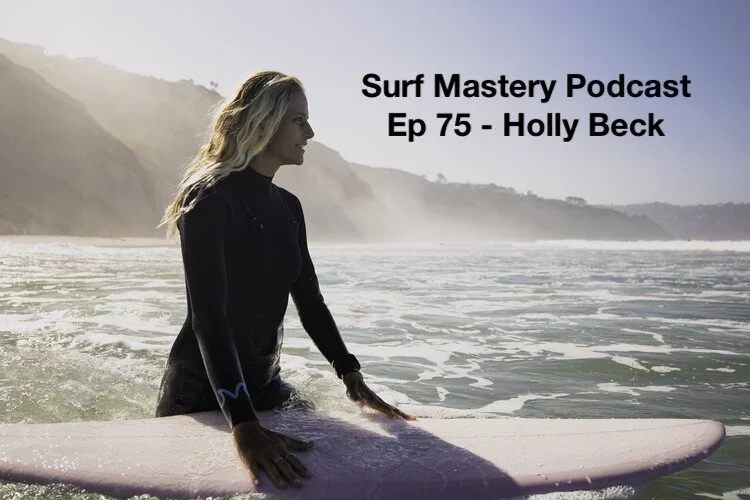
What if upgrading your pop‑up—and your whole life’s decision‑making—were the very same skill?
Former world‑tour competitor Holly Beck has traded jersey numbers for a master’s in counseling and a fleet of women’s surf‑and‑yoga retreats. In this episode, she and host Michael Frampton unpack how wave reading, self‑talk, and even parenting triggers all mirror the swell lines rolling toward us—and why “holistic surf coaching” may be the next frontier in both performance and mental health.
Discover the exact mental reset Holly uses to turn fear or frustration into flow—whether you’re hesitating on a set wave or a career move.
Learn the three most common technical fixes (pop‑up mechanics, front‑foot weight, and looking at the wave) that unlock immediate progress for everyday surfers.
Hear how surf‑therapy tools like guided visualization, breath work, and “emotional swell forecasting” can improve relationships on land as much as in the lineup.
Hit play now to merge sharper surfing with calmer, more purposeful living—one mindful wave at a time.
https://www.surfwithhollybeck.com
https://www.groundswellcommunity.org
https://surfmastery.com/mens-life-coaching
Key Points
Holly Beck discusses her passion for holistic surf coaching and talk therapy, emphasizing the importance of mental and emotional aspects in surfing.
Holly Beck highlights the transformative effect of surf therapy on personal relationships and self-awareness.
Holly Beck describes a recent retreat that combined surf coaching with mental health workshops, aimed at enhancing participants' self-awareness through surfing.
Holly Beck identifies common surfing mistakes, such as improper pop-up technique and inadequate front foot weight, and emphasizes the importance of looking at the wave during the take-off.
Holly Beck discusses the balance between exposing children to surfing and allowing them to develop their own enjoyment of the activity without forcing it.
Holly Beck shares insights on parenting, emphasizing the importance of self-awareness and maintaining calmness to effectively handle children's emotions and behaviors.
Holly Beck explains the structure and locations of her surf retreats, highlighting the unique approach of her holistic surf coaching retreats.
Holly Beck discusses her future plans for surf coaching, including potential new ventures and the integration of holistic surf coaching into existing retreats.
Outline
Holly Beck's background and current endeavors
Holly Beck is a former professional competitive surfer who has been running the Surf with Amigas Women's Yoga and Surfing Retreat in Central America for the last 11 years.
Holly recently completed a master's in counseling and is now a licensed therapist, combining holistic surf coaching with talk therapy.
Holly's interest in surf therapy led them to research its efficacy, particularly for individuals who already surf.
Holly's journey into surf therapy began with personal experiences and a desire to understand the connection between surfing and mental health.
Holly's transition from professional surfing to surf therapy was influenced by personal life events, including a relationship breakup and the need to move back to California for their children's schooling.
The therapeutic aspects of surfing
Surfing is considered therapeutic due to its ability to activate all senses, require presence, and provide a dynamic environment that constantly changes.
The therapeutic benefits of surfing extend beyond physical exercise, addressing mental and emotional aspects such as self-talk, emotions, and interactions with others.
Surfing can serve as a tool for self-awareness and personal growth, helping individuals understand their patterns, emotions, and relationships.
The dynamic nature of surfing, with each wave being different, encourages surfers to be fully present and adapt to changing conditions, fostering a flow state.
Surfing can be a reflection of one's relationships and personal challenges, offering insights and opportunities for growth.
Holly's personal relationship with surfing and its evolution
Holly's relationship with surfing has evolved from a need-based dependency to a more balanced and enjoyable practice.
Through counseling and personal growth, Holly has learned to manage emotions and self-worth tied to surfing performance.
Holly's surfing experience is now more about fun and enjoyment rather than a crucial need, allowing for a healthier perspective on the sport.
Holly's personal growth has influenced their approach to relationships, reducing the need for external validation and fostering a more balanced view of partnerships.
Holly's retreats and workshops
Holly runs women's surfing yoga retreats, focusing on self-awareness, support, and empowerment.
The retreats incorporate workshops that tie surf elements with mental health components, such as reading surf forecasts and understanding emotional triggers.
Holly's retreats aim to enhance self-awareness in the context of surfing, making therapy more accessible and fun.
The retreats offer a supportive environment where participants can focus on themselves, away from daily responsibilities.
Holly plans to expand the retreats to include more holistic surf coaching experiences, possibly in different formats and locations.
Common mistakes in surfing and coaching tips
Holly identifies common surfing mistakes such as improper pop-up technique, insufficient weight on the front foot, and not looking at the wave during takeoff.
Coaching tips include evaluating and improving pop-up technique, embracing the assertiveness of the front foot, and maintaining focus on the wave throughout the surfing process.
Holly emphasizes the importance of looking at the wave from the start of paddling to the pop-up and beyond, to better read and respond to the wave's conditions.
Advanced surfers are also encouraged to maintain focus on the wave to enhance their performance and enjoyment of the sport.
Parenting and introducing children to surfing
Holly discusses the balance between introducing children to surfing and allowing them to develop their own enjoyment of the sport without forcing it.
Warm water is highlighted as a factor that makes surfing more appealing and accessible to children.
Holly shares personal experiences of surfing with their children and the challenges of not pushing them too hard.
The importance of self-awareness in parenting is emphasized, suggesting that staying calm and rational helps in managing children's emotions and behaviors.
Holly advises against using surfing as a means to gain a child's affection, as it may lead to the child doing it for the wrong reasons.
Transcription
Michael Frampton
Welcome back to the Surf Mastery Podcast. I am your host, Michael Frampton. Today's guest is Holly Beck, and Holly is a former professional competitive surfer. And for the last 11 years, she's been running the Surf With Amigas women's yoga and surfing retreat in Central America. Holly has always had an interest in the science and practice of surf therapy, and she recently completed a master's in counseling and is now a licensed therapist and is combining the two—both holistic surf coaching and talk therapy. So, very interesting conversation with Holly. I want to thank and acknowledge Holly for her honesty and openness in this conversation. And without further ado, here is my talk with Holly. So, whereabouts are you right this—
Holly Beck
Minute? I'm in Pavones.
Where's that? Pavones? You don't know the wave Pavones? It's in southern Costa Rica. It's the second longest left in the world.
Michael Frampton
Wow.
Holly Beck
Yeah, I think they say that Chicama is the longest in Peru, and Pavones is number two. But yeah, it's basically as far as you can go south in Costa Rica, and there are a few really nice left point—
Michael Frampton
Breaks. Is that the same place where you did the video about reading waves?
Holly Beck
Yeah, that's not the same wave, but it is. That wave is like literally right across the street from my house.
Michael Frampton
That looks like a very long wave as well.
Holly Beck
It is. Yeah, it can be. It needs swell. That wave needs swell. It's like flat today, but when there's swell, then it's really good.
Michael Frampton
Okay, cool. Well, thanks for taking the time to do this show. That's awesome.
Holly Beck
Yeah, stoked.
Michael Frampton
So, tell me, what are you most excited and passionate about in the surfing world at the moment?
Holly Beck
What a great question. I am most excited and passionate about taking surf coaching beyond just the physical, mechanical parts of riding waves and looking at the things that go on in our minds and in our bodies—subconsciously or somewhat consciously—the self-talk that we have to ourselves and the emotions, and how that impacts our experience out in the ocean, both our own experience and our interaction with others. And kind of drawing those connections and raising people's awareness of how much of a factor that can be.
Michael Frampton
A factor in terms of your surfing, you—
Holly Beck
Mean? Yeah, in terms of your surfing, in terms of the whole way that you approach surfing—from the spot that you choose to surf, the surfboard you choose to ride, your goals in surfing, your interactions with other humans in the water, where you choose to sit in the lineup, and then, like, your own surfing. I think that the mental and emotional aspect plays a huge part that people don't really focus on. Or at least I haven't seen as much of a focus on, outside of maybe like competitors. Like competitors at the elite level—yeah, their coach is probably going to teach them some, like, breathing techniques or, you know, calming techniques. But for the average surfer, I don't think that having, like, an intentional surf practice is something that most people are doing. And I feel like it can just, like, only enhance your surfing, both from a performance and then an enjoyment standpoint.
Michael Frampton
Yeah, no, I totally agree. Like, when I was surf coaching in California, my surf coaching turned more into surf guiding, where I would just go surfing with the surfers. And if someone hesitated on a wave... As soon as I saw them hesitate to take a wave that I had clearly described, "Hey, take that wave," I would always ask, "Well, where else in your life are you hesitating?" And that would always open up the question to be a lot deeper than just surfing. Because I've always thought that surfing is an art, and art reflects life and life reflects art. That's great that you're digging deeper into that. Is that sort of through the surf therapy world—
Holly Beck
Correct? Yeah, definitely. I think that example that you gave is just so perfect. And that's where it goes beyond surfing. It's not just like, okay, let's identify the reasons that you didn't paddle for that wave. Was it because you were afraid of hurting yourself? Was it because you were afraid of falling and other people seeing that? So, essentially, like a fear of failure? Was it because you're worried about, like, getting in someone's way? So, it's almost like that inability to, you know, have self-worth and take up space and feel that you deserve that wave. And I feel like it's interesting to kind of identify those things. And then if you can get to the root of why it was, then you can sort of work on that to have the person be more likely to catch more waves, but help them in other parts of their life—in their family, in their job, in their relationships—where probably some of those same themes are at play.
Michael Frampton
Yeah, definitely. I guess if they didn't feel worthy of that wave because perhaps someone else was looking at that wave too, even though it was their turn, maybe they're less likely to pitch a deal in the business world because perhaps someone who's been in business longer they feel is more worthy of that business deal.
Holly Beck
Yeah, or even like speaking up, you know, feeling like you—I think it's a lot to do with, like, taking up space. And, you know, I've primarily been working with women, and I feel like in general, that is something that I see too, of like, especially in like a male space—you know, surfing obviously is changing so much, and now certain places there may be just as many women or more women—but it still feels like kind of a male-dominated space. So, like, as a female paddling out into a group of men, you know, maybe there's that kind of like, "Well, I'm the girl out here," and that, like, fear of kind of, like, taking up space in that environment that then can play in in a relationship, in a family, and at work as well.
Michael Frampton
Yeah, and do you find... Clients are willing to open up on both levels or does—how long does that take? Like, typically you're doing retreats. Like, is that why they're a week—
Holly Beck
Long? Yeah. Yeah, depends on the person. In some cases, you know, people are very self-aware, and it doesn't take much to point it out. And they're like, "My gosh, you're right." Like, I can see the parallels. And just asking that question, you know, "What other parts of your life are you reacting in this way?" And then they're— all of a sudden they're, like, drawing these connections. And then other people maybe are a little bit more resistant or like, "I don't know. I don't do that in other parts of my life." But I think for the most part, people are really open to it. I mean, fixing it is a whole 'nother step, you know, that takes longer. But I think just drawing the awareness typically doesn't take that much time.
Michael Frampton
Yeah. Now, is this something that you noticed within your own surfing? You know... Not at first. I think I've noticed it more in seeing other people. I mean, I was a professional surfer, and then I started women's surfing yoga retreats. And so I've spent the last 12 years doing surf coaching basically for women over the course of a week, where you actually get to know the person. It's not just like a one-off coaching session where you meet up at the beach and you coach them and then you go off. It's like I'm actually spending a week with them. Over dinner or drinks or whatever, I'm hearing their story, and I started to notice parallels. I started to notice the woman that would always go for it and then suddenly would feel fear and back off. You know, or even the opposite—the one whose default reaction in times of fear was just to, like, barrel ahead no matter what was happening. And then I would hear their story and kind of go, wow, I see. I'm noticing parallels here. I'm noticing, as they talk about their jobs or their relationships or their family dynamic, like, then I see that same personality out in the water. And, like, it was a different series of events that led me to pursue a master's in counseling. And I've been living in Central America, and I split up from my husband and he moved back to California, and we have kids that need school. And there are all these things that kind of led me to go, okay, I need to move back to California. What am I going to do with myself? I'm interested in counseling. I had a psychology undergraduate degree and a lot of, like, family history, trauma stuff that I was interested in kind of exploring more in my own self and to try and understand those around me better. That was what really put me in that direction. And it wasn't until I was really doing it and I discovered that there is such a thing as surf therapy—because I didn't even know about that. I mean, I knew that, you know, I go in the ocean and I come out feeling better. Like that, I think—and most surfers feel that. You know, it doesn't take a master's degree to learn that you go in the ocean and you come out feeling better. But in actually learning the science behind trauma and depression and that surf therapy exists, and it's an evidence-based treatment modality, I was like, yes, this is perfect. And I spent the last year, in completing my master's program, I had to get, you know, hours—volunteer hours. So I spent the last year as an intern with the Groundswell Community Project, which is a surf therapy organization. And it's been really interesting. But something that's been really interesting to me, actually, is that surf therapy has primarily been done for people who don't surf. So, autistic kids. Veterans. People like that. For them, just going to the ocean is part of the healing. And so most of the surf therapy—like, in doing the master's program, I had to write all these papers. And so, of course, I was writing papers on surf therapy as much as I could because I was interested in it. And so it made it more fun to write this paper. So I researched all the literature out there of all the studies that have been done on the efficacy of surf therapy. And almost without failure, they're all done on people that had never surfed before. So, like, you know, substance abuse, people who are recovering from substance abuse, or war-torn children in Sierra Leone, you know. And so it's hard to separate out, well, is it... Is it just the going to the ocean that's the healing part? Or is it actually someone who already has a surf practice and then just approaching that practice more intentionally, more mindfully—like, can that be effective? And so over the last year, that's what I've been really focused on exploring is taking the surf therapy curriculum and kind of growing it up and making it be for people who already surf that aren't just learning to surf and applying it to their experience as well.
Michael Frampton
Yeah, there's a lot there. When you really get down to why someone started surfing and why they surf, it's not because it's a sport. It's because they need that therapeutic aspect of surfing more than they need the exercise or the pastime. Let me ask, when was your first wave and what was the main reason that drew you into surfing?
Holly Beck
I always loved the water. I was a water baby. My parents had a hard time getting me out of the pool. And even though I grew up in a coastal community, we didn't live right at the beach, and my parents weren't beach people. I didn't really spend much time at the beach growing up, other than with friends' families. And I remember boogie boarding in the summertime with friends when I was probably pretty young. I was probably in elementary school or early junior high when I was old enough to be allowed to go to the beach with friends' parents. And I just loved it right away. But my mom was very old-fashioned, very... Girls need to be on the beach looking cute in a bikini, not out competing with the boys. Like, keep in mind, this was in the early '90s. It was before Blue Crush and Roxy and the whole, like, women's surfing media movement. In those days, you know, her perspective was that girls didn't surf. That was for boys. And I was a super tomboy. So, like, from my, you know, earliest memories, my mom and I were butting heads because I wanted to play soccer and I wanted to wear shorts and I wanted to climb trees. As the oldest girl, she really wanted me to be like her little doll that, you know, did ballet and played piano. And, you know, the most athletic thing I was allowed to do was horseback ride, which was great. Thankful for that. But still. So, yeah, when I finally discovered surfing, I think I was probably in seventh or eighth grade. And I was like, my God, I want to be a surfer. And she was like, no, that's for boys. So it took me until I was 14 to kind of save up babysitting money and find a surfboard at a garage sale. And even then, she was like, well, you're not allowed to go. Okay, you bought the surfboard, but you're not allowed to use it. So I had to keep it at a friend's house and kind of lie about where I was going. But eventually, I was, you know, a teenager, and I was old enough to be like, well, I'm doing this. And then, yeah, it was my first wave, like, on a surfboard, like, standing and riding was incredibly memorable because it was like the culmination of something that I had been wanting for years and had been told I wasn't allowed to do it because I was a girl. And so—and looking around in the water, like, there weren't other girls. You know, so it kind of, like, she was telling me it's not for girls. And then I would go to the beach and there weren't any other girls. It was hard to kind of argue that, but ultimately I was like, well, I don't care, because I'm going to be the one.
Michael Frampton
What did that first wave mean to—
Holly Beck
You? Yeah, it was just—it was freedom. You know, it was kind of this feeling of like, I can do anything. I asked for this and I was told no, and I fought and worked and whatever. And, you know, I don't necessarily remember all the whitewash waves, but I do remember the first green wave I got—like, the first down-the-line, like, riding along the face of the wave, surfing wave—like, that's the one that's memorable. And it really was this feeling of like, yes. Like, I did this. I persisted and I got it. And yes.
Michael Frampton
Freedom from what?
Holly Beck
Freedom from... From all of the expectations, from all of the pressure that I felt at home to be a certain thing. Like, in order to have acceptance at home, you know, I needed to get straight A's and I needed to be feminine and girly and, you know, not make too much noise and just fit into this mold that, you know, my parents could be proud of and show me off to their friends. It was very like, they were like, this is how you're going to be in order to be accepted in this family. And it was like—I mean, I was always a nerd, so getting good grades wasn't that hard, but like all of the other things were really hard for me to fit into. And so it was like, you know, feeling like there's something wrong with me because I want all of these things that I'm told I shouldn't want and I can't actually have. So all of a sudden I had, like, gotten this wave and it was like, okay, I don't care. You know, and I did care. Of course I cared. It was still, like, in there, like, I'm doing something wrong. But it was kind of just like, well, this is worth it. Like, it's worth it. I can be myself and this feeling is worth it.
Michael Frampton
Yeah, so even back then it was very therapeutic.
Holly Beck
For sure. Yeah, absolutely. And throughout my high school years, that was my escape. It was like, as long as I went surfing in the morning, nothing else really mattered. I could come home and deal with the family life that wasn't super comfortable, but it was okay because I had gotten my surfing. I was lucky that my high school had a surf team and I was able to sign up for it. And then all of a sudden it was a class. So she couldn't say I couldn't go. Okay, maybe I couldn't go on the weekends, but, like, it was actually for school. I was like, I have to go. It's participation-based—my grade. So you can't tell me I can't go because I have to go and it's a grade. Yeah.
Michael Frampton
And are you finding similar reasons that your clients started surfing—as an escape, for a sense of freedom and—
Holly Beck
Now? I mean, women's surfing has changed so much since those days, but in general, I think it's... Yeah, I think it goes across the board. I think, like, women in their 40s, that's like—they see the imagery, and it's like a bucket list thing. And they're kind of like, I'm going to do that. So I don't know if it's necessarily freedom as much as maybe empowerment. Like, I'm going to do this hard thing. Like, surfing is hard. It's hard to learn how to surf. It's not just like, I'm just going to go casually play pickleball, you know? It's like, it's such a hard thing that if you're really going to do, like, you have to dedicate time to, and then it's frustrating, and it's cold, and it's uncomfortable, and it's crowded, and all the things. Like, you have to really want it. And then, if you then get success, there's this feeling of, like, empowerment. Like, I did this hard thing and that feels good. And I think just being out in nature, too—like, people do it, people keep doing it because you're outside and you're not looking at your phone. You're not getting emails—unless you've got one of those fancy watches.
Michael Frampton
Yeah, some people are. Yeah, laughs Yeah, and yeah, I mean, surfing is—it's damn hard.
Holly Beck
True.
Michael Frampton
It's so hard. But I think one of the biggest reasons we keep going back to it is... the therapeutic aspects. Now, obviously a lot of people aren't aware of that. It's just this draw that they feel. Sometimes you just go surfing and you don't even catch any waves, and it was—you never regret that. Sometimes it's hard to put the wetsuit on, etc., but I don't think I've ever regretted paddling out, even if I didn't catch waves. Is this that connection with nature and that therapeutic aspect of surfing?
Holly Beck
Yeah, for sure. It's like the negative ions and the being in nature and the sound. I feel like one of the things that I like most about it as far as the therapeutic aspect is that you have to be present. You have to be, like, as you're entering the water, it's like all of your senses are activated. Like the feeling of the sand or the rocks or whatever it is under your feet and the feeling of the water and the sound of the waves and the smell of the sea kelp or the salt water or whatever—all of your senses are activated. Sometimes the waves are small and mellow and you can kind of drift out there and be lost in your thoughts, but most of the time you have to be focused, because as soon as you take your focus away from the present moment, the wave knocks you over, the set takes you out from behind. Even when you're riding the wave, it's like people say you get lost in the moment of flow because you have to pay attention to what's happening right there in front of you or else you're going to get lost. Else you've blown it. A lot of things don't require that kind of presence. And so surfing—it makes it really easy, I feel like, to get into that flow state because of all those elements.
Michael Frampton
Yes. Is that why surfing is considered therapeutic?
Holly Beck
I think there's multiple reasons, but I think that is a big one. It's like the fact that it's activating all of your senses in that way, and it's dynamic, it's moving, like, as opposed to other things. You know, like, I think any sport that you're passionate about can be therapeutic. You know, people who love tennis, like, they find their therapy by going out there and, you know, hitting the ball around. Or people that go to the gym, like, the gym becomes their therapy. So it's not like surfing is unique in that sense—that it's the only thing that's therapeutic. But I think it goes further than those other things because of the dynamic environment. You know, even opposed to, like, snowboarding—like, the mountain isn't moving, unless it's the avalanche chasing you, you know. But for the most part, the mountain is static. So surfing just has that extra element in that it's constantly moving, it's constantly changing. Every wave is different. You never know what you're going to get. You have to really be fully present. You can't be like, okay, I'm going to go plan my run and I'm going to go hit that jump or that, you know, bank just like I did the last time. It's like every single wave is different and constantly changing.
Michael Frampton
Yeah, there's no war veterans' tennis therapy.
Holly Beck
Yeah. Right.
Michael Frampton
You're right. Surfing—one of the most exciting parts about surfing is it is always different.
Holly Beck
And frustrating. Exciting and frustrating. The love and hate, right? I just want that wave over again. I blew it. I wish the waves were like they were yesterday. You shouldn't have been here yesterday.
Michael Frampton
Yeah, but that's—I think for me, at least that's what brings me back. Because, like, if I'm frustrated—I turn up, the forecast said it's four foot, I turn up and it's half a foot, and I'm like, okay... If I really think about it, I actually want to learn how to ride half-foot waves because I've seen pros tear the bag out of tiny little waves. And how do they do that? Obviously it's possible. I'm more likely to grab my 11-foot glider and just catch them. But it... You know, it does... Once you're standing up and you're on that tiny little wave, all the frustration disappears, and all of a sudden you're immersed and you feel the glide, and it takes that frustration away. I think that's one of the beauties of surfing.
Holly Beck
For some people, though—I mean, you must have seen people out surfing that get really frustrated. Right? That get angry at the waves. That are like—you know, kick out of the wave, like, person?
Michael Frampton
Okay, is surfing therapeutic for that?
Holly Beck
I don't know. I think it could be a way to introduce therapy, because that's the type of person that maybe might be resistant to actual therapy. But then, if you talk to them about surfing, it's like, wow, I noticed that you're showing anger right now. Like, tell me about that. Where is that? What are you angry about? Where's that anger coming from? How does that feel in your body? You know, and then, do you think that that's helpful to you? How is that making you appear to other people? Like, whatever works for that individual to actually look at the anger and then think about where is that coming from? Like, their anger—they're probably having anger in other parts of their life, but they don't feel like they're able to express that anger. So then they express it in the ocean. So then it becomes this tool for talking about those emotions.
Michael Frampton
Yeah, and they could even be twice as angry in other parts of their lives, and surfing is actually less angry for them. We don't know their story, you know. You've had some pretty challenging times recently as well. You mentioned a relationship breakup with the father of your children. That's pretty intense.
Holly Beck
Yeah, it was. The process was intense, but it was the right thing to do. It was like—I think... I think for me, it's actually—surfing was involved. Surfing was involved because part of the issue in our relationship was that I need to go surfing. Like, it's like a—it's a need, you know? Like, for me, it is my therapy. And like I was saying before, as long as I go surfing, I'm cool. You know, I can... I can deal with a lot of things, as long as I get that minute to myself to go surfing. And when we had children, that became a big problem, because all of a sudden I didn't have the ability to go surfing because I got babies. At first, I was pregnant, you know, and then I've got this tiny baby. And in our relationship, taking care of the children really fell on me. And when I needed him to be like, "I see that you need to go surfing. Let me take the kids and go. Just go take an hour." Those were the things that I really needed. And instead, I was kind of made to feel like I had a problem. It was like—it was put in the phrase of like, you have a—you are addicted, and this is a problem and you need to figure it out. And there was a long time where I was like, maybe he's right. I do have a problem. I'm a surfing addict. Like, how am I going to deal with this? And eventually, once the kids got old enough that I was kind of separate from them a little bit and had a little time to myself, I realized that, no, it's—I don't actually—I know. I know now the definition of addiction, and that isn't the problem. It is just my thing that I am passionate about, that makes me feel better. And that was what I needed that I wasn't getting. Obviously, there was a lot of other things, but that was really... That was really the thing that made it hard to tolerate all of the other things. But the funny thing—or not really funny—the ironic thing, I should say, is that after we broke up, then, you know, the children have been living with me. So now it's even harder to go surfing sometimes. Because as a single mom, it can be challenging to get the time to go surfing. But luckily, the kids are now old enough that they're starting to surf themselves a little bit, so that makes it easier.
Michael Frampton
Yeah, I can relate to a lot of that. The mother of my children left, so I can relate to that. I know what it's like to lose the family dynamic. Do you think that it stems from childhood, like he wanted that control over you, and you were—and it sounds like your parents did too?
Holly Beck
Yeah. I really do think that that's it. And that is one of the reasons why I think I stayed in the relationship as long as I did—was that feeling of like, I have to do this thing for somebody else. Like, I can't be true to myself. And he's a great guy in a lot of ways, obviously, and we are—I'm very lucky that we actually co-parent pretty well. We're both a lot happier separate, and we finally got into that place after three years of some struggle. But yeah, looking back on the choices that I made to choose him—well, plus I was living in Nicaragua, and there's just a really shallow dating pool down there. And I wanted to live there and I wanted to have children. And this guy that was like age-appropriate and willing to live there and have children showed up. And I was like, okay, you'll do. And he actually... He actually wasn't a very good surfer. And I had come—like, we met right as I was quitting pro surfing. So, like, up until that point in my life, like the previous 10 years, one's self-worth was all dependent on how good you surfed. I mean, that's the surf industry, you know? It's just like all about, like, how hot you are and how shredding. You know, how’d you do in the contest? Did you get in the magazines? Who's your sponsor? Like, self-worth is just like—you know, it's a struggle. And so, when I met him and surfing wasn't his whole life, that was almost attractive at first because I was like, you're different. You surf, you like to surf, but you're not obsessed with surfing. Like, how refreshing. This is so different than everyone else I've been with. And then once I realized, like, he's just really not that good of a surfer, and he doesn't understand etiquette and... I was like, "What have I done? I'm now committed to this guy and we're living together in Nicaragua, and he's a kook! My god!" And, you know, I had to do all this self-talk. I was like, it's okay. I'm not that shallow. It's not all about surfing. Like, it's fine. It's great that he has other passions and I can have my thing and he can have his thing and we don't have to surf the same spots together and I don't have to be attracted to him in the water. But, you know, it turns out I am that shallow and surfing is that important.
Michael Frampton
Maybe, but I feel there's a little bit more to it than that because it sounds like... he wasn't accepting of your need to go surfing. Maybe if he was actually accepting of it and let you go surfing, not only would it have been your escape from everything else, but surfing might have been your escape from him as well. It's true. If he was trying to keep that controlling aspect that reminds you of your childhood, and that's what drew you to surfing in the first place... It's interesting because it's directly to what we were talking about before—surfing is a reflection of your relationships or your job. There it is.
Holly Beck
Yeah, it's true. I feel like it's... If we can—I mean, that's what therapy is, right? It's self-awareness. And then I've done a lot of therapy, too. So, in my experience, therapy has been self-awareness, but learning about what is a functional relationship. So I think if you can teach someone those things through surfing—amazing.
Michael Frampton
Well, it reminds me of that saying, if you see something within someone else, it's within you as well. So every time you're coaching someone outside of you, in some sort of way, you are coaching yourself. And of course, you know, if you've been through these types of experiences, it's much easier to relate to people. They're more likely to open up if you do. Let's bring it back to surfing, though. How has all this relationship experience and counseling, etc., and learning about psychology—how has that affected your personal relationship with the ocean?
Holly Beck
You know, in a funny way, I feel like... it's helped me to not be such a surfing addict. It's like... I mean, I think it's a lot of things together, but I do feel like I've learned more tools to be able to be more self-aware. And yeah, like, I don't need surfing as much as I used to. Like, obviously, I love it and it feels so good to do it, but I feel like that need that I used to have, where if I didn't go surfing, I just, like, couldn't deal with it—struggle? I feel like I've gotten past that to that extreme. Like, obviously when I'm upset, yes, my default is I want to go surfing, but I don't necessarily feel like I need to go surfing in order to maintain baseline anymore. So that has been really helpful. And even in dealing with jerks in the water—you know, like the aggressive jerk in the water—I'm so much more likely now to be looking at that guy and going, wow, he must be going through a lot right now. Like, he clearly needs this wave more than I do. And I'm just going to make way, rather than being like, this guy—like, this idiot out here—like, I'm going to show him, you know, like I maybe used to do. And just being more appreciative of being in the water. Like, because I'm for sure—like, especially having that past of pro surfing—like, there is that part of me that still has that self-worth element that's tied to my performance, like even now. And, you know, I think as a kid I had, like, no self-confidence, and then I developed surfing and that was where I got, like, attention and whatever—like, outside of my family. And then I was good at it and I got, you know, I was paid to do it and all of this. So, like, all of these good things came to me from feeling like I was surfing well. And it is hard to, like, let go of that. And especially as a woman, like, I'm so used to being, like, the best girl in the water. And there's like a, you know, kind of an element of like, yeah, I'm awesome, you know, that comes from surfing well. And then you have those days where you don't surf well, for whatever reason. You're tired or you're just, like, you're out of sync and you fall off and people are watching. And, you know, that kind of thing used to affect me more than it does now. So, having gone through this process, my surfing is, I would say, more mellow. Like, where it used to be so like, I need it, and if it doesn't go the way I want, like, you know, and this guy, and like, the crowd, my god, you know—and now I'm just like, I'm a little bit more chill. Like, I definitely still get really excited. My friends are always like, Holly, wow, chill. But it's more mellow. I don't get the big extremes up and down. I'm excited or I'm just cruising. And if I'm not having a good one, I just go in. I have no shame in paddling in. If I get to the point where I'm like, I'm not having fun, I'm not going to stress about getting that last wave. That's something that my friends always trip out on. I was recently in the Mentawais and... You know, the boat comes and people are out there, like, all this anxiety, like, I gotta get a wave to get to the boat, like, I can't paddle in. And I'm like, why not? I'm just gonna paddle in. I'm done. And it's funny that I feel like that has been as a result of doing this work.
Michael Frampton
So it sounds like you are more in control of surfing, whereas previously maybe surfing had a little control over you.
Holly Beck
I think that's accurate. I don't even know that I'm in control of surfing. I think I'm just more in control of myself. And like I was saying earlier, like... the emotions would come out in surfing in a way that I feel like is not as socially acceptable to have come out in other ways—like the jerk that we talked about earlier that maybe had a lot of pent-up anger at home but felt like he couldn't yell at his wife or his kids or whatever, but then in the water can yell at the ocean because it's almost like a safer place to express those emotions. And in the same way, like, I would have all this stuff going on inside that I felt like I had to just, like, bottle up, but then I would go out in the ocean and just, you know, like it would all come flying out. Which, you know, is the therapeutic aspect of surfing, right? Is that you can get those emotions out. But I feel like now I'm just a little bit better at—if I start to get upset or agitated or depressed or whatever those emotions are—I'm better able to, like, address it and be like, okay, I feel off. What is it that I need? And I'm going to figure out how to give myself that so that it doesn't get to be such a big feeling. And that helps me in my day-to-day life, and it helps me in my surfing.
Michael Frampton
So the way that you describe the—I guess, is it fair to say that your relationship to the ocean and surfing has improved? Yes. Do you think as you're going along that journey with the ocean, is it reflected in your personal relationships?
Holly Beck
I think so. I do think so. Yeah.
Michael Frampton
How does surfing help your personal relationships? How does that happen?
Holly Beck
For me personally, I think in the past, surfing helped my personal relationships because it was an outlet for emotions that I didn't feel able to deal with on land.
Michael Frampton
Sure. Or a client, if you want to use an example.
Holly Beck
And so I was able to, like, soothe myself in the water, which then made me a better, you know, partner or parent or whatever. And I think that now, I have learned other tools so that now surfing doesn't have to have all that pressure. Now surfing, to me, is more just fun. Like, obviously it feels good. But it really—it's interesting. You know, it's almost like I didn't really fully understand that until I'm talking it through, because I haven't really talked about it. Like, I've noticed that I don't need to surf as much as I used to. And I had kind of phrased it as like, well, I've just gotten more used to not surfing, because I just spent 10 months in California where I barely was able to surf at all. And there were a lot of hard times as a result of that, but I got through it. And now that I'm here in Costa Rica, and actually the kids are with Dad right now, and I could have surfed today, but I didn't, because I felt like I had other things to do. And there's a big swell coming, and I'm just going to save it. But in the past, like, I would have had to surf today. And so it's almost like—so my relationship with the ocean has changed in the fact that it is not as crucial. I still love it, I still enjoy it, it still gives me all the benefits, but I don't need it like I used to.
Michael Frampton
And when you do go surfing, do you find you surf better because of that?
Holly Beck
I don't know. Maybe. I probably don't surf as well because I'm not going as frequently. You know how it is when you go every day and you're in tune with the ocean and your body and the boards and in shape.
Michael Frampton
Well, maybe a better question is, do you enjoy the surfing experience—
Holly Beck
More? I think so, yeah. There's not as much... Like I said, it more feels like a bonus. It doesn't feel like something I have to have. And if it doesn't go well, I'm mad. Now it's like, I'm just happy to be out there.
Michael Frampton
Do you feel the same way about personal relationships now as well?
Holly Beck
Maybe so, actually. Maybe so. Like, for a long time in my life, I felt like I had to have a partner. Like, I had—like, that defined me. Like, I needed that, like, validation from the other human. Like the text messages and, like, somebody has chosen me. And, like, that validation was important to me. And having gone through a long time being single and getting used to that and, like, choosing that, then I sort of lost that need. Yeah. That constant need for validation. So now the relationship that I'm in now is—I don't feel the need for that validation as much. And more a bonus.
Michael Frampton
It's a bonus. It's—
Holly Beck
Yeah. And it's enjoyable. And yeah, he's in San Diego and I'm in Costa Rica, and I miss him and I'm excited for him to come. But, like, it's not the same, like, need that I used to have. Like, where in the past, like, I would—you know, I would have a hard time staying in a committed relationship if he was far away because I need that. So I would be, like, looking for that validation here.
Michael Frampton
Is it the most functional relationship you've ever been in?
Holly Beck
Well, it's early days now, so we'll see. But I think so. I think so. I think I've chosen differently. You know, in the past—and maybe it's kind of all related—because in the past it was like relationships were like a means to an end. I need validation. And then, I need to get married and have kids because I want to have kids. So I gotta find someone that's going to achieve that for me. And now it's like, I don't need anything. I'm financially stable. I've already had children. I've already been married. I don't have that, like, I need to get married or I need someone to support me or whatever. I've lived by myself. And so now it really is more about just like, I want a companion to enjoy life with. But it's okay if we're not together for two months.
Michael Frampton
You see, surfing reflects life and life reflects your surfing. Definitely.
Holly Beck
You're good.
Michael Frampton
So you just did a retreat recently. You had some clients come down to where you are now, I'm assuming?
Holly Beck
That's right.
Michael Frampton
And how did that go?
Holly Beck
It was amazing. I mean, I've been running women's surfing yoga retreats for 12 years and I feel very comfortable in that space. And I feel like it's always transformative for people just to spend a week where they get to focus on themselves and leave jobs and families at home. And I think the interesting thing about women's surf retreats, too, is that, like, our team—we've created this culture of, like, support and empowerment. So we're just, like, all day, like, you're awesome. Like, that was amazing. Like, epic wipeout. You know, like, everything is all real positive. And I feel like people getting the chance to spend a week with, you know, all these rad people—women telling them that they're awesome. Like, when does that happen in life? Like, you know? So that part is good, too. But this retreat was different because we were approaching it holistically. So we were doing these workshops where we were tying in a surf element with a mental health element. Like, for example, we did a lecture on how to read a surf forecast. So we talked about, you know, the actual surfing forecast and where do those numbers come from? And there's buoys out there and the wind blows on the surface of the ocean and creates swell and the buoy measures them and they spit it out into a computer program and blah. Right. And this is how you do it. Because a lot of women that come on these retreats, like, they don't know what the period means. You know, like, they just look at the Surfline summary of, it's going to be two to three and it's green, you know, but they don't necessarily understand the difference between a two foot at 13 seconds and a two foot at 17 seconds swell. So the point is to, like, teach them that. And then what do you do with that information? If you know that there's a big swell coming, like, what will you do to prepare? You're going to get a lot of sleep and eat well and make sure you have your right board and plan where you're going to go. And so then, tying it in to the mental health component, we have people visualize, like, what if you were your own home break? Imagine the various features that would be involved. Like, for me, I have this bay and at one point there was a ship that was out there that was my relationship, and then that ship sank. And it was, like, very tragic at first, but now it's made this killer little point break. And so now I actually experience a lot of joy from having had that experience. Right? So we ask everybody to kind of consider, like, their own emotional home break and what are the features. And then forecasting. The storm that comes—like, there's a storm out to sea: stress, job stuff, you know, political drama, whatever—the news. And here comes this wave of emotion. And being aware of our own individual features and how that's going to impact us. And so maybe there's, like, childhood trauma—shallow reef in my cove—but not in my friend's cove. So that swell that comes in is going to make a big emotional reaction on my coast but not hers. So it's kind of that—like you said—therapy is self-awareness. And so it's being aware of what are the features in my life that are like triggers that can cause me to have this big wave of emotion. And then, knowing that might be coming, what am I going to do to prepare in order to be able to ride that wave of emotion and maybe even find joy in it—or at least not get, like, taken out. So we have, like, various little workshops like that. And then there's awesome discussions that come as a result. So I think people left the week with—aside from just, like, you know, improving their surfing and getting to spend a week in Costa Rica riding horses and going on jungle hikes and, you know, being told they're awesome—to leaving with this, like, enhanced level of self-awareness. But it's all in the context of surfing. So I feel like it feels—you know, therapy can be kind of heavy. And even though here we are talking about it, there's still that stigma associated with it. Like, it's not something that you necessarily, like, blast everybody. "Yeah, last night I was talking to my therapist." You know? Like, most people kind of keep it a little bit more down low. Or people think—like, I encountered a lot of people who are like, "I don't need therapy. Yeah, I just have the normal anxiety, depression stuff. But, like, I don't need therapy." But it's like, well, everyone can benefit from self-awareness. So it's kind of a way of sort of sneaking in that, like, therapy aspect—but in the context of surfing, which makes it feel more fun and accessible.
Michael Frampton
Yeah, I like that. It's a great analogy of the swell coming in the bay and the preparation. And you're right about the stigma around therapy. I think the term is... because of the stigma around the term, it's the wrong term to use because it's more about—it is about self-awareness, but psychological education. Yeah. And that's if you want to be a better surfer, you have to be self-aware. Where are you at? What type of surfer are you today? And what do I need to learn to become better? Surfing awareness, ocean awareness, equipment awareness, etc. So yeah, it's a great analogy. It's funny because if you don't, and if you don't have that preparation and education of that swell's coming, and you turn up to the beach, "Oh, I'm ready," and then you look down and there's no leash string—and it ruins everything because you did not think things through. Now, there's probably a way around it. You borrow someone's, but at the moment it might stress you out, and that might affect when you do finally paddle out. That one mishap of the half-an-hour delay and trying to find a string for your leash—it's ruined everything. And you learn from those experiences. So next time the big swell comes, you listen to Holly and you do your preparation properly.
Holly Beck
Or if you go through that moment and you don't have your leash string and you're stressed out, now you're in this stress moment—you don't paddle straight out. You take that moment and you ground yourself. And so it's like teaching those tools as well. Like, what do you do when you feel all, like, frantic and whatever, and now you need—you know, things went—something went wrong, but you still have to perform. How do you relax? How do you become aware of your internal state and change it so that you can focus on the next thing? So it's that psychoeducation of, like, what are the tools in your toolbox, right?
Michael Frampton
And the stigma around therapy—I mean, it's less. I mean, a city like Los Angeles, it's not so much a stigma. It's almost accepted and expected, almost. But certainly, I'm sure not all your clients are from living in LA. But do you think there's a similar stigma around surf coaching?
Holly Beck
I don't know, actually. That's a good question. You know, I think that there's a gender difference, because I have noticed too in our retreats that—well, we do have some co-ed retreats because people want to bring their partners or brothers or best friends or whatever. We just—guys are like, "I want to do it." And I have noticed that it's a lot more common for me to get an email that's like, "I want to come with my wife on this retreat, but I don't need coaching. You know, she needs coaching, but I don't need coaching. I just do my own thing." And I'm like, no, but—I'm sure that unless you are Kelly Slater, you know—and even Kelly Slater probably gets some coaching—you know, like, don't you want to have video footage? And don't you want to be guided to the best spot and told where to sit? And if the coach notices that you should put more weight on the front foot, wouldn't you be interested in hearing that? You know? But—and I think that—so that there is less stigma in help-seeking among women than there is among men.
Michael Frampton
Yeah, I think it's—overall, it's—I mean, 10 years ago, it was worse, right?
Holly Beck
Yeah.
Michael Frampton
Surf coaching? "No. I don't need that." It's becoming more—yeah, it's more—it's definitely more socially accepted nowadays. And I think what—sounds like what you're doing is so—I mean, awesome. These trips sound amazing. I want to come.
Holly Beck
Come on down. Let's talk about it. It's so—
Michael Frampton
Fun. Yeah, I did a similar one. I did—so I was in Nicaragua a couple of years ago with Taylor Knox and Matt Griggs.
Holly Beck
Nice.
Michael Frampton
The surfing therapy wasn't really discussed, but a big part of the trip was meditation.
Holly Beck
Okay.
Michael Frampton
And it was more of a men's thing. The men would get together—it was about 10 of us—and we'd get in a little circle, and we would do a meditation, and Matt and Taylor would talk about, you know, human psychology, I guess, and then that would open the discussion into—and it was an amazing trip. You know, it was an amazing trip.
Holly Beck
That's awesome. Yeah, those two guys are both super—
Michael Frampton
Well—
Holly Beck
Cool.
Michael Frampton
Is meditation something that you include in your retreats as—
Holly Beck
Yeah, definitely. We do. If we're including it, it's more like guided meditation. It's like one of the activities we do is "What's your magical surfer?" Like, if you could be any type of surfer, what would you be? And we guide them through the process because I think that... You know, I see a lot of women that are like, "I want to get down to a shortboard. I want to go shorter. Now I ride an eight-foot, but I really want to go shorter." And that's like always a question of, like, why do you want to go shorter? Is it because you feel like it's more cool? You know, like... Or, like, unless you live in New York City and you have to get to the beach on the subway and you need a shortboard so that you can do that easier, like, okay, I get it. But otherwise, it's like, why is that? And I feel like it's interesting, like, going through that meditation—like, people don't necessarily know what we're doing. Like, I don't tell them this is what we're going to do. We just start this, "Okay, follow along with me and see where you end up." And then at the end, it's like, okay, what did you come up with? Like, in your fantasy surf session, what were you doing? How were you interacting with the ocean? What did your board look like? And I feel like sometimes people surprise themselves. I noticed when I do it, I get a different answer every time, because it's more based on, like, my mood. Like, sometimes I want to be out there getting so barreled, and other times I just want to stand there and glide. But I feel like people—like, they... If you ask them, "What are your goals in surfing?" the answer is a lot of times based on other people's perceptions of, like, that looks cool. I want to do that. When you really guide them through, like, what does their body actually want? What do they actually want? Sometimes the difference is like, "I just want to enjoy myself in the water. I just want to glide," you know? And so it's like, okay, well, then let's figure out what board is going to get you to that goal.
Michael Frampton
Yeah, often people don't really think it through. And we—yeah, there's that stigma around, of course, you know, because you look at the WSL. And if that's what professional or high-level surfing is—fair enough. But I've always—I see surfing as less of a sport and more like music. Whereas, okay, sure, the WSL—that's your hard, fast jazz. But then look at Devon Howard.
Holly Beck
Yeah, right.
Michael Frampton
I mean, he's just as good a surfer. It's just he's more into the slow jams.
Holly Beck
Yeah, right.
Michael Frampton
He's just as good a musician. Technically, the way he reads a wave, the way he deals with a lineup, etc.—it's just his style of surfing is much different. So I'm always helping clients stop looking at Kelly Slater and Dane Reynolds and take a look at some of the other surfers, the alternative boards.
Holly Beck
They may not have even been exposed to.
Michael Frampton
Or know that exists?
Holly Beck
They don't.
Michael Frampton
Totally. And sometimes I find a lot of surfers—a lot of my clients in the past—they don't even watch surfing at all. They just go surfing. So they actually don't have an idea of what to look—you know, a surfing mentor or whatever. So sometimes just... making them realize that, you're right, it's not just Kelly Slater. There's lots of other different types of surfers out there surfing all sorts of surfboards. And nowadays that footage is so accessible.
Holly Beck
Yeah, right. There's fewer excuses for not being exposed to it now. You just have to go and look.
Michael Frampton
But I think we need mentors in all aspects of our lives, really. Like, even if you've got a therapist, their knowledge of human psychology is something to look up to. Or at least it should be. And if it's not, then maybe choose a different therapist.
Holly Beck
But, well, I think just focusing on the individual is something that—because it's like, okay, if you just all look at Kelly Slater, that doesn't matter who you are—you want to be Kelly Slater. But it's like looking at the individual: like, where do you surf? How much time do you have to surf? What do you want? What are your goals and dreams? What are the feelings that you want to have in the water? And what board is going to make the spot that you surf and how frequently you surf get closest to that feeling? You want this feeling? You want to be challenged? Okay, fine. Perfect. You know, I spoke to a client today that's coming on a retreat soon. And she was telling me how she lives in Chicago. She doesn't surf very often. But her goals are to feel challenged. Like, she wants to struggle because that's where she gets joy. But she goes on—she went on a retreat and they put her on a nine-foot board. They're like, "Well, you live in Chicago, and you've only surfed once. You're going to be on a nine-foot board." And she's like, "But I didn't know—I feel, yeah, I've got long waves, but I didn't feel challenged." So it's like finding—like, rather than me say, "You live in Chicago, this is your height and weight, you've surfed four times in your life, this is the board for you"—it's like, no, well, what are your goals? What are you—what feeling are you looking to have? And then let's find the board that's going to give you that feeling, or, you know, help you get to that feeling, versus just like, "You're just—this is the numbers and this is what you get."
Michael Frampton
So let's ask you a shallow question. What are some of the most common mistakes that you see the average surfer make?
Holly Beck
I do a lot of coaching, and I would say that to almost every single person—well, I—you know, I'm not coaching WSL surfers. I'm coaching, like, the average surfer. The most common thing I say to people is first, like, figuring out the pop-up, because people have really crazy pop-up habits that they developed early on, and just evaluating the pop-up. And it's like, is it a physical limitation that's causing you to do that? And if so, then let's just have compassion for ourselves and understanding and embrace that. But most of the time it's a habit. So working on the pop-up technique is the first thing. The second thing is more weight on the front foot. Like, so many people have a tendency to be on their back foot—even, like, intermediate surfers that are, like, trying to learn how to get barreled, and they pull into the tube and they're back. You know, so really, like, embracing the assertiveness of the front foot. And then look at the wave. Like, the actual wave, right? It's amazing to me how many novice, advanced beginner, even early intermediate surfers—even my boyfriend—as he's paddling for the wave, he looks straight at the beach. I'm like, "Why are you looking at the beach?" He's an excellent surfer. He's been surfing his whole life. He surfs really well. But he's not looking at the wave on the takeoff. It trips me out. And I just feel like—like, why would you not look at the wave? Like, that's the—you should be looking at the wave the entire time. Like, that's where you're getting your information on what's coming.
Michael Frampton
Next. Yeah. Those are good tips. I think it's often a mishap in one's perspective of surfing, because we all—often surfers think that surfing starts when we stand up, but it actually starts when you start paddling. You've got to start reading the wave as you're paddling, and the pop-up is significant—the first and arguably the most important manoeuvre.
Holly Beck
For sure. And you should be looking at the wave while you're doing it.
Michael Frampton
Yeah, I mean, yeah, you get the pop-up right? It's like singing a song. You've got to hit that first note. That's right. Your feet land in the right place. You entered the wave correctly. The timing of your pop-up, etc.
Holly Beck
Yeah, and even for, like, advanced surfers, I would say, like, surfing more critical waves—like, you better be looking at that curve from the very start, from the whole time. And in order to set that rail and be charging down the line. And yeah, like I said, I was recently in the Mentawais and I was watching these other surfers. They're good surfers. They're not beginners. You know, we were surfing Macaronis and it was good. And I was just like—you know, I have a hard time turning off the surf coach mind. And I was just like watching these people take off. And I was like, wow, they're not looking at the wave. No wonder they're having a hard time pulling into the barrel. They're not looking at it.
Michael Frampton
Yeah, there's so much in surfing. And that's the coolest thing about surfing—there is no... there's no limit, no matter who you are. I mean, Kelly Slater still wants to get better, and he can get better. There's still waves that are going to challenge him, and he's seeking those waves in those situations. It's the surfing journey. And there's a different board he could learn to ride. Surfing is—there's so much to surfing. It's not one thing. It's so dynamic. It's so broad. It's such a... it's so much more than your parents as well.
Holly Beck
Sport. Yeah. And that's what makes it so fun. I'm a parent.
Michael Frampton
Do your kids surf?
Holly Beck
They do. Yeah, they are. They're about to turn six and eight—older girl, younger boy—and I surfed when I was pregnant. My son caught his first wave when he was four months old, just like sitting in my lap on a longboard that my friend pushed us into a wave. And I surfed with them on my shoulders when they were big enough that they could hang on. I would, like, practice on land. I would put them piggyback on my shoulders, but then I wouldn't hold on to them. And I would, like, swing around and make them hold on. I was like, watch the monkeys—you know, the mama monkey with the baby on the back jumps from tree to tree. I'm like, we can do this. And then, yeah, as they got a little bit bigger, then I would start with them on my shoulder and swing them around to the front of the board with me so that they would be standing on the board as well. And then, as they got bigger, then they would lay on the board and I would pop up and then help them to their feet. And then last year, they both got really into boogie boarding, so riding their own waves. And then now they're both stand-up surfing. And they're little, but my son—he's so skinny and little, he's so light, he doesn't really have the strength or the weight to paddle himself out past the waves. But he can paddle out and turn around in the whitewash and stand up and ride into the beach. My daughter—she's not like... she only wants to do it on her terms. So she doesn't want to go every day. But then there'll be days that she'll surprise me and be like, I want to go surfing. I'm like, okay, let's go. I try really hard not to push it, which has been a challenge for me at times. Because I'm like, it's so good for you. It's perfect out there. Look, there's that other little girl out there. Like, let's go. Come on. It'll be so fun. And she resists. And actually, on Mother's Day this year, the kids were asking me, like, what do you want for Mother's Day? What should we do for Mother's Day? And I was like, I want to go surfing with you guys. That's what I want for Mother's Day. And we went to—we went on a campout. There was, like, a bunch of other moms and kids. And the waves were maybe not ideal for it, but they were decent waves for it. And my daughter just really didn't want to go. And finally, she said to me, I really want to make you happy, but I don't want to surf. And I just, like, felt this, like, man. Okay. All right. You don't have to surf. Like, you don't. I love you. You make me happy. It's fine. And after that, I felt like I saw this shift. That all of a sudden when she felt like she didn't have to, then she was like, OK, I want to. Because just before that, she had told me at one point that she hated surfing. And I was like, no. So it was a good lesson to, like... really not have that expectation. And they're going to get into surfing if they get into surfing, and if they don't, that's fine too. But I accept them for who they are. I'm trying to, like, do it differently from the way I was parented. And it's hard because, you know, you have those patterns ingrained in you. And I do find myself reacting to the kids sometimes the way that I was reacted to. And it's those times that I have to, like, kind of stop and—you know, OK, I'm going to use my tools here. I'm very frustrated and annoyed because kids are annoying. I'm going to take some breaths. And it's not about them. You know, it's about me. And how do I calm myself down so that I can then address their needs? So I'm working on it. It's a struggle.
Michael Frampton
Though. Yeah. OK. Well, it sounds like you're pretty self-aware and you're just—it's just like, it's a give and take sort of thing. Exposing—you want to expose them to surfing because you want them to feel safe in the ocean and understand the joys of the pastime. But you're right, at the same time, as soon as you start to push them, they're like, nah.
Holly Beck
Yeah. Well, and sometimes, like, she'd be like, I don't want to go to the beach. I'm like, come on, we're going to the beach. I didn't want to. And I'm like, come on, we're going. And then we get to the beach, and all of a sudden she's playing and laughing and whatever. And I'm like, see? You know, so it's like some element of pushing is necessary. But it's just knowing when to be like, OK, fine. We're not going to the beach today.
Michael Frampton
We don't have to. Probably a lot of listeners who—you know, love surfing and want their kids to at least enjoy the experience of being near the ocean. What's the worst thing someone could do to inhibit their children having a relationship with the ocean?
Holly Beck
I mean, I think for me, the things that I've noticed is, like, if the kid thinks that gaining your affection is... is—the way that they're going to get that is by doing it. Because then even if they do it, they're doing it for the wrong reason. They're doing it because you want them to. They're not developing their own enjoyment of it. And then even if they do it for years, then it may end up backfiring eventually. Like, I have friends whose parents surfed and took them to the beach all the time, and they surfed a bit when they were young, and then they stopped surfing and didn't surf because they were like, that's my parents' thing. And they wanted me to do it, and I'm over it. Whereas, like, I was the opposite. Like, I didn't get a chance to do it. So I was like, all I wanted to do. So I think it's just like trying to find that balance of, like you said, introducing it, showing it, but not forcing it. And warm water helps. Warm water helps so much. My kids did not want to surf in California. My son would a little bit, but not really, because he would just get cold. And the wetsuit is such a pain to, like, wrestle the little wiggly body into, you know? But now that we're here in warm water, it's so much easier.
Michael Frampton
Have you read any decent parenting books?
Holly Beck
You know, when the kids were babies, I read a bunch of books. I read everything that came across my path. I don't know that there was any that were super... helpful that I would, like, recommend. I think the most important thing is self-awareness. If you're aware of your own triggers and your own emotions and the way that your emotions are affecting your behavior—that, I feel like, that's the most important thing. Like, whether it's about surfing or parenting or whatever. It's like I've noticed that the moments that I make mistakes and do something that I’m regretful about later—it's always when, like, I lost my calm. And so as long as I can stay calm and, like, rational, then I'm good. As far as parenting goes—you know, the kid's having a tantrum. And if I can stay calm, then I can be aware of, this is just a little human with undeveloped, you know, cognitive processing. And they're having a big emotion that they don't know how to control. So I have to be the one that can control my emotions. But if I get lost and like, we gotta go now—you know, get your shoes on, we're out of here. You know, it's like, that was me losing my cool. So it's really—it's not about the kid. It's about me.
Michael Frampton
Totally. Yeah, because kids pick up on even the most subtle... whatever's within you, and then they just don't want to be around you. So then it's like—so you're right, it's—that's the best parenting advice. That's the best summary of... all the parenting books I've read as well. I've got three boys, six, seven, and ten.
Holly Beck
Old are your kids? OK, so yeah, right in the same range. And do they surf?
Michael Frampton
Yeah, they do. Yep.
Holly Beck
Nice.
Michael Frampton
Yep, they do. I never pushed them, though. I just exposed them to it and always just wanted them to enjoy the experience of being at the beach, really. And, you know, sometimes they don't. Sometimes they want to go. And my younger two—they're bodyboarding mostly, and I just let them do that. They just come and have some fun. Yeah, my eldest one—a ten-year-old—he loves surfing, but not in winter. They don't even bother in winter. But in the summertime—we were living... we were down at Zuma Beach in Malibu every day as they were growing up. They got exposed to a nice part of the world and beautiful beach. And before that, we were in Sydney, Australia, with nice warm water in the summer as well. So yeah, the warm water thing helps a lot.
Holly Beck
For sure. And Zuma is not that warm in the summer. Even in the summer, it's not that warm.
Michael Frampton
Yeah, you still need a wetsuit, but the atmosphere is nice and warm and it's a beautiful spot. And they've spent quite a bit of time in New Zealand, which is a lot colder than Zuma and Sydney. So it's warm for them. It's certainly not tropical Costa Rica. How often are you running these—
Holly Beck
But definitely warm for them.
Michael Frampton
How often are you running these—
Holly Beck
Retreats? Well, the normal Surf With Amigas retreats are going year-round. Pretty much almost every week. And we have a bunch of different locations all over the world. We do Nicaragua, Mexico, Panama, Costa Rica, Morocco, Indonesia—that's probably one I'm forgetting. But yeah, I have team everywhere, kind of just running them in season. Costa Rica is definitely our number one, and we have multiple locations in Costa Rica. But the Holistic Surf Coach—we just did the first one a couple weeks ago, and we're doing the second one starting on Saturday. And then there's one in Morocco in the fall, and in Nicaragua in the spring. And Peru, that’s the other spot. We're going to go to Peru. So... yeah, they're a little bit more energy intensive, and we need more specific staff. I mean, I think at this point, like, the staff are what makes the experience. And so for the holistic surf coaching, it's just like a different caliber of staff that's trained in—you know, trauma-informed. Doesn’t necessarily have to be a therapist, but definitely someone open to, you know, being very trauma-informed and has to be, like, self-aware as well. So that’s the limiting factor. And we're just kind of growing it and learning about it. Like, from the first one—you know, we got a lot of feedback and we refined things. And now we're going into the second one, we're going to do some things a little bit differently. And so yeah, it's fun. For me, it's really fun to do something different. I think I had spent, you know, a long time doing the same thing. And, you know, obviously it grew and changed and developed and improved, but really I felt like I—the formula was there and it was, like, running and established and kind of was like just ready to take on a new challenge. So it’s fun to have—even though it’s like a similar product—it’s different, and it's fun to have that challenge of doing something differently.
Michael Frampton
It’s awesome. It sounds amazing. So how can people find out more about these trips and book?
Holly Beck
Surfwithamigas.com has all of that. And then I have my own website. I’m kind of in this, like, middle ground of deciding what to do with it. So I just graduated, like, last week officially. And I’ve been so busy doing that I haven’t really had a ton of time to think about, okay, what’s next? And so I’m in this middle ground of trying to decide, like, does the whole culture of Surf With Amigas shift more toward these holistic surf retreats? Or is it just, like, a specialty series of retreats within Surf With Amigas? Or do I start something new that is not just retreats, but it's—you know, workshops in California and individual clients, and it’s just more of the holistic side of things and maybe even calling it therapy sometimes. But like you said, I feel like that word needs to be adjusted. But yeah, I’m in this point of trying to figure it out. So the Surf With Holly Beck website is to kind of explore that avenue of doing just my own thing. But in the meantime, because Surf With Amigas has all the stuff up and running and going, we’re doing the holistic surf coaching through Surf With Amigas. So yeah, we’ll see. But either one of those ways can be involved. And then I’m going to be in California seasonally. So we’ll be doing things in California as well. So if you don’t want to commit to a full week of this and are in... Southern and Northern California—I’m going to be in the Bay Area quite a bit this next year. So there’ll be, like, one-day experiences where you can just come and experience holistic surf coaching just for a session and see if you like it.
Michael Frampton
Okay. Awesome. I will put links to both those websites in the show notes. Thank you so much for your time, Holly. Thank—
Holly Beck
You. I really enjoyed the conversation.
75 Holly Beck - Holistic Surf Coach & Surf Therapist
For the passionate surfer—whether you're a weekend warrior, a surf dad, or an older surfer—this podcast is all about better surfing and deeper stoke. With expert surf coaching, surf training, and surfing tips, we’ll help you catch more waves, refine your paddling technique, and perfect your pop up on a surfboard. From surf workouts to handling wipeouts, chasing bigger waves, and mastering surf technique, we’re here to make sure you not only improve but truly enjoy surfing more—so you can get more out of every session and become a wiser surfer. Go from Beginner or intermediate Surfer to advanced.