
78 Dean Stott - The Frogman
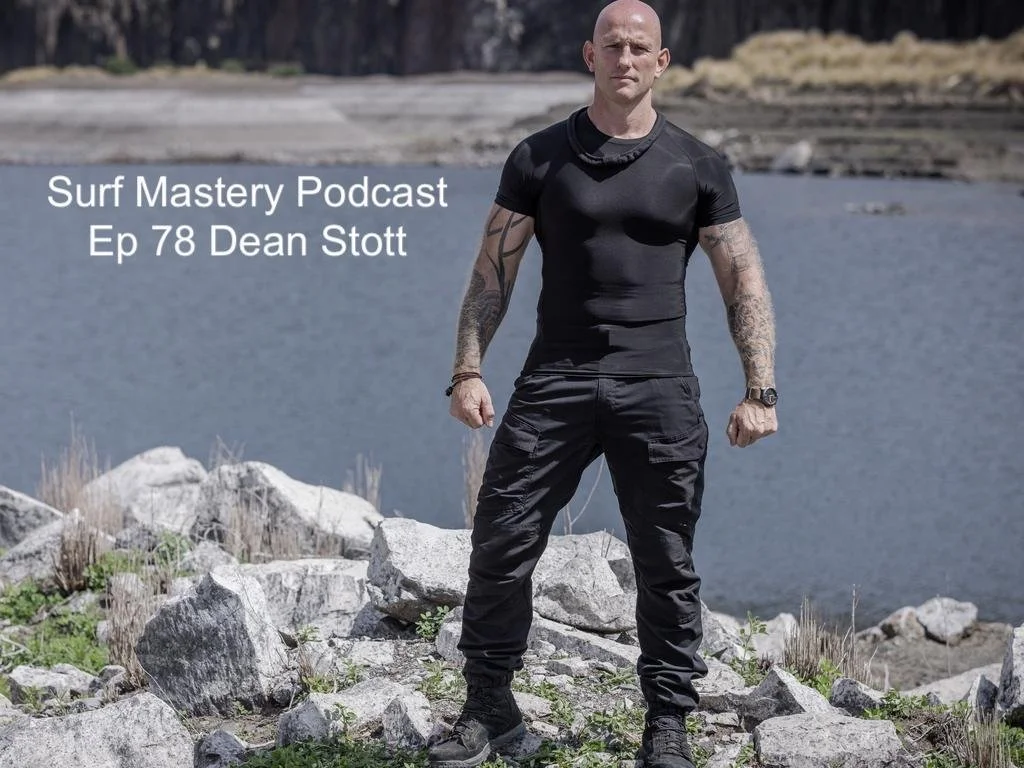
What do elite soldiers, surfers, and world-record breakers have in common? More than you think—and Dean Stott proves it.
From cold-water surf breaks in Cornwall to top-secret operations in war zones, Dean Stott’s journey is fueled by mindset, grit, and the relentless pursuit of possibility. In this episode, Dean shares how surfing shaped his military career—and how facing fear head-on in the water and on land built his unstoppable self-belief.
Learn how to use military-grade mindset tools to push past fear and frustration in your surfing.
Discover how a devastating knee injury led Dean to break a Guinness World Record on a bike—and why that matters for you.
Gain insights on how respect, communication, and curiosity can open even the most “locals-only” surf breaks.
Tap play now to get an unfiltered look into what it really takes to build unshakable resilience—on the board, in your life, and far beyond.
https://www.instagram.com/deanstott/?hl=en
Key Points
Successful communication and respect for local communities helped secure easy passage and access to desired locations for surfing.
Early experiences with surfing shaped Dean Stott's career and self-belief, including his decision to join the military.
Dean Stott's resilience and love for water, developed from a young age, were critical in his military career and his approach to life challenges.
Dean Stott attributes his success in both surfing and the military to his mindset of believing anything is possible and his resilience.
The military experience enhanced Dean Stott's appreciation for water and improved his surfing skills, allowing him to surf in exclusive locations.
Dean Stott plans to surf the dangerous coast of Somalia, leveraging his security background and local contacts to ensure safety.
Dean Stott's approach to navigating difficult situations, whether in the military or surfing, emphasizes communication, respect, and understanding local dynamics.
Dean Stott's career as a frogman, a combat diver, and his love for water have been intertwined since his early years, influencing his military choices and surfing lifestyle.
Dean Stott's injury and subsequent recovery highlighted the importance of mental resilience, support networks, and finding new challenges to maintain a sense of purpose.
Dean Stott's upcoming challenges include a TV show and kayaking the Nile, emphasizing the need for physical fitness and mental resilience.
Outline
Dean Stott's Background and Philosophy
Dean Stott emphasizes the importance of communication, respect, and understanding when entering new environments, drawing from experiences with tribal elders and military operations.
Dean's philosophy is rooted in the belief that anything is possible with the right mindset, planning, and support network.
Dean's approach to challenges involves facing fears head-on, as demonstrated by their response to a near-drowning experience as a child.
Dean Stott's Introduction to Surfing
Dean Stott discovered surfing at a young age during family holidays in Newquay, Cornwall.
Dean's initial fascination with surfing led to purchasing a family surfboard and eventually individual boards for each family member.
Dean's passion for surfing influenced their decision to join the military, aiming to silence a skeptical father by proving their commitment.
Impact of Surfing on Dean's Military Career
Dean Stott's early experiences with surfing contributed to their comfort and capability in water, which was crucial in their military career as a 'frogman'.
Surfing taught Dean resilience, the value of community, and the belief that anything is possible, principles that were carried into their military service.
Dean's military postings were often by the water, allowing them to continue surfing and enhancing their physical and mental well-being.
Dean's Unique Surfing Experiences
Dean Stott has surfed in unique and restricted locations, including Camp Pendleton and Somalia, leveraging military and security industry connections.
Dean plans to surf the coast of Somalia, highlighting the country's untapped surfing potential despite security challenges.
Dean's approach to surfing in unfamiliar or restricted areas involves thorough preparation, local intelligence, and respectful communication with locals.
Dean's Approach to Challenges and Security
Dean Stott's career in the security industry is characterized by a focus on communication, respect, and understanding rather than reliance on weapons.
Dean's evacuation of the Canadian embassy from Libya during the Arab Spring exemplifies their approach to crisis management through negotiation and local engagement.
Dean advises against impulsive actions in challenging situations, advocating for understanding local dynamics and finding common ground.
Dean's Military Career and the Term 'Frogman'
Dean Stott joined the Royal Engineers, following in their father's footsteps, and later became a commando, always seeking to be near water.
The term 'frogman' refers to combat divers, a role Dean embraced within the Special Boat Service (SBS), leveraging their extensive diving experience.
Dean's military career was significantly shaped by their love for water and surfing, influencing their choice of units and activities within the military.
Dean's Post-Military Challenges and Achievements
After leaving the military due to injury, Dean Stott faced an identity crisis but found new purpose through challenges like cycling the world's longest road.
Dean's cycling challenge raised $1.3 million for mental health and demonstrated their resilience and ability to overcome physical limitations.
Dean continues to seek new challenges, balancing them with family life and exploring new sports like kayaking.
Dean's Mantras and Advice
Dean Stott's mantra 'anticipation is worse than participation' encourages taking action rather than overthinking challenges.
Dean advises making one's own luck, emphasizing hard work and effort over waiting for opportunities.
Dean believes in the power of words and the importance of supporting children's self-esteem without the pressures of social media.
Dean's Current and Future Projects
Dean Stott is working on a TV show that involves traveling the world and requires physical fitness.
Dean plans to kayak the River Nile, aiming to be the first to do so from source to sea, despite the challenges posed by wildlife and political instability.
Dean's projects are designed to raise his profile and increase sponsorship opportunities for philanthropy.
Dean's Message to Surfers
Dean Stott encourages surfers not to compare themselves to others and to remember that everyone starts somewhere.
Dean emphasizes the importance of resilience and picking oneself up after setbacks, drawing from their own experiences.
Transcription
Dean Stott
You know, anything is possible with the right mindset. You know, I went and spoke to the tribal elders and sat down, shared coffee with them, shared bread. It was all about communication, respect, showing them that we were no threat, who we were, what we were doing. And we just got an easy passage through. So I tend to use that everywhere I'm in the world. I wouldn't just turn up on the beach and start waxing the board. I would probably have made sure that those that needed to know and just get that sort of that agreement in place.
Michael
Dean Stott is a former soldier for the SBS, the Special Boat Services in the British Military. He's a Guinness World Record holder, an author, a motivational speaker, and of course, a long-time surfer. Dean has lived quite the life, and Dean has a very strong sense of self-belief. And it really comes across here, and it's with great pleasure that I share with you my conversation with Dean. How did you first discover surfing?
Dean Stott
My father actually, we used to... We grew up just, I went to school just south of London, and so every summer holiday we would go down to Newquay in Cornwall. So my father would hitch up the caravan and we'd head down there, and I remember I was quite young, I was about 11 or 12 on our first holiday down there. And just straight away, it was just fascinating, just watching people in the water. My father then bought us both—I say both, myself and him and my two sisters—some bodyboards. Then I can almost see the distinction between bodyboarders and surfers at an early age. So the following summer we went down, and my father bought one surfboard between the family to see how we get on, and we were all hooked—me, my sisters, and my dad. So he then bought us a surfboard each. And yeah, every summer holiday we would spend down in Newquay. And then... I went to college in 1994, I want to get this right, I'm getting old now—'93 or '94—and I... On the summer holidays, Newquay was almost like the Ibiza or the Vegas of the UK, you know, very popular with young teenagers. So my friends were like, we're going to go to Newquay for a couple of weeks. I said, perfect. I was thinking more to go surfing, whereas they were thinking more of a boozy holiday and meeting girls. So they would get drunk in the evenings and be hungover in the day. So I would go have a paddle in the water. And I met this... I met this Norwegian surfer, a guy called Jan, and him and I just got chatting and he was telling me how he's having a gap year from college. And he was a silver service waiter at Fistral Hotel, which is on the peninsula. And back in '94, he was like, he was earning £30 a day. So he'd get his breakfast for free, he'd serve breakfast, surf all day, and then repeat the process in the evening. And he got £30 cash a day. It was only £10 to stay in the hostel. So he was making £20 a day surfing and being fed. So he said, do you fancy it? I said, yeah, why not? So he lent me a suit. And then I started doing that with him. About a week later, my father came down to pick us up. This is long before mobile phones. My friends were there and I wasn't. And they said, my dad's like, where's Dean? And they said, he's staying here. So my father took them back to Surrey. And then six months later, my father came looking for me. Because I had... I'd just given up on college and just spent my time in Newquay. He found me working in one of the surf shops down there. And so he was displeased with my choice in life. And he said, "What are you gonna do now?" And to silence him—my father was a militia guy—and I said, well, I'll join the military. And he said, "You'll last two minutes." And so that was it. That was how I sort of ended up joining the military. But it was from my time in surfing. I actually always wanted to be a fireman. That was it. That was always my childhood ambition. But that shift in deciding to go surfing and living in Newquay to then silencing my father, that's how I started my military career.
Michael
What was it about surfing that grabbed you?
Dean Stott
I don't know. I always remember one day just sat there, and I was just watching the waves. Just carried on, just watching the waves, even when there weren't surfers there. I think it was more of an appreciation. Bit of water, and I felt I'm comfortable being in the water. And this sort of shaped my career as well in the military. I'm known as the Frogman. And my whole career was based around water. And it was from that early age, just having a real appreciation to it. I do remember even younger, going on holiday as a very young kid—I'm talking four or five years old—and I had a near-drowning accident in the swimming pool in the south of France. But that didn't put me off water at all. Again, I think it was just that real love for it. I just... I can't explain. Obviously, you're a surfer, and most of the listeners are surfers. It's just a different... You feel like you can escape from the rest of the world when you're just floating around in the water, either on the surface or under the surface. So, yeah, I just felt comfortable there. In water.
Michael
Interesting. And you say you had a near-drowning experience and it didn't, like... Did it do the opposite? Did it almost make you want to face that fear more?
Dean Stott
Yeah, I think I just got pulled out of the pool, and then I just literally... I was pushing the boundaries. I was too young. I didn't have any armbands. And I just went into the deep area when I shouldn't have. And it was like... But the best thing to do is, you know, face your fears as well. And we did it in the military. If you have an incident—maybe, for example, skydiving, you have to pull your reserve or whatever—the best thing to do is not dwell on it, it's to get back up. And, you know, that's what my father did with that experience. Rather than sort of take me to the side, he just put me back in the water. It was almost like he spent a little bit more time with me. But yeah, it could have had the totally opposite effect and, you know, really had a negative in my life. But no, I just felt comfortable in that environment.
Michael
But to go from like dabbling in the ocean, you know, every summer holiday to then just like, I know I'm going to stay here and work part-time in a restaurant just so I can surf... And back then, the wetsuits were okay, but they weren't great. There weren't that many surfers around. And you... Like, it was... There was... That's dedication, you know? That compared with, you know, someone living in Orange County who's just paddling a soft top out in warm water. It's quite a big... It was different back then.
Dean Stott
Yeah, exactly. Yeah. Land, sea, waters aren't as inviting as the waters here off Orange County. But yeah, I just think it was, you know... For me, and, you know, I wasn't a great surfer at the time either. And that short period of time, you know, I really saw my capabilities changing. I was doing a lot more and things like that. And I was a big surf fit, you know. It's like being bar fit or cycling fit. The more you spend doing it, you know, the fitter you are. And then you... I think as well, as you touched on, the cold waters, that probably did help me a lot in my military career as well, because it was, you know, something... It's not... It's quite menacing when you have to dive into the Scottish waters or the Irish Sea. But actually, from a young age, I sort of really knew that I could cope in those environments. It probably put me in good stead for later on in my military career. It's only now that we're chatting, I think, yeah, that might have been a contributing factor.
Michael
Yeah, well, that's what I was going to ask you is like, what did you learn from surfing that you took with you into the military?
Dean Stott
You're never going to be great at the start. It takes time. Be resilient. I think, for me, it was just the fact that, you know, I always still believe that anything's possible. You know, as a young boy, I used to watch these guys on the waves and think, I could never do that. And I just knew that over time, you know, you're not—yes, you're not going to be the best—but you can build yourself up. So for me, that "anything's possible." But I think, well, the surfing was almost like the community. That's what I saw more, and it was almost like being in a team. And that was very relatable to the military as well. Because you tend, you know, whether you go surfing on your own, we're still very much welcomed within the community, or whether you're surfing with your friends. So I saw that sort of—that was probably my initial introduction to that camaraderie, which was then taken on into the military as well.
Michael
And then what did you learn from the military that affected your surfing life?
Dean Stott
I was very fortunate in the military. I've been in Germany. I got posted to Germany first for a year. Then every—I think, I was thinking about it yesterday—I've lived on the coast for the last 25 years. Every posting I had in the military was by the water. But I think again, you know, I joined the military—my father told me I'd last two minutes, which was my fire in my belly—but I was about 65 kilos and 5'7" at the time. And obviously now 90 kilos and five foot 11, I was growing and getting more confident in the military, in my abilities, and that was being reflected in the water as well. It's like, you know, that whole thing—you can't, and you look at others and sort of compare yourself to others—is that, well, why not? And yeah, I obviously got a lot fitter within the military, you know, joining the Commandos, the Airborne, and things like that, then obviously going to Special Forces and actually having even more of an appreciation for the water, especially being a frogman as well. And really, for me, is how when we're doing a lot of military planning, our water affects our plans—you know, high tides, low tides, sea states, and things like that. You know, it's not just surfing, it's actually what we're doing operational-wise. That sea has a real impact on what we're doing as well. So there's some synergy there, there's some crossover. And it used to be frustrating sometimes when you're flying over in the helicopter and looking down and seeing the surf and just wishing, you know, I was in there. I've experienced that many times in the military and since as well. I'd love to just dive in. But again, what the military then gave me was an opportunity to surf in places I never had an opportunity to when I was a civilian as well. So that did help as well.
Michael
Yeah, I imagine you've surfed places that not many people have surfed.
Dean Stott
Yeah, as we touched on earlier, for example here in Camp Pendleton, which for the listeners separates Old Miss Orange County to Oceanside—a huge town, huge U.S. Marine Corps base. And yeah, as you drive down the Five towards San Diego or coming up, you know, you look over to your left or right, and you see that coastline, and you think, I'd love to get in there. And there's some great breaks. But obviously, unless you're in the military, you can't access that. So in 2005, we had a training exercise. And the final day, we had this barbecue. And I borrowed one of the guy's boards, you know, jumped in the water, and yeah, very surreal. So looking back, because you can see... And there were guys doing water jumps, parachuting into the water. There were helicopters taking off. Yeah, it was almost like being an extra on Apocalypse Now. But yeah, that's probably one of the most unique places I've been able to surf that probably others couldn't. But Somalia, you know, having left the military, working in the private security sector... You know, Somalia's got a great coastline, but obviously because of the security issues, not many people surf it.
Michael
Are you planning a trip, a surfing trip there or something? I heard it on one.
Dean Stott
Of those, yeah. I'm looking at surfing the coast of Somalia and literally going from the north to the south. You know, because of the security issues, there's beaches there, there's breaks with no names. It's known as the most dangerous place in the world to surf. Having obviously worked there and being in that industry, I feel a lot more safe. I have some great contacts as well. But really, it's because of the fact of the piracy and things that come with that, you know. It hasn't been commercially fished for years. Not only above the water where we'll be surfing, but below the water, there's such a vast array of marine life. But, you know, some of these countries are sort of tarnished with one brush. You know, back in the '70s, it was a very popular fishing and tourist resort—Somalia and the coastline. And having been there, it's like I want to almost share that with the world as well. It's like, don't just assume Somalia and think piracy and Black Hawk Down. Actually, what it's got is an amazing coastline. An opportunity, when things do get better, that people may want to surf there one day.
Michael
Yeah, that sounds great. Risky but fun.
Dean Stott
Yeah, exactly. Yeah, I'm open to any guests that want to come along with me.
Michael
Okay. I'm wondering—it makes me think—there's some pretty rough places in New Zealand. And there's some places where you just don't surf. Like if you parked up and you started suiting up, some locals might come over to you and say, "Nah, bro, you can't surf here." Yeah. If you were in that situation, what would you do?
Dean Stott
What I tend to do, you know, I don't go into anywhere without more intelligence-led. I would have a local fixer and I would have already had that cleared and the discussion done before I start rolling in. And that's what it is. You know, what I do—a lot of stuff in the security industry—is really interesting. So I... I don't know where I single-handedly evacuated the Canadian Embassy out of Libya on my own—18 militia and four diplomats. Which sounds like sexy and Hollywood, but never needed any weapons. It was actually all about communication and showing respect to the locals. Now, the British Embassy got shot at the week before at the checkpoints. And so I went out—rather than talking to the guys with weapons, probably similar to the guys in New Zealand—you know, I went and spoke to the tribal elders and sat down, shared coffee with them, shared bread. And it was all about communication and respect, showing them there was no threat, who we were, what we were doing. And we just got an easy passage through. So I tend to use that everywhere I'm in the world. I wouldn't just turn up on the beach and start waxing the board. I would probably have made sure that those that needed to know, and just get that sort of agreement in place.
Michael
Where does that come from? Like, what's your intention and your approach? Because most people obviously are going to think, like, let's use the example of, okay, let's get the... an embassy out of a rough situation. Now, most people are going to assume that you're Liam Neeson and you're armed to the nines and you're going to have to run for it. Whereas you're like, no, let's just talk to the right people. Do most people just not have the balls to do that? And what's your thinking and your approach?
Dean Stott
So the approach to that—sort of going back slightly, because I've just told you the end bit rather than the prior. So when I got out of the Special Forces, I went to Libya and soon identified—it was during the Arab Spring—that they didn't want it being another Afghanistan or Iraq. I call them the Big Five, the largest security companies in the world, were charging seven-figure sums for crisis management evacuation plans, which weren't actually in place. So I was trying to find a niche within the industry. There was a huge proliferation of weapons at the time. So I bought 30 weapons off the black market and I buried them between Tunis and Egypt and designed my own evacuation plans. So it wasn't that I didn't have weapons. I just didn't need them. I did have them strategically placed along the country should we have needed them. But for me, it's almost about—I think Hollywood doesn't help matters when it comes to Special Forces. Everyone sees all these movies, and they see people blowing through the wall and things like that. It's called offensive action. But Special Forces, that's 25% of what we do, and that's almost the last resort. That's the last resort we should go to. 50% of what we actually do within the Special Forces is support and influence. It's hearts and minds. It's being embedded with the locals, understanding demographics, the politics, the tribal influences—but that doesn't look sexy on Hollywood. And so from that, my time in the Special Forces, understanding that, is what I then put into the security industry. It wasn't the fact that we didn't have weapons. We just didn't need them. And we make the judgment on the ground. And if it did go wrong, 180, then at least we knew we had something in place. So it's knowing when to and when not to. Let's say I employ you and say, I want to surf this break. We want to get some footage there. Now, if I—and I tell you—if I turn up with... if I just turn up, I'm either going to A) get approached by one of the locals saying, "Nah, you're not going," or if I managed to paddle out, I'm going to come back and my car's either not going to be there or it's not going to have wheels on. With that little bit of information, how are you going to help me to surf that?
Dean Stott
Yeah. So what I would do is I would obviously get local knowledge. So what area is it? Who is the Stripe or who are the locals that you are concerned about? Who is the one who has the power? And who is the right person to speak to there? And then, so yeah, you know, you may not get away with it, but it's almost like coming in and just saying, look, this is what we want to do. These are our intentions. Ask them almost why—they understand from their side. So rather than one-way telling what it is we want, understand why it is you can't do it. Because there may be some middle ground. They may say, "Actually no, we just don't want you surfing there. You can go up to the break, you know, the other end of the beach." So it's almost a two-way conversation. And then yeah, you know, don't get me wrong—when I have my fixers in Libya and Somalia, you know, sometimes we do pave their hands with a few dollars as well. So it's just showing up. It's actually the fact that they will probably be impressed that you've at least reached out and offered to speak to them, rather than just tipping up in your car and throwing your board in the water. And that's what it is. It tends to be just a lot of respect. And it may be like, "Well, why don't you guys come paddle with us?" You know what I mean? Give them something as well. So it's not just a one-way transaction. It's two ways as well.
Michael
It's a good point. It's as simple as like, if you know that... if you know the risks, yeah, you want to find out why that risk exists and respect their reasons. Even if their reasons don't make sense to you, you have to find out why and try and empathize with them. It's that, yeah.
Dean Stott
And then if it doesn't work, then find some... some common ground. Find somewhere else. Like I said, they may open up and say, "Well, actually there's a great little cove around the corner," which you probably never knew about. So I'm... now, we've had it before. Again, it's just understanding the ground truth. As well is why—there's always a why, isn't there? Or why is it we can't do it?
Michael
Have you ever had any... let's say political situations in your surfing life?
Dean Stott
Ooh, in my surfing life? No, not really.
Michael
Not really political.
Dean Stott
No, I've been very fortunate. I always blame myself for being notorious. Australia, Bali... I'm trying to think where I've been. I've been very lucky. I think, you know, sometimes, you know, I'm... luckily I'm a size where I look like I can look after myself. You know, a lot of people think I'm a UFC fighter. They're probably like, "Just stay away from Shrek." You know? It's like... No, but I've been very fortunate. But again, tends to be when I go to places like Australia, Bali, you know, I'm lucky. Now, I've done South Africa, I've gone with a local, and that always helps things as well. Having that local knowledge is key. Rather than just going in on my own. And so, going back to your reference to your place in New Zealand, you know, it's having that local knowledge. Maybe have one of those guys with you. And that's what I would do. If I was in the water, I would make sure one of those guys was looking after your car.
Michael
Yeah, that's a good...
Dean Stott
Point. Yeah, I've been very fortunate that I haven't had any sort of political things, especially coming from being a Brit. You know, our history isn't that great around the world. You know, from what... You know, I'll give an example. I ended up training the Kurdish Special Forces, and I pulled my team together. We went to Kurdistan, and we were in this auditorium, and the general was giving this presentation, and he was, you know, telling us about the origins of Kurdistan—until the Brits came along and split the country into four. So sometimes you're like... You know, sometimes you can feel the burn in the back of your head. But no, I've not had that in the water, luckily. But I have had it on the land.
Michael
Okay, so frogman, what's the origin and meaning of that term?
Dean Stott
So when you Google "frogman," it tends to be the combat divers. So I joined the Royal Engineers. My father was in the Royal Engineers, so I just followed his sort of path. I was in the Royal Engineers, then became a commando, so worked alongside the Royal Marines. Again, I just wanted to be near the water. But within the Royal Engineers, we have combat engineer divers. We can do everything that we can do on the water—on the surface, sorry. So whether it's concreting, whether it's chainsaws, whether it's, you know, all these hydraulic tools, explosives—we do that underwater. And I then decided I was going to UK Special Forces. And coming from an Army background, you primarily will go to the SAS, which is the Army Special Forces. The SBS was the Naval Special Forces and was 100% Royal Marines. But because of my background, my love for the water, and the fact that the SBS just walk around in blue shorts, t-shirt, you know, Oakleys and Reefs, that's more suited to me. But they'd only, for the first time in history, opened the doors that you could come from the Army. And so that's what I did. I went on selection. I was one of the first Army candidates to pass for the Special Boat Service from the Army. I think now 15% are from the Army background. But I always remember going there thinking, they're all divers in the SBS. So, you know, we start at a level playing field. And they're not. They are still new divers. They don't dive until they pass selection. Whereas I had 10 years of diving experience behind me. So I ended up very quickly becoming like the dive rep for the squadron, the senior diver. And then it's like, anytime there was any sort of diving exercise or operations, I wouldn't even go look at the board to see whose name's on it. Literally, it was me all the time. I mean, you know, since now I'm becoming a public figure, I get the question like, you know, what's the difference between such and such or Bear Grylls and you, and it's like, and the frogman—I was the one who was always in the water.
Michael
That must have served you in your surfing life as well a lot, being comfortable and in the water.
Dean Stott
I mean, I think those early years of surfing and just falling in love with water really actually carved my path in the military as well. You know, I... I had the choice when I was in Germany. So I would go to 9 Parachute Squadron, which are based in Aldershot, or to 5 9 Commando, but based in North Devon on the coast where the surf was. I was like—boom—straight in. That was my decision, to go Commando rather than Airborne. And then I spent eight years there, on the coast, just surfing all the time. And I remember joining a reconnaissance troop, and I got the whole troop into surfing as well. So literally, our day would be geared around what the swell was like. But we used to have—back in the military—on a Wednesday afternoon, it was called a sports afternoon. So you could play a sport that was recognised within the unit. So me and my friends used to go surfing. And the Sergeant Major was like, "That's not a recognised sport." So we then set up 5 9 Commando surf team and made it a recognised sport. And we used to go out every Wednesday afternoon with the 5 9 surf team. And then a few of the guys went on and represented the Army in the tri-services. So yeah, actually bringing the sport into so many units as well.
Michael
Very cool. Aside from surfing, what are you most passionate and excited about in your life at the moment?
Dean Stott
Whew. There's a few things. A lot has happened in my life since I left the military. I got injured out of the military after 16 years. It wasn't something I planned, and then obviously went on into the security industry. After evacuating the Canadian Embassy, I decided I wanted a new challenge. I always like to have a challenge. I always like something to sort of physically and mentally challenge, you know, engage me. And so I... my injured leg now is two kilos lighter than my good leg, and I was about a month before my 40th birthday, sorry, and I said to my wife, I said, "I've always fancied doing a world record." And she said, "Well, what in?" And I had just started cycling because cycling wasn't hurting my knee. And so I said, "I'm going to do a world record in cycling." My wife had found the world's longest road from southern Argentina to northern Alaska. So, having never cycled before, I applied for the world record and sort of focused my attention on that, trained for a year. And yeah, broke the world record. It was 117 days. I did it in 99 days and became the first man in history to do it in under 100 days. We raised $1.3 million for mental health. So I like to take on challenges, especially sports that I've never done before, and find out what the biggest challenge is. So for me, although I enjoy surfing, it's probably the only sport really that stayed with me from a young age. There's other sports I'm now getting into, like kayaking and stuff—again, that love for the water—but still learning new skill sets. But I've got... still doing a lot of security stuff in the background. Not so much smuggling people across borders myself. My book's getting launched in the U.S. this year, doing a lot of TV now as well. So we've got some big projects going. It's all under embargo at the moment. So really multi-hyphenated, but just something for me—something I can focus on and train for. And I need to be that physically active. But again, with San Clemente just down the road, if there's a lull in my life, I just throw myself in the water.
Michael
Yeah. Interesting. So you... you like to throw yourself into things that are difficult.
Dean Stott
Yeah, I like to get outside my comfort zone. You know, I obviously know from my time in the military that I have that sort of the right mindset. You know, a lot of what I talk about is—the importance is actually the planning, as we touched on here already. But yeah, I just... I like to test myself. I like to... you know, one of my things throughout my whole life really is I like to prove people wrong. My father telling me I'd last two minutes—OK. You know, then became the first, you know, and people telling me I couldn't go to the SBS, you know, from the Army, and then doing that. People telling me, "There's no way you're going to be able to cycle the world's longest road," and then smashing it by 17 days. It's like, I like to have a challenge. I'm obviously an individual—you can't just go buy a bike and join the cycling club. It's like... and I like to have an objective. I always like to have something that I need to be aiming for. But conscious, I'm 45 years old now. I'm no spring chicken. And with a young family—we have a daughter of 11, a son of six, one on the way in September—I'm conscious that I'm not away as often. For me, I've really struggled in the past with the balance, the yin and the yang. It's always gone one way or the other. And so yeah, I'm really just trying to find that fine balance, that I can still be busy, spend time with them.
Michael
Where does that self-belief come from? Because it's one thing to be motivated by people telling you can't not to. But underneath all of that, there is a certain amount of self-belief, right?
Dean Stott
Yeah, there has to be obviously some resilience built up. My father, when he was in the Army, football manager, player, and coach. So he was what we would call a tracksuit soldier in the military. So all I saw my father doing was playing football. So he's very competitive. So from a young age, there was really a competitive streak in the family. Even Christmas Day, the ball game at night was like, that's a big thing. But the self-belief really came from when I joined the military, I think. You know, I didn't look beyond basic training. I just thought, well, I'm doing basic training. I finished that, and then it was like the next stage. And then I found myself in Germany playing football, very similar to my father. And then I decided to go to Commandos. But each time I was doing it, I then realized I was growing physically, but mentally. And I could see myself, actually, that I wasn't in line with everyone else. You know, I was actually ahead of them. I was a lot fitter than them, and I was getting fitter. And so I was getting more confident with my abilities, and it's like, well, what's next? What's next? And really sort of pushed myself to that fact that I could only... I then went Special Forces, but then it was continuing that. So obviously that gave me a lot of self-belief, you know, and confidence. And I just genuinely believe that, you know, anything is possible with the right mindset, planning, and the right team around. You know, I wouldn't be able to have done that bike ride, I wouldn't be able to do half the things I'm doing now, if I didn't have my wife around me. My wife is amazing. She's the brains. She manages me, she runs the businesses and stuff like that. I genuinely believe anyone can break a world record if you've got someone looking after the kids, you've got someone covering the mortgage, doing the businesses, and all you have to focus on is your challenge. And so I'm very fortunate to have that support network. And I think that’s, you know, what helps as well alongside my self-belief and resilience.
Michael
You mentioned the injury. Now, you basically... Sounds like you tore pretty much every piece of soft tissue around your knee. I mean, that's a horrific injury. How did you come back from that mentally? I mean, that obviously knocked you for six physically, but emotionally, like you had to basically become a different person, right?
Dean Stott
Yeah, well, I... for the listeners, I was doing one of the HAHO jumps—high altitude, high openings. The parachute opens in the air. It's attached to the aircraft. And I'd done hundreds of these jumps before. It was like the third jump of the day. But this one, my leg got caught in the line above my head. So I was frantically trying to pull my leg off the line and I couldn't. And it pulled my leg up over my head. So I tore my ACL, my MCL, lateral meniscus in the knee, but my hamstring, my calf, and my quadriceps as well. So all the supporting muscles as well. So it was just floppy. But yeah, I did 16... I’d been in the military 16 years. I, prior to that, had grown up in the military environment. My father lived in the military. So all I ever knew was that. That lifestyle. So then to be told, you know, thank you for your time, you know, time to move on. On reflection again, luckily for me, my wife Alana was very entrepreneurial and sort of picked up all those other sort of distractions that I needed. I didn’t know, you know, running the accounts and who am I going to be banking with? You know, I didn't know who we were, you know, what gas bill I was paying in the military. I didn't care. I was doing a job that I loved. But I did go through what, only on reflection, was an identity crisis. You know, I’d gone from working in a tight-knit unit, knowing what we were doing day in, day out, with like-minded individuals, and we knew what we were doing for the next two years, week by week, those plans, to now—where do I now fit in society? You know, my skill sets—where can I use these? On a personal level, my identity was... I got to where I had been in the military through my physical robustness. I couldn’t even now run 100 meters without tripping over. And so, yeah, I really did struggle in those early days. And then to add to the pressure as well, my wife was eight months pregnant when I left the military. And it’s like, is there any work out there? Am I going to be able to support the family? So within 48 hours, I went out to Libya during the Arab Spring. And thankfully, yes, there was plenty of work for me. But then, from me leaving the military to the Canadian Embassy, that was five years. I just was so fixated on being able to work, support my family, that I neglected my own physical and mental well-being—and my family. I think the last year I was only home 21 days in a 365-day calendar. I’d really disconnected from society. So this is when the second pin had dropped. I soon realized I was trying to match the adrenaline rush I had when I was in the Special Forces, without coming to terms with the fact that you'd actually left. So I hadn't really addressed the fact that I’d left the military. I just kept myself busy doing quite dangerous jobs in the civilian sector, but knowing that I didn't have a support network. You know, if it all went wrong in Libya, I didn’t have support. You know, 35 guys jumping out of a plane to come get me. You were on your own. So, yeah, that was the turning point in my life, which is why we then decided to do a bike ride.
Michael
Interesting. Do you have like a... like when things are feeling like too much and it's easy to get down and the human mind often goes straight to the negative, is there a mantra that you say to yourself to keep the faith and the self-belief?
Dean Stott
Yeah, I have a couple of mantras. Well, I'm a big... with the bike ride I touched on, we raised $1.3 million, and that was for mental health. And when I was doing the challenge, you know, what is the message you're promoting? And I was a real believer in physical activity helps your mental state. So I always find if I'm feeling low, I just got to do something. I get fit, you know, just feel physically active. You know, a perfect example—a good friend of mine, he was in the military with me, he's now a teacher in the UK, and during the Christmas period, you know, he went on a bit of a down as well. He went to his doctor, and his doctor says, "Well, what's happened? Anything changed?" And he said, "Well, I'm a schoolteacher. We're on Christmas holiday. I normally run into work." "Yeah, there’s your answer. Just put your trainers on." That was it. That was the magic fix. So yeah, I'm a big believer that if it is low—find out, especially people that are physically active—just get active. I'm not saying go cycle 14,000 miles. That's ludicrous. But, you know, give yourself something to train for. And that's why I always think, that's why I like to have something short term and not to train for, you know, just to keep yourself busy. But my sort of mantra I use is, "Anticipation is worse than participation." You know, a lot of people will tell you why they can't do it. You know, when people were talking about—if I was to say to someone on the street, "Tomorrow you're going to do the Orange County—no, sorry, next week you're going to do the Orange County Marathon," they'll tell me every reason why they couldn't. So for me it's like... and then when they do it, eventually they'll look back and think, "Actually, it wasn't that bad." I used to do that a lot with my students in the military. They used to overthink things or compare themselves, for example, to others because they had bad experiences. Don’t do that, you know. And then actually, when you speak to them afterwards, they look back on reflection and say, "Actually, it wasn’t actually that bad."
Michael
I like that. What was it again? Anticipation is worse than participation?
Dean Stott
Exactly, yeah. It's a bit like when you want to go surfing in Newquay in the winter. You don't want to get in, but actually afterwards it wasn't too bad. Well, I don't know.
Michael
You know, you never regret a surf.
Dean Stott
No, exactly. Exactly. Yeah. No, but it's a great mantra.
Michael
You know, I really like that. I've got an open-ended question for you. It doesn't have to be necessarily surfing related. What's the best advice you've ever had and the worst advice you've ever had?
Dean Stott
I think the best advice I got was a friend of mine called Ozzy. He said, "Make your own luck." You know, he said, "It won't come to you. You need to make your own luck." And I didn’t really see it in the military, but I did see it when I became a civilian. It's like, now I see a lot of people not asking me these questions, but they know—they see me doing these great things, but they don't see the hard work and the effort that goes in the background. So, "Make your own luck" is probably one of the best ones I had. One of the worst ones... I don't think I've... there's nothing that jumps out because I believe, you know, even if it was a bad one and I did it, you know, I learned from it. You know, I always say you can't be experienced without experiences. So whether it was bad advice or not, I probably learned from it anyway. So there's nothing, unfortunately, that's jumping out.
Michael
So you're a parent as well?
Dean Stott
Yes. Yeah.
Michael
How are you helping your children to have a good sense of self-esteem in this current climate?
Dean Stott
Yeah, I keep... they don’t do social media. No. I think social media is a real... that's affecting a lot of mental health as well. You know, when you're comparing yourselves to others. And for me, it's just—find yourself. My daughter actually this week is doing lifeguard training down in Dana Point. And so I... and I am concerned. Like, I had a great career in the military, but I was always looking to please my father. You know what I mean? It was always, you know, to get some respect from him. And I worry that, you know, I've done some great things in my life. My wife's done some great things—that our children don't feel like they're under that pressure as well. So for me, it's like, go do what you want to do. You will have our support. You know, I talk about—I do a lot of international guest speaking. My opening line is that, you know, my father told me I would last two minutes. You know, the fact that I still talk about that 27 years later is the power of words. So I'm conscious of that, is what I say to my children. Yeah, if you want to do it. And even if I don't agree with it—and hopefully they'll change their mind later on—but never hold them back and just always let them believe that anything is possible. Anything is possible with the right mindset and support. But as a parent—and I see my friends parenting as well—it's very different from your parents, the way parents parented you. You learn from what was good and what wasn’t, and then you pass that on to your children.
Michael
"Anything's possible"—is that something that your father taught you as a child or is that something you learned from the military?
Dean Stott
I mean, it's something I learned from the military and beyond. You know, especially in the Special Forces, when we're training, we train, we rehearse. You can't plan for every scenario, but you go in there with a mindset that—yes, it may not be done before. It doesn't mean it can't be done. I like the one I use: "Anything is possible." I said, no, "Nothing is impossible. It just hasn't been done yet." I mean, that's how I... yeah.
Michael
That's good too. Yeah.
Dean Stott
Because I think that's the first thing to overcome. You know, if you believe—I genuinely believed I was going to do that bike ride. If I believed, then everything else should flow. But as soon as you have doubts, then that will then affect everything else.
Michael
What's your... Are you working on a new challenge at the moment?
Dean Stott
I'm doing a big TV show which involves me being physically fit, going around the world, which will be interesting. So that's my short-term goal. My long-term is, when I finished the bike ride, I wanted to kayak the River Nile, the world's longest river. It's never been done before from source to sea. And so for me, the attraction for that was—I love Africa. I spent a lot of time working in Africa. It's one of my favourite continents. A new sport. I've done a bit of cleffering in the SBS, but I haven't done... and it's like 4,200 miles of kayaking. There's other... unlike the bike ride, you've got issues such as hippos, crocodiles, civil war in South Sudan. So for me, it was the perfect challenge. COVID obviously hit, and then we looked at doing it again. But when I reached out to some of the sponsors and some of the production teams, the big ones that we're chatting to, they loved the idea. But we're in an environment where it's like—it doesn't matter how many millions you've raised for charity, or how many world records you've got—it's like, "How many Instagram followers do you have for that, really?" And it's like... so I actually see that I'm in a world that's normally quite taboo for me, which is social media. So the sort of plan over the next 18 months—and these TV shows that we're doing are going to be huge—you know, they will raise that profile. And then once we finish them, it's like, well, now let's do the Nile. You've got more eyes on you, which helps for sponsorship. But from a philanthropy angle, you can raise more money as well, because there's more eyes on you. So that's the plan. It hasn't gone away. It's just been shifted to the... did it right.
Michael
Very cool. You haven't...
Dean Stott
Like.
Michael
You're doing something now that involves you being physically fit. But you had that injury that you described, like tearing everything around one of your knees. Most people would just—okay, desk job from now on. How long realistically, how long did it take you to recover from that injury? It must've been years.
Dean Stott
Yeah, well, when I got injured, you know, there was a spiral of errors in the military at the time. From my injury to me actually getting operated on was 44 weeks. So it totally deteriorated. And then I then found myself in the civilian industry. So again, I sort of neglected my physical well-being. When I came back from the Canadian Embassy, my injured leg was two kilos lighter than my good leg because of the muscle wastage. And so... when I did the bike ride, I got the muscle mass back. I think there's 14% less power in my hamstring, but, you know, I then got a lot fitter. I'm not at the running that I was in the military. You know, I could probably do a marathon, but I'd probably have to sort of rest it for two weeks later because it's swollen up. Whereas when I was in the military, I'd probably do a marathon day after day and not worry about it too much. So it's not so much that... and mentally, I know that I can do things. So I don't worry too much. It's more the recovery on things. So I try and do stuff—for example, the bike ride was perfect, it was low impact. Kayaking was low impact. So I try and avoid the knee area, but if I have to, I can still run.
Michael
You have a very strong sense of hope and self-belief. It's quite rare. Pretty awesome. It's infectious.
Dean Stott
Yeah, it is. I think I raise the bar. I mean, the problem I have is I need to raise the bar again, but you've got to hire... you're almost there. Higher to fall as well. There you go. Yeah. I'm conscious of my age. I'm 45, but I know that your endurance peak in life is between 40 and 50. You know, that's when you're in your endurance peak. I'm in that area. I'm not the fittest, but I'm at that point. And it's not because you are fitter, it's because you're wiser. You know, you probably surf a lot different from when you were younger because you’ve... you know what to look out for. You know, from previous experiences—as I say, you can't be experienced without experiences. And all I've done is I've taken all those sort of experiences and I just put them into a new sport. But then learn from the experts as well. I'm never naive to think that I can do it myself. I sort of learn from those experts and their knowledge and sort of get through it.
Michael
Yeah, well, you've lived a hell of a life. And as listeners have probably gathered, you've got some more stories behind you. But I'm going to point my listeners in the direction of the Jocko Willink podcast you did, if they want to get more into that. There's no point in us repeating that here. But I want to thank you for your time, Dean. And if the listeners here—a lot of them—because surfing is so difficult, and there's a lot of frustration and a lack of self-belief, what's one message you could leave those surfers with before we sign off?
Dean Stott
Everyone started somewhere. Everyone started somewhere. Kelly Slater would have had it in his day as well. We all start from somewhere. I am not... I'm the carved-out version of a younger Dean, you know, so... and yeah, don't... don't worry too much. And I think my key takeaway—don't compare yourself to others as well. We're all unique individuals. You know, we're all unique. You know, I had that with the bike ride. A lot of people were saying, "Well, have you seen such and such, how he trains or does that?" Yeah, but I'm not that person. No, I'm me. So... and you are going to have your ups and downs. It's just how you then pick yourself back up. That's the thing. You know, everyone has their ups and downs. I still have my ups and downs. It's what I do and how quick I brush myself off. And, right—thank you so much, Michael.
Michael
Beautiful. Love that. Thanks, Dean. Really appreciate it.
Dean Stott
Appreciate it. Thanks for having me on.
Michael
That was Dean Stott, a.k.a. The Frogman. You can learn more about Dean and follow him on Instagram @deanstott—that's S-T-O-T-T—and deanstott.com. Links to that in the show notes. And if you want to hear more from Dean, I highly recommend episode 270 of the Jocko Willink Podcast. Thanks for tuning in and supporting the show. Over and out.
For the passionate surfer—whether you're a weekend warrior, a surf dad, or an older surfer—this podcast is all about better surfing and deeper stoke. With expert surf coaching, surf training, and surfing tips, we’ll help you catch more waves, refine your paddling technique, and perfect your pop up on a surfboard. From surf workouts to handling wipeouts, chasing bigger waves, and mastering surf technique, we’re here to make sure you not only improve but truly enjoy surfing more—so you can get more out of every session and become a wiser surfer. Go from Beginner or intermediate Surfer to advanced.