
79 Matt Scorringe - Olympic Surf Coach
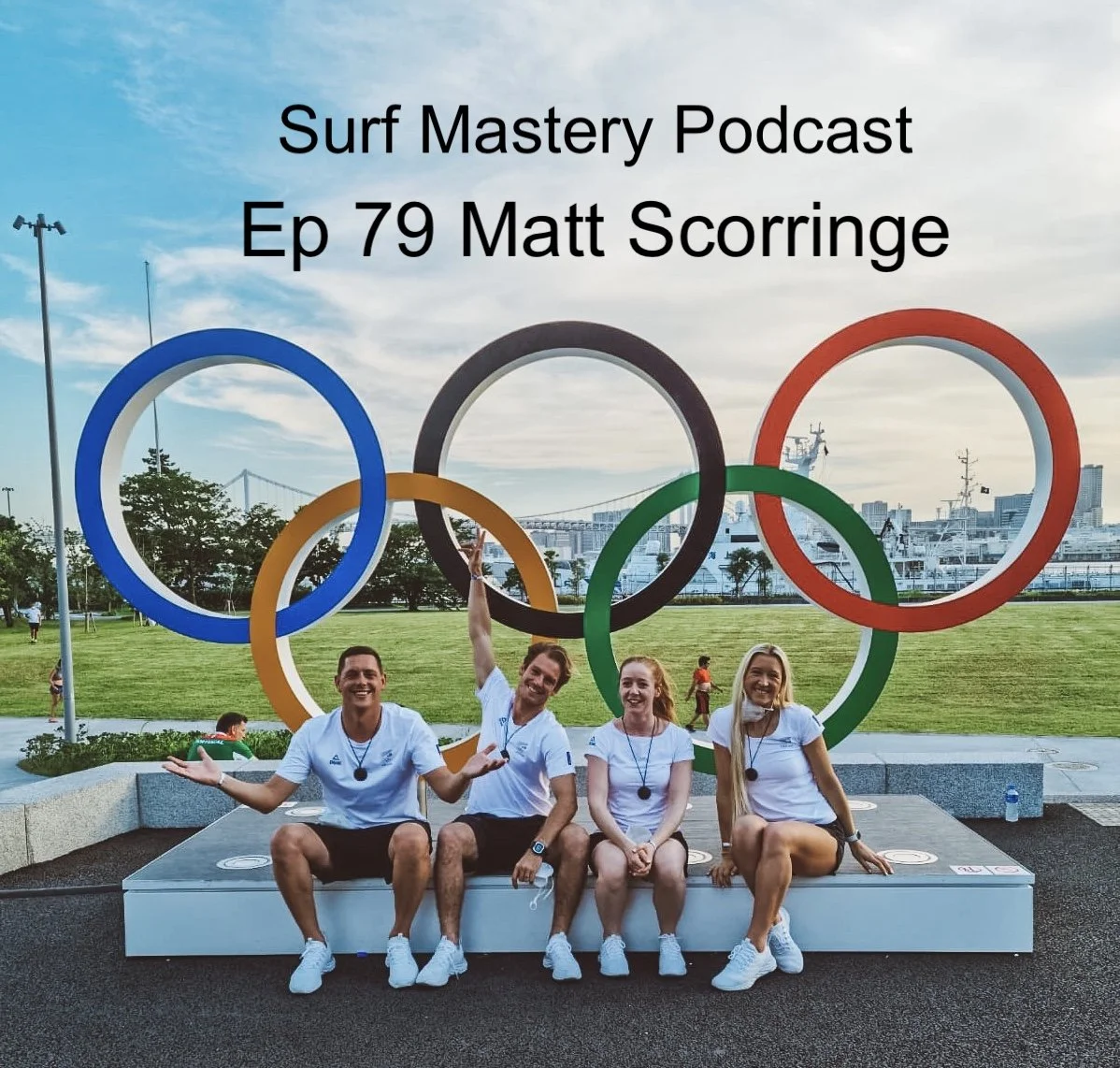
Think you need to surf better waves or get more footage to improve? Olympic coach Matt Scorringe says that’s not what’s holding you back—and the truth might surprise you.
In this episode, we dive into Matt’s experience coaching New Zealand’s Olympic surf team and how that elite-level insight is changing the way everyday surfers are coached. From managing high-pressure mindsets to embracing breathwork and land-based movement, Matt breaks down the tools that help surfers perform at their best—no matter the conditions, crowd, or stress.
Learn how to regulate your nervous system and find flow—even when your session starts rough.
Understand why visual content alone won’t transform your surfing, and how personalized coaching bridges that gap.
Discover how elite athletes use meditation and breathwork to build confidence—and how you can use those same techniques in just one breath.
Hit play now to learn what Olympic surfers know that can radically shift how you approach your next session—mentally and physically.
For 20% off the academy:
Code - SURFMASTERY20 for 20% off the academy
Link- https://www.theartofsurfing.com/taos-academy-membership
Anyone that joins the November cohort put SURFMASTERY in the comments box during checkout and they will be emailed their 100% off code for 1 year of the academy.
Link- https://www.theartofsurfing.com/remote-coaching
Matt's Instagram: https://www.instagram.com/theartofsurfing/?hl=en
Matt's first episode (ep 05): https://podcasts.apple.com/nz/podcast/podcast-surf-mastery/id1088660076?i=1000365196083
https://open.spotify.com/episode/4Pf2ZKTG9R1qiJXLD8cnMz?si=MUhhPyddTMypANvYQlo9mg
Key Points
Comparison of rock climbing and surfing, emphasizing the critical importance of mastering foundational techniques in both sports.
Olympic experience summary, emphasizing excitement, team atmosphere, and the challenge of managing athlete excitement and focus.
Discussion on the trust and relationship between coach and athlete, highlighting its importance for performance at high levels of competition.
Strategies for maintaining athlete calmness and focus, including breathing exercises and visualization techniques, were discussed and implemented.
Transition to remote coaching post-COVID, detailing the launch and success of Matt Scorringe's online coaching services.
Land-based training techniques and their importance in surfing progression, with an example of a client's impressive improvement through dedicated practice.
Discussion on the unique aspects of surfing as a sport, including its accessibility for practice and improvement at any level.
Importance of varied coaching approaches to accommodate different learning styles and the value of long-term coaching relationships.
Details on Matt Scorringe's coaching programs, including membership options and a special offer for listeners of the podcast.
Outline
Comparison of Rock Climbing and Surfing
Matt Scorringe compared rock climbing and surfing, highlighting the importance of perfecting foundational skills in both sports.
In rock climbing, if the first three pieces of the climb are not perfected, one will fall and not reach the next stage.
In surfing, even with a bad pop-up, poor speed generation, and a crappy bottom turn, one can still attempt a cutback.
Matt emphasized the need for obsessive amounts of repetition to perfect foundational skills in both sports.
Matt Scorringe's Experience at the Olympics
Matt described the Olympics as one of the most exciting times of their life.
The entire experience, from the team villages to the surfing venue, was full of excitement.
As a coach, Matt had to manage their own excitement while helping athletes stay level-headed and grounded.
Matt had two surfers, Billy and Ella, representing New Zealand in the Olympics.
The qualification process for the Olympics was uncertain due to COVID-19, and the final confirmation came only a few months before the event.
Matt learned the importance of trust and the coach-athlete relationship in managing athletes' emotions and self-doubt.
Matt focused on managing athletes' energy, mindset, and belief to keep them grounded and in the right frame of mind before their heats.
Billy and Ella had different energy needs before their heats, with Billy requiring high energy and Ella needing a calm and quiet space.
Matt helped athletes navigate the distractions and overwhelming nature of the Olympics, including media attention and the opening ceremony.
The athletes' participation in the opening ceremony and the subsequent lack of sleep affected their training and preparation for the competition.
Matt emphasized the importance of adaptability and managing adrenaline in surfing, even for average surfers.
Strategies used to help athletes stay calm included breathing exercises, visualization techniques, and reminding them of their love for the sport.
Matt incorporated these strategies into their own surfing routine to surf with ease and flow.
Changes in Coaching Practice After COVID-19
Matt's coaching practice has evolved to include remote coaching and online services due to the impact of COVID-19.
The acceptance of online learning has increased, allowing Matt to help surfers from around the world through technology.
Matt launched an online academy with educational videos and a library of content to support surfers' learning.
The academy was redesigned to include personal intervention and annual reviews to provide surfers with focused guidance and progression.
Matt emphasized the importance of land-based training and simulation of movements to improve surfers' skills.
Surfers are encouraged to use technology, such as iPhones or cameras, to capture footage for review and assessment.
Matt highlighted the value of a coach-athlete relationship and the importance of finding the right coaching style that resonates with individual surfers.
Signing Up for Coaching and Discounts
Matt offers a membership program for online coaching, providing access to content and an annual review.
For those seeking more intensive coaching, Matt offers a remote coaching cohort program, a three-month intensive coaching experience.
The next cohort intake is in November, with limited spots available to ensure quality and meaningful change in surfers' skills.
Listeners of the podcast can benefit from discounts and benefits, including a free membership for those signing up for the November cohort and a 20% discount on the annual membership.
Discount codes and details can be found in the show notes and on the website surfmastery.com.
Transcription
Matt Scorringe
In that sport, if you don't perfect the first three pieces of the climb, you're going to fall. You don't get to the next stage, right? So he compared it to surfing. He said, look, in surfing, if you have a bad hop-up, poor speed generation, and a crappy bottom turn, you can still fumble your way along to a cutback attempt. Rock climbing—you fall at the bottom turn, you don't get to do the cutback attempt. There's so much emotion, there's so much noise, there's so much excitement, as I mentioned, at something like the Olympics. And it is exactly that—just managing your athlete's energy, their mindset, their belief, and just keeping them level-headed and grounded.
Michael Frampton
Welcome back to the Surf Mastery Podcast. Today's guest is Matt Scorringe. Matt is a former pro surfer turned coach, and Matt was one of the original guests on the show back in 2016, episode number five. Today we talk about Matt's time as the surf coach to the New Zealand Olympic team leading up to the Games, and about his experiences at the event itself. We talk about what the role of a surf coach is at the Olympics, and how his role as a surf coach to the average surfer has adapted to the online medium post-COVID, plus much more. You can find out more about Matt at theartofsurfing.com. Matt is offering listeners a discount to his online surfing academy, his educational platform, and a bonus for those that sign up to his remote coaching. Details and links to that stuff are in the show notes and at surfmastery.com. Without further ado, here is my conversation with Matt Scorringe. As we chatted, tell me about the Olympics. What was that experience like?
Matt Scorringe
I think just to summarize it—it's obviously been a question a lot of people have asked me since going to that—is it just was one of the most exciting times of my life, really. Everything was so exciting, from just the team villages, you know, the New Zealand team and the way in which they welcomed you and made you a part of the team, surfing venue, just watching the action, and yeah, everything the entire time was full of excitement. And, you know, as a coach, you're allowed to be excited and get pretty heightened, but, you know, for the athletes, it was trying to manage that excitement and keep them in a state of mind to do the job at hand. But yeah, just an incredible experience, that's for sure.
Michael Frampton
How many surfers went with you?
Matt Scorringe
We had two surfers in the team. So, in total, you could have had four athletes per country. We unfortunately missed out. Paige Hareb just missed out by literally one spot at the ISA World Titles earlier that year. So that was a bit of a shame. We could have had three, but yeah, we had Billy and Ella. So we were the male and female. And to have two athletes there out of the 40 in total, it was pretty cool for New Zealand to be part of that, you know, first year that surfing was in the Olympics.
Michael Frampton
Yeah, well, that's nice for you as a coach to just have two to manage. Ideally, it would...
Matt Scorringe
Be one. Yeah. You know, I'm so used to running campaigns with our New Zealand teams for, say, the junior titles where we have 12 athletes, or even the Open—we have six. So having only two was, yeah, it was really nice. It was really fun. I really enjoyed being able to focus in on them both and separate what they individually needed. You know, to a more large capacity, I could spend time understanding what they needed, you know, in different ways. And they’re very different athletes. That was nice. And, you know, over my career, I’ve mostly worked with groups, as I just mentioned. And so it was—yeah, it was really cool to kind of break that all down and grow as a coach out of that experience on how you can—how much more you can actually help surfers when you're just focusing on, you know, less surfers. Working with one would be... it'd be pretty amazing. Not to say easy is the wrong word, but it would be a lot more attainable to kind of know exactly what that athlete needs, right, on any given day.
Michael Frampton
So what did you do? From—I mean, you probably remember the day you got the call—you’re going with these two athletes to the Olympics. That whole period, including closing ceremony, what did you take away from that? What did you learn as a coach from that whole experience?
Matt Scorringe
Yeah, man, that’s a big question. You know, the crazy thing—just to answer the first part about it—you know, being involved heavily with Surfing New Zealand for so long and running the high performance program here and being the Olympic pathway coach—you know, had that title leading into actually being, you know, officially selected. It was such a huge journey because of COVID as well. You know, the Olympics being pushed back, not knowing if we would qualify athletes from New Zealand, not even knowing the real qualification process for so long. And then even when we qualified two athletes—or they qualified themselves, I should say—at the ISA World Titles, that was never confirmed until around maybe three to four months before the Olympics that they were officially going. Because it then becomes New Zealand, you know, the NZOC, the New Zealand Olympic Committee’s decision on whether they want to send those athletes and they feel they are worthy of going, right? Because it costs them a lot of money and they want to make sure they've got potential medal contenders, or at least people that can get a reasonable result. So we were all still unsure for quite a long time. And so yeah, it was an amazing relief to know we were officially going. Obviously, the athletes, more importantly, had done all the hard work. It would have been, you know, quite hard for them. But in the end, it was always a shoo-in, but we just—it just took that long to get the confirmation. So—but yeah, to answer the second piece of your question, I think the biggest piece that I learned, in sitting there watching all the other coaches were, you know, Gabby’s coach, and Italo’s coach, and Carissa, and all of these, you know, world champions and watching their coaches, was just how much, you know, they relied on the trust of their coach. So it wasn’t all the technical stuff. It wasn’t all of the, you know, the equipment stuff. Like, those athletes are so dialed in. But just mostly how much at that level—and this was across all sports, being able to watch, you know, different coaches from all sports—it was just that trust and that relationship. You know, building that out with your athletes and how important that is on that day, you know, to be that second head on their shoulders.
Michael Frampton
Just helping to manage their own self-doubt.
Matt Scorringe
Yeah, it's one of those things. Like, a lot of people ask, like, what do you do when you coach surfing, right, initially? And you can get into the technique and the strategy. And then, you know, there’s a post going around of a certain ex-pro surfer saying just recently, like, from that WSL Final Five comp and, you know, the World Title Day, saying, “What are these coaches actually doing?” And it’s funny because he’s saying, “These guys and girls are so good. What do they need on the day?” But there’s so much emotion, there’s so much noise, there’s so much excitement, as I mentioned, at something like the Olympics. And it is exactly that—just managing your athletes’ energy, their mindset, their belief, and just keeping them level-headed and grounded, and then getting them into the right place. I guess frame of mind, but into that right space energetically as well before the heat. And I mentioned earlier how different Billy and Ella were as athletes. And, you know, just to give examples—Billy really needs to be running, like, on a high energy. Like, almost bouncing up and down, sort of chill-over-amped, where, you know, he's just ready to run up the beach and just catch a million waves. And Ella was very different. She needed to be calm. She needed not to be hearing all the noise. She needed to be away from everyone. Like, she needed her own energy-specific quiet space and routine to not let the pressure and the nerves, you know, build. And so just seeing signs in them that they’re getting affected, moving them away—you know, just managing them in those moments—is really just fantastic. One of the biggest roles, I think. I mean, they know how to surf. They know their equipment. You can certainly help with a strategy based on the competitor or the conditions, but they’re all pretty astute in that area too, right? And so if someone else is controlling—helping them control their, I guess, their mindset—that is what I think was the biggest takeaway.
Michael Frampton
Interesting. So just helping them to focus on the task at hand rather than getting pulled in every direction. They're probably getting people asking for interviews and autographs. And I can imagine it’s just—everything about a surfing competition is 10x intensified because of the Olympics and the hype. And it just has the ability to take away from what they’re there to do, I guess.
Matt Scorringe
Definitely. You know, I mean, just when we arrived and we got to that village, they were like two kids in a candy store. You know, there was just so much going on. And they got nicknamed, you know, by the New Zealand team—you know, basically they were both just bouncing around the walls, just so excited. And they just got called “the bubble couple” because they were just so, like, bubbly and, you know, having such a fun time. And it was really good for them. Like, they thrived off that. And they got so much media attention out of it. And now, here in New Zealand, they were across the TV, radio shows, everything, because they just had—there was a new cool sport, right? With a male and female, they’re both very marketable, very, like, just, you know, their personalities are very fun, and their energies were really attractive. And so everyone wanted a piece of them. And, you know, literally, they were, you know, one—or they were two of only six athletes chosen by the New Zealand team to walk on the opening ceremony as well. And that was the night before we had to travel out to the venue, and it was the day before the comp. So they had basically—and they didn’t finish that night till like two in the morning. So it was full on. So, you know, they’re up till two in the morning at the opening ceremony to get up in the morning, move to the contest venue, the comp starts the very next day. We couldn’t even surf the venue—I think it was two days or three days out it opened—just because of all the COVID protocols. So yeah, it was a really busy, different lead-up. Not your normal lead-up into an event. And then you're there for one of the biggest surfing moments of your career. You know, so yeah, it was really easy to be distracted and overwhelmed. And that was kind of the main thing I was trying to manage as a coach.
Michael Frampton
Off a terrible night’s sleep. And then you're going to work somewhere you’ve never surfed before. It’s like the worst... lead-up to a surf.
Matt Scorringe
Yeah, I mean, admittedly, we had been there the two days prior training, as I said, but the swell had been one to two foot—like, really small. And then the day before was the arrival of that first—you know, obviously, you know, if you remember the comp back, it got quite big and stormy, right, with the sort of hurricane that came through—and so the typhoon. So it really was going to be sort of chalk and cheese in terms of what they were training in to what we were going to get. And yeah, they made a decision as athletes that, hey, this is a once-in-a-lifetime opportunity to walk on an opening ceremony for my country. And yeah, they decided they wanted to stay an extra night at the village because we could have moved out a night early. And I didn’t judge them on that—I understood it. You know, I think I would have done the same thing if I was to be completely honest. And we just managed it the best we could. They left earlier than other athletes. They, you know, we gave them a sleeper, and we got out there and the swell had arrived—it was completely different. They had to ride different boards than they'd been training on. And then, yeah, had to get up the day after and surf. So it worked out—they both made their heats that next day. But as you say, definitely not the best training or lead-in to an event. But it was very similar, like, for all the athletes. You know, a lot of surfers were all in the opening ceremony because it was that new sport, and they were invited to do so, and no one said no to my understanding.
Michael Frampton
This kind of alludes to something that I think is important. Pretty common in surfing is that you have to be so adaptable as a surfer. Even just the weekend warrior—you don't really know what it's going to be like when you turn up. And maybe, you know, one of your kids was up spewing till two in the morning, but you still want to go surfing with your buddies. And you turn up, you have to learn to manage—I guess you have to manage your adrenaline and all sorts of things. And adapt to the conditions. And that's what these guys are so good at, right? The pros.
Matt Scorringe
Yeah, definitely.
Michael Frampton
And that’s what you’re here to help them do, right? You don’t want them to just—you want to make sure their nervous system is calm, and they want to ramp themselves up just before they warm up for their surf, really. So that’s a big part of surfing as well, I think, because there’s so much life—just for the average surfer—there’s so much life you have to manage before your surf and after your surf and in and around surfing, especially if you’re surfing, you know, tricky conditions. What are some of the strategies you use to help, for example in the Olympics, to help them stay calm and not just burn all the energy out of all that excitement and other obligations?
Matt Scorringe
Yeah, good question. You know, I actually have to give a shoutout to Dave Wood and another guy that was involved in the New Zealand team, Campbell, who was our sports psych guy. And basically, we—myself and Billy and Ella—were fortunate to work with them in the lead-up. And so their main tasks were to help us have tools to deal with this, you know, new excitement that they knew would come. So the New Zealand team wrapped around us some support, knowing that as new athletes and a new coach, we would be overwhelmed. We would be excited. They could tell Billy and Ella were going to be the media darlings of the team. And so some of those strategies were just sort of every second night, we were Zooming back into New Zealand with Dave Wood. He's just an expert in his space of controlling nerves under pressure. And he works with a lot of UFC fighters. And a lot of it’s what's getting quite common around the place now with just breathing exercises. But he would just take us through different types of box breathing and sort of talking over the top of us as we were going into these meditative states to just bring ourselves back and regulate that nervous system and kind of calm ourselves before these big days. And the first time he Zoomed in—and we’d been there, I think, three days at this point—you know, we were just buzzing. Man, it really reminded us of why we were there—the job at hand. And so a lot of the things I do in my role is just reinforce these things, you know, that experts in these areas taught me or taught the athletes. Another one of the sessions we’d been doing with the sports psych guy, Campbell, from the New Zealand team—he sat with us or met up with us a few times beforehand and just got to understand what made them both happy. And it’s as simple as just thinking about, in both of their cases, they just would think about who their favorite person to surf with was, at what spot—you know, your local spot. What did the waves look like? What did the air smell like? What could you see? What could you hear? You know, what turns were you doing? What was the board you were on? Just all the details that remind you of your happy place. And I know it can sound a little, you know—I don't know—sort of been and done, or a little cheesy, but it worked. It really brought both of them back to inner child. There. Wanted to surf for the right reasons—that loved the sport. And now look at you, you're at the Olympics. And it just gave them that feeling of pride and success. And no matter how I perform, as long as I do my best, you know, I can be proud of myself. And so I think that takes away, for a lot of athletes, the pressure. You know, the surrounding pressure and, you know, whether it’s trying to do it for sponsors or parents or other people—you kind of start to look at it from, you know, why you started out on this journey. And it really helped. It really helped them. And I just look to reinforce those things over the course of the campaign.
Michael Frampton
I’m sure it helped you as a coach as well.
Matt Scorringe
Absolutely, yeah. I mean, coaches are human too. We get excited, we get caught up in the noise and, you know, the kind of all the media and everything. So yeah, I was buzzing out myself. And, you know, I was the first one that had to check myself and kind of use those strategies to, you know—I need to be kind of regulating myself, right? To be able to give them, you know, my best and help them as well.
Michael Frampton
I know you were just recently in Bali with a group. But while you were there, I’m sure—I’m going to assume—you’re doing some of your own surfing while you were there as well. I’m just wondering, is... is there anything that you now do or have included in your daily life, daily routine, that you learned from the Olympics? From that experience?
Matt Scorringe
The thing is about, you know, a surf coach is when you finally get to surf, you're just so eager to get out there. You can kind of maybe not practice what you preach a little bit, because, you know—particularly in my case right now—just a young family and a busy work schedule, and you finally get those windows. So there’s a lot of the, like, the mindset stuff that I reinforce that I can kind of brush over. But one thing that I have learned through years now of coaching it—you know, re-delivering, you know, the information that I’ve heard from those that are experts in the area—is you can tap into those spaces a lot quicker. So for me, it is... I’m always looking to—and you can almost get it down to one breath. And I know you’ve spoken with other people on this podcast actually now—that just kind of jumped into my mind—about, you know, the importance of breath work and the way in which, you know, it might take someone else two to three minutes to get to a state, where others it can be one breath. And I feel like the key thing I look to always try and remind myself is just how lucky I am to be here. And so in Bali—a prime example—it’s just how crowded it can get at places like Padang. And you might not be having the best session. And it can literally take just one breath to find that inner child, like that inner middle-child version of me who would have looked at this moment and just been like, "Are you kidding me? I’m out at Padang with like Rizal and Peta and Dingo and all the waves." I’m not, but like just... you know, you're getting flustered, you're getting kind of maybe a bit angry—not at them—but just the situation. And so using those breathing techniques to kind of calm myself down and just be a lot more grateful for where I’m at—I use multiple times in a session, even now. And I really find it helps me just... yeah, surf with ease and flow and lose the tension and kind of get in more of that flow state with my surfing.
Michael Frampton
Yeah, interesting. That raises a good point. And something that’s not heard mentioned too much—though sort of most sports psychologists and stuff will say, "Hey look, meditate." And the strategies that have become really common and that you sort of dived into a little bit more through Dave Wood. But there’s something that’s not often mentioned: the more you do that, the more you do—in the beginning, it might be a struggle to meditate for 10 minutes and think about your inner child. And it might feel forced and kooky or whatever. But if you just do it, then after years of doing it—and then, of course, as a coach, you’re always talking about it and teaching it as well, so it’s kind of reinforced as well—but just for the general athlete and the general person, I think... at first it's going to feel like off and a waste of time etc., but the more you practice it, the easier it is to get into it. And you get to the point where it can literally be one or two breaths and just reminding yourself, and then boom, you’re there. And that’s something we see—we get little snippets of. I think Kelly Slater taps. You see Kelly Slater tapping the water. Mick Fanning rubs his hands, shakes his body. And you see him doing that on the beach with headphones on at first to get into the zone. And then if he has a bad wave, you see him do it quickly while he’s waiting for a set. And that’s... slowly I’ve learned they’ve put the time in. They’ve worked with sports psychologists and stuff and learned how to meditate. And they’ve put the time—we don’t see that. And it pays off in the end. Because then once you get experienced at it, it can happen reasonably quickly.
Matt Scorringe
Absolutely. And, you know, just to like firm up what I was saying—like, working with the sports psych guy from the New Zealand team—for me, in my space with what I do as a coach, I wasn’t aware of a lot of the importance, you know, for Olympic athletes to spend a lot of time in preparation working with someone in that area. And we were advised, and we had our hand held by the New Zealand team to do so. And I just sort of thought, cool, you know, I’m stoked for my athletes, and I’m stoked I can do this. But by the end of it, I was just in complete awe and amazement at what this guy was doing with us and what I learned, what our athletes learned. And you nailed it—just the stuff that Mick and all those elite athletes have been doing for so long. And we just think of it like it’s just some weird habit they might have before they paddle out. But there’s, you know, hours and hours of backstory in them getting to that moment where a simple rub of the hands can completely mitigate all this outside noise and pressure. And I have no idea how they do it at that intense level. I feel, you know, grateful to have learned these strategies and be able to use it just in a general free surf to just knock off some frustration when you’re having a bad surf, or, you know, the crowd’s working against you, or you’re just not in rhythm—and just resetting your mind just to try and just get into rhythm on an everyday surf, you know. So yeah. And I like to kind of teach that to my recreational clients as well, just to help them get out of funks and change the flow of a surf, or sort of nip that bad rhythm in the bud and have an opportunity to kind of bounce back in a surf.
Michael Frampton
Yeah. It’s a good segue. So tell me, how has your, you know, home base—your coaching practice at home here in New Zealand—how’s that changed and evolved after COVID?
Matt Scorringe
Man, it's a completely different business now. It's obviously very common that all businesses, and particularly coaches of any sort—and sport coaches I think even more particularly—have had to kind of build into the technology side of this way of delivering our services. For me, the main big change has just been the growth of remote coaching. So I obviously went to the Olympics, which was fantastic. It really helped me launch, I guess, to another level with people's awareness of what I do. And let's face it—respecting what I do. You know, people out there that surf but didn’t think surf coaching could help them. And then they see surfing as an Olympic sport, and they see Olympic coaches—it really changes people’s mindsets to give that a go. And so I’ve had a whole lot more inquiry and people from all around New Zealand and the world, and you can only be in so many places. There’s only so many hours in the day. So yeah, it's been an exciting journey to launch my remote coaching service and now helping people literally all around the world—in New York, in Brazil, Australia—you know, through technology and still seeing incredible results. So I think COVID has changed a lot for people’s acceptance of learning online, which was really good. Yeah, a really good benefit for myself and other coaches. So a Loom call or an app that you're going back and forth in with video analysis and that kind of feeling—more comfortable just to see people through a screen than in person. So yeah, it's changed a lot.
Michael Frampton
Yeah. And you’ve got the Academy as well, which—you’ve got a database of educational videos as well, which goes along with that, right?
Matt Scorringe
Yeah, definitely. Yeah.
Michael Frampton
Because in terms of business—like, I’ve done a lot of... I’ve read a lot of business books. I’ve done a lot of online learning about business. But it wasn’t until recently I got a business mentor who was able to help me sort of bring that information and that knowledge into some practical terms. So I was feeling so frustrated. I didn’t know how to apply all this knowledge specific to my needs. So once I got the business mentor, she just helped me just integrate all this knowledge from all this reading. I’d been an inspiration. I’d been looking at other, you know... into my own personal strategies. Do you think that’s a similar thing of what happens with surfers? Because there’s a lot of educational information out there for surfing now.
Matt Scorringe
Yeah.
Michael Frampton
How does it fit into my surfing? That’s, I think, the piece that’s missing.
Matt Scorringe
Yeah, you’ve absolutely hit the nail on the head. I was one of those coaches—and there’s been a few of us—that, with COVID, started to produce online content for learning. I mean, it was just the way the world went. And I was very lucky. I had been planning to do that already for some time before COVID was around. So I literally launched my Academy with my library of content—I would say two weeks after our lockdown started here in New Zealand. And at that point, most people were just starting to think, “I now need to change tack.” So yeah, I'm really grateful that I had that idea already and was ahead of that curve. So I launched in early 2020, and it went really well. I signed up a large amount of members instantly and had a great community and was delivering what I was really proud of in terms of a product of content. But then, of course, the world opened back up, and people get back to real life. And they start surfing again, actually, and I start coaching in person. And the one thing that really stood out to me over the next 12 months was—I found I could only get my members to improve so much through just purely learning via video or online. And even the top percentage of those students that improved the most, they were really dedicated to the land-based training to then take that into the water. Anyone that was just visually watching it, like kind of binging Netflix—some of them had little improvement really show up in their surfing. And that’s not a knock on anyone’s content, whether it’s mine as my content or another coach’s. It’s just the key missing piece, which is, you know, personal intervention of what they need to actually focus on. So I then redesigned the Academy over the next six months and changed it so that the kind of, I guess, the main hierarchy of the value proposition was that as a member of The Art of Surfing, you do get an annual review from me. So you submit it, and you can then use the content as the supporting element—you know, learning, education—to further understand how you can improve these key pieces I’m going to help you know, or a surfing coach will help you identify. And as soon as I’ve done that, it’s just changed the whole scope of what my members are getting in terms of actual progression. I mean, it’s obvious. But I just wanted to create a model that—it wasn’t about giving a little bit to a lot of people. I wanted to give a lot to a few people and actually truly have transformation in my members. And yeah, it’s been a great journey. And I’m really happy I took that change of direction because I’m getting to know my members more personally. You know, it’s more of a community. I’m literally—it’s like friends almost. And you can’t have thousands and thousands of members, but those hundreds you’re helping—you’re making more of an impact. And yeah, it’s been really enjoyable.
Michael Frampton
What’s the most objections that you get to this process? Is it the fact, “I can’t get good footage of myself?” Is that the main...?
Matt Scorringe
Of course. And I have been—you know, I think myself and all the coaches out there—we’ve been off, everyone’s been offering, you know, that sort of, “Hey, buy a video review, one-off,” you know. “This much, I’ll do one turn. This much, I’ll do three turns. This much, I’ll do your whole surfing.” So it’s nothing new there. But—and we’ve always been fighting the fact that people can’t get footage. But for me, with this new product, it’s not about saying, “Hey, you need footage right now.” You’ve got a year membership. So in that space of a year, you’re going to get some footage if you really want to. And I’ve got, you know, resources online within my Academy about how people can achieve that. You know, obviously there’s solo cams, there’s 4K cameras. You can film really pulled back—so it’s just filming the whole lineup and then chopping. I’ve got one client in New York that does that, and the footage is fantastic for reviewing. And he’s literally filming—like, there could be seven people up on different waves all in the widescreen—but he zooms into himself and crops it and it’s fantastic. I filmed on my iPhone. I did an eight-person course where I only used my iPhone for a day to coach. And so I filmed them on my iPhone, I coached them on my iPhone, and it was more successful in terms of progression than any other way of doing it. No, it’s not as easy because you’ve got to put more effort into sort of sit with everyone individually and show them the review. But the iPhone—if you loom in and you film someone on the normal beach break, obviously not like a long point break—you’re getting all the movement patterns you need for your coach to see what you’re doing wrong. And so, particularly with—I mean, the iPhone 14 coming out and all that—it’s better than most cameras, to be honest. And so there’s no excuse that you can’t get your dad, your mom, your daughter, your wife, a good mate—go down with your mate that wants to get an improvement, catch three waves each, and stand at the water’s edge with an iPhone—job done. Send it in to your coach. You’re going to be a better surfer.
Michael Frampton
Yeah. And as a coach, that’s all you need to—sometimes all you need to see is like two seconds, and you’re like, “Okay,” you just know. You can just tell by the way they—you can tell what their attitude is as they’re popping up. There’s so—people don’t realize that. As a coach, you can read so much off of potentially a wave that you’re obviously not going to be proud of. I mean, there’s no point getting footage of you surfing your best in overhead waves. That’s nice. But I think people need to realize how little we need as coaches to make a really good assessment and to make it personal. And yeah, with the technology nowadays—like yeah, iPhone—someone standing on the beach with an iPhone is all you need.
Matt Scorringe
It is all you need. And you’ve just said—I’ve got one client in LA, he had the same issue. And I jumped on a Loom call with him and had our first session with my remote coaching package. And I said, “Get your friend.” And he did. And they went down, he got three waves on a two-foot day, and it was onshore. And I produced 16 minutes of review out of that. And he—that would—you know, I know the number because he replied to me and went, “I cannot believe you have produced 16 minutes of review from those three crappy waves.” And I said, “Look, I can see everything.” You know, you pop the way that you’re not generating speed off the mark, you’re extended through your bottom turn, there’s no rotation through you, and you know—it was just all clear as day. And you know, as you said, doesn’t need to be at J-Bay on a six-foot day to see those things not showing up.
Michael Frampton
What about the Surfline Rewind? Is that good enough?
Matt Scorringe
That one’s touch and go. “50” would be the best way to describe it. There are beaches where it’s nice and close, and so it does work. And then there are spots where it’s just too pixelated and too far away. So yeah, I’ll say to all my members, “Look, grab it, send it in, and I’ll let you know if it’s going to be sufficient.” But I mean, gosh, places like Canggu, you know, as an example, or Huntington, there are so many waves that it is fine. You can’t loom in as much as you’d like because it gets pretty pixelated. But if you can see enough, you can at least bring in a module and then speak to it based off a module—say, “Hey, this is where you would be pulling the arm this way, and this is where you want to be pulling it.” So you still get the job done. And so I always say to my members, you know, let’s try it and we’ll see how we go.
Michael Frampton
Yeah. Thank you. Yeah, it's hit and miss. Some cams are close, like Malibu and stuff, but yeah, a lot of them are so far away. So when you say land-based training, what do you mean by that?
Matt Scorringe
Well, for me, land-based training means just trying to feel the movements in any way possible. So obviously there’s been a massive burst of these surfskate training styles, which I think serves a really important place. I use it a lot with clients when we have the time, but it’s not necessarily the only way to do it. And so a lot of my land-based training is all just about showing my members what the movement would feel like on land so they can actually just simulate it. And it may just be standing in front of the mirror and just like, pretending you're on that wave. And that whole—you know, not to at all sort of copy off anyone—but I think Brad Gerlach has done a great job with his Wave Ki. I think that style is effective. And, you know, he’s got a real art in which he does it and a real unique way. But just to distill it down into just simulation of movements. So you feel how much rotation I’m asking you to achieve through your back and bottom turn to get your chest to actually face the lip line. And so if they’re not getting some reps on the board somewhere with that outside of the water, it’s going to be hard to know what that range of movement truly feels like and how far to go with that. And this—you know, I have some clients, one guy in New York particularly, who is just so committed to that piece of the process that his progression recently has even blown me away. As a coach that’s coached thousands of people all over the world, how quickly he has progressed has blown me away by really, you know, making sure he goes through that land-based training. And honestly, obsessively. Your normal person probably wouldn’t do it the way he does, but his background is professional rock climbing. So his training in that area—you know, he said to me, “Look, in that sport, if you don’t perfect the first three pieces of the climb, you’re going to fall. You don’t get to the next stage, right?” So he compared it to surfing. He said, “Look, in surfing, if you have a bad pop-up, poor speed generation, and a crappy bottom turn, you can still fumble your way along to a cutback attempt. Rock climbing—you fall at the bottom turn, you don’t get to do the cutback attempt. You’re falling to the ground.” So he said it’s so detrimental that you perfect all the foundations to get there. And he said the only way to do that was just obscene amounts of repetition of that particular part of the climb or that particular hold or whatever it might have been in that sport. And he’s just taken that approach to surfing. And it’s really impressed me.
Michael Frampton
Yeah, that’s interesting. That’s such a great lesson from rock climbing. It’s so applicable. I guess if you’re serious—if you are serious about improving your surfing—you can’t skip. There’s no skipping that. There’s no, “Hey, I want to work on my top turn.” It’s, “No, hold on...”
Matt Scorringe
Yeah.
Michael Frampton
Hold on. You’ve got to get speed first. You’ve got to catch the right wave first.
Matt Scorringe
Yeah. And the thing is, surfing’s changing. We’ve got coaches and people doing this embodied movement practice, which has a true—I mean, every other sport or martial art, it’s just—it’s part of it. It’s ingrained. Music—you know what I mean? You want to be a musician, there’s a certain amount of playing. We all want to play music, but you have to practice in order to be able to play. Tennis—you’ve got to practice before you play. Otherwise no one’s going to play with you if you can’t do...
Matt Scorringe
Yeah, so true. Yeah, that’s why we love surfing, right? Is we can just do it. Like, you are enjoying it in the act of practicing. And there are so many other sports—like you say, tennis—like, you can’t just... I mean, you can practice as you play your friend, but if you're wanting to play a good player, you can’t practice in that moment because they’re just going to hit the ball back at you and you’re not going to get it. So I’ve always found it interesting with a lot of sports. When you're not... you know, when you’re not playing it—you know, let’s say rugby, professional rugby players or NRL players—you know, when they retire, that’s it. They don’t do the sport again. You don’t play it anymore. You can practice it, but that’s not playing it. Whereas surfing—you retire, you still surf, you’re still practicing, you’re still doing it while practicing. You know, it’s the same thing because it’s an individual sport, obviously. But there’s a lot of sports that aren’t—they take two people to play it, right? I mean, golf would be similar to surfing, but tennis is not. Rugby is not. You know, any form of racing is not. So we’re really fortunate. I’ve always—I think that’s why it’s got to be the fastest-growing sport globally. There’s, you know, so many people that are starting in adulthood now with it being such a, like, popular sport and they just fall in love with it. Like my friend Neil in New York, who is the climber—he’s come from this obsessive background in other sports, and he’s just fallen in love with the fact he can do it and practice while doing it, you know, which is quite unique to a lot of people that didn’t just grow up with surfing as, you know, a childhood sport they just could do any other day at the beach. And yeah, I think that’s an interesting point too.
Michael Frampton
With the land-based training—if you take the fins off your board and put your surfboard on a yoga mat and practice your pop-ups jumping up and down on your board—it’s probably the perfect way to ruin your surfboard.
Matt Scorringe
Yeah, true. That’s not right. And look, I...
Michael Frampton
Yeah, we’re not talking about doing that. Let’s just make that clear.
Matt Scorringe
I’ve got to be honest. I’ve got content in my academy where I have done that just to show placements, right? But—where your hands would be, where your feet would be. But some people—look, one thing I’ve learned as a coach is everybody needs different types of information delivered in different types of ways. You know, there are so many different learning styles. You never know in which way it’s going to kind of connect with what individual. And that’s why I really recommend people try different coaches in any given sport—is they’re probably going to say the same thing. Because we all know what we’re looking at in terms of, “Hey, let’s just give an example—like, there’s no compression in your bottom turn.” But they are going to deliver it differently to me, or I’ll deliver it differently to them. And you just don’t know which voice and which way will connect. With my coaching, I always try and give as many versions of the same piece of information—visually, verbally—even several types of ways in which I say it, several types of ways in which I show it visually in my online content or in a live review session. And it’s funny—I’ve had so many clients that might have been with me for a while or have seen it three or four times in one way, and then I say it a different way, and they’re like, “I wish you’d said that at the start. That makes sense.” And you’re like, “Well, I just didn’t know which iteration was going to click for you.” You know, I’ve got eight other people in the room or, you know, thousands of other people in the membership. Like, you just got to throw enough mud at the wall as a coach sometimes.
Michael Frampton
The eighth time you explain something to someone and they finally get it—that happens through a relationship with a coach. Yeah. That’s exactly why... that’s why you have a coach—for those moments. That’s why you spend $1,000 on five hours of coaching and you finally get it. And then it makes all of those years of learning finally start to make sense. And then the coaching relationship builds even further. And next thing you know—wow, I’m surfing so much better. The last year of one’s surfing with a coach—you might learn more in that one year of working with a coach than you did in your first ten years of surfing.
Matt Scorringe
Definitely. Yeah, there’s kind of two things that come to mind as you say that. Like, the first is how many parents have said to me, you know, that put their kids in and they’re trying to say the same message often. You know, there’s obviously lots of parents that are good surfers. They know what they’re looking at. They see their kid. It’s pretty clear what they’re not doing. But the kids just won’t listen to them. Or they just don’t hear them the way they say it. And then you get them along and you deliver it—certainly in a more professional way—using your, you know, review technology and all that kind of layers of coaching techniques you have. But the parent has that smile on their face like, “I’ve been banging my head against the wall on that for so long.” And then, yeah, to your other point, like—just that really makes me think about the athletes I’ve been working with for a long time. And, you know, the newer the athlete, the more you say. Like, the longer you’ve been working with them, the less you say. And that’s my learning anyway. Like, when I work with someone like—you know, particularly if they’re at an elite level—but someone like Billy, who I went to the Olympics with, and, you know, we’ve been either surfing together, good friends, and working together for so long now, it was just the smallest of conversations or the smallest of, like, little nods from me. And it means—you know, the backstory is there behind all of that. They know what you mean. You don’t need to kind of come at them from eight different ways. And so yeah, the more someone puts in time with a coach, definitely the more they’re going to get out of it in the long run.
Michael Frampton
Okay, so how do people find out more about you and potentially sign up for some coaching? How does it work?
Matt Scorringe
Yeah, so just through my website, theartofsurfing.com, I have pretty clear, I guess, you know, guides on there in terms of in-person and online coaching. And so I have the membership, which is our kind of, like, base-level online coaching experience where you get the access to all the content and an annual review. And for those that want to take it to the next level and actually do the remote coaching, I have a remote coaching cohort program. So it’s a three-month intensive, you know, coaching with me via my app that I use. And, you know, the next cohort intake is in November. It’s really limited spots. I only take sort of 15 people each time just so I can give them that quality and, you know, look to actually make that change in their surfing. So yeah, that’s all on the website, and you can find information about that there.
Michael Frampton
Awesome. Well, I’ll put links to all of that stuff in the show notes. Matt, again, thank you so much for your time. We need to do this more often.
Matt Scorringe
Definitely. Yeah, I appreciate that. And I just want to say, speaking to the notes in your show notes, I’m happy to provide some benefits and discounts for the listeners. For anyone that wants to jump on a November cohort, I’ll be throwing in a membership—an annual membership on top of that. So normally it’s, you know, the membership, and if you want to do a cohort, it’s an additional cost. So that will be in there. And if anyone just wants to jump on the membership and just grab the annual, we’ll be doing 20% off for all the listeners on the show.
Michael Frampton
Okay, great. Awesome. All right, man. Will there be a code or something for that?
Matt Scorringe
Yep, so there’ll just be codes for both. So when you use them, it’ll make that...
Michael Frampton
Discount. All right, make sure they’re in the show notes and I will edit the audio version in before I publish.
Matt Scorringe
No worries, Mike. Thanks for having me, mate.
Michael Frampton
That was Olympic surf coach Matt Scorringe. The discount code for Matt’s Surfing Academy is SURFMASTERY20, and if you sign up to his November remote coaching cohort, leave a comment in the comment box at checkout—surfmastery—and he will throw in a free membership to his Surfing Academy, the online education platform he has at The Art of Surfing. All details and links to all of that stuff are in the show notes and at surfmastery.com. You can check out Matt at theartofsurfing.com and @theartofsurfing on Instagram. Leave a comment on Instagram. And please give us a rating on the old podcast app that you’re using. Until next time—keep surfing.
79 Matt Scorringe - Olympic Surf Coach
For the passionate surfer—whether you're a weekend warrior, a surf dad, or an older surfer—this podcast is all about better surfing and deeper stoke. With expert surf coaching, surf training, and surfing tips, we’ll help you catch more waves, refine your paddling technique, and perfect your pop up on a surfboard. From surf workouts to handling wipeouts, chasing bigger waves, and mastering surf technique, we’re here to make sure you not only improve but truly enjoy surfing more—so you can get more out of every session and become a wiser surfer. Go from Beginner or intermediate Surfer to advanced.