
80 Linton Fafie - Surf Coach
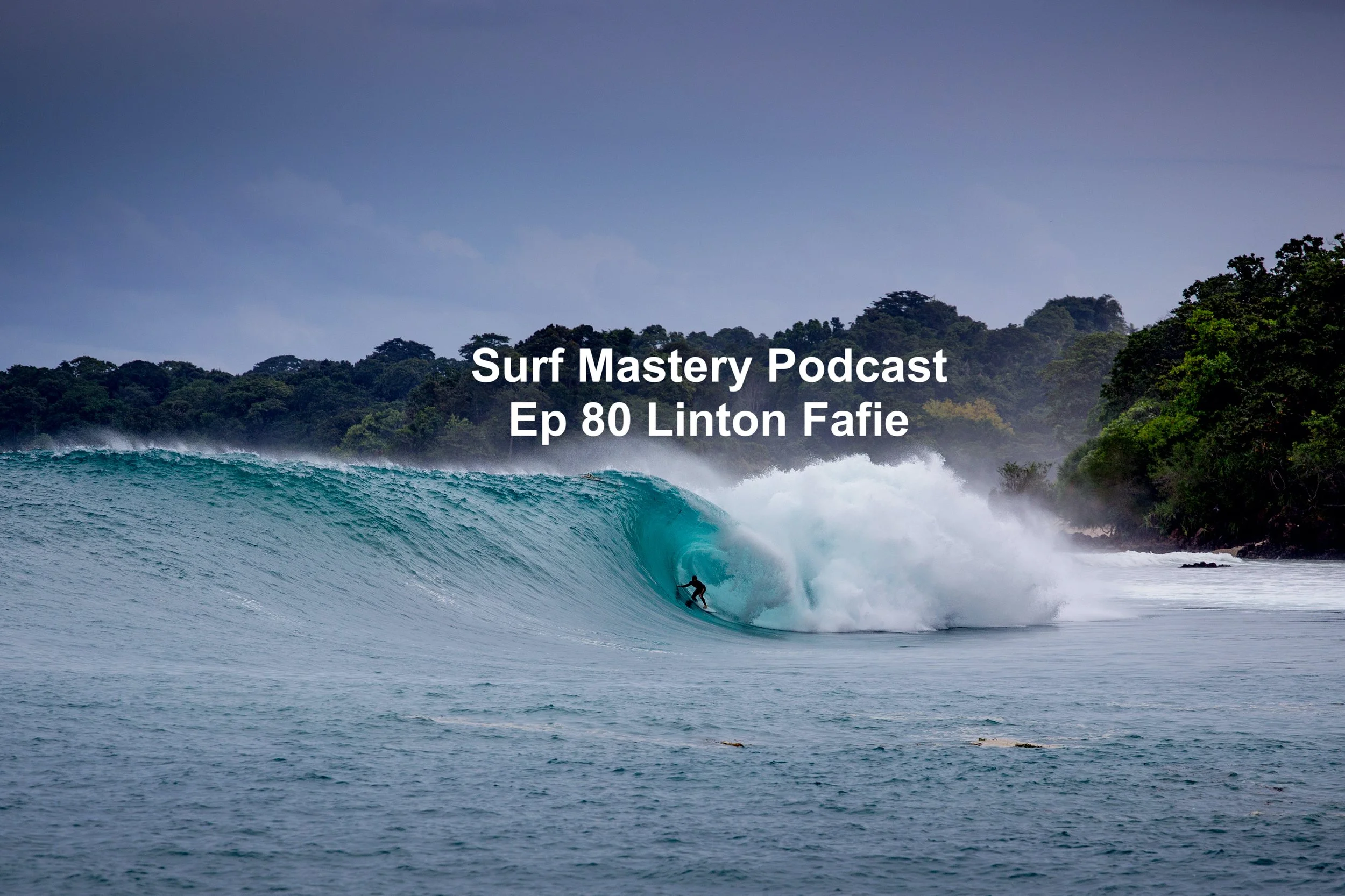
Still struggling with takeoffs, turns, or reading waves—despite surfing for years? What if the problem started with your very first lesson?
In this episode, surf coach Linton Fafie from Surfing Australia's High Performance Centre breaks down why so many adult intermediates hit frustrating plateaus. From debunking the "pop-up" myth to explaining how poor fundamentals in wave timing and body awareness hold surfers back, Linton offers insight every progression-focused surfer needs to hear.
Learn why most surf schools create bad habits that can take years to undo.
Discover how proper whitewater training builds real wave-reading skills that translate to the lineup.
Understand the importance of body connection, rail setting, and slowing down to finally unlock smoother turns and better positioning.
Press play to unlearn the hype, fix your technique at the root, and finally surf the way you've always wanted—with control, style, and confidence.
Check Linton's website: https://nextlevelsurfcoaching.com/
Follow his Instagram: https://www.instagram.com/nextlevelsurfcoaching/?hl=en
DNS Episode: https://surfmastery.com/podcast/050-dns
Life Coaching: https://surfmastery.com/mens-life-coaching
Key Points
Teaching beginners to stand up straight away is considered one of the worst things to teach them, as it bypasses fundamental skills and creates false perceptions.
Linton Fafey emphasizes the importance of teaching beginners how to catch waves in the whitewater to develop fundamental skills and timing.
Linton Fafey discusses the importance of understanding the momentum and feeling of being on a moving object for intermediate surfers to improve their skills.
Linton Fafey explains the misconception of the 'pop-up' in surfing, emphasizing that it's more about pushing down into the wave rather than popping up.
Linton Fafey highlights the importance of setting the rail on takeoff rather than focusing solely on getting to one's feet quickly.
Linton Fafey discusses the difference between a surf school experience and actual surf lessons, emphasizing the importance of learning fundamentals for serious surfers.
Linton Fafey explains that there are no shortcuts in surfing and that coaches' role is to keep surfers on the right track, emphasizing the importance of fundamentals.
Linton Fafey shares his experience of learning to surf without a leg rope initially, highlighting the importance of not having a false sense of security in challenging conditions.
Linton Fafey discusses the challenges of intermediate surfers who may not have the fundamentals right, leading to frustration and the need to revisit basic skills.
Outline
Surfing Fundamentals for Beginners
Linton Fafie emphasizes that teaching beginners to stand up straight away is counterproductive and bypasses essential fundamentals.
Beginners should focus on riding the whitewater to develop timing and balance before attempting to catch green waves.
The importance of reading the whitewater and matching the wave's speed and push is highlighted.
Linton suggests that beginners should be taught to catch waves by watching the wave come in and jumping onto the board.
The fundamental skill of reading a bit of whitewater and the necessary speed to catch it is crucial for beginners.
Linton Fafie's Background and Coaching Philosophy
Linton Fafie grew up in a surfing family on the south coast of New South Wales, Australia.
Linton started coaching in their early 20s after a life-changing moment, transitioning from construction work to coaching.
Linton has been coaching for nearly 10 years, working with Surfing Australia's High Performance Centre and running Next Level Surf Coaching in Byron Bay.
Linton works with a variety of surfers, including recreational adults, junior athletes, and intermediate surfers.
Linton's coaching philosophy involves working with other coaches to learn and develop their own coaching style.
Intermediate Surfer Challenges and Coaching Approaches
Intermediate surfers often struggle with turns and maneuvers, which is a common pain point for them.
Linton uses a holistic approach to coaching, incorporating DNS principles to improve intra-dominal pressure and connection from top to bottom.
Linton emphasizes the importance of initiating movements with the eyes to control weight shifts and board movements.
Linton works with surfers on land to develop reciprocal movements and control before applying these skills in the water.
Linton uses video comparisons to illustrate proper techniques, such as the pop-up maneuver, emphasizing that the board drops underneath the surfer rather than the surfer popping up.
Surf School Experiences vs. Proper Coaching
Linton criticizes surf schools for providing tourist experiences rather than proper lessons, leading to a lack of fundamental skills in surfers.
Surf schools often focus on getting beginners to stand up quickly, bypassing essential learning steps.
Linton developed a three-month program to teach backpackers proper surfing skills, emphasizing the importance of foundational skills before progressing.
Linton believes there are no shortcuts in surfing and that proper coaching involves keeping surfers on the right track rather than fast-tracking their progress.
Linton highlights the difference between surfing and other sports like skiing, where bypassing fundamentals can lead to more severe consequences.
Linton Fafie's Coaching Business and Online Presence
Linton operates under the name Next Level Surf Coaching, which was registered around 2010.
Linton offers international coaching trips and is based in Byron Bay but is open to coaching anywhere.
Linton's website is nextlevelsurfcoaching.com.
Linton predicts the growth of intermediate surfing coaching due to the rise of wave pools and the increasing popularity of surfing.
Linton encourages potential students to ask if they will be taught how to surf or just given a tourist experience.
Transcription
Linton Fafie
Majority of the time, yeah, it's more of a push down than a pop-up. The pop-up word is probably one of the worst words in surfing. Worst thing you can teach the beginner is to stand up straight away first lesson.
Michael Frampton
Welcome back to the show. Today's guest is Linton Fafie. Linton is one of the coaches at Surfing Australia's High Performance Centre. He works out of Byron Bay and you can check him out at nextlevelsurfcoaching.com. You know, every time I interview a surf coach, I always ask for recommendations for other guests and Linton has come up multiple times. So we finally got to line up our diaries and he did not disappoint. Loads of gold in this episode, right? Linton has done a lot of DNS courses, which we referenced quite a few times in the episode. So if you are not a regular listener of the show, that might be a new term to you. If you go back to episode 5-0, where I interviewed Dr. Rintala all about DNS, if you want to learn more about some of the details of DNS. Linton has some great perspectives on some of the fundamentals of wave reading. How to help intermediates overcome plateaus, the ideal pathway for beginners, the difference between a good beginner lesson and a tourist experience. As I said, lots of gold in this episode. I highly recommend you follow Linton's Instagram, which is @nextlevelsurfcoaching. There will be links to Linton on my Instagram and, of course, on show notes to this episode. One announcement I'd like to make before I fade in the interview, is I have finished setting up my website and I am now working as a therapist and life coach. Open to international clients via Loom. You can check out the page on my website. If you go to surfmastery.com, you will see it there. And there will be a direct link to that in the show notes. And without further ado, here is my conversation with Linton. How did you start surfing?
Linton Fafie
My family surfs. My father, brothers, they all surf, so it was just a natural progression that I was in a... I'm going to get into it. I pretty much didn't know anything else but surfing. Yeah, ever since I can remember, I started getting into surfing. That was just life down at the beach.
Michael Frampton
Were you too young to remember your first wave?
Linton Fafie
Yeah, I kind of remember my first wave on a surfboard, but there was years there of just boogie boarding and playing in the whitewater and I remember like one of my earliest memories, I think, of like sitting at one of these, playing in the water with one of my friends with like a little boogie board. And I remember looking at this island that was there and like going to my mate like, "If a wave that big came through, would you catch it?" We were sort of both sort of freaking out and I remember like, mate, like sort of umming and ahhing. And I was like, "If it was fat, I'd catch it if it was fat, but if it barrelled, I probably wouldn't catch it." You know, but that's probably one of my earliest memories, I think. I would have been like five years old, I think.
Michael Frampton
What beach was this?
Linton Fafie
This is down on the South Coast, New South Wales, at Tomakin, where I grew up. Barling Beach. Yeah. Yeah. Shout out to all the South Coastians out there. Yeah.
Michael Frampton
When did you get into coaching?
Linton Fafie
Probably got into it like in my early 20s. I was... My brother started a surf school, Surf Tools, here on the East Coast of Australia. And I kind of started helping him out with a few trips and then I was kind of living in Western Australia at the time. So I came back during the summer and I sort of helped him out. But it wasn't until I kind of had a bit of a... You know, when you're sort of... A bit of a life-changing moment. I was working on the mines over there, doing a lot of construction, trying to earn millions, but it wasn't really making me too happy so I was like, I'd rather just be on the beach coaching, you know? I was way happier making way less money than I am now. I'm making, yeah, good money. So I just hit a mate up that was working for Surfing Western Australia at the time and he asked if I had any work and I did my Level One and it kind of all just sort of spiraled from there really. Yeah, but when I was a junior, I got coached. We had a South Coast team coaching squad. It was kind of one of the earliest ones I can remember. Is this when coaching was first starting to, you know, it's starting to happen. And I was down the South Coast, me, Paul Morgan, good mate Jimmy Nowic, Nathan Bartlett, a few other crew from the South Coast, and we'd all go up to Ulladulla and do a little coaching squad with Ant Valsy, who's working up at... From Palm Beach High now in Queensland. He runs the surf performance program up there. So I remember like when he sort of first explained to us like doing a floater and just to bend your knees and land low.
Michael Frampton
There. Okay, so he was like your original coach?
Linton Fafie
It was just like this, "Whoa, wow." I didn't even think of that, you know, but just such an easy little principle. And yeah, so I carry that on. Yeah, ever since that day. It was classic when I started working up at... Daphne Estrella at the High Performance Centre. Because he lives up at Cabarita now. And yeah, so he coached me all those years ago and then he brought his son in and I was coaching his son.
Michael Frampton
Comes full circle. Yeah, I bet that was a little bit of a proud moment for him too, to see you carry the flame and you know, progress with the Surfing Australia and all that. It's awesome. So how long you been with...
Linton Fafie
Circle. That was pretty classic for that to go around like it did. Yeah, it's pretty sick.
Michael Frampton
Surfing Australia and how much work do you do from the High Performance Centre there?
Linton Fafie
So I'm up there most weeks, but I'm currently on a permanent part-time role with them. So I do a lot of... About three days a week up there. Just juggling my own stuff with Next Level Surf Coaching and things that I got on up there. Been with them fully for nearly 10 years now, on and off. You know, so... When things came up, I'd go up there. If things weren't on, I'd be doing my own stuff. But yeah, at the moment, sort of three days a week. But it's good. It's good to go up there and work with other coaches. And I think that's, you know, how you progress as a coach is just working with other coaches and, you know, learning from each other and finding your own little style of how you present things and put things across.
Michael Frampton
And what sort of athletes are you working with up there? Is it the average athlete or elite or a bit of both?
Linton Fafie
A bit of everything. A lot of the average Joe Blows, you know, adult recreational surfers. Do a lot of junior athletes. So... Maybe they're not quite elite yet on their elite program, but they're sort of... We call it the Rising Talent Program. There's such a pool of young surfers at the moment that... Not all of them... There's not spots for all of them in the Talent ID Program that they run out of the centre. So we've developed another Rising Talent Program for the kids that might just miss out on that scholarship but are still, you know, still good enough to be in the mix but just unfortunately just missed out. So yeah, I work with them a lot. And whoever else that comes through the place.
Michael Frampton
Yeah, and then you've got a surf school in Byron. So I do a lot of intermediate, advanced coaching in Byron under Next Level Surf Coaching. Yeah. So same thing, work with... Love it. Adults and a lot of the junior or developing groms that are in the area. So just working off... Sort of working alongside, I could say, with Byron Bay Boardriders Club as their coach and just sort of developing a bit of a pathway in the area just for kids to sort of get that mentoring. Sort of help them sort of progress and find their way.
Michael Frampton
Sweet. And so with the intermediate adults, yeah. Is it seasonal or is it consistent or what's it like up there?
Linton Fafie
That's consistent, yeah. Yeah, so that's... Yeah, all day, every day sort of stuff. There's so many intermediate adults out there these days, isn't there? I've done a lot of time with beginners through my time.
Michael Frampton
Yeah, there sure is. Yeah. Do you work... Do you work with absolute beginners?
Linton Fafie
I try and stay away from it. I do get pulled in from time to time. Had old Borat come through town a few years ago. And I've done a couple of sessions with him. He was quite green at the time. But a bit hard to say no to that guy.
Michael Frampton
So, okay. And you're obviously living in Byron, you probably see, especially during the high tourist season, you see a lot of beginners come through. What's the best, and the worst you've seen... Let me ask you, what's the worst thing you think you could teach a beginner? And what's the best thing that you think a beginner should learn?
Linton Fafie
The worst thing you can teach the beginner is to stand up straight away, first lesson. I think that's the worst thing that you can teach them. Mainly because it just tries to shortcut so many fundamentals and, you know, just that you get just from riding a whitewater, you know, riding the whitewater and in that prime position, learning to turn the board left, right. And it kind of gives them a bit of a false, both sort of perception and where they are. And they kind of progress out the back rather a little bit too quickly than what they should. So I think one of the best things you can teach a beginner is just how to catch and ride a wave properly. And that's usually going to take care of a lot of issues later on down the track.
Michael Frampton
So even just a white... a whitewash wave?
Linton Fafie
Whitewash wave. Yep, just like getting them to watch, you know, whitewash wave coming in and like timing that wave when it comes in where you get on your board and, you know, even just sort of... What I do with a lot of beginners is, I even do it with intermediate surfers that are out the back and having trouble catching waves. I get them back in on the whitewater. They don't really like it too much. But we're just getting like waist-deep water with a bigger board, any board really, and just like, catch waves just by watching the wave come in and jumping onto your board and riding that whitewater in. And you'd be surprised at how many people are sitting out the back trying to catch green waves and they haven't even got that fundamental skill of reading a bit of whitewater. And the speed and the push that's necessary to smoothly catch that bit of whitewater, if that makes sense.
Michael Frampton
Yeah, so working on their timing so they can catch it without...
Linton Fafie
Paddling. Timing, yeah, exactly. Timing and just matching that timing with the power of the wave and the speed of the way that wave's pushing in. And having them like... Because once they get focused on that little bit of whitewater coming in it just initiates a bit of a focal point for them, so they're not just head down, scrambling for the shoreline. They actually have a bit of a focal point. They've got something to watch. They've got something to time as it comes in. And just sort of push into that, smoothly jump onto the energy of the wave into that prime position. And then that time, and that's where you develop all your wave reading skills and your timing. It's not out the back watching the horizon, you know, that's just the next part to it all. But if you've bypassed that little basic step of just watching a whitewater wave come in and time that and jumping onto it... You know, it doesn't even have to be with a board. It could be body surfing or whatnot. I think that's a fundamental skill that needs to be taught at that beginner level. But it can take time with some people. So... and it depends on what the surf school is selling. You know, if they're selling stand-up first lesson or your money back kind of stuff, which a few of the surf schools sell here in Byron, that's just the expectation that they're setting. They kind of bypass that. Hold the board for them, push the client onto the wave, and tell them to stand up straight away.
Michael Frampton
Yeah, well, I guess a lot of the times they're just... they're serving the tourist surfer that just wants to try it and will probably only ever try it once.
Linton Fafie
Exactly, yeah. I think... I think that's where we kind of got lost with this whole surf school thing around the world. I don't think it's just a Byron thing. Apparently Europe's pretty crazy for it too, but just... yeah, just that. You know, people think they failed if they haven't stood up first lesson, you know, and I'm like, don't worry about it. It took me four years before I even got onto my feet. Yeah, I might have been like five at the time, but yeah, just that playing in the whitewater and riding the waves in, it just sort of helps stabilise yourself. I look at it like with the DNS principles, how long it takes for your nervous system to mature and stabilise, yes, to actually get to standing, you know, it takes you... it takes a good... what is it, 12 months, 12–13 months? I'm just trying to look at my posters here, yeah.
Michael Frampton
Yeah, 13 months usually.
Linton Fafie
13 months, yeah. You know, and you think like, yeah, you're a baby at the time and there's a lot of things developing, but... I kind of look at it that way. Like you've just came from your mother, you know, and then you're into the world with a whole new, you know, you're in a new world and you got gravity, you got to stabilise, you know, the ground's a new thing for you. So you've got to develop all the muscles and the nervous system to actually stabilise yourself so you can get to standing. And then... and I kind of look at it like that when I'm getting someone in the ocean and they're in a new environment again at that beginner level. And they've got to learn to stabilise. They need time for the nervous system to respond and to find that base of support for them to progress, you know, to develop the muscles needed to get to their feet again. Does that make sense?
Michael Frampton
Yeah, for sure. When you get an intermediate surfer who's struggling physically, do you wind them right back to that too?
Linton Fafie
You got to. It depends on... I have done. With intermediate surfers, but mainly they might think that they're an intermediate surfer because they're out the back on a shortboard. You know what I mean? It's like they still haven't developed the skills to be out the back and ride a shortboard. Okay, so... I have brought them back into the shore and said, "Look mate, you've got to just do this." And it's kind of blown their mind like, "I've never been taught this before, this is crazy." And then maybe in that same session we might get back out the back again and get them onto a wave and then they've just... it's just way easier for them. You know, they've got a bit of timing sort of developed. But a lot of the time it can take a few sessions for them to sort of learn that basic skill.
Michael Frampton
Yeah, no, I like that. In the surf coaching world, you mentioned wave reading and the whitewash. And it's, you know, in the surf coaching world, there's a lot of... you know, and I'm guilty of this as well, of trying to teach people, look at the details on the wave, look for the power zones, you know, and that's all great for, you know, intermediates and above. But if you think you're an intermediate and you're not really, then you do have to take it right back to the simple. The whitewash is the perfect place to learn the real simplicity of wave reading.
Linton Fafie
Yeah, I think that's what's getting... yeah, that's just getting bypassed. And yeah, I think it's the perfect spot for it. I think this needs to happen. Fuck. I don't know. How did you learn to surf? Did you go straight out the back or...? I know I spent a lot of time in the whitewater.
Michael Frampton
No, I spent a lot of time. I was on a massive nine-and-a-half-foot plastic Bic board with... yeah, in the whitewater at first. I think we were encouraged to stand up straight away. Yeah, you know, I was blessed enough to have, you know, a pretty fit, flexible body. So I picked it up reasonably quickly. I mean, of course, I built a lot of bad habits along the way and I've had to unwind them. That's almost the epitaph of the show. But yeah.
Linton Fafie
It might be because you got told to stand up straight away.
Michael Frampton
Exactly. No, exactly. And a big part of it for me was wave riding. I was always like paddling my guts out to get waves and then I hold them. And nowadays, like my goal is, can I catch a wave without paddling? Just pure timing. Or just two strokes. That's all you need if you get the timing right.
Linton Fafie
Yeah, exactly. Yeah. Yeah, and all that stuff that you had mentioned about looking for the power zone and the ripples going up the wave as you're reading a wave coming in... all those micro details are super important and I think once a surfer is at that, you know, intermediate level, they've done the progression and they're out the back, yeah, they're great tips to start implementing for sure. But there's no point talking about that stuff if they can't actually match that speed of the wave that's coming in just by... visually, I mean, like, you know, visually match that speed of the wave. And one of the other big things is too, is it just takes time for people to... about the momentum. Like going... like just going with speed, if that makes sense. Like not necessarily generating speed, but you're on an object that's actually moving. And you've got to stand on that object. It takes people time to sort of figure that feeling out. Yeah, like if you just came off land and then you've gone into the water and now you're on an object that's got momentum. And that feeling of momentum is one of the biggest things, one of the hardest things to coach. Which I'm sort of stripping it right back and trying to start coaching that feeling of what it feels like just to be on something that's moving. And I think that's where like intermediate surfers, when they do get out the back and they haven't got comfortable with that feeling, that's where the, you know, the arms are going all over the place and they're rushing because there's this thing that's moving and they're trying to sort of keep up with it, but they haven't really figured out how to sort of stabilise in that.
Michael Frampton
Object. Well, they have so much expectations of... of what surfing is and should be for them too. But when you look at the little kid, the reason why kids pick it up so fast and, you know, they get the fundamentals right, is literally because they just have so much fun just playing in the whitewater.
Linton Fafie
Yeah. There's no urge for them to be out the back. Like, "I should be out there. How come I'm not out there?" It's like... you know, a lot of the young groms that I coach, like the real micro ones, they're just like, "No, I'm just chilling in here." I'm like, "Cool, fine. Spend as much time in here as you want." You know, there's no need for you to go out the back just yet. Like when you're ready, I'm here for you, you know, just let me know when you're ready and we'll get you out there.
Michael Frampton
Yeah, that's interesting. And you see the exact same thing in DNS, right? You get some big, strong bodybuilder who's all of a sudden, they're in crazy back pain. And then you have to take them back to the three-month position or the six-month position as an infant. Exactly. And get them to get out of their head and into their body and focus on the details of their body position and their surroundings. And that's what gets them out of pain. That's what gets them stronger. And it's the same with surfing.
Linton Fafie
Right? 100%. Yeah. It's good that you said that because I was like, I wonder if he understands what I'm talking about. Yeah, a hundred percent.
Michael Frampton
No, totally man. That's... I think a lot of it is the expectation thing, right?
Linton Fafie
Yeah. They see good surfers and I'm like, how come I'm not surfing like that? He's been doing it for like 40 years or a good 20 years, you know? And they go through the process. They live and breathe it. Like, it takes time. And don't be scared to put that time in. Like, enjoy putting the time in. And that's what I like to say to some of the beginners that I do coach is like, enjoy this moment. Like, you're gonna have just as much fun in here learning these fundamentals as you're going to have out the back. You know, or when you're ready to go out the back, that's the joy about surfing. It just... you know, the beginning part's just as fun as being advanced. It's just you're doing different things, experiencing... it's just a new experience really.
Michael Frampton
What do you think, for the average adult intermediate surfer, what do you think... like, why are they coming to you? What's the main frustration or the pain point? Why do they reach out?
Linton Fafie
Pain point is like turns. So they want to do turns. They want to get to that advanced level. A lot of it, yeah, a lot of them want to start learning manoeuvres. Could be multiple different things, but I find a lot of people, yeah, they just want to start learning how to do top turns, cutbacks, and whatnot. But then... once they do come with me, we realize that there could be some other issues that are limiting their... yeah, their ability to start doing turns and cutbacks and whatnot.
Michael Frampton
So you work quite holistically.
Linton Fafie
Yeah, yup. Because I see on your... I was scrolling back through your Instagram just before this. Yeah. And a couple of videos stood out to me. One of the ones, you had a guy like get in touch with the board, with his feeling, and what it feels like, and his eyes... and his eyes lead the movement. You had him sort of looking up against the wall. All he wanted to do was wring his neck. And you go like, "No, let your eyes guide it." And then when he slowed down and his arms started following his eyes... and I thought that was such a great illustration of slowing things down.
Linton Fafie
Yeah, it's like, you know, you got to think that when you start trying to turn and do manoeuvres, you want to be in total control of the situation. So if you can start the process by just a look, you know, you just look with your eyes. So, you know, yeah, do a top turn or a cutback and you just start looking with the eyes. That's an initiator of movement. And then, you know, you can add a little turn with your head and the rotation, but literally the eyes will initiate a bit of a weight shift. So you go from like toe side to heel side or vice versa. But if you've got enough awareness and you can feel that weight shift like control just from a look of your eyes, and then you've got way more to work with to get to end range. But if you just turn your head, twist, rotate your shoulders, and that whole movement hasn't even spoken to your board yet, exchanged from toe side to heel side, when it comes to actually driving through the turn, you've got your end range. There's no more movement to happen. So that's what I'm finding with a lot of intermediate surfers. They'll go for a turn, maybe swing off the bottom turn on their backhand or swing this way or swing that way. The board hasn't actually moved until they've got to end range. So there's no communication from top to bottom until they get to end range, if that makes sense. So with that, I'm just trying to get that awareness that they've got the ability to initiate. So it's just that... that 1% at the start, it's that little initiation at the start where you're... you might just rock from toe to heel side. You know, and you've got that awareness. So then you can keep playing with the rest of it. So you don't have to go to end range and dig a rail. You've got actually total control out of the whole movement, not just trying to twist and throw your arms up to end range and not even get a response out the board.
Michael Frampton
Yeah, no, that was a great video to illustrate that too. And do you do quite a bit of work with people outside of the water like that?
Linton Fafie
Yeah, so that's sort of coming from a lot of DNS principles that I've been working with. And just experimenting with just intra-abdominal pressure and, you know, getting that connection from... yeah, top to bottom and just that awareness. So I'll probably... put people in three months and through DNS and just work on a bit of a reciprocal sort of movement. So, you know, just one palm up, one palm down, and just sort of get that connection of, you know, when they breathe and getting their sort of eyes and breath and just movements of the wrists or lines, and then we'll throw them on a skateboard and just get them to rock from toe side to heel side and see if they've got control of when they can go to toe side, when they can go to heel side, just with the nuanced sort of movements of just looking left or looking right.
Michael Frampton
It's amazing how little you have to do if you get things right sometimes. I'm always amazed when you watch someone like Occy surf. It's like, he's not doing cool with his body, but everything he is doing is just right. And it works.
Linton Fafie
Yeah. Well, he's so connected. You see his frame, you know. He's so low to his board. He's so connected that he just has to do the nuanced movements and he gets a great response from it. It's when you're not connected and you've got to go to end range to actually, you know, to your board to get that feeling to your board, to get a response. I find that's when the issues start. But then a lot of it stands to like, if you're not standing on the right part of your board, you're not going to get the right response from your board as well. There's a lot to go into it.
Michael Frampton
Yeah. There's another video I was watching which I thought was such a great... you're obviously coaching someone using a video comparison of them with John or the pop-up.
Linton Fafie
Yup.
Michael Frampton
Or the... yeah, the old school pop-up takeoff. Yeah, and there was such... I'll put links to these videos or I'll put them up on my Instagram when I leave. I'm going to publish this so people can see what we're talking about. But this is so like... even the word "pop-up" makes you think that you have to pop up and the board stays the same. But as you illustrate in this video, it's no, it's you, your head stays the same. It's the board that drops underneath you.
Linton Fafie
Yeah. On certain occasions, certain circumstances, but majority of the time, yeah, it's like, it's more of a push down than a pop-up. Like... and I think the pop-up word is probably one of the worst words in surfing, you know, especially at that lower level. You know, and that quick pop-up, you know, it's like you're getting someone with no skill to do something really quickly. And of course, there's going to be errors when you train someone like that. So, yeah, and that's one of the big things, I suppose, with intermediate surfers is they get caught up in the lip because they're so focused on getting up on my pop-up. Okay. And I suppose it goes back to your question before, with what a lot of intermediates come to see me with. And that'd be one of the questions, you know, that'd be one of the issues that they present me. It's like, there's this going on with my pop-up and my pop-up's this and my pop-up's that. And I'll be like, bet you it's not your pop-up at all. Bet you it's the wave. You know, I bet you that's probably what's causing the issues because you're thinking about your pop-up too much, you know? Start thinking about the wave. Start thinking about where you want to surf to. And, you know, think about getting into the wave. Don't think about popping up, you know? Because then you're going up away from the board. You want to be going down into the wave, like, you're going to be setting your rail and pushing down into it. You don't want to be popping up away from it. Especially when you start surfing more challenging waves.
Michael Frampton
They obviously, they can pop up or they can stand up on a board, but it's the timing, right, that's off or the thought process behind it. Sort of the thought process, maybe the fact that they're trying to do it quicker. Like what got me thinking of this was at Kirra one day. And it's a good solid Kirra swell, like six to eight foot. You know, like screaming down the line, like screaming down the bank. And there was an old guy, I just saw an old guy take off on a wave. It would have been a good solid six-plus footer and he took off, like as he pushed in he kind of set his rail but, you know, he must have had hip problems or something, but he was kind of like, half up, dropping down the face, half up, you know, his front leg was getting up. By this stage he's sort of under the lip, you know, the wave is fully tubing over top of him. He kind of got his back leg up, you know, he's nearly in the barrel at this stage. And then by the time he got stable, yeah, he's sort of coming out of the tube. But he was up and he was riding and I was like, and he just... That was the gnarliest wave and you just cruised through standing action. And I'm like, it's not a pop-up at all. Like, yeah, it's important to be quick and, you know, to your feet. And of course he could have done a lot better things with that wave if he got to his feet and, you know, he could have thrown his ass in the face and got deeper, blah, but has he got the ability or has he got the range of motion in his hips? I don't know. But he just did what he could do at that point in time. And it worked for him and he got a cracker wave, you know. So that's what got me thinking about it. So many people that are fumbling on that takeoff because they're just trying to do it too quick. And for starters, they actually haven't got the skill required to do it that quick. And they're missing other fundamental things like setting a rail. Like, it's more important to set your rail on the takeoff than to get to your feet. Like, a lot of the time, people, by the time they actually get to their feet, they're at the bottom of the wave trying to set their rail and it's like, no, you gotta set your rail first and keep that in the water so you can take the drop and, you know, your board's going to turn off that rail. A lot of the time, intermediate surfers though, rush up to their feet. Well, not even rush, by the time they've sort of got to their feet they're on the flats at the bottom of the wave and then with that speed they've produced by just dropping straight down the wave with a flat board, then they're trying to actually engage the rail and it's like, they find it really difficult to engage a rail. Of course, they're riding like a fatter, wider, intermediate board. And they've got momentum, they've got speed, so they can't actually engage the rail at that point in time until the board actually slows down or they push through the tail more to actually turn the board. And then they're actually stalling and slowing up, and that's when they start to have issues. So the issue is not actually the pop-up, the issue is actually how they're entering the wave by, you know, like, trying to pop up or not pushing down into the board and setting a rail so the board's actually locked into the wave and then you can get your stance right.
Michael Frampton
So I guess they think that surfing starts once you're to your feet, but what you're saying is no, you should be able to pop up slowly as you're already surfing. The old guy example, like he's surfing the wave but he knows full well...
Linton Fafie
Yeah, you should be able to pop up to what the wave's dictating, if that makes sense.
Michael Frampton
He's old and his pop-up is slow, but if he sets his line right, he can just take his time and it doesn't matter how long it takes to get to his feet. Because he's already riding the wave. He's set his line. He's surfing the whole time.
Linton Fafie
Yeah, and then we take that back to the beginner level of how people are getting taught. Are you teaching people how to ride the wave at the very fundamental beginning in the whitewater? Are you teaching them to ride that whitewater in a prime position so they've actually got the ability to, et cetera, like... and it's just like trim to the right, push down on that right edge and trim to the right, yeah. And then trim to the left. Okay, and what's one of the biggest issues all the coaches probably have with intermediate surfers is on their takeoff they're always looking down. They're just paddling in looking down, and that's one of the biggest things. It's like, I'll keep your eyes up, look to where you want to go. But if you actually went back to the beginning in that first lesson and just got people riding the whitewater, they'd get super comfortable being in that prime position and having their head up looking to where they want to go. You know what I'm saying? "Surf the board over here to the right," you know, and just as they take it to the beach, and now they'll get really comfortable with having their eyes up and a focal point of where to take the board. And then you won't have that issue at the intermediate level because they've learned all those fundamental things at the beginning.
Michael Frampton
Yeah, that's an important skill. That's what I mean. You see Labradors set better lines than most...
Linton Fafie
Intermediates. Exactly. Yeah. Yeah, 100%. Yeah, but it's, you know, it's not their fault. It's just... yeah, they've just bypassed a few things and...
Michael Frampton
Yeah, so I guess maybe to summarize a little bit, if you learned at a surf school, it's not the surf school's fault, but they're just trying to give you the tourist experience of what it's like to stand up on a board first time. But if from then on you decide, "No, I actually want to surf. I want to take it seriously," you're going to have to go to a better coach and learn some of these fundamentals that we've talked about. And sort of start from scratch again. Forget your tourist experience. Yep, that was great. But that wasn't a surf lesson. That was a surfing experience.
Linton Fafie
A hundred percent. And that's where, yeah, that's where we've gone wrong with the whole surf school, in brackets, side of things. Everyone's just given experiences. They're not actually giving a school or a lesson, per se. And I... I did with mum. So back... good 15-plus years ago, when I was working with my brother's surf school, we were taking backpackers up and down the coast here on the East Coast. And I was spending like five days with them and teaching them how to surf over the five days. They got to the fifth day and they were actually just starting to, you know, starting to get good. And I'm like, I just... you know, that's what really got me, drove me to sort of that intermediate style of coaching. That just... they just... actually, you're only getting to a level now that I can actually teach you some proper things. So we ended up developing a platform, a three-month program. So they'd come and stay with us on their gap year for like three months. By the end of the three months, they could become a Level One surf instructor. Okay, and then they could take that qualification wherever around the world. But to become a Level One surf instructor, they had to have a certain base of skills. You know, they had to be able to comfortably take off on a three-to-four footer, trim across, do a bottom turn, top turn, cutback, what-so-ever. So I had to develop a way of coaching to get these guys to a certain level within three months. And that's when I looked back and I was like, "Okay, what did I actually do with my surfing? How did I actually get taught?" You know, I didn't go to a surf school and get taught how to stand up on a board and then just went, "Okay, cheerio, have a good time." It's like, no, I was in the whitewater. I was doing this. My father was watching me, or my brothers, or someone in the community was watching me and guiding me through the process. Like, I never really surfed by myself. There was always someone there to... slap me across the back of the head if I did something wrong and I got in the way or, you know, "Maybe try this," "Maybe try that," "Don't do this," "Don't do that." So then that got me thinking of like, "Okay, I've got to just strip this back for these guys at the start. Get those foundations taken care of. When we do start progressing, you know, out the back to the greener waves in the next couple of weeks, they're going to be way more comfortable in that sort of situation." I was having that challenge of getting intermediate surfers to it—or beginner surfers to at least that intermediate range—within three months really got me thinking of the process that needs to happen to... good... fast track your surfing or develop your surfing. Yeah, that's good. I like that. Yeah, there's a lot more to it than most people think.
Linton Fafie
Yeah, exactly. Yeah. Yep. And like, that's the other thing that's out there as well that I kind of see. Like a lot of, you know, "Come fast track your surfing here," "Fast track that," and it's like, "Shortcut your surfing." And I'm like, "No, there's no real shortcuts to it or there's no real fast tracks. You've got to go through the process." I see coaches and surf schools... our job isn't to fast track anything. Our job is just to keep you on the right track. Like, yeah. And that's where a lot of people fall off that track and they take a detour. They could be surfing for, you know, 10 years and they never get past that one level. It's because, of course, they've gone so far to the left that, yeah, you've got to bring them back to the right here to get them back on the straight path again and getting those fundamentals down.
Michael Frampton
Yeah, I guess surfing is one of those unique sports or pastimes that you can just get away with so much. But it's still fun and it's... you still, you know—air quotes—"surfing."
Linton Fafie
Yeah.
Michael Frampton
Whereas it doesn't happen like that with skiing. If you try and go too far up the mountain and you haven't got the fundamentals right in skiing, it's game over. You're going to lose your skis. You're going to face plant. Whereas surfing, you can just get away with it. It's like you go to Uluwatu and you're like, "How did this guy even paddle out?" And they get away with so much just because it's in warm water and it's like...
Linton Fafie
Or even at the Pass, you know, you've got people that are out in the lineup and you're like, "What is this person doing?" Like... but it takes it back to when I started to learn how to surf, I wasn't allowed to have a leg rope. My parents didn't want me to have a leg rope because they didn't want me to go out into any surf that was too challenging for me, that I wasn't going to be able to get myself out of. It wasn't until I sort of proved myself that they were like, "Okay, cool, you can start using a leg rope now if you want." You know, but I remember like, yeah, it's just... so I didn't have that false sense of security. You know, I wasn't putting myself in a situation that I couldn't get myself out of.
Michael Frampton
It sounds like you had a great sort of early surfing experience.
Linton Fafie
It was just life. That's all I had to do, really. Yeah. Wasn't much else going on back then.
Michael Frampton
Yeah, I guess that's what... people like yourself who grew up in such a rich surfing community... that's why you are a good surfer. And then these newbies come along and they think that they can bypass it all and it just does not work that way. That's why there's frustration. So you have to wind it back and get these fundamentals right.
Linton Fafie
Exactly, yeah. And it's kind of like the blind leading the blind, isn't it? It's like the newbies come and, you know, they want to surf with people at a similar ability level, so they might go out with someone else who's just sort of new as well, and then they'd be like, "I read this somewhere" or "Saw this somewhere," and they're kind of teaching each other. And yeah, it's just kind of the blind leading the blind.
Michael Frampton
So tell us where exactly you're working from and what's your website?
Linton Fafie
I'm out of Byron, but I'm pretty much open to anywhere. I do a lot of international trips as well with clients, to the Mentawais and boats and whatnot. But yeah, under the name Next Level Surf Coaching. And yeah, I registered that name back... I think 2010 or something it was. I just remember going, there's so many surf schools out in the world these days teaching everyone how to stand up. Surfing's going to explode. I was like, there's no one teaching intermediate. There's people teaching the advanced, like the elite level for comps. Everyone's learning how to surf, but no one's actually teaching intermediate surfers. I'm like, the sport's going to explode in the next few years. So that's when I named the business Next Level Surf Coaching.
Michael Frampton
Yeah, good prediction because it has and it continues to grow.
Linton Fafie
Continues, especially with wave pools and everything else, yeah.
Michael Frampton
Yeah, that's interesting. Yet we still see the tourist experience, but I don't think we'll ever get away from that. That's always going to be part of...
Linton Fafie
It. It's always going to be part of it. Yeah. Yeah. I think it's just... if you're out there wanting to learn how to surf, you pretty much have to ask that question, don't you? "Do you have any experience, or are you going to actually teach me how to surf?"
Michael Frampton
Yep. All right, Linton. Well, I'll put links to your website, your Instagram. And I'll put these videos we mentioned up on my Instagram reels and I'll tag you in there when the show comes out. And I thank you so much for your time today.
Linton Fafie
Cheers, Mikey. Thanks for finally catching up, mate.
Michael Frampton
All right, man. Thank you. That was Linton Fafie from Next Level Surf Coaching andnextlevelsurfcoaching.com. If you enjoyed this episode, give him a follow on Instagram. Give us some feedback. You can do that on the Instagram post relevant to this episode. Or of course, you can email me: mike@surfmastery.com. Another way to support the show would be to rate and review on iTunes or on Spotify. Until next time, keep surfing.
80 Overcoming Intermediate Surfing Plateaus with Surf Coach - Linton Fafie
For the passionate surfer—whether you're a weekend warrior, a surf dad, or an older surfer—this podcast is all about better surfing and deeper stoke. With expert surf coaching, surf training, and surfing tips, we’ll help you catch more waves, refine your paddling technique, and perfect your pop up on a surfboard. From surf workouts to handling wipeouts, chasing bigger waves, and mastering surf technique, we’re here to make sure you not only improve but truly enjoy surfing more—so you can get more out of every session and become a wiser surfer. Go from Beginner or intermediate Surfer to advanced.