
99 Rod Perez - Holistic Health Practices for Surf Wellness
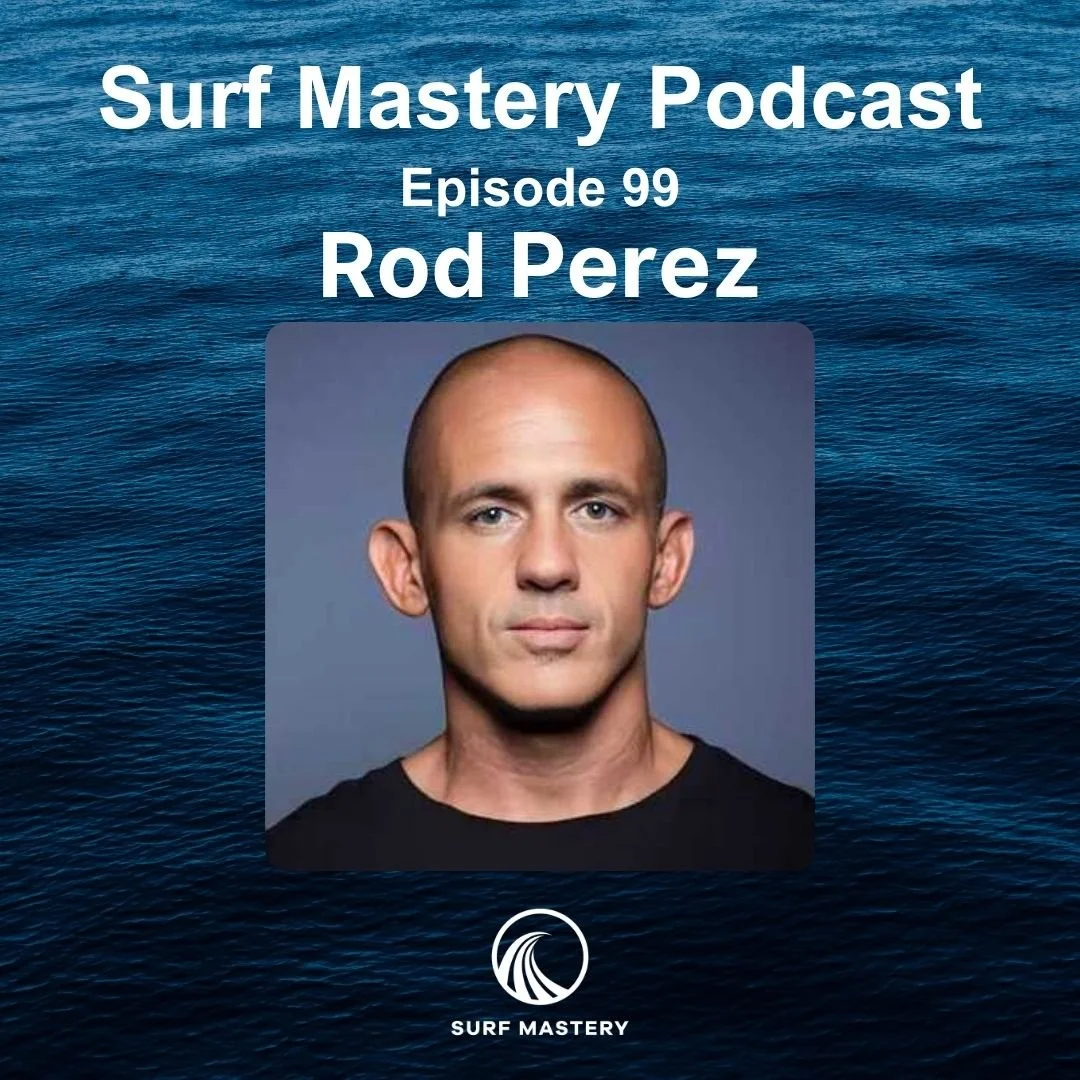
Still trying to surf hard while your body says otherwise? What if the real secret to surfing stronger with age isn't more power—but smarter recovery and movement?
In this conversation with renowned surf performance coach Rod Perez, we break down the truth about sustainable surf fitness. From mobility to mindset, Rod shares insights from decades of coaching elite athletes (including Joel Parkinson) and working with everyday surfers who want to feel good in the water again—not just grind in the gym.
Learn how to bulletproof your knees, hips, and back with training strategies surfers over 35 actually need
Discover why most “fit” surfers are missing the endurance and mobility they truly need for better surfing
Understand how Japanese samurai philosophy can help you live—and surf—with more purpose, energy, and gratitude
Hit play now to learn how to extend your surfing years and unlock better sessions through smarter body and mind practices.
Follow Rod Pererz : Website:rodperez.com & Instagram: holisticprohealth
Follow Michael John Frampton: Instagram: surf mastery & Website:https://surfmastery.com/.
Key Points
Rodrigo Perez discussed working with Joel Parkinson and helping him transition to a different phase of life, emphasizing the importance of training, sleep, and health.
Rodrigo Perez emphasized the importance of mobility and capacity in training, particularly for surfers, noting that many people lack these aspects in their fitness routines.
Rodrigo Perez highlighted the benefits of recovery techniques such as ice baths and saunas, stressing that proper recovery is often neglected but crucial for preventing joint problems and osteoporosis.
Rodrigo Perez discussed the use of advanced recovery techniques like stem cells and peptides, noting their effectiveness in helping clients recover from injuries.
Rodrigo Perez shared insights on the common ailments among aging surfers, such as lower back problems and hip rotation issues, and the importance of sustainable training practices.
Rodrigo Perez discussed his book 'The Art of Longevity,' inspired by his clients' back problems and his own experiences, aiming to provide a holistic guide for mind and body wellness.
Rodrigo Perez emphasized the importance of basics like proper diet, exercise, and recovery over advanced supplements or genetic modifications for longevity.
Rodrigo Perez discussed the influence of Japanese philosophy and traditions on his approach to health and wellness, highlighting the simplicity and discipline of the samurai lifestyle.
Outline
Introduction and Background
Michael Frampton introduced the Surf Mastery Podcast and mentioned a new website, surfmastery.com, with a free download of top five tips.
Rodrigo Perez, the guest, has released a new book titled 'The Art of Longevity: Your Practical Guide to Total Mind and Body Wellness'.
Rodrigo Perez is a professional coach and founder of Holistic Pro Health Performance, having worked with successful athletes.
Joel Parkinson provided a quote about Rodrigo Perez's help in transitioning to future goals.
Michael Frampton mentioned attending one of Rodrigo Perez's courses in 2016 and being impressed with their knowledge and presence.
Professional Collaborations and Retreats
Rodrigo Perez and Michael Hintala presented together in California in 2019.
Rodrigo Perez worked with Ricardo Christie to help him return to the tour.
Rodrigo Perez is currently working with the new generation of surfers, including Canadian and Japanese surfers.
Rodrigo Perez and Tom have been running retreats together, despite challenges during the COVID-19 pandemic and Tom's hip surgery.
Dealing with Knee Injuries and Osteoarthritis
Michael Frampton discussed Tom's knee replacement and their shared experience with ACL reconstruction leading to osteoarthritis.
Rodrigo Perez emphasized the importance of proper training, stabilization, and recovery to manage knee injuries and osteoarthritis.
Rodrigo Perez highlighted the need for a balanced approach to training, including non-impact exercises, and the use of recovery methods like ice baths and saunas.
Rodrigo Perez mentioned the use of advanced recovery techniques such as stem cells and peptides for some clients.
Training and Mobility for Surfers
Rodrigo Perez discussed the importance of mobility and capacity in training for surfers, particularly for those looking to improve their technique and endurance.
Rodrigo Perez defined mobility as the ability to move the body in different planes with strength, not just flexibility.
Rodrigo Perez recommended increasing the number of reps in training to improve endurance and capacity.
Rodrigo Perez noted that many surfers, especially those aged 35 to 60, seek help for injuries and pain, often due to overtraining and lack of proper recovery.
Case Study: Joel Parkinson
Rodrigo Perez discussed working with Joel Parkinson, who had an MCL injury and needed to adjust his training approach.
Joel Parkinson lost weight and regained his surfing potential, winning competitions after working with Rodrigo Perez.
Rodrigo Perez emphasized the importance of educating surfers on sustainable training practices and maintaining a love for surfing.
Rodrigo Perez's Surfing Journey
Rodrigo Perez started surfing in 1999, initially bodyboarding before transitioning to surfboards.
Rodrigo Perez has been improving their surfing skills over the years, particularly with the help of Tom and other students.
Rodrigo Perez enjoys learning about different surfboards and adapting their surfing style to various ocean conditions.
Inspiration Behind 'The Art of Longevity'
Rodrigo Perez was inspired to write 'The Art of Longevity' by their mother's back problems and the prevalence of back issues among clients.
The book aims to provide practical, science-backed tips for total mind and body wellness, drawing from Rodrigo Perez's 25 years of experience.
Rodrigo Perez emphasized the importance of maintaining a healthy lifestyle, including proper training, nutrition, and mindset, to achieve longevity in surfing and life.
Samurai Philosophy and Lifestyle
Rodrigo Perez discussed the influence of samurai philosophy on their approach to life and wellness.
Rodrigo Perez highlighted the discipline, simplicity, and gratitude inherent in the samurai lifestyle.
Rodrigo Perez emphasized the importance of maintaining a positive energy level, healthy habits, and a balanced approach to diet and exercise.
Book Chapter: 'Life of a Samurai'
Rodrigo Perez chose the chapter 'Life of a Samurai' as the one to spread to the world, as it encapsulates the essence of the book.
The chapter discusses the disciplined lifestyle of the samurai, including their approach to diet, meditation, and daily routines.
Rodrigo Perez believes that adopting elements of the samurai lifestyle can lead to greater happiness and fulfillment.
Japanese Culture and Longevity
Rodrigo Perez discussed the influence of Japanese culture on their understanding of longevity and wellness.
Rodrigo Perez highlighted the traditional practices, social structures, and clean environment in Japan that contribute to longevity.
Rodrigo Perez emphasized the importance of simple habits, such as early morning routines and daily exercise, in maintaining a healthy lifestyle.
Transcription
Michael Frampton
Welcome back or welcome to the Surf Mastery Podcast. I am your host, Michael Frampton. If you're a fan of the show and haven't subscribed yet, please do. One of the best ways you can help grow the show is to share an episode with a friend. I have released a new website, same address, surfmastery.com, and there is a free download for the top five tips from the show, so if you haven't done that, go ahead and do that. There'll be a link in the show notes, or just go to surfmastery.com and it's there on the front page. Today's guest is Rodrigo Perez. He's just released a new book, here it is here. If you're watching on YouTube you can see that. For those listening, it's called The Art of Longevity: Your Practical Guide to Total Mind and Body Wellness. And I'm gonna read from the back for a quick and dirty bio of Rod. Rodrigo Perez is a professional coach and founder of Holistic Pro Health Performance and has worked with some of the world's most successful athletes. The Art of Longevity draws on everything he's learned along his own journey with one aim: helping people live the lives they've imagined. And let me read, here's a good little quote from Joel Parkinson – I'm not sure if he's a current or former client of Rod’s. I'll read his quote that he put in the first thing you see in this book actually. “As a former pro surfer, training has always been an integral part of my career, and in this next stage of my life, Rod has helped me to transition to where I want to be for the future. I want to be ripping in my 60s.” Well, so do I. And exercising outside of surfing and looking after your sleep and your health and all that stuff is an important part of that. And sadly, there's a lot of... What I like about this book is it condenses it down into just simple, practical, science-backed tips that you can... yeah, just a quick and dirty—well, it's not that quick, it's actually pretty comprehensive, this book. And I actually did a course—gosh, it would have been back in 2016, I think, when I was up in the Gold Coast. I did one of Rod's courses and I was impressed with him and his knowledge and his presence as a coach as well. Anyway, without further ado, here is my conversation with Rodrigo Perez. Anyway, it's nice to see you again. I don't know if you remember, I came to one of your courses. Gosh, it would have been 12 years ago, maybe.
Rodrigo Perez
Yes, 12 years ago, and then I remember in 2019 as well I saw you in California. It was presented together with Michael Rintala.
Michael Frampton
Rintala, that's right. That's right. Wow. Yeah. Yeah. It's been a long time. Yeah, I remember that first time I met you and I did your course, Ricardo Christie came in and did a little talk. I think you were working with him at the time.
Rodrigo Perez
Yeah. Yeah, we were working to make him come back to the tour and he made it back that year. That's right. So we've been working together at that time. We were working together for two years—persistence and changes in mindset and vision and beliefs, like things that he wasn't doing and stuff. Things that he was rejecting to do but ended up doing. And in some comps he didn't want to go for, 3,000 ones, and then he went to one of them and he won, and that's what made him, like, get back.
Michael Frampton
Yeah. And you've worked with a lot of pros over the years.
Rodrigo Perez
Yes. I'm pretty grateful for that. And even being... it's interesting because even now, I'm still working with the new generation. It's very interesting now, being working with a Canadian girl, Erin, being working with the new Japanese generation. They've been surfing amazing. TC said hello to you.
Michael Frampton
Okay. Yeah. Yeah. I see you've been doing some—well, last time I spoke with Tom, he said that you guys have been running retreats together.
Rodrigo Perez
Yeah, so I was on the phone maybe an hour and a half ago and then we chatted and he's got a busy road. I said I'm gonna jump on the Loom with Michael and he said hello to Michael. Yeah, we've been doing a lot of stuff together. We're building now, building something new for everyone. It's been good. Like, I think we just started at the wrong time and a good time because it was straight away during COVID. Yeah, had a lot of competitions in 2020, and in 2021 it was too hard to run the retreats. We still pushed, we had a few retreats—jump the fence to do the retreats, isolate, don't let people know—but yeah, it was cool. And he had a couple of injuries as well. We had to stop—like last year, we had to stop for six, seven months because he had a hip surgery. We've been working a lot on his rehabilitation. He's getting back, and he's getting back to the water, been surfing better now, and starting to connect everything back. And yeah, this year was great. Looking forward to start to push a bit more.
Michael Frampton
Cool. Yeah, actually recently Tom had his knee replacement. Well, you know Tom's story about his knee. I'll run through it quickly. He had ACL reconstruction back when he was 16, and that basically predisposes you to osteoarthritis later on in life. And a similar thing happened to me. I had my ACL reconstruction when I was 21, and now, just late last year, I went in and—one day my knee just blew up and I thought, no, what? And I hadn't done anything to it. Anyway, I went in to see the specialist and now it's bone on bone now, and sadly... yeah. So I'm going through that at the moment. But that leads me into the question. I think there's a lot of surfers that maybe they haven't had ACL knee surgery, but surfing is notoriously hard on the knees. And osteoarthritis is a common... it's a common thing amongst surfers. How do you approach dealing with that particular injury?
Rodrigo Perez
Well, like, a lot of stuff that can come in behind the structure. I know when we talk about our age, or when you are 20 years old, and how much training you've done at the time—or the right training—the stabilization. A lot of people focus too much on compounding exercises all the time: squats, deadlifts, bench presses, and deep pulls. And at the end of the day, like, we needed a lot of other things behind. And then when approaching situations like that, like present, or you talk about Tom and your situation—his hips got a lot of problems because his knees now, he's ended up... So he had a full tear, and then glute med, and he had a full tear, like pretty much the tendon of the gluteal medius pulled out of the bone. So he had to reattach and stitch up the gluteus. So things like that—for me it's just one comment after the other—because he didn’t have, he doesn’t have much stability on the right knee where the process is there now, and then probably that’s the main goal and keep it constant training. Now unfortunately, like as a type of one, you keep frothing for life, but if you mess up your training—I know—you have to think. So a surfer's pumping whole week, and you get this mojo and a surfer’s every day. You forget about the training. You're just doing a little bit of stretch to recover. And you forget about the activation and the strength area. And that's probably—if you let go—sometimes you let go for three weeks, four weeks. And you know it's hard to gain strength. Very easy to lose. The body can switch on pretty quick. No. So situations like that, we definitely need to see. Do you have any history on your ankle? Same side?
Michael Frampton
Yeah, a little bit.
Rodrigo Perez
Yeah, so that usually is like that. Whoever has ACL, they have a lot of history on the ankle on the same side, and then it really can bring up to the hip. So it's something we have to work our way around. What helps it? The best thing we can do is just eat well. Keep the training up. No, and don't forget about the recovery. We never spoke about—like no one talks about recovery—but recovery is a big thing today. Ice baths, saunas, any kind of thing where you can recover. And I think that's the main part, because we have the tendency to hit. And then we hit 85%, 90%, and then we usually recover only 10%. So all these things can hit pretty hard, like osteoporosis and joint problems, because we don't recover enough.
Michael Frampton
Yeah. Yeah. And you mentioned... Doing the non-impact stuff was big for me. Basically, I'm lucky enough—I know after I had met you and Rintala back in Huntington Beach, I ended up doing the DNS courses. And last year when I was having trouble with my knee, it was simply because I wasn't—I wasn't keeping up with my training. I think that's all it was. And now I'm back into doing those stabilization exercises. And back on good recovery protocols. And now it's—obviously the cartilage doesn't grow back, but there is scar tissue that grows over the bone. And as long as you don't do too many hours on that scar tissue, you can... You can keep them from—.
Rodrigo Perez
Inflammation down. And unfortunately, it's like that when you get in that stage. It's going to leave you with it, but you have to be smart. No, nothing will change there. You just have to be smart to get it better. But like people are using stem cells today now, so they're using peptides around there as well to help with the recovery. It's not wrong—it's another tool we can use. Now, some people can do it very well. I have a couple of clients—they've done it on the knee, they've done it on the big toes, they've done the spine. They're feeling amazing. Shani Doran has done it on the whole body, and in his reports, he's very good. The other day, I exchanged a text with him asking, and yeah, he's feeling really good. So it's just the tools we put in together. Now, even I've been chatting with Kelly. I'm probably catching up with him this week to check out his hip. But as I remember, maybe it's the same. He put his block in J-Bay. So here we go, we want to put everything together. And I remember when he broke or hurt his foot—we met each other in France. I was in France and I mentioned to him straight away, have you been doing some mobility work? Have you been doing some single leg work or not? He just—he loves yoga, he loves to be stretched. Now, Kelly is a big believer in opening a lot of length, being very open. I'm agree with that—as a surfer, we need these lengths to be open. We need to reach more, we need to get a better range, but we need nice toned mass as well. Or even as we get older, we need just tonification. Like, we need big quads, we need a big gluteus, it's like that. That's pretty much what I told Tom the other day. I said, "Tom, you know what? You're gonna have to come back to how you used to be 10, 15 years ago. Now, bulking up." "Really, Rod?" "Yeah, you need bulking up." Now, bulking up in the right way. Switch on all the joints, get more muscles around, because that's the problem—when we hit our 50s, with the tendency of hormone levels dropping, it's very hard to maintain the muscle density around the bone. So we need to work in that way. We push a little bit on the activation, but bring a little bit of hypertrophy together. Because otherwise, definitely as we get older, we don't have to be heavier—the light is better—but we need nice toned muscles around, be bulky.
Michael Frampton
Yeah. And is that just through your standard, you know, squats, things like that, but obviously you want to do them nice and slow and controlled, especially for that age group. Yeah. Yeah.
Rodrigo Perez
So, work on an eccentric phase. So, the negative phase—slow control. Now, when we talk about Mike Rintala, we talk about DNS. We have the motor control—work on the motor control, make sure we have all the joint centration so that the body can move better. And that’s the main part. And beside that, you can combine—that’s where we combine all the training together. Now you can have a bit of hypertrophy together with mobility work and neuromuscular work. I know a lot of people don’t do it. A lot of people have tendencies to just do one thing or just do other things. And sometimes it has to mix and have the experience—if you know, or know someone who knows, can advise you how to do it. But putting things together is the best.
Michael Frampton
So you've worked with a lot of surfers at all levels, right? So you obviously work with a handful of pros—some we've already mentioned—but you're serving the general public and around your area on the Gold Coast, correct?
Rodrigo Perez
Yes.
Michael Frampton
Coolangatta. Yeah. So what's—and I know that you work with other athletes as well—but let's... what's... is there... what is it specifically that non-pro surfers need more than others?
Rodrigo Perez
They need to be in the water more. If they want to improve, therapy—no, that's no doubt. Technique—you develop when you practice.
Michael Frampton
What about in terms of your area of expertise, like training and stuff? The body—training.
Rodrigo Perez
Definitely, a big thing is what I find—the majority of people—mobility is a big one. So, movement patterns, too, need a lot of improvement. That’s a long time when you're doing a workshop, even with the years watching everyone doing the movements developed. And then, to improve the myofascia, to improve the hip mobility, to improve ankle mobility—it’s a big one. Our sole capacity—that’s, I think, a lot of people are very weak. They lift heavy weights, they have training, but they don't have capacity. That's when we talk about the endurance muscle. And that’s the main muscle we need for surfing. For sure, we need strength, we need the activation for the core, but capacity is pretty poor. So, movement development and capacity are the big ones.
Michael Frampton
Anyway, how do you define mobility?
Rodrigo Perez
How I define mobility? Mobility for me is the body can move in different planes and you get stronger in different planes. People have the tendency to be stretched, but mobility is not a stretch. So mobility, when you're training your body, you're able to develop a better range of motion of your joints. But it's not only developing a better range of motion—it's improving your strength in different areas. Like, simple thing: can you squat deeper? Can you hold your squat deeper there? Are you strong in the position? No, it doesn't matter if you improve so much more mobility, but you're not strong in the position because you don't keep repeating there. So, yeah, that defines mobility: you strengthen your body in different planes—the planes you’ve never been, or your body has never been. Because that's the thing—like a lot of beginners or intermediate surfers—like when we talk about it, talk about bottom turn—they cannot squat deep, they cannot drop as low because the mechanism, when the brain doesn’t land—there’s lack of mobility or lack of capacity to be able to drop a bit more.
Michael Frampton
So mobility isn't just about flexibility. It's about functional range of motion.
Rodrigo Perez
Yes.
Michael Frampton
Okay. And when you say capacity—let's say you've got someone who does a little bit of training, they do a little bit of stretching, and they do a little bit of the standard stuff in the gym. They're probably doing three sets, 10 to 12 reps. Is that enough to increase capacity?
Rodrigo Perez
Should do a little bit more. Depending on which movement, depending what they are like.
Michael Frampton
Yeah. So, is there a range—like looking to 12 reps to up to 15 reps?
Rodrigo Perez
Yeah, increase their reps. That will help. So when we talk about capacity, that’s when we hit more endurance phase. And that’s what we’re looking to. Because sometimes 10–12 reps—we're going for adaptation. Now, you need to pass the adaptation. That’s why we talk about 15 reps, sometimes 20 reps. That’s when the endurance muscles start to activate more.
Michael Frampton
With the general population of surfers in your area—once they get a bit older and they’re injured and they’re in pain—I’m assuming that’s usually when things... that’s usually when people seek help. What are the most common ailments that demographic is coming to you with? The aging surfer?
Rodrigo Perez
Look, it’s very interesting because we have the classes and the variation of the classes is between 17 to up to 35 years old—majority males. I think the majority of males, they have a lot of problems or they are beginner to intermediate surfers—they want to improve, be able to paddle better, they have to understand how to do the pop-up, how the body flows inside. When I'm talking about the private—my private general—is between, say, 35 to up to 60 years old. That’s the age coming up. Like, I have Joel Parkinson, who works with me full time. He has been with me since July last year. And Joel is in this phase. He had an MCL injury last year—March last year. We’d say no full tear—apparently, he had just a couple little lines of the ligament that was holding there—no surgery. But we needed to work on the right way because Joel was doing so much high-intensity training. Group classes sometimes with friends. And then, his training during the tour was a lot of endurance. You can see a lot of athletes being over-fatigued all the time. And as you get older, injuries start to knock on the door more and more. So for Joel, it was just about bringing him back to the water. And bringing him back to the water was healing his MCL—making sure he’s losing weight as well. So for them, as a retirement time, giving up everything, slowing down surfing, or getting a bit disappointed because of the injury, they have to bring back the full potential again. That’s what happens with the majority of them. Not even just talking about Joel, but the other people who come to see me—because they’re into the business so much, they're very wealthy, very successful in business—developers, construction company—but they cannot bend anymore. They have lower back problems, shoulder problems, very tired spine. The spine doesn’t move properly anymore. And when we talk about hip rotation, they can't even do a proper external rotation. So that’s the main part we work on. I try to approach all these areas and make sure all the training they’re doing has a lot of sustainability behind it. Like Joel—he lost probably nearly 12 kilos from August to now. Now he's a full potential surfer again. He’s done, I think, three finals comps in the last seven months and won the comps—Maldives, he won. He had three comps—he won all three. Here back in Gold Coast—Single Fin—he got second. And here, I think the board riders competition—he got second. So, he’s back into it now. He’s very glad he’s been on the program and the amount of weight he lost, and he’s pretty much got back to the same weight he used to compete in before. We try to educate students—all everyone’s in that age between 35, 38 to 55, 60. We lost so much—they need to get very well educated again. Between the way they treat themselves, the way they should put priorities into their routine to keep being able to surf for life. And that’s what people end up saying now. Like, “I have my bank full of money. I’ve done my life.” But no, you haven’t. If you let that go, you lose the most important thing for you—surfing. A few of them are even depressed because even if they go for paddling, they know how to surf, but they cannot last long. Probably 30 minutes in the water, an hour.
Michael Frampton
Joel is one of my favorite surfers. So smooth and stylish.
Rodrigo Perez
Beautiful. Love the carves.
Michael Frampton
His surfing style—being very smooth, very graceful, and controlled. Do you see similarities in the way that he moves in the gym?
Rodrigo Perez
He's getting better, let's say. Not really, because I think he used to be very educated on fast pace of training. I'm thinking not only him, but I believe like Mick and the other ones. At the time, the trainers were pushing very high intensity. They had to be tough with the pain. That's pretty much what they were putting into it—getting tough with the pain—but he's gotten way better now. He's doing very well with slow. He understands motor control now. So we needed a year together. And yeah. But I can see why he's so smooth—because he's a froth master. He loves surf so much. He loves the lines, he loves the wave. When he's surfing, he just... we talk a hundred percent about surfing now. What's with the surfboard and how they move, the stability about it. So Joel didn't have much body control, all right? So now he has a lot. And that was a big problem—why his injury, the body started breaking. You know—lower back, knee, back and all that stuff. And he even turned to me and said, "Rod, wow. Why didn't I know this when I was competing?" So he said, "Well, it would have been much better than what I’ve done the way you push me here." But it's everything divided. Whatever we're doing there, it's all divided by what they need. And we should be doing a little bit of high intensity—one and a half times a week—to get the heart rate up, because that's part of longevity. Now, it's not just about correcting—it's about connecting. We have the cardiovascular happening, we have the high intensity, one and a half times, everything very well balanced.
Michael Frampton
When did you start surfing?
Rodrigo Perez
It's a pretty funny story. I started surfing in 1999—five or six? But I was just bodyboarding. I never wanted to... like, I started surfboarding, I had an accident, I gave up. I started bodyboarding and I stuck a lot with bodyboarding. I moved to Australia, I was bodyboarding here. I loved big waves, big barrels. Early on, when it was big, it was good. Then in 2005–06, I decided to move down here in Coolangatta and surf the banks. And probably 2007–08, I sold the bodyboards—too boring to surf the points—I really wanted to surf on the surfboard. So I started surfing with a longboard in 2008, cruising, learning, improving. Probably by 2010–11, I decided to give up the longboard. But the longboard was probably an 8-footer, maybe like a mid-length. At that time we called it a longboard—today we call it a mid-length. Now it's 6'6", 8-footer. At the time, well, that's a small longboard, that's a longboard—but now everyone's calling it a mid-length board. And then from there, I said, "You know what? I don't want these boards anymore," and I switched it up. Pretty much in love with twin fins now—that's what I ride most of the time. Wherever I'm going, I try to learn so much about twin fins. And then probably since 2018, I've been hanging a lot with Tom, so I've been learning a lot about boards, how to put it together. Things change really—the ocean, you know—and plus I think hanging with my own students because I had different students, they are surf coaches—like Jay Bottle. Now, even did a lot of stuff with Brad Gerlach, and getting a little bit of pieces with each other. Now I understand timing and stance, reading, where to sit. And I think I'm very happy with my surf for probably the last three years. So much improvement. And then it’s the interest. I think it was yesterday or two days ago, I said, "Wow, I'm getting older, I'm getting better." Awesome. And that's the cool thing—I'm getting better fast, I'm slowly improving on the board, choosing for which ocean it is. Even like this morning, I did some training. I just wanted to drive around to check out how to surf. I knew it was small, but I saw D'bah. D'bah was pumping, but low tide. I said, "I'm not going to go." Then I saw a friend—"Let’s go quick." But I said, "I don't have a board. I just have a mid-length." I said, "You know what? Let’s go mid-length." So it was another lesson—how the mid-length could work in a hollow wave. Have to take off faster, to put it down inside the barrel—how they could support that. And I found out—yeah, it's not a board for this. Not in a beach break. Could be in a point break—big, hollow—like Greenmount, Snapper, Rainbow—it’d work very well. But yeah. It's fun. So I think it's a big Bible. As you know, surf is always a big Bible. We always have to be open to learning every single day. And every time I see Tom, I say, "Tom, how about this board? What do you think about this board? Have you tried that one?" And he said, "No, I tried this one. You’re into this board?" "Okay." So yeah.
Michael Frampton
So getting better as you age—that's good to hear. Now, you've written a book called The Art of Longevity. What inspired you to write that?
Rodrigo Perez
Everything. No, like big explanation for sure. My mom—why she didn’t have much information, the way she ended up... My back problems I had before, and then how many people have back problems. A lot of my clients—surfers—had back problems. How many? Like today, probably every 100 people, 90 people have bulging discs in the back. And they don't know how to deal, or they’re just taking Panadol and thinking they're fine—but no, it's not fine. And that’s a restriction you’re going to have there for life. And if you let it go, it gets very tight and gets worse. I think that's all the inspiration—a lot of interest together with Tom as well. His journey through his injuries, helping him out as well—with all his shoulder, hip, and knee on this journey together. And seeing how a lot of people are lost. A lot of people are lost—where are they going to? And sometimes it has to be simple. You know, the formula is at the front, but I know it’s hard to do it. And then at the end of the day, if you don’t do it, no one’s going to do it for you. You're just going to make it worse. And it’s the dream coming together—because that was my goal, my dream—to have my own book one day. The idea was, say, "Well, when I pass my 50s, I will have enough knowledge and do it." But the opportunity came earlier. And then they turned to me and said—the publisher—"Would there be interest? Would you?" And I said, "Wow." To put your workshops—because the workshops is what it’s all about. That’s what me and Tom are driving with the workshops now. And I said, "Yeah, I’m keen to do it. I’m ready." Because I have the notes, I have the subject, I have the titles. I said, "Yeah, let me just put the content and let’s do it. I’m happy." So I think my clientele and my 25 years of experience working with people—this was the big experience to see what did happen. And as you mentioned, not working with the normal clients, but working with the athletes. Now, in the many years when I was working with the athletes—everyone should have this plan. Because at the end of the day, we all are athletes. We’re athletes for life. We’re dealing with stress. We get up in the morning, we have to look after the kids, we have to go to work, we need to bring money home, and we smash the body. At the end of the day, if you have time, you can go for a surf or you can go for training. But if you don't do it properly and don't have enough energy, you start to break. And as humans, a lot of people have this mentality—they say, "I'm getting older, I don't need to surf anymore. I'm getting older, I deserve to have a beer belly. I made my life, it's gone, I don't surf anymore." That’s what I hear sometimes. I say, "Nah. No way. You should be frothing. You should be happy all the time." And then I know a lot of people probably sometimes end up putting the board in the sun and doing parties with friends and drinking—they think they are happy. But at the end of the day, it’s just when they go for the surf trip, the swell is up—even if the swell is up, not even big, like two, three foot on the points—they're not able to catch anything. "Yeah, I don’t want this anymore. No, I’m too old for that." I say, "How old are you?" "I’m 40." I say, "What? Man, I’m 47. My surf’s getting better. I’m still looking for waves I want to go." Definitely, probably like—we don’t need to put ourselves on a big, very hollow, dangerous wave if we don't have high skills for those types of waves. But life is beautiful. You should do it. So that’s communication.
Michael Frampton
Yeah. I mean, Skip Frye is still surfing every day and he’s in his 80s. So yeah, it's certainly possible. I mean, and obviously, you know, Kelly Slater keeps pushing the boundaries of what’s possible—into your 50s now.
Rodrigo Perez
And he's going to be there. And then what to do with Kelly—but that’s the big cool thing about Kelly. He really put the seeds in from the beginning. The way he treated his whole life, how he looks after himself. And definitely his mindset was strong. And one thing I learned with Tom—and probably coming from Kelly as well—it’s like Tom says, "I don’t hang with the olds. I love to hang with the young. The old ones just whinge all the time." So, keep your mind fresh and always open to learning anything—learning to sing, learning to play a guitar, play piano, read books. A lot of people don’t even read a book. So things like that improve—from the brain to the whole body. And that’s, I think, for me what it was about. All the doctors—what they talk about longevity these days—they're going too much technical. And a lot of surfers, a lot of us, don’t understand the technical part. They read, they say, "Pretty cool, I read this book from this doctor, that doctor—they talk about this path." What does that mean? So the goal was just bringing the book as simple and understandable. What people can take for life and keep it on top of the table for everyday—have a checkpoint and a good session of training as well. If they fall on a good session of cardio, good morning routine, or good night routine—seeing how they can train themselves. So it was a dream come true. And a terrific one for me—it was kind of like getting the world title.
Michael Frampton
You know, I love the title. And I’ve had a good flick through the book and it’s very holistic. And it’s just sort of a bit of everything, and this... just what you need to know sort of thing. I guess—is it the type of book you wish you had when you were 20? Is that what it is?
Rodrigo Perez
Yeah. Yeah. And for the older points as well, you know—like for everyone—you still can do a lot of stuff now. And that was the goal: open for everyone, and for females as well. Sometimes we talk a lot about purpose, but we cannot forget about the surfing girls. They are very open. They want to learn. They are more into the body than the males. But the surfer female community is growing. And a lot of them, they want to be there surfing, they want to be able to paddle better, to take more waves—but missing a little bit more motivation. For them, may have someone to be there and give them a hand—"Hey, let's go."
Michael Frampton
Yeah. Yeah, and you're right about the... there's a lot going on in the longevity world with people, you know, doing all sorts of genetic modification and all the fancy supplements and stuff. But really, none of that stuff does anything unless you have the basics right anyway.
Rodrigo Perez
That's true. I think the other day I put it on my Instagram and said to people, "Doesn't matter if you take any supplements—you can take peptides, you can take whatever you want—but if somebody didn’t do the work behind there, nothing's going to happen." Now, is it something like Panadol? Does it matter what you're doing, or if you want pain relief, or you're taking these peptides to heal your shoulder? Yeah, but if you're not doing the physio, if you're not doing the exercise—whatever it is—if you're not going to do a soft tissue release or doing some manipulation or doing a sauna... nah, doesn't help. Yeah, it's a bit complex. And then, like, you probably have massive experience because you lived in the US for a long time. And then you're back in New Zealand now. And we’re pretty much—we’re very special here because we’re in a special country: New Zealand, Australia. We can still breathe pure air, we can drive without too much traffic, we can put ourselves close to nature. It's totally different from how it’s going, probably, in California, LA, and all that area.
Michael Frampton
Yeah. Yeah. It's very different here. I do miss the weather in California, though.
Rodrigo Perez
Okay. Well, you need to see it.
Michael Frampton
Yeah, and where you are has amazing weather too as well.
Rodrigo Perez
Yeah, it is. I love this time of year. People say to me April, May, June are the three best months here on the East Coast—between, I would say, Gold Coast, even down Crescent Head. Even a bit colder down there, but I think it's the best time to surf: good waves, offshore all the time. It’s not too hot. Yeah, it’s a good environment—not many school holidays or many competitions. Well, we have the contest right now, it's been pretty busy around, but it's pretty fun.
Michael Frampton
Now, if you could only choose one chapter of your book to spread to the world, which chapter would that be and why?
Rodrigo Perez
Wow, there’s so many, but probably let's go with The Life of a Samurai. Probably that’s the last chapter. It's a little bit of a digestion of the other chapters, but people can understand a little bit more. That's the big one. I think it’s samurai life—understanding how they take their life, how Japanese life takes their own life. How they’re very disciplined in what they do, the way they eat, they have time for meditation, how simple life is for them. But they're still happy. They still smile and are happy. They are grateful. And that’s probably what we miss. As humans, we always want more. We get cranky and... that’s not going to take you anywhere. And when I read the last chapter, when they sent the book to me, I got very emotional. I even was talking to the editor. He sent it to me and I said, "Man, thank you. That made me emotional." And that's what I want to see. Interesting. The other chapters are very interesting. Yeah. Very interesting.
Michael Frampton
When did you first start learning about the samurai?
Rodrigo Perez
Long time ago. I'm a black belt in Jiu-Jitsu, so I've done Brazilian Jiu-Jitsu for a long time. And it was what got me into learning more about Japanese philosophy. That’s something—I’m talking about probably when I was 16, 17, and started to do exercise science at university. That made me really understand learning movement and getting into the culture. Because they are probably the oldest culture we have in the world. So... and I believe we have so much to learn from them. So much. Japan is... busy—a lot of people there—but they still maintain good food, they still use unmodified seeds, no modified grains. They still keep on that. And if you look into Japanese technology, they are very successful. They’re probably one of the smartest populations we have in the world. Probably because they still keep the same tradition. Even generation by generation, they pass the same tradition they’ve had for many years. Let's talk about Okinawa—how they put Okinawa on the blue zone—how they take care of themselves. I think a lot of people bought into the diet because it’s a big fight out there: plant-based is better, carnivore is better, paleo is better—they’re fighting too much. And the reality is it's not only the diet. Everything around them—they have tradition, they have a lot of people involved, they have the social parts as they get older. They don’t have much pollution. They have a clean ocean around them. They’re dancing, they exercise every day, they get up early, they do meditation, they go for a walk, and they come back. So it’s simple things. Simple things we have to practice. And a lot of people don’t do it. You know, like simply get up in the morning—just have a cup of water, two cups of water. People just get up—straight to the toilet, short black straight away. And that’s just—it’s a little habit. You can just turn that around. Short black, get a newspaper, what do you like to do? I get up, I get my newspaper, and I get my short black. I say, no, that’s cool. How about you stand, you read the paper, you just go for a nice walk, come back, and just put yourself—relax. And afterward, sit and have a cup of coffee. Same thing—change everything around. Change your smile, change your day, your energy. People don’t understand how much you have to change—not only the environment, the diet—but it’s your energy level. How you talk to people, how you smile during the day, how you put your energy out—showing your brightness out there. And that’s coming for everyone. If the people are cranky, in a bad mood every day—it’s probably because they’re not sleeping. But every night, they have one or two glasses of alcohol and they go to sleep. They’re not sleeping—they’re drunk. But sometimes, they don’t have the best sleep and they get up feeling like crap. And that’s it. It's just—change. Clean up. And that’s—I think—the old philosophers have so much to teach us. Yep, I love it. And that’s the art form.
Michael Frampton
Yeah, no, I love that. And your book certainly encompasses all of that. Thank you for writing it. I think it's got a little bit of everything. You talk about breathing, you talk about sleep, you talk about recovery, you talk about diet. And then there’s a comprehensive training program with really good images—simple black and white images where you can clearly see good ways of moving your body. I think it’s a great book. You've done an outstanding job. Congratulations on it. And there will be links—there will be links to where you can purchase this book in the show notes, as well as to Rod’s website. If you're in the Gold Coast, you can go and see him, or you can check out some of his retreats that he's doing with Tom and everything else that Rod’s got going on on his website there. Links in the show notes. Rod, thank you so much for your time today.
Rodrigo Perez
Michael, thanks so much. Thanks for having me on your podcast. It's a big pleasure. And thanks for a long time—we’ve been chatting a long time—last time with you in California. And yeah, it’s good to know your journey as well, like you’re moving back, now looking after kids. Well done, man. Now you're probably in a new challenge and journey for you. But thank you, thanks for your time—really appreciate you hearing all the thoughts about the book.
Michael Frampton
All right. Awesome. Thanks, Rod. Easy as that, man.
Rodrigo Perez
It was easy. Good chat.
Michael Frampton
Yeah. Sweet. Thanks for doing it, man. When does it come out? Is it the 14th of March, is it?
Rodrigo Perez
14th of...
Michael Frampton
May. 14th of May, sorry. Yeah, we’re in May. Okay. Yep. Now, your publicist—is it Anna Tidswell, is that her name?
Rodrigo Perez
A publisher? Yes. She’s the girl.
Michael Frampton
She’s been in touch. Yeah, we’ll publish this episode after the book comes out and we’ll make sure we have all the links and stuff to it.
Rodrigo Perez
Sweet. Thank you. How's life going for you?
Michael Frampton
Yeah, man, it’s okay. It’s busy, man. Mostly just, you know, raising my kids.
Rodrigo Perez
How old are they now?
Michael Frampton
Eight, nine, and twelve.
Rodrigo Perez
You have three. I thought you had two. No—you have boys?
Michael Frampton
Three. Three boys.
Rodrigo Perez
That's good. They fight each other.
Michael Frampton
Yeah, there's plenty of that. But they're good. They're good kids, they're very active. And we spend a lot of time outdoors. We were surfing throughout the summer, and in winter, they're into football. And yeah, keep them busy. That's...
Rodrigo Perez
Good. Yeah. That's part, no? This journey. Probably in the end, they're going to be your best friends. Yeah. When they get 16, 18... I have a client similar to you, but he's raising two kids, lost his wife too—Paulie Malber. You know his past. His first kid just turned 18, so he's out of school. And the second one just got into high school. Yeah. No, I think... dang, yeah. Something like that, yeah. That's good. Good to hear. And that's it. Keep stronger, man. Keep frothing. They love surfing. Surf with them.
Michael Frampton
Yeah. Yeah. Yeah, man. Life is good, man. Can't complain.
Rodrigo Perez
That's cool. But you're from Northern Beaches?
Michael Frampton
No, I lived there for a while. That's when I met Tom. I'm from New Zealand. I lived in Avalon for four years. Miss that place. Have you been to Avalon?
Rodrigo Perez
Yeah. I always stay with Tom when I'm going down—I stay with him around there.
Michael Frampton
Tom.
Rodrigo Perez
Yeah. I'm coming down next weekend. I'm driving down. I'm going to stay with him probably one week.
Michael Frampton
Nice. It's paradise there, man.
Rodrigo Perez
I told him Avalon is pretty unique because it's just the community there and everything's happening there. It's awesome. Yeah, Avalon and Narrabeen—it's this true gold spot. It's a pretty cool place, world-class.
Michael Frampton
Yeah, and Little Avalon is one of my favorite waves.
Rodrigo Perez
Yeah. The right one in front of the cliff there?
Michael Frampton
The right, yeah.
Rodrigo Perez
I never saw it break. Well, I saw photos—Tom sent me some when it’s breaking—but I'm always here and never saw it in person. Maybe this storm—I’ll be there for a little bit longer. But yeah, not yet.
Michael Frampton
Yeah. It's a little bit of an intimidating wave, but it's actually covered in congee, like real soft seaweed. So it looks gnarly, but it's not as bad as you think. I think that keeps a lot of people away from it.
Rodrigo Perez
Well, Tom sent the photos when it was like 15 feet. He’s taking off—balanced by himself, or him and his brother.
Michael Frampton
Yeah, yeah. It gets big there. I've never surfed it when it's huge there, but it actually holds small waves there as well—just quietly. Okay. Yep. Yeah.
Rodrigo Perez
I heard about it. Hopefully, I can see it this time. I met Nick. I heard about him, but I met him just a while ago when I was traveling with Ido Portal.
Michael Frampton
No. And have you met Nick?
Rodrigo Perez
Yeah, he's come along to do one of his workshops.
Michael Frampton
Cool. Yeah, I just interviewed Nick for the podcast a couple of weeks ago, actually. Yeah, he was trained by Paul Chek a lot, so he's very much...
Rodrigo Perez
Yeah, and actually that's because I was trained by Paul. But I come from a generation before him. I think he's younger than us. How old is he, 35?
Michael Frampton
Yeah, I think he is a bit younger than us, yeah.
Rodrigo Perez
Yes, I'm 47 now. So, I’ve been studying Paul Chek since 2004 or 2005. I started studying in London. I was living here three years, in London for one year. Yeah, back here. And I did a lot with Paul when he was still traveling. So at that time, he was still doing some workshops—traveling to Australia. So I did a lot of courses with him and Mark Buckley. And I worked a lot of times with Jane Carton. So Jane Carton was—she's Chek Level Three or Four. She pretty much helped Mick come back when he had the injury behind the bone.
Michael Frampton
2007. That's right. That's right. Yep. Yeah.
Rodrigo Perez
At that time, I was working for her, and I was doing inventory. Well, yeah. So that's what always started my journey into surf—because of my job. Taylor Knox. A lot of the other guys at that time. And then we ended up splitting because I wanted to move down to Coolangatta and Jane was up north. I said I didn't want to go north and wanted to start my own thing down here. You too, I've got two things to do it. And yeah—thank you. Thanks for that—published.
Michael Frampton
Cool. All right, man. It's just coming up on the hour, so I better let you go. Sweet, man. I'll let you know when it's... yeah. Sweet. Thanks, man. See ya. Bye.
99 How to Surf Stronger as You Grow Older with Rod Perez (Holistic Pro Health)
For the passionate surfer—whether you're a weekend warrior, a surf dad, or an older surfer—this podcast is all about better surfing and deeper stoke. With expert surf coaching, surf training, and surfing tips, we’ll help you catch more waves, refine your paddling technique, and perfect your pop up on a surfboard. From surf workouts to handling wipeouts, chasing bigger waves, and mastering surf technique, we’re here to make sure you not only improve but truly enjoy surfing more—so you can get more out of every session and become a wiser surfer. Go from Beginner or intermediate Surfer to advanced.